CD Players
Three CD Players Compared: Marantz CD60, SMSL PL200 and Arcam Radia CD5
A three-way comparison of sub-£1,000 CD players, covering build, features, sound character and the trade-offs that matter before you buy.
Introduction
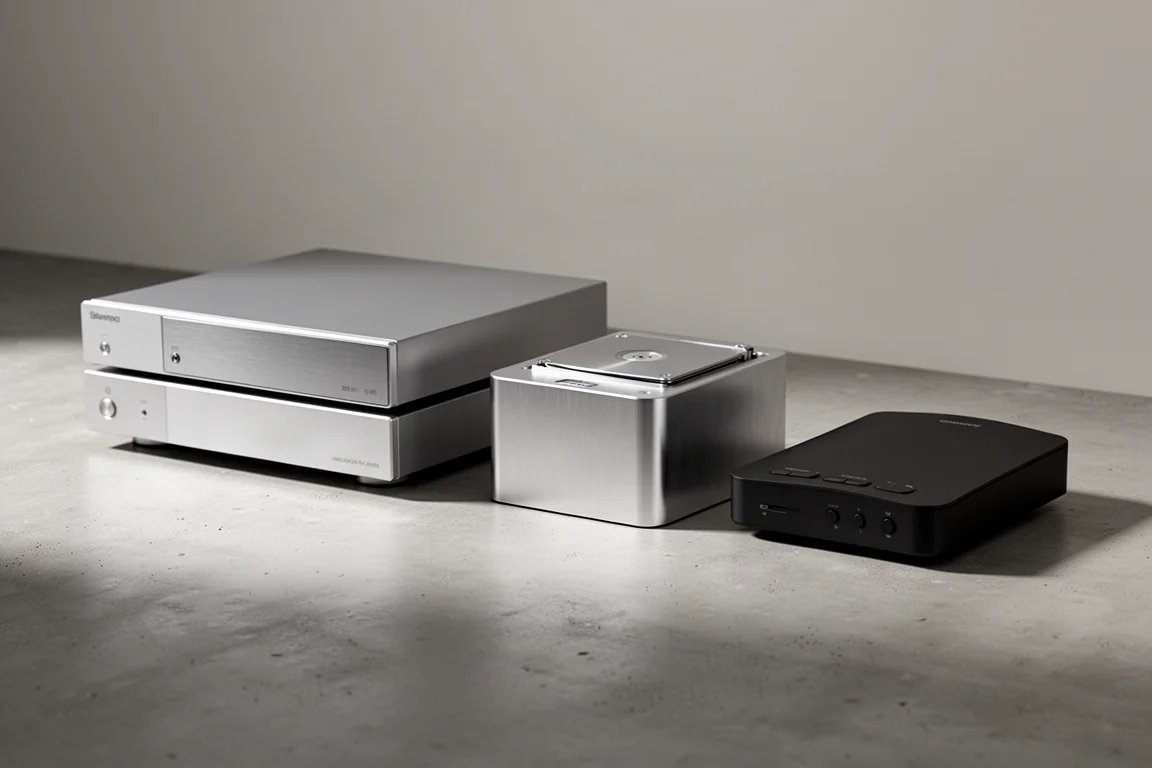
Compact disc players have quietly become interesting again. Three recent models sit in the same affordable bracket, and comparing them side by side makes the differences between them unusually clear: the Marantz CD60, the SMSL PL200 and the Arcam Radia CD5.
Two of these come from British brands with long histories in home audio, while the third arrives from a manufacturer known for dense, high-specification designs. All three retail below £1,000, and each takes a noticeably different approach to build, features and sound.
How These Three CD Players Compare
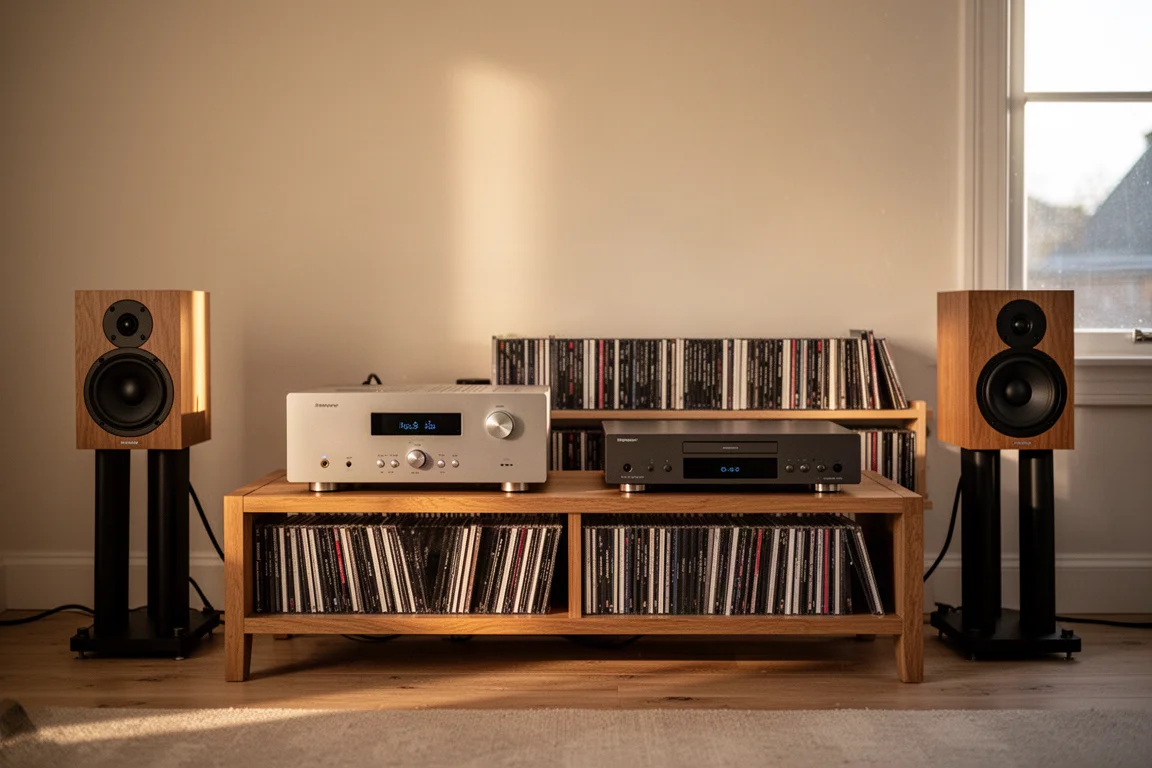
All three players were assessed in the same systems, which makes the trade-offs between them easier to describe. The more affordable reference setup paired a pair of Q Acoustics 5020 speakers with an Iota VX SA3 amplifier, while the more revealing setup used Aon Argon 1ES speakers driven by an Exposure 2510 amplifier.
Beyond sound quality, four practical questions separate these players: how well they are built, how pleasant they are to use day to day, what connectivity and file playback they offer, and whether the digital output is clean enough to feed an external DAC. The last point matters more than it might seem. A CD player with a well-implemented digital output can serve as a transport and improve substantially when paired with a better converter, while a noisy one is effectively limited to its own analogue stage.
Each player also carries a distinct tonal character, so the right choice depends partly on the system it will sit in and partly on personal taste. Neutrality, resolution and sheer scale are the three qualities that separate them most.
Marantz CD60: Neutral, Balanced and Easy to Live With
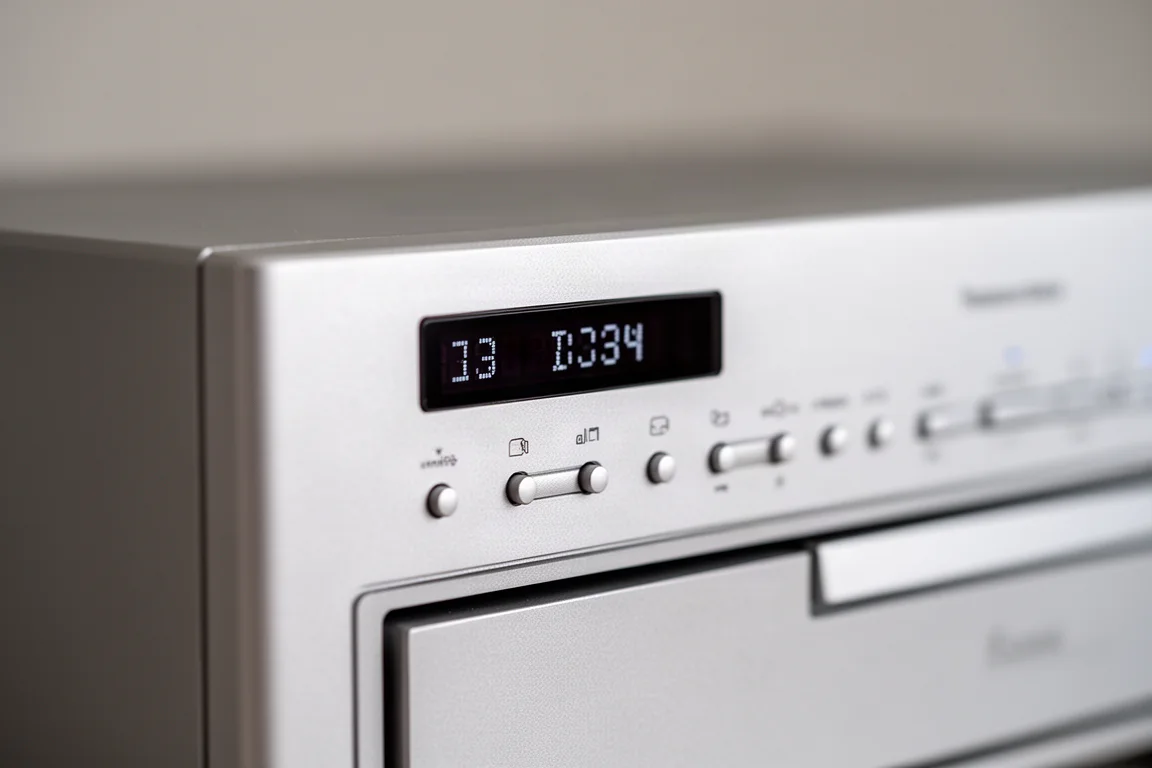
The CD60 is the largest of the three, measuring 442 x 129 x 396 mm and weighing 7.5 kg, and it uses a two-tier front panel over a thin folded steel chassis. In silver the finish looks more obviously plastic than the black version. The disc drawer glides out smoothly, though the button layout takes some adjusting to: the play button would make more sense next to the track skip controls rather than where it sits now.
Around the back there are single-ended RCA analogue outputs, coaxial and optical digital outputs, and a set of RCAs for remote integration with other compatible Marantz components. A 6.25 mm headphone socket with its own volume dial sits on the front, and the supplied remote covers the full feature set, including two digital filters, repeat playback and display dimming. The player will also read music from flash drives, up to 192 kHz / 24-bit PCM and DSD, provided the drive is in a supported format. Menus are basic and there is no gapless playback, but it is a genuinely useful extra.
The DAC is based on an ESS Sabre 9016K2M chip, supported by HDAM technology that uses discrete components in the output stage instead of op-amp ICs to lower noise and distortion.
In use, the CD60 is the least coloured player of the three. With the Q Acoustics and Iota system it sounds natural and easy to follow, with a soundstage that extends a little beyond the speakers, though depth is limited. Move it into a more revealing setup and it struggles, sounding small and muddy next to the other two. Its digital output is a different story: feeding a Denafrips Aries 12-1 through the coaxial output opened up the soundstage considerably and revealed a lot more detail.
Tonally it sits close to the Cambridge Audio CXN 100 streamer, which is slightly warmer and a touch better at separating instruments, while the CD60 uses a much older DAC chip yet remains close in overall fidelity. At its regular discounted price of around £650 it represents very good value; at the £849 retail price it looks a little expensive.
SMSL PL200: Compact, Resolving and Built Like a Jewel
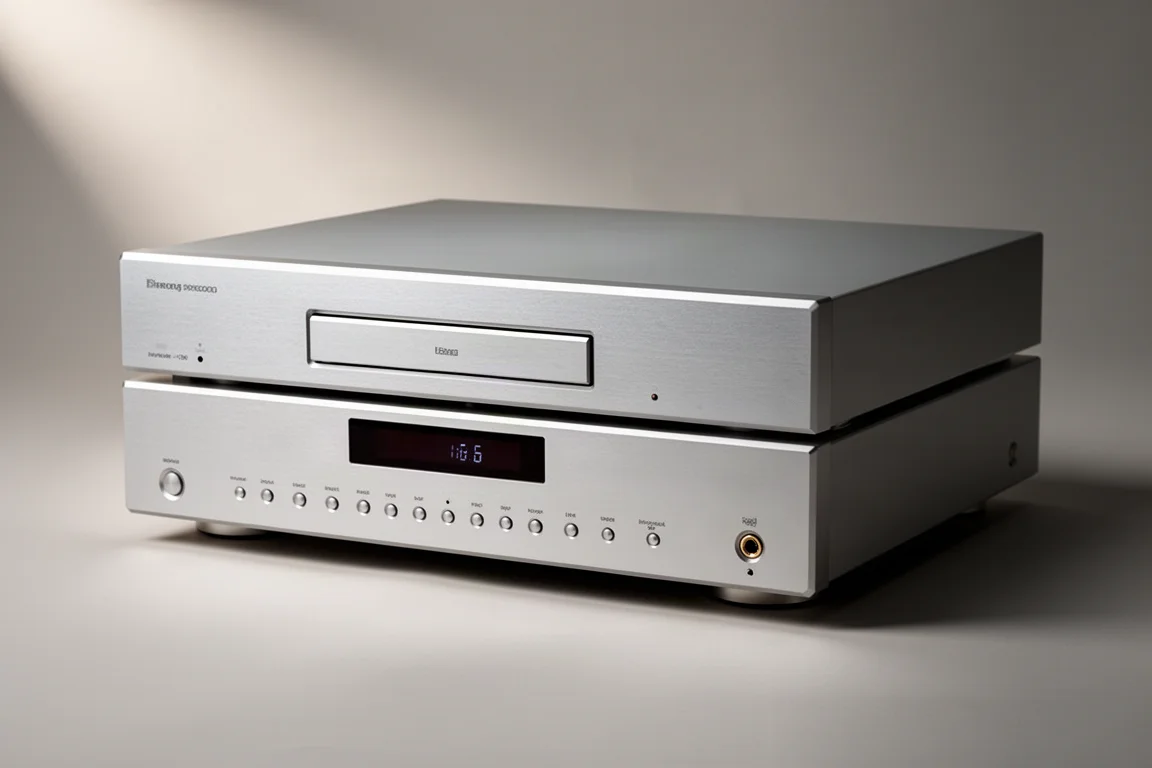
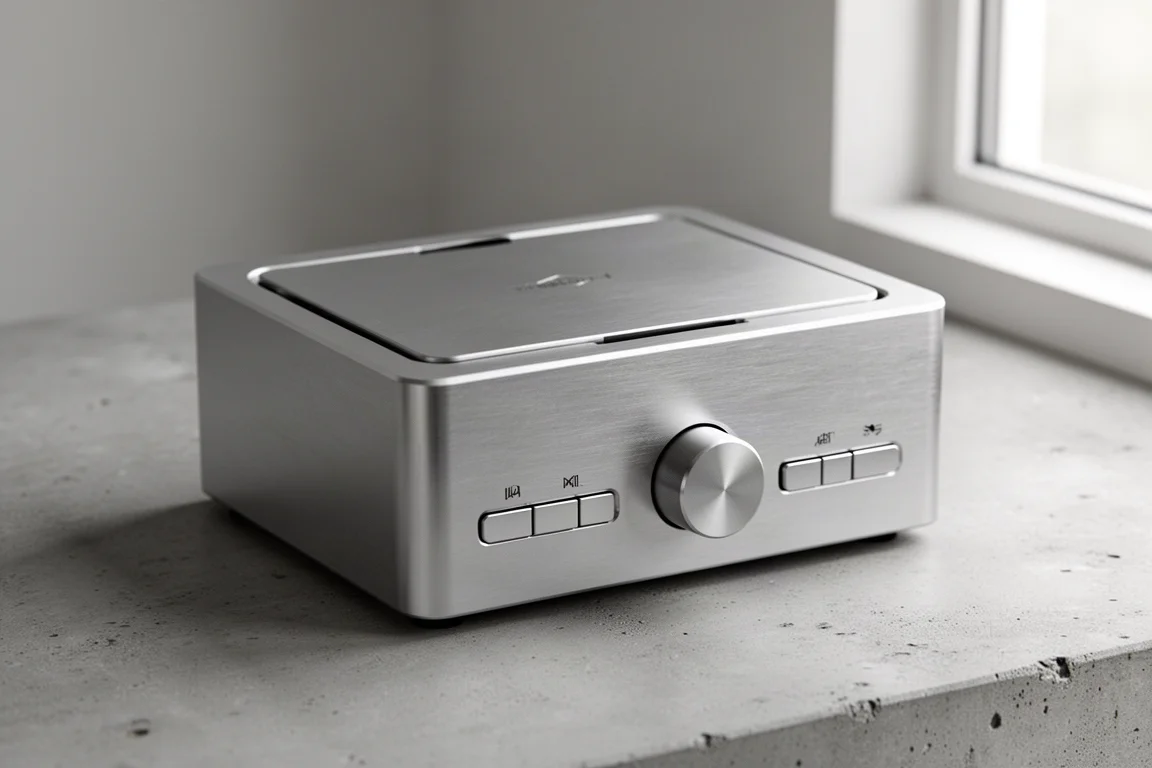
The PL200 is machined from a single billet of aluminium. There are no screw holes on the top, sides or back, only on the underside, where the centre has been cut away to make room for the circuitry. For a player that sells direct for around £550 plus shipping and taxes, roughly £700 all-in in the UK, the build and finish are exceptional.
It is also tiny, at 200 x 42 x 175 mm and 1.7 kg, and it is a top-loading design. Placing a disc on the spindle by hand brings a little of the ritual of a turntable, and leaving out a motorised drawer and its motor can bring sonic benefits as well. The piano key style buttons for play, pause, stop and shuffle initially look like a gimmick but suit a unit likely to live on a desk or sideboard, although the spring loading under the keys could offer a bit more resistance. A central knob switches the unit out of standby, rotates for volume attenuation and presses to reach the menus, and the same functions are available on a plastic remote that is fit for purpose but a step below the aluminium handsets used elsewhere in the range.
Connectivity includes balanced XLR and single-ended RCA analogue outputs, optical and coaxial digital outputs, and a USB-C input that is handy for phones, though a full-size USB-A input would be more useful for flash drives. A Bluetooth receiver is also included, which adds little to a player like this and can be a potential source of noise. The DAC is a top-of-range AKM 4499, paired with a separate AK-4491 IC for delta-sigma modulation and digital filtering, the same dual-chip arrangement found in the EverSolo DMP-A8.
Resolution is excellent for the money. The PL200 does not dig quite as deep into recordings as the EverSolo DMP-A8, but it is comparable to the DMP-A6. Like that streamer it has excellent bass definition, a midrange with crisp transients and an open top end that can become tiring, though the CD player has the better high frequency refinement and clearly better imaging, while the streamer spreads its soundstage a little wider. Against the Marantz it renders more information, but the tonal balance shifts from neutral to analytical, which is a matter of taste. In the more revealing system the extra clarity swings the balance firmly in its favour, with a nice sense of decay and precise placement of performers, though a little more soundstage width and midrange body would be welcome.
The selectable PCM filters do not change the fundamental character. The default sharp rolloff setting offers the best clarity while most of the others sound dull by comparison. The short slow filter is the useful alternative: it pulls back the highs slightly, adds warmth to the midrange and gives greater bass weight, trading a little resolution for a marginal gain in soundstage width.
Used as a transport, however, it disappoints. Feeding the Denafrips Aries 12-1 through the coaxial output produced a dirty, harsh sound, which makes the digital output hard to recommend for that purpose. As a self-contained player, though, it is superbly built and genuinely capable.
Arcam Radia CD5: The Most Relaxing Listen of the Three
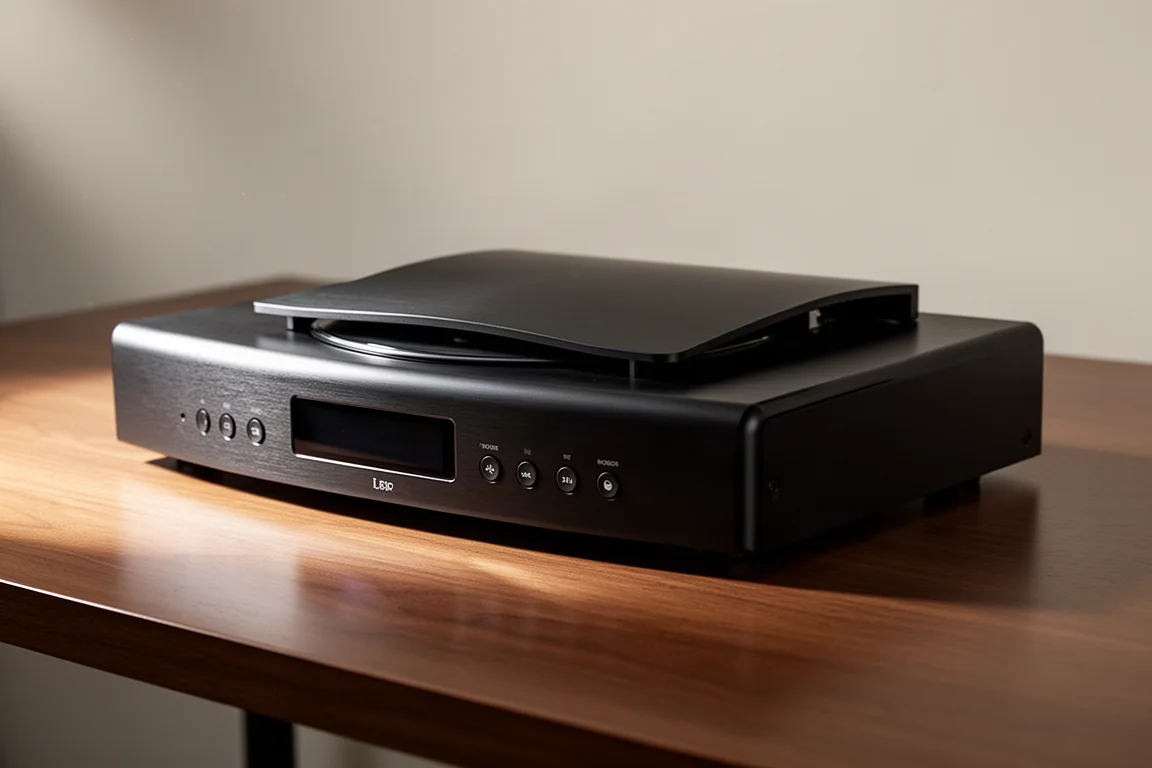
The Radia CD5 is Arcam’s entry-level CD player, priced at £699 and measuring 431 x 83 x 344 mm at 6 kg. The curved matte black aluminium shell and the Radia styling, with understated lettering, recessed buttons and subtle yellow highlights, give it a build quality that exceeds most full-width players at this price. A cowl across the top neatly conceals the rear connections when the player is viewed from above.
Ergonomics are not perfect. With the door open, pressing play does not close it and start playback, so the open/close button has to be pressed first. Pressing back halfway through a track jumps to the previous track rather than returning to the start of the current one, which should only happen in the first few seconds of playback. The remote is plastic but nicely finished and better than expected, and it is needed to reach the menus, which include a choice of three DAC filters. Around the back are single-ended RCA analogue outputs, coaxial and optical digital outputs and a proper USB-A input for flash drives. The DAC is an ESS Sabre 9018K2M, a slightly higher specification than the 9016 chip in the Marantz.
The CD5 is the biggest sounding of the three. Its presentation is closest in spirit to the Bluesound Node X streamer, with weighty bass and a midrange full of harmonic saturation, though it does not quite match that streamer for scale or instrument separation. Its top end is less rolled off than the Node X and it has a little more presence in the upper midrange, which gives lead vocals and instruments more energy while keeping some liquidity in the midrange. It is the kind of sound that can be enjoyed all day without fatigue, which is exactly what lower-priced systems often need.
In the more revealing setup it proved the most satisfying of the group over long sessions. The trade-offs are real, though: it has no obvious digital artifacts but cannot match the SMSL PL200 for bass definition, transient snap or locked-down imaging. Used as a transport with the Denafrips Aries 12-1, its performance shifts to another level, with some of its own character still coming through. It is a natural fit for listeners moving over from vinyl, offering very good resolution and a big sound without an artificial digital edge.
Which CD Player Should You Buy?
The three players do not produce a clear winner, which is what makes the choice interesting. If neutrality matters most and the rest of the system sits below £1,000, the Marantz CD60 is the easiest to live with, especially at its regular discounted price, and its digital output makes it a strong candidate for use with an external DAC later on.
If resolution and build quality are the priorities, the SMSL PL200 delivers more detail than the Marantz for a similar outlay and is the most impressive object of the three, provided it stays in its role as a self-contained player rather than a transport. The Arcam Radia CD5 is the one to choose if long, fatigue-free listening sessions matter more than absolute detail, since it offers the biggest, most relaxed sound of the group.
Streamers at a similar price remain a genuine alternative. The Marantz is close in tonality to the Cambridge Audio CXN 100, the SMSL resembles the EverSolo DMP-A6 and the Arcam shares the Bluesound Node X’s big, weighty character, so anyone weighing a CD player against a streamer can use those comparisons as a rough guide. What the disc players offer is a simple, self-contained way to play a physical collection, and each of these three does that with a distinct personality.
Conclusion
All three of these CD players are capable, well-made and clearly worth considering below £1,000, and none of them embarrasses the others. The Marantz CD60 is the neutral all-rounder, the SMSL PL200 is the detail specialist with the best build, and the Arcam Radia CD5 is the most enjoyable over long listening sessions. Match the character to the rest of the system and to your own priorities, and any of the three will serve a disc collection well.
Further reading
Related Reviews
CD Players
Advance Paris X-CD9 Review: A Tube CD Player That Also Works as a Transport
A close look at the Advance Paris X-CD9, a tube CD player that doubles as a CD transport, with listening notes, handling details, and a comparison against an external DAC.
CD Players
Best CD Players and DACs in 2026: Five Ways to Get Great CD Sound
Five CD player and converter options from roughly $80 to $600, plus what actually matters for sound quality and how buying discs supports the artists you love.
CD Players
Best CD Players Compared: Budget, Mid-Range, and High-End Picks
A practical comparison of four CD players across price points, from an entry-level deck to a reference-grade player that doubles as a DAC and headphone amplifier.