CD Players
Advance Paris X-CD9 Review: A Tube CD Player That Also Works as a Transport
A close look at the Advance Paris X-CD9, a tube CD player that doubles as a CD transport, with listening notes, handling details, and a comparison against an external DAC.
Introduction
The compact disc has been around for more than four decades, and it remains one of the most practical ways to build a serious music library. New releases still arrive on disc, and used CDs now sell for a fraction of what they once cost. That makes a dedicated CD player a sensible purchase again rather than a nostalgic one.
The Advance Paris X-CD9 is a tube-based CD player that can also be used as a CD transport. It sells for $1,399, and it is built to cover both jobs: a complete one-box player for listeners who want to keep things simple, and a disc drive for those who plan to feed an external DAC later.
What Makes the Advance Paris X-CD9 Stand Out
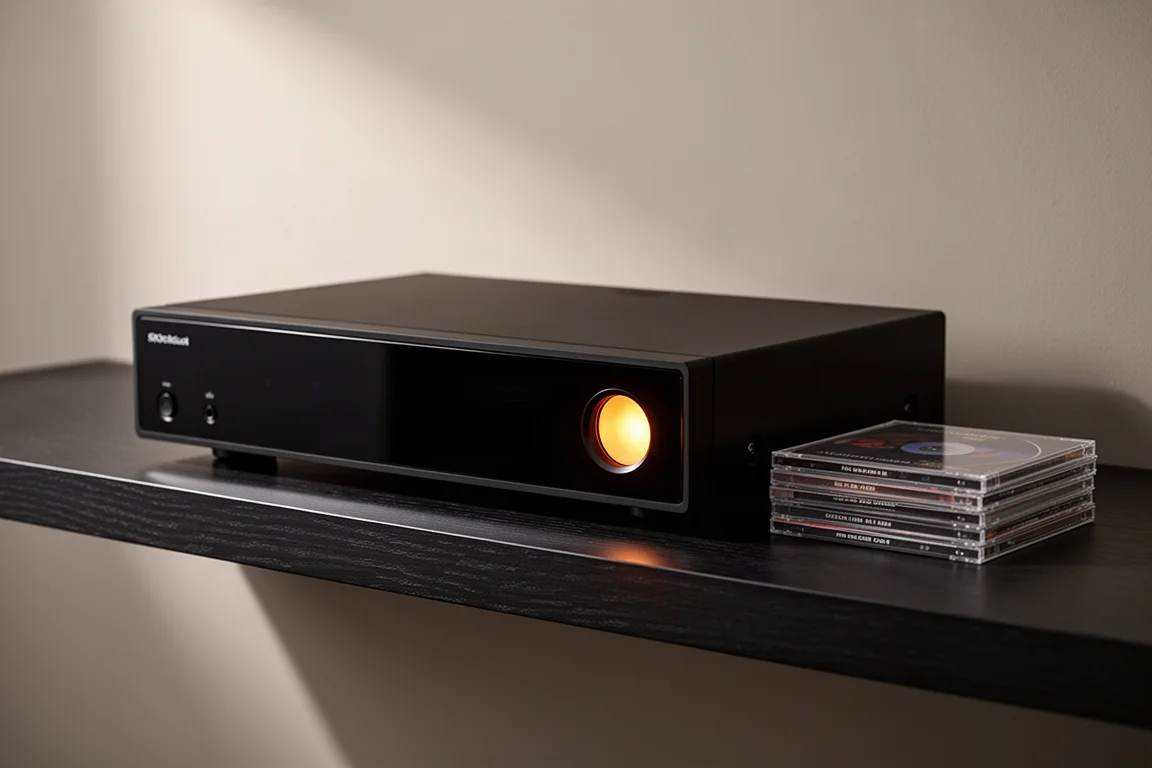
The first thing that sets this player apart is its tube output stage. A US-made new old stock 5744 tube sits behind a small window on the right side of the front panel, visible through a red filter. That detail gives the player a visual signature without making it look busy.
Tubes have a reputation for being fragile and expensive, but neither concern applies here. This tube type is widely available online and inexpensive, and given how it is used in this circuit, it should last a very long time. Replacement is not a hassle.
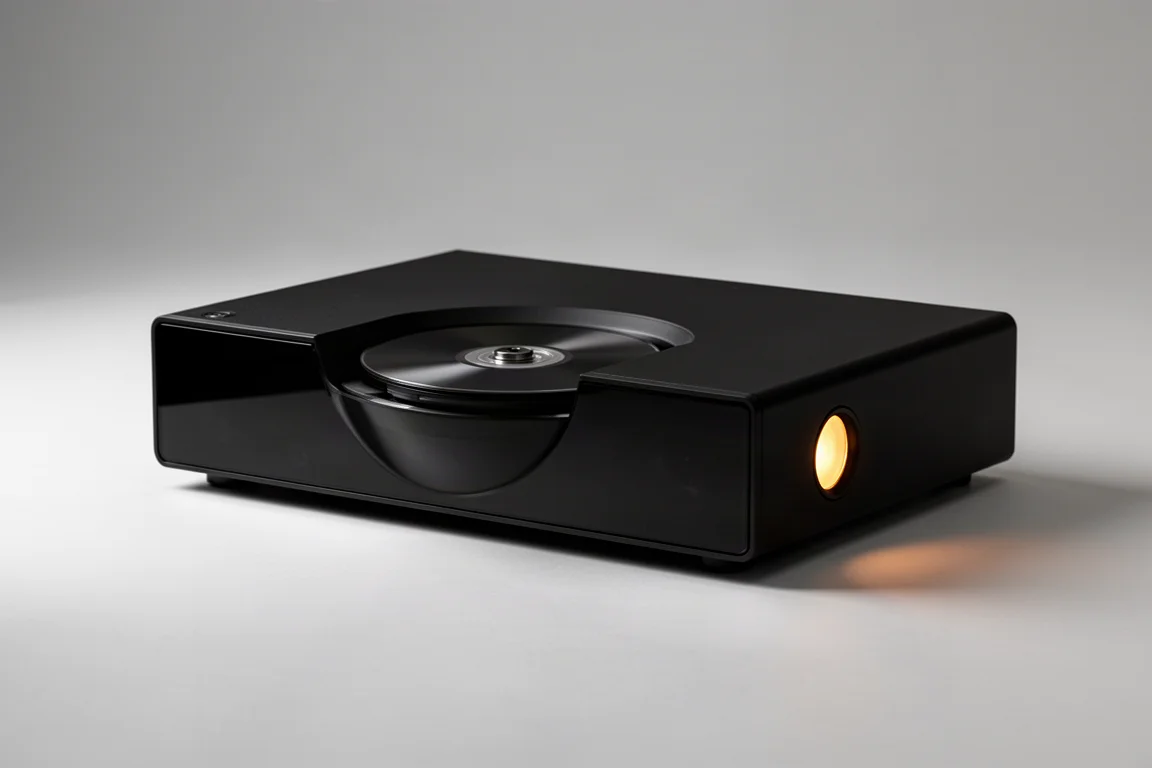
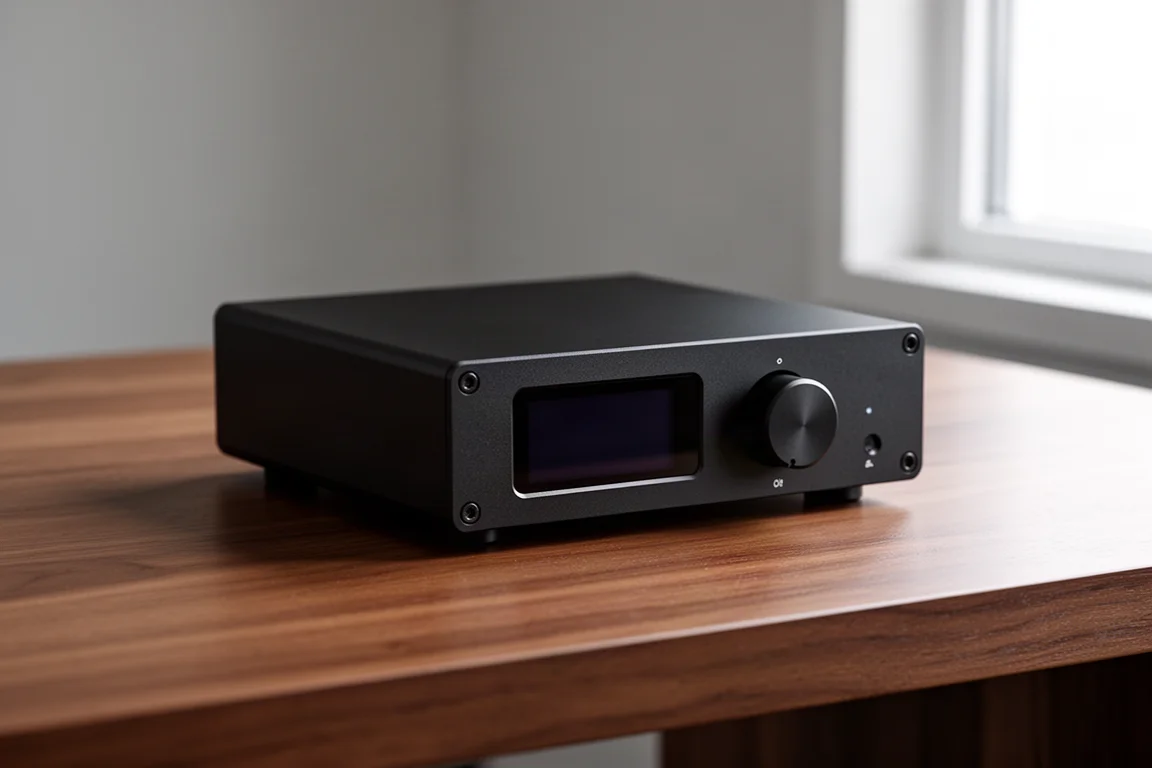
The rest of the design is deliberately understated: a sleek, glossy black chassis that sits quietly on a shelf and gets on with the music. Around the back you get XLR and RCA analog outputs, plus coaxial and optical digital outputs for transport duty. Inside, the layout is densely packed, with a healthy sized toroidal power transformer.
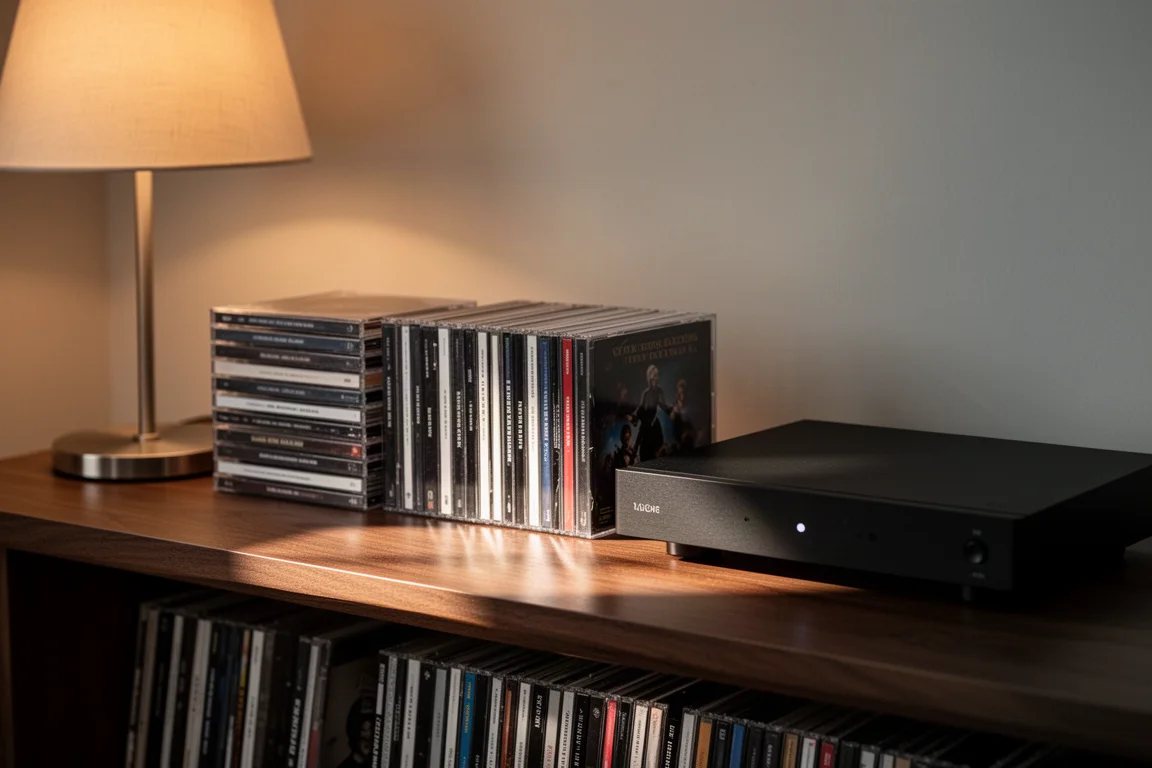
Connectivity is one of the strongest arguments for the X-CD9. Buyers who start with it as an all-in-one player can add an external DAC later without replacing the machine, so the purchase does not close off future options.
How the Advance Paris X-CD9 Sounds
Listening to the X-CD9 as a standalone player, the character is easy to describe: sweet, warm, and sophisticated, with plenty of detail and a clear, clean bass foundation. It is the kind of sound that keeps you playing one disc after another rather than reaching for something else.
That matters more than it might sound. The usual failure mode of digital playback is not harshness but boredom, the feeling that you would rather be doing something else. The X-CD9 avoids that. Across a wide range of material it stayed engaging, including a Boston band’s hard-edged rock reworking of a Bob Dylan song, the two-disc original cast recording of Hair (the off-Broadway and Broadway versions, taped a year apart in the same New York studio), and a closely miked solo piano album where you can hear deep into the instrument.
Low-frequency weight was particularly noticeable through a pair of tower speakers with four 8-inch woofers per cabinet. The player delivered real impact and power down low, which is a large part of why it never felt thin or clinical.
Design, Remote, and Everyday Handling
Two practical details are worth knowing before you buy.
The remote control is made of glossy plastic. It works fine and looks acceptable, but it does not match the finish of the player itself.
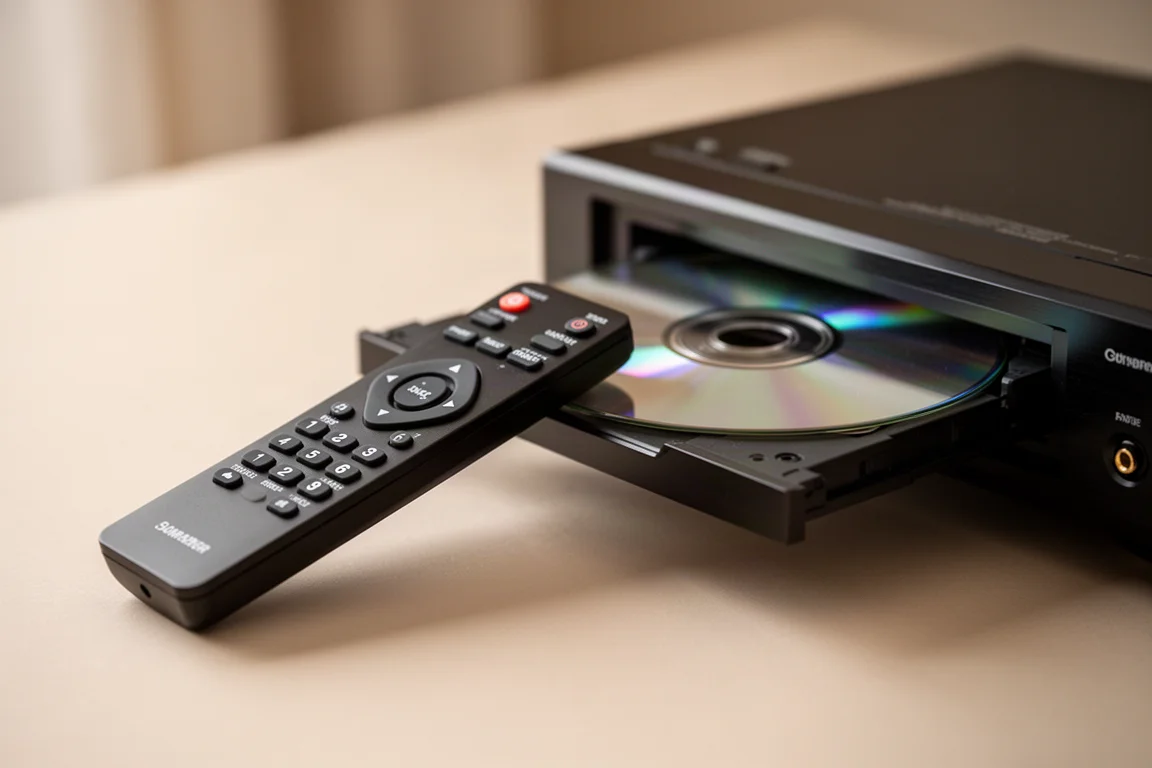
The disc tray is the bigger adjustment. It opens and closes very quickly, so if you are not quick with the button, the tray can be closed again before you have placed the disc. A little practice solves it, but it is a quirk rather than a refinement. The tray itself is plastic, which is standard at this price.
Tube Design and Long-Term Ownership
Ownership costs for the tube are low. It is a widely available type, replacements are inexpensive, and the way it is driven in this player suggests a long service life rather than a consumable you need to budget for every year.
Access is simple as well. The tube glows behind the front window, and the rest of the electronics stay out of the way. For buyers who have avoided tube gear because of maintenance worries, this is about as low-risk as tube audio gets.
Transport Mode and Connectivity Options
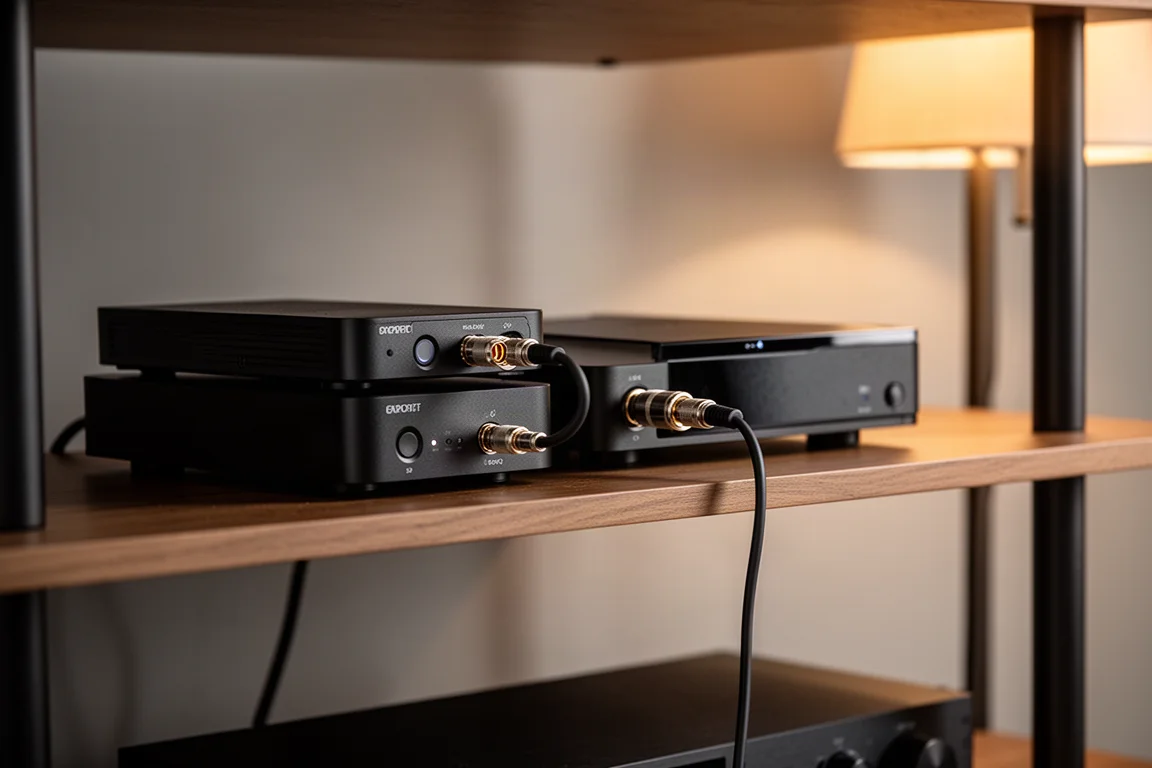
Using the X-CD9 as a transport is straightforward. Connect the coaxial or optical output to an external DAC and the player becomes a disc drive, with the analog outputs left unused.
That flexibility is why the X-CD9 makes sense across a wide range of systems. If you already own a DAC you like, the player slots in as a transport. If you do not, you can run it as a complete player and add a converter later.
The Denafrips Ares DAC as a Comparison Reference
To test how the X-CD9 performs in transport mode, it was run through a coaxial connection into an original Denafrips Ares DAC, a unit that has been in service for five or six years and still sounds excellent.
The comparison was closer than expected. With the Ares handling conversion, bass was a little tighter, faster, and cleaner. Through the X-CD9’s own output stage, bass had plenty of impact and power but was slightly less nimble. Running the X-CD9 on its own as an all-in-one player also added a touch more dimensionality to the sound. Overall the Ares had a small edge, but the margin was narrow.
For anyone weighing the two paths, the practical takeaway is that the X-CD9’s internal conversion is competitive. Adding an external DAC is a refinement, not a rescue.
Who Should Buy the Advance Paris X-CD9
The clearest fit is a listener with a substantial CD collection who needs a new player, either because the old one is failing or because it is time for an upgrade. The X-CD9 covers both the all-in-one and transport roles, so it does not lock you into one approach.
It also suits listeners who are curious about external DACs but not ready to commit to a separate transport and converter straight away. And because used CDs are currently inexpensive, it is a good moment to build a collection around a player like this.
Buying Advice for CD Listeners
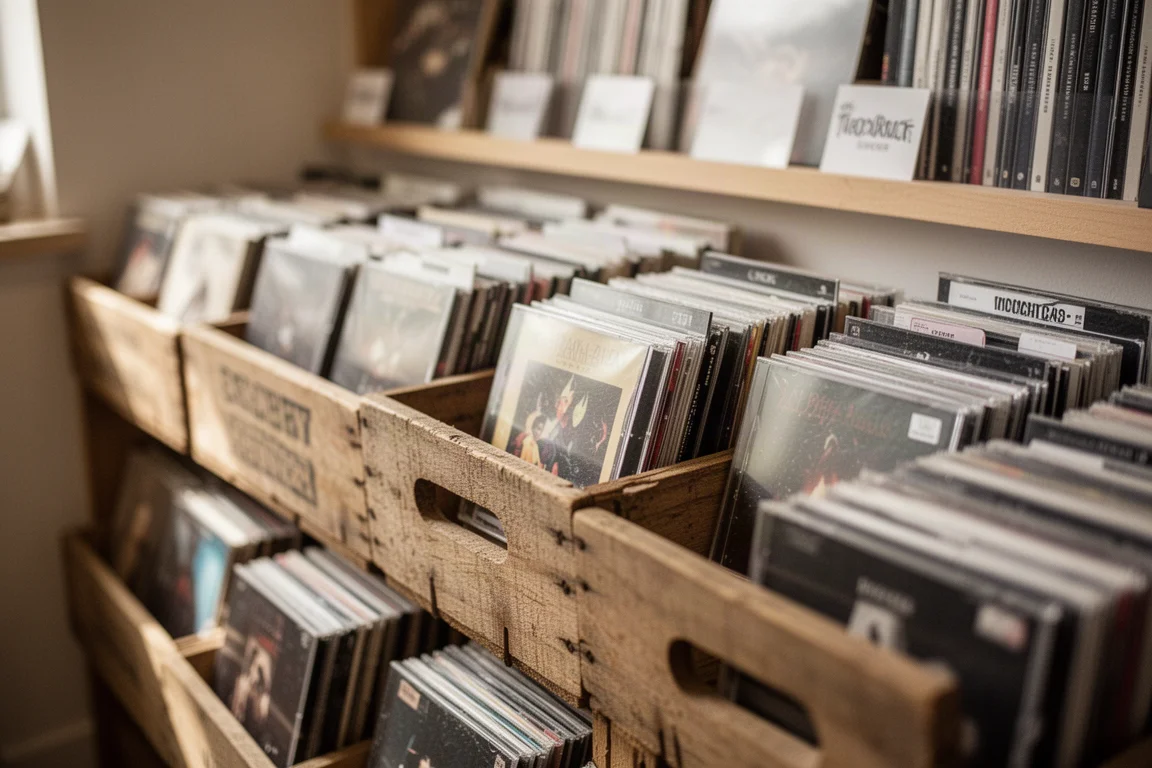
If you are starting or rebuilding a disc library, the economics are unusually favorable right now. Used CDs sell for very little, and the format still receives new releases, so a player like the X-CD9 has plenty of material to work with.
At $1,399, the X-CD9 sits in the middle of the dedicated player market. What you are paying for is a specific combination: a tube output stage with a warm, detailed character, solid analog and digital connectivity, and the option to use the machine as a transport whenever you want.
Budget for the small annoyances rather than the big ones. The plastic remote and the fast tray are easy to live with, and the tube, the part that worries most buyers, is inexpensive and simple to replace.
Conclusion
The Advance Paris X-CD9 succeeds because it does not force a decision. Run it as a one-box tube CD player and it delivers a sweet, detailed, engaging sound. Add a DAC later and it works as a transport without complaint. For listeners with a CD collection and a $1,399 budget, that combination makes a strong case.
Further reading
Related Reviews
CD Players
Best CD Players and DACs in 2026: Five Ways to Get Great CD Sound
Five CD player and converter options from roughly $80 to $600, plus what actually matters for sound quality and how buying discs supports the artists you love.
CD Players
Best CD Players Compared: Budget, Mid-Range, and High-End Picks
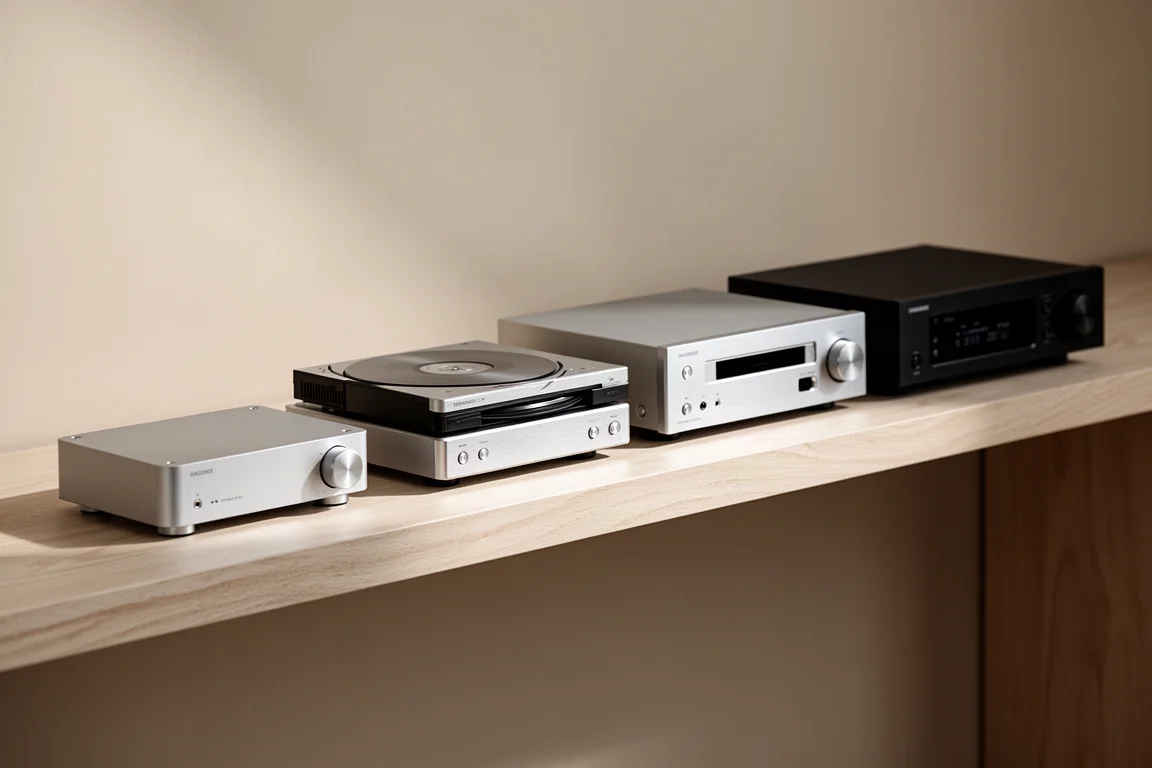
A practical comparison of four CD players across price points, from an entry-level deck to a reference-grade player that doubles as a DAC and headphone amplifier.
CD Players
Best Cheap CD Players in 2026: Four Affordable Picks and a Budget DAC Upgrade
Four affordable CD players plus a budget external DAC, with the strengths, trade-offs, and upgrade paths that matter before you buy.