CD Players
Best CD Players Compared: Budget, Mid-Range, and High-End Picks
A practical comparison of four CD players across price points, from an entry-level deck to a reference-grade player that doubles as a DAC and headphone amplifier.
Introduction
CD players cover an enormous price range. At one end sits a compact deck that costs about as much as a decent pair of headphones; at the other, a reference-grade player that costs more than most people’s entire system. The useful question is not whether the expensive one is better, but where the money actually goes and which of those upgrades you will hear in your own room.
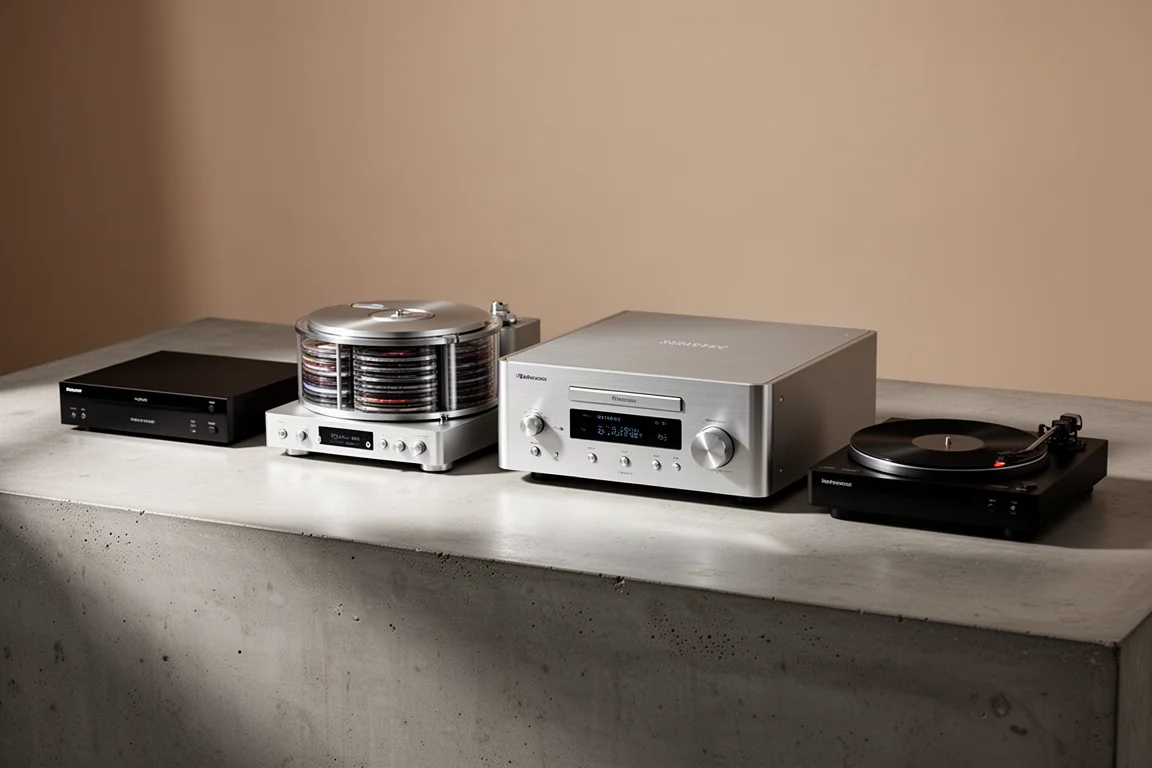
This comparison looks at four players: the SMSL PL150 at around $150, the Onkyo DX-C390 six-disc carousel at around $350, the Magnetar Mark 2 4K Blu-ray player at $1,800, and the TEAC VRDS-701 at around $4,300. All four play CDs. They do not sound the same.
What Actually Drives the Price of a CD Player
A CD player is not one component. It is several, and each one shapes the final result.
The power supply is the foundation. A better supply does not make music louder; it makes the quiet parts quieter, which reads as a darker, blacker background. That in turn produces better imaging, more detail, and cleaner separation between instruments.
The analog output stage turns the converted signal into something your amplifier can use. Affordable players typically rely on op amps, and more expensive players use them too, but costlier designs add output filters, better capacitors, and more careful filtering, board layout, and grounding. Op amps can carry their own sonic character even though their basic job is simply to boost a signal.
Clocking and jitter control matter more than many listeners expect. A more accurate clock produces a cleaner digital result, and that shows up as sharper imaging and better instrument separation.
The transport mechanism and the digital-to-analog converter complete the picture. There is a useful workaround here: if a player’s internal converter is the weak link, an optical or coaxial digital output lets you send the signal to an external DAC, either a standalone unit or the DAC inside an integrated amplifier. A budget player with a poor converter is not necessarily a dead end.
One point worth stating plainly: not all digital playback devices sound the same. Streamers, CD players, and DACs differ audibly because of their power supplies, output stages, and error correction. Those differences are not as subtle as they are sometimes made out to be, and they tend to survive even in modest systems.
SMSL PL150: The Entry Point
At around $150, the SMSL PL150 is the least expensive way into this group. It includes a headphone amplifier, which is unusual at the price, and it can be connected to an external DAC.
There are two practical catches. First, the player does not include its own power supply; you need to provide a 5V, 2A or higher unit, and a generic phone charger is not the right answer. Second, the sound quality on its own is the weakest here: harsh, fatiguing, and flat, without much dynamic life. Paired with a good external DAC and a proper power supply it improves, but that changes the total cost. As a standalone CD player it is hard to recommend over the alternatives in this group.
Onkyo DX-C390: The Value Pick
The Onkyo DX-C390 looks like a piece of late-1980s or 1990s hi-fi, and for many listeners that is part of the appeal. It is a six-disc carousel changer, so you can load several discs at once and let the player do the work, and it can also feed an external DAC if you want to change its character.
Sonically it is the surprise of the group. Its clarity and dynamics sit at roughly the same level as the Magnetar Mark 2, with vocals pushed a little further forward. The presentation is warm and dynamic, which is consistent with the Wolfson DAC chips used in many Onkyo players of that era. At around $350 it delivers far more than its price suggests.
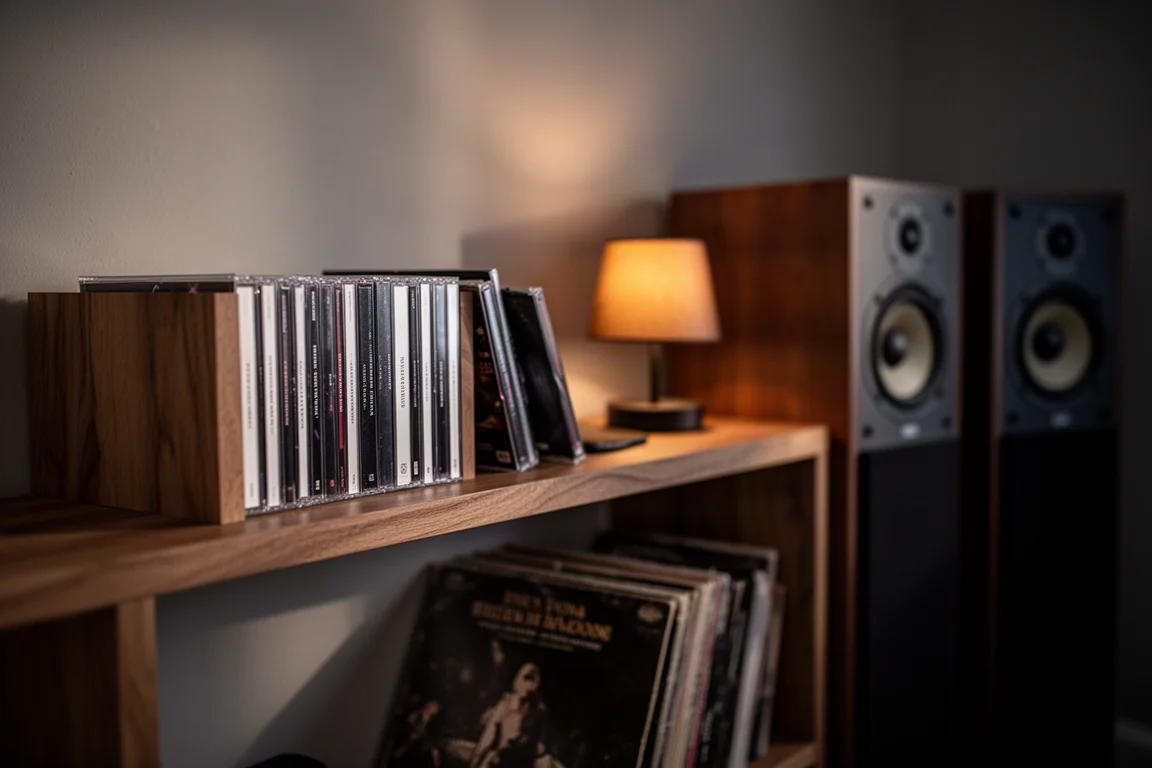
The changer mechanism also makes it genuinely enjoyable to use: six discs, one evening, no getting up to swap anything. For listeners who mainly want to play CDs and want the best value in this comparison, this is the one to beat.
Magnetar Mark 2: Best for Disc Versatility
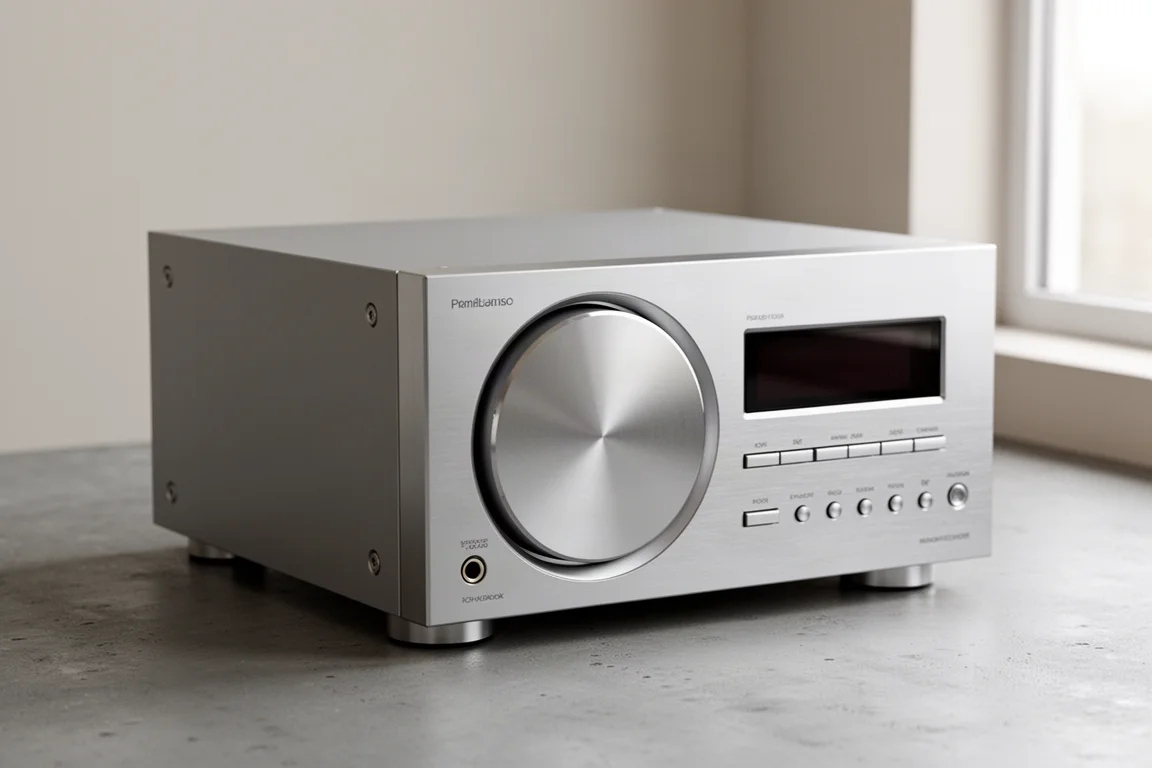
The Magnetar Mark 2 costs $1,800 and is really a 4K Blu-ray player that also handles CDs and SACDs. That combination is its main argument: one box for films, CDs, and high-resolution discs.
Its DAC and analog output stage are competent, and its clarity and dynamics are comparable to the Onkyo. The difference is presentation rather than resolution. Vocals, and whatever sits at the center of the soundstage, are less forward than on the Onkyo, which some listeners will prefer and others will not. If you want a single player for a mixed disc library, the Mark 2 earns its place; if CDs are all you play, you are paying for capability you may never use.
TEAC VRDS-701: Best Overall Sound
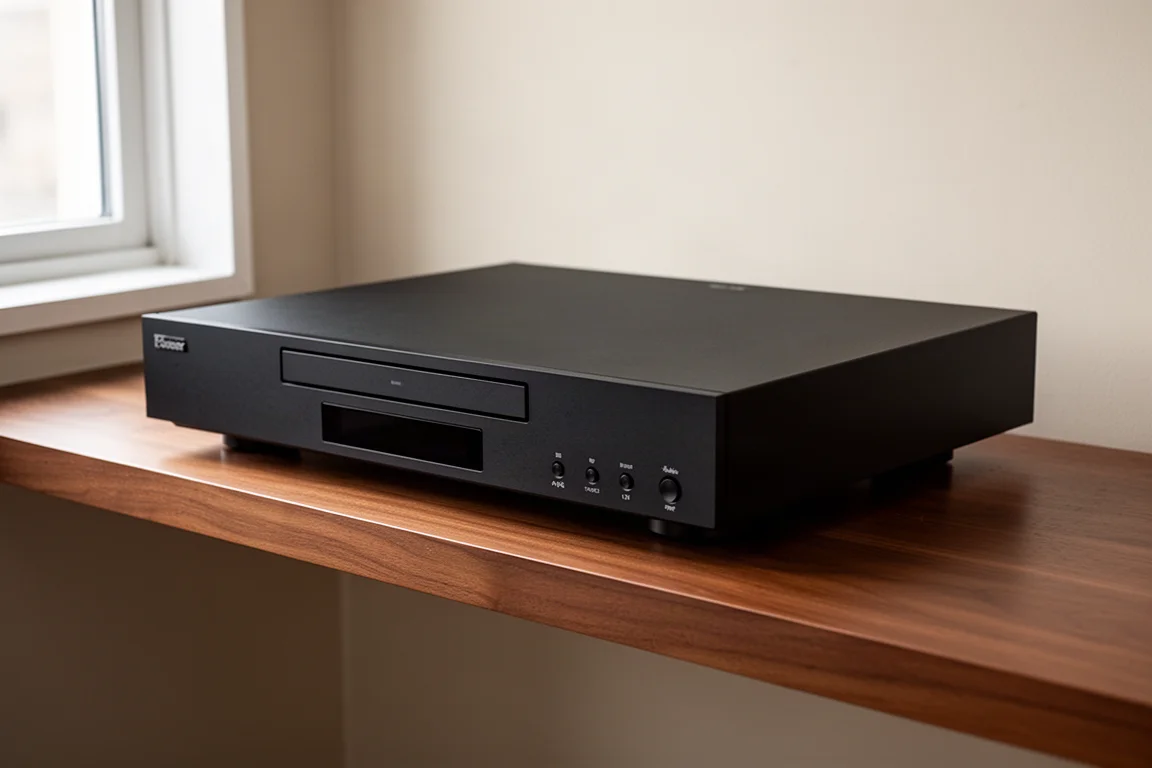
The TEAC VRDS-701 is the most expensive player here at around $4,300, and it is not close to the others. It is effectively three products in one: a CD player, a DAC with USB, coaxial, and optical inputs, and a headphone amplifier.
The converter is the interesting part. It is a multi-bit delta-sigma design built from discrete components rather than an off-the-shelf chip, and the result is a level of instrument separation, imaging accuracy, and sense of air and scale that the other three cannot match. It is also honest: on a harshly recorded disc you hear the harshness. That transparency is not a flaw. It means the player is not adding a character of its own.
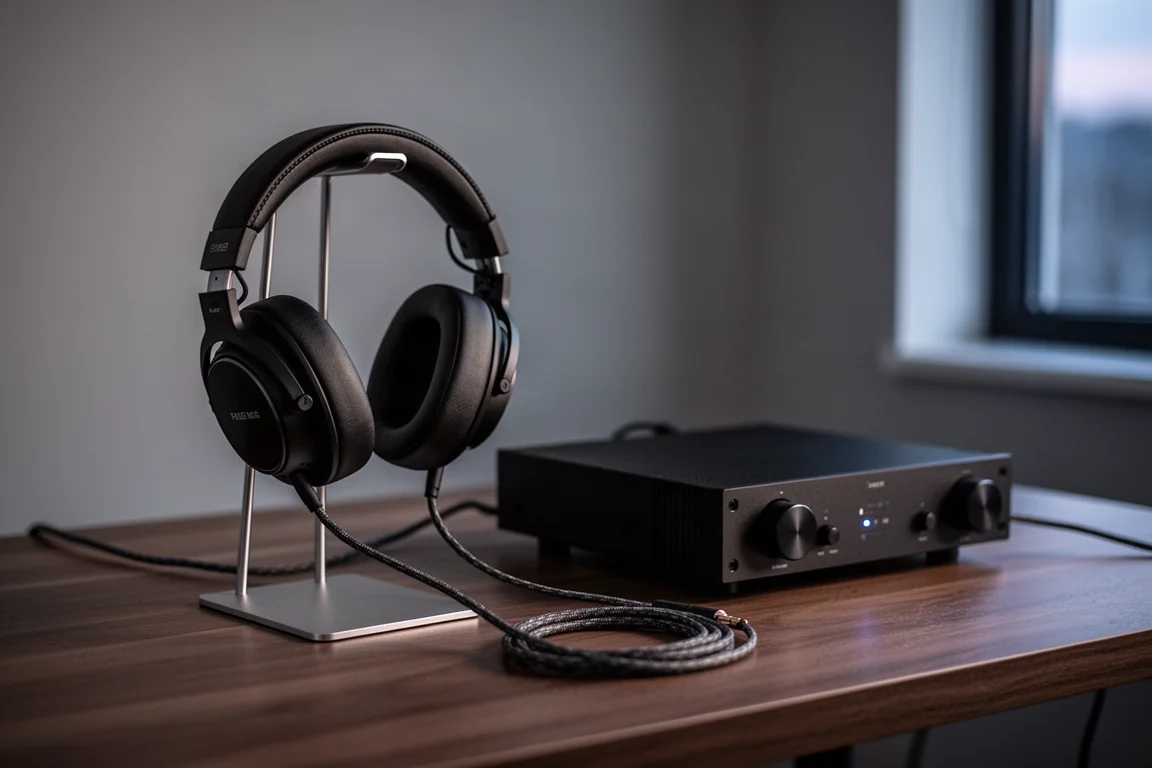
If you already own a streamer, the DAC inputs make the value case stronger. The CD mechanism is effectively an extra source inside a component you might otherwise buy for digital conversion and headphone listening alone.
Overall Buying Advice
Price does not translate into sound quality in a straight line. The Onkyo DX-C390 at around $350 keeps pace with the Magnetar Mark 2 at $1,800, a useful reminder that the cheapest player is not automatically the worst and the most expensive is not automatically the right buy.
A sensible way to choose: if CDs are your only source, the Onkyo is the best value here and the TEAC is the best sound. If you also need 4K Blu-ray and SACD playback, the Magnetar covers more ground in one box. The SMSL makes sense only if you plan to use an external DAC and supply your own quality power supply; as a standalone player it is the weakest of the four.
Conclusion
The gap between a $150 CD player and a $4,300 one is real, and it comes down to parts you can name: the power supply, the output stage, the clock, the transport, and the converter. You cannot buy reference-grade sound at an entry-level price, but you can buy a genuinely satisfying player for far less than the top of the market. The Onkyo DX-C390 is the value pick, the TEAC VRDS-701 is the reference, and the Magnetar Mark 2 sits between them as the most versatile option.
Further reading
Related Reviews
CD Players
Advance Paris X-CD9 Review: A Tube CD Player That Also Works as a Transport
A close look at the Advance Paris X-CD9, a tube CD player that doubles as a CD transport, with listening notes, handling details, and a comparison against an external DAC.
CD Players
Best CD Players and DACs in 2026: Five Ways to Get Great CD Sound
Five CD player and converter options from roughly $80 to $600, plus what actually matters for sound quality and how buying discs supports the artists you love.
CD Players
Best Cheap CD Players in 2026: Four Affordable Picks and a Budget DAC Upgrade
Four affordable CD players plus a budget external DAC, with the strengths, trade-offs, and upgrade paths that matter before you buy.