Ski Resorts
Thredbo Ski Resort Review: Australia's Best Mountain Experience?
Thredbo pairs Australia's biggest vertical with modern lifts and strong terrain variety, but snow quality and operational quirks remain worth weighing before you book.
Introduction
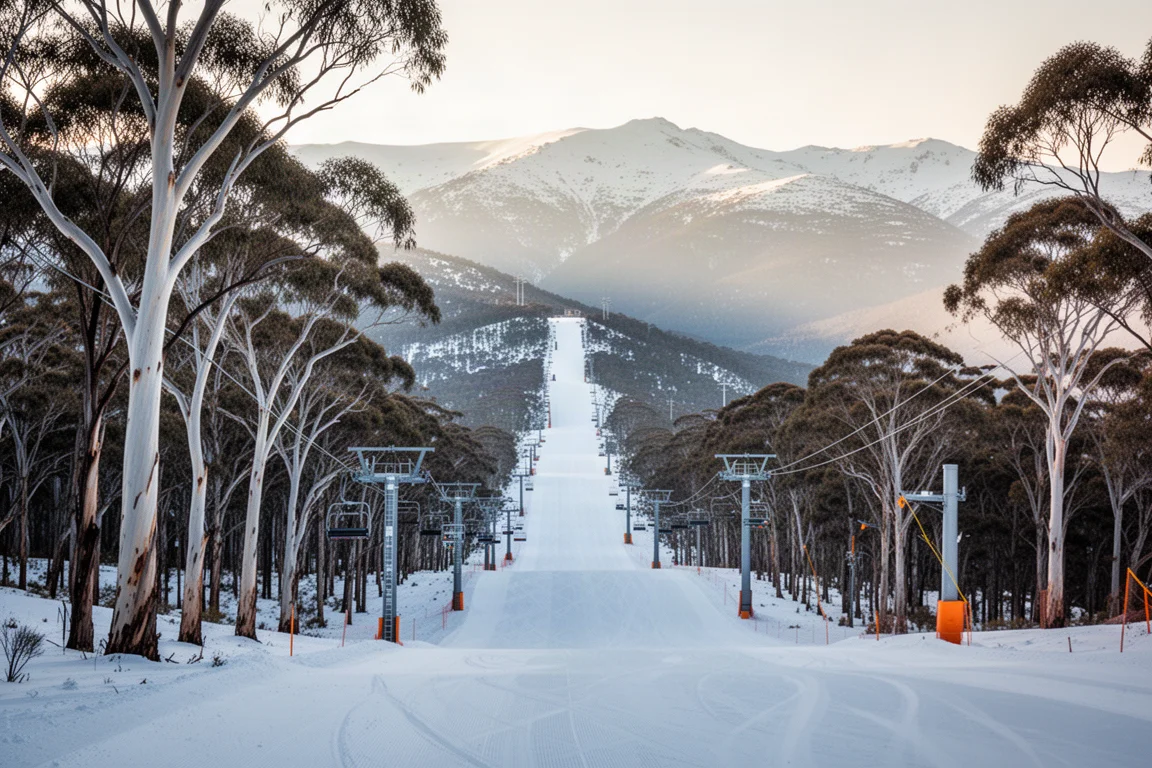
If you are looking for ski slopes that feel genuinely worthwhile without leaving the Australian continent, Thredbo is the name that comes up most often. With a vertical drop surpassing 2,000 feet, modern infrastructure, and a drivable distance from Sydney, the resort has a lot to like at first glance. The obvious question is whether it escapes the drawbacks typical of Australian skiing and riding, and whether it truly stands above the rest of the country’s ski scene.
The short answer: it comes closer than anywhere else in Australia, thanks to its exceptional vertical, a strong lift network, and a well-rounded on-mountain package. But it shares the same snow and weather challenges as the rest of the country’s resorts, and those shape the experience more than any marketing suggests.
Who Thredbo Is For
Thredbo’s standout characteristic is its vertical. The resort’s 670-metre, or 2,200-foot, vertical drop is by far the highest in Australia, beating its next closest competitor by nearly 50%. The sustained fall line makes it the best bet in the country for long vertical-heavy runs, and the elevation stretch creates strong terrain distinctiveness plus varied scenery.
Beginners get a decent starting point, but with caveats. The Friday Flat zone at the base is a dedicated learning area, and as of 2026 it is the only green terrain that does not require downloading or taking a blue run back to the base. Most easier slopes sit in the scenic upper mountain, but the valley runs are all marked blue or harder, a new change for the 2026 season. Confident beginners can usually manage them in good conditions, while less certain riders can download the Snow Gums double chair. Reaching upper-mountain greens also requires riding a T-bar, though a separate Easy Rider T-bar exists for practice.
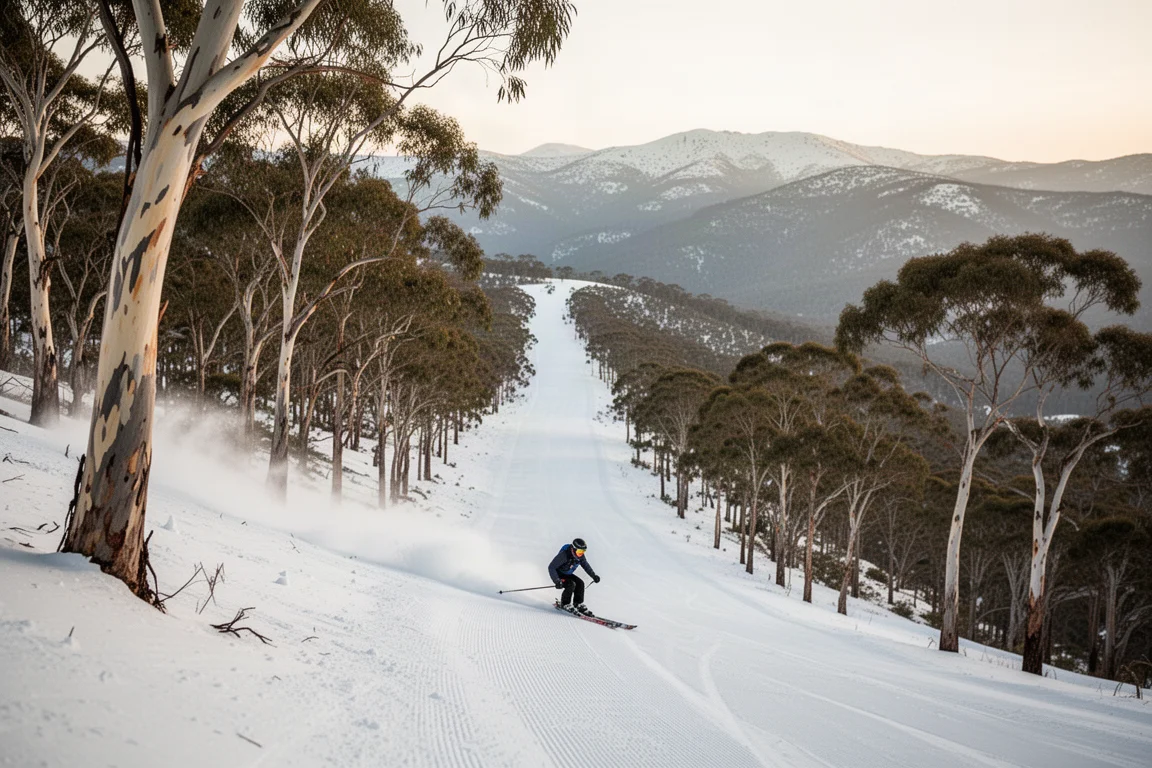
Thredbo becomes an especially ideal mountain once guests reach intermediate level. Blue runs span the vast majority of the resort, including top-to-bottom cruisers that make for the longest consistent runs in Australia.
Terrain Variety and Parks
The aptly named Cruiser chairlift sits high enough for consistent conditions without the hassle of a T-bar, making it the most popular intermediate zone. Near the summit, riders willing to take a T-bar will find some nicely groomed blue bump runs.
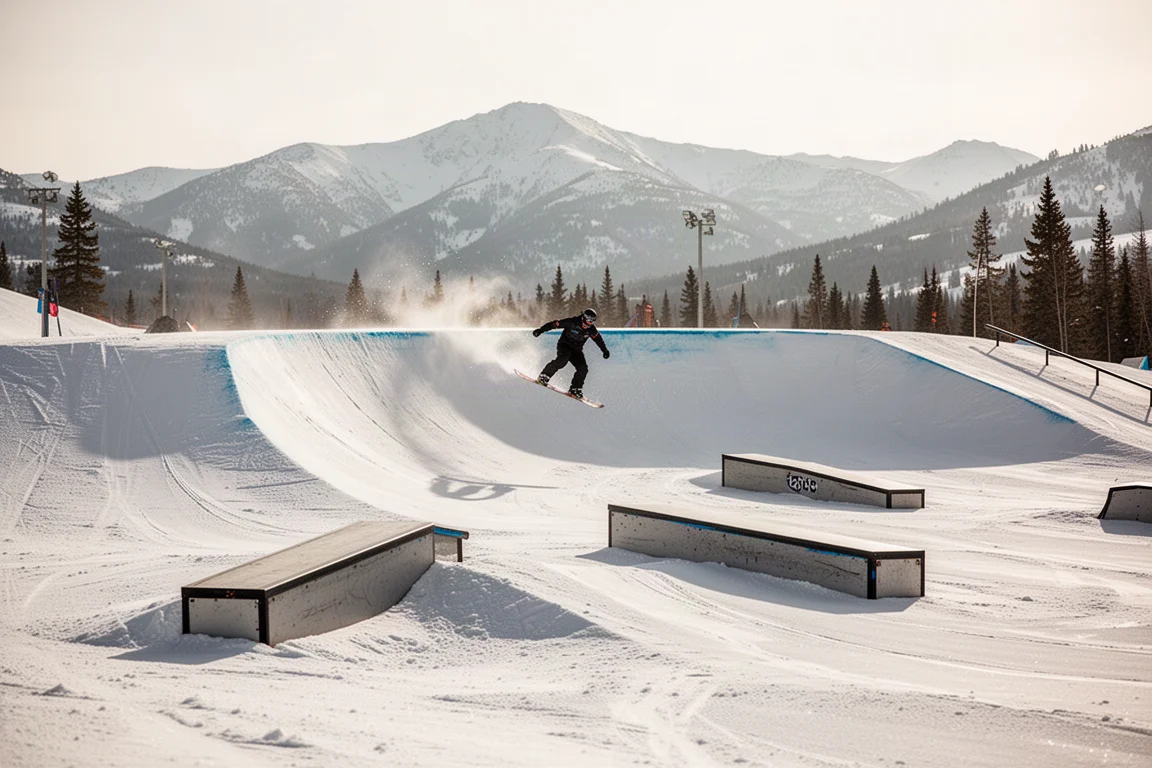
Freestyle skiers are well served too. Thredbo has three distinct terrain park zones with boxes, rails, and standout jumps, and the resort even builds a quarter pipe when conditions allow.
For advanced skiers, expectations should be tempered. Black diamond runs range from steep cruisers to mogul lines to open bowls, and the ungroomed snowfields off the upper-mountain T-bars feature scattered rocks and stones. But there is very little true expert terrain: most runs keep their steep pitches brief, and obstacles are generally avoidable without serious technical maneuvering.
The glade terrain is the real thrill here. The unmissable gum trees offer wide spacing in upper areas, creating distinctive and playful tree skiing. Trees grow taller and thicker at lower elevations, so the lower snow gums are considerably harder to ski through even in good conditions.
One structural note: the total footprint is just under 1,200 skiable acres, large for Australia but not dramatically so. The mountain gets its footprint from height rather than width, which keeps the slopes narrow.
Snow Quality and Operations
Thredbo does not top out higher than Australia’s other resorts, meaning the extended vertical comes from a lower mountain at fairly low elevations. Terrain length beats the Australian average, but quality tends to suffer toward the bottom. Snowfall is highly variable, and it is exceptionally rare for the resort to exceed 250 cm, or 100 inches, in a season. The upper mountain is as reliable as Australian skiing gets, but thin cover regularly appears during droughts, and the lowest trails often depend entirely on snowmaking.
The snowmaking arsenal is exceptional, but there is only so much a resort with above-freezing temperatures through a typical winter can do. Several mid and lower mountain areas are perennially closed, including the Schuss trail off the gondola and the lower Golf Course Bowl, with closures multiplying in below-average seasons.
Storms bring their own problems: exceptional wind pummels the exposed upper mountain, and wind holds are common. The lack of surface lift redundancies in the lower mountain adds further operational interruptions.
Lifts, Crowds and Getting Around
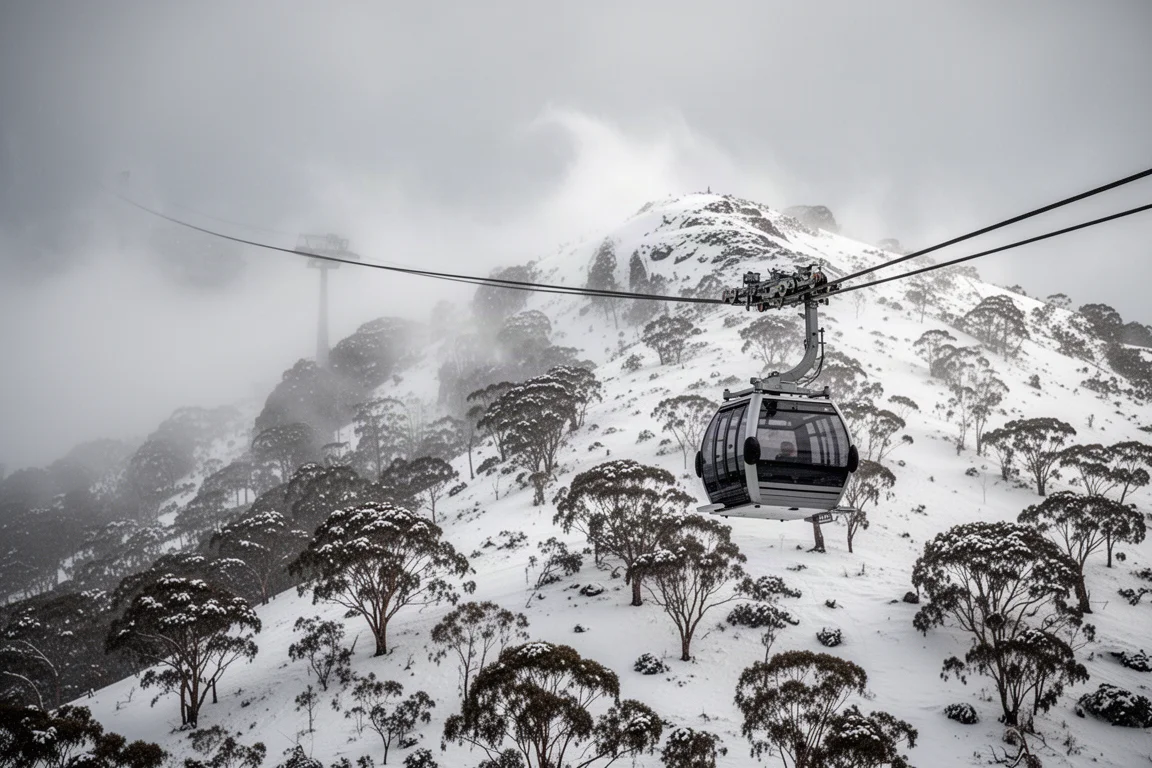
Thredbo’s lift network is strong for Australia. High-speed service holds down primary access to all lower and mid-mountain areas except the bunny hill, mostly via high-speed quads, and the Merritts Gondola provides a weather-protected route from Thredbo Village up to the Cruiser zone, a notable advantage over resorts still relying solely on fixed-grip lifts. All terrain above the treeline, however, runs exclusively on T-bars. The Merritts midstation on the Kosciuszko chair is often closed, and the Snow Gums double chair is quite slow.
Crowds are a real factor given Australia’s limited terrain and Thredbo’s proximity to Sydney and Canberra. The Gunbarrel lift is the worst choke point in the morning as the only direct way up from Friday Flat, and the Cruiser lift is regularly busy. The T-bars handle crowds better, so you will usually find the fewest people alongside the best snow. Navigation has some frustrations, particularly getting between the Friday Flat and Thredbo Village sides, though signage is generally strong with clear closure and blind-corner warnings.
Facilities, Lodging and Getting There
Thredbo offers an impressive on-mountain network: two base complexes plus five on-mountain restaurants, including Eagle’s Nest, built as Australia’s highest restaurant, and Merritts Mountain House at the top of the gondola. Prices at these mid-mountain venues are often surprisingly cheaper than down in the village. Specialty options include Kareela Hut, which typically requires reservations, Black Sally’s with Japanese food, and the casual outdoor Frostbite shack.
Lodging is extensive, with several ski-in ski-out options and most others a short shuttle ride away, and unlike much of the accommodation at nearby Perisher, most of it can be reached by car directly. It is very expensive, though generally more affordable than Perisher. Cheaper options exist in Jindabyne and Cooma, and camping is available in Jindabyne for the bare-bones traveler.
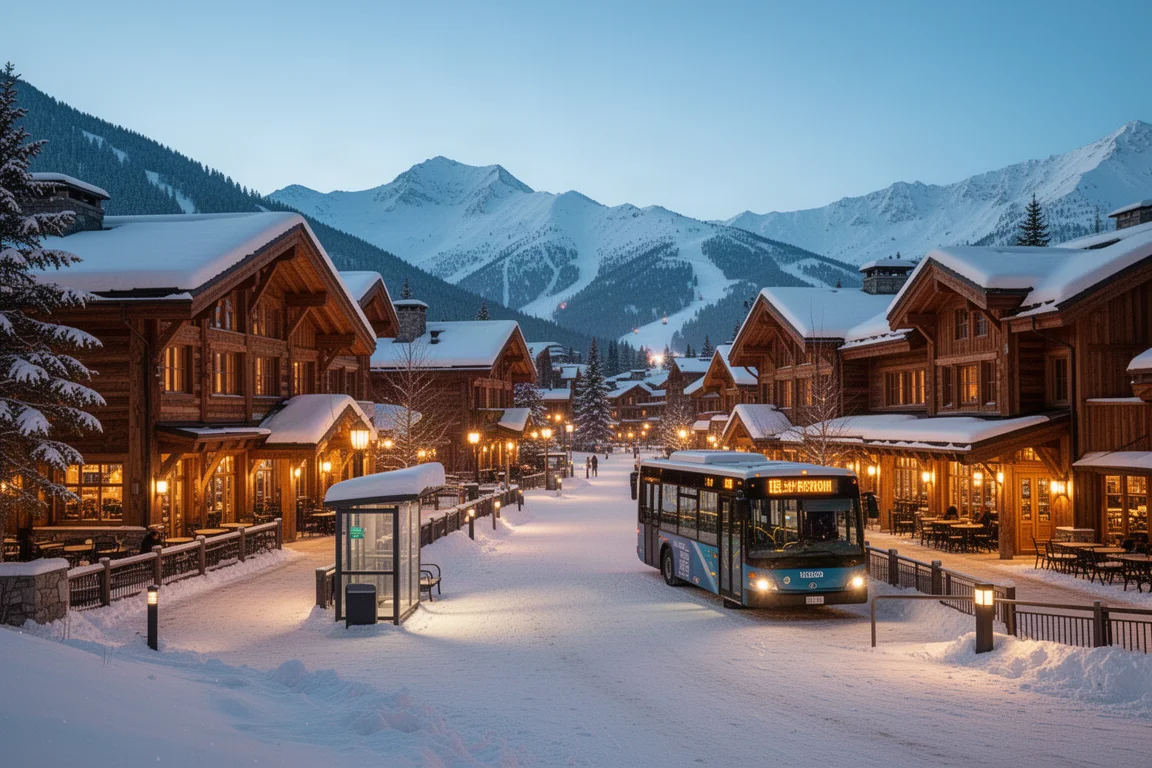
The resort sits roughly five hours south of Sydney and two and a half hours from Canberra. Driving is the most common option, with direct bus services from both cities. Two-wheel-drive vehicles must carry snow chains, and driving into the Kosciuszko National Park costs a 29 Australian dollar entry fee, while weekend town buses bypass the park fee at 20 Australian dollars round trip as of 2026. Access from Victoria is possible via a remote road with very few services, so fuel up. After-dark options include the village’s bars and live music, with Jindabyne offering a wider nightlife range.
Passes and Pricing
One-day lift tickets are extraordinarily expensive if booked close to the day of, though advance booking, especially off-peak weekdays, brings somewhat discounted rates. Thredbo is a member of the Ikon Pass with 7 days on the full pass and 5 days on the Ikon Base Pass, though the Base Pass is blacked out for two weeks in early and mid July. There is no Thredbo access on the Ikon Session Pass. Ikon access is weaker in raw days than Epic Pass access to Perisher, Falls Creek, and Hotham, which are unlimited on the highest tier, but Ikon passholders can use either a prior or upcoming North American season pass, a flexibility Epic does not offer. Note that passholders must stop at a ticket counter for a printed pass, as the physical Ikon card does not work with Thredbo’s readers.
Overall Rankings and Verdict
Scoring across ten categories, Thredbo lands a 3 for snow and a 3 for resiliency, a 6 for size, a 6 for terrain diversity, a 5 for challenge, a 7 for lifts, a 6 for crowd flow, an 8 for facilities, a 6 for navigation, and a 6 for mountain aesthetic, adding up to an overall score of 56. That makes it the top pick in Australia.
Buying Advice
Thredbo has the same snow problems as the rest of Australia’s mountains, but if you are considering a ski trip to Oceania, it is the mountain that holds up best against the commercial fields in nearby New Zealand thanks to its vertical drop, modern lift fleet, and decently sizable footprint. Book lift tickets well in advance, target off-peak weekdays if possible, and plan to spend most of your time on the upper mountain where snow quality is strongest. If you can use Ikon Pass days from a prior or upcoming North American season, that flexibility can soften the cost significantly.
Conclusion
Thredbo is not the most technical mountain and shares the weather challenges of the entire Australian ski scene. But for a well-rounded package, its terrain variety, modern infrastructure, and extensive on-mountain amenities make it a very compelling choice. If you want to ski or ride among Australia’s snow gums, or you happen to be in the area anyway, you are unlikely to find a better overall option.
Product link
View more details for Thredbo Ski Resort
This product is mentioned in the review. Check the specifications, options, and compatibility before buying.
View more details for Thredbo Ski ResortFurther reading
Related Reviews

Ski Resorts
Alyeska Resort Review: Alaska's Largest Ski Resort, Worth the Journey?
A deep look at Alyeska Resort: heavy snowfall, expert terrain, an Icon Pass connection, and the trade-offs of a near-sea-level mountain in the Last Frontier.

Ski Resorts
Bear Valley Ski Resort Review: Northern California's Quiet Sierra Alternative to Tahoe
A lesser-known Sierra resort with over 1,300 skiable acres, surprisingly strong expert terrain, and crowd levels Tahoe can only dream of. Here is what to know before you go.

Ski Resorts
Colorado Ski Resorts Ranked: The Best Destination Mountains for Overall Experience
A ranked guide to Colorado's destination ski resorts, covering terrain, snow, logistics, crowds, and cost so you can pick the right mountain for your trip.