Ski Resorts
Bear Valley Ski Resort Review: Northern California's Quiet Sierra Alternative to Tahoe
A lesser-known Sierra resort with over 1,300 skiable acres, surprisingly strong expert terrain, and crowd levels Tahoe can only dream of. Here is what to know before you go.

Introduction
When most people think about skiing in Northern California, Tahoe is the name that comes to mind. But the northern Sierra has plenty of mountains outside the Tahoe region, and some of them have ski resorts with a genuine identity of their own. Bear Valley, located off Highway 4 south of the Tahoe region, is one of them.
The question is whether this low-profile mountain holds its own against the behemoths of Tahoe, or whether it flies under the radar for a reason. Here is a full look at the mountain experience, the terrain, the lifts, and how Bear Valley stacks up in the overall rankings.
Mountain Overview and Size
The first thing to note about Bear Valley is its size. The resort offers just over 1,300 skiable acres and 1,900 feet of vertical descent, which is decent for a local ski resort, although a step below the biggest Tahoe destinations. There is a catch, though: over 40% of the resort’s terrain lacks direct lift service, so in practical terms the mountain is substantially smaller than its raw footprint suggests. Also, only advanced and expert guests can really use the full vertical drop, because the lift-served beginner and intermediate trails have a vertical descent of less than 1,000 feet, roughly half the advertised figure.
Despite those caveats, when the mountain is fully open there is more than enough to keep most guests busy for at least a few days. Bear Valley is divided into four major mountain areas, three of them lift served, each with a distinct character aimed at a different type of guest.
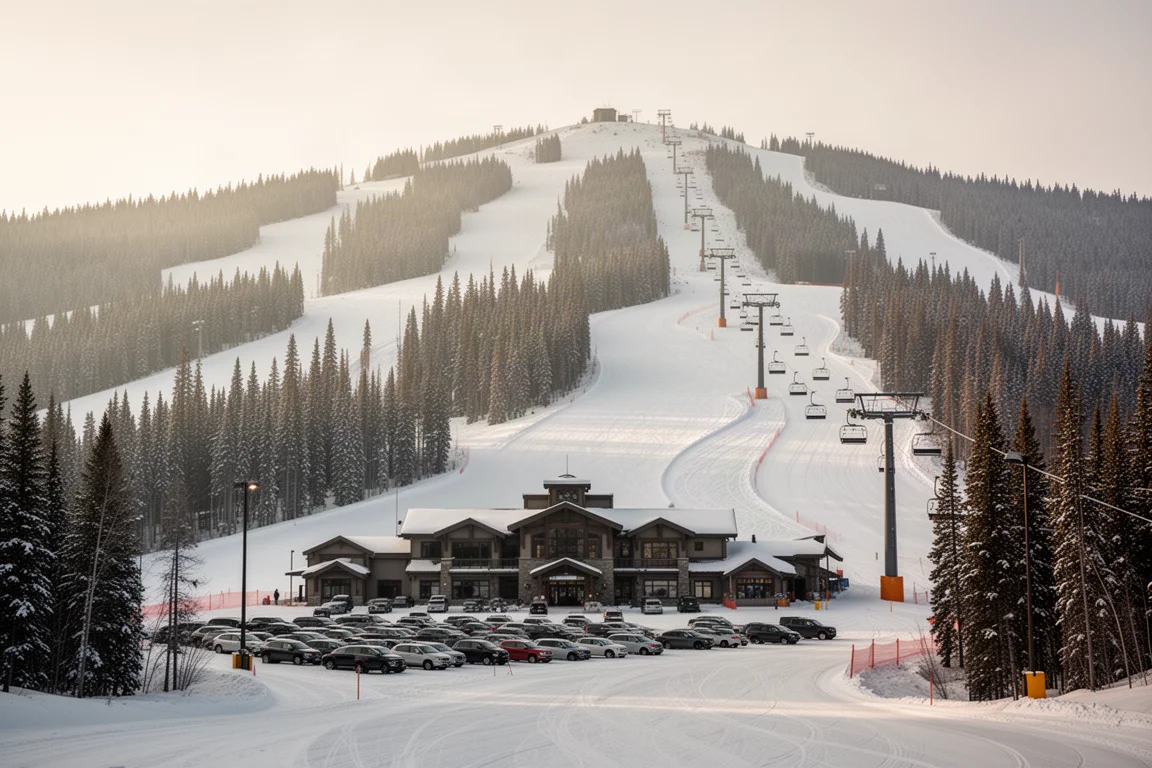
The front side is all guests see when they arrive, and at first glance it makes the resort look smaller than it really is. The main lodge and parking sit at the base of this area, which is actually well over halfway up the total vertical drop. Bear West sits far skier left and is mostly intermediate focused, while the Lower Mountain, made up of the two large bowls Snow Valley and Grizzly Bowl, is entirely advanced and expert oriented. The fourth area, the Village side, has no lifts at all.
Terrain Breakdown
The front side offers all of the resort’s beginner terrain, surrounded by a mix of shorter intermediate and advanced runs, with scattered cliffs and steep glades adding spice. Bear West has the longest groomers on the mountain plus intermediate glades and ungroomed trails; the lower section is relatively flat, but traversing is rarely required outside of powder days or spring conditions.
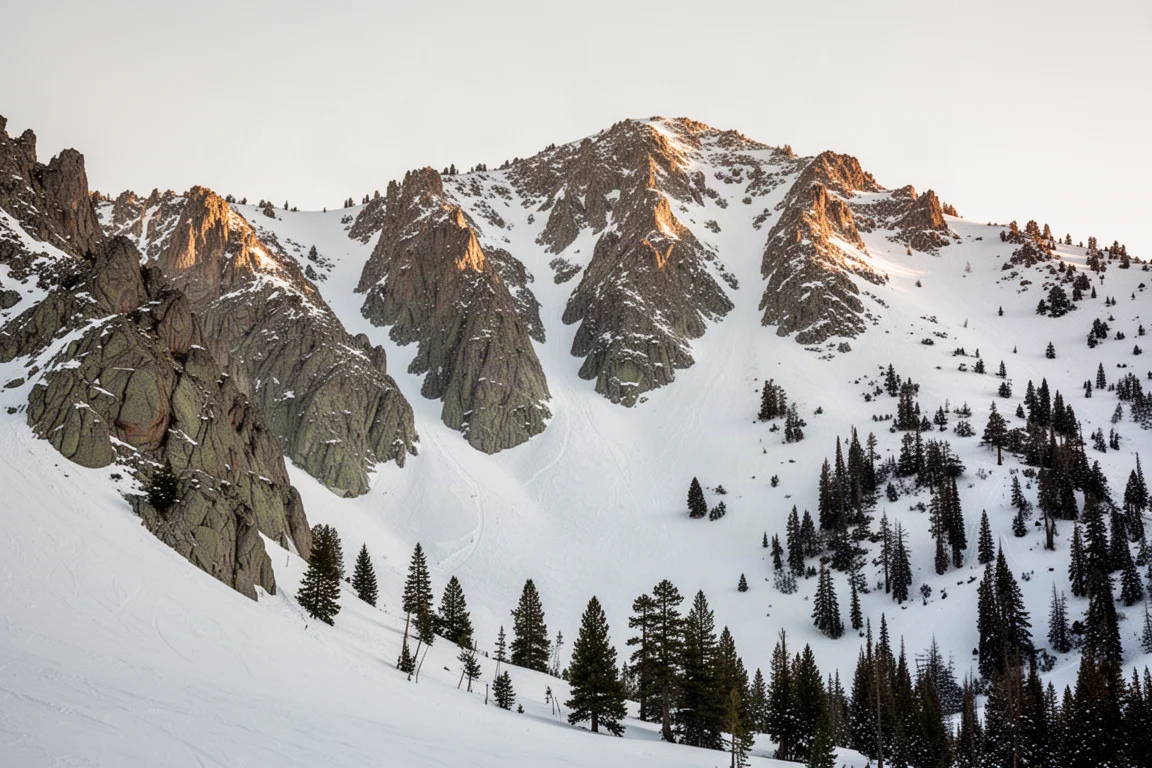
The Lower Mountain is where advanced and expert skiers will want to spend their time. Snow Valley and Grizzly Bowl total over 300 acres of advanced and expert terrain, with cliffs, ridgelines, chutes, and endurance runs. The main run down Snow Valley is sometimes groomed, but the rest of the Lower Mountain is over 1,100 vertical feet of ungroomed terrain. On the ratings side, Bear Valley is notably conservative: some of its single blacks would be marked as double blacks at many competing mountains, and West Ridge in Grizzly Bowl contains the mountain’s gnarliest terrain, with unmarked chutes and cliffs beyond the four double blacks shown on the trail map.
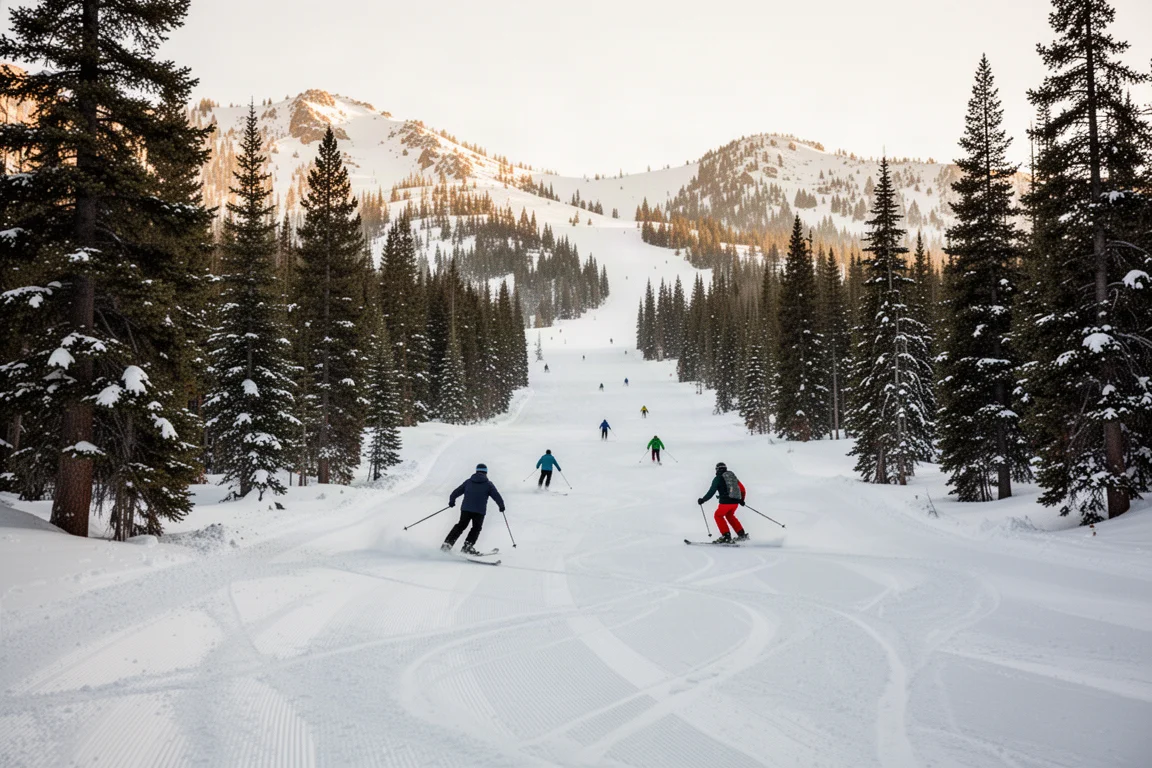
Intermediates are well served too. Bear West hosts the longest blue trails on the mountain, and the Koala chair offers a mix of groomed and ungroomed blues with varied pitches and glades. The Mokelumne Express has one main blue run back to the base, Mokelumne West, but it sees heavy traffic and has a fairly steep section that can be a choke point for lower-level intermediates. For adventurous intermediates who do not mind the bus ride back, the Village side offers two of the longest blue runs at the resort by a significant margin.
The Village side itself is Bear Valley’s most unique feature: a large, wide-open, southeast-facing slope with no lifts whatsoever. Guests who venture in must navigate uncut trees at the bottom, follow a flat road back to the village with extensive pushing involved, and catch a bus to return. It often feels like entering a backcountry zone, albeit one that is patrolled and maintained for avalanche safety. Very few guests ski it, and even experts are unlikely to lap it more than once or twice a day.
Beginner terrain is limited but thoughtfully arranged. All of the green trails sit in one pod right by the main lodge, with a clear progression: the Panda carpet is a tiny bunny hill, the Cub chair serves a mild consistent slope, and the adjacent Super Cub chair adds steeper sections and trees next to the main terrain park. There is enough here for first-timers to learn without lapping the same run too many times.
Freestyle riders get several terrain parks on the front side: the Cub Park offers small features for beginners, while the Rodeo Park, directly adjacent to the Super Cub chair, has larger jumps plus rails, boxes, and tubes.
Lifts and Crowds
Bear Valley’s lift network is its weakest point. Of the resort’s seven chairlifts, four have historically been old fixed-grip doubles that tend to sway and bounce. Two of those serve the beginner area, another fixed-grip triple has rarely run, and that leaves just two detachable high-speed lifts as the desirable rides. Those two are well placed, though: both run from the base of their respective mountain areas to the resort summit, so many guests can spend an entire day on just these two lifts. The base-area Mokelumne Express is a six-pack and on most days will be the lift visitors ride most frequently.
One frustration for advanced guests is that the Grizzly chair, the only lift serving the Lower Mountain, is an old fixed-grip double and does not reach every part of the area, so lapping a small selection of trails or traveling to Bear West or the Village side requires two lift rides.
Help is on the way for the 2024-25 season. The Wall chair is set to be replaced by a higher-capacity fixed-grip quad, the Cub chair is set to be replaced by the underused triple that currently extends further up the mountain, and the Super Cub chair is set to receive new chairs. After those upgrades, the Grizzly chair would be the only remaining old-style double at the resort.
The huge counterweight to all of this is crowds. Bear Valley often feels empty compared to Tahoe or other destination ski regions. The only areas likely to see any sort of lines are the bases of the two high-speed lifts, and even the Grizzly chair, the sole outlet for a large steep mountain area, rarely has lift lines at all. The slower lifts are far less of a problem here than they would be at better-known resorts. One exception: the mountain’s only lift-served lodge can be tough at lunchtime, and the lunch line may well be the longest queue of the day.
Snow, Reliability, and Views
Bear Valley’s snow experience is generally in line with what you would expect from a northern California resort, but it is a mixed bag. Thanks to its low crowds, the resort preserves snow better than many Tahoe competitors, and those who know where to look may find fresh powder even days after a storm. However, because of the mountain’s unique layout, conditions can vary drastically across areas: the front side and Bear West have favorable exposures and preserve snow well, the Lower Mountain can see rain in warmer storms, and the sunbaked southeast-facing Village side is the least reliable, often icy and slushy even when the rest of the resort is still powdery.
Snowfall totals are strong, at roughly 300 inches of average annual accumulation, though that tends to underperform the Tahoe mountains by around 10 to 20%. Bear Valley also sees the full range of Sierra weather patterns, from massive storms that shut the resort down to multi-week snow droughts and low-elevation rain. The front side and Bear West are reasonably reliable thanks to snowmaking and their higher elevations, but the Lower Mountain may not open at all until late in the season, and it can take days or even weeks after big storms for it to open. The resort changed ownership for the 2023-24 season, and the new owners have acknowledged the inconsistency, claiming that off-season upgrades will allow them to open and groom the Lower Mountain with a quarter of the snow currently required. If that holds, it would address the resort’s biggest weakness for advanced visitors.
Where Bear Valley genuinely stands out is scenery. The resort sits on the edge of a canyon lined with prominent mountains, including Mokelumne Peak and, further north, the backside of Kirkwood. From the upper ridgelines and the Village side, guests can see the Dells and other impressive peaks. The town near the mountain is tucked out of sight, giving the resort a very isolated feel, and the often sunny footprint makes for an impressive vibe for a mountain of this size.
Facilities and On-Site Lodging
Bear Valley has anything visitors might need, but it will not blow anyone away. The main base lodge has a reasonably large cafeteria, several rooms of seating, a small shop, and two bars, though the building itself is unremarkable and lacks capacity during peak times. At the summit there is a small food shack that sometimes serves lunch or drinks, with no option to actually enter the building, and on spring weekends the resort sometimes offers barbecue lunches outside the main lodge. Another lodge in Bear Valley Village offers more food and shopping options, but only guests who venture into the Village side are likely to see it.
Getting there is comparable to most Tahoe competitors: about three and a half hours from San Francisco, two and a half hours from Sacramento, and two hours from Stockton. Highway 4 is reasonably reliable in all but the very largest storms, but it closes just east of the resort during winter, so visitors coming from Nevada have no easy access. Traffic is rarely a major issue outside major holidays, and the parking situation is forgiving: the lot is essentially the widened-out terminus of Highway 207 and can extend as far as crowds demand, with the majority of parking always free. On weekends and peak days a preferred parking system applies to the spots closest to the lodge.
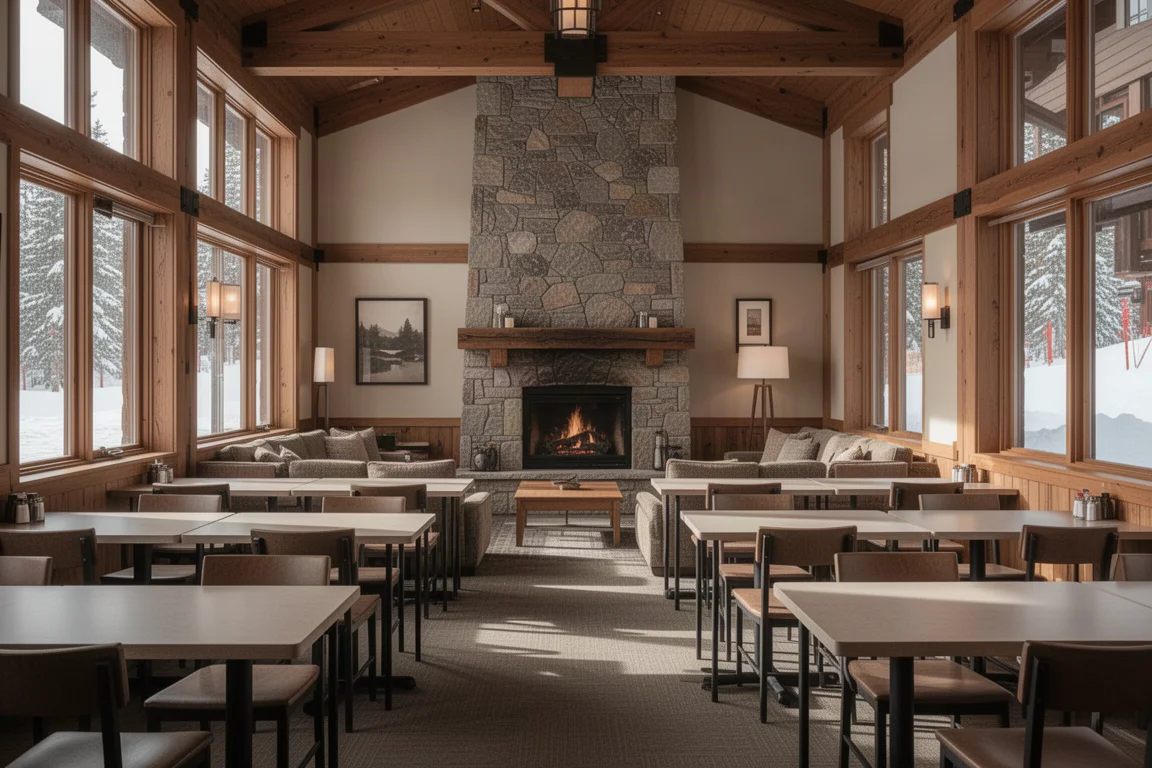
For lodging, the closest option is Bear Valley Village, from which a shuttle ride is needed to reach the ski area. The Bear Valley Lodge is the main option, and while it will not impress anyone accustomed to slopeside lodging at destination resorts, it provides a comfy, laid-back stay with a large stone fireplace lounge to relax in after a long day. Because of the lack of lifts on the Village side, village accommodations are technically ski-in but not ski-out. The apres-ski scene is best described as relaxed: several bars in the main lodge and a few more in the village, with a fuller restaurant and bar scene requiring a drive down the mountain.
Pricing and Season Passes
Lift ticket prices undercut many of the more well-known California resorts but are still not cheap, with adult lift tickets costing $135 on weekdays and $155 on weekends and holidays. Bear Valley is on neither Epic nor Ikon, but it is on the Cali pass, a season pass that also grants unrestricted access to Dodge Ridge, China Peak, and Mountain High, plus three days each at 19 resorts on the Powder Alliance partnership. If you can make proper use of the Cali pass, it is probably the best-value way to access the resort.
Rankings and Final Verdict
Bear Valley scores a 7 for snow, a 4 for resiliency (its Lower Mountain areas have historically suffered from inconsistent opening schedules), a 6 for size (a claimed 1,680-acre footprint with 1,329 skiable acres by measurement), a 6 for terrain diversity, an 8 for challenge, a 4 for lifts, an 8 for crowd flow, a 5 for facilities, a 7 for navigation, and an 8 for mountain aesthetic. Those categories add up to an overall score of 63, placing Bear Valley seventh among California and Tahoe resorts as of mid-2024.
For a mountain that has flown so far under the radar, Bear Valley puts up a surprisingly strong fight against locally operated Tahoe resorts such as Mount Rose and Sugar Bowl. Its diverse terrain, strong natural snowfall, family-friendly atmosphere, and distinctive isolated setting make it a compelling option for anyone looking to avoid the hassle of better-known destinations. Outdated lift infrastructure and the large chunk of terrain without lift service hold it back, but with the new ownership addressing resiliency and the lift network over the next season, this cult favorite is worth watching. If you want a lower-key Sierra alternative with real expert terrain and no lift lines, Bear Valley deserves a spot on your list.
Conclusion
Bear Valley is not trying to compete with Tahoe’s giants on scale or luxury, and that is exactly its appeal. The terrain is diverse, the challenge for advanced skiers is real, the crowds are minimal, and the views are outstanding. Its weaknesses, from aging lifts to inconsistent Lower Mountain openings, are being actively addressed by new ownership. For skiers and riders willing to trade convenience for a quiet, characterful mountain, Bear Valley is an easy recommendation.
Product link
View more details for Bear Valley Ski Resort
This product is mentioned in the review. Check the specifications, options, and compatibility before buying.
View more details for Bear Valley Ski ResortFurther reading
Related Reviews

Ski Resorts
Alyeska Resort Review: Alaska's Largest Ski Resort, Worth the Journey?
A deep look at Alyeska Resort: heavy snowfall, expert terrain, an Icon Pass connection, and the trade-offs of a near-sea-level mountain in the Last Frontier.

Ski Resorts
Colorado Ski Resorts Ranked: The Best Destination Mountains for Overall Experience
A ranked guide to Colorado's destination ski resorts, covering terrain, snow, logistics, crowds, and cost so you can pick the right mountain for your trip.
Ski Resorts
Best Lake Tahoe Ski Resorts for Experts: A Ranked Guide
A ranked look at nine Lake Tahoe ski resorts by how well they serve expert skiers and riders, from wide gladed tree runs to cornice-crowned chutes.