Turntables
Thorens TD 124 DD and TD 404 DD: Direct-Drive Turntables and Cartridges Compared
Two Thorens direct-drive turntables and the two cartridges that define their sound, compared on price, character, and day-to-day usability.
Introduction
Thorens was founded in Switzerland in 1883 and began by building musical boxes before developing one of the first electric gramophone motors and a magnetic pickup in 1928. Its audiophile reputation was sealed in 1957, when the TD 124 idler-drive turntable established broadcast-quality precision as the benchmark to beat.
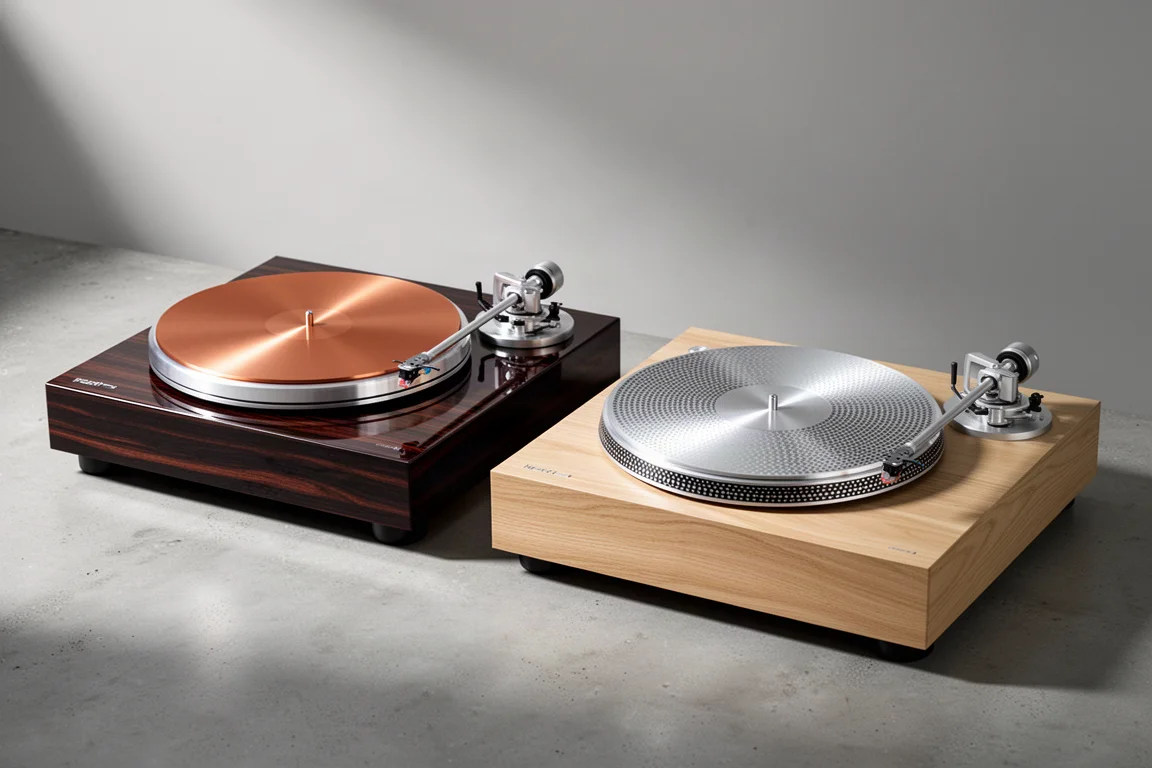
When Gunter Kürten took stewardship of Thorens in 2020, he brought back a re-engineered TD 124 with a clear design brief: keep the classic mid-century look and fix the technical limitations of the 1950s original. That project has since grown into a small family of direct-drive turntables and cartridges, and this guide covers the four pieces that matter most in that line-up: the TD 124 DD 140th Anniversary Edition, the TD 404 DD, the Ortofon SPU 124, and the Thorens TAS 1600.
The two turntables share a motor and a design language, but they answer different questions. One chases the best possible sound. The other chases the best possible ownership experience.
What Sets the TD 124 DD and TD 404 DD Apart
Both turntables are direct drive, and both use the same ultra-quiet motor. Almost everything else diverges.
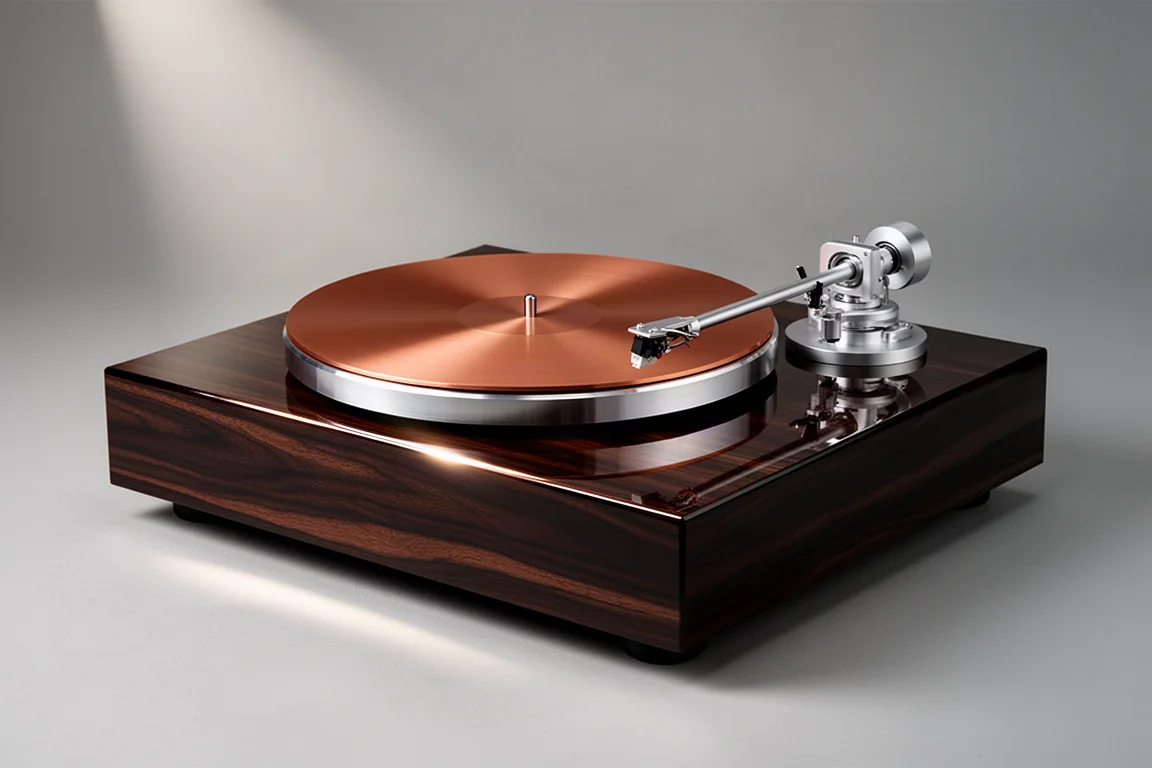
The TD 124 DD replaces the original idler drive with that silent direct-drive motor and swaps the vintage mechanical clutch for an electronic brake. It adds an electric lift to the updated TP 124 tonearm for safer cueing, an external linear power supply, and balanced XLR outputs. It sells for 8,000 EUR in the EU and roughly 12,000 USD in the USA.
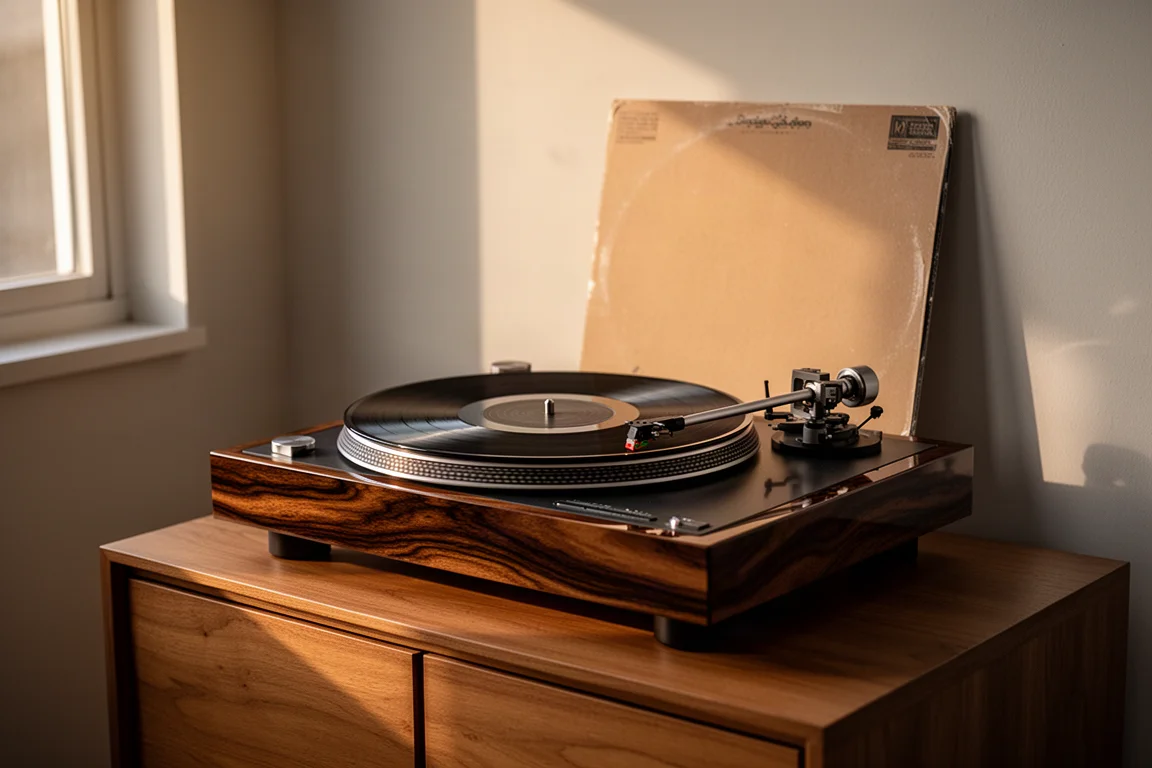
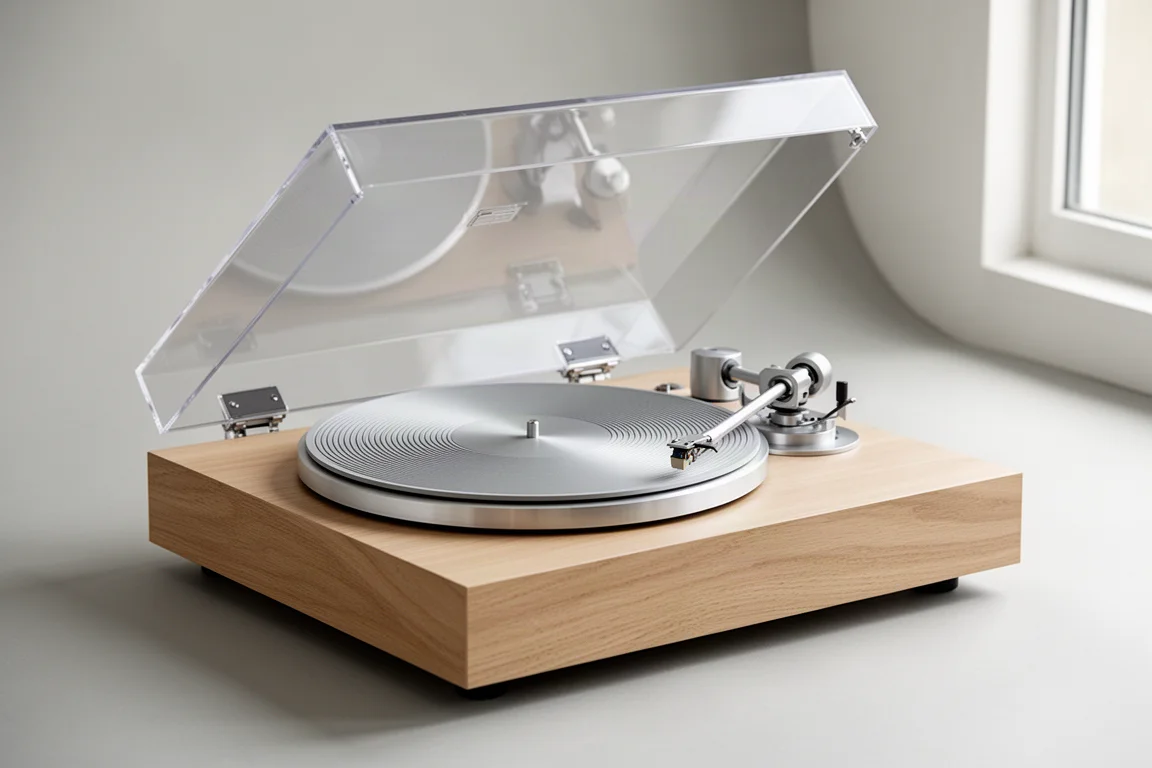
The TD 404 DD, introduced in early 2026, keeps the same motor but wraps it in a more livable package. Its TP 160 tonearm is J-shaped and rides on a knife-edge bearing, and its plinth wears a matte wood veneer rather than a gloss finish. It sells for 4,500 EUR in Europe, and a linear power supply adds 500 EUR.
The practical differences are worth spelling out early, because they shape everything that follows. The TD 404 DD ships with a dust cover, a completely silent electronic tonearm lift operated by a button, and an automatic stop and lift at the end of a side. When the stylus reaches the run-out groove, the platter stops spinning and the arm rises. The TD 124 does none of this.
Thorens TD 124 DD 140th Anniversary Edition
The 2023 140th Anniversary Edition pushed the TD 124 DD further still. Thorens added a 5 mm layer of solid copper to the top of the aluminium platter for additional mass and resonance suppression, fitted high-purity silver cables inside the TP 124 tonearm, and finished the plinth skirting and armboard in a high-gloss real wood veneer instead of the standard finish. The edition also shipped with a special Ortofon SPU 124 cartridge in a vintage-style bakelite housing.
It sold for 12,000 EUR in Europe, roughly 13,000 to 14,000 USD, and it was limited to 140 units. It has long since sold out.
Sound is where this turntable earns its keep. The low end is very weighty, and dub techno lands with a dynamic thrust that is unusual for vinyl playback. The midrange carries a natural body that cheaper turntables tend to thin out and cool, so a record like Leonard Cohen’s The Future lets you hear the space around the voice as clearly as the voice itself. With the Ortofon SPU fitted, the upper treble rolls off slightly, which keeps denser electronic material from slicing too hard into the room, and ambient records such as The Orb’s Moonbuilding 2703 AD sound expansive and unhurried.
Ownership asks for some forgiveness in return. There is no dust cover in the box, so one has to be bought separately from a third-party supplier, which turns routine maintenance into careful dusting of the platter, plinth, and tonearm. The motorised tonearm lift is a convenience feature that runs long enough to disturb the opening seconds of quieter music, which makes lowering the needle by hand the more reliable habit. Some units ship with the tonearm clip set too far forward at the factory, which can stop the arm from clearing the clip and reaching the running groove; moving the clip outward fixes it but leaves it less secure. Some examples also show cosmetic imperfections on the top surface of the copper plate, and there is no remedy for those.
Thorens TD 404 DD
The TD 404 DD is the easier turntable to live with, and it is not subtle about it. It comes with a dust cover, a completely silent electronic tonearm lift operated by a button, and automatic stop and lift at the end of a side. Leaving the room while a record plays stops being an act of faith.
The platter is aluminium and is described by Thorens as heavily damped, with a rubberised surface pattern that looks excellent. The matte wood veneer on the plinth, in a light oak tone, reads as slightly more contemporary than the high-gloss anniversary finish.
Paired with Thorens’ own TAS 1600 cartridge, the TD 404 DD produces a sound that is cleaner and more precise than the TD 124 DD and its Ortofon SPU. Where the 124 gives low-end texture real physical heft, the 404 renders it with greater surface texture but less mass. Sub-bass pressure gives up a little ground in exchange for noticeably better soundstage organisation. Dense remixes sound tidier, if slightly less atmospheric, and guitar-driven records gain crunch and immediacy at the cost of a hint of midrange weight.
One caveat matters here. The two turntables were compared with different cartridges fitted, so the comparison is not strictly like for like. Treat the tonal differences as a description of each complete setup rather than a verdict on the decks alone.
Ortofon SPU 124
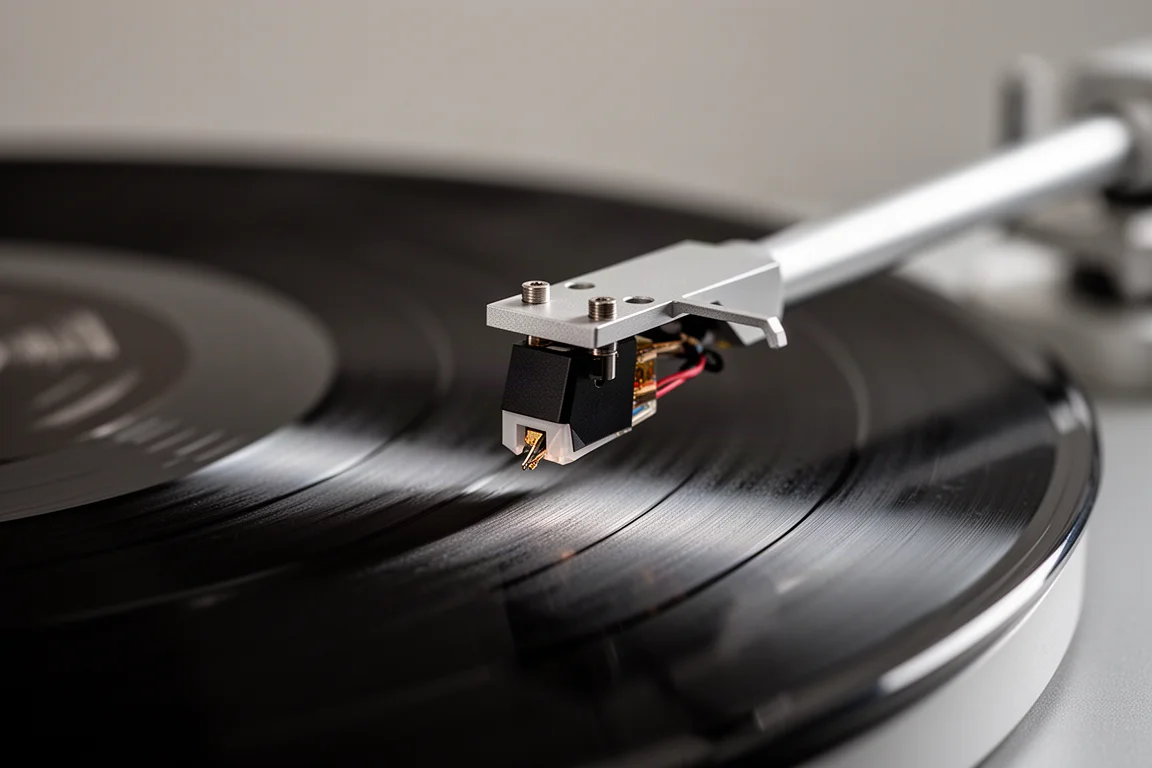
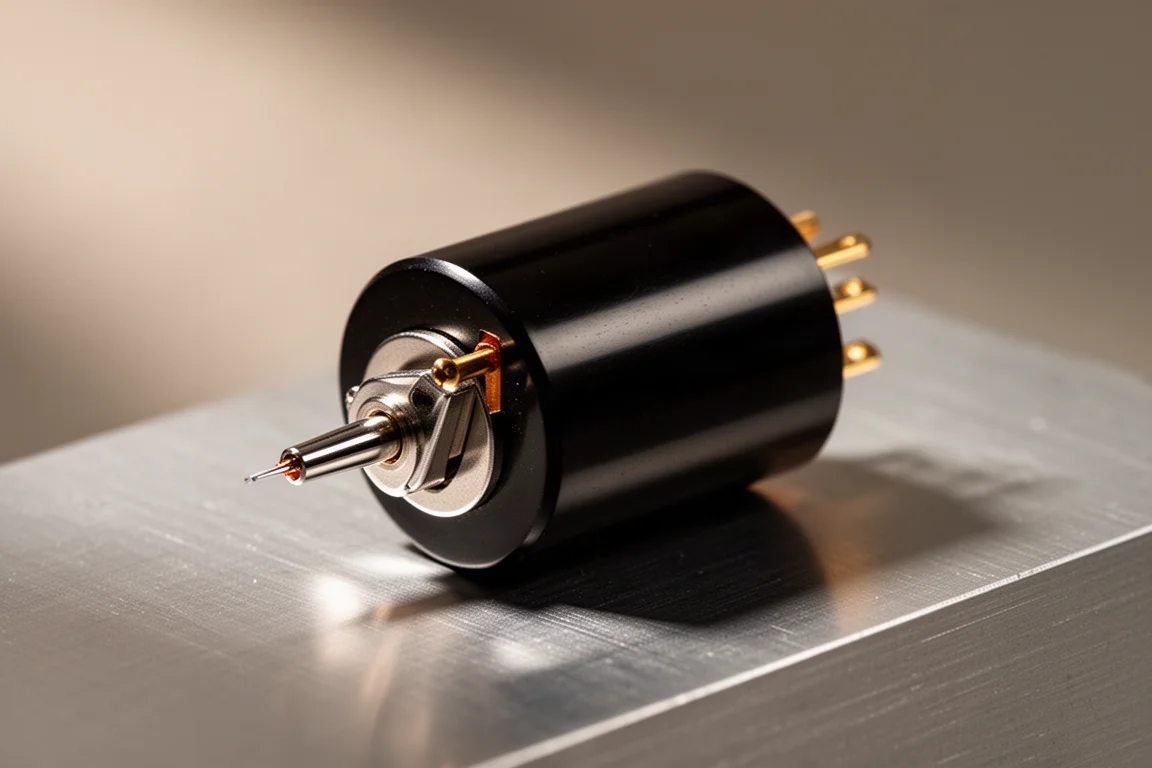
The Ortofon SPU 124 is the cartridge that came with the 140th Anniversary Edition, housed in a vintage-style bakelite shell. It is central to that turntable’s character rather than an accessory bolted on at the end of the build.
Its contribution is audible across the range. The low end carries real weight, the midrange keeps a natural body that flatters voices and acoustic instruments, and the upper treble rolls off slightly, which softens the leading edges of dense electronic productions and keeps them from cutting too sharply into a room.
That roll-off is a taste decision rather than a fault. Listeners who want maximum bite and air will hear the difference immediately, while listeners who prioritise body and long listening sessions will find it persuasive. The cartridge is specific to the TD 124 line: it is not offered for the TD 404 DD.
Thorens TAS 1600
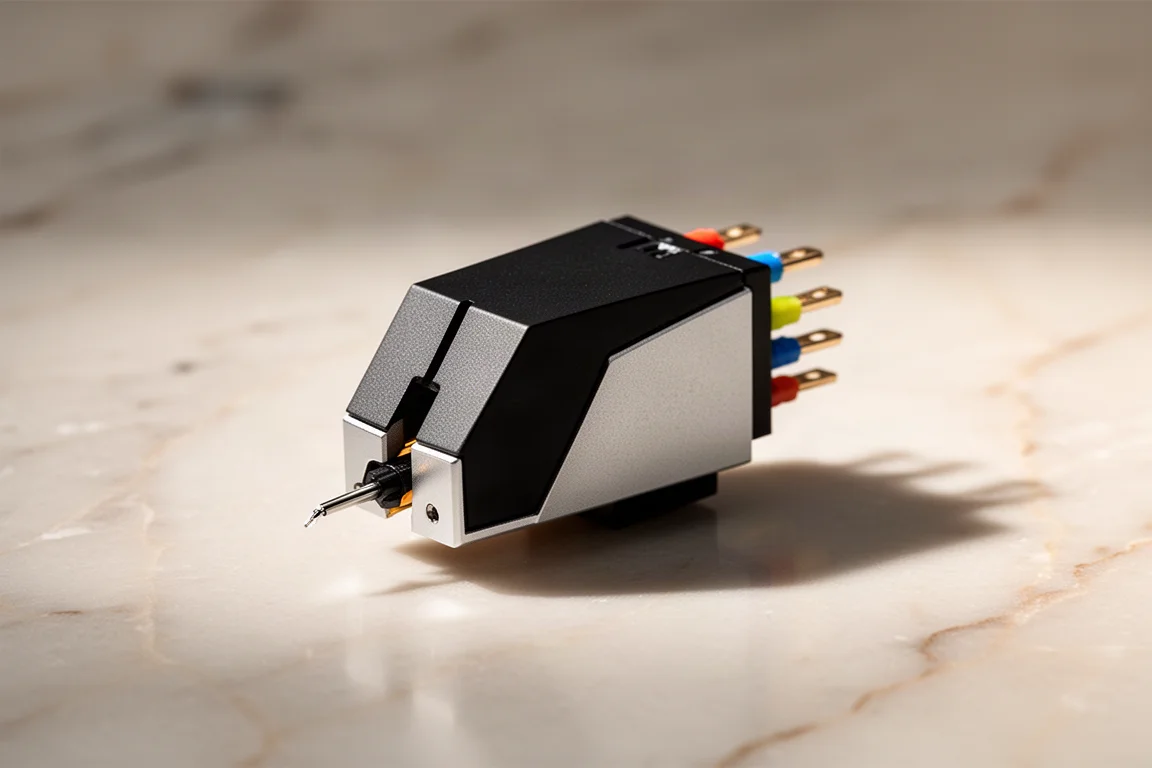
The Thorens TAS 1600 is the company’s own contemporary cartridge, and it is the natural partner for the TD 404 DD. Adding it to the turntable costs 1,200 EUR.
Where the Ortofon SPU 124 leans on mass and body, the TAS 1600 leans on precision. The TD 404 DD and TAS 1600 combination renders low-frequency information with more surface texture and less weight, organises the soundstage more cleanly, and gives guitar records a sharper, more immediate edge. It trades a little atmosphere for tidiness, and a little midrange weight for clarity.
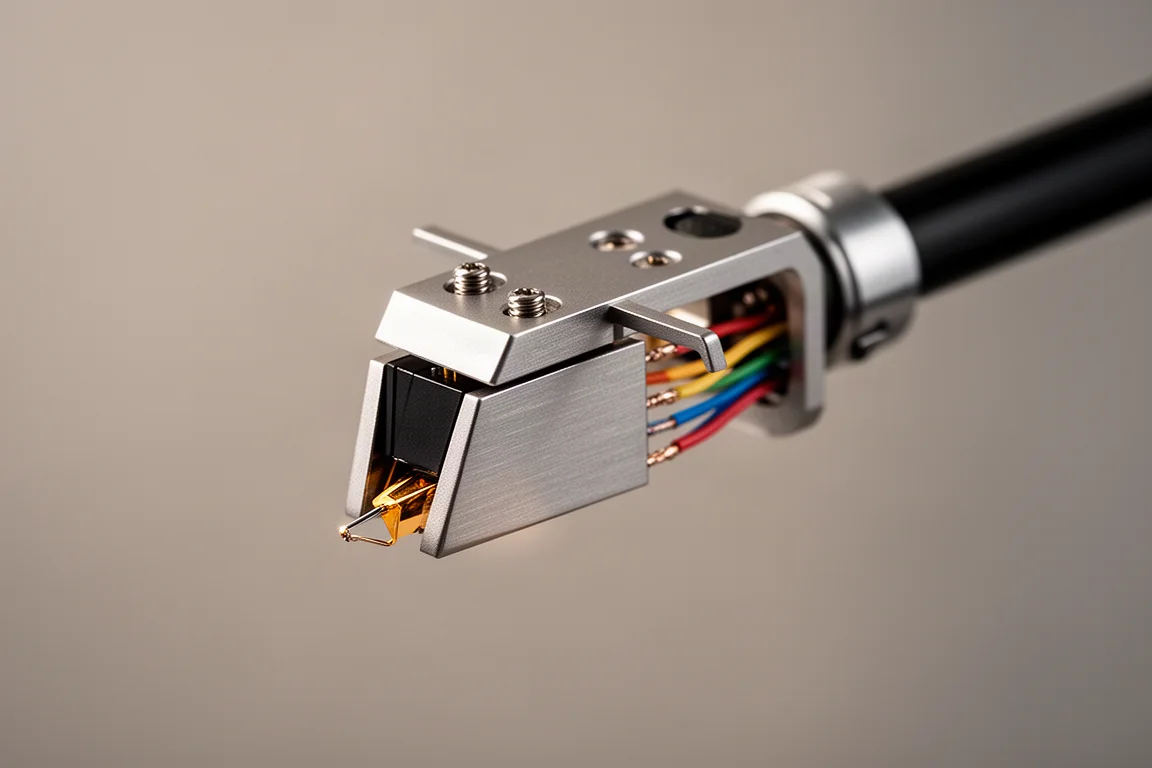
That trade-off is the whole story of this pairing, and it is worth being direct about it. If you want the biggest, heaviest low end available in this family, the SPU and the TD 124 remain the reference. If you want a cleaner, more organised presentation that stays easy to follow across long sessions, the TAS 1600 delivers it.
Living With a High-End Turntable Day to Day
Specifications get a turntable onto a shortlist. Ergonomics decide whether it gets used.
The TD 124 DD makes you work for its sound. Its electronic brake is genuinely useful when flipping a record: push the switch, the platter stops, flip the record, pull the switch, and the platter spins again. But the motorised tonearm lift is loud enough that it is better treated as a redundant feature, and the missing dust cover turns routine upkeep into a careful ritual.
The TD 404 DD removes almost all of that friction. A silent lift, an automatic stop at the end of a side, and a dust cover that is simply there mean fewer reasons to hesitate before putting a record on. There are no prizes for doing things the hard way, and a turntable that is easy to operate gets played more often.
The honest summary is that the two decks ask different things of their owners. One asks for patience and careful handling in exchange for the best sound in the range. The other asks for very little and still sounds excellent.
Buying Advice
The numbers frame the decision clearly. A TD 404 DD with the TAS 1600 cartridge and the linear power supply comes in at just over half of the 140th Anniversary Edition’s original asking price, and the 404 brings more convenience at the same time.
The Anniversary Edition is effectively a closed question for most buyers. It was limited to 140 units and has sold out, so the realistic choice today sits between the TD 404 DD and the standard TD 124 DD, which remains in the line-up at 8,000 EUR in the EU without the anniversary upgrades. That standard model keeps the classic look, the electronic brake, the TP 124 tonearm, and the external power supply, but not the copper platter layer, the silver internal cabling, the high-gloss veneer finish, or the SPU cartridge.
If the goal is the best possible sound and you accept the operational compromises that come with it, the TD 124 DD family is the destination. If the goal is a turntable you will actually use every day, the TD 404 DD is the more sensible purchase, and its technical architecture supports later cartridge changes if you want to chase a warmer, heavier presentation over time.
Conclusion
Two direct-drive turntables from the same workshop, separated by roughly a factor of two in price and by a much wider gap in day-to-day convenience. The TD 124 DD 140th Anniversary Edition represents the sound-quality ceiling of the range, with a weighty low end and a natural midrange that its sibling cannot quite match. The TD 404 DD gives up a little mass and atmosphere in exchange for a silent lift, an automatic stop, a dust cover, and a lower price.
Match the purchase to how you listen. Long, uninterrupted sessions with a cartridge that favours body point toward the TD 124. Regular use, shared rooms, and a preference for precise, organised sound point toward the TD 404 DD and the TAS 1600.
Further reading
Related Reviews
Turntables
Best Turntables 2026: Seven Standout Picks From Entry Level to Premium
A practical roundup of seven turntables worth considering, from a US-made budget deck to small-batch premium models with a clear upgrade path.
Turntables
Best Turntables Under $1,000: Five Fully Manual Picks Worth Considering
Five fully manual turntables under $1,000, compared on build quality, cartridges, upgrade potential, and the character of sound each one brings to a system.
Turntables
Best Turntables Under $2,000: Six Vinyl Decks Worth Building a System Around
Six turntables under $2,000, from a value-focused belt-drive deck to a fully balanced design, with the strengths and trade-offs that matter before you buy.