Sleeping Pads
Therm-a-Rest Military Base Camp Review: Nearly the Same Pad for Much Less
A self-inflating sleeping pad built to a military specification, with a nylon shell, a lighter weight, and a price that undercuts the civilian Therm-a-Rest Base Camp by roughly half.
Introduction
Therm-a-Rest has spent decades refining the self-inflating sleeping pad, and the Base Camp is one of the longest-running designs in that line. Less widely known is that the same company also builds gear under military contracts, and one of those products is a sleeping pad that is, for most practical purposes, the Base Camp with a different specification sheet.
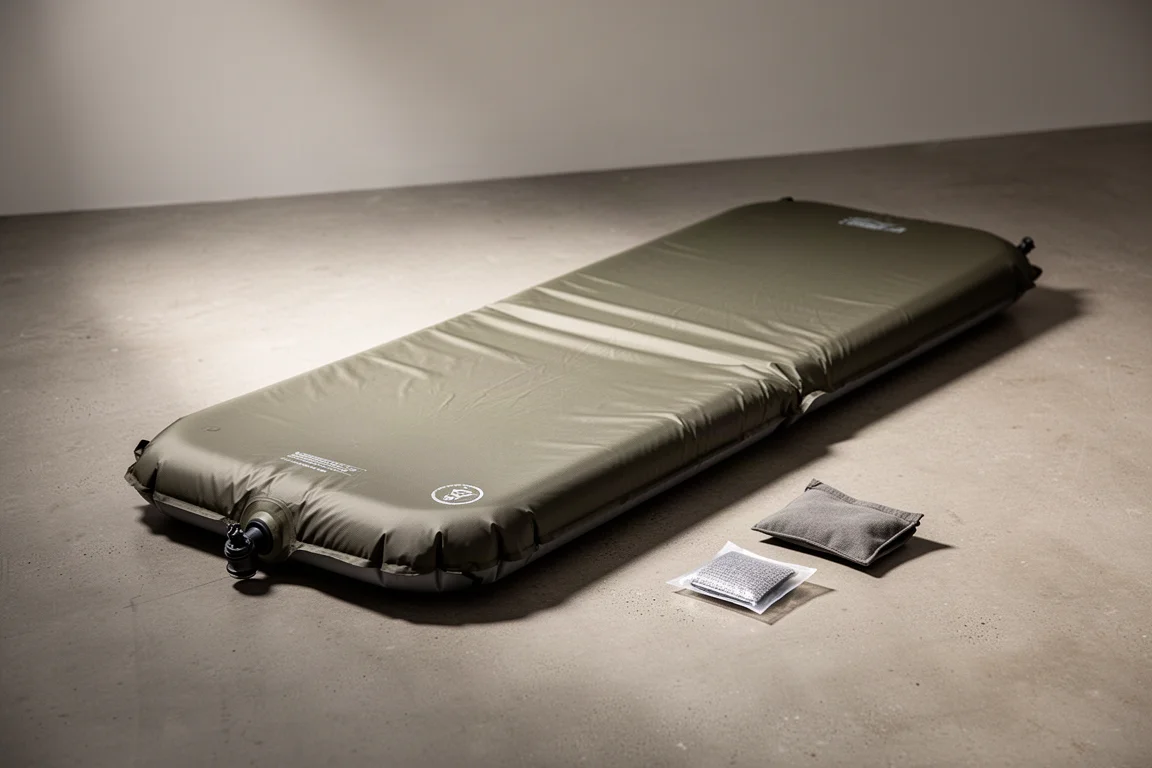
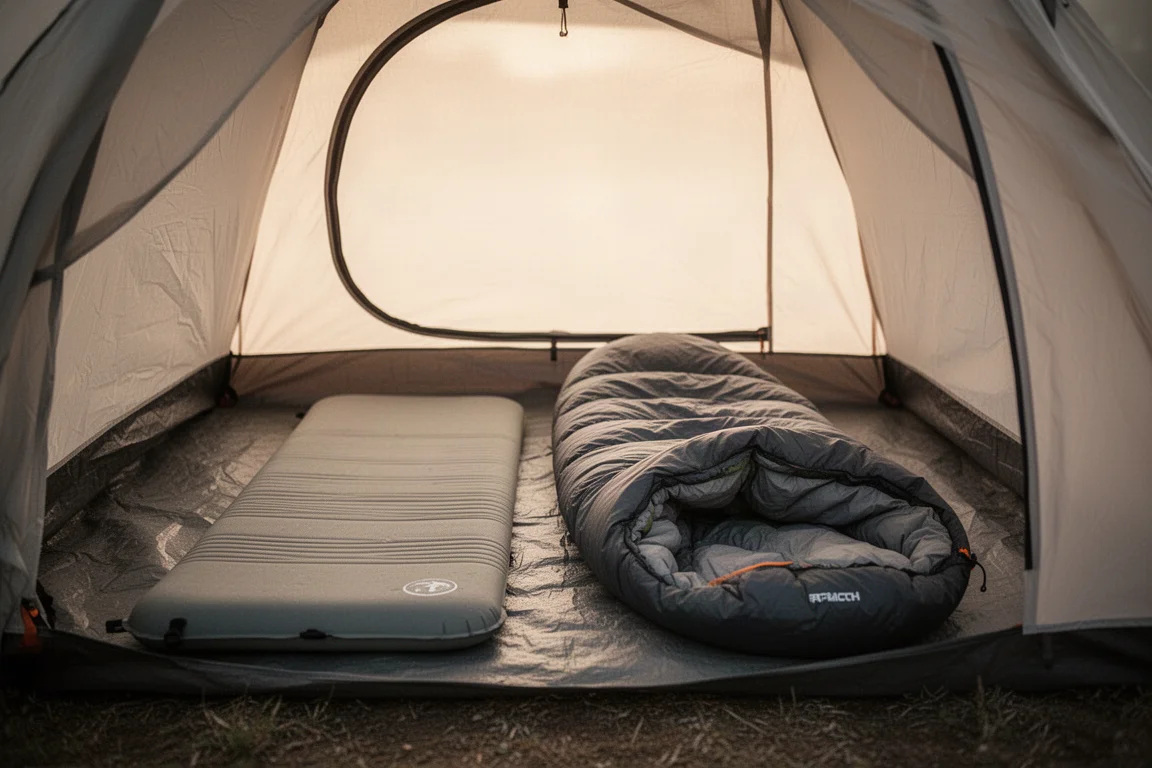
The military version is a self-inflating mattress with a nylon shell, a polyurethane foam core, and the same valve as the civilian model. It measures 72 inches long and 20 inches wide, and it sells new for around $60, against roughly $115 for the regular-size civilian Base Camp.
That price gap is the headline, but it is not the whole story. The two pads differ in shell material, thickness, weight, and insulation rating, and those differences matter depending on where and how you sleep.
Who This Sleeping Pad Is For
This is a sensible choice for three-season campers, backpackers, hunters, and anyone who wants a durable self-inflating pad without paying civilian retail. At 1.8 lb it is light enough to carry on foot, and the 72 by 20 inch footprint is a full-length, full-width pad rather than a minimalist torso-length design.
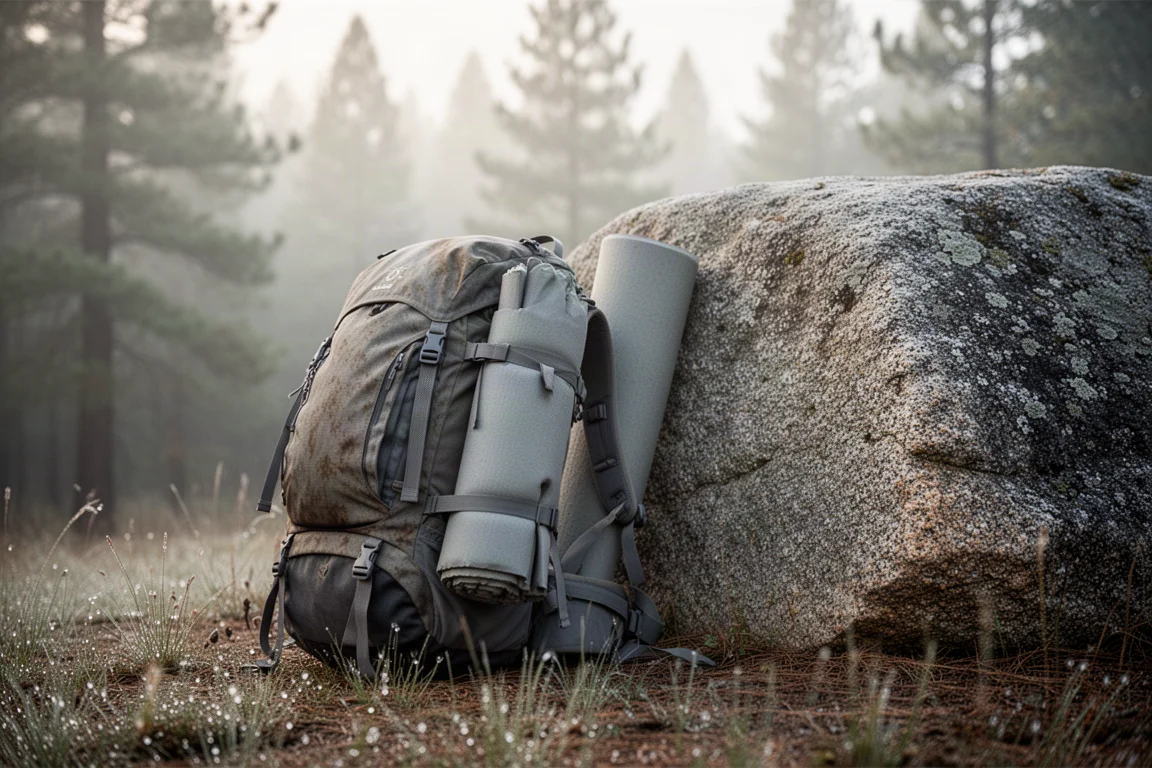
It also works well as a second pad: a spare for guests, a loaner for a partner, or a mattress that lives permanently in a vehicle or a base camp kit. Because it comes in a single size, taller or broader sleepers should check the dimensions against how they normally sleep before committing.
What Comes in the Box and How It Sets Up
The pad arrives with a repair kit, and the included paperwork mirrors what ships with civilian Therm-a-Rest pads. Setup is the familiar self-inflating routine: open the valve, let the foam core draw air in, and top it off with a few breaths if you want a firmer feel. A pad that has been rolled and stored for a long time benefits from that helping hand, since the foam takes a while to recover its full loft.
Rolled up, the military pad measures about 20 inches long and roughly 5.5 inches wide, the same packed footprint as the civilian version.
Main Strengths: Durable Nylon Shell and Lower Weight
The most significant material difference is the shell. The civilian Base Camp uses polyester, while the military pad uses nylon. Nylon is the stronger and more abrasion-resistant of the two, and it is also lighter, which is why the military version weighs 1.8 lb against 2.5 lb for the civilian pad despite covering the same footprint.
That combination is unusual. Military specification gear often trades weight for durability, and here the durability and the weight both move in the buyer’s favor.
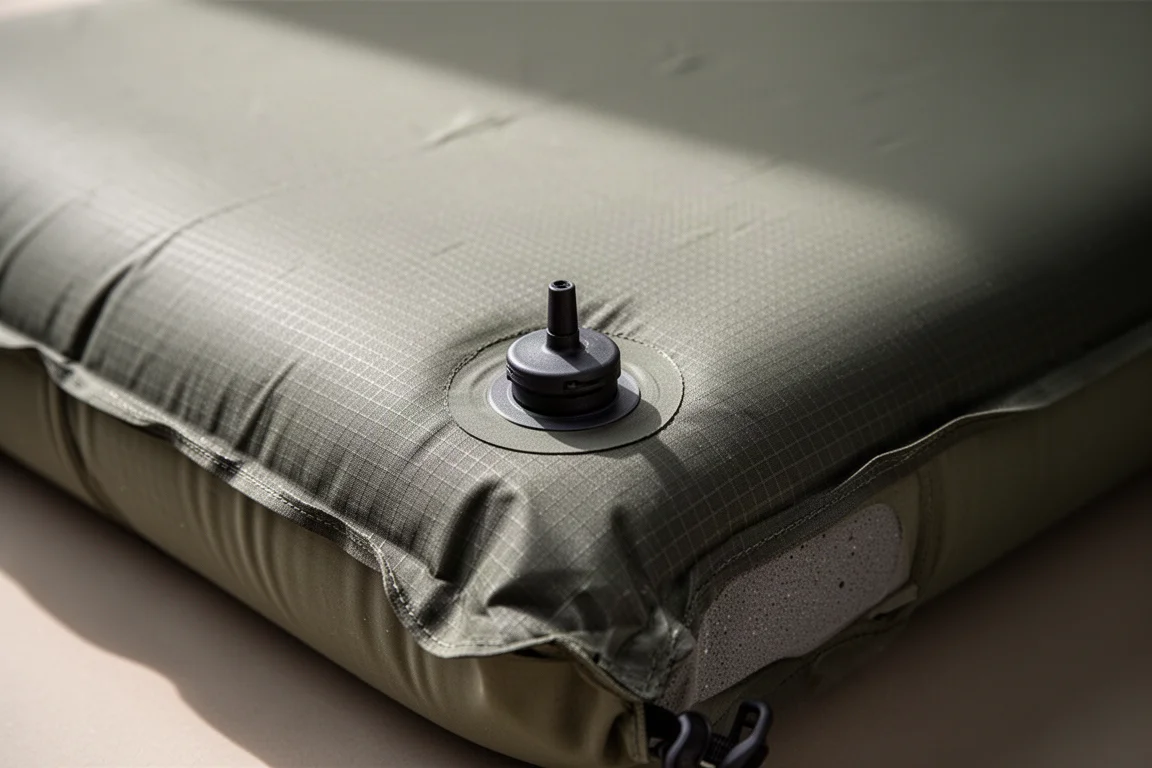
Both pads share a polyurethane foam core, both are self-inflating, and both use the same valve, so the day-to-day experience of inflating, adjusting, and deflating them is essentially identical.
Comfort and Real-World Feel
The military pad is 1.5 inches thick where the civilian Base Camp is 2 inches. In use, that reads as a firm, supportive surface rather than a plush one. It feels much like other Therm-a-Rest self-inflating pads, and it is comfortable on both the back and the side, though it is noticeably firmer than a three-inch air mattress.
The insulation rating is the other difference. The military pad carries an R-value of 3, while the civilian Base Camp is rated at 6. In the real world, most sleepers would struggle to tell an R-value of 3 from an R-value of 6, particularly when paired with a warm, well-insulated sleep system. The gap becomes more relevant in genuinely cold conditions or for anyone who sleeps cold.
Why the Military Version Costs Less Than the Civilian Base Camp
Therm-a-Rest’s parent company operates as a military contractor for the United States military, and sleeping pads are one of the products it supplies. That contract production, along with surplus channels, is why the same basic design can reach buyers at roughly half the civilian retail price.
Color is part of what you get from that channel. Gray is the most common finish, green turns up regularly, and a coyote brown version exists but is genuinely rare and hard to find.
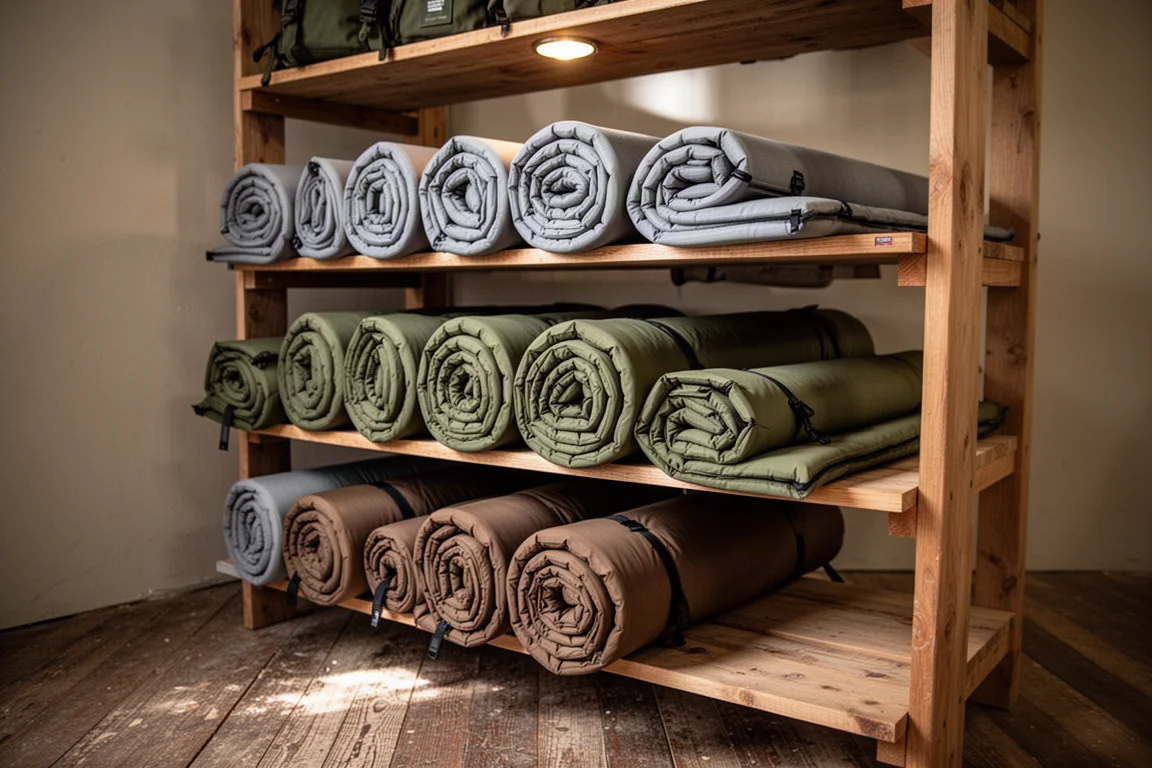
The savings can go much further if you are open to used gear. Surplus pads sometimes sell for under $10, which is remarkable for a full-length self-inflating mattress. The catch is condition, and it is a real one.
Things to Consider Before Buying
Start with thickness and insulation. At 1.5 inches and an R-value of 3, this pad is a three-season option for most people. Anyone camping in shoulder-season cold, sleeping on snow, or running cold at night will get more from the thicker, warmer civilian Base Camp.
Size is the second consideration. The military pad comes in one size only, while the civilian version is offered in regular, large, and extra large. If you are tall, broad-shouldered, or simply prefer more room, the civilian lineup gives you options this pad does not.
Third, availability and color vary by seller, and surplus stock moves in batches. If a particular finish matters to you, it may take patience to find it.
Finally, if you buy used, inspect carefully. Check for punctures, confirm the pad holds air, and ask questions before committing. Repairing a pad yourself is possible, but it is a caveat that comes with used military surplus in general, and it is worth factoring into the decision.
Buying Advice
New, the military pad is the straightforward value pick. At around $60 it delivers the same foam, the same valve, and the same packed size as the civilian Base Camp, with a tougher nylon shell and roughly 0.7 lb less weight to carry. For three-season use, that is a lot of pad for the money.
If you sleep cold, want a thicker surface, or need a specific size, the civilian Base Camp at about $115 remains the more capable pad, and its R-value of 6 is the main reason to pay more. For used surplus under $10, treat it as a project purchase: worth it if you can verify condition, less so if you cannot.
Conclusion
The military version of the Base Camp is one of the better-kept value secrets in camping gear. It is stronger, lighter, and roughly half the price of the pad it is based on, and the differences that remain, thinner foam and a lower insulation rating, will not matter to most three-season campers. If you want maximum insulation and more size choices, the civilian Base Camp earns its price. If you want a durable self-inflating pad without the markup, this is the one to look at.
Product link
View more details for Therm-a-Rest Military Base Camp
This product is mentioned in the review. Check the specifications, options, and compatibility before buying.
View more details for Therm-a-Rest Military Base CampFurther reading
Related Reviews
Sleeping Pads
Best Backpacking Sleeping Pads 2026: Nine Pads Rated on Price, Comfort, Warmth, and Weight
Nine backpacking sleeping pads compared on price, comfort, warmth, and weight, from a $65 summer pad to a year-round option rated at R-7.3.
Sleeping Pads
Best Backpacking Sleeping Pads: Comfort, Warmth, and Weight Compared
A practical comparison of the Nemo Quasar 3D, Therm-a-Rest NeoAir XTherm Max, and Big Agnes Rapide SL for backpackers choosing between comfort, warmth, and packed weight.
Sleeping Pads
Best Backpacking Sleeping Pads: Ultralight, Winter, Comfort and Budget Picks
A practical roundup of the sleeping pads that stand out for ultralight weight, winter warmth, pressure relief and value, plus three popular pads that fell short.