Sleeping Bags
Therm-a-Rest Hyperion 20 vs Sierra Designs Nitro 20: Two Premium Down Bags Compared
A practical comparison of two premium 20-degree down sleeping bags: one built for gram counting, one built for room to move and easy venting.
Introduction
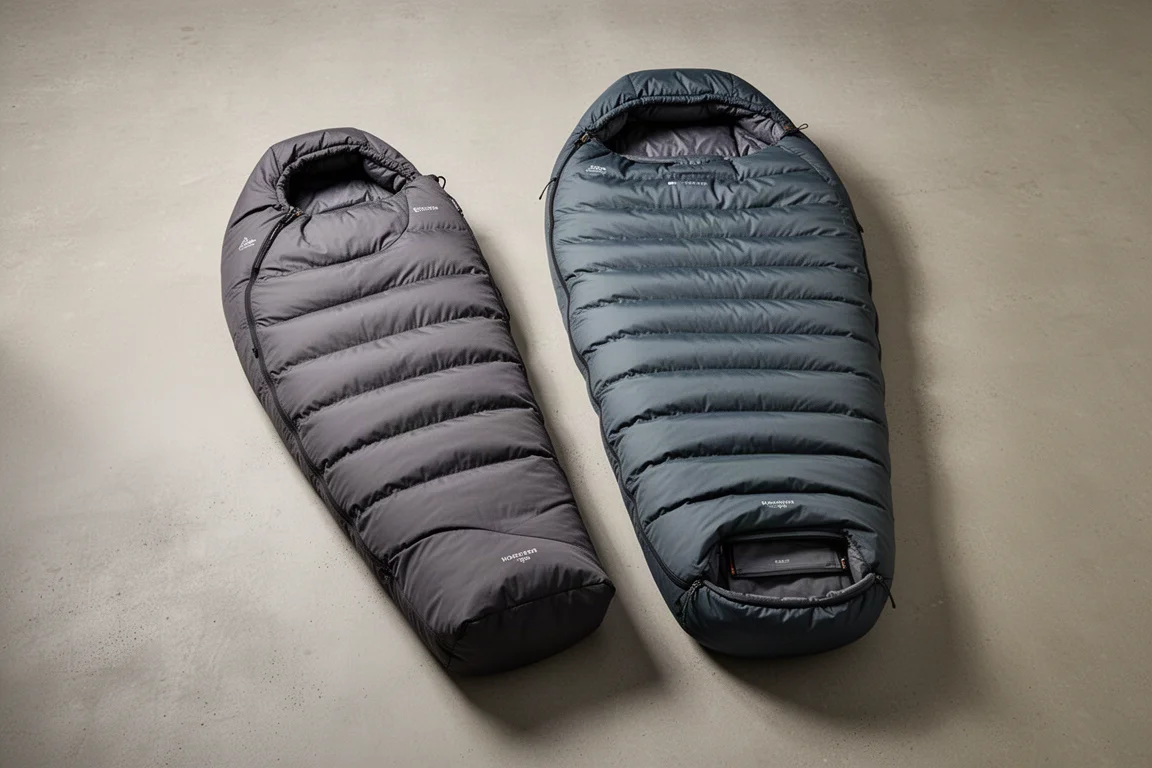
Two premium 20-degree down sleeping bags, two different design philosophies, and a genuinely difficult choice between them. The Therm-a-Rest Hyperion 20 and the Sierra Designs Nitro 20 both come from companies that put real effort into sustainable manufacturing, both use responsibly sourced down, and both carry a premium price. The Hyperion sits at nearly 400, while the Nitro lands just over 300.
What separates them is not quality. It is how each bag decides to spend its weight budget. One trims grams aggressively; the other spends a little weight on comfort and temperature control. Understanding that trade-off is the whole point of this comparison.
What These Two Bags Have in Common
Both are down-filled mummy bags, and both use Responsible Down Standard certified down, so the fill is ethically sourced. Both also use a durable water repellent treatment that is PFC free, which is a meaningful detail for anyone who cares about how gear is produced.
The differences start with fill power. The Nitro uses 800 fill down, the Hyperion steps up to 900 fill. Shell fabrics diverge too: the Hyperion uses a 10-denier fabric, the Nitro uses 15-denier nylon inside and out. Those two variables, plus the cut and shape of each bag, explain most of the weight gap and most of the comfort gap.
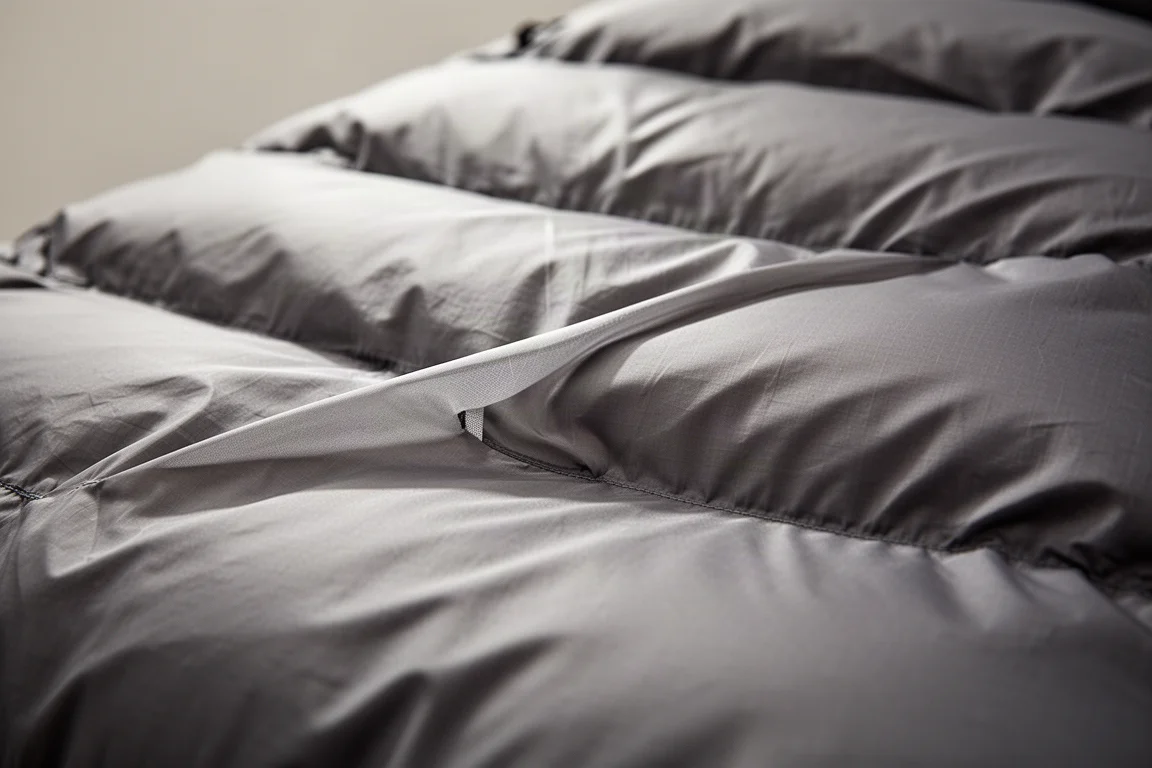
Weight is the headline number. The Nitro comes in just under two pounds in the regular size, at 1 pound 15 ounces. The Hyperion lands at 1 pound 4 ounces in the 20-degree version, with a 32-degree version at roughly one pound. That is a substantial ounce difference, and it does not come from cutting corners on fill quality.
Sierra Designs Nitro 20: Room to Move and a Venting Foot Box
The Nitro is a zippered mummy bag with the classic tapered profile, wide at the head and narrowing toward the feet, but it leaves noticeably more room to move than a tightly cut bag. Its baffles are narrower than typical, around five inches rather than the six or seven inches seen on many other bags.
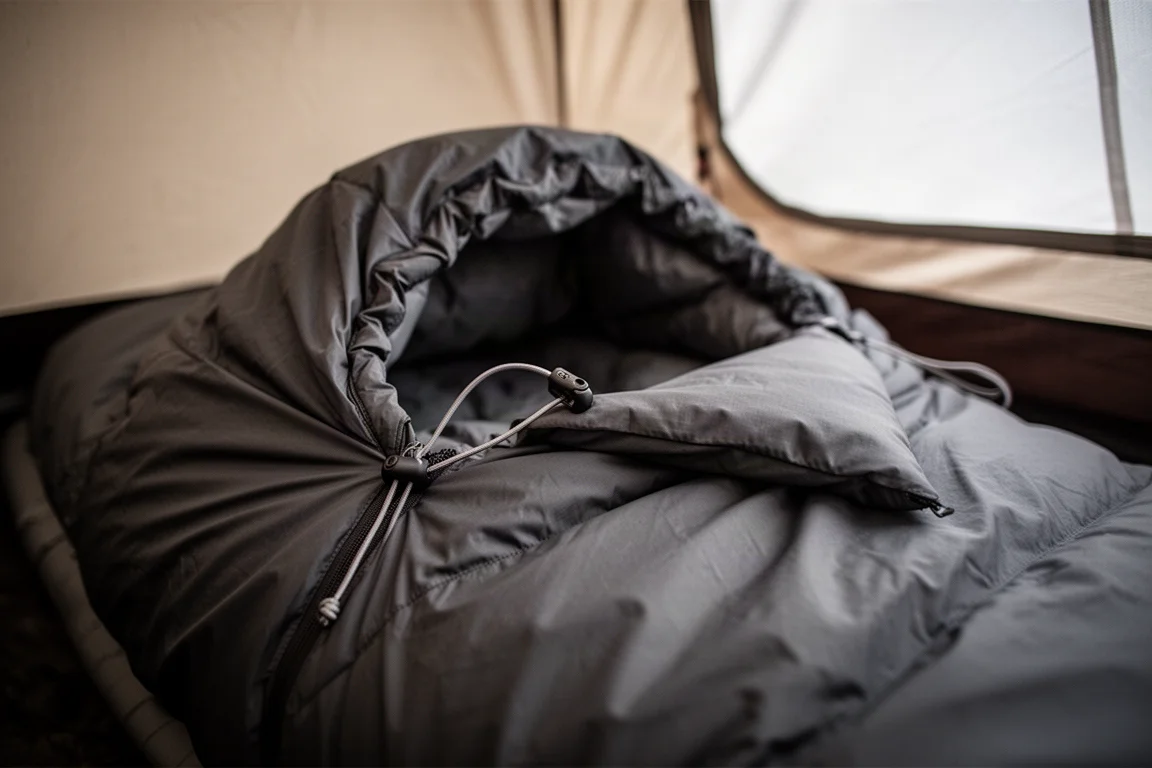
At the head end, there is a half-length zipper and a large draft tube. The stitching gives that draft tube enough rigidity that zipper snags are largely a non-issue, which is a small thing that becomes a big thing on a cold night. A sewn draft collar across the front lets you tuck your shoulders in and close off the warm air your body is trapping. The hood is generously sized and does not feel claustrophobic when cinched down.
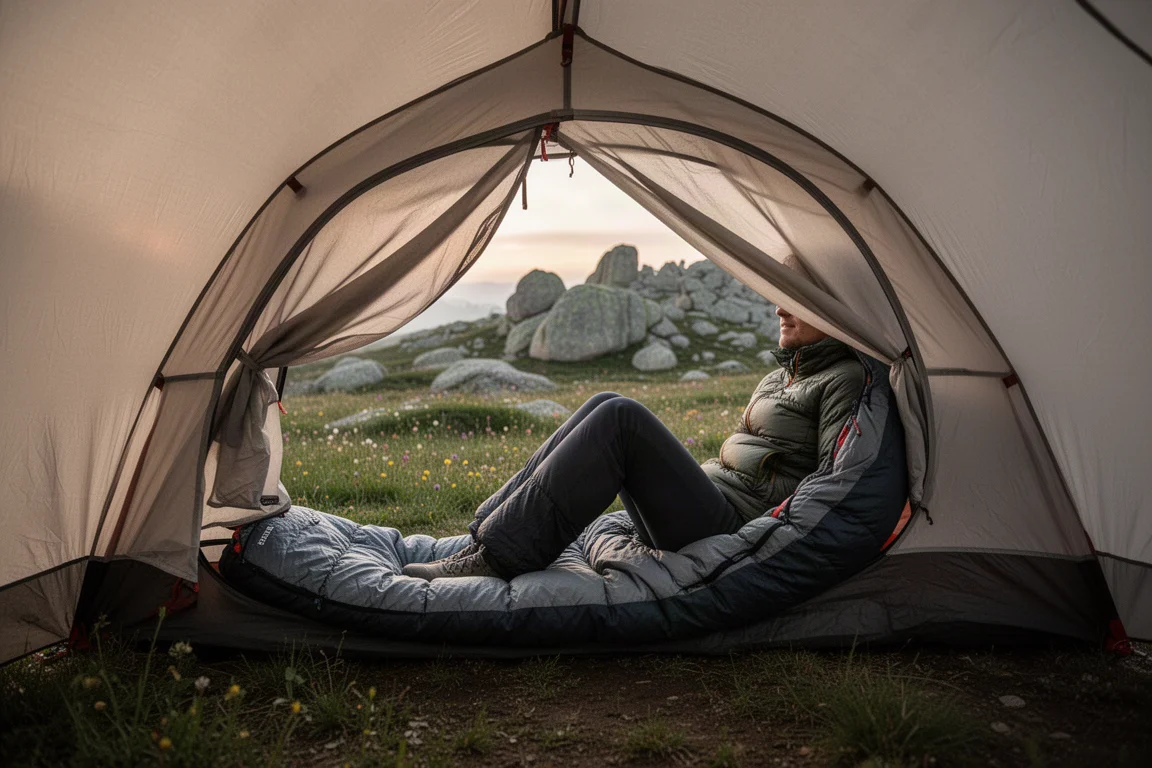
The feature that stands out most is the opening in the foot box. It lets you lift your knees, slide your feet out, and vent when you are running warm instead of lying there overheating inside a sealed bag. It adds a little weight through extra fabric and down, but not enough to be a deal breaker. There are also loops sewn into the bottom of the bag, which allow a do-it-yourself pad strap setup using shock cord and toggles so the bag shifts less during the night.
The fabric itself is 15-denier nylon inside and out. It is comfortable, but it is not the softest hand feel when placed next to the Hyperion.
Therm-a-Rest Hyperion 20: Low Weight and a Soft Hand Feel
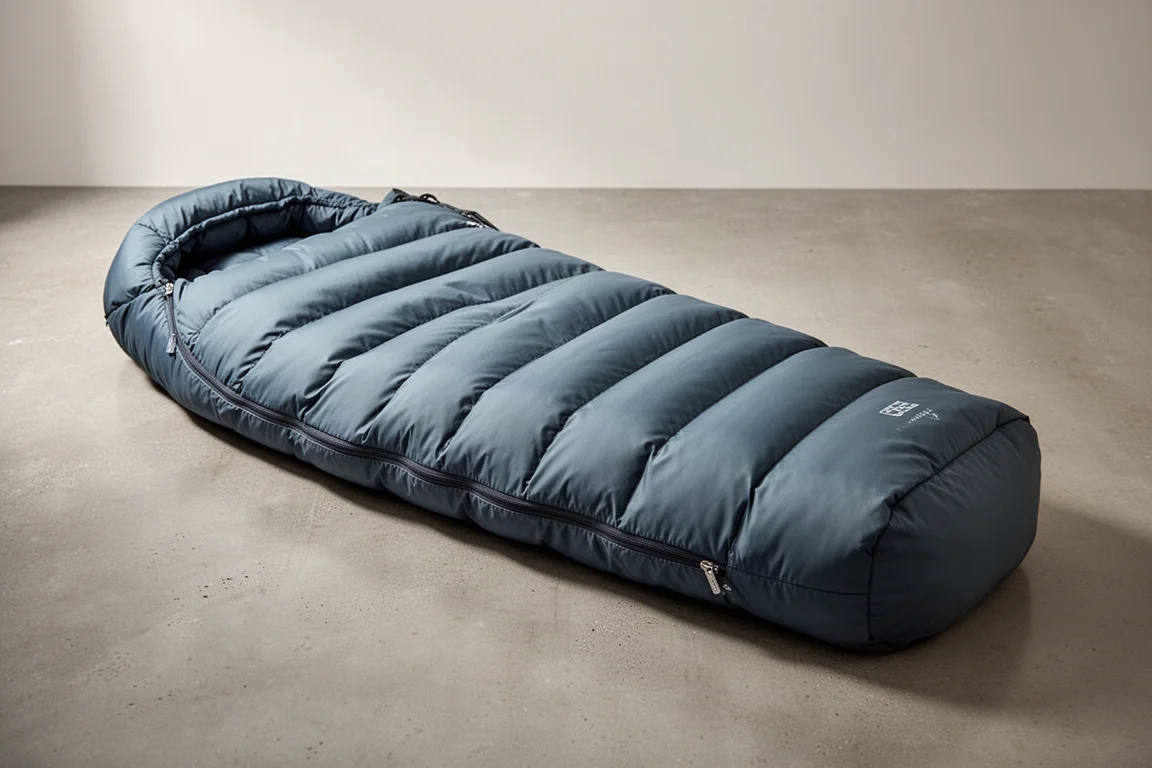
The first thing you notice about the Hyperion is the fabric. The 10-denier nylon is genuinely soft against the skin, a clear step up in comfort compared to the crisper feel of the Nitro.
The shape is where the weight savings really come from. The Hyperion tapers much more aggressively from the hips down to the foot end, which cuts grams but also limits how much you can move around inside. It is narrower at the shoulders than the Nitro as well. There is an upside to a snug cut: less dead air space to warm up, so the bag can feel warmer faster than a roomier bag you cannot fill with body heat.
Baffles are wider here, which mainly means down has more room to shift, though in practice it is not a major issue. Therm-a-Rest distributes the fill with 70 percent of the down on top and 30 percent on the bottom, a zoned approach that assumes you are pairing the bag with an appropriately insulated sleeping pad. When you lie on the bag, the down underneath compresses and stops providing its full insulation value, so the warmth comes primarily from the down above you.
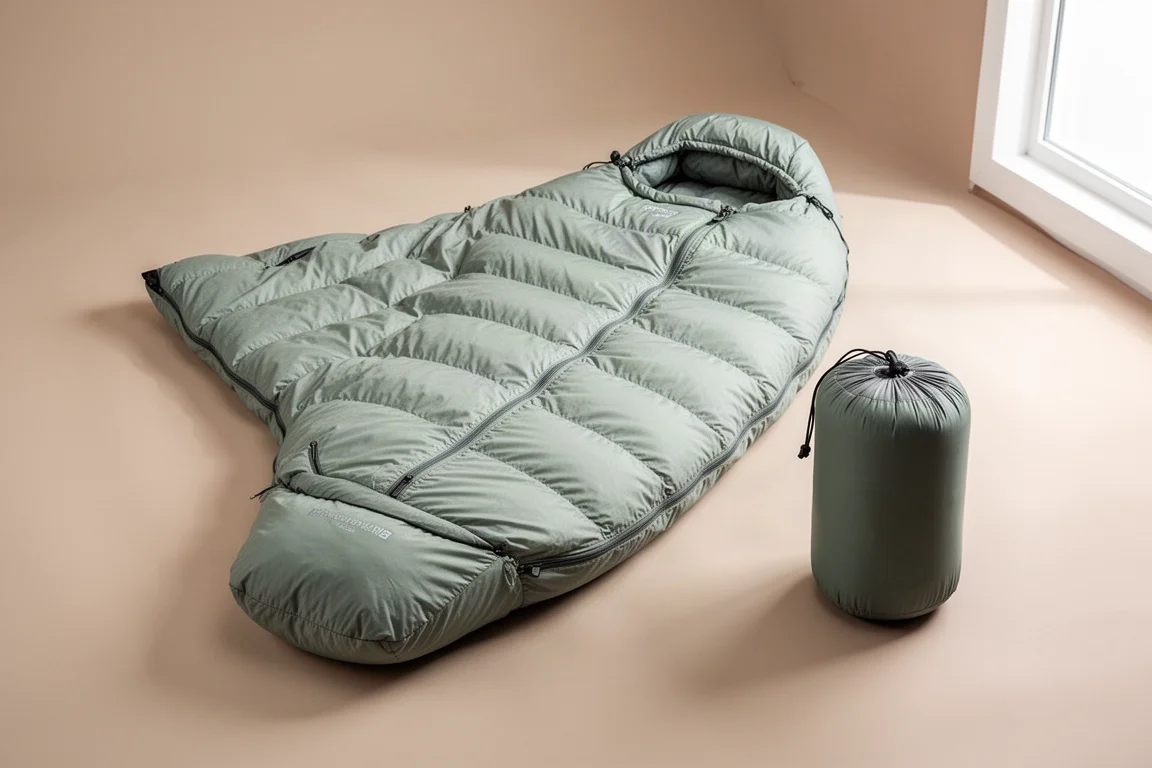
The hood is more sculpted and ergonomic, cinching down neatly. The zipper is the same half-length design as the Nitro, and there is a similar draft tube, but it uses a grosgrain ribbon that does not deliver the same snag-free experience. The foot box is generously shaped so your feet can sit upright rather than angled to the side, though there is no venting option at the bottom. Built-in Synergy Link pad straps wrap around your sleeping pad to hold the bag in place and can be removed if you prefer.
Which Bag Fits Which Kind of Trip
If counting ounces is the priority, the Hyperion is the clear answer. At 1 pound 4 ounces for the 20-degree version, it is the bag to take when every gram matters, and the soft fabric makes that weight savings feel like a bonus rather than a compromise.
If you value room to move, a less confined feeling inside the bag, and the ability to vent your feet when you overheat, the Nitro makes more sense. It is heavier, but 1 pound 15 ounces is not a punishing penalty for a bag that is easier to live with across a range of conditions, and its price sits below the Hyperion.
Both bags are excellent, and the honest answer is that the right choice depends on which of those two philosophies matches how you actually sleep.
Conclusion
The Therm-a-Rest Hyperion 20 wins on weight and fabric comfort. The Sierra Designs Nitro 20 wins on interior space, temperature regulation, and price. Neither is the wrong purchase, and neither has a flaw serious enough to rule it out. Pick the Hyperion if you are chasing a lighter pack, and pick the Nitro if you want a bag you can move around in and vent without getting out of it.
Further reading
Related Reviews
Sleeping Bags
Best Down Sleeping Bags Under $300: Four Backpacking Options Worth a Look
Four down sleeping bags that stay under $300, compared on fill power, baffle design, hood comfort, and packed size.
Sleeping Bags
Best Sleeping Bags and Sleep Systems: Five Premium Down Picks Compared
Five premium down sleeping bags and sleep systems compared on warmth, weight, construction, and value.
Sleeping Bags
Big Agnes Lost Ranger UL 3-in-1 Sleeping Bag System Review: One Bag, Three Setups
A practical look at the Big Agnes Lost Ranger UL 3-in-1 Sleeping Bag System, covering how the three configurations work, where it shines, and the details worth weighing before buying.