Sleeping Pads
Therm-a-Rest BaseCamp Military Sleeping Pad Review: Lighter, Stronger, Cheaper
The military version of the Therm-a-Rest BaseCamp shares the self-inflating design of the civilian pad but uses a nylon shell, weighs less, and costs far less.
Introduction
Therm-a-Rest has been building self-inflating sleeping pads for decades, and the BaseCamp is one of the better known models in that line. Less well known is that the same pad family includes a military version, produced to a military specification and sold for considerably less than the civilian model.
That price gap is not a coincidence. Therm-a-Rest and its parent company operate as military contractors for the US military, and sleeping pads are among the products they supply. Several other outdoor brands have taken on similar work, which is why military-spec versions of familiar camping gear sometimes sit quietly beside the retail versions.
Set the two pads next to each other and they look and behave almost identically: self-inflating construction, polyurethane foam inside, the same valve, the same 20-inch width, and the same rolled footprint. The differences are specific, and they matter depending on how you camp.
Who This Product Is For
This pad suits campers who want a simple self-inflating mat for three-season use and do not need a high R-value. It is a natural fit for car campers, scout trips, and anyone building a kit on a budget, particularly if you are comfortable shopping military surplus. Because the shell is nylon and the pad weighs 1.8 lb, it also appeals to paddlers and short-haul backpackers who want something lighter than the civilian BaseCamp without paying more for it.
It is a less obvious choice for cold-weather camping, where the lower R-value works against you, and for anyone who needs a longer or wider mat. The military version comes in a single size, so larger sleepers may prefer the civilian pad and its three size options.
Main Strengths
Start with the shell. The civilian BaseCamp uses polyester; the military version uses nylon. Nylon is the stronger of the two materials, and it is also lighter, which explains part of the weight gap. The military pad comes in at 1.8 lb against 2.5 lb for the civilian model.
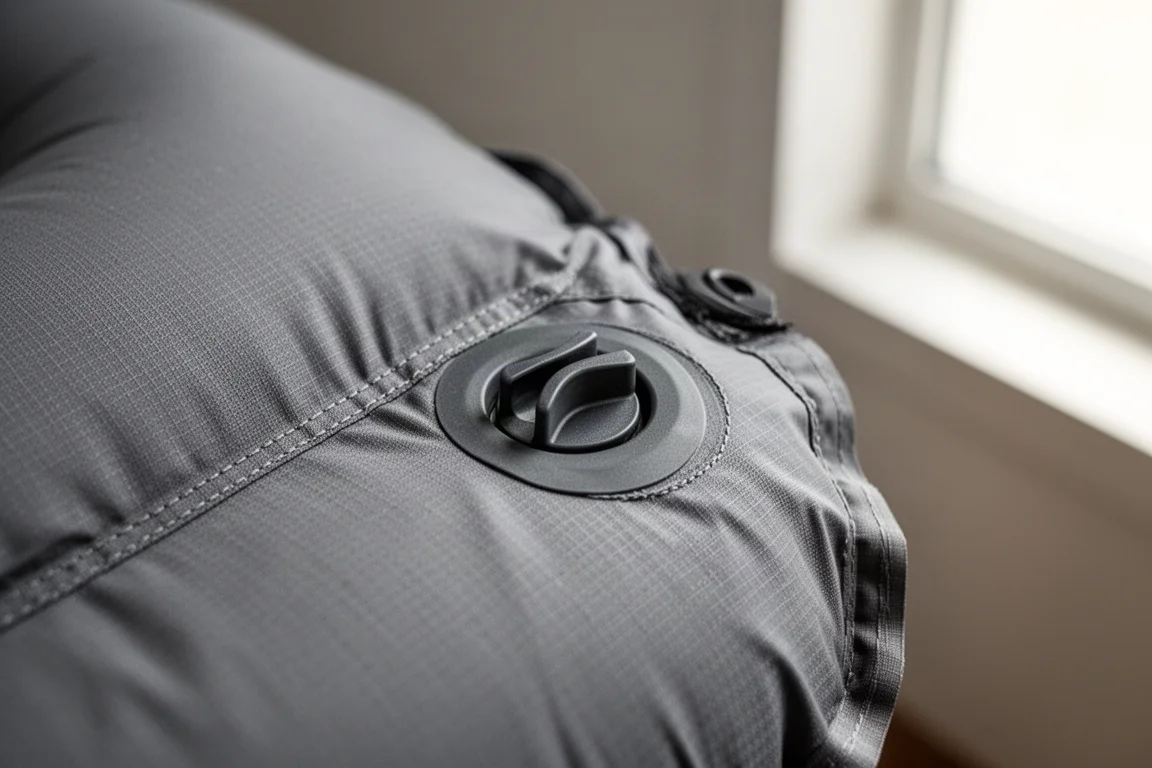
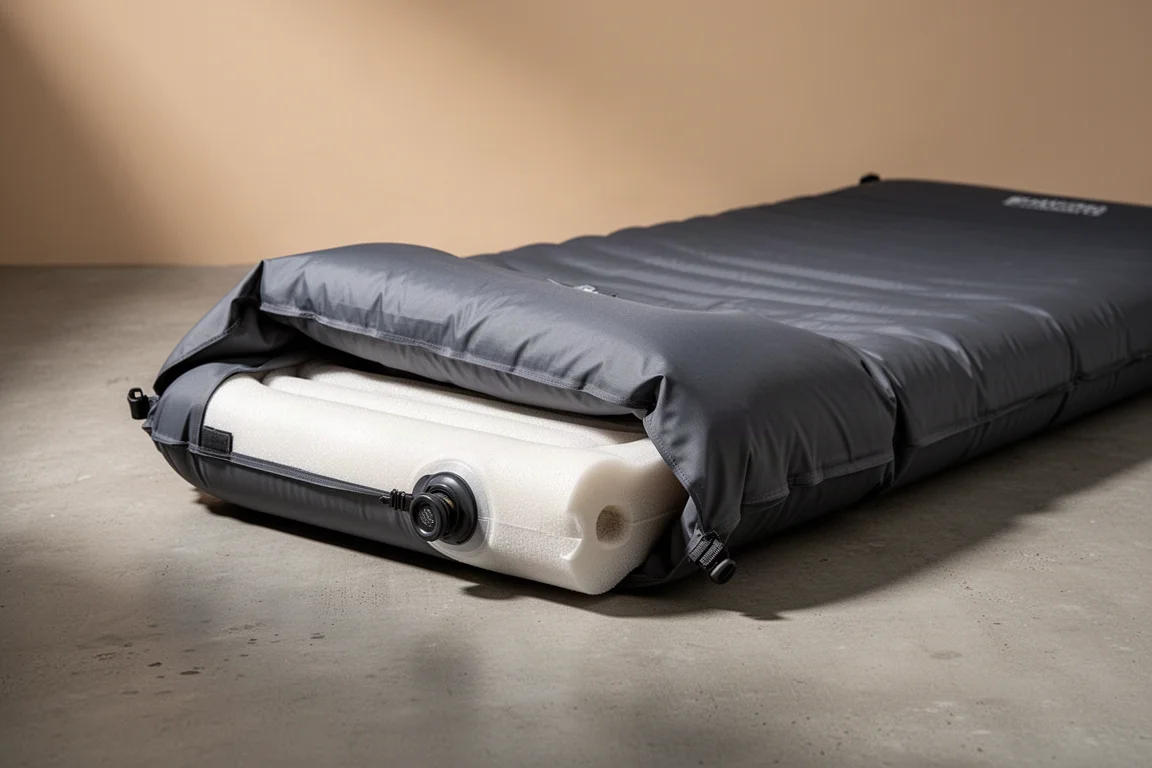
The core design is shared: polyurethane foam, self-inflating operation, and the same valve. A repair kit is included, which is useful on a pad that may be asked to take more punishment than a typical camping mattress.
Comfort sits close to other self-inflating Therm-a-Rest pads. On the back and on the side, 1.5 inches of foam cushioning feels supportive on grass, and the surface is firm rather than soft. It is noticeably firmer than a three-inch air mattress, but for a pad built to a military specification that is entirely reasonable, and it does not feel like a compromise in normal use.
Materials, Size, and Weight
The material choice drives most of the other numbers. Nylon was selected because a military pad has to be strong and durable, and it happens to be the lighter option as well. The foam inside is polyurethane, the same as the civilian pad, and the inflation valve is identical.
Measurements are straightforward: 72 inches long, 20 inches wide, and 1.5 inches thick. That is one inch less in length than a typical large civilian pad and half an inch thinner than the civilian BaseCamp, which measures 2 inches. When rolled, both pads come in at 20 inches long and roughly 5.5 inches wide, so packed bulk is essentially the same.
Colors vary by stock. Gray is the most common finish by a wide margin, green appears from time to time, and a coyote brown version exists but is rare and hard to find.
Things to Consider Before Buying
The headline difference is insulation. The civilian BaseCamp carries an R-value of 6; the military pad is rated at 3. On paper that is a large gap. In practice, most people would struggle to notice the difference between the two, especially when sleeping in a warm, well-built sleep system. That said, if you camp in genuinely cold conditions, the higher R-value of the civilian pad is the safer choice.
Thickness is the second difference. The military pad measures 1.5 inches against 2 inches for the civilian version, and that extra half inch is noticeable if you are a side sleeper who likes more clearance from the ground. Sizing is the third: one size only here, versus regular, large, and extra large on the civilian pad.
Buying used surplus deserves care. Pads in this family are often sold after long storage, and a pad that has been rolled up for years may need a helping hand to expand the first time. Check for holes, confirm that it holds air, and ask questions before you commit. Minor repairs are possible if you are willing to do them yourself.
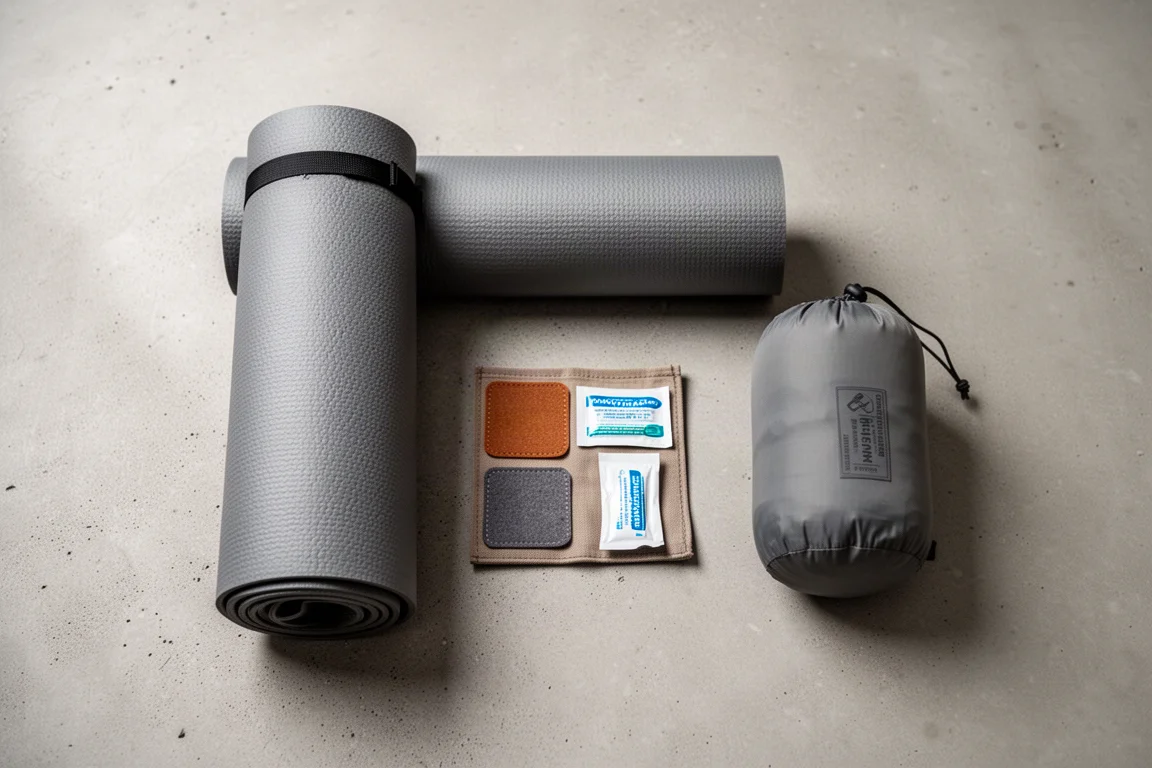
The good news is that the construction is simple, so there is little to go wrong beyond the shell and the valve, and the included repair kit covers the basics.
Price and Availability
The regular civilian BaseCamp retails for about $115. The military version is commonly found new for around $60, and used examples have changed hands for under $10. That is a substantial saving on a pad with the same footprint and the same inflation system.
Availability is the trade-off. Military surplus stock comes and goes, and the color you receive depends on what is on hand at the time. If you want a specific finish or a guaranteed size, the civilian pad is the more predictable purchase.
Buying Advice
If you want the thickest, warmest version with the widest choice of sizes, the civilian BaseCamp is the straightforward pick at $115. If you want a lighter pad with a stronger shell for a much lower price, the military version is the better value, and the differences are small enough that most three-season campers will not miss them.
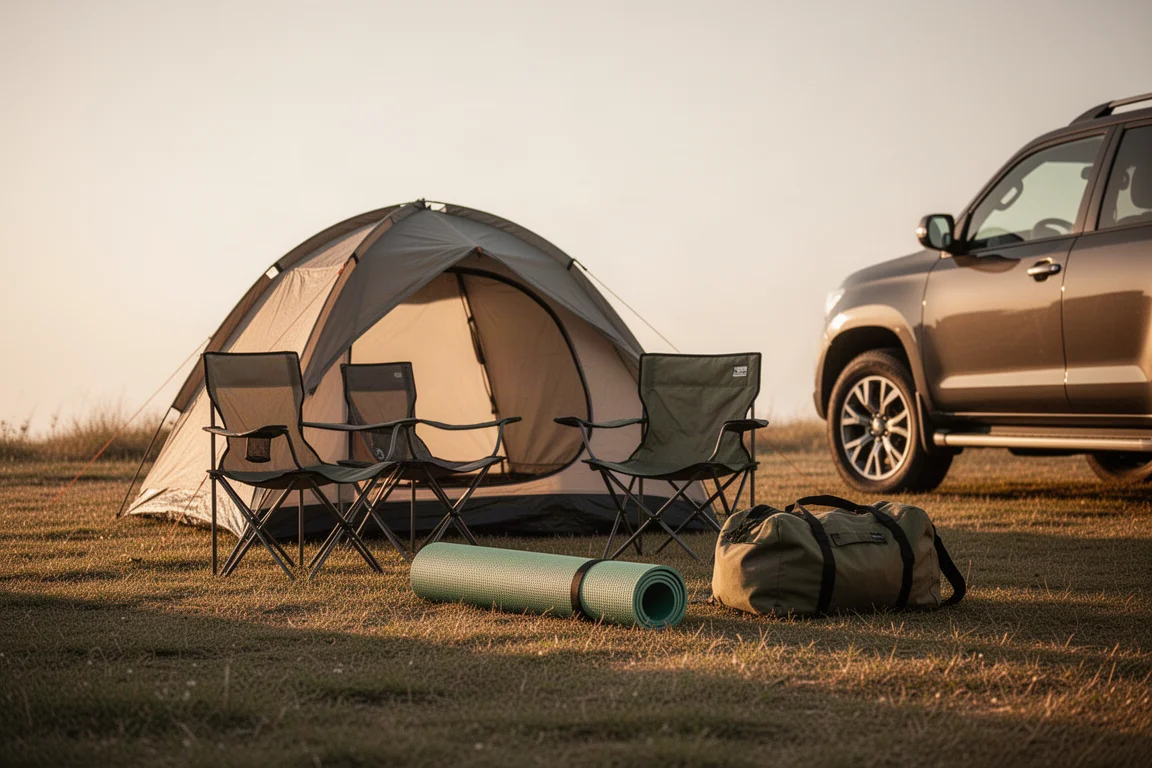
Either way, buy for the conditions you actually camp in. A warm, well-made sleep system narrows the gap between an R-value of 3 and an R-value of 6 far more than a spec sheet suggests.
Conclusion
The military version of the Therm-a-Rest BaseCamp is a quietly excellent option for anyone who wants the feel of a proven self-inflating pad without the retail price. The nylon shell is stronger than polyester, the pad is lighter at 1.8 lb, the valve and foam are shared with the civilian model, and a repair kit comes in the box. What you give up is insulation and thickness: an R-value of 3 instead of 6, 1.5 inches instead of 2, and a single 72 by 20 inch size.
For three-season camping, that trade looks sensible. For cold-weather trips or larger sleepers, the civilian BaseCamp remains the more capable pad. If you shop surplus, inspect carefully and ask questions, and the savings can be remarkable.
Product link
View more details for Therm-a-Rest BaseCamp Military Sleeping Pad
This product is mentioned in the review. Check the specifications, options, and compatibility before buying.
View more details for Therm-a-Rest BaseCamp Military Sleeping PadFurther reading
Related Reviews
Sleeping Pads
Best Backpacking Sleeping Pads 2026: Nine Pads Rated on Price, Comfort, Warmth, and Weight
Nine backpacking sleeping pads compared on price, comfort, warmth, and weight, from a $65 summer pad to a year-round option rated at R-7.3.
Sleeping Pads
Best Backpacking Sleeping Pads: Comfort, Warmth, and Weight Compared
A practical comparison of the Nemo Quasar 3D, Therm-a-Rest NeoAir XTherm Max, and Big Agnes Rapide SL for backpackers choosing between comfort, warmth, and packed weight.
Sleeping Pads
Best Backpacking Sleeping Pads: Ultralight, Winter, Comfort and Budget Picks
A practical roundup of the sleeping pads that stand out for ultralight weight, winter warmth, pressure relief and value, plus three popular pads that fell short.