Camping Tents
The North Face Wawona 6 vs REI Base Camp 6: Which Six-Person Tent Suits Your Camping Season?
A practical comparison of two six-person camping tents, covering setup time, measured floor area, ventilation, rain protection, pole quality, and shoulder-season warmth.
Introduction
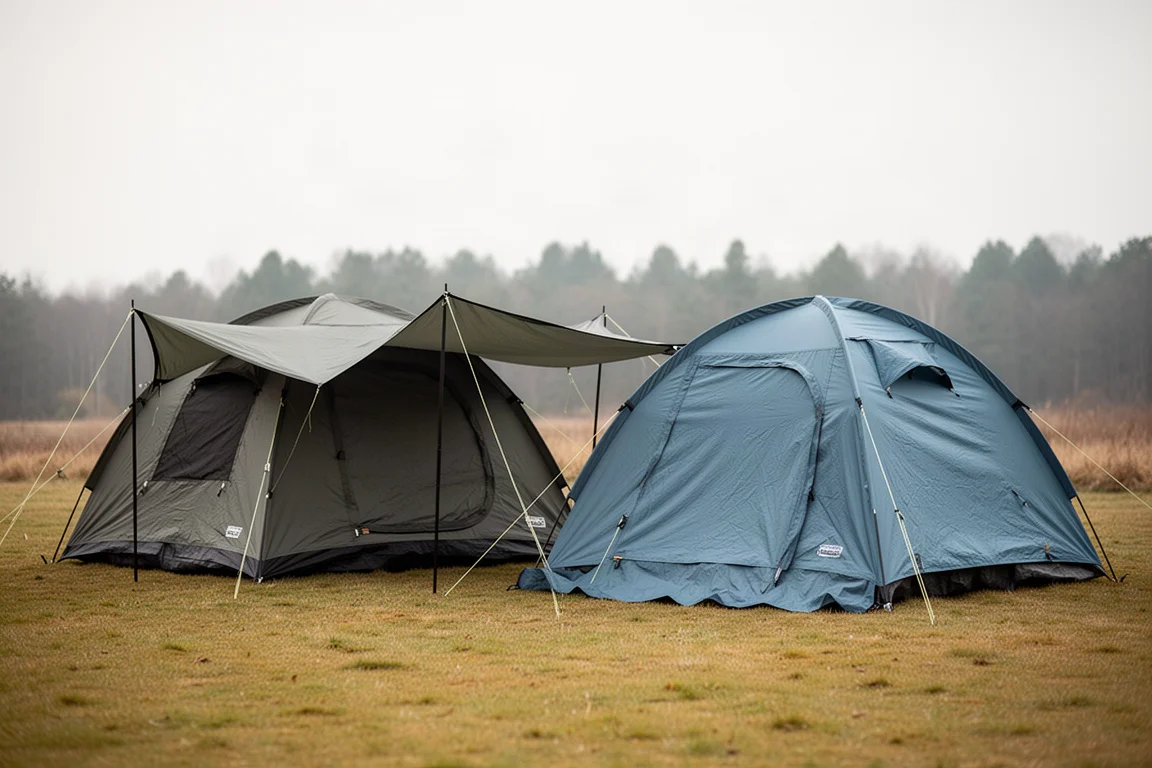
Six-person tents often look similar on a specification sheet, so the more useful question is which one suits the way you actually camp. The North Face Wawona 6 and the REI Base Camp 6 are both six-person designs with color-coded poles, sleeves, clips, webbing, and rainfly attachment points, and both can be pitched by one person without much trouble. The meaningful differences appear in floor area, door design, interior storage, ventilation, rainfly coverage, pole quality, and how each tent handles heat, heavy rain, and cold.
This comparison works through those differences using measured floor dimensions, timed setups, and weather testing, then points to the camping style each tent fits best.
How These Two Six-Person Tents Compare
The comparison focuses on the details that shape day-to-day use: setup time including staking and guying out, measured floor dimensions and base area, door size and zipper hardware, pocket and loop counts, whether vents and windows can be operated from inside, rainfly coverage, pole construction, vestibule livability, and how quickly each tent packs away.
Two findings frame everything that follows. The REI Base Camp 6 was slightly easier and faster to pitch, at around 17 and a half minutes for the full tent including staking and guying out, and its measured dimensions were accurate to within about an inch. The Wawona 6 took roughly 15 percent longer, about 20 minutes, and measured several inches narrower and shorter than expected, which left it with a smaller base area than its stated figure suggested.
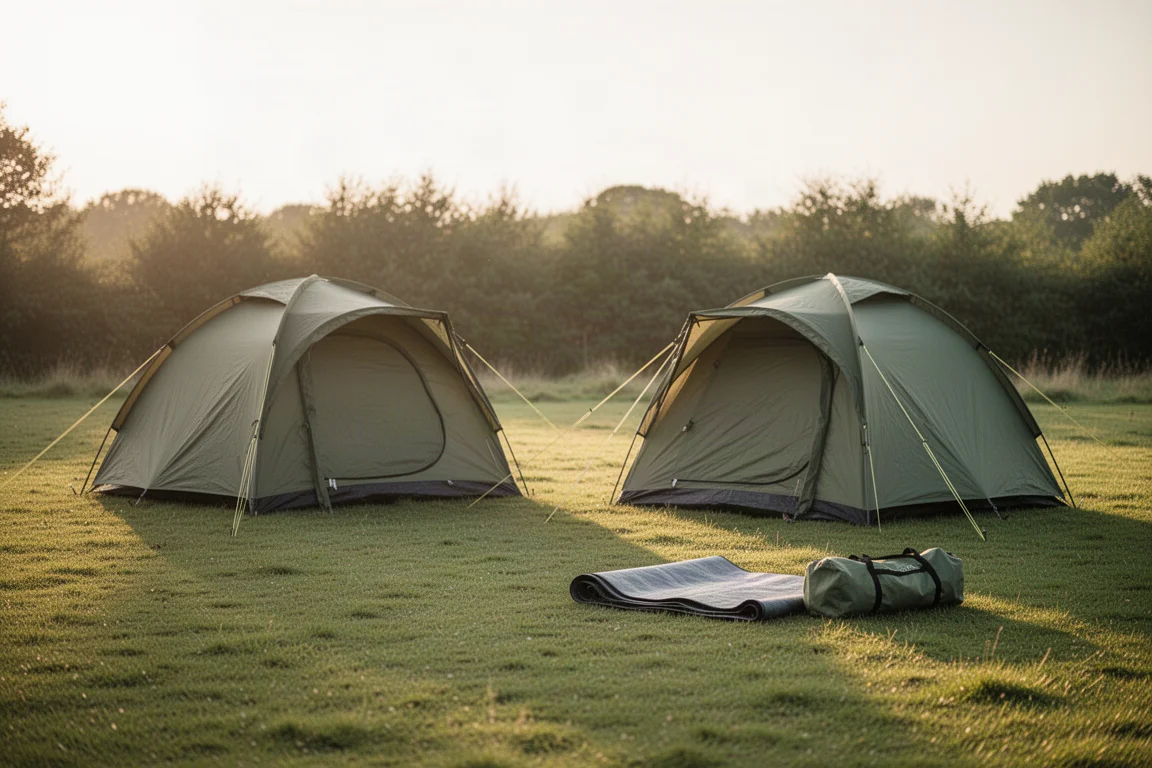
Color coding is a shared strength. Both tents mark poles, pole sleeves, pole clips, webbing, and rainfly grommets or buckles, which keeps the pitching sequence clear for a single camper. The main setup difference comes from the rainfly. The Wawona’s rainfly carries more fabric and more clips, and those clips often caught on the tent body or on the poles, so it took two or sometimes three attempts to seat it alone. The Base Camp’s rainfly went up on the first attempt.
The North Face Wawona 6: Best for Warm-Weather Camping
The Wawona 6 is the more ventilated of the two tents and reads as a three-season design aimed at summer camping. Its front wall is largely mesh above the lower section, the four walls have mesh panels that join together at the top, and the back window opens for additional airflow. The trade-off is a partial rainfly that stops short of the ground.
Ventilation and Rain Protection
Mesh coverage is the Wawona’s strongest card in hot weather, and its rain performance comes from construction rather than from rainfly length. The tent does not require sealing a single seam, and the seam taping held up through days of thunderstorms, including a stretch where the entire floor sat in inches of standing water with no leakage into the tent.
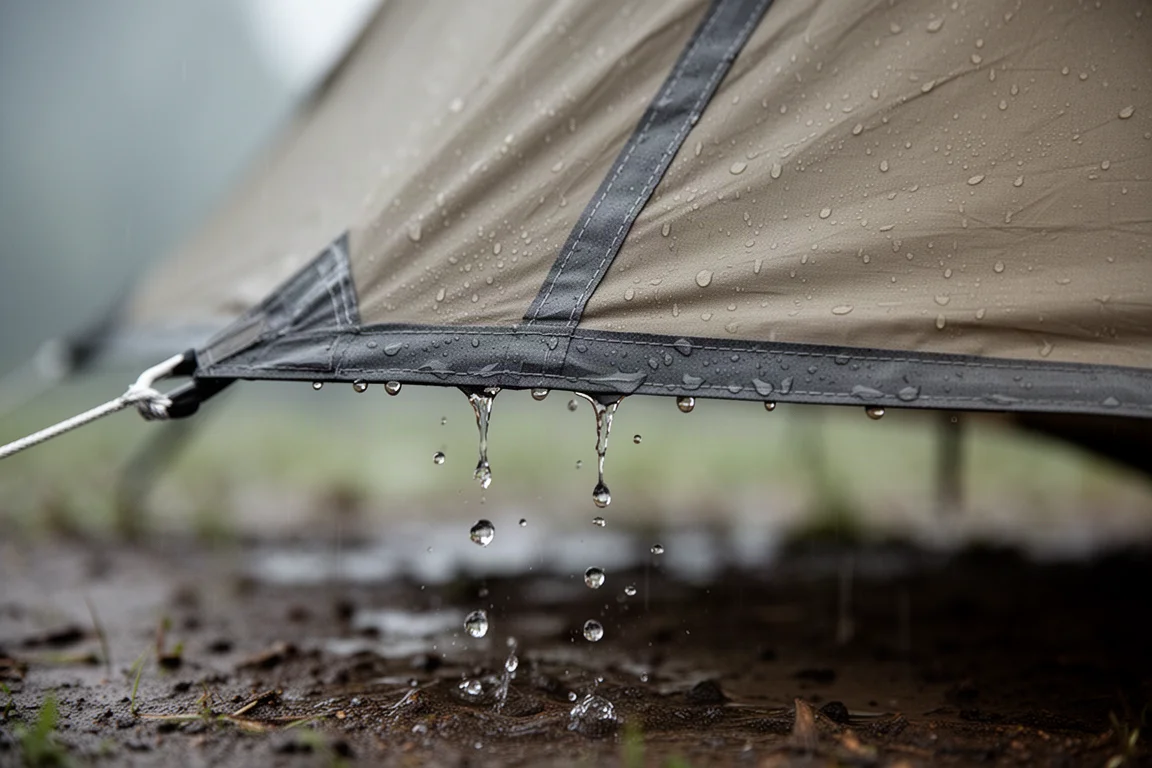
Rainfly coverage is the weak point. The Wawona’s rainfly overlaps the window mesh by only about 4 to 5 inches, so horizontal rain can reach the mesh directly. The four vents are also accessible only from the outside, which is awkward when the weather turns quickly.
Window access follows the same pattern. The side windows cannot be opened from inside the tent, so opening them means stepping out of the tent first. Using the loop at the bottom of each window to guy the window out is the practical workaround, since it keeps some ventilation available on hot days without a trip outside to close the window when rain starts.
Vestibule Space, Poles, and Packing
The Wawona’s front vestibule is its most distinctive feature. The tallest point measures about 74 inches and the lowest end about 65 inches, which is enough to stand completely upright across the whole vestibule. Two camping chairs and a large camping table fit with space left over, which makes the vestibule a practical place to leave wet gear.
Pole quality is the other clear advantage. The Wawona uses DAC MX aluminum poles, which snap together easily and are stronger than regular aluminum. None of the poles bent during testing in 15 to 20 mph winds, and a comparable Wawona 6 that went through 50 mph winds came away with poles that were still usable. The tent also has 11 guy-out points with 11 guylines, roughly double the Base Camp’s six.
Packing is straightforward. The full pack-down took about 14 minutes, helped by a top-loading carry bag with a wide opening. Peak height is 77 inches, and interior storage totals nine pockets and eight loops.
REI Base Camp 6: Best for Shoulder-Season Camping
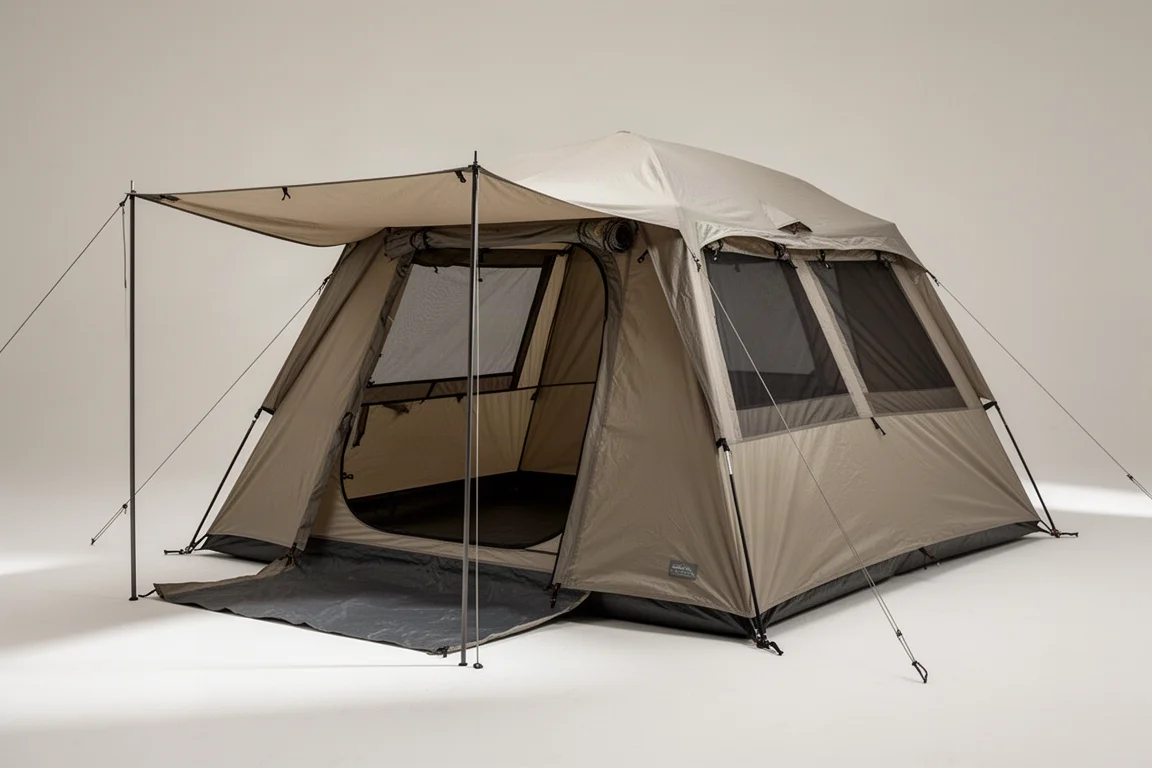
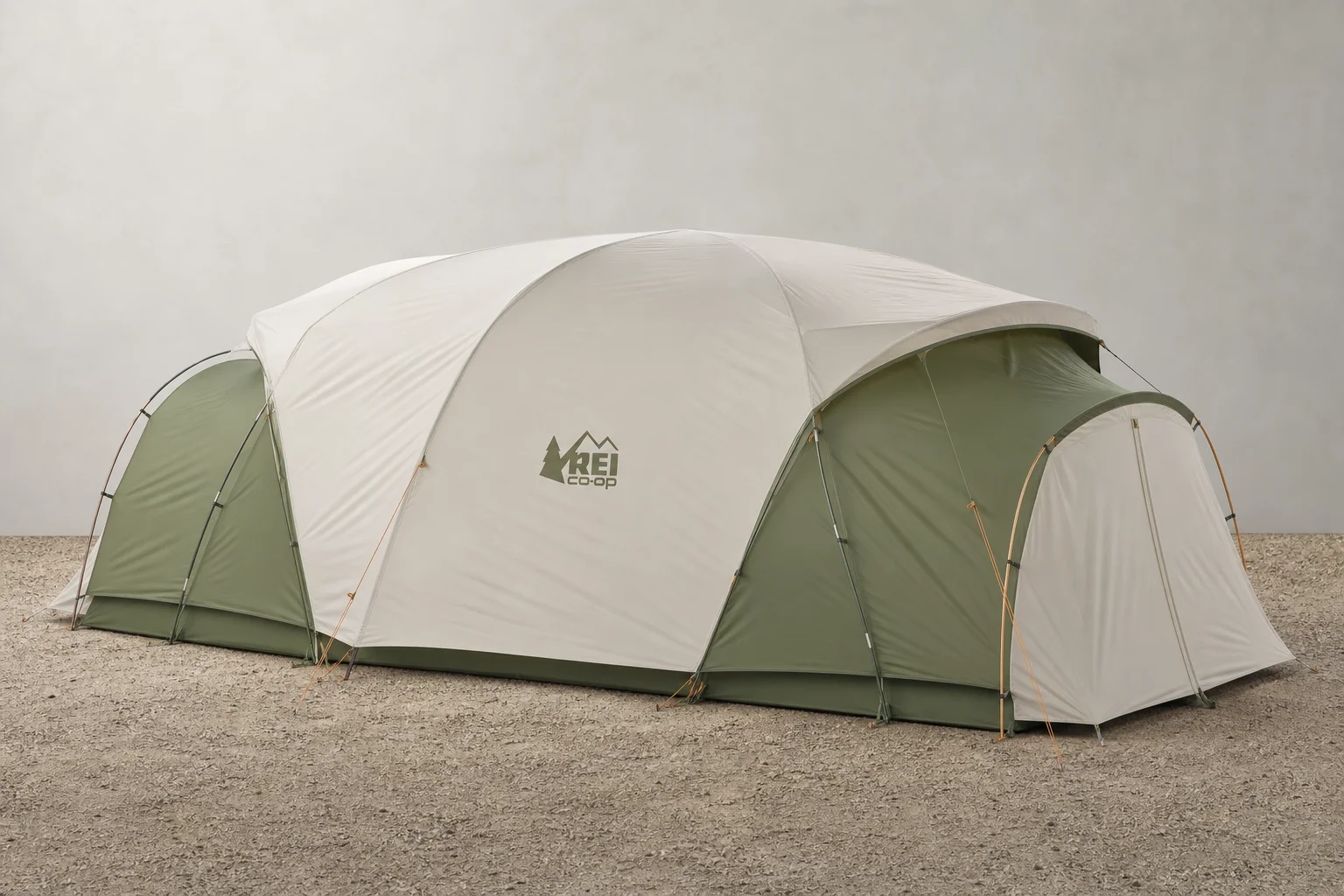
The Base Camp 6 takes the opposite approach: a larger, squarer floor, a full-length rainfly, less mesh, and a warmer interior that suits cooler conditions. It is also the faster of the two tents to pitch.
Setup, Doors, and Interior Storage
Setup took about 17 and a half minutes including staking and guying out, and the rainfly went up on the first attempt. The floor area measured about 82 and a half square feet, close to 10 percent more than the Wawona, and the stated dimensions proved accurate to within about an inch.
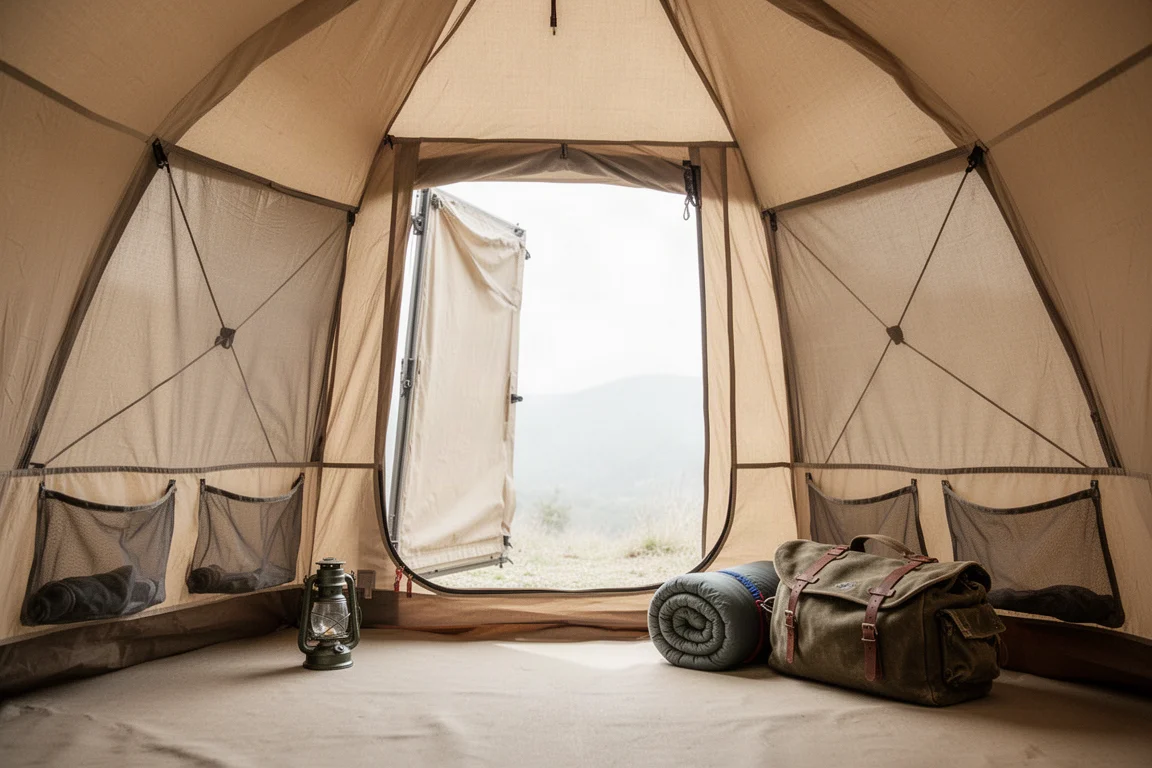
The doors are the standout. Two doors, each roughly 74 inches by 59 inches, take up nearly the entire wall, and opening each only halfway still leaves plenty of room to walk through. A door can be unzipped almost completely, leaving only a small strip of fabric attached at the top, and the loose door fabric stuffs into a pocket above the door. That pocket approach is quicker than the toggles on the Wawona, which take three to four times as long to tie up.
Zipper hardware is stronger on the doors. Each door uses two YKK zippers, while the Wawona uses SBS zippers, a grade lower. The Base Camp’s windows use unbranded zippers rather than YKK, which is a reasonable place to economize, since windows see far less strain than doors.
Interior storage is generous: 14 pockets and 20 loops, for 34 in total, roughly double the Wawona’s nine pockets and eight loops. Many of the pockets are large, and some run around the tent except where doors and vents interrupt. The square floor plan, about 109 by 109 inches, fits one queen bed comfortably.
Weather Protection and Warmth
The full-length rainfly is the reason the Base Camp handled a one-hour heavy rain test well. It reaches almost all the way to the ground, and water runs off the rainfly directly to the ground without touching the inner tent body much, which keeps the inner tent well protected.
Cold-weather performance follows from the same design. There is more fabric than mesh, the full-length rainfly makes the tent effectively double-walled, and the four vents are small enough to hold warmth while still being adjustable. All four vents, two roof vents and two floor vents, can be opened and shut from inside, and the two windows, one on each door, can also be operated from inside.
Two limitations are worth knowing. The floor uses inverted seams that are not taped, and direct water sprayed onto the tent body produced some leaking at the corners after about an hour, so a comparable flooding test would likely have allowed water entry. The poles are regular aluminum rather than DAC MX, which makes them softer and more likely to bend over extended use, and there are only six guy-out points with six guylines.
Vestibule space is uneven. The front vestibule is large enough for two camping chairs, but the rear vestibule cannot fit even one chair, and sitting upright on a stool there is not possible. Packing is also less pleasant than the Wawona, because the stuff sack is small and side-loading rather than top-loading. Peak height is 73 inches. In warm summer weather the Base Camp feels hot and stuffy, which is the expected cost of its warmer design.
Which Tent Should You Choose?
Start with the season you camp in most. For summer trips in warm conditions, the Wawona 6 is the better fit: its mesh-heavy walls, large vestibule, DAC MX poles, thorough seam taping, and 11 guy-out points all point toward hot, wet, or windy summer weather. Its weaknesses are a longer setup, a rainfly that covers the window mesh only slightly, and windows and vents that open only from outside.
For shoulder-season camping in cooler temperatures, the Base Camp 6 is the stronger choice. Its larger square floor, full-length rainfly, double-walled construction, inside-operable vents and windows, faster setup, and much larger storage count suit cold mornings and quick camps. Its trade-offs are untaped floor seams, softer aluminum poles, a small rear vestibule, a fussy stuff sack, and a stuffy interior on hot days.
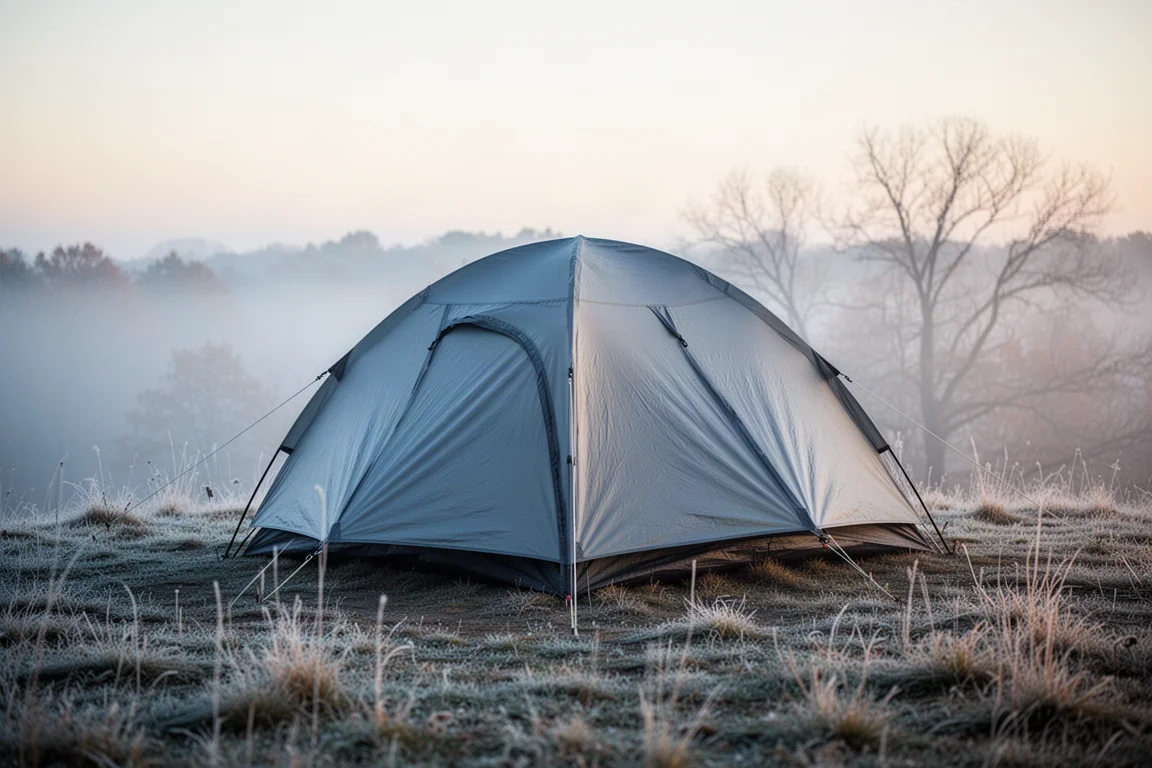
If the decision comes down to a single attribute, weigh rainfly coverage against ventilation. The Base Camp keeps rain and cold out more reliably, while the Wawona moves air and gives you a far more usable covered space.
Conclusion
The two tents divide cleanly by season rather than by overall quality. The North Face Wawona 6 is the three-season tent for warm-weather camping, with outstanding ventilation, a full-height vestibule, DAC MX poles, and seam taping that held up even when the floor sat in standing water. The REI Base Camp 6 is the three-plus-season tent for cooler trips, with a larger square floor, a full-length rainfly, inside-operable vents and windows, easier setup, and roughly twice the interior storage. Matching the tent to the conditions you actually camp in is the deciding factor.
Further reading
Related Reviews
Camping Tents
3F UL Gear Taiji Two-Person Tent Review: Field Waterproofing Results and Buying Advice
The Taiji pairs an attached fly with a removable inner, but sustained rain exposed untaped vent seams that need sealing before this shelter can be trusted.
Camping Tents
3FUL Gear Lanshan 2 Pro 4-Season Review: A Sub-$200 Single-Wall Trekking Pole Tent
An early look at the 3FUL Gear Lanshan 2 Pro 4-Season, covering its straightforward pitch, generous interior space, and the condensation and seam-sealing questions that come with any single-wall shelter.
Camping Tents
Alps Mountaineering Lynx 1-Person Tent Review: Big Value in a Small Budget Tent
A close look at the Alps Mountaineering Lynx 1-Person Tent, covering real interior dimensions, materials, setup time, ventilation limits, and who should buy it.