Camping Tents
The North Face Wawona 6 Rain Test Review: Dry Inside Through Light and Heavy Rain
A focused look at how The North Face Wawona 6 handles light rain, heavy rain, and wet-weather ventilation, plus the trade-offs to weigh before buying.
Introduction
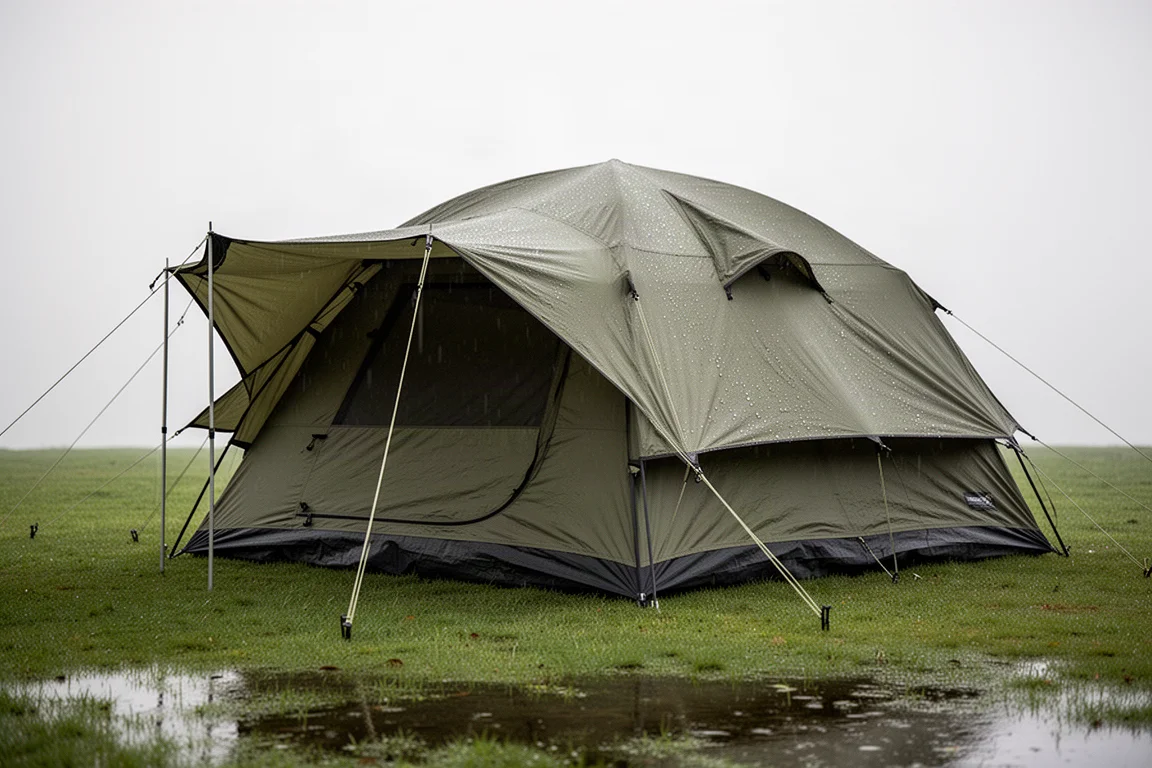
The North Face Wawona 6 is a large dome-style camping tent built around a partial rainfly, and its wet-weather behaviour is the part worth understanding before you commit. This review covers how the tent performed through roughly an hour of light rain and then through repeated afternoons of heavy rain, including one session where the ground around it flooded and water pooled around the base.
The short version: the interior stayed dry in both scenarios, and the tent pairs that protection with genuinely usable ventilation in the rain. There are still a few design details to understand, mainly around the back door and the flooring.
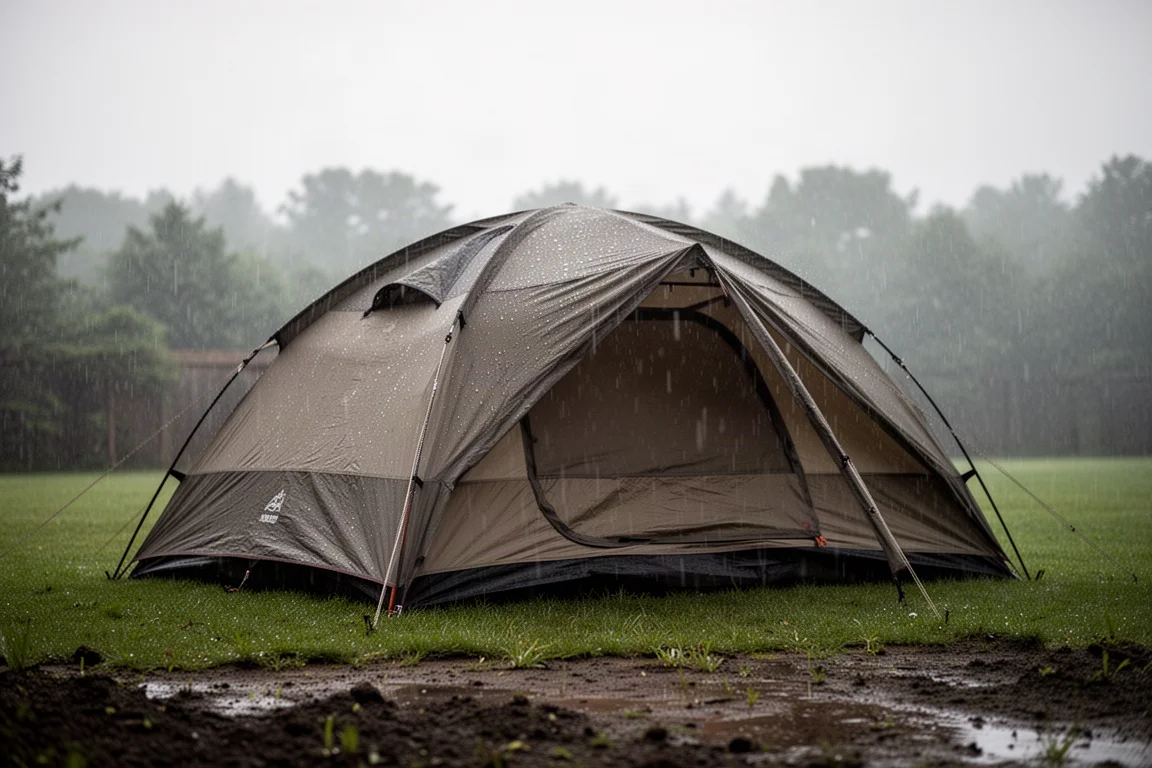
What makes the result interesting is that the rainfly does not cover the entire inner tent. The Wawona 6 relies on a combination of partial coverage, thorough seam taping, and adjustable vents rather than a full wrap-around fly.
Who This Tent Is For
This tent suits campers who expect real rain and want a large shelter that stays dry without sealing seams themselves. Every seam on the Wawona 6 arrives taped. The seams not covered by the rainfly are taped, while the seams that sit directly under the rainfly are left untaped because the fly handles that water.
That means no seam sealing is required on a brand new tent, which is a meaningful convenience for anyone who has spent an evening brushing sealant along the seams of a cheaper shelter.
It is also a good fit for campers who want airflow during wet weather. The windows can be guyed out into vents, the two smaller vents sit at an angle that keeps water out, and a small gap between the rainfly and the ground at the vestibule allows some ventilation even when the ground is wet.
Main Strengths: Rain Protection and Seam Taping
Rain protection held up in both scenarios. After an hour of fairly light rain, there was not a single leak inside the tent. In the heavier test, rain fell hard for about three hours, the surrounding yard flooded, water reached ankle depth, and the bottom of the tent was submerged with one corner sitting in roughly two inches of water.
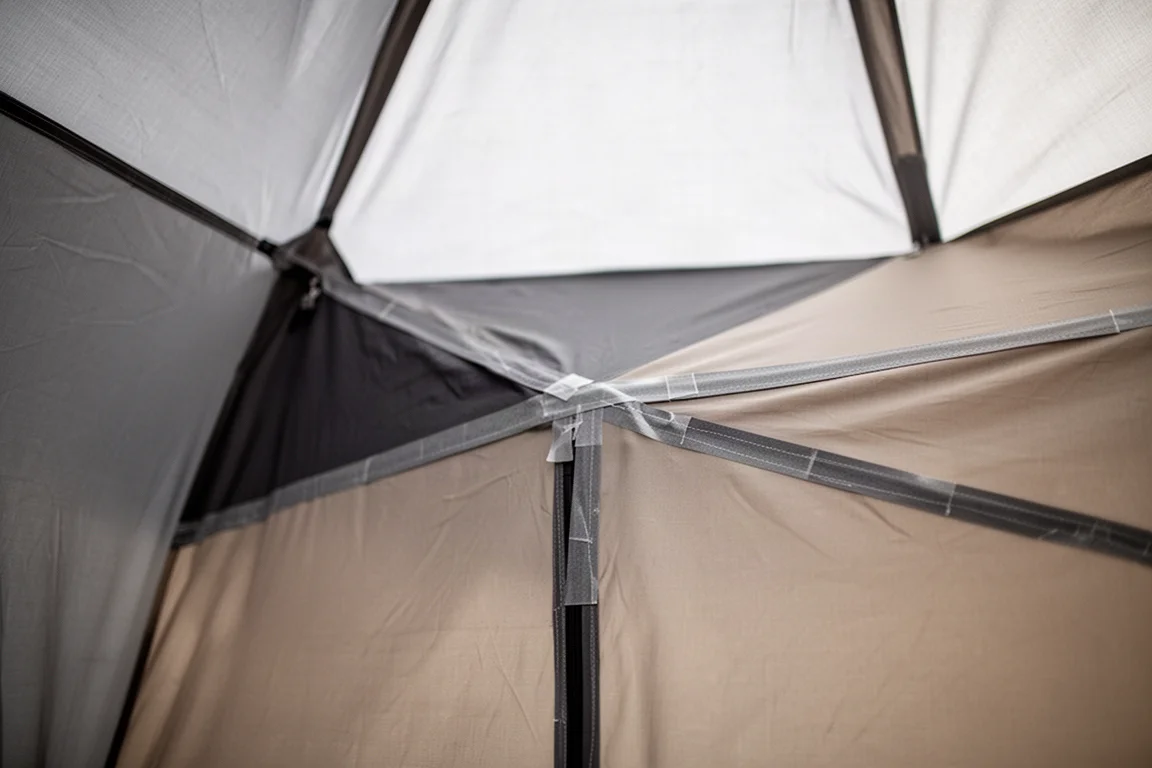
Inside, the corners showed no leakage at all. Even when the seams were pressed gently there was no dampness, and the rest of the seams did not leak either. The flooring stayed dry from the inside, as did the black fabric at the bottom of the tent, the yellow fabric higher up, the mesh above it, and the fabric behind the back door mesh.
The seam taping is thorough. Vertical seams are taped up to the point where the rainfly covers them, the back door is taped all around, and every seam in the flooring is taped, including the corners. The flooring is not a bathtub-style floor and it carries a lot of seams, so that taping is doing real work.
One smart detail: the inner tent door sits fully behind the vestibule and nowhere near the vestibule door. Even when the vestibule door is soaked and dripping, opening it does not let water into the sleeping area.
Ventilation in Wet Weather
Wet-weather ventilation is where the partial rainfly earns its place. In light rain, one window could be guyed out to create a vent, and no water came through it. Both main windows can be guyed out into angled vents, and they stayed leak-free through heavy rain with moderate winds.
The two smaller vents performed well too. One left open during heavy rain sat at a downward angle that kept water out entirely, and the mesh inside stayed completely dry.
There is one firm rule in heavy rain: the back door has to stay closed. The rainfly does not cover it, so water flows directly over the fabric. That same door is already unusable in light rain, because water drips off the rainfly onto it. The windows also need to be closed from the outside unless they are guyed out, otherwise rain drips in through the window mesh.
A small gap between the rainfly and the ground at the vestibule adds a final path for airflow during heavy rain. Even with water on the ground, that opening keeps some air moving through the shelter.
Things to Consider Before Buying
The flooring is not a bathtub floor, and it has a large number of seams. Every one of those seams is taped, which is what kept the interior dry while the floor was submerged, but the construction is worth understanding if you regularly camp where standing water is possible.
After three afternoons of heavy rain, the back wall, the one with the back door, was slightly damp on the inside. It did not drip, but touching it left a slightly damp hand. The rest of the walls stayed completely dry. The likely reason is exposure: the back wall has no guy-out point and the rainfly sits closer to the tent body there, so it receives less coverage and more water, while each side has a guy-out point that lets the window vent be propped out for extra coverage.
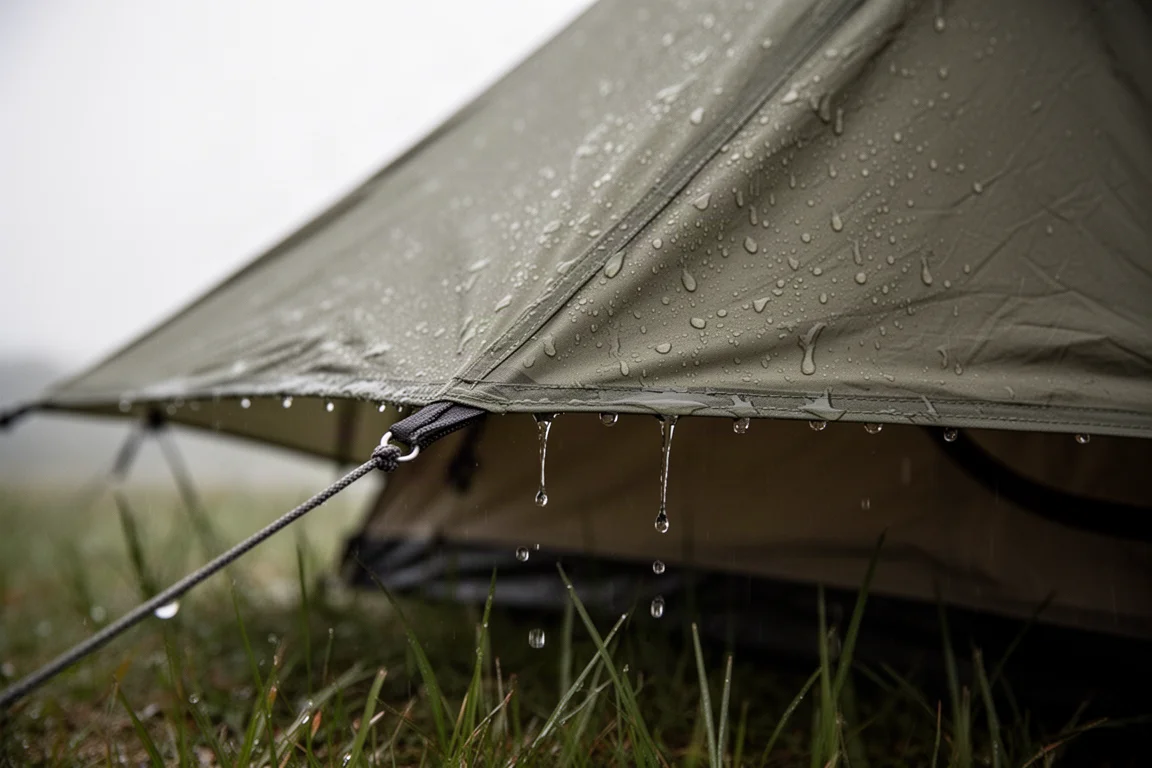
Back door usability is the other practical limitation. Between the water dripping off the rainfly and the lack of coverage over that panel, it works as a closed wall in wet conditions rather than a usable entrance.
Buying Advice
Buy the Wawona 6 if rain protection and ventilation both matter, and you would rather not seal seams yourself. The tent handled an hour of light rain and repeated heavy rain without leaking, kept its interior dry while the ground around it flooded, and still offered working ventilation through guyed-out windows, angled vents, and the gap at the vestibule.
Be realistic about the layout. Plan on entering through the front, keep the back door closed when it rains, close the windows from the outside unless you are propping them into vents, and expect the back wall to be the first place to feel damp in prolonged, heavy weather.
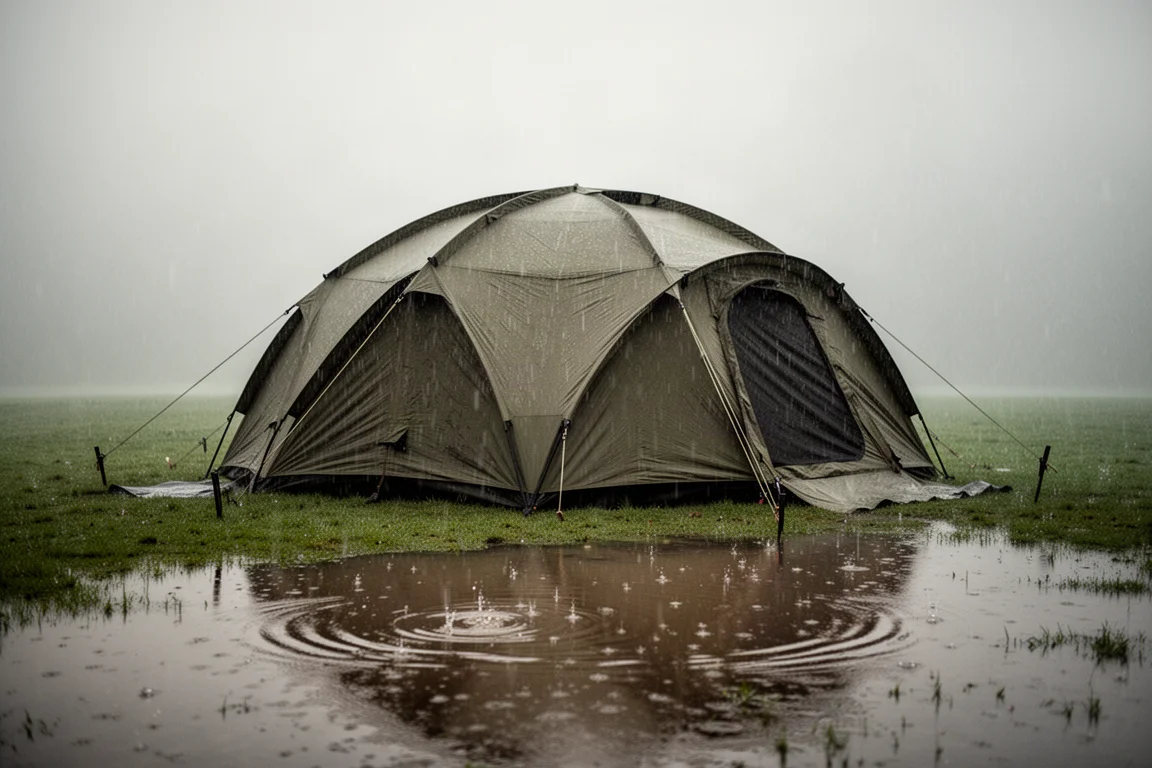
If you want a full wrap-around rainfly or a bathtub floor, this is not that tent. If you want a large shelter that stays dry in serious rain and still breathes while it does, the Wawona 6 delivered in these conditions.
Conclusion
The North Face Wawona 6 turned in strong rain performance. The partial rainfly, complete factory seam taping, and adjustable ventilation worked together to keep the interior dry in light rain and in heavy rain that flooded the ground around it. The trade-offs are specific and manageable: a non-bathtub, multi-seam floor, a back door that stays shut in the rain, and a back wall that can feel slightly damp after several days of heavy weather. For campers who prioritize staying dry without doing their own seam sealing, it is a confident choice.
Product link
View more details for The North Face Wawona 6
This product is mentioned in the review. Check the specifications, options, and compatibility before buying.
View more details for The North Face Wawona 6Further reading
Related Reviews
Camping Tents
3F UL Gear Taiji Two-Person Tent Review: Field Waterproofing Results and Buying Advice
The Taiji pairs an attached fly with a removable inner, but sustained rain exposed untaped vent seams that need sealing before this shelter can be trusted.
Camping Tents
3FUL Gear Lanshan 2 Pro 4-Season Review: A Sub-$200 Single-Wall Trekking Pole Tent
An early look at the 3FUL Gear Lanshan 2 Pro 4-Season, covering its straightforward pitch, generous interior space, and the condensation and seam-sealing questions that come with any single-wall shelter.
Camping Tents
Alps Mountaineering Lynx 1-Person Tent Review: Big Value in a Small Budget Tent
A close look at the Alps Mountaineering Lynx 1-Person Tent, covering real interior dimensions, materials, setup time, ventilation limits, and who should buy it.