Camping Tents
The North Face Stormbreak 2 Review: A Budget Two-Person Tent Built for Wet Weather
A practical look at The North Face Stormbreak 2, covering setup time, interior dimensions, vestibule configurations, rain performance, and the trade-offs worth weighing before buying.
Introduction
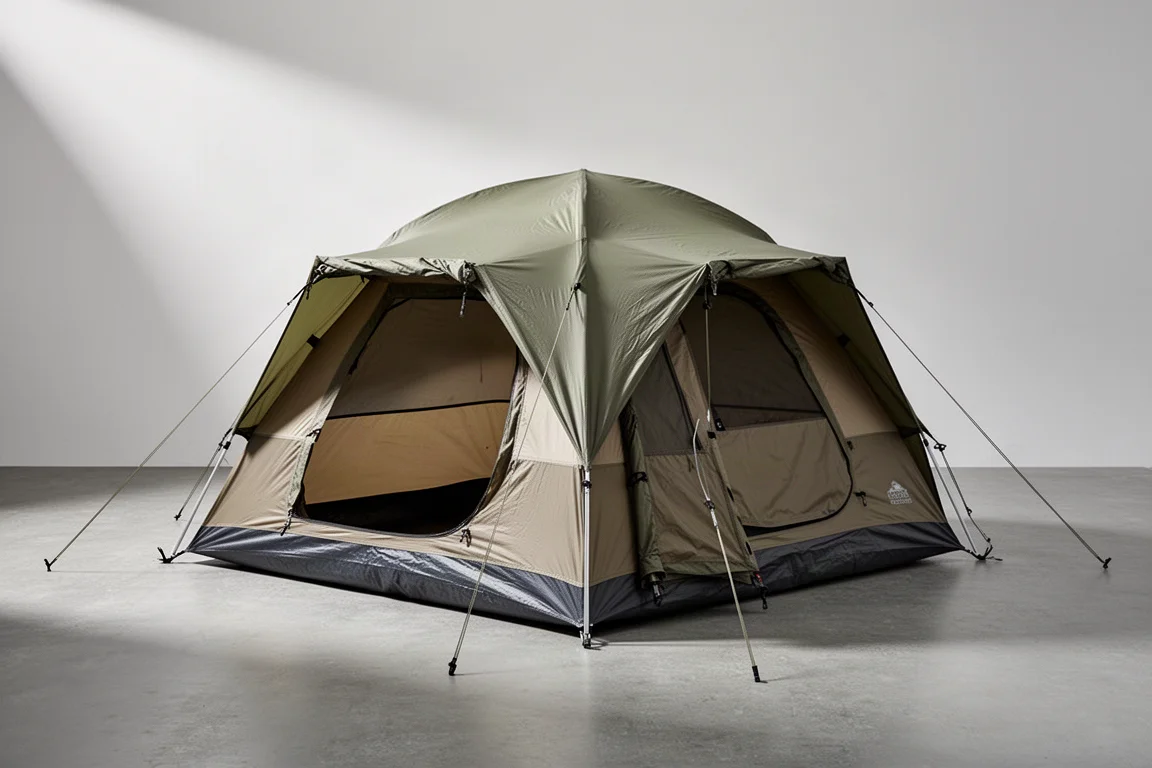
The North Face Stormbreak 2 is a two-person camping tent that sits at the bottom of the brand’s tent range. It ships with a full-coverage rainfly, aluminium poles, two vestibules, and the brand’s limited lifetime warranty, and it sells for roughly $200.
That combination makes it one of the more interesting budget options for campers who want dependable weather protection without paying premium prices. This article walks through how the tent goes together, how much room it actually offers, how it behaves in sustained rain, and where it asks for compromises.
Who the Stormbreak 2 Is For
The Stormbreak 2 is aimed at campers who drive to a site, pitch for a weekend, and want a shelter that stays dry. The roughly 30 square feet of floor area is enough for two adults sleeping side by side, and the two vestibules add useful covered storage for packs, boots, and wet layers.
It is not a lightweight backpacking tent. The complete package weighs about 6.3 pounds, which is noticeably more than the marketed figure suggests, so anyone counting grams for a long-distance trip should look at lighter designs.
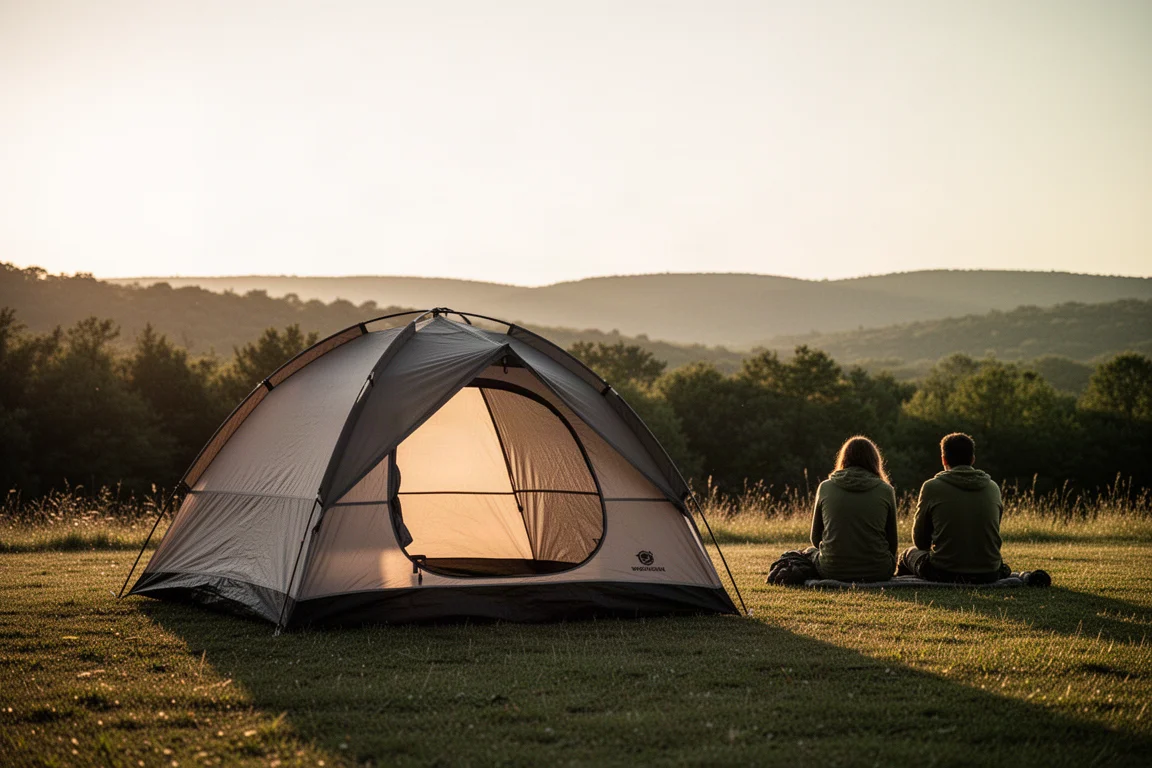
A full-size double pad such as the Exped MegaMat Duo 10 drops in with a little floor space left over for gear. Wider 25-inch pads will fit as well, but only just, running right to the edges of the tent. Anything larger starts to press against the walls.
That makes the Stormbreak 2 a good match for couples, weekend campers, and anyone who prioritises interior space and rain protection over pack weight. It is a poor match for solo travellers who want to carry as little as possible.
Setup, Takedown, and Packed Size
Setup is straightforward. The tent body is laid out on the ground, the two long poles are crossed over each other, and each pole end is seated in one of the four corner grommets. A single clip at the top and eight clips along the bottom hold the body to the poles, and there are no pole sleeves to thread, which keeps the process quick. Four clips are left free at this stage.
The two short poles then run across the top at 90 degrees to the long poles, secured by grommets at the top of the tent, and the remaining four clips attach to them. The rainfly goes on next: a single red webbing tab on the fly lines up with the matching red webbing on the body, grommets on the underside of the fly seat onto the tips of the short poles at the top, and further grommets at the bottom seat onto the tips of the long poles. The final step is staking both vestibules, staking out the widths, and guying out the pre-attached guylines.
The whole process takes roughly seven and a half minutes, and takedown runs about seven minutes and 45 seconds. Packing away is the slower half, partly because the carry bag is on the small side.
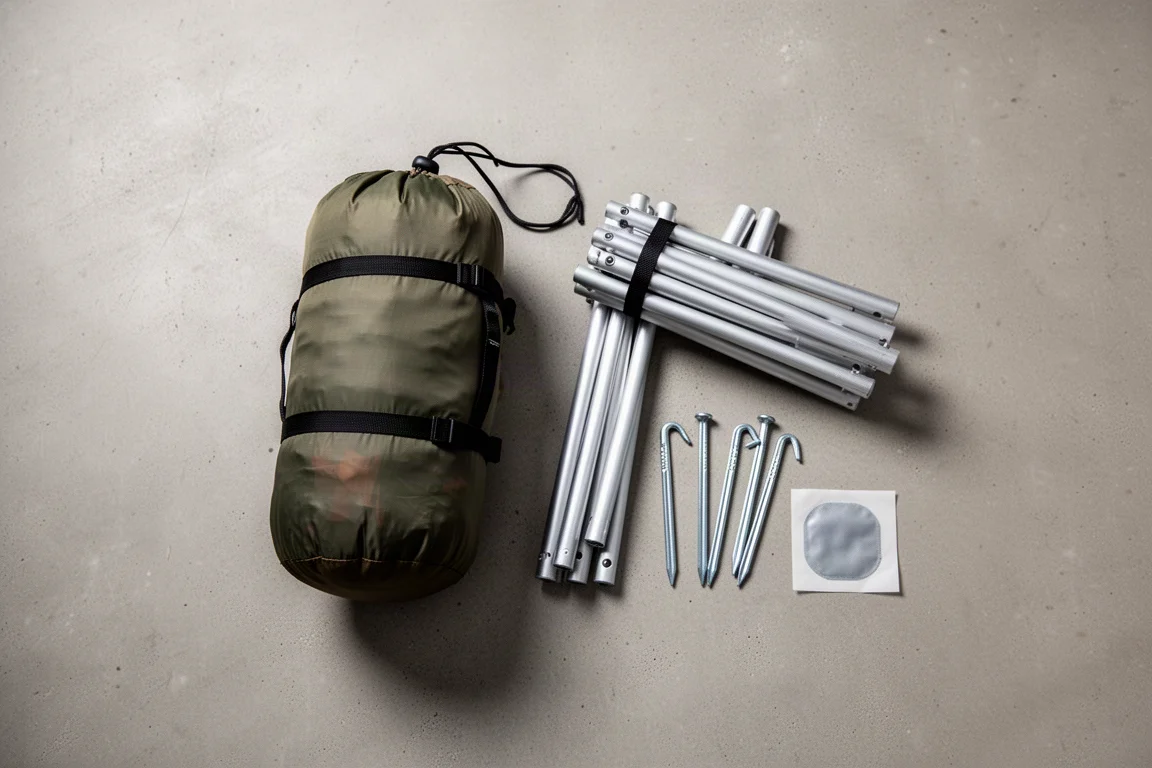
One practical detail: only 10 stakes are included, but 14 are needed for a complete pitch, so four extras are worth adding to the kit. Packed down, the tent measures about 20 by 7 by 6.5 inches, or about 17.8 inches long when the poles are carried separately.
Interior Space and Peak Height
Peak height at the centre reaches about 43 inches. The two short poles at the top hold the fabric up across a square area rather than at a single point, so the measured height at the edges of that square is about 39 inches on all sides. In practice that means near-maximum headroom across a broad section of the tent instead of a narrow ridge.
The floor measures about 87.5 inches long and 49.5 inches wide, for a base area of roughly 30 square feet. A 4-inch sleeping pad leaves plenty of room overhead, and even a 6-inch queen mattress sits comfortably beneath the extended peak.
Width is where pad choice matters. A double-wide pad such as the Exped MegaMat Duo 10 fits cleanly with around 6 inches of spare width for storing gear on the floor. Wider 25-inch pads squeeze in, but they run edge to edge. A near-queen-size airbed is a different story: it appears to fit, then bulges out against the side walls and puts stress on the fabric, so it is best avoided.
Vestibules, Doors, and Storage
There are two vestibules, one at each end of the tent, both in a trapezium shape. Each measures about 41.5 inches along its short length and 23.5 inches wide, adding roughly 10.5 square feet of covered space per side, or about 21 square feet across both.
The vestibules can be configured five different ways. Fully closed is the default. The centre flap can be unzipped and tied up at the top toggle, or opened only halfway using a second toggle in the middle when partial ventilation is enough. Because each vestibule has four loops, two per side, staking the alternate loop keeps the centre flap closed while opening the two sides to create a small awning. The vestibule can also be taken out of the equation entirely by un-staking it, unzipping it fully, and tying the top and side fabric up out of the way.
Each vestibule covers one door, and each door measures about 41 by 29 inches. The doors unzip almost completely, leaving only a small attachment point, which turns them into wide openings that are easy to move through and that help cross ventilation. A pocket beside each door holds the rolled door fabric, and those pockets are large enough to swallow other items as well.
Storage inside is generous for the price. Four corner pockets measure about 18 by 9 inches each, and there are five felt loops for hanging a lantern or a fan. No gear loft is included, so those loops go partly unused.
The tub floor runs the full perimeter, measuring about 6 inches high along the length and about 6.5 inches along the width. The slightly higher sides at the width are deliberate, since the rainfly cannot be pulled away from the body as far there as it can at the vestibules.
Main Strengths: Weather Protection and Value
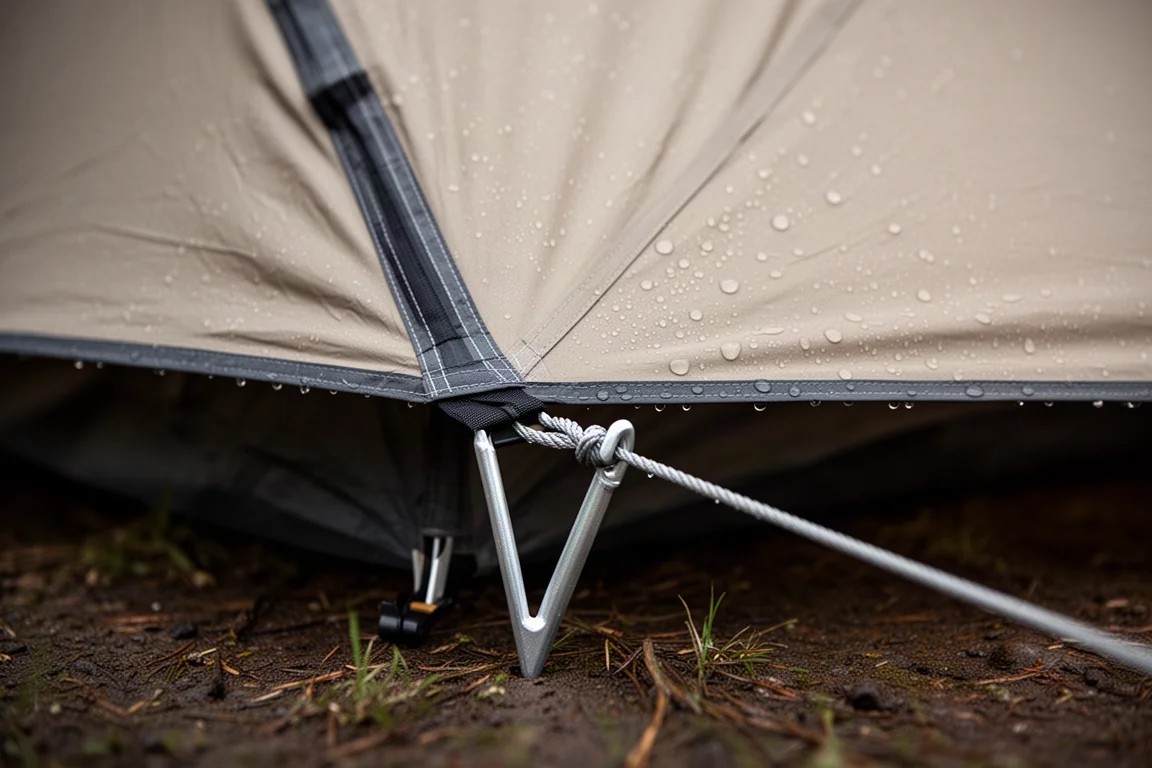
The full-coverage rainfly extends almost to the ground, and each width of the tent has its own guy-out point to pull the fly away from the body. That gap improves airflow and makes it harder for rain to reach the inner tent.
Seam taping is applied thoroughly on the rainfly, with every seam taped. On the tent body, only the tub floor seams are taped, including the corner seams and the seam running across the floor. Everything above the tub floor is left untaped.
In rain testing, the Stormbreak 2 came through about two hours of light to moderate rain without leaks, and it stayed completely dry through an hour of heavy rain as well. The corner seams held, the floor stayed dry, water did not creep past the tub floor, and the underside of the rainfly was dry when it was lifted to check.
The materials are sensible for the price. The floor is 68D polyester with a 3,000 mm polyurethane coating, the rainfly is 75D polyester with a 1,200 mm coating, and the tent body is 75D polyester taffeta. The poles are aluminium, and the 40D polyester micromesh kept out every bug that came near it. Guylines are standard shock cord with easy-to-use tensioners, and the stakes are thin shepherd hook designs.
Value is the headline. This is the least expensive tent in The North Face lineup, priced at $185 in 2024 and around $200 more recently, and it carries the brand’s limited lifetime warranty. For a tent that handles sustained rain this well, that is a strong package.
Things to Consider Before Buying
The vestibule zippers are the most consistent annoyance. They are SBS zippers and feel well made, but the rain flap catches easily, so zipping one-handed leads to repeated snagging. Both hands are needed, one to hold the fabric clear and one to work the pull, and the same applies from inside the tent. The door zippers, which are also SBS, do not have this problem and run cleanly.
There are no rainfly vents for wet-weather ventilation. Most tents in this class offer at least two, and their absence is noticeable on damp, still nights.
Weight is the other caveat. At about 6.3 pounds packed, the Stormbreak 2 is heavier than its marketed specification suggests, which rules it out for ultralight backpacking trips.
The inner tent is roughly half mesh and half fabric. That is fine for cooler conditions but limited for hot summer nights, and the white fabric panel across the top blocks the view when lying back to look at the sky. Finally, the carry bag is tight enough that packing everything back in takes longer than it should.
Buying Advice
The Stormbreak 2 makes the most sense for campers who want maximum interior space and dependable rain protection on a budget. Two people, a double-wide pad, and a weekend of unsettled forecast is exactly the scenario it is built for. Buyers who value a fast, simple pitch will also appreciate the clip-based design and the absence of pole sleeves.
Skip it if portability is the priority, if you want a highly breathable summer shelter, or if one-handed vestibule zipping matters to you. Those buyers are better served by lighter or more mesh-heavy designs.
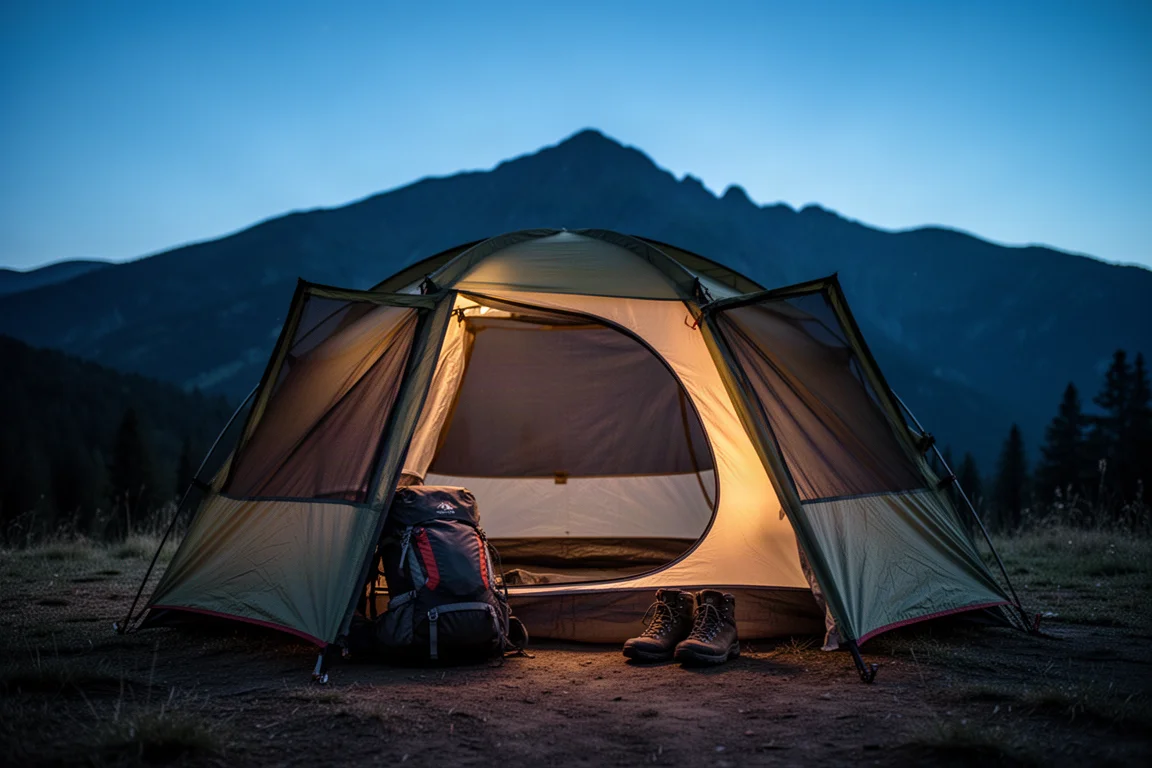
If the Stormbreak 2 fits your use case, plan on adding four stakes to reach a complete pitch, and consider a groundsheet if you want extra protection for the floor. The included limited lifetime warranty is a meaningful backstop for a tent at this price.
Conclusion
The North Face Stormbreak 2 delivers a rare combination at the budget end of the market: a full-coverage, fully taped rainfly, a genuinely spacious interior with an extended peak, two large vestibules with five configurations, and a limited lifetime warranty. Its weak points are the snag-prone vestibule zippers, the lack of rainfly vents, and a packed weight that keeps it out of ultralight territory. For car camping and weekend trips where staying dry matters more than saving grams, it is a compelling option.
Product link
View more details for The North Face Stormbreak 2
This product is mentioned in the review. Check the specifications, options, and compatibility before buying.
View more details for The North Face Stormbreak 2Further reading
Related Reviews
Camping Tents
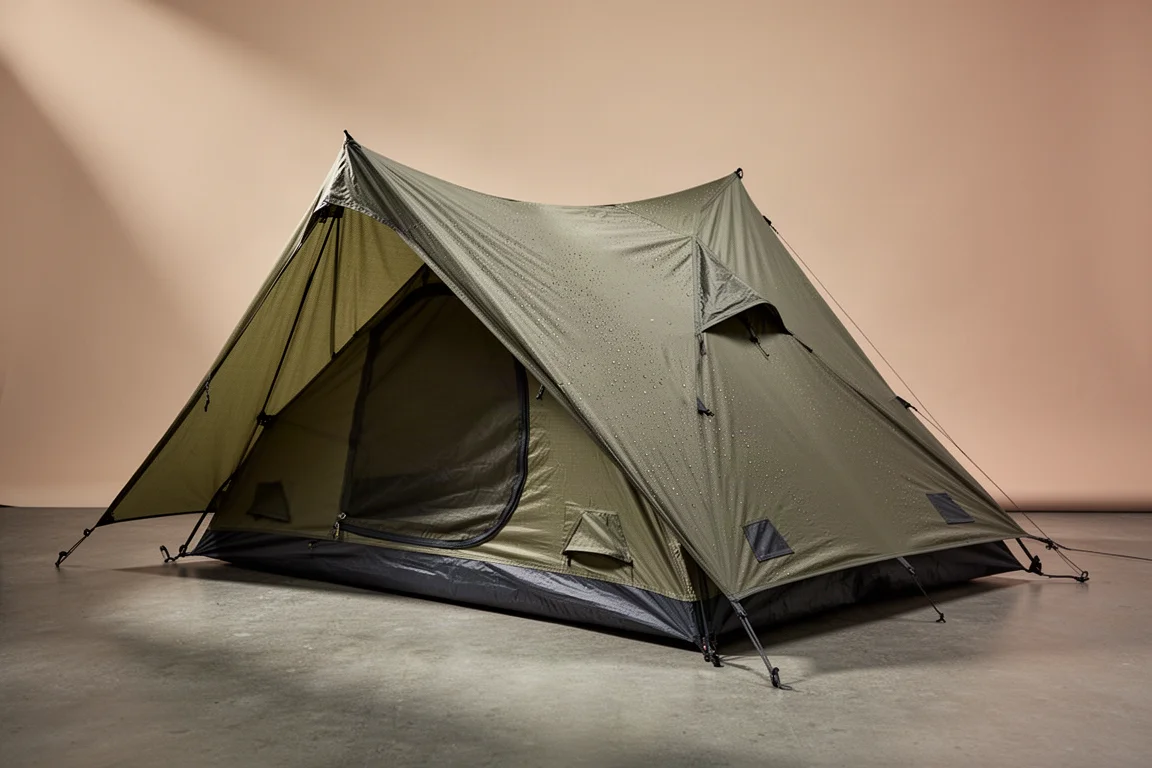
3F UL Gear Taiji Two-Person Tent Review: Field Waterproofing Results and Buying Advice
The Taiji pairs an attached fly with a removable inner, but sustained rain exposed untaped vent seams that need sealing before this shelter can be trusted.
Camping Tents
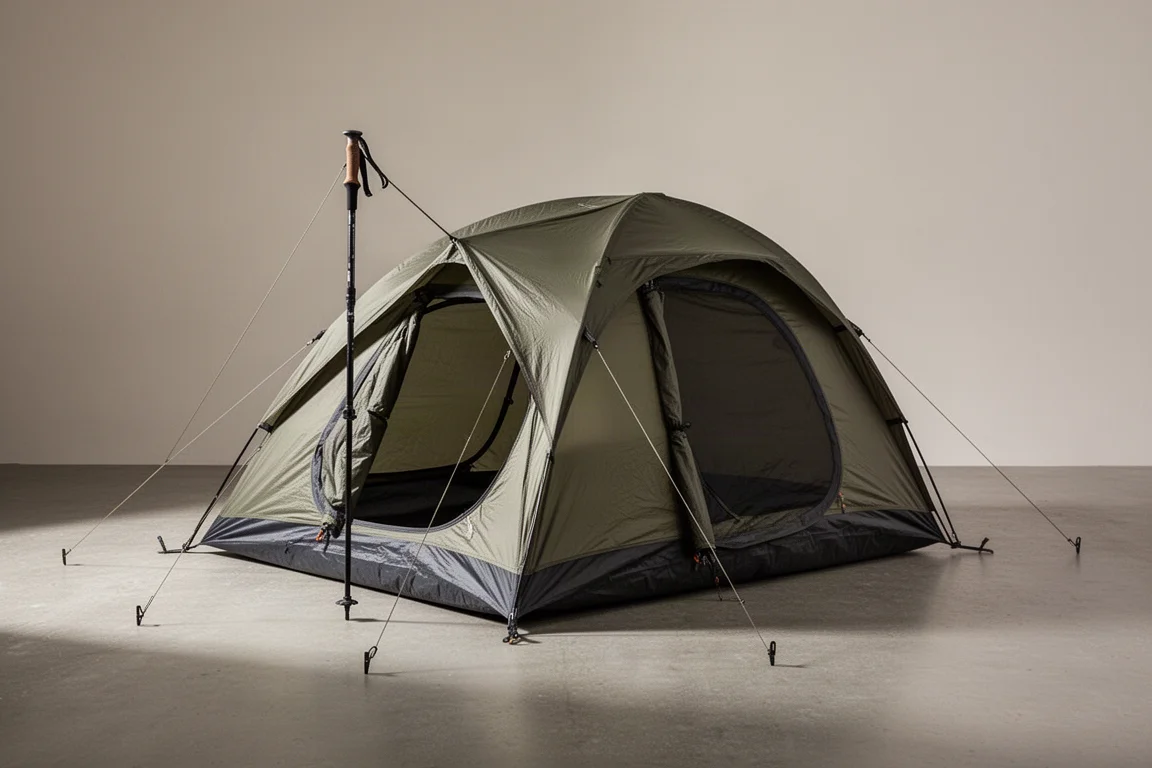
3FUL Gear Lanshan 2 Pro 4-Season Review: A Sub-$200 Single-Wall Trekking Pole Tent
An early look at the 3FUL Gear Lanshan 2 Pro 4-Season, covering its straightforward pitch, generous interior space, and the condensation and seam-sealing questions that come with any single-wall shelter.
Camping Tents
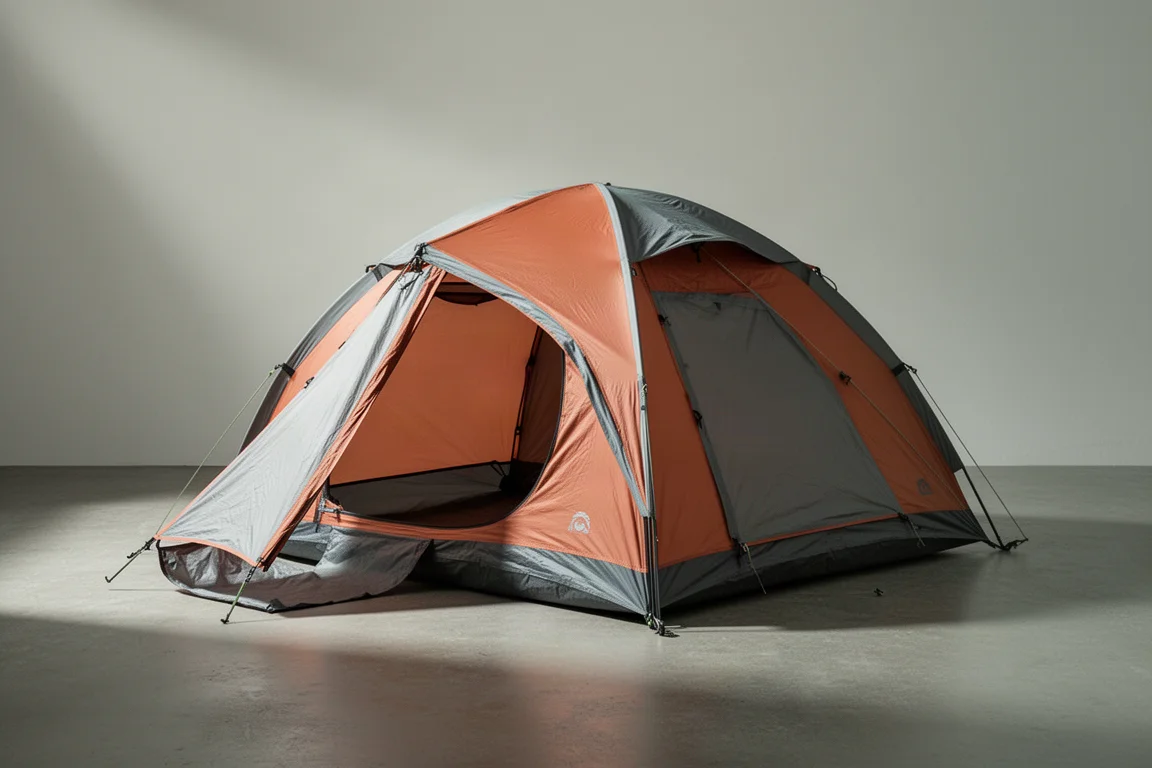
Alps Mountaineering Lynx 1-Person Tent Review: Big Value in a Small Budget Tent
A close look at the Alps Mountaineering Lynx 1-Person Tent, covering real interior dimensions, materials, setup time, ventilation limits, and who should buy it.