Camping Tents
Teton Sports 2-Person Vista Quick Tent Review: Fast Setup, Serious Space
A fast pitching two person pop-up tent with two doors, two vestibules, and a removable rainfly, plus the seams and packed size worth knowing about first.
Introduction
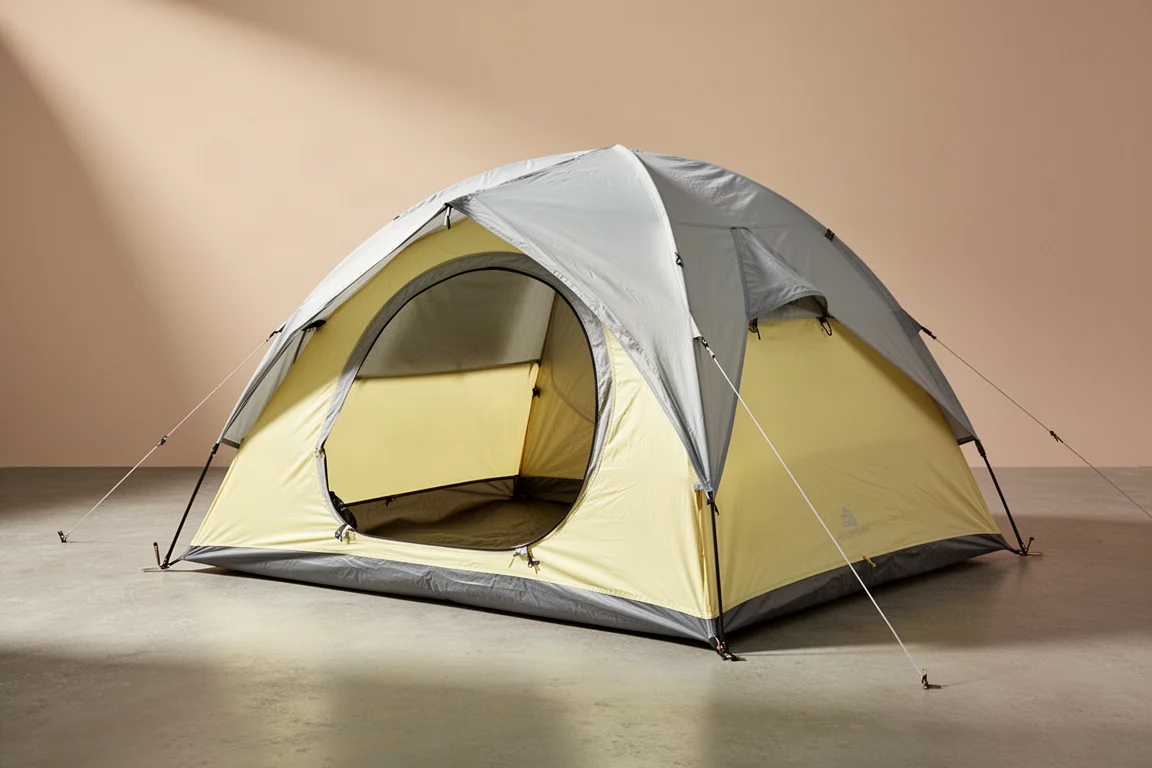
Pop-up and instant tents promise a campsite that appears in seconds, and the compromises usually show up everywhere else: thin fabric, a single door, no vestibule, and a floor plan that barely fits two sleeping bags. The Teton Sports 2-Person Vista Quick Tent takes a different route. It still pitches quickly, roughly three and a half minutes for a full setup with stakes and guylines, but it keeps the features that make a tent comfortable to live in: two doors, two vestibules, a gear loft, and a rainfly you can remove entirely.
At just over $100 and backed by a lifetime warranty, it sits in an unusual spot for a pop-up design. This review covers setup and pack-down, interior space, ventilation, weather behaviour, packed size, and the handful of details worth knowing before you buy.
Who This Tent Is For
This is a car camping and weekend trip tent first. It suits two people who want a quick pitch at the end of a drive, a floor plan that accommodates a large sleeping pad, and enough vestibule space to keep wet boots and packs out of the sleeping area. It also works for solo campers who want room to spread out.
It is not aimed at backpackers. The packed size and 6.6 pound weight are reasonable for a car boot, not for a long trail carry. It is also not a true instant tent that springs open the moment you pull it from the bag.
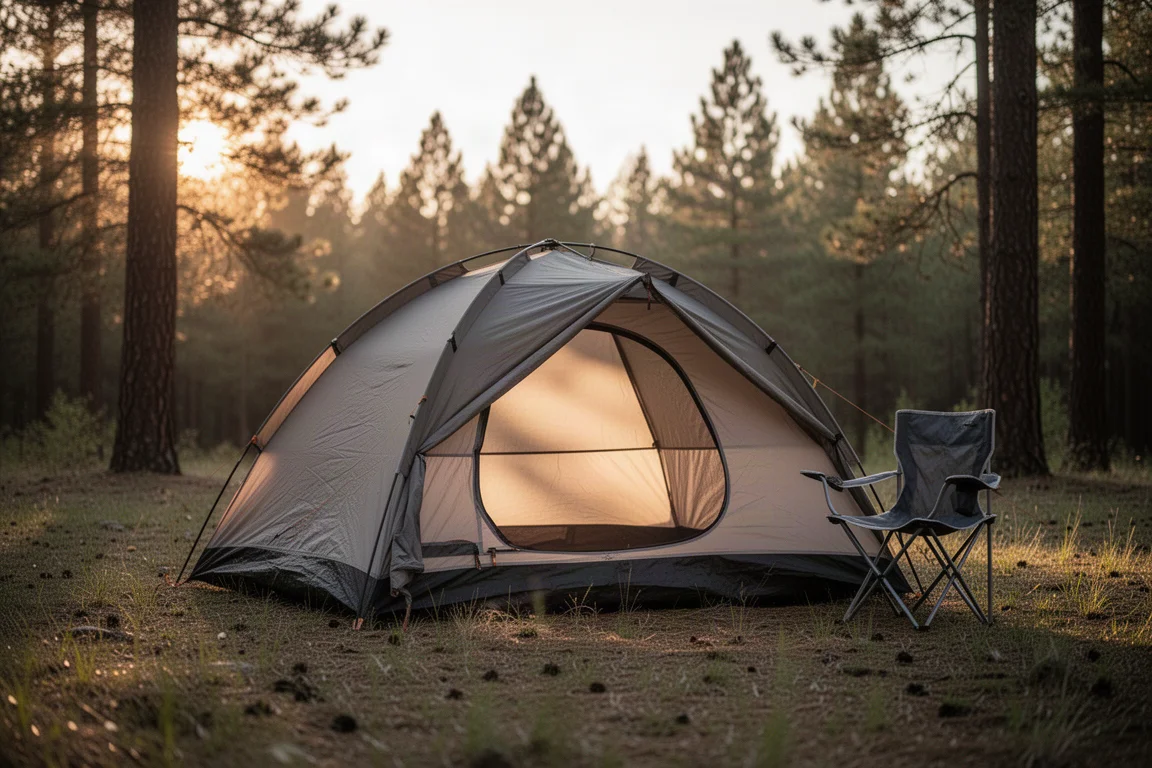
The appeal is the combination of speed and interior comfort, and that combination holds up once the tent is pitched.
Main Strengths
The strengths here are less about any single specification and more about how the tent behaves in daily use.
Setup and Pack-Down in About Three Minutes
Setup starts by sliding the tent out of the carry bag and unfolding the body until it lies flat as a square, with the centre locking hub left folded. One side of the square holds two longer poles, and unfolding that side turns the base into a rectangle. Locking those two poles is the next step.
From there, the two drawstrings at the top of the centre hub are untangled, grabbed with one hand, and lifted off the ground while the other hand pushes down on the hub. The tent pops up, which takes about one minute in total. Staking the four corners is optional but quick.
The rainfly then drapes over the top and fastens with four buckles at the corners. With the vestibule zips closed, the tent is guyed out with four pre-attached guylines, two at the front and two at the back, the vestibules are staked, and the rear rainfly vent is opened. That stage adds roughly two and a half minutes, bringing a complete pitch to about three and a half minutes. Skipping the stakes and guylines saves around one and a half minutes.
Take-down runs in the opposite order. Close the vent, pull the stakes from the guylines and vestibules, unbuckle and remove the rainfly, then press down on the grey poles with both hands so the frame folds and the body lies flat. The two longer poles are unlocked and folded back to the square shape, the four edges are folded toward the centre hub, and the air is pushed out. That takes about one and a half minutes.
Packing is the last stage. The rainfly is folded in half on the ground, the tent is laid on its edge and rolled up inside it, and the whole bundle goes back into the carry bag, another one and a half minutes or so. Compression straps are included if you want to cinch the load down further.
Space, Doors, and Cross Ventilation
The base measures about 83 inches by 62 inches. That works out to 35.7 square feet of interior floor space, plus 8.6 square feet of vestibule space, for 44.3 square feet in total.
Peak height is around 40 inches, and the walls slope downward, so the full height is only available at the centre of the tent. With a six inch thick mattress in place, sitting up and lying down are comfortable, though taller campers should account for the sloping walls.
A large double pad leaves plenty of room for gear, and a mattress close to queen size fills the floor with a few inches to spare. Because a mattress that size occupies the whole footprint, a model that inflates from the side valve is easier to manage than one that inflates at the head.
Each door is 52 inches long and 32 inches wide, with two zippers that open from inside and outside. The two vestibules are identical, with a longest width of about 15 inches, enough for footwear and wet gear.
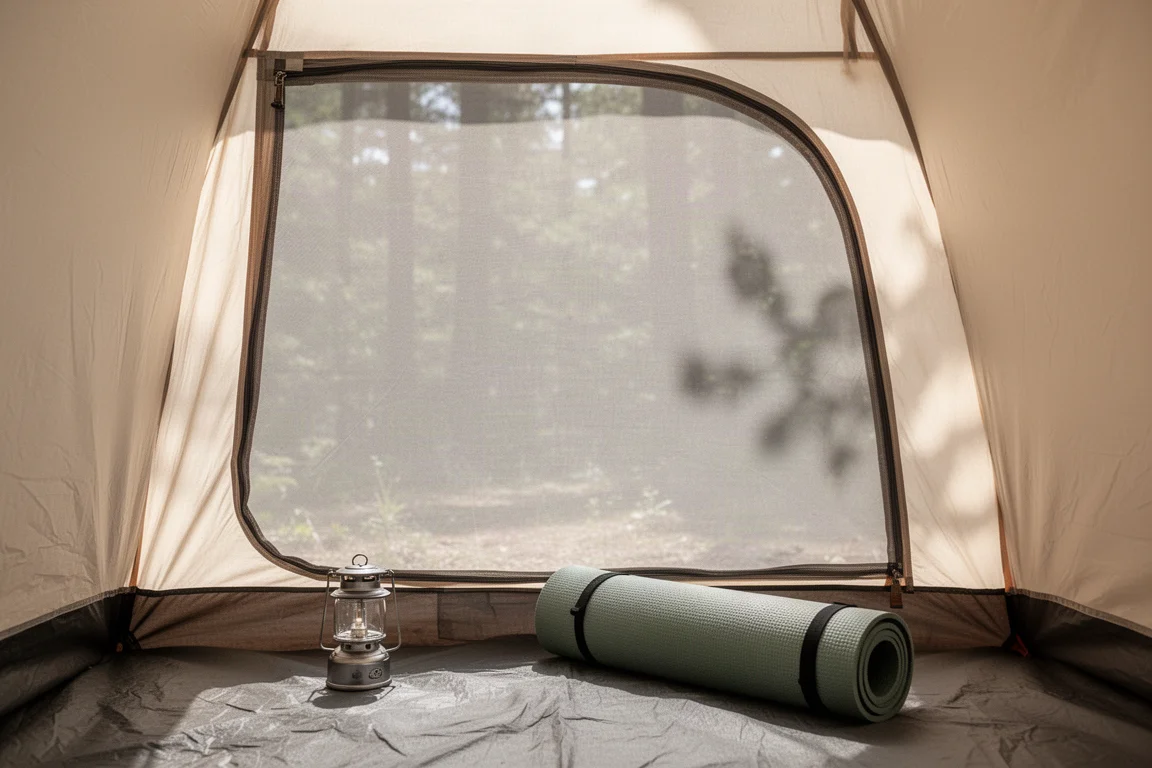
Ventilation is where the layout earns its keep. With the rainfly removed, roughly two thirds of the tent is mesh, which makes it comfortable on hot days and gives nearly unblocked views at night. With the rainfly on, both vestibules can be unzipped and clipped back to expose large mesh panels, and because there are two doors and two vestibules, cross ventilation is strong. In rain, the rainfly limits airflow, though the rear vent can be propped open with its kickstand and Velcro, and the rainfly stops about two inches short of the ground to let air move underneath. The vent is only adjustable from outside.
Storage, Fabric, and Warranty
Storage is generous for this class of tent. Two pockets, one on each width of the tent, measure about nine inches by four inches. A gear loft hooks to four circular loops at the top with S-hooks, and each loop still has room to hang a small lantern alongside the loft.
The body and rainfly use 75D Taffeta fabric, which feels high quality in hand. The bathtub floor extends almost five inches up the walls, and the mesh is a smooth no-see-um weave with very fine holes. Stitching is consistent, mostly double stitched with some single stitching at the pole clips, and the unbranded zippers run smoothly without snagging. The fibreglass poles are a little thicker than those on many other pop-up tents. The tent is covered by a lifetime warranty.
Portability and Packed Size
Packed, the tent measures about 33 by 8 by 8 inches. Compared with a Coleman 2-Person Sundome, a more traditional two person design, it is roughly 30 percent longer, and its overall packed volume is about 80 percent larger.
Weight comes in at around 6.6 pounds for the tent and carry bag, rising to about 7 pounds with the eight stakes and the compression strap. The carry bag includes a shoulder strap, and it is a fairly tight fit, which is part of why the package stays compact for a two person pop-up tent.
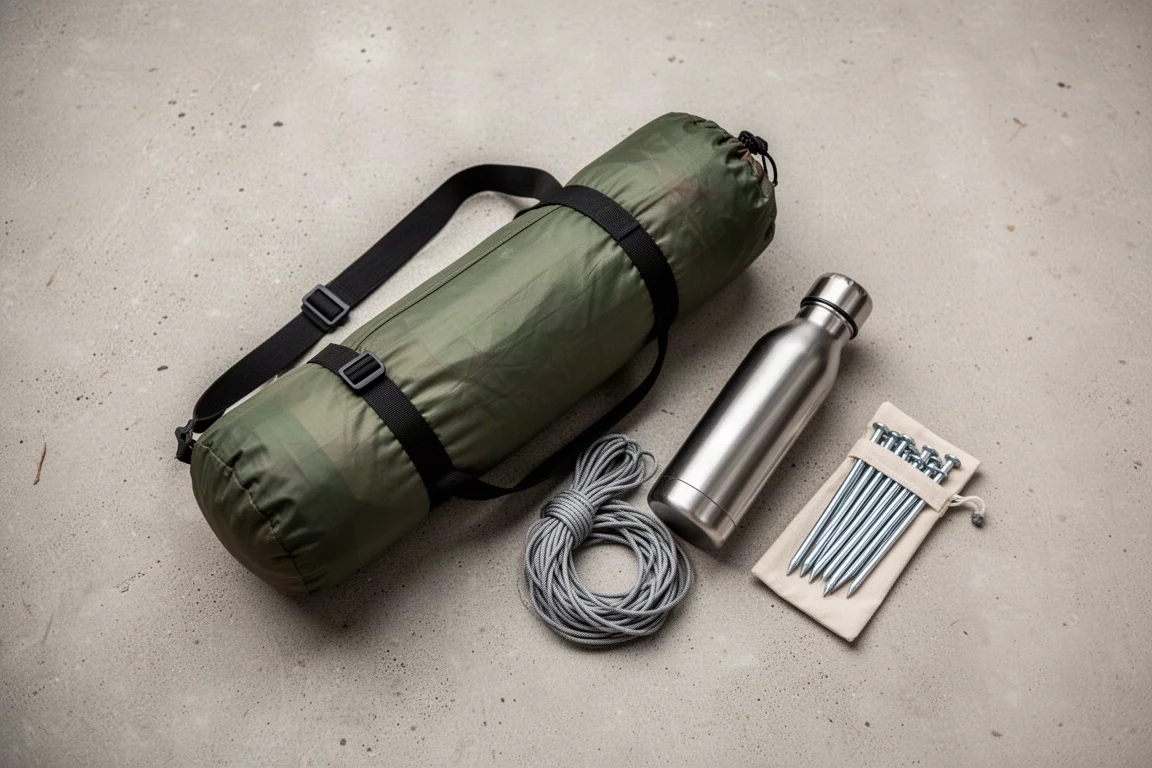
If boot space is tight, the length is the dimension to check first, since it is the measurement that differs most from a conventional tent.
Things to Consider Before Buying
A few details are worth weighing before you commit.
This is not an instant tent in the strict sense. It does not spring open straight out of the carry bag. The full sequence is still quick at about three and a half minutes up and three minutes down, staking and guylines included, but it is a deliberate process rather than a single pull.
Seam sealing is the other consideration. The seams on the flooring are factory taped. The seam between the tent body and the flooring is not taped, nor are the yellow fabric to mesh seam, the inverted vertical seams, or the door seams, though those are covered by the rainfly. In a one hour heavy rain test, the underside of the rainfly became slightly damp and some water seeped through the fly, while the mesh and the yellow fabric stayed dry and no water entered through the rainfly. A few drops did work in through the untaped seam between the bathtub floor and the tent body. Sealing that seam prevents it.
The flooring is thinner than the rest of the build, and a groundsheet is a sensible addition to protect it. Wind behaviour was solid in light to moderate conditions, and the four guylines, modest peak height, and aerodynamic dome shape suggest it should hold up reasonably in stronger wind, though heavy wind protection was not measured.
Smaller points: the tie-back latches at the bottom of the doors are loose enough that the fabric sometimes unravels after being tied, and one pole clip attachment arrived not fully sewn down. Neither affects the way the tent performs.
Buying Advice
Buy this tent if you want a fast pitching shelter for car camping and weekend trips, and you value interior space, two doors, and two vestibules more than the absolute smallest packed size. The feature set is unusual for a pop-up design at this price, and the lifetime warranty adds meaningful long term confidence.
Look elsewhere if you need a true instant tent that opens straight from the bag, if you plan to carry your shelter on your back, or if you would rather not seal seams before camping in sustained heavy rain. In those cases the pack size, weight, and untaped body seam matter more than the convenience.
For most buyers the practical extras are simple: bring a groundsheet, seal the floor to body seam if heavy rain is likely, and choose a mattress with a side valve if you plan to use a queen sized pad.
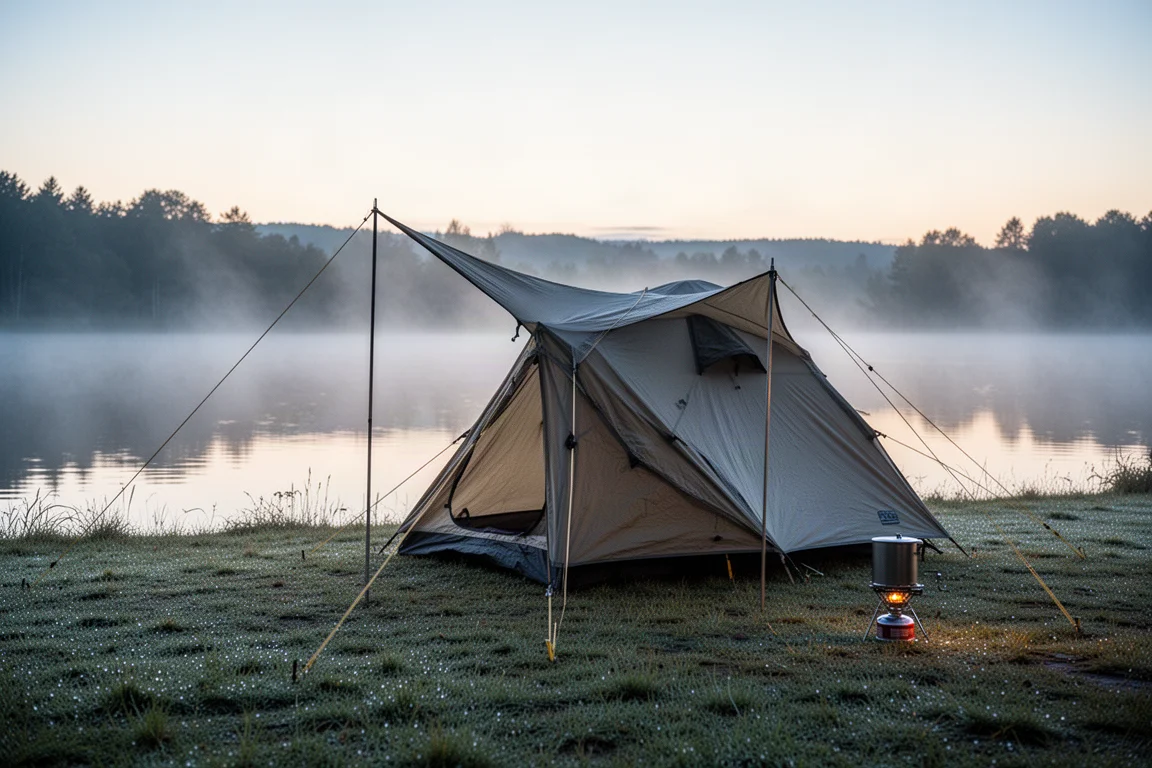
Budgeting a little extra for a footprint pays off over the life of the tent, since the flooring is the part most exposed to abrasion.
Conclusion
The Teton Sports 2-Person Vista Quick Tent is a fast pitching two person shelter that keeps the comforts most pop-up tents leave out: two large doors, two vestibules, a gear loft, lantern loops, pockets, and a rainfly you can remove for warm weather ventilation. Setup runs about three and a half minutes and pack-down about three, both including staking and guylines.
The trade-offs are equally clear. Packed size is larger than a conventional two person tent, the body seam needs sealing for heavy rain, and the flooring is on the thin side. At just over $100 with a lifetime warranty, it remains a strong value for campers who want speed without giving up living space.
Product link
View more details for Teton Sports 2-Person Vista Quick Tent
This product is mentioned in the review. Check the specifications, options, and compatibility before buying.
View more details for Teton Sports 2-Person Vista Quick TentFurther reading
Related Reviews
Camping Tents
3F UL Gear Taiji Two-Person Tent Review: Field Waterproofing Results and Buying Advice
The Taiji pairs an attached fly with a removable inner, but sustained rain exposed untaped vent seams that need sealing before this shelter can be trusted.
Camping Tents
3FUL Gear Lanshan 2 Pro 4-Season Review: A Sub-$200 Single-Wall Trekking Pole Tent
An early look at the 3FUL Gear Lanshan 2 Pro 4-Season, covering its straightforward pitch, generous interior space, and the condensation and seam-sealing questions that come with any single-wall shelter.
Camping Tents
Alps Mountaineering Lynx 1-Person Tent Review: Big Value in a Small Budget Tent
A close look at the Alps Mountaineering Lynx 1-Person Tent, covering real interior dimensions, materials, setup time, ventilation limits, and who should buy it.