Emergency Shelters
Terra Nova Bothy Bag and Fjallraven Windsack 3: Two Emergency Shelters Tested in Wind and Rain
A wet, windy field test of the Terra Nova Bothy Bag alongside notes on the Fjallraven Windsack 3, covering condensation, ventilation, comfort, and when an emergency shelter is worth carrying.
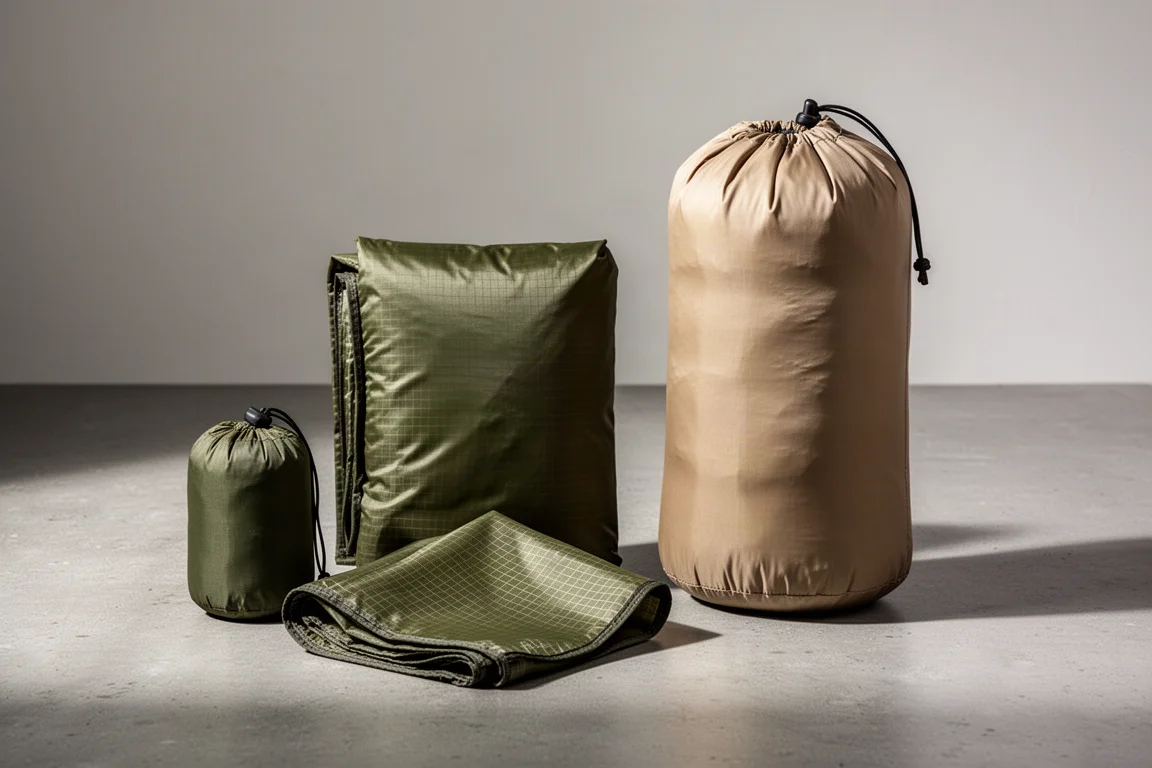
Introduction
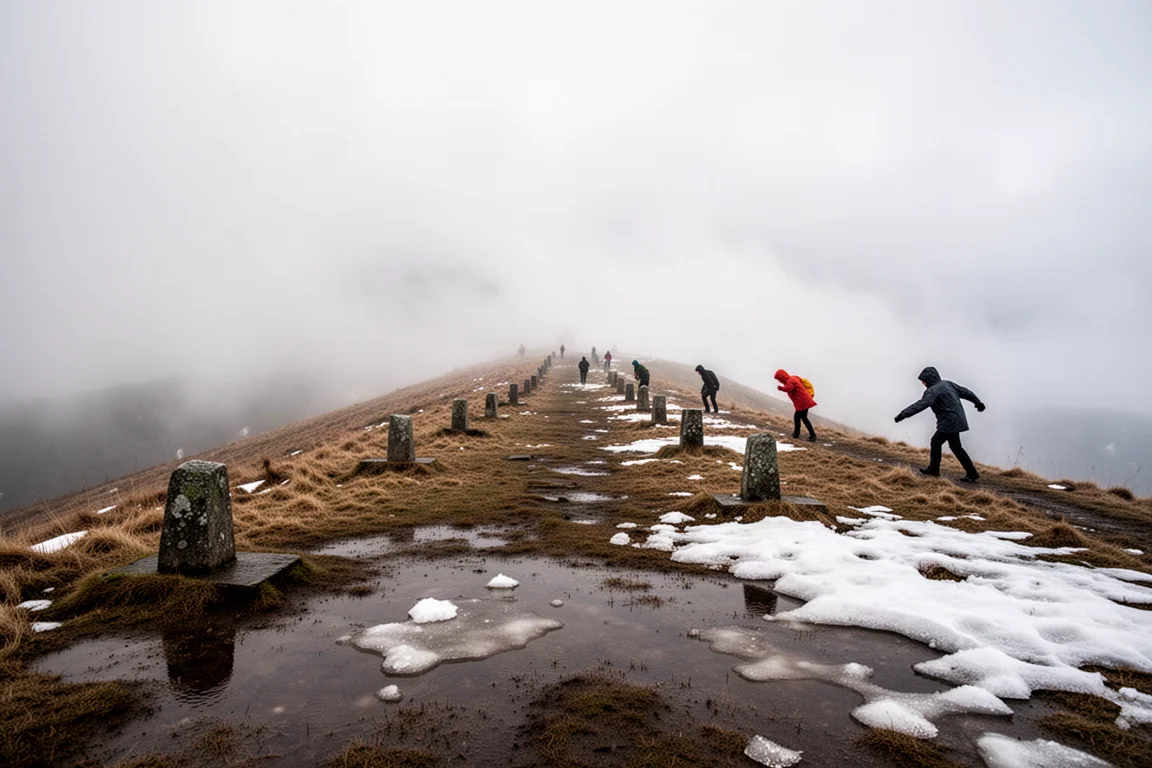
Emergency shelters that pull over your head and hold in body heat are a familiar piece of kit in the UK and parts of Scandinavia, and close to unknown almost everywhere else. Two of the better known designs are the Terra Nova Bothy Bag and the Fjallraven Windsack 3, and both were put through the same weather: temperatures hovering around freezing, steady rain turning to ice, deep melting snow underfoot, and sustained winds of roughly 30 mph gusting toward 50 mph on an exposed ridge above the tree line.
That is a demanding set of conditions, and it is exactly the kind of weather an emergency shelter is supposed to justify. What follows is a field account of how each design behaved, where the limits showed up, and how to think about carrying one.
What a Bothy Bag Is and Where It Is Used
A bothy bag is a lightweight fabric shelter that one person or a small group pulls over themselves to get out of wind and rain. The term is British, and the format is common in the UK and, to a lesser extent, in Scandinavia. It is not widely used in alpine Europe or in the United States, and it remains a polarising item: some people rely on them, others consider them nearly useless.
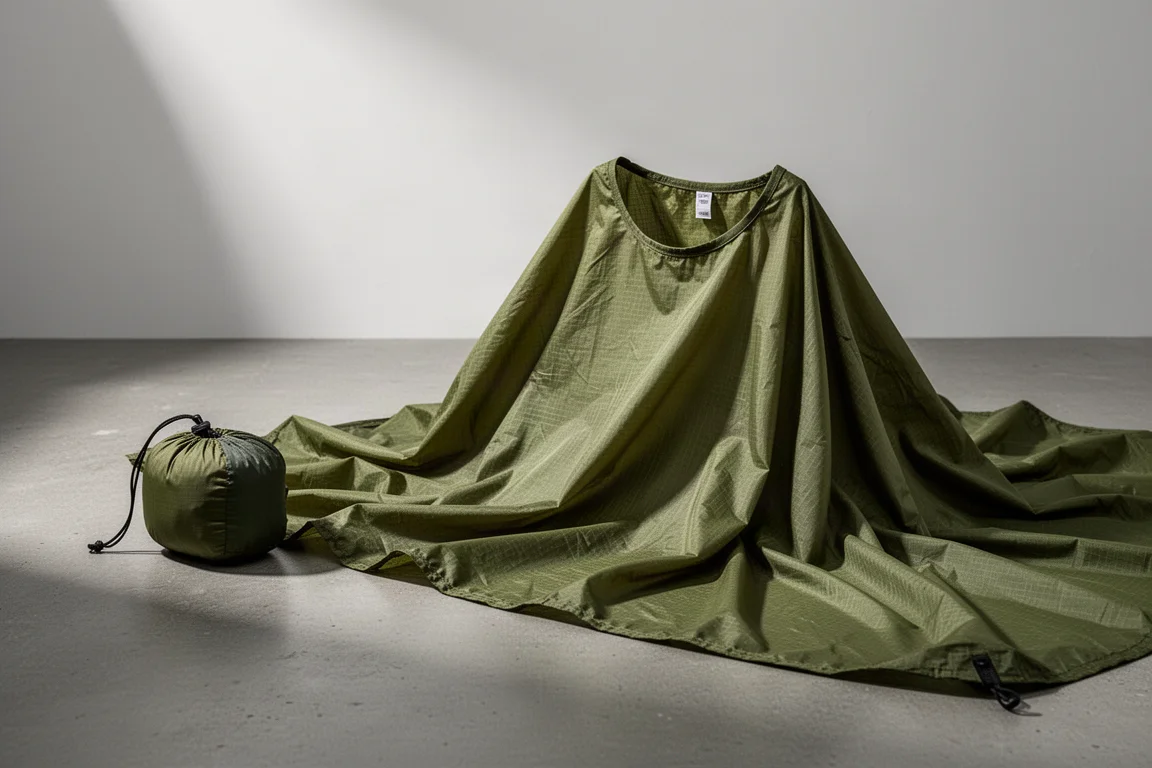
Manufacturers present bothy bags as emergency shelters that also work for short stops, such as a lunch break out of the wind. They come in several sizes, and several companies build them. Structurally, they depend on the people inside plus trekking poles, skis, or similar to give the fabric its shape. One person alone produces very little form, which matters more than it sounds once the wind is up.
Terra Nova Bothy Bag: Two-Person Emergency Shelter
The Terra Nova Bothy Bag covered here is the two-person size. It is genuinely light, packs down small, and is well made: the stitching held through strong gusts without coming loose or tearing, and the fabric did block the wind. A sleeve at the top takes a trekking pole so the material can be lifted clear of your head.
Getting in and out is awkward, and the interior is far smaller than the two-person rating suggests. One adult filled the whole shelter while kneeling, and sitting upright at roughly 90 degrees is the only workable position. Any change in posture changes the shape of the shelter, so it is a poor match for anyone with mobility limits.
Moisture is the bigger problem. The shelter has no seam tape, and within about an hour the walls and ceiling were soaked with condensation. Water also came through the vent, which lay flat against the fabric instead of clearing. Because your body is the frame, your back rests against damp fabric that draws heat away rather than holding it in. After roughly three hours the inside was wet enough that sitting in it offered little advantage over standing in the rain.
Terra Nova describes the bag as a warm, dry micro climate that can keep an injured person warm and dry. In these conditions, that description did not hold up.
Condensation and Ventilation: The Core Problem
Both shelters share the same weakness, and it is not about how much rain lands on the outside. The problem is moisture generated on the inside. Condensation builds quickly in a small closed space, and in cold weather that is more than an inconvenience: wet clothing and wet fabric pull heat away from the body, which is the mechanism behind most cold-weather emergencies.
The practical consequence is that a shelter which leaves you wet after use can put you in a worse position than the weather alone. Wet layers cannot be removed inside a cramped shelter without exposing yourself to the damp interior, and stepping back out into wind while soaked is the scenario every cold-weather training programme warns against.
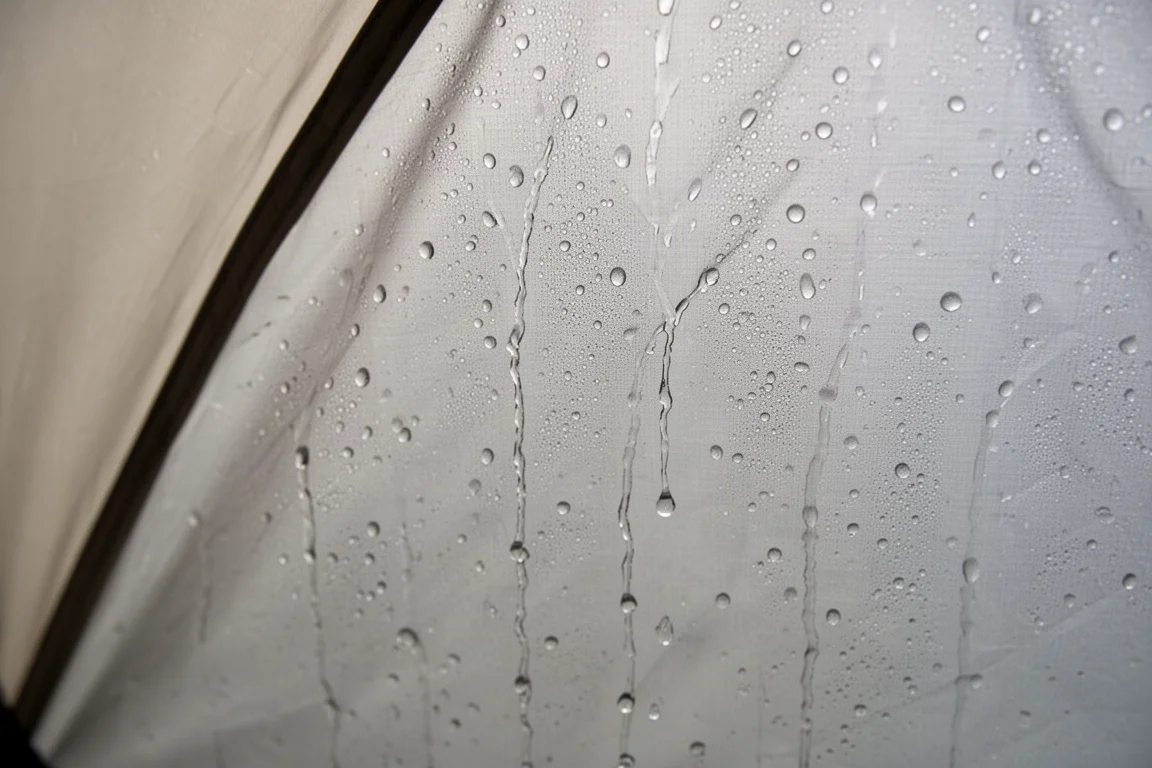
Ventilation is the variable that decides how bad this gets. A vent that lies flat against wet fabric does not move air, and once condensation forms on the walls it tends to stay there or drip.
Fjallraven Windsack 3: Space Without Waterproofing
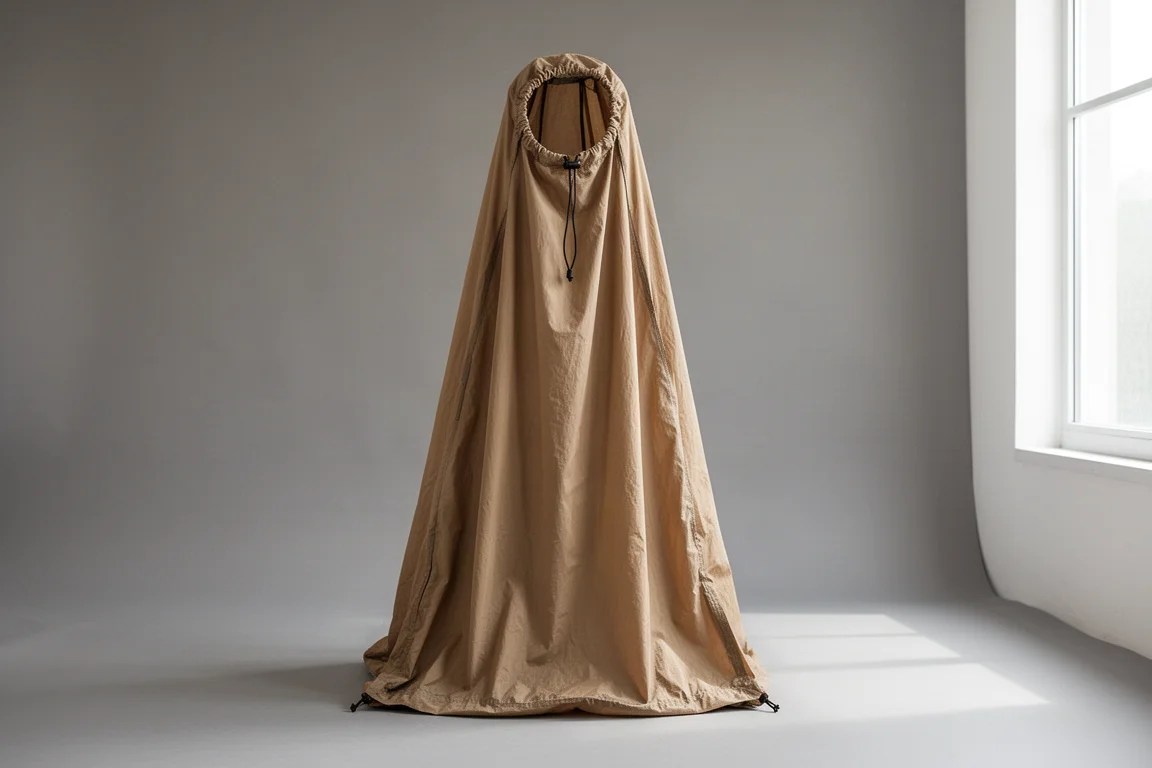
The Windsack 3 solves the space problem that the bothy bag creates. It is tall enough to stand up in, and it can be tied off using trekking poles, skis, or trees, so the structure does not depend entirely on the occupants. That also means the fabric can be pulled away from your body, which lets you warm up and change out of wet clothing while still out of the wind. It retained heat noticeably better as well.
The trade-off is water. The Windsack 3 is not waterproof, and after an hour inside, the walls were dripping with moisture. Ventilation was also very poor. On the evidence of a wet, windy test, it is not a shelter to rely on in sustained rain, even though it is the more comfortable of the two to occupy.
Comfort, Mobility, and Setup Effort
Comfort separates the two designs sharply. The bothy bag has no tie-off points, so it depends on the occupant to hold its shape, and the only viable posture is seated upright with your back against the wall. Hip and back discomfort sets in well within an hour, and there is no way to shift position without deforming the shelter around you.
The Windsack 3 asks less of the body. Standing is possible, the fabric can be held away from the skin, and guy lines give it a shape that does not collapse when you move.
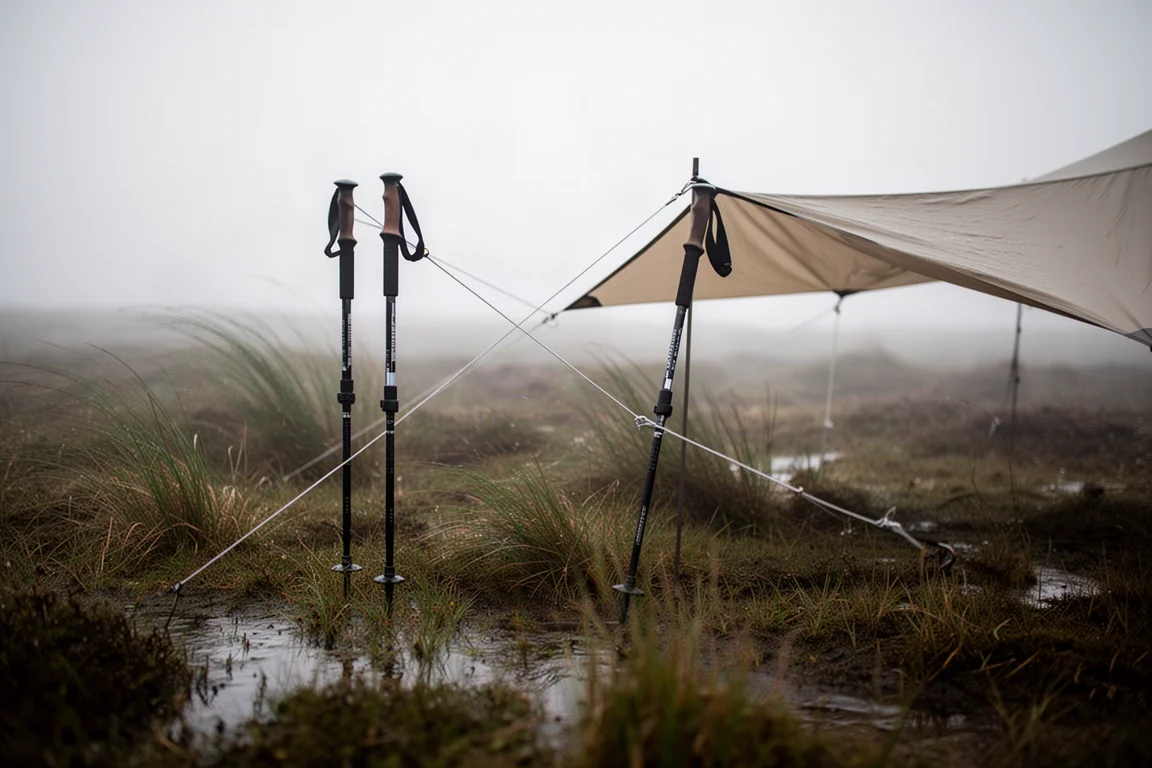
Setting either shelter up in strong wind takes time and care. Poles, skis, or anchor points need to be arranged before the fabric is fully deployed, and a shelter that relies on body position is the hardest to manage when you are cold and your hands are wet.
What the Manufacturer Claims and What the Test Showed
Claims made for the bothy bag included a warm, dry micro climate, suitability as shelter for an injured person, high quality wind protective fabric, stitching that will not come loose in strong winds, and ventilation described as essential to a good quality shelter. Set against the field test, the lightweight and construction claims held up, wind protection was partial, and the warm, dry claim did not.
Buying Advice: Shelter, Tarp, or Neither
A bothy bag earns its place for short stops in fair or mild conditions: a lunch break out of the wind, a quick regroup, a few minutes while someone adjusts layers. Used that way, the fast setup and small packed size make sense, and moving on quickly matters because moisture builds fast inside.
As a long-term emergency shelter in cold, wet, and windy conditions, it does not hold up. The condensation, the leaking vent, the cramped seated posture, and the impossibility of changing out of wet gear all work against the one thing that matters most, which is staying dry.
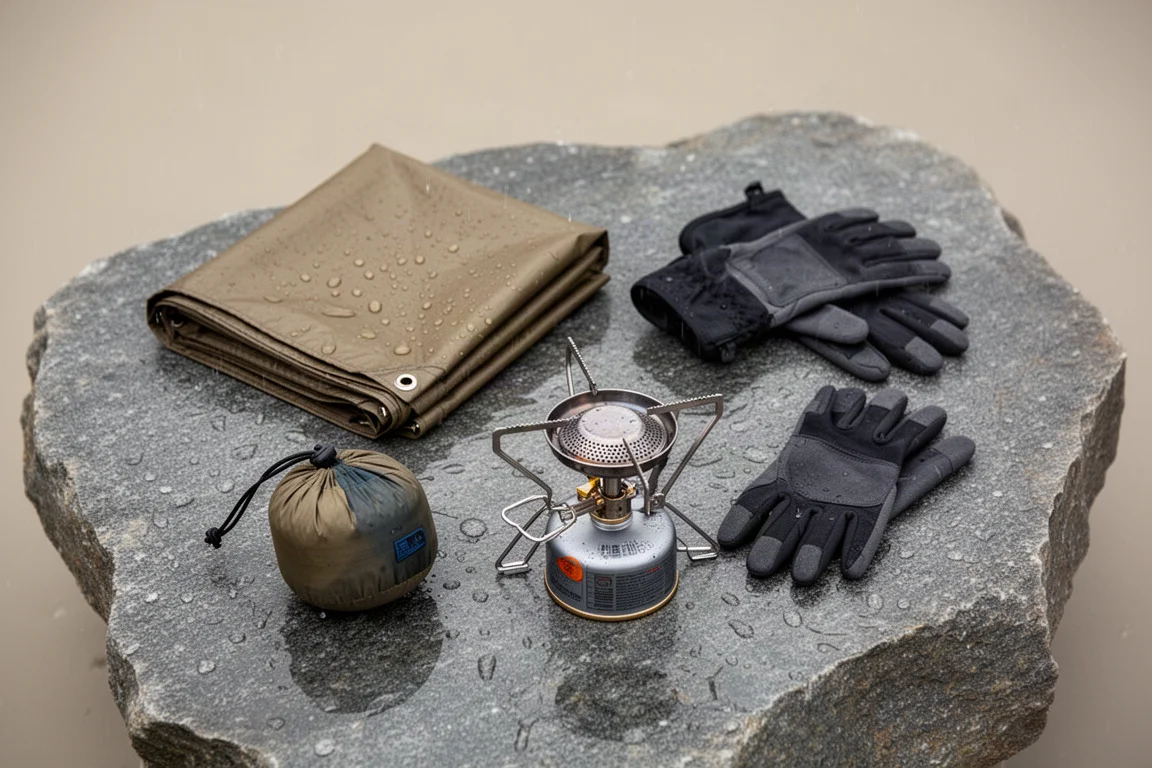
A square tarp is the more flexible option. It can be pitched above the tree line without trees, shaped into a range of shelters, and it keeps the weather off you without trapping your own moisture against your body. For exposed, cold, and wet ground, that combination is far easier to trust.
Conclusion
Both designs have real strengths: the Terra Nova Bothy Bag is light, small, and windproof, and the Fjallraven Windsack 3 is roomy, can be tied off, and holds warmth better. Both also fall short on the same point, which is keeping you dry inside. Choose either for brief shelter in mild weather, and look to a tarp or a similar open shelter when the forecast points to cold, wind, and hours of rain.
Further reading
Related Reviews
Emergency Shelters
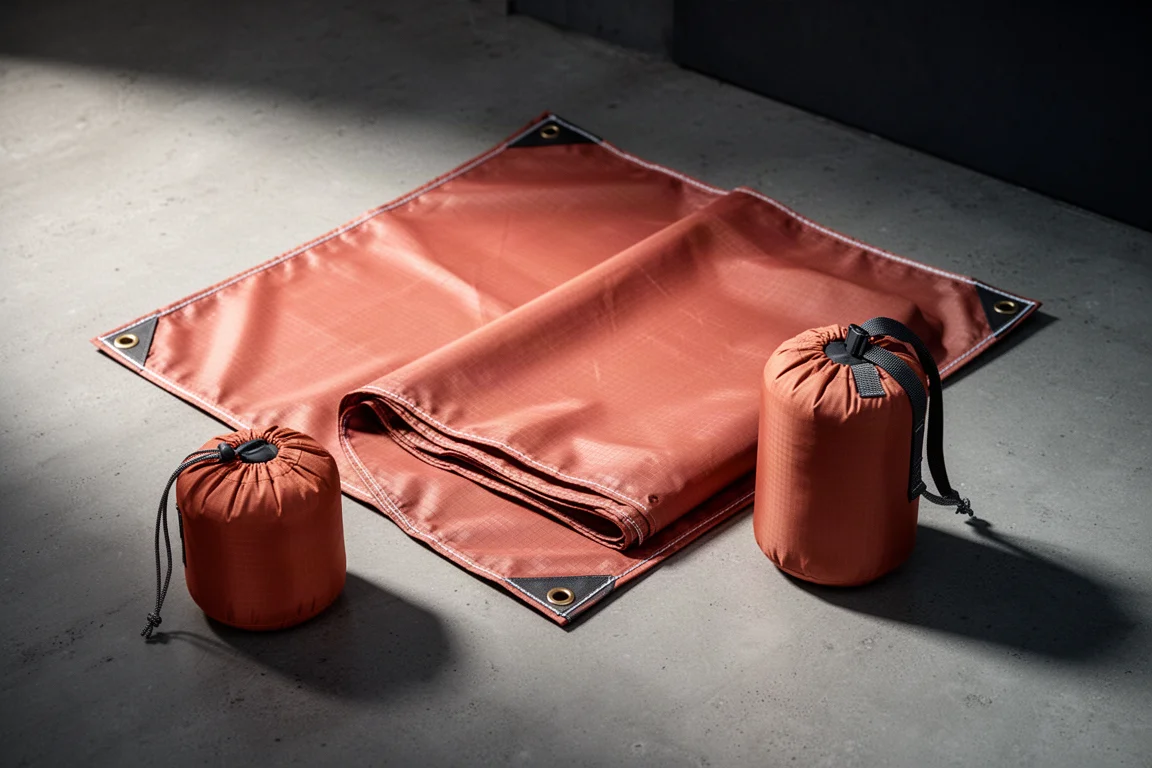
Aqua Quest Survivor Emergency Tarp Review: A High-Visibility Shelter Built for Hard Weather
A 10 x 10 ripstop nylon emergency tarp with taped seams, a 5,000 mm hydrostatic head rating, 19 tie-out points, and reflective trim, tested through winter storms and driving rain.
Emergency Shelters
F Raven Wind Sack 3 Review: A $150 Emergency Shelter That Struggles in Real Weather
A field-focused look at the F Raven Wind Sack 3, covering wind and rain performance, condensation, setup limits, and whether it earns its price.
Insulated Jackets
Aerogel vs Down Insulation: Two Aerogel Jackets Compared
Aerogel is the lightest solid on record, but two aerogel jackets measured against a comparable down jacket tell a more complicated story about warmth.