Emergency Shelters
Aqua Quest Survivor Emergency Tarp Review: A High-Visibility Shelter Built for Hard Weather
A 10 x 10 ripstop nylon emergency tarp with taped seams, a 5,000 mm hydrostatic head rating, 19 tie-out points, and reflective trim, tested through winter storms and driving rain.
Introduction
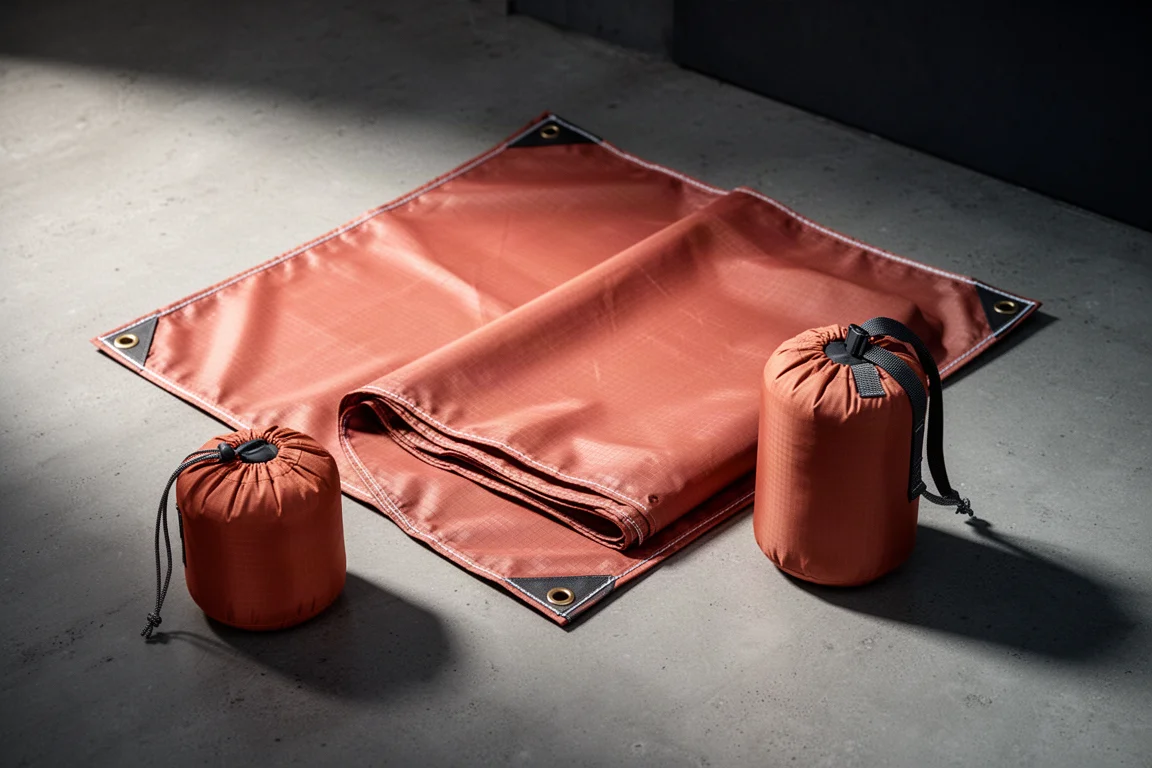
The Aqua Quest Survivor Emergency Tarp is a 10 x 10 foot square shelter built around two jobs at once: keeping you protected from whatever the weather is doing, and making sure you can be seen while you wait it out. Aqua Quest has a long track record of building high-strength tarps, and the Survivor follows that pattern with a heavy duty fabric, taped seams, and a colour and trim chosen to stand out against almost any terrain.
This is not a featherweight summer accessory. It is a shelter you pack when conditions could turn serious, and it is built to be pitched again and again rather than discarded after a single night out.
Who This Product Is For
The Survivor makes the most sense for people heading into genuinely rough conditions: winter trips, exposed hillsides and moorland, high winds, driving rain, and any situation where a shelter failure would be a real problem. Anyone who wants a reusable emergency shelter instead of a thin single-use sheet will find this in a completely different class.
Visibility is the other half of the design brief. The body is an orange-red tone and is surrounded by reflective material, so the shelter reads clearly in low light and stands out when you need to be found. For a shelter that doubles as a signal, that is the right priority.
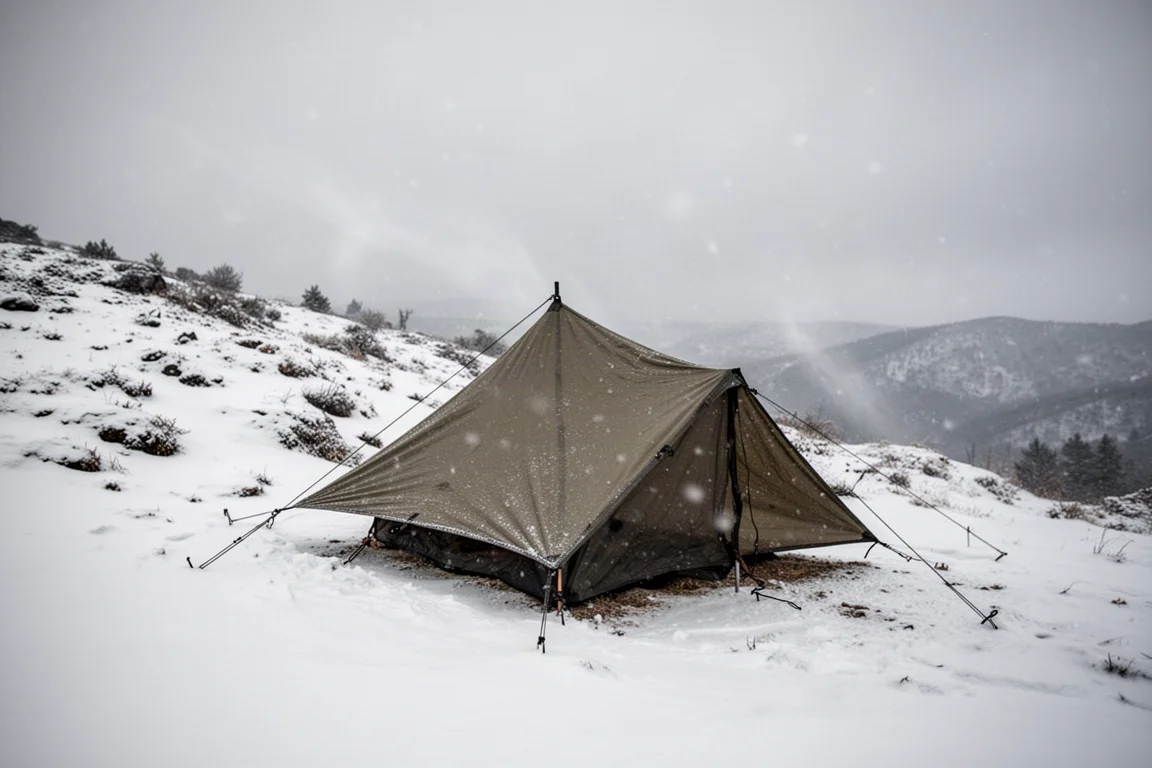
It also works well as a shared shelter. A 10 x 10 square gives one person generous space and still leaves enough room for two, three, or even four people, which makes it a practical group option rather than a strictly personal bivy.
Main Strengths
The single biggest advantage of a square tarp is flexibility. A 10 x 10 can be pitched in a wide range of configurations, from a high open shell for fair weather to a tight, low storm pitch that closes down the wind. There is no fixed shape to work around, so the shelter adapts to the site rather than the other way around.
Protection is comprehensive. This tarp blocks wind, rain, hail, and snow, and the taped seams and 5,000 mm hydrostatic head rating are the reason it holds up under sustained heavy rain. Through snowstorms, thunderstorms, strong winds, and sideways rain, no leaking made it through the fabric or the seams.
Hardware and detailing are equally considered. There are 19 tie-off points on the 10 x 10 version, positioned around the body and along the centre seam, and they are reinforced and reflective. Two lantern loops sit at either end, and because they can also take a guy line, you can run a cord from one end to the other and hang whatever you need, whether that is drying clothing or a light for the evening.
Materials and Build Quality
The fabric is a 70 denier nylon ripstop, which is a notably heavy specification for a tarp. It has been treated with both silicone and polyurethane, making it a dual coated fabric that feels substantial the moment you handle it. The difference between this and an inexpensive polyester tarp is obvious on contact: the Survivor is built for strength first.
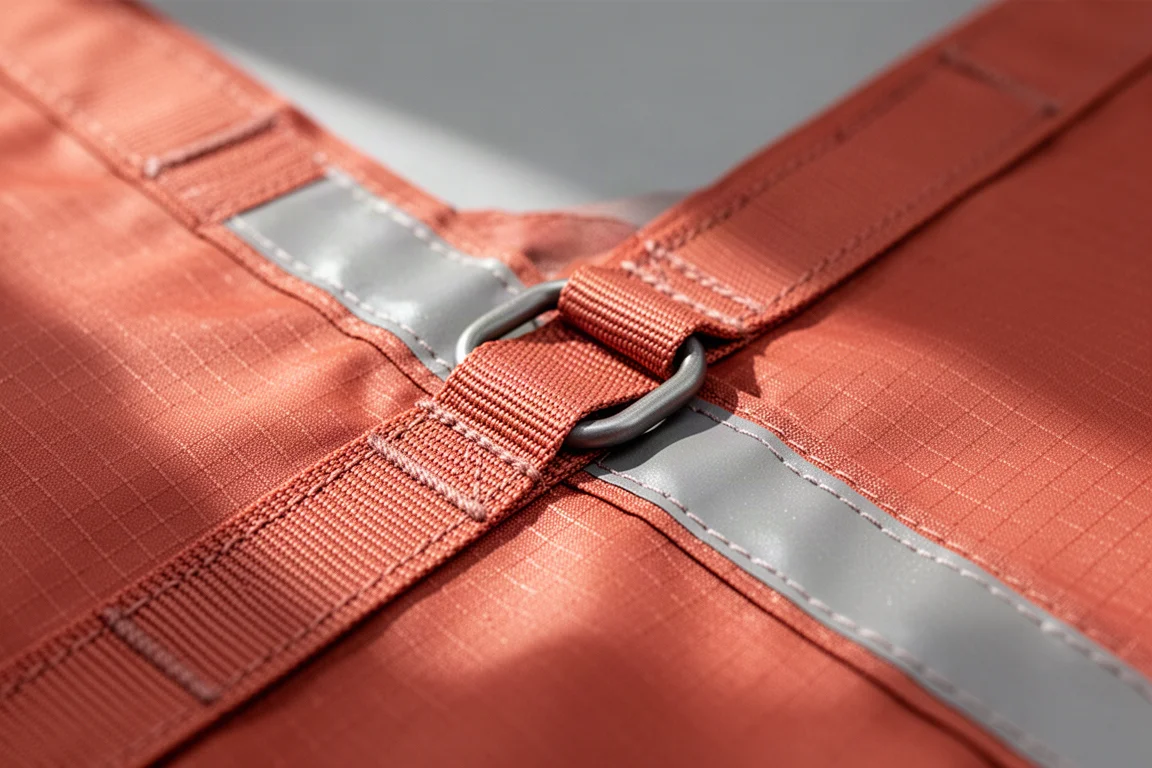
Seams are taped rather than left raw, tie-out points are reinforced, and the perimeter trim and logo are reflective, so the high-visibility theme carries through every part of the construction rather than being limited to the colour of the fabric. Stitching quality is excellent throughout. At 1.8 pounds for the 10 x 10 size, you are carrying real material rather than a token emergency sheet, and the tarp is covered by a lifetime warranty.
Setup Options and Real-World Testing
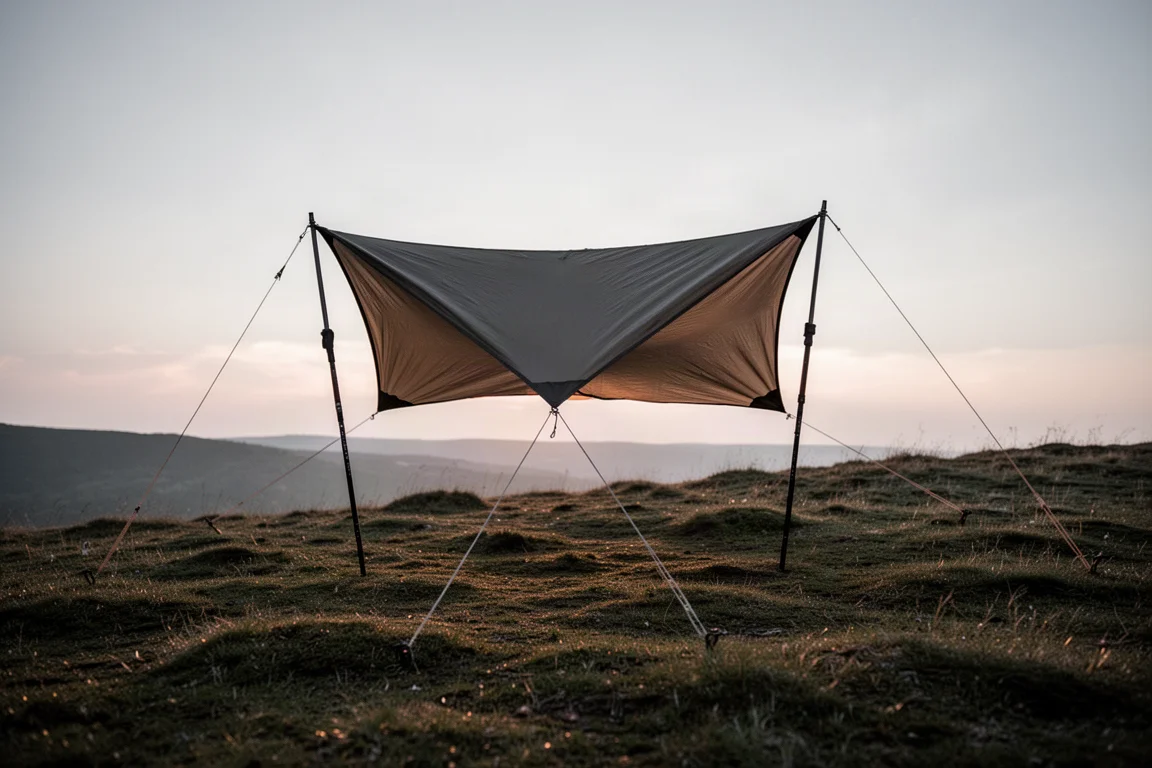
A common assumption is that a tarp shelter needs trees. It does not. A square tarp can be pitched almost anywhere, and the only real requirements are a little knowledge and some practice. With no trees around, the Survivor can simply be pulled over you while you sit on top of it, in the style of a bothy bag, with one important difference: this tarp is genuinely waterproof, where a bothy bag is not.
If you would rather build a proper shelter, you can stake it out on open ground and use yourself as the support, or use one or two trekking poles to create a full windproof and waterproof pitch in a matter of minutes. Because the tarp is square, there is no wrong orientation, which matters when you are setting up quickly in poor conditions. Testing across winter snowstorms, wind storms, thunderstorms, and heavy sideways rain produced no failures, and the fabric stayed watertight throughout.
Things to Consider Before Buying
Two practical points are worth weighing before you commit. The first is the storage bag. It is small, measuring roughly 12.5 inches long and 4 inches wide, and while rolling the tarp into it at home is manageable, doing the same out in the field with cold hands is a different experience. It is the one part of the package that feels under-specified for the product.
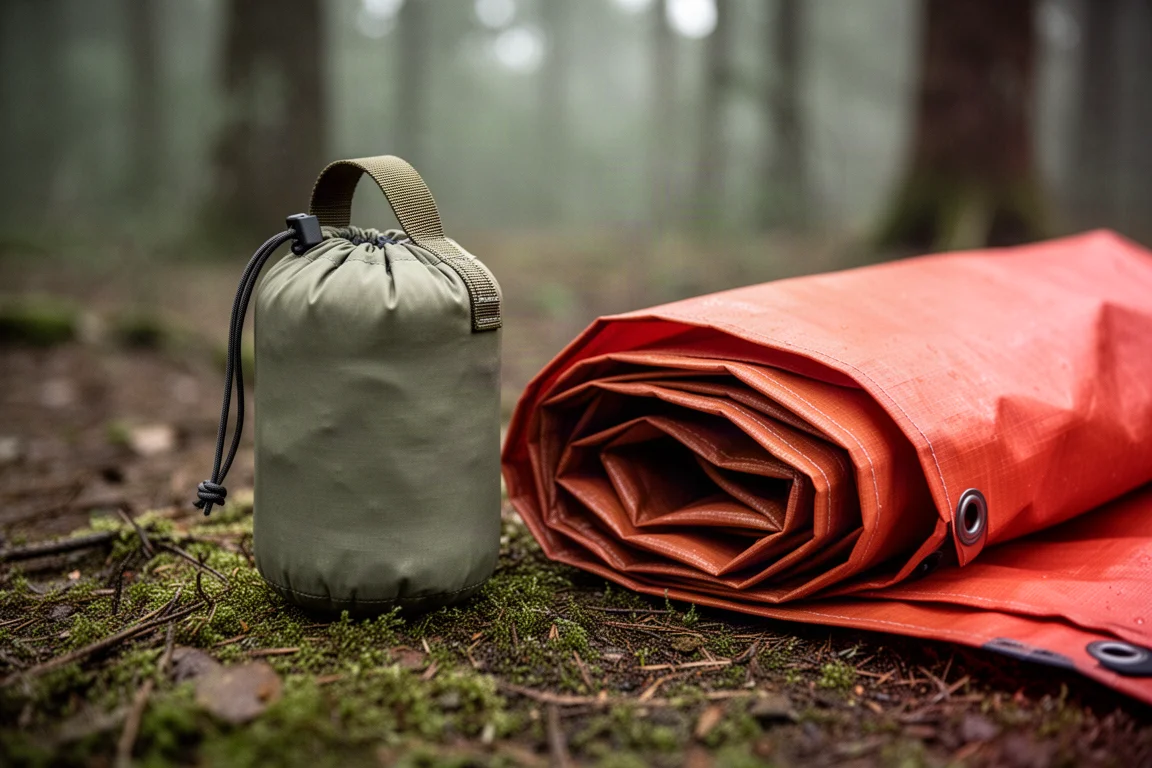
The second point is strength versus need. This is a very thick, very heavy tarp, and for warm-weather, lower-elevation trips it is more shelter than the situation calls for. In summer conditions a lighter tarp can offer full protection without the extra weight. The calculus changes in winter, in exposed terrain, or at very high altitude where conditions can turn extreme, and that is where the Survivor’s construction earns its place. A lighter-weight option alongside this model would make the range easier to match to the season, though the 10 x 10 size itself is a good one and worth keeping.
There is also a skills consideration. Pitching a tarp cleanly in a storm looks simple only because it has been practised. Anyone new to tarp shelters should set one up in the rain and in the wind before relying on it in a real emergency, because doing it for the first time in bad weather can take far longer than expected.
Size, Weight, and Packing
The 10 x 10 format is the version reviewed here, weighing 1.8 pounds and packing into a bag about 12.5 inches long and 4 inches wide. A larger 10 x 15 version is also available for anyone who wants more covered area. For most users, the 10 x 10 is the sweet spot: large enough to block wind, rain, snow, and sun, compact enough to carry without debate, and flexible enough to shelter one person comfortably or a small group at a squeeze.
Buying Advice
Cost is the deciding factor for many buyers, so it is worth putting the Survivor in context. Emergency shelters generally fall into two camps: cheap single-use options that offer little real protection, and expensive shelters designed to be used as many times as you need them. This tarp sits firmly in the second group. At $115 for the 10 x 10, it is pricier than the inexpensive polyester tarps that sell for $30 to $40, but those are not 70 denier ripstop nylon, and finding a ripstop nylon tarp of this specification is not easy. Those that exist tend to be expensive for what they are.
Set against wingsacks, bothy bags, and bivvies, the Survivor costs roughly the same and in some cases less, which makes the price easier to justify as an emergency shelter purchase. The remaining question is a personal one: how often will you be out in genuinely extreme weather? If the answer is regularly, the strength and the lifetime warranty make the case for you. If your trips are mostly fair-weather and low-elevation, a lighter shelter will serve you just as well for less weight.
Conclusion
The Aqua Quest Survivor Emergency Tarp is an excellent, extremely strong, and extremely durable shelter that does exactly what an emergency tarp should do. The 70 denier ripstop nylon, taped seams, 5,000 mm hydrostatic head rating, 19 tie-out points, and reflective detailing all point to a product designed for hard use in bad conditions, and it held up through everything it was tested against without leaking.
The trade-offs are honest and easy to understand. The storage bag is too small for comfortable field packing, and the tarp is heavier and thicker than warm-weather trips require. If you expect storms, winter conditions, or exposed ground, this is a shelter worth the money. If you do not, a lighter tarp will keep you just as dry.
Product link
View more details for Aqua Quest Survivor Emergency Tarp
This product is mentioned in the review. Check the specifications, options, and compatibility before buying.
View more details for Aqua Quest Survivor Emergency TarpFurther reading
Related Reviews
Emergency Shelters
F Raven Wind Sack 3 Review: A $150 Emergency Shelter That Struggles in Real Weather
A field-focused look at the F Raven Wind Sack 3, covering wind and rain performance, condensation, setup limits, and whether it earns its price.
Emergency Shelters
Terra Nova Bothy Bag and Fjallraven Windsack 3: Two Emergency Shelters Tested in Wind and Rain
A wet, windy field test of the Terra Nova Bothy Bag alongside notes on the Fjallraven Windsack 3, covering condensation, ventilation, comfort, and when an emergency shelter is worth carrying.

Backpacking Gear
Building a 10 lb Base Weight: An Ultralight Backpacking Gear List
A practical walkthrough of the ultralight pieces behind a 10 lb base weight, from a 765 g pack and a roomy one-person tent to a full camp chair and a dependable water filter.