Astrophotography
Telescope Live Review: Processing Professional Observatory Data From Home
A hands-on look at Telescope Live, a remote astrophotography service that lets you download and process data from professional telescopes in Chile, Spain, Australia, and the US.
Introduction
For a long time I avoided processing any image data I had not captured myself. Part of the appeal of astrophotography, for me, has always been the full chain: setting up the equipment, solving problems, waiting for clear skies, and watching a faint object slowly appear on the screen. So when I finally decided to try remote observatory data, I wanted it to be something genuinely special.
That is what led me to Telescope Live, a remote astrophotography service that gives members access to data from professional telescopes at observatories around the world. I picked a dataset from the largest, most capable telescope I could find in their archives, and processed it from scratch. Here is how the experience went, and who I think this service actually makes sense for.
What Is Telescope Live?
Telescope Live is a remote astrophotography platform that provides access to professional-grade telescopes located at observatories in Chile, Spain, Australia, and the United States. The network ranges from wide-field refractors to enormous reflectors, and because the telescopes are spread across both hemispheres, you can work with objects that may never rise from your own location.
As someone imaging from Canada, that last point was the biggest draw. Southern hemisphere targets are simply out of reach from my backyard, no matter how many clear nights I get. Telescope Live closes that gap entirely.
The website itself is well organized. Each dataset shows the object, the location it was captured in, and the telescope used. You can search by object type, telescope, filter combination, field of view, and total integration time. Some projects contain dozens of hours of exposure time captured through equipment most amateurs could never justify owning.
Choosing a Dataset
The platform runs on a credit system, and datasets cost different amounts depending on the telescope and project. The front page highlights picks of the day, with each set listed at one, two, six, or more credits. The hardest part, honestly, is deciding what to download.
My criteria were simple: something visually spectacular, preferably a southern hemisphere target, and captured through a telescope completely different from anything in my backyard. Filtering by telescope is what led me to my pick, a dataset captured with a Planewave CDK24 in Chile, a two-foot aperture corrected Dall-Kirkham design with a 4,000mm focal length. For perspective, a telescope like that lists for around $73,000, so processing its data is about as close as most of us will ever get.
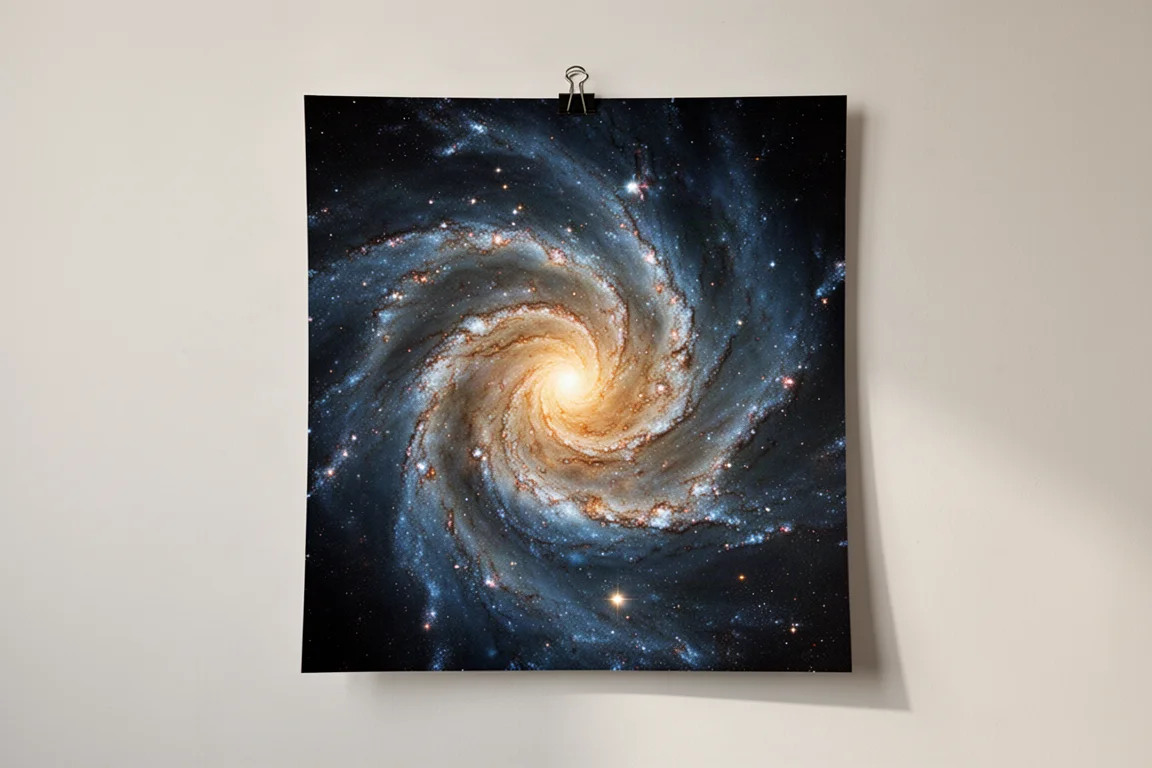
The dataset I chose, an image of the Sculptor Galaxy, cost 11 credits, and the finished example image on the platform set expectations very high.
First Look at the Data
After downloading the calibrated files, I stacked the raw subs in PixInsight and applied an auto stretch to the luminance data. What came up on the screen stopped me cold. This was a simple stretch of linear data with no processing beyond it, and the image quality was unlike anything I had produced from home.
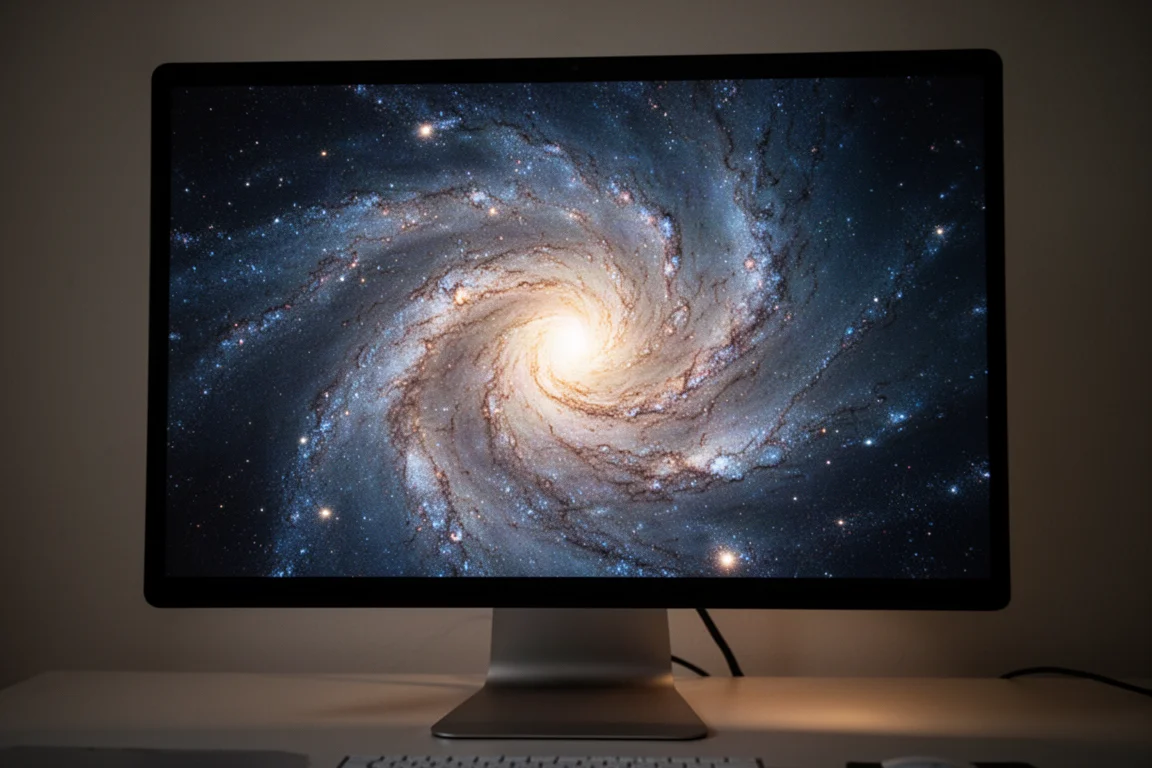
This is what massive aperture under pristine skies, good seeing, and long integration times deliver. The signal is so clean that the hard part shifts entirely from acquisition to processing, which is exactly the skill I wanted to practice.
The Processing Workflow
From there, I built the RGB image using star alignment and combined the color channels. Even at that early stage, structure was already visible: subtle color variations, hydrogen nebulae, and the classic contrast between an orange galactic core and blue outer arms.
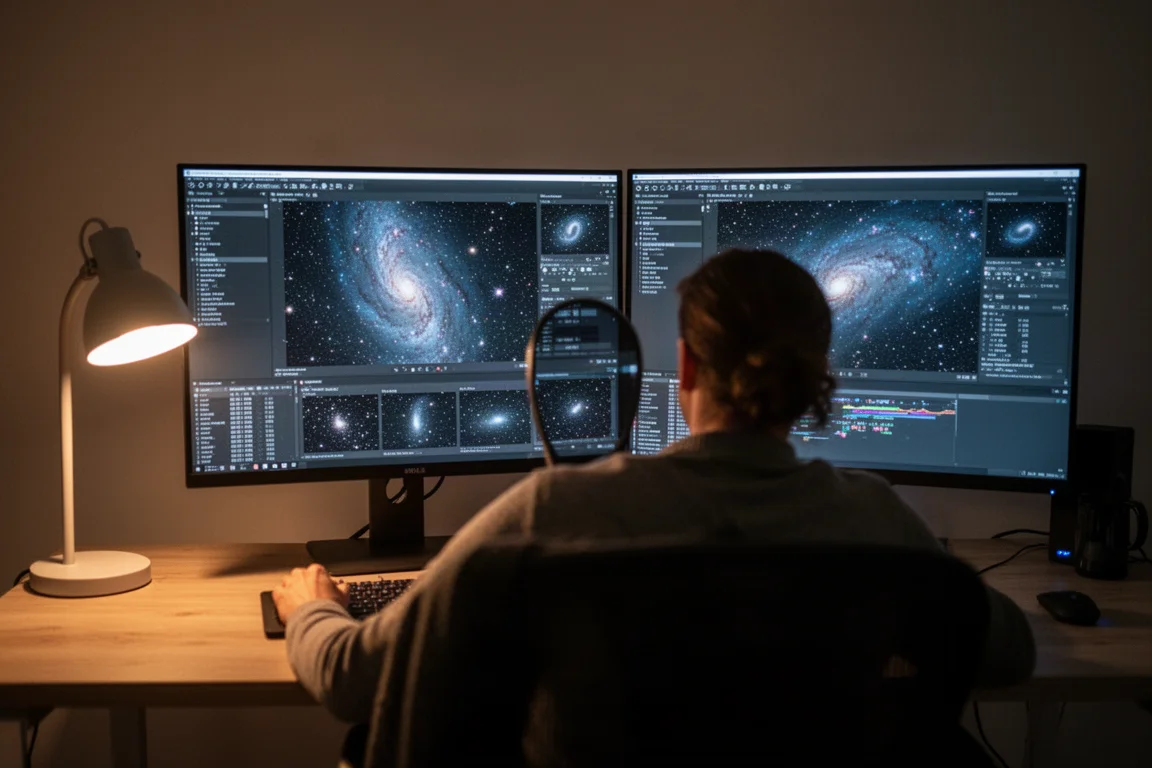
The Sculptor Galaxy turned out to be a rewarding subject precisely because the data is so forgiving. When the raw material is this good, your processing decisions become the creative bottleneck rather than signal quality, and that is a genuinely useful way to sharpen your skills.
Who Gets the Most Out of It
An important point up front: for me, this does not replace capturing my own images. That emotional connection to an image built from exposures you collected yourself is still the core of the hobby, and Telescope Live is a different experience entirely. I see it as a resource for practicing image processing, experimenting with unfamiliar filters, and working with professional-quality data. If clouds have ruined your imaging plans, you can still spend the night creating something.
One thing worth remembering: any images you share that were created with this data should clearly state that they came from the Telescope Live network.
Pricing and Value
Telescope Live uses credit-based plans, with datasets costing anywhere from a single credit up to double digits depending on the telescope and project. There is currently a promo code, ASTROBACKYARD, that gives 50% off for 2 months on any of the plans, which is a low-risk way to see whether the workflow fits how you like to work.
Given the alternative, which is owning a two-foot corrected Dall-Kirkham in the Atacama, the credit model is a remarkably accessible way to work with this tier of equipment.
Things to Consider Before Subscribing
The main consideration is mindset. If your enjoyment comes from the acquisition side, the cold nights, the gear troubleshooting, the waiting, remote data will feel like only half the hobby. It took me years to try it, and I was hesitant going in. The surprise was how much fun the processing-only workflow turned out to be, and how much it taught me about how astronomical data behaves.
For beginners, it is a great way to learn what raw astronomical data looks like before you invest in equipment. For experienced astrophotographers, it may be even more valuable: you can challenge yourself with new objects, filters, and telescope designs you have never touched.
Buying Advice
If you are a die-hard astrophotographer curious about southern hemisphere targets or simply want professional-grade data to practice on, Telescope Live is easy to recommend. Start with a single impressive dataset, pick a target your own setup could never reach, and use the trial discount period to see whether the processing-only workflow clicks for you. I started with the Sculptor Galaxy, and a dataset from their 1-meter telescope is next on my list.
Conclusion
Telescope Live turned out to be more than a data download service. Its greatest strength is inspiration: access to telescopes and skies most of us will never have, and a genuine path to becoming a better, more well-rounded astrophotographer through processing. It will not replace a night under the stars in your backyard, but as a complement to the hobby, it is hard to beat.
Product link
View more details for Telescope Live
This product is mentioned in the review. Check the specifications, options, and compatibility before buying.
View more details for Telescope LiveFurther reading
Related Reviews
Astrophotography
ASKAR FRA400C Review: A Versatile 400mm Refractor for Astrophotography and More
The ASKAR FRA400C is a compact 72mm refractor that balances reach, versatility, and portability for astrophotographers and visual observers.
Astrophotography
Askar SQA106 Review: A Premium 106mm Astrograph With Exceptional Optics
The Askar SQA106 is a premium 106mm quintuplet astrograph with impressive sharpness across full-frame sensors, though its price and weight demand careful consideration.
Astrophotography
Astro Imaging Gear 2026: Eight New Products Worth Watching
A look at the most interesting new astrophotography and astronomy products announced this year, from fast telescopes to smart cameras and wireless accessories.