Hi-Fi Amplifiers
Technics SU-R1000 Review: A Direct Digital Integrated Amplifier With a Standout Phono Stage
The Technics SU-R1000 combines direct digital amplification, LAPC speaker calibration and an unusually capable phono stage. Here is what it does well, and what to weigh before buying.
Introduction
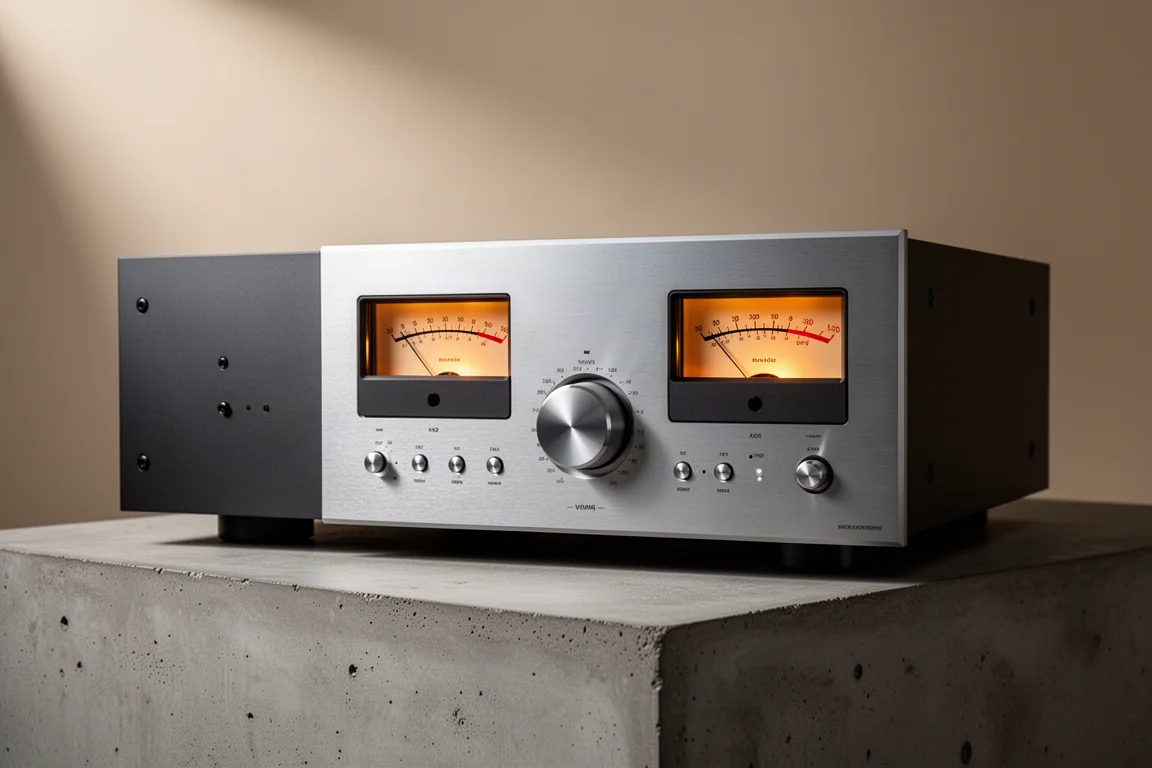
The Technics SU-R1000 is the brand’s reference-class integrated amplifier, and it is not a new product. It has been on the market for roughly five years. What keeps it interesting is how much it packs into one chassis: a direct digital amplification stage, a speaker calibration system, a comprehensive phono stage with digital correction, and a build that looks and feels like serious high-end hardware.
At around $10,000 it sits firmly in premium territory, but it makes a strong case as one of the better value propositions in high-end audio, especially for listeners who would otherwise buy a separate DAC and a separate phono stage on top of an amplifier.
Who This Product Is For
The SU-R1000 suits listeners who want a single box that handles digital sources and vinyl equally well. Because everything entering the amplifier is digitized, there is no need for an external DAC, and because the phono stage is unusually capable, there is no need for a separate phono preamp either. Someone building a two-box system around one amplifier and one pair of passive speakers can keep the signal path short and put the rest of the budget into the speakers.
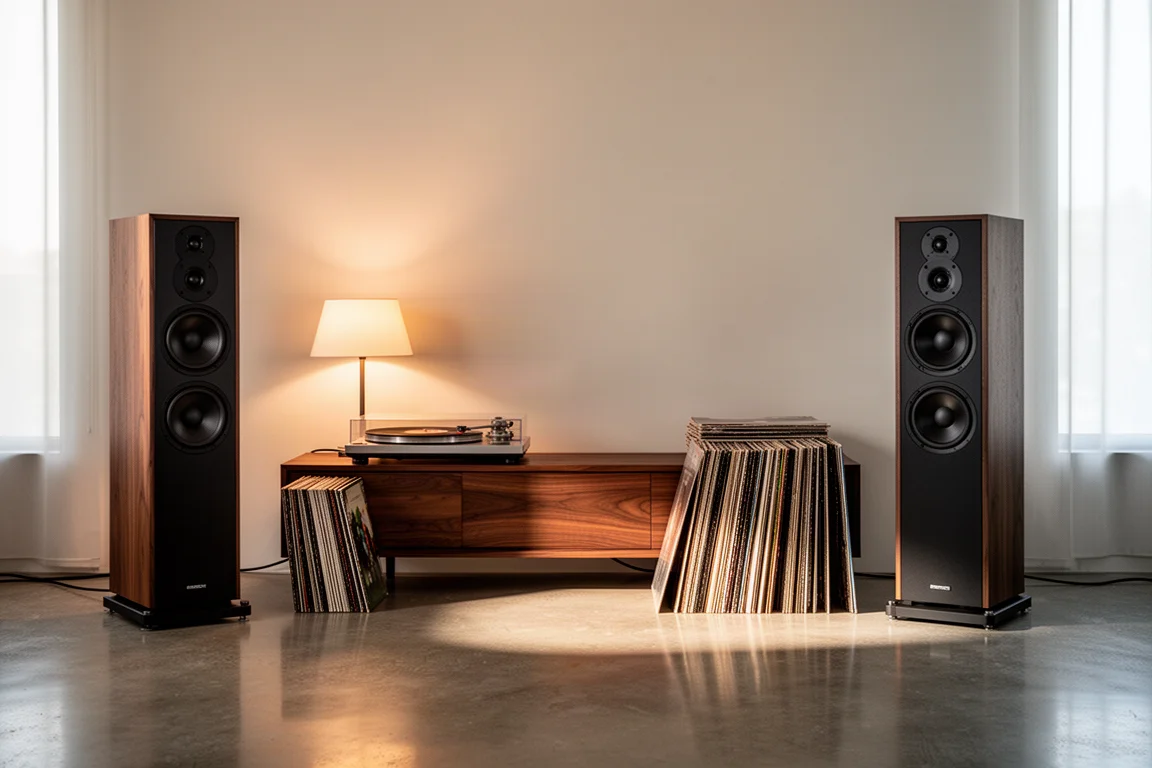
It also appeals to anyone who wants to physically separate the amplifier and the loudspeakers so that either can be upgraded independently, rather than moving to active speakers. It is a weaker fit for listeners who want streaming built in or who rely on room correction, since the SU-R1000 offers neither.
Main Strengths
Three areas stand out: the physical build, the amplification approach, and the phono stage.
Build Quality and Design
The amplifier weighs around 23 kg and uses a thick-walled brushed aluminium chassis, with a front panel around a centimetre thick. Two analog VU meters dominate the front, which is a welcome touch when streaming, since there is no sleeve or disc to look at. The large central volume dial has a feel that matches the price. Around the back there are two sets of speaker binding posts, two optical inputs, two coaxial inputs, two USB inputs, single-ended RCA and balanced XLR line inputs, plus RCA and balanced XLR phono inputs, a tape output and pre-outputs. Technics rates the output at 150 W per channel into 8 ohms and double that into 4 ohms, while independent bench testing has recorded closer to 190 W per channel into 8 ohms.
Direct Digital Amplification and ADCT
The SU-R1000 is not a class AB amplifier. It is a direct digital design: the digital signal travels through the amplifier, and just before the speaker terminals the PCM signal is converted to a PWM signal, which then switches the output devices directly. One giveaway of this approach is that you will find no mention of a DAC chip on the specification sheet. The output devices are GaN FETs rather than MOSFETs, and the theoretical advantages are faster switching, lower distortion and less need for negative feedback. The amplifier is fed by a switch-mode power supply with a fixed switching frequency of 400 kHz, which is faster than the roughly 100 kHz typical of more conventional designs.
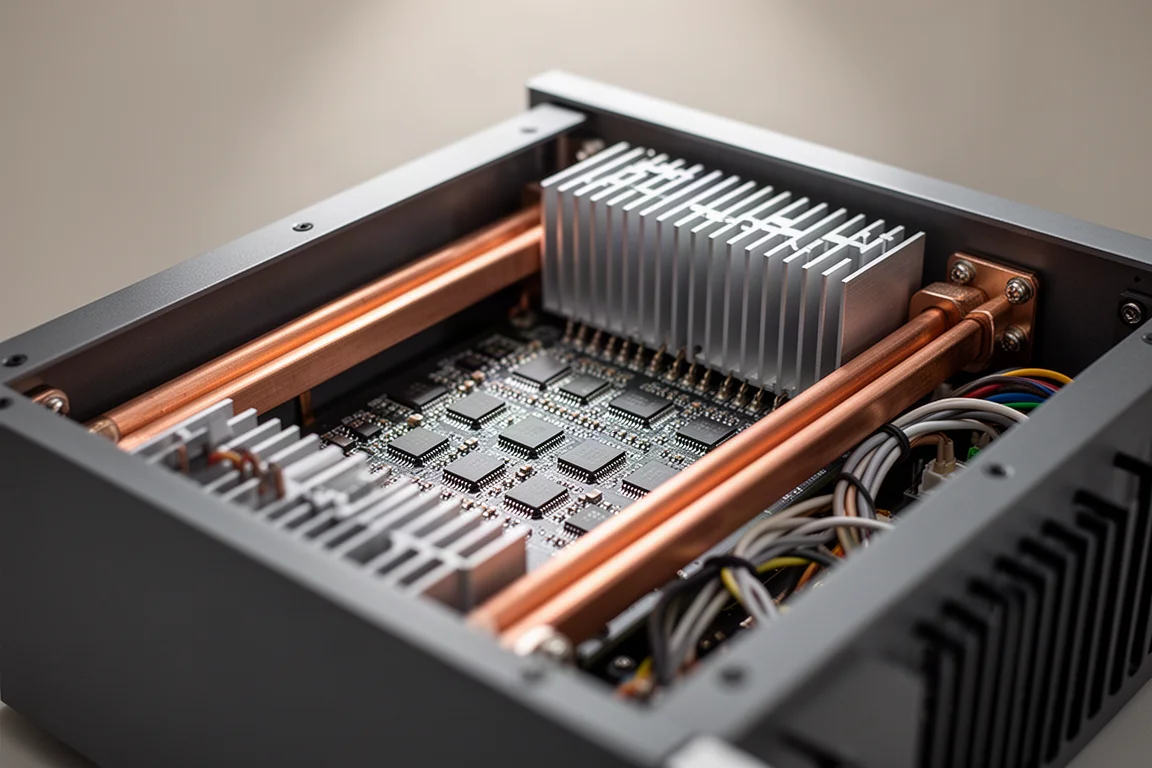
Technics also tackles back-EMF. The reasoning is that the backwave of a speaker driver can introduce low-level electromotive distortion into an amplifier’s output stage. The SU-R1000 digitizes the signal at the output stage, reduces its gain, compares it with the signal feeding the amplifier, and feeds the inverse of any difference back into the circuit to cancel distortion. Technics calls this Active Distortion Cancellation Technology, or ADCT.
Intelligent Phono EQ
The phono stage is where the SU-R1000 separates itself from most integrated amplifiers. Correction happens partly in the analog domain before the ADC and partly in the digital domain after it: the analog stage applies a high-gain, low-pass filter, and the DSP returns the higher frequencies to their proper level. There are correction curves for Decca, London, AES, Columbia, IEC, NAB, RCA and RIAA. A supplied test record is played into the amplifier with the phono optimizer engaged, and the test tones are digitized and analyzed to build a correction curve that flattens the cartridge’s frequency response and removes crosstalk. The umbrella term for all of it is Intelligent Phono EQ, and the optimization can be switched on and off from the remote.
The difference is not subtle. With optimization engaged, complex recordings sound better organized and easier to follow, and smaller details have more space to breathe, without any loss of dynamic weight or physical presence. Compared with a dedicated PS Audio Stellar Phono, the internal stage is a clear step up. That is unusual: the phono stages inside most integrated amplifiers are outclassed by a good digital feed, and that is not the case here.
Load Adaptive Phase Calibration (LAPC)
A button on the remote labelled LAPC sends a series of test signals into the speakers, reads their impedance at various frequencies, and programs the internal DSP to compensate for impedance variation. In A/B listening, engaging LAPC produced slightly more kick in the low end and possibly less grain in the treble. It is not a dramatic change, and it is likely to matter more with less capable speakers than with a high-quality reference pair.
How the SU-R1000 Compares With Other Integrated Amplifiers
Against the Lyngdorf TDAI-3400, another direct digital design, the SU-R1000 delivers a similar level of clarity and above-average layer separation, but sounds slightly warmer and considerably more substantial. The Lyngdorf includes room correction, which the Technics does not, and the SU-R1000 costs roughly €2,000 more. In listening terms, the extra outlay is audible.
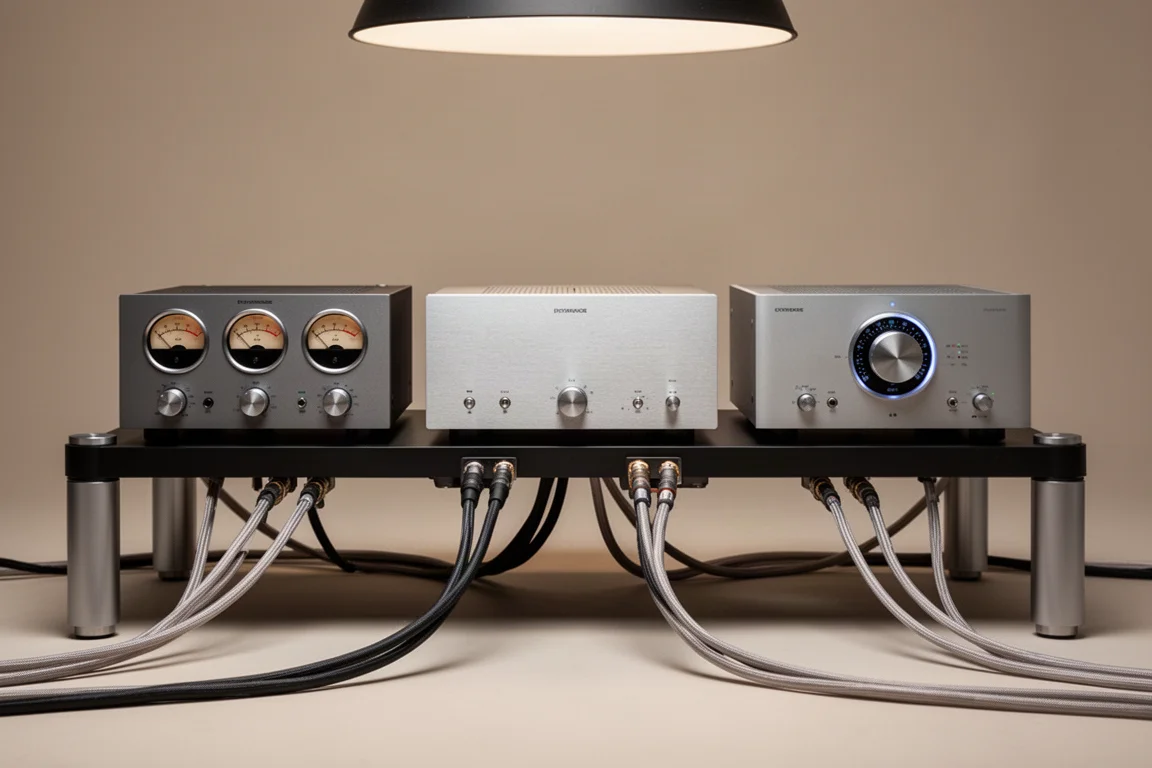
Against the Luxman L-505Z, a class AB amplifier with no DSP, no internal DAC and an all-analog phono stage limited to RCA connections, the Technics again sounds heftier and marginally warmer, which is not what most listeners expect from a direct digital design. The Luxman is fleet-footed with microdynamics and can be the more satisfying choice on tonal grounds, particularly with solo piano and early pressings. The SU-R1000 pulls ahead on layer separation and overall musical insight, so listeners who want to hear deep into a recording will prefer it.
Against a standalone phono stage such as the PS Audio Stellar Phono, the SU-R1000’s internal phono section is the stronger performer. For a vinyl-only listener that alone could justify the amplifier, though using its tape output or pre-outputs to feed a different power amplifier would be an expensive way to work around the internals you have already paid for.
Things to Consider Before Buying
- There is no streaming and no room correction. If you want either, it has to come from somewhere else in the system.
- All analog inputs are digitized on entry. The ADC uses a 24/192 AKM chip, but the analog stage ahead of it is not documented, so expect some fingerprint on analog signals. In practice, the differences between cartridges and between DACs remain largely intact.
- Listeners who prefer an all-analog signal path may want to feed the amplifier digital sources only.
- The balanced XLR phono input is for moving coil cartridges only. Moving magnet users will need the single-ended RCA phono input.
- The physical size and the roughly 23 kg weight need planning for, particularly on a shelf or in a rack.
- Around $10,000 is a serious outlay, and it is worth being honest about whether the feature set matches your system.
Buying Advice
The SU-R1000 makes the most sense for a listener who wants one amplifier to handle both digital and vinyl well, and who would rather not buy a separate DAC or phono stage. It also suits anyone building a minimalist system around an amplifier and passive speakers that can each be upgraded independently.

If streaming and room correction matter to you, that budget is probably better spent elsewhere, or split between the SU-R1000 and a separate streamer. And if the price sits beyond your budget, it is simply not the right amplifier for you, however good it sounds.
Conclusion
The SU-R1000 has been around for about five years, and it remains a persuasive package: a heavyweight chassis with genuinely useful meters, a direct digital amplification stage with distortion cancellation, speaker calibration that offers a modest but real improvement, and a phono stage that outperforms a dedicated external box. The absence of streaming and room correction is the trade-off. For the right listener, that trade is an easy one to accept.
Product link
View more details for Technics SU-R1000
This product is mentioned in the review. Check the specifications, options, and compatibility before buying.
View more details for Technics SU-R1000Further reading
Related Reviews
Hi-Fi Amplifiers
Accuphase E-280 Review: Entry-Level Accuphase With Flagship Attention to Detail
A close look at the Accuphase E-280 integrated amplifier, covering its champagne build, AAVA volume control, sound quality, and the speakers and sources that suit it best.
Hi-Fi Amplifiers
Advance Paris A10 Classic vs Yamaha A-S301: Two Integrated Amplifiers Compared
A practical comparison of a $350 integrated amplifier and a $2,500 reference model, covering the differences that matter and the ones that do not.
Hi-Fi Amplifiers
Affordable Chinese Amplifiers Worth Buying: Five Budget Hi-Fi Amps Compared
A practical look at five affordable amplifiers, what each one does well, and the trade-offs to weigh before you buy.