Hi-Fi Amplifiers
Technics SU-GX70 Review: One Amplifier for Streaming, Vinyl, and TV
A 30-watt integrated amplifier with HDMI ARC, a built-in streamer, Space Tune room correction, and a strong phono stage. Here is what to know before buying.
Introduction
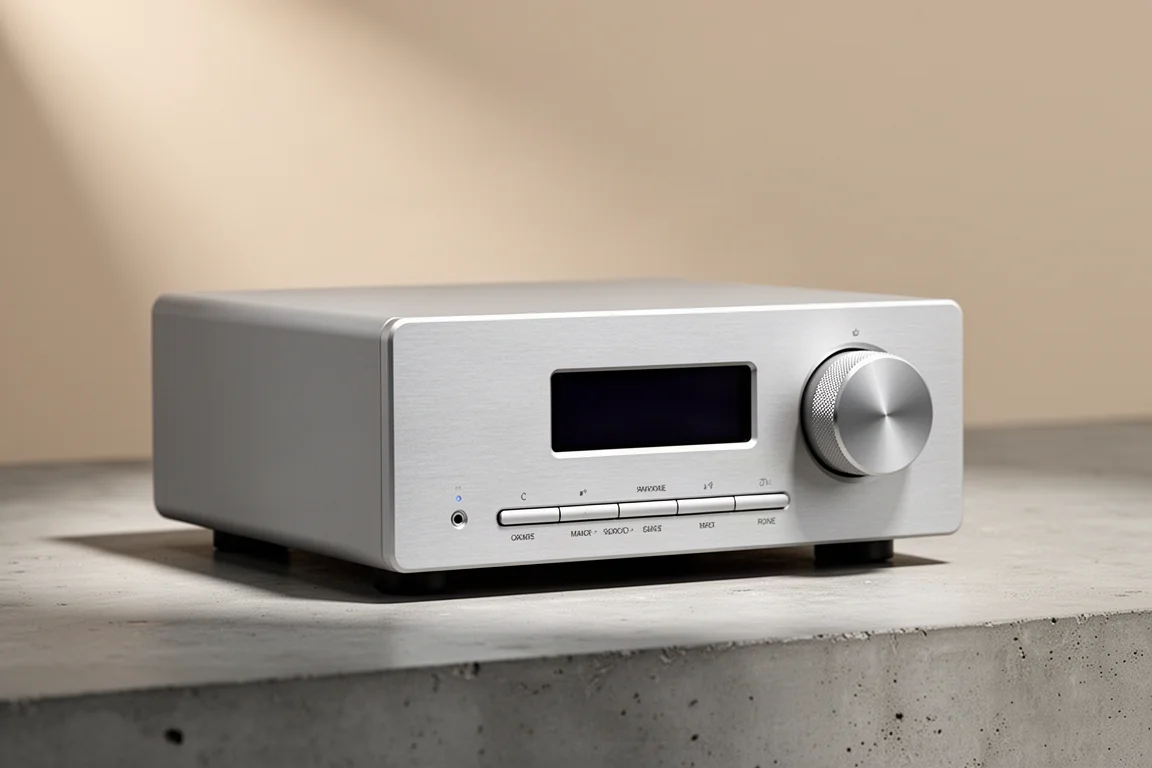
The Technics SU-GX70 looks like a conventional integrated amplifier: a compact chassis, a front panel volume knob, and a modest power rating of 30 watts per channel into 8 ohms and 60 watts into 4 ohms. The specification sheet tells a different story. This is an all-digital amplifier with HDMI ARC, a built-in streamer, a phono stage, and automatic room correction, all in one enclosure.
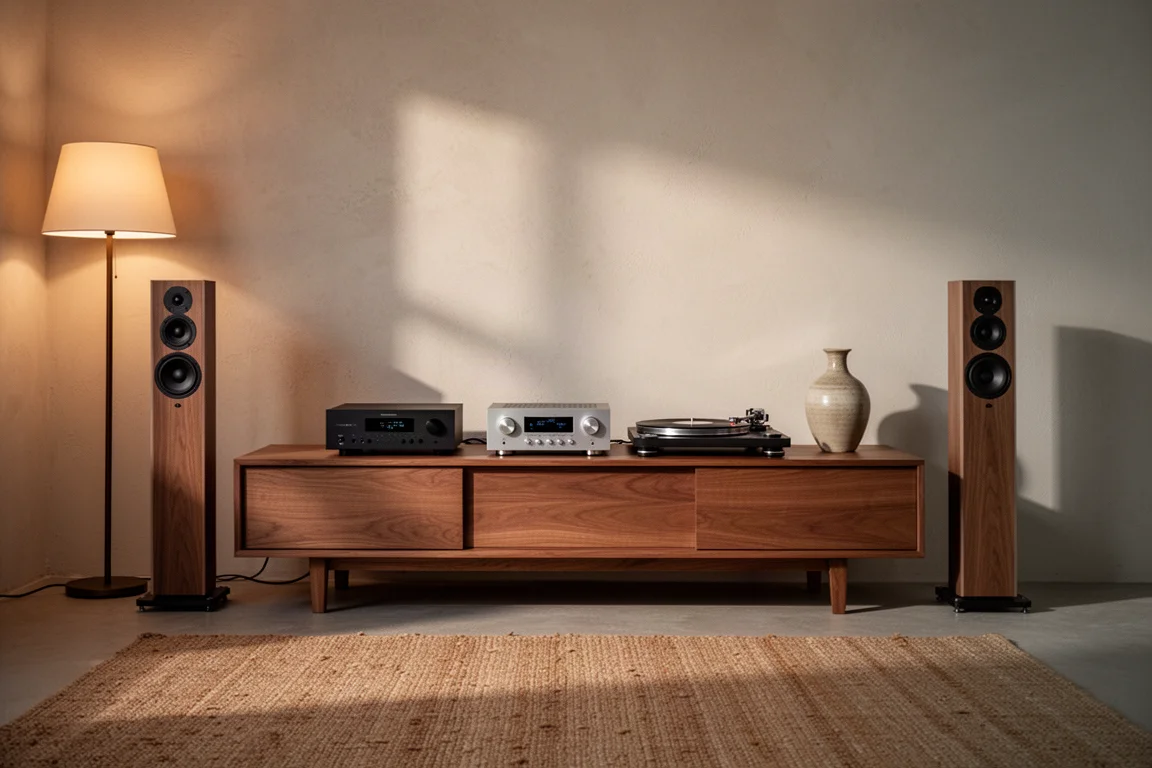
That combination makes the SU-GX70 unusually self-sufficient. There is no need to add a separate DAC, and there is no need to add a separate network streamer, because both functions are already built in. The HDMI input, the first on any Technics product, lets the amplifier sit at the centre of a stereo home theater system as easily as it anchors a two-channel music setup.
Who This Product Is For
The SU-GX70 suits listeners who want one well-executed box rather than a rack of separate components. If your sources are a mix of streaming services, a television, and a turntable, the amplifier covers all three without extra hardware. The built-in streamer handles high-resolution files and includes an MQA decoder, and the phono stage is good enough that most vinyl owners will not feel the need to add an external one.
It also suits owners of moderately demanding speakers in small and medium rooms. In practice the amplifier drove 4-ohm KEF R11 Meta tower speakers, a load that can dip to roughly 3.2 ohms, to reference levels with peaks above 100 dB without strain and with dynamic range to spare.
It is a less obvious fit for two groups. Listeners who want to keep an entirely analog signal path will not like that analog inputs, including the turntable input, are converted to digital. And anyone who regularly listens for long stretches at concert volumes on difficult speakers should consider a more powerful amplifier, which is a point covered further below.
Main Strengths
All-Digital Amplification and Power Delivery
The SU-GX70 is an all-digital amplifier, following the same engineering direction as the SU-700 Mark II and the R1000. Every signal, analog or digital, is converted to digital and kept in the digital domain. For most listeners that is an advantage rather than a compromise, because it removes the need for an outboard DAC entirely. Adding one would be redundant.
The wattage figures deserve context. At everyday listening levels the SU-GX70 drove large KEF tower speakers about as convincingly as a far costlier class A amplifier. Higher-powered designs will always have more dynamic headroom at concert volumes with peaks beyond 100 dB, but up to around 90 dB the Technics gives nothing away. For a 30-watt design, the sense of grip and control is remarkable, and it is one of the more powerful-sounding low-wattage amplifiers available.
Two practical details round out the amplification section. Preamp outputs are included, so a more powerful external amplifier can be added later without replacing the SU-GX70. The amplifier also runs silently, with no audible noise floor to intrude on quiet passages.
Space Tune Room Correction and the Technics Audio Center App
Space Tune is the standout feature, and it is exclusive to the SU-GX70 within the Technics range. It is a room correction system with presets for free placement, wall placement, corner placement, and shelf placement, plus a custom option and a full auto EQ mode. Auto EQ uses the microphone in a smartphone to calibrate the speakers to the room, and the process takes roughly 30 seconds.
The results are easy to hear, particularly in the bass, which becomes tighter and more focused even in a treated room. EQ settings can be switched on and off, and they can be combined with the amplifier’s tone and balance controls for further manual adjustment. That makes it simple to hear the same pair of speakers present music two different ways.
The Technics Audio Center app acts as a remote and as a hub for streaming services. It works best on iOS devices. Between Space Tune and the app, most of the day-to-day control lives on a phone rather than the front panel.
Streaming, HDMI, and Connectivity
The HDMI input with ARC support is a genuine shift for the brand and for the category. It allows the amplifier to connect directly to a smart television and serve as the centrepiece of a stereo home theater system. The implementation is proprietary, and in use it has proven reliable.
Wired and wireless streaming options are extensive: an Ethernet port, Wi-Fi, Bluetooth, AirPlay 2, Chromecast, and internet radio, with native support for Spotify, Tidal, Amazon Music, and Qobuz through the Audio Center app. High-resolution files are supported, and a built-in MQA decoder is included.
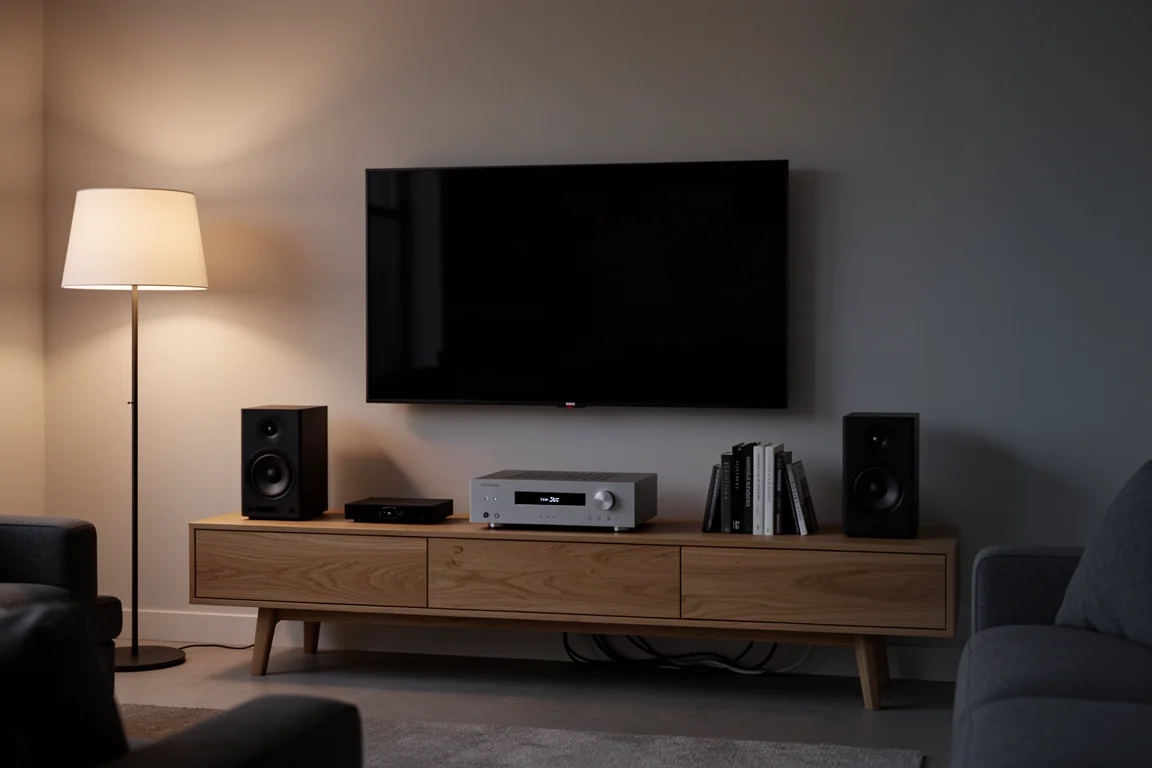
Sound quality stayed consistent across sources. Streaming from the app, from a laptop over AirPlay, and from a television through the HDMI input all produced the same house sound, which is exactly what a system hub should do. There is no benefit to chasing add-on streamers or budget DACs with this amplifier.
Sound Quality and the Phono Stage
Tonally the SU-GX70 is transparent and free of coloration. The mid-range shares components with the costlier R1000 and sounds very close to it, with vocal stems and layered harmonies rendered with real definition and separation. Dense backing vocals separate into distinct voices occupying their own space rather than blurring into a single stacked line, which is something not every expensive amplifier manages.
Bass is controlled and articulate, and every element of a kick drum, double bass, or synth note remains audible in the mix. With Space Tune engaged, the low end gains weight and focus, which suits dance and hip-hop particularly well, while more nuanced bass lines can be preferable with correction switched off. Switching between the two profiles takes seconds.
Two caveats are worth knowing. The top end can sound slightly thin, even a little rough, at very high volumes or with heavily compressed pop recordings, though it is clean with well-recorded material at sensible levels. And the amplifier will not rob capable speakers of a large, well-defined soundstage.
The phono stage is a genuine strength. It matches the quality of the stage in the G700 Mark II and comes close to the one in the R1000. Records play with near CD-like clarity, and comparing the same track across streaming, disc, and vinyl reveals how small the gaps have become. Listeners who want their vinyl to sound warm and softened may prefer a different amplifier, but those who want higher fidelity from their records will find a lot to like here.
Things to Consider Before Buying
Power is the first consideration. At 30 watts per channel into 8 ohms, the SU-GX70 handled demanding 4-ohm towers well in practice, but anyone who listens at sustained concert levels or owns exceptionally difficult speakers should look at a more powerful option. The preamp outputs offer a path forward, and higher-powered integrated amplifiers remain available for those needs.
The second consideration is room correction range. Space Tune auto EQ does not address frequencies above roughly 8 kHz, so it will not tame a speaker with a pronounced treble peak in that region. Tone controls can be used to soften such a peak manually, but the automatic correction alone will not do it.
Third, analog purists should note that every analog input is digitised, including the turntable input. If preserving a pure analog path matters to you, this amplifier is not built around that priority.
Finally, the display is basic compared with some competitors, and the app experience is strongest on iOS. Neither affects sound quality, but both shape daily usability.
Buying Advice
At or under $2,000, the SU-GX70 is one of the most complete integrated amplifiers in its class. The closest comparison in value terms is the NAD C700, which sells for around $1,500 and offers a clean, if slightly sterile, presentation without a phono stage. Spending roughly $400 to $500 more on the Technics buys better room correction, a stronger phono stage, HDMI, and more tailoring to your room.
The Audiolab 7000A remains appealing for listeners who value a more powerful class AB design and want to experiment with separate components to shape the sound. Adding streaming and network features to it costs extra, which pushes the total above what the Technics asks. The Yamaha 1000A is a sensible alternative for anyone who wants the reassurance of more power and good short-burst performance into low-impedance loads, at a price only slightly above the NAD. For most other listeners the Technics is the more defined and more feature-complete amplifier.

The Marantz Stereo 70 is worth a look if the Technics price is out of reach, especially for buyers who prioritise home theater duties over pure two-channel performance. And if maximum power is the deciding factor, the higher Technics model or a comparable high-output integrated is the better route.
The broader point is that the SU-GX70 removes the upgrade treadmill. There is no need to match a streamer, a DAC, and a phono stage, because all three are already inside the chassis and working to the same standard.
Conclusion
The Technics SU-GX70 is a rare example of an amplifier that is both modest in specification and unusually complete in execution. It drives demanding speakers confidently at realistic listening levels, corrects for the room in about 30 seconds, handles television audio over HDMI, and treats vinyl with more care than most built-in phono stages manage.
Its limits are honest and easy to identify: 30 watts per channel, correction that stops below the top octave, and a digital path for every input. Buyers who can live with those boundaries get a single component that covers streaming, records, and TV without compromise elsewhere. For anyone building a modern system around one box, it is a confident recommendation.
Product link
View more details for Technics SU-GX70
This product is mentioned in the review. Check the specifications, options, and compatibility before buying.
View more details for Technics SU-GX70Further reading
Related Reviews
Hi-Fi Amplifiers
Accuphase E-280 Review: Entry-Level Accuphase With Flagship Attention to Detail
A close look at the Accuphase E-280 integrated amplifier, covering its champagne build, AAVA volume control, sound quality, and the speakers and sources that suit it best.
Hi-Fi Amplifiers
Advance Paris A10 Classic vs Yamaha A-S301: Two Integrated Amplifiers Compared
A practical comparison of a $350 integrated amplifier and a $2,500 reference model, covering the differences that matter and the ones that do not.
Hi-Fi Amplifiers
Affordable Chinese Amplifiers Worth Buying: Five Budget Hi-Fi Amps Compared
A practical look at five affordable amplifiers, what each one does well, and the trade-offs to weigh before you buy.