Vinyl and Analog
Technics SL-100C and EMT TSD MRB Review: Two Analog Upgrades Worth Hearing
A $995 direct drive turntable and a $2,495 handcrafted moving coil cartridge, examined for what each one actually adds to a vinyl system.
Introduction
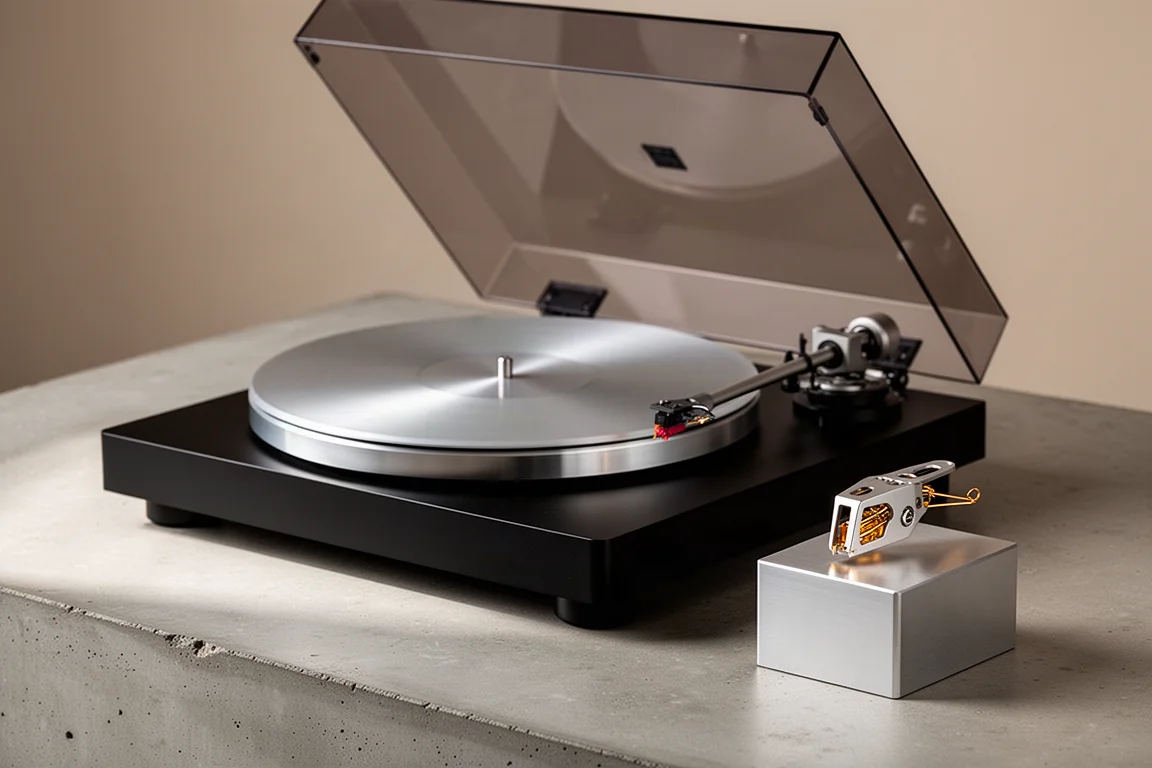
Two analog upgrades sit at opposite ends of the price ladder, and both are worth understanding before you spend anything. The Technics SL-100C is a direct drive turntable that sells for $995 with a moving magnet cartridge already fitted. The EMT TSD MRB is a moving coil cartridge handcrafted in Switzerland for $2,495, and it is one of the least expensive models in the EMT range rather than the flagship.
These are not competing products. One is a complete record player. The other is a cartridge that asks a turntable to show what it can really do. Between them they answer the two most common questions in analog: how much turntable do I actually need, and how much difference does a cartridge make.
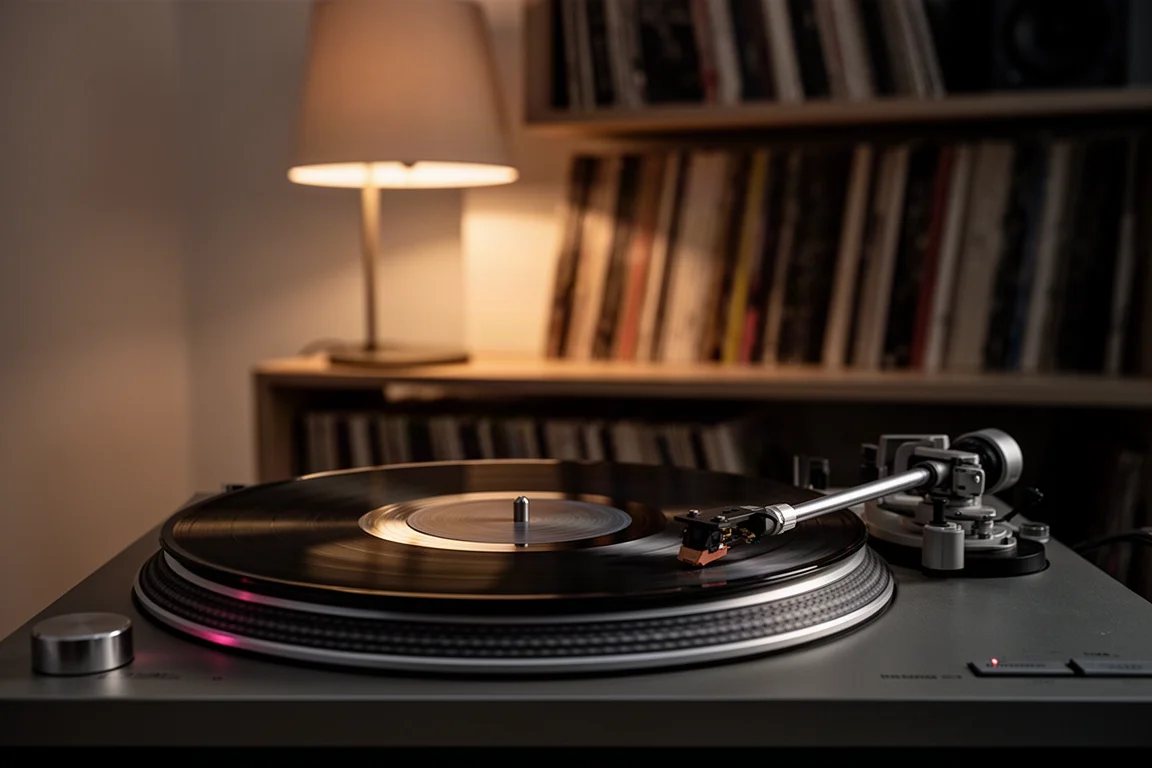
The practical takeaway is that each upgrade solves a different problem. The SL-100C removes friction from the act of playing records. The EMT TSD MRB adds a distinct voice to a system that is already capable of resolving it.
What These Two Upgrades Have in Common
Both products are about extracting more from the groove rather than changing the character of a system in a dramatic way. A turntable is essentially the transport: it spins the record at a stable speed and holds the arm steady. A cartridge is the transducer: it reads the groove and turns those movements into a signal. Upgrading either one changes what you hear, but they do it from different directions.
The SL-100C is unusually good at revealing what a cartridge is doing. Moving from its bundled cartridge to a higher-quality one produced a clear shift in bass depth, texture and dynamic range, which makes the turntable a useful platform for anyone who plans to upgrade the cartridge later. The EMT TSD MRB, by contrast, is a cartridge that rewards a resolving turntable, a quiet phono stage and clean records. Feed it a modest front end and you will hear less of what it offers.
One practical note applies to both. The SL-100C does not include a phono stage, so a separate phono preamplifier is required before it will make sound. The EMT cartridge needs a moving coil compatible phono stage, and a step-up device if your phono stage only accepts moving magnet input.
Technics SL-100C: Direct Drive Without the Fuss
The SL-100C is a direct drive turntable, which is the design approach Technics is known for. It arrives with an Audio-Technica moving magnet cartridge already mounted in the headshell, and the $995 price includes that cartridge. Setup is genuinely simple: the cartridge comes pre-mounted, stylus tracking force adjustment is straightforward, and no previous turntable experience is needed to get it running.
The feature list is sensible rather than crowded. There is a hinged dust cover, RCA jacks on the back so you can use any interconnect cable you like, and a two-year warranty. The turntable is designed in Japan and made in Malaysia. It is sold direct through Amazon and the manufacturer’s own site rather than through a wide dealer network.
The auto-lift feature is the one worth calling out. At the end of a record side, the arm raises itself out of the groove automatically. If you would rather cue manually, the feature can be switched off, which is how many long-time listeners will choose to run it. It is a small thing that makes a real difference to how relaxed the whole experience feels.
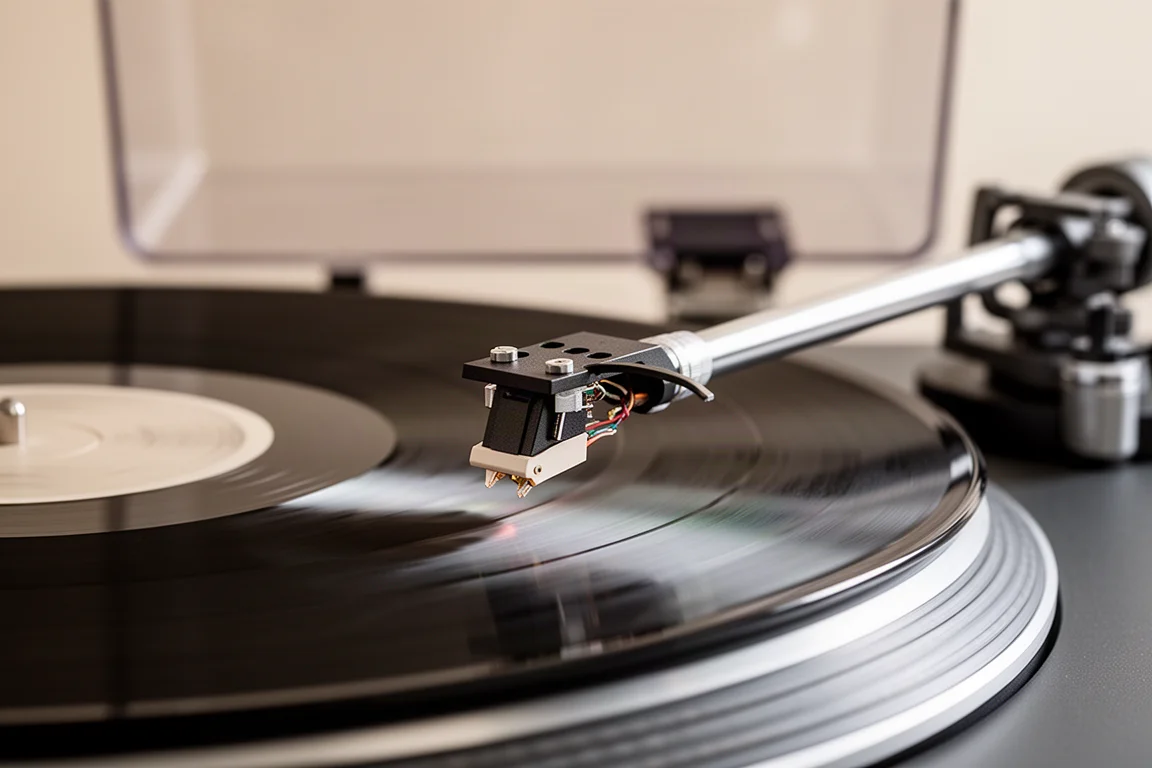
Sonic character is where this turntable makes its case. It has a solidity and weight to the sound, with more body and warmth than a leaner belt-drive design with a magnesium tonearm and a solid wood plinth. That alternative approach is very detailed, very clear and fun to use, but the Technics puts more meat on the bones. With a record built on deep bass, the room felt energised, and the texture and palpability of the music came through strongly.
The bundled Audio-Technica cartridge is a competent starter. Swapping to a $400 high-output cartridge amplified everything: more powerful presentation, deeper bass, stronger textures and dynamics, and a bigger, deeper soundstage. The turntable itself stayed neutral through that change, which is exactly what you want from the transport.
EMT TSD MRB: A Handcrafted Moving Coil Cartridge
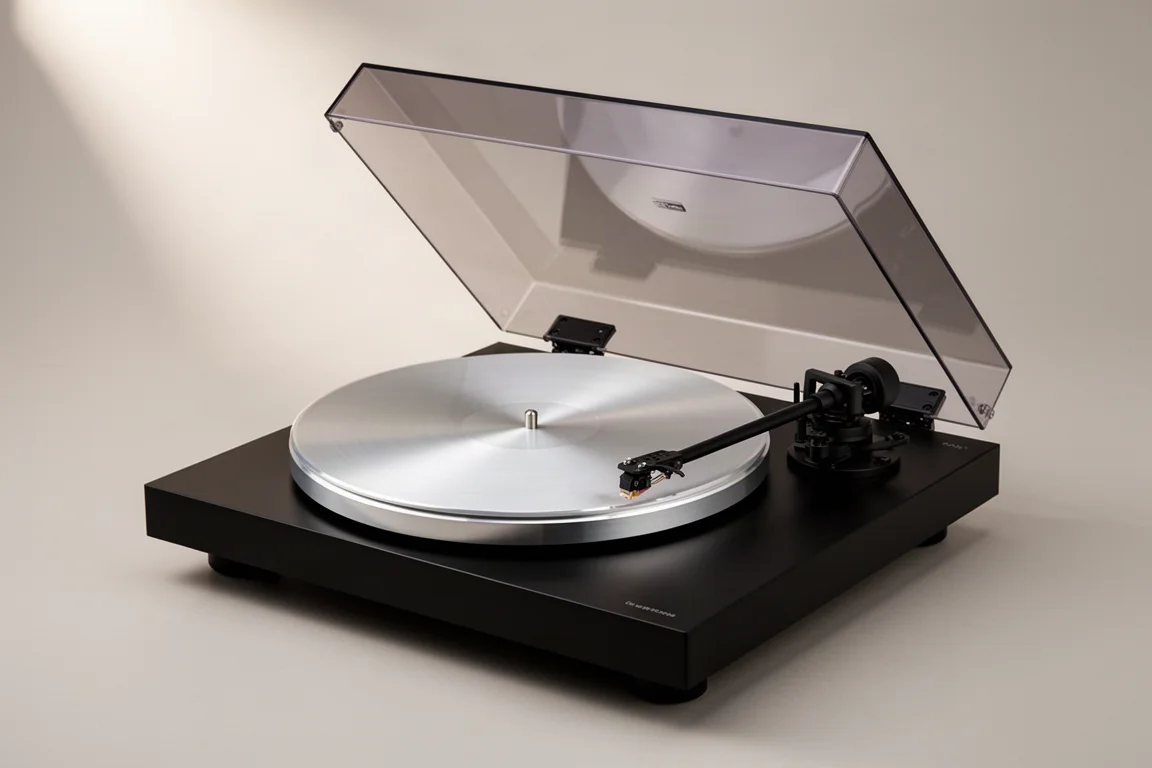
The EMT TSD MRB is a moving coil cartridge priced at $2,495 and handcrafted in Switzerland. It is an entry point into EMT ownership rather than the top of the range, which makes it an interesting proposition for listeners who want the character of a specialist maker without moving to the company’s most expensive models.
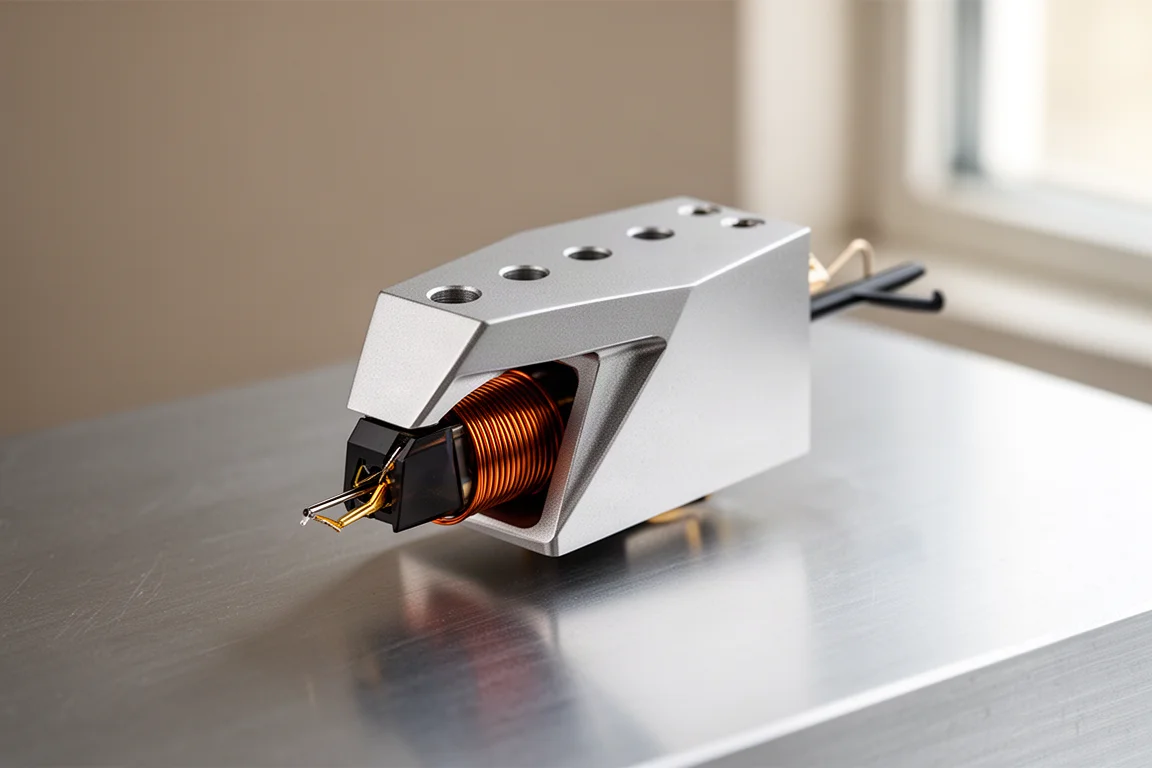
Physically it is distinctive. The cartridge and headshell are a single integrated piece, so there is nothing to mount on a separate headshell and no alignment decisions to make beyond setup. The body is essentially solid magnesium, the cantilever is boron, and the shape is unmistakably its own. That integrated design is a convenience in one sense and a commitment in another: the cartridge travels as one unit.
Tonally, this is a natural, full-bodied cartridge that still delivers a lot of clarity and detail. Its strongest trait is spatial retrieval. It pulls information out of the grooves about the room, the placement of instruments and the space around them, and it tracks well while doing it. On a live album with a large band, the performance felt more energised and more present, with more of the venue and the audience coming through. On a rough, fuzzed-out garage single from the 1960s, it stayed immediate and connected rather than exposing the recording as a limitation.
Comparisons sharpen the picture. Against a similarly priced moving coil cartridge that is brighter and more transparent, with crisper drums and more sparkle on top, the EMT counters with more weight, more pulse and more thrust to the rhythms. Its imaging is more spacious and more open, individual instruments within the stage are more clearly separated, and the overall tonality is richer and more powerful. Against a softer, plumper moving coil design that is relaxing and involving in its own way, the EMT is noticeably livelier and more dynamically agile.
Matching the Cartridge to the Turntable
Cartridges and turntables are partners, and the balance between them decides how much of an upgrade you actually hear. The EMT TSD MRB was heard at its best on a reference direct drive turntable, where the same live recording sounded like a fresher, better performance rather than a remastered one. That is the level of front end the cartridge is built for.
The SL-100C sits at a different point. It is a serious turntable that does not cost an unreasonable amount, and it is transparent enough to show clearly what a cartridge change does. Pairing a $2,495 cartridge with a more modest turntable is not a mistake, but it is a case where the turntable becomes the limiting factor. If you already own a strong turntable and a capable phono stage, the cartridge is the more dramatic upgrade. If you are building a system from scratch, the turntable comes first.
Buying Advice: Matching the Upgrade to Your System
Choose the Technics SL-100C if you want a direct drive turntable that is easy to set up, easy to live with and not fussy about tweaking. It suits listeners who are serious about analog but do not want to spend an unreasonable amount, and it works well for anyone who intends to experiment with cartridges later, since it makes those differences obvious. Budget for a separate phono preamplifier, and treat the bundled cartridge as a starting point rather than the destination.
Choose the EMT TSD MRB if you already have a resolving turntable and a moving coil compatible phono stage, and you want a cartridge with a natural, full-bodied tone and unusually strong spatial detail. It is a specialist purchase, and the integrated headshell design means it arrives as a complete unit rather than a body you mount yourself. For listeners who value the way a cartridge communicates the performance rather than the last degree of treble sparkle, this one makes a persuasive case.
Neither product demands constant attention. The turntable simply works, and the cartridge rewards good records and a quiet chain. That combination of low maintenance and high payoff is rarer than it should be at either price point.
Conclusion
The Technics SL-100C and the EMT TSD MRB belong in the same conversation because they represent two different ways of getting more music out of a record collection. The SL-100C is the foundation: a direct drive turntable with a simple setup, a switchable auto-lift, a two-year warranty and a sound that carries real weight. It also happens to be an excellent tool for hearing what a cartridge upgrade does.
The EMT TSD MRB is the refinement: a handcrafted Swiss moving coil cartridge with a full-bodied, natural tone, strong spatial retrieval and rhythmic drive that sets it apart from brighter or softer alternatives at a similar price. It asks more of the rest of the system, and it gives more back when the system is ready for it.
Buy the turntable if you need a dependable, unfussy front end. Buy the cartridge if you already have one and want to hear deeper into the records you know best.
Further reading
Related Reviews

Backpacking Gear
Building a 10 lb Base Weight: An Ultralight Backpacking Gear List
A practical walkthrough of the ultralight pieces behind a 10 lb base weight, from a 765 g pack and a roomy one-person tent to a full camp chair and a dependable water filter.

Road Bikes
10 New Road Bikes Worth Watching: Aero, Titanium, Steel and Endurance Standouts
A practical roundup of 10 new road bikes, from aero flagships chasing single-watt gains to titanium, steel and endurance platforms built for real roads.

Bikepacking Gear
11 Bikepacking Essentials for Long-Distance Cycling
Eleven bikepacking essentials for long-distance cycling, from a steel gravel frame and a two-person tent to helmet lights, packable gloves, and a frame bag that puts weight in the right place.