Home Theater
TCL Z100 FlexConnect Review: Wireless Dolby Atmos Without the Rigid Setup
A practical look at TCL's Z100 FlexConnect system, from a single rear speaker to a four-speaker Atmos layout, and where the optional subwoofer fits.
Introduction
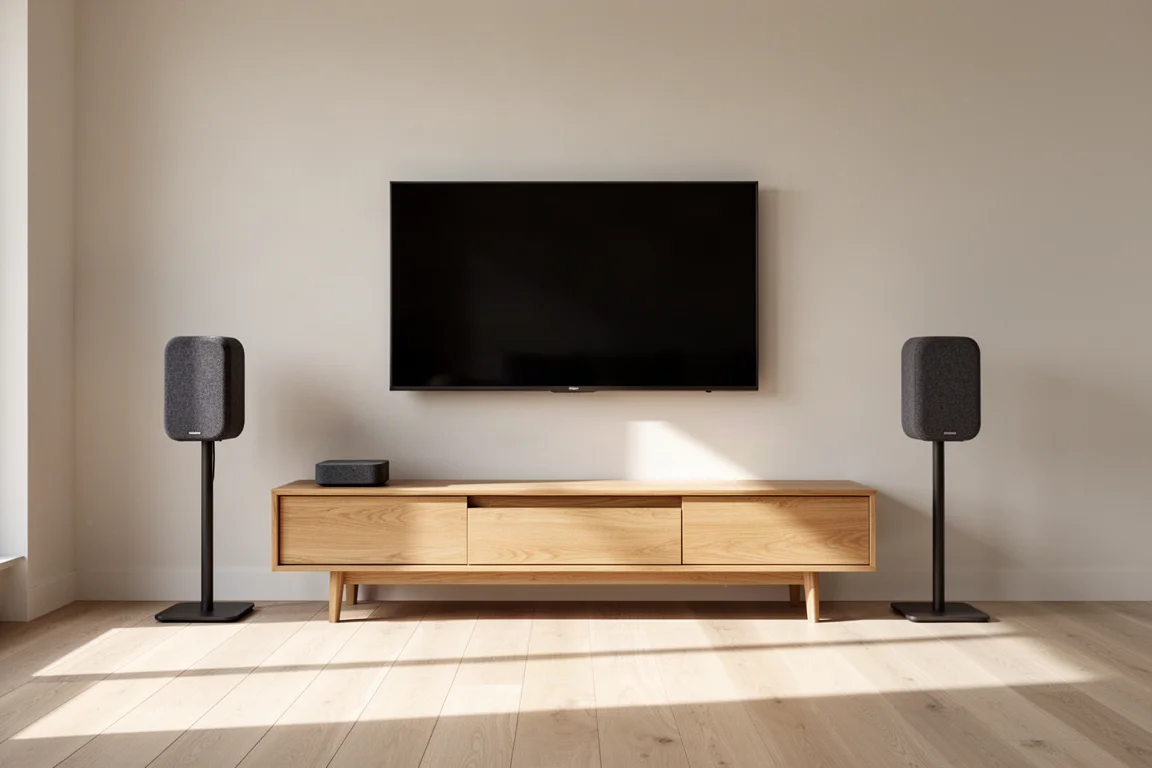
Dolby Atmos FlexConnect is designed to loosen the rules of home theater. Instead of insisting on strict speaker placement, a receiver, and a stack of wired boxes, it lets you put the speakers where the room allows, press a button, and let the system handle the rest. TCL’s Z100 is one of the first ways to try that idea at home, and it works alongside a compatible TCL television such as the QM7, QM8, QM9, or the flagship X11L.
The system scales from a single wireless speaker up to four wireless channels, or three speakers plus a subwoofer. That flexibility is the whole pitch, and it largely holds up in practice. The interesting part is where the trade-offs sit.
Who This System Is For
The Z100 suits households that already own, or plan to buy, a compatible TCL TV and want a clear step up from built-in television audio without committing to an AV receiver and wired speakers. It also makes sense in irregular rooms, where a conventional surround layout is difficult to position properly.
A single Z100 placed behind the sofa is enough to make a difference. Sound that previously came only from the television starts reaching the rear of the room, and the change is noticeable even if it is not dramatic. There are gaps, though: effects tend to thin out as they cross the centre of the room before filling back in behind the listening position. At roughly $299 for the add-on, that is a sensible first step rather than a finished solution.
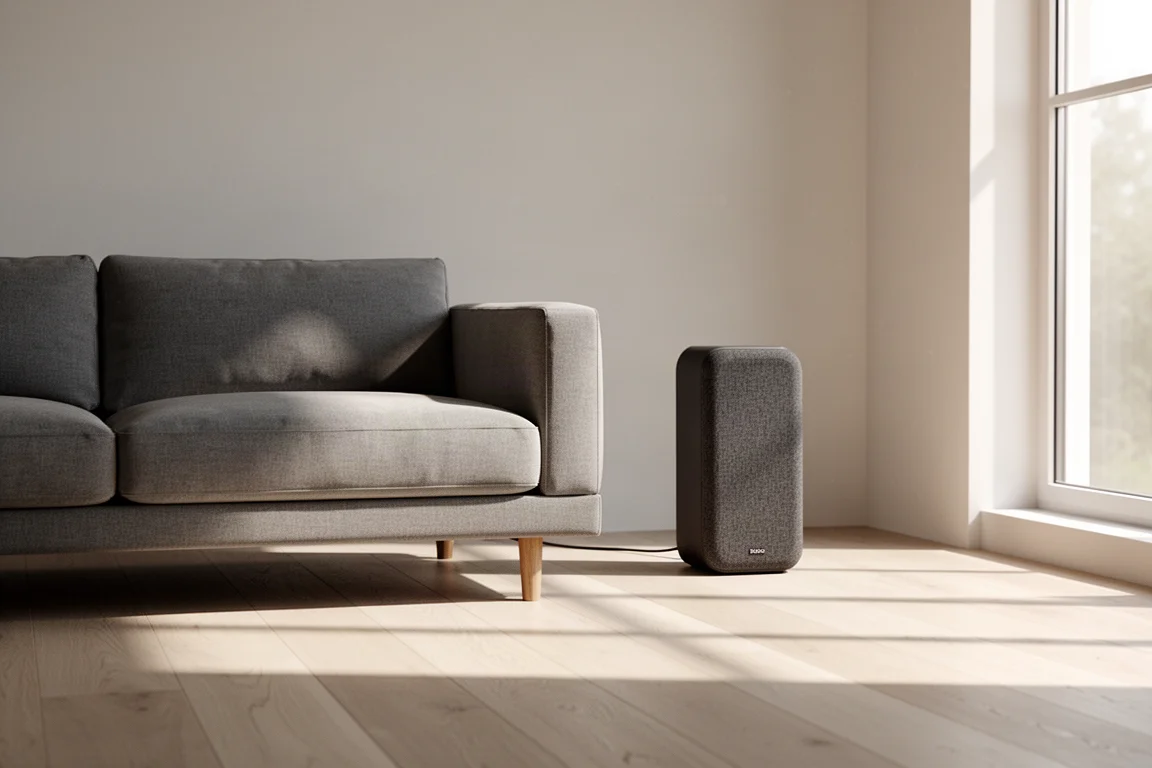
Placement habits matter more than the marketing suggests. If you can put speakers behind or beside the listening position, the upgrade is easy to hear. If everything has to sit up front, the system still widens the presentation, but the gains are smaller.
Setup and Placement in Practice
Setup runs through TCL’s sound menu. You open the menu, select recalibrate, and the process finishes in under a minute, with no measuring, no manual test tones, and no wiring runs across the room.
Dolby’s positioning language suggests near-total placement freedom. In practice, symmetry still counts. The system works in imperfect or irregular rooms, but it rewards balanced placement, both in the number of speakers and in how they relate to the television and to the listening position.
Main Strengths
Once the system is calibrated, the strengths are straightforward: real rear-channel information, bass that is shared across whichever speakers are present, and dialogue that no longer feels pinned to the screen.
Two Speakers Is Where It Starts to Convince
With one Z100 in each rear corner, angled toward the listening position, the gaps heard with a single speaker mostly disappear. Effects travelling from front to back stay connected through the middle of the room, and the result feels close to what a small 5.1.2 setup delivers.
Bass improves as well. FlexConnect routes low-frequency information to whatever speakers are available, so the mid-bass drivers in the Z100s share the load instead of leaving everything to the television. Dialogue benefits too: narration projects into the room with shape rather than sounding trapped inside the screen.
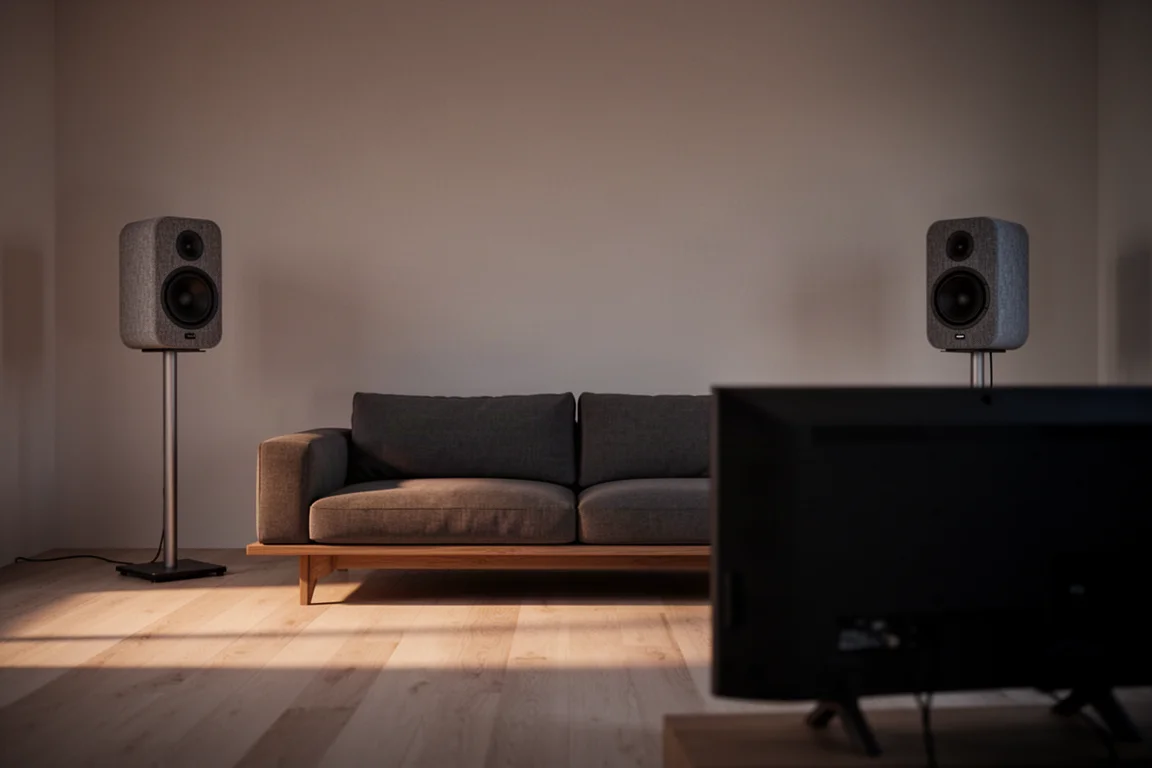
One speaker works. Two is where the system stops feeling like a gimmick and starts behaving like a genuine surround setup.
Four Speakers Deliver Seamless Coverage
Adding two more Z100s up front, on either side of the television, removes the remaining gaps. Overhead effects gain continuity, and the presentation becomes genuinely competitive with higher-end soundbar packages and small bookshelf-based Atmos systems driven by an entry-level receiver.
The step from two speakers to four is about continuity rather than volume. Effects move through the room without seams, and the front pair gives the system a wider, more stable stage for dialogue and music.
Things to Consider Before Buying
This is not reference-grade hardware, and the price bracket explains why. A pair of SVS Titan bookshelf speakers alone runs about $1,200, and once you add a receiver, a subwoofer, and surrounds, a traditional setup without Atmos lands near $4,000. The Z100 system is aimed at listeners who want most of that experience for a fraction of the cost, with far less furniture rearrangement.
FlexConnect is not the only way to get a flexible Atmos layout, and it is worth knowing where the Z100 sits. Sony’s Bravia Theater Quad is more universal, with processing handled in a separate control box that connects to any television over HDMI ARC or eARC, so no particular display brand is required. Spatially it holds a slight edge, and with symmetrical placement it feels a touch more cohesive, though not by a wide margin. Without a subwoofer, however, the Quad speakers sound lean next to the Z100 setup, and adding the SW3 or the SW5 pushes the total well north of $3,000, two to three times the cost of four Z100s at around $1,200. LG’s H7 FlexConnect soundbar with matching M7 speakers, meanwhile, could not be paired successfully in a direct comparison, so LG’s full FlexConnect experience remains hard to judge. For buyers who already own or plan to buy a compatible TCL television, the Z100 system’s price-to-performance is the strongest argument in its favour.
Bass Depth Has Real Limits
With four Z100s and the woofers built into the X11L, there is real low-end presence, more than the speaker count would suggest. It is not subwoofer territory: the system will not pressurize a room. It has solid mid-bass punch and plays comfortably into the 40 Hz region, but not much lower.
That trade-off is not automatically a problem. Plenty of listeners want weight without rattling walls or disturbing neighbours, and for them this balance is a feature rather than a shortfall.
The Subwoofer Trade-Off
The optional Z100 subwoofer adds punch, but it does not meaningfully extend the system’s bass depth, and in its current form it is the weakest part of the range. FlexConnect does not adjust the subwoofer’s level or EQ, and because the sub occupies one of the four available wireless channels, adding it limits the system to three Z100 speakers. That forces an asymmetrical layout: either two speakers up front and one behind, or two behind and one up front.
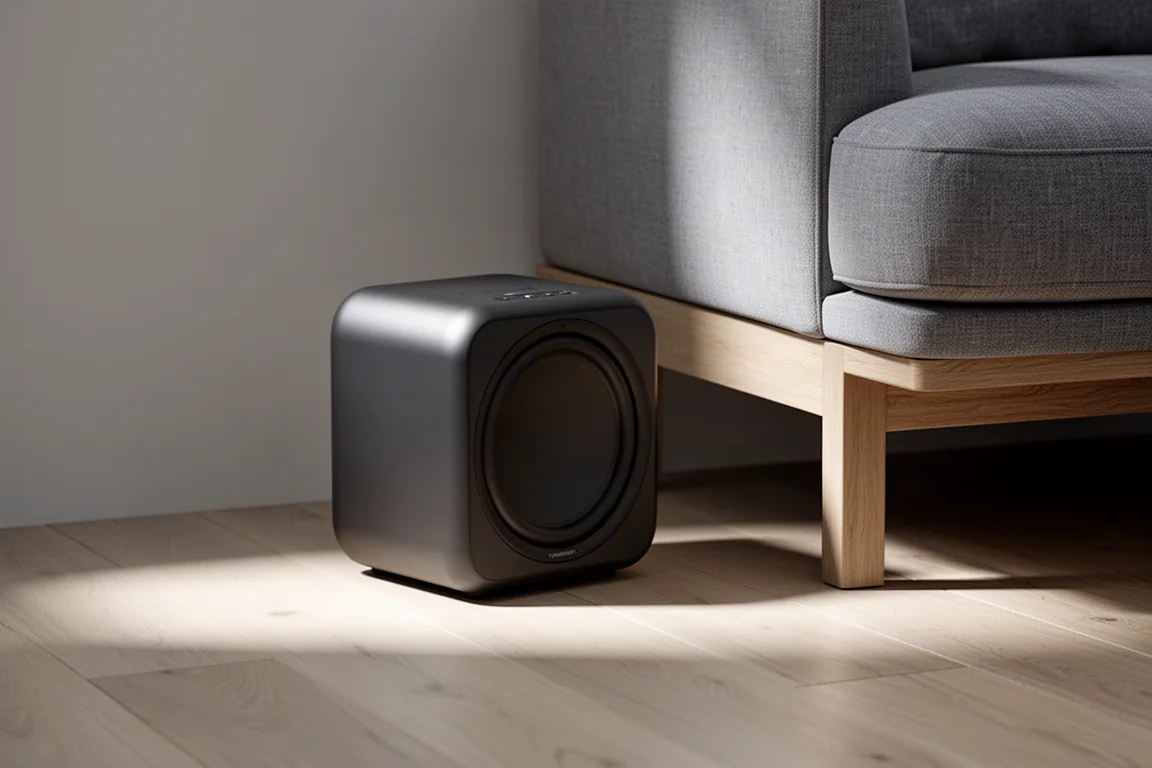
In a symmetrical four-speaker arrangement the system simply sounded better and more controlled. Relying on the television’s own woofers, FlexConnect tapers the low end off gracefully instead of pushing past its limits. Once the subwoofer is connected, that behaviour changes, and when pushed hard it can clip or bottom out. This showed up both with reference Atmos material and with films such as The Fifth Element. Firmware updates may improve the integration over time, but as it stands the four-speaker, no-subwoofer configuration is the one to choose, with two speakers in the rear corners as the second pick.
Wireless Reliability and Latency
Wireless audio invites fair questions about delay and dropouts. No lip-sync issues or meaningful delay appeared at any point. Across several weeks of use there were two brief signal drops, one during a live sports stream and one during live television, where audio collapsed back to the television for less than a second before restoring itself. Two interruptions over weeks of regular viewing is a minor note rather than a recurring problem.
Buying Advice
Start with at least two speakers. A single Z100 is a genuine improvement, but the second speaker is what turns the system into something that behaves like surround sound.
How Many Z100 Speakers Should You Buy?
A pair of Z100s costs roughly $600, which puts the system in the same territory as a single mid-range soundbar. With a compatible TCL television, two speakers placed behind the listening position create an experience a lone soundbar cannot match.
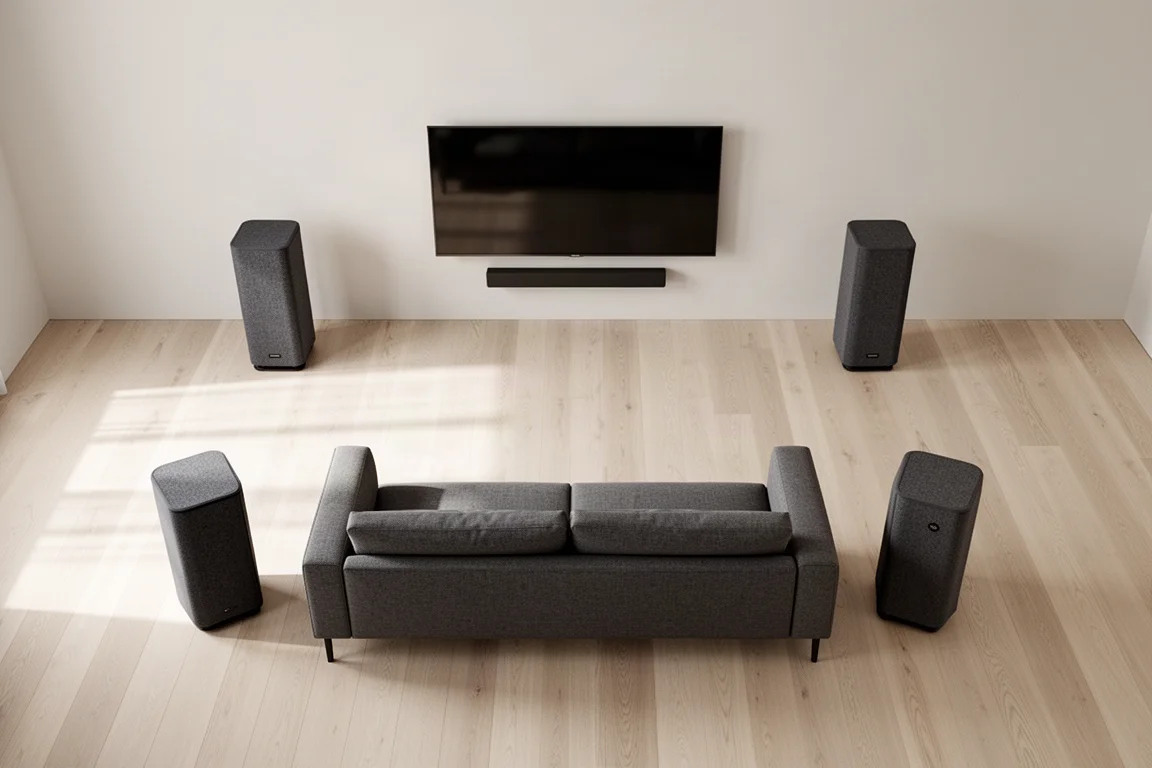
If the room only allows speakers at the front, the result is a wider soundstage than a soundbar provides, but the gains are smaller than they would be with speakers behind or beside you. A single soundbar remains the more minimal option and can deliver close to a 180-degree presentation when the room cooperates. In an irregular room, though, two Z100s placed to the side or behind the listening position will outperform most equally priced soundbars on their own.
Four speakers remain the best version of the system if budget and space allow. Keep the layout symmetrical, and consider leaving the subwoofer out for now.
Conclusion
FlexConnect does not end traditional home theater, but it does make a convincing Atmos experience far more accessible. The Z100 system is at its best with four symmetrically placed speakers, and its second-best form, a pair in the rear corners, still beats what a comparable soundbar can do on its own. Bass depth is the price of admission, and the current subwoofer adds more complication than it resolves.
If you own a compatible TCL television and were weighing a soundbar or a starter home theater, this is a middle ground worth serious consideration. It is simpler, cheaper, and more capable than its price suggests.
Product link
View more details for TCL Z100
This product is mentioned in the review. Check the specifications, options, and compatibility before buying.
View more details for TCL Z100Further reading
Related Reviews
Home Theater
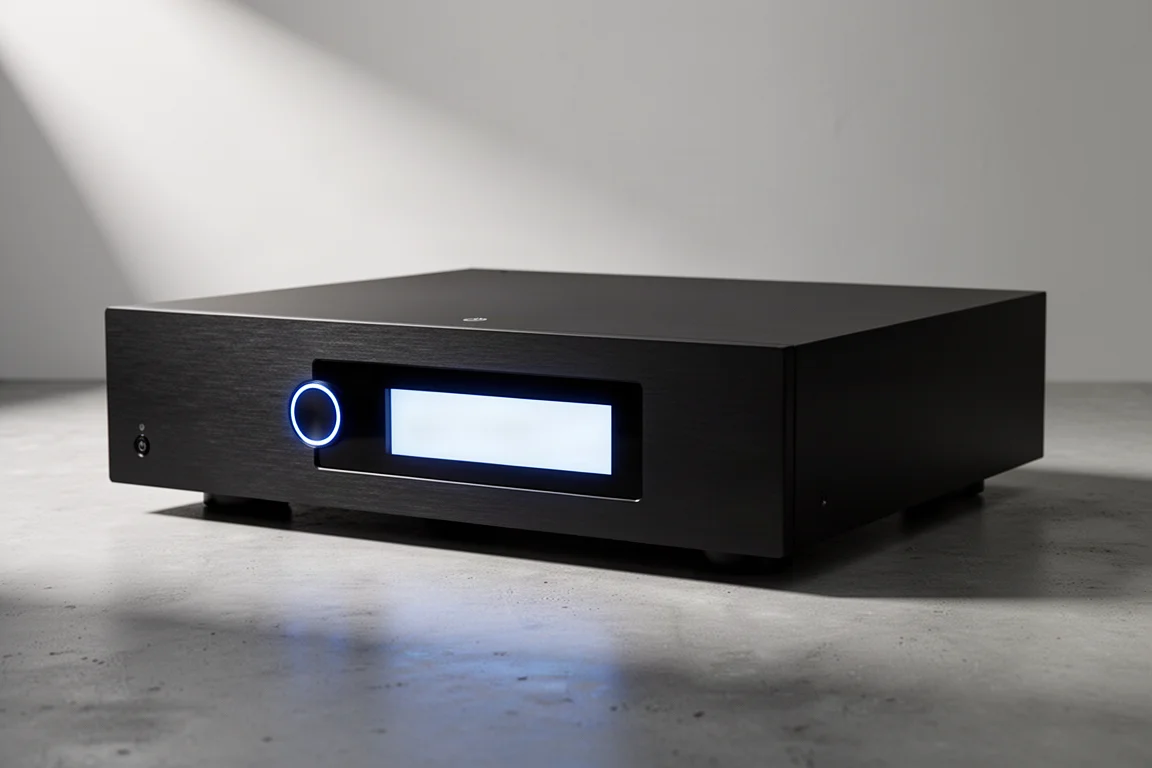
Anthem AVM 90 Review: A 15.4-Channel Flagship Preamp Processor
A close look at Anthem's flagship preamp processor, covering its dual ESS DAC architecture, 15.4-channel layout, ARC Genesis calibration and four independent subwoofer outputs.
Home Theater
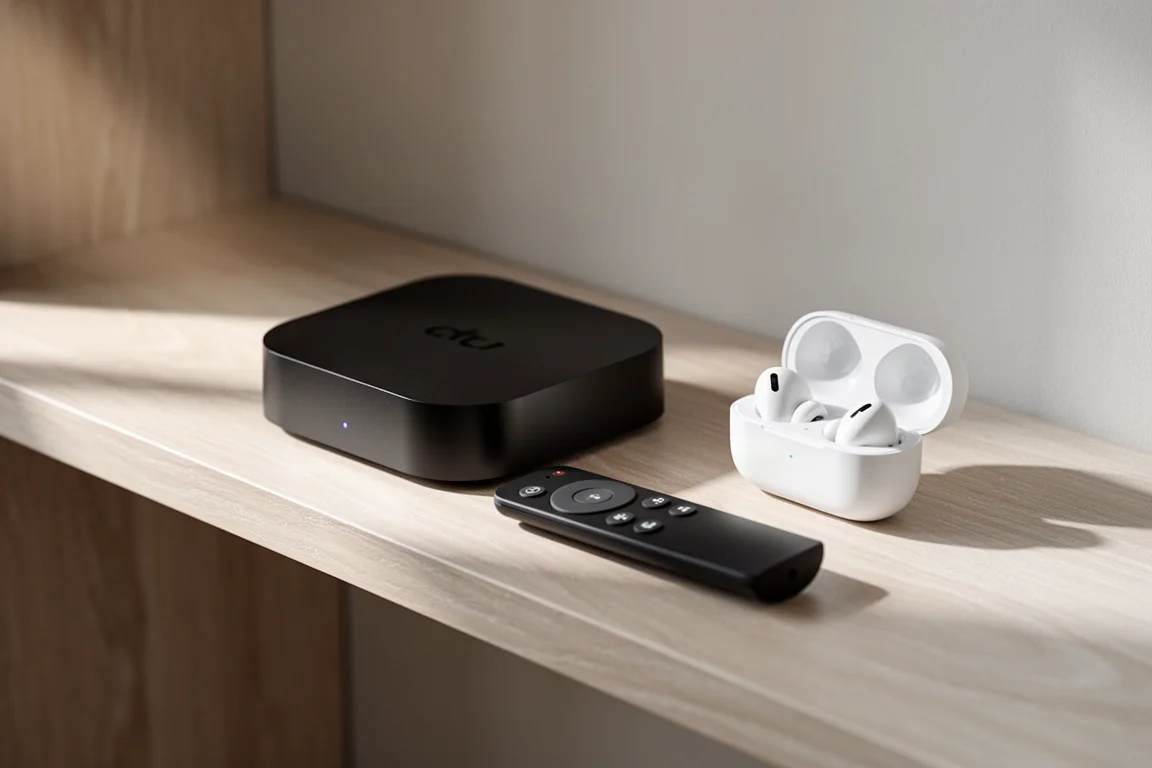
Apple TV 4K With AirPods: A Best-Value Home Theater Setup
An Apple TV 4K paired with AirPods over Bluetooth makes a compact home theater setup for movies, spatial music and late-night viewing, and it can be assembled for as little as $300.
Home Theater
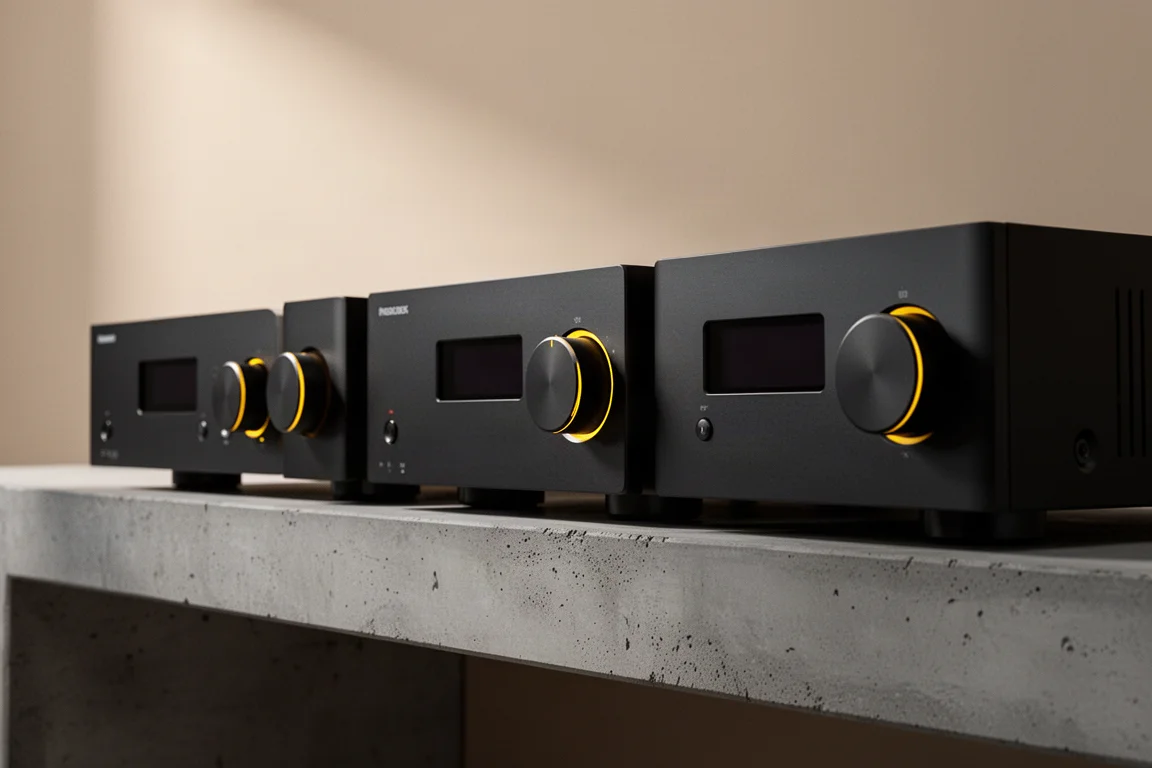
Arcam AVR15, AVR25, AVR35, and AVP45 Compared: Which AV Amplifier Fits Your System?
Four new Arcam home theater components share nine-channel amplification and Dirac Live, but differ in power, processing ceiling, and channel flexibility.