Home Theater
Anthem AVM 90 Review: A 15.4-Channel Flagship Preamp Processor
A close look at Anthem's flagship preamp processor, covering its dual ESS DAC architecture, 15.4-channel layout, ARC Genesis calibration and four independent subwoofer outputs.
Introduction
The Anthem AVM 90 is the flagship preamplifier processor in Anthem’s lineup, and it retails for $7,499. It is a 15.4-channel design, which in practical terms means nine bed-layer channels, six height channels and four independent subwoofer outputs. Development was shaped by supply disruptions that forced Anthem to build a completely new DAC and DAC board architecture, which is why the processor arrived with 8K HDMI support rather than the 4K iteration originally planned. The result continues an Anthem tradition: two-channel audiophile performance delivered inside a multi-channel cinema system.
Who This Product Is For
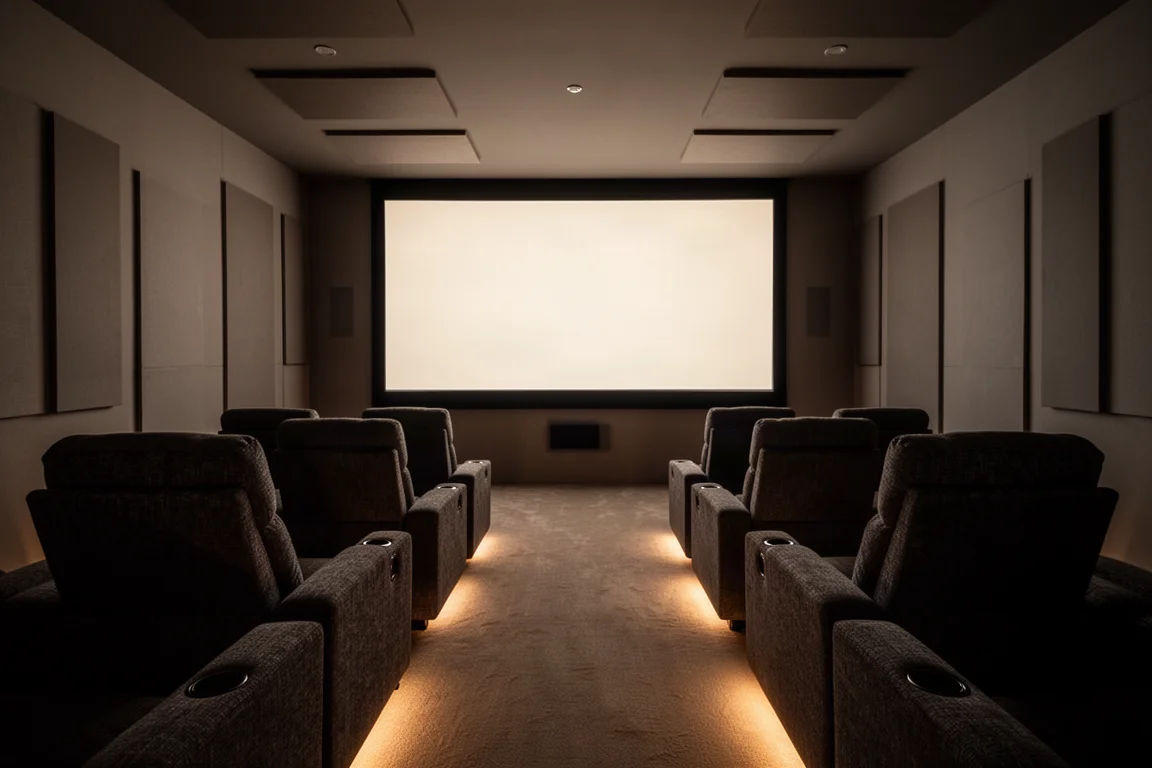
This is a processor for listeners who treat a home cinema as a serious audio system rather than an accessory to a screen. The 15.4-channel layout suits rooms with multiple rows of seats, height speakers and more than one subwoofer, and the fixed channel architecture rewards owners who plan their speaker layout carefully before installation.
It also fits households that want modern streaming convenience alongside disc playback. AirPlay 2, Google Chromecast, Spotify Connect and Bluetooth are all built in, so the processor works as a network audio endpoint as readily as it works as the switching hub of a theater.
Owners of earlier Anthem processors are a natural audience as well. The AVM 90 keeps the same control system integrations and the same calibration philosophy while moving the audio circuitry forward.
Design and the New Chassis
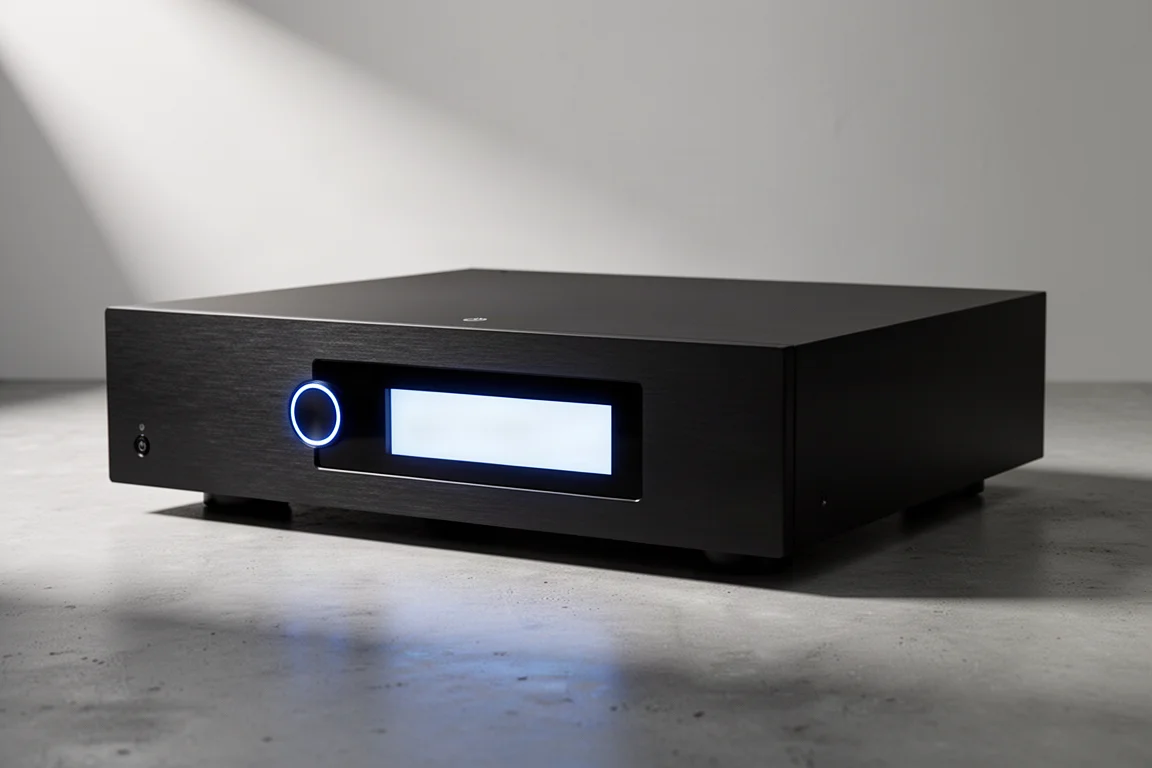
Anthem introduced its Streamline chassis with the STR integrated amplifier, and the AVM 90 adopts it in place of the busier front panels of earlier generations. There is a single power button, five front panel buttons and a volume control. Discrete main and Zone 2 power buttons are gone; instead, the power button communicates state through color. A blue LED ring indicates a single active zone, purple indicates that both main and Zone 2 are powered on, and a red ring appears when HDMI CEC is enabled and the unit is in standby.
The display is larger and easier to read than those on previous Anthem processors, with volume shown in large numerals that remain legible from a main listening position roughly 18 feet away. The display corners can optionally show the active input, ARC room correction status and audio signal details in a single view, and brightness is adjustable from 0 to 100 percent. For rack installations, a rackmount kit has been retooled for the new chassis and is smaller than the version made for earlier models.
Main Strengths: DAC Architecture and Channel Count
The heart of the AVM 90 is a pair of ESS Technology ES9038PRO DACs for the main zone. These are 32-bit, 768 kHz, eight-channel converters with a dynamic range rated at 132 dB, and Anthem supported them with meaningful circuit changes: updated voltage regulators, a DAC board moved from four layers to six, 0.1 percent precision resistors and upgraded op amps. Each of those changes targets a realistic audible benefit rather than a specification headline.
Subwoofer output is handled with unusual care. Each of the four independent subwoofer outputs has its own dedicated converter, using a pair of ESS ES9038Q2M chips, also 32-bit and 768 kHz stereo designs. Zone 2 gets its own separate DAC as well, and native HDMI input sources can now be switched to Zone 2, which is a welcome addition for second-room listening.
In listening comparisons against the previous AVM 60, the AVM 90 produced a noticeably quieter and more transparent presentation, with silent passages in a recording rendered as a genuinely black background. Vocalists and instruments appeared in a larger, more focused and more three-dimensional image. The headphone output is also a substantial step forward, delivering a clean, slightly analytical character that pairs well with revealing headphones.
Connectivity and Virtual Inputs
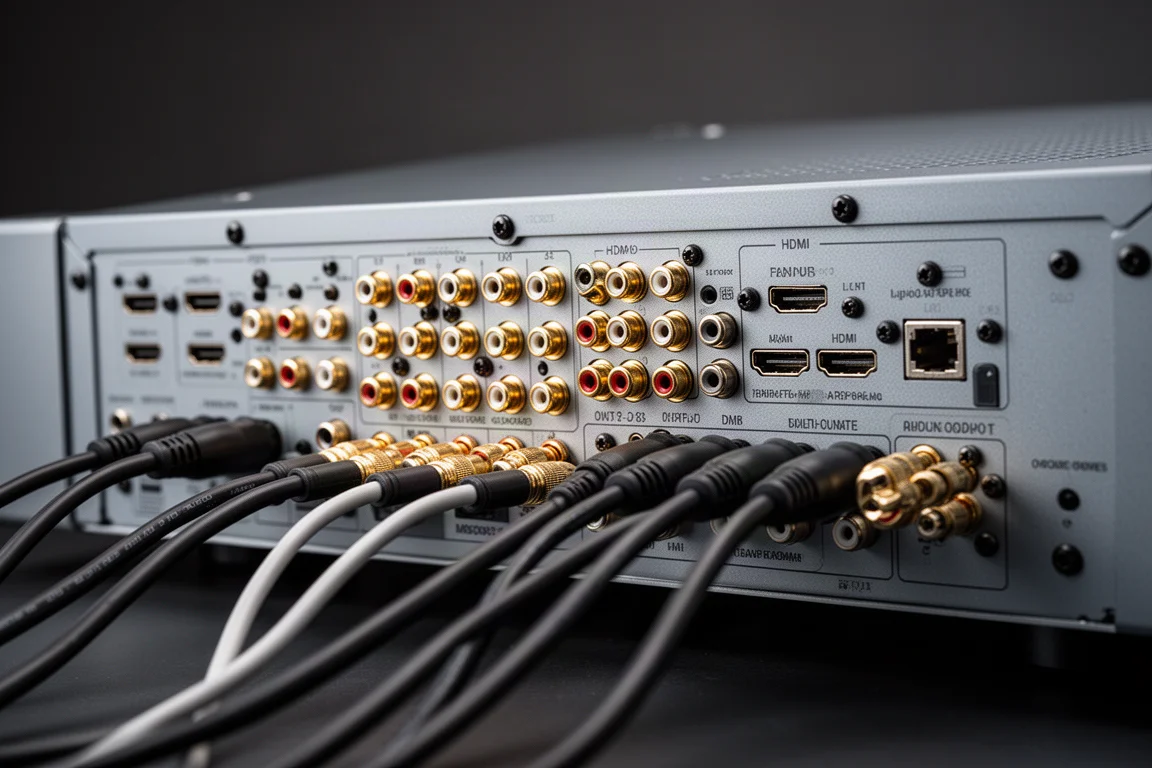
The AVM 90 provides seven HDMI 2.1 inputs with HDCP 2.3 support. The main zone has two parallel HDMI 2.1 outputs, which is useful for hybrid television and projector setups or for feeding a second display, plus an independently switchable HDMI 2.1 output for Zone 2. The main HDMI 1 output supports eARC, allowing a television to pass two-channel stereo up through uncompressed Dolby Atmos and DTS:X signals at up to 192 kHz and 24-bit over a single cable.
Analog connectivity covers four pairs of single-ended RCA inputs and a dedicated moving magnet phono input, an unusual inclusion for an Anthem processor of this class. Digital connections include two coaxial S/PDIF inputs, three optical inputs and one optical output. Stereo balanced and AES/EBU inputs are not included, a departure Anthem has maintained since the AVM 50.
Every physical input can be assigned to one of 30 virtual inputs, and the unit ships with virtual HDMI inputs preconfigured for each physical connection along with streaming and audio return channel options. The processor also integrates natively with Crestron, Control4, Savant, URC, RTI, ELAN and other IP-based control systems.
ARC Genesis and Four Subwoofer Outputs
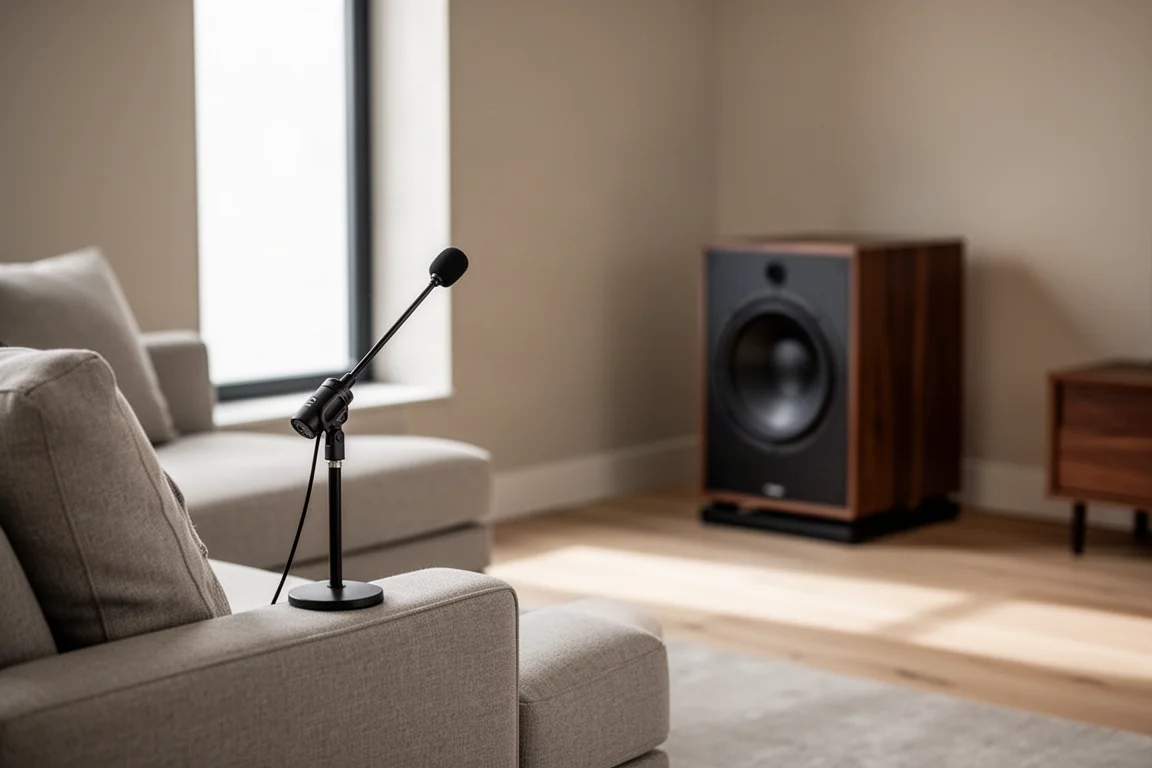
Room correction comes from ARC Genesis, Anthem’s established calibration platform, and the AVM 90 ships with a new directional microphone. A small aperture near the top of the capsule improves high-frequency accuracy, which matters most when calibrating speakers mounted behind an acoustically transparent screen, where the top end is otherwise difficult to measure reliably.
Four independent subwoofer outputs are the headline feature here. ARC Genesis calibrates each subwoofer separately, and the software automatically calculates the optimal phase for every subwoofer to achieve the best transition to the main speakers. In practice, placing the microphone at the main listening position and letting the automated phase routine run produced excellent results with both two and four subwoofers. Four subwoofers in a rectangular room is a widely used guideline for smoothing room modes across seats, and the AVM 90 is built to exploit that arrangement.
The Quick Measure tool is included as well. It removes the need for separate measurement software when checking speaker or subwoofer placement, and it can be run after calibration to compare response with and without ARC engaged, so owners can see exactly what the correction is doing in their room.
Streaming and Network Playback
Streaming support is broad and, importantly, protocol agnostic. AirPlay 2, Google Chromecast, Spotify Connect and Bluetooth are all on board, and the processor appears instantly on the network as an AirPlay or Chromecast endpoint that can be grouped with other speakers and televisions. Ethernet and Wi-Fi are both built in. Roon endpoint support has been announced for the AVM 90 but is not yet available, and certification should not be treated as a barrier to purchase: a Roon core can already be connected through HDMI, coaxial, optical or another streaming protocol, though native volume integration and lossless streaming through the mobile app are lost in that arrangement.
The usual trade-offs of each streaming platform carry over. Chromecast can be slow to load music, and AirPlay volume steps can feel coarse when controlled from an iOS device, a limitation that disappears when the processor is grouped with other AirPlay speakers or when the physical remote is used.
Things to Consider Before Buying
Channel outputs are fixed rather than assignable. If a room has two or three rows of seats and needs an additional set of side surrounds, the front wide outputs, subwoofer outputs or a height pair cannot be reassigned to that job. Bed-layer channels, height channels and subwoofers must also be configured sequentially, and the naming follows that order, which is worth understanding before installation and ARC setup.
HDMI CEC remains imperfect, and owners who do not need it may prefer to switch it off. There is also a specific trigger behavior worth noting for custom installations: if Zone 2 was the last active zone and the main zone is then powered on, a Zone 2 trigger can activate even though Zone 2 is off. An earlier internal fan issue was resolved through firmware, so running the latest stable firmware is strongly recommended. Finally, Auro 3D is not supported.
Buying Advice
At $7,499, the AVM 90 is expensive, but it occupies a narrow and useful position in the market. The next meaningful step up moves into the $20,000 range and beyond, which makes the Anthem a high-value option for listeners who want flagship processing without stepping into that bracket. Its combination of a 15.4-channel layout, four independently calibrated subwoofer outputs, automated subwoofer phase adjustment and a genuinely strong headphone output is difficult to match at this price.
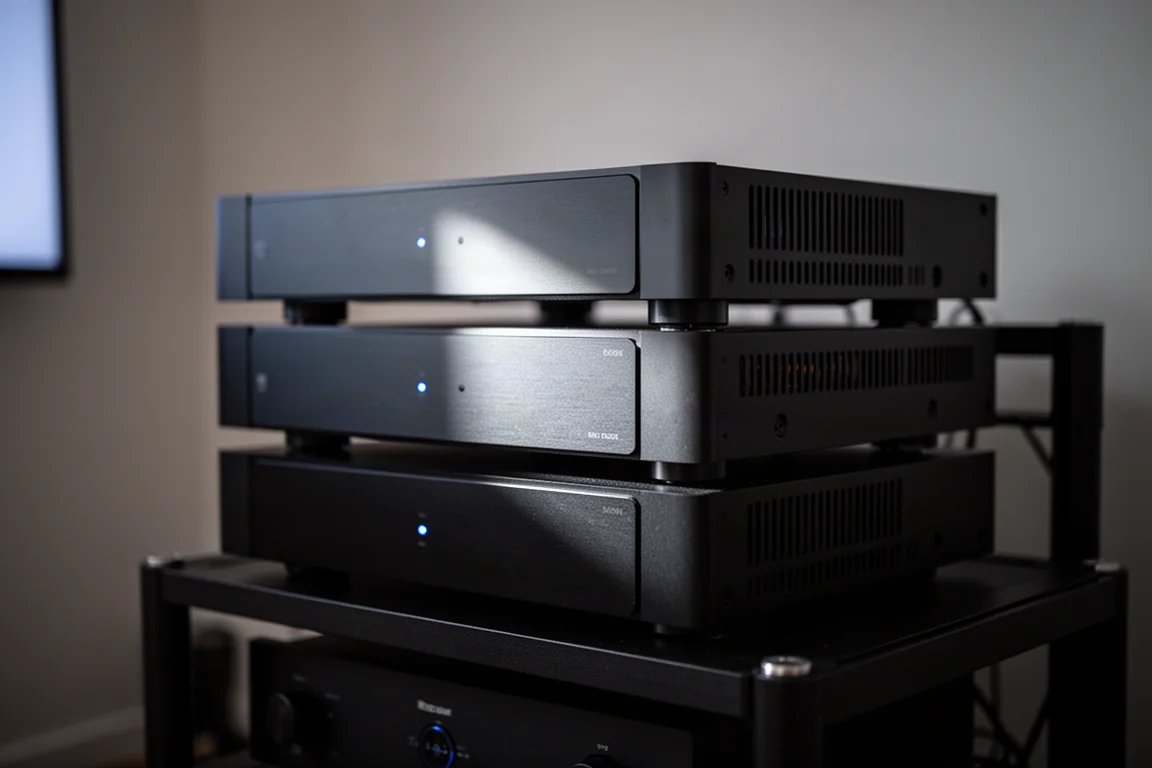
For anyone upgrading from an AVM 60, the improvement in noise floor, image focus and transparency was clear enough to be obvious on almost any recording. Whether the gap from an AVM 70 justifies the move is a personal decision that depends on how the rest of the system is built and how much value you place on the subwoofer and headphone improvements. Buyers should also budget for the speaker layout the processor is designed around, since the four subwoofer outputs and six height channels deliver their full benefit only when the room can support them.
Conclusion
The Anthem AVM 90 is a carefully engineered flagship processor that treats audio quality as the primary goal. Its dual ES9038PRO main-zone conversion, dedicated DACs for each subwoofer and for Zone 2, four independent subwoofer outputs and ARC Genesis calibration with automated phase adjustment add up to a coherent design rather than a list of features. The caveats are real but manageable: fixed channel assignments, occasional HDMI CEC quirks, a Zone 2 trigger nuance and the absence of Auro 3D. For listeners building a serious multi-channel system around multiple subwoofers and a well-planned speaker layout, it is a compelling choice at its price.
Product link
View more details for Anthem AVM 90
This product is mentioned in the review. Check the specifications, options, and compatibility before buying.
View more details for Anthem AVM 90Further reading
Related Reviews
Home Theater
Apple TV 4K With AirPods: A Best-Value Home Theater Setup
An Apple TV 4K paired with AirPods over Bluetooth makes a compact home theater setup for movies, spatial music and late-night viewing, and it can be assembled for as little as $300.
Home Theater
Arcam AVR15, AVR25, AVR35, and AVP45 Compared: Which AV Amplifier Fits Your System?
Four new Arcam home theater components share nine-channel amplification and Dirac Live, but differ in power, processing ceiling, and channel flexibility.
Home Theater
Audio and Home Theater Gift Ideas: 13 Value Picks for Music and Movies
A practical gift guide for people who care about sound, covering budget three-way towers, powered desktop speakers, subwoofers, a receiver, headphones, and a streamer for spatial audio.