Home Theater
Arcam AVR15, AVR25, AVR35, and AVP45 Compared: Which AV Amplifier Fits Your System?
Four new Arcam home theater components share nine-channel amplification and Dirac Live, but differ in power, processing ceiling, and channel flexibility.
Introduction
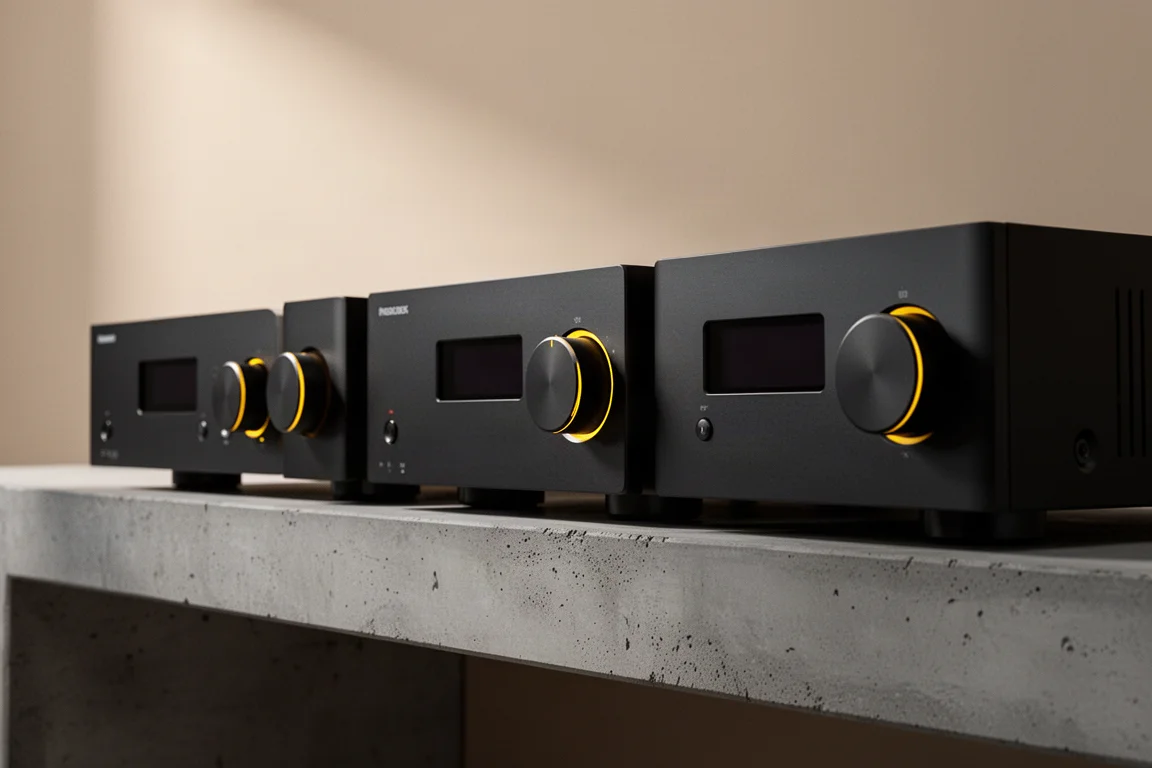
Arcam has refreshed its home theater range with four new components: the AVR15, AVR25, and AVR35 AV amplifiers, plus the AVP45 AV processor. They replace the AVR11, AVR21, AVR31, and AV41 models introduced in 2020.
The most significant change is amplification. The previous generation topped out at seven built-in amplified channels, and every model in the new lineup handles nine.
Arcam’s history goes back to 1976, when two engineering students at the University of Cambridge built an integrated amplifier under the name A&R Cambridge. The company built its reputation on two-channel stereo gear prized for a natural, musical character rather than a clinical one, and its AV pedigree stretches back further than many listeners expect, with audiophile multi-channel designs dating to 1995. Harman acquired Arcam in 2017 and has continued to develop the multi-channel range alongside the stereo lineup.
A 2023 refresh of the two-channel range introduced a new look, a reimagined user interface, and a dedicated app. That design approach now reaches the home theater line for the first time.
What All Four Models Share
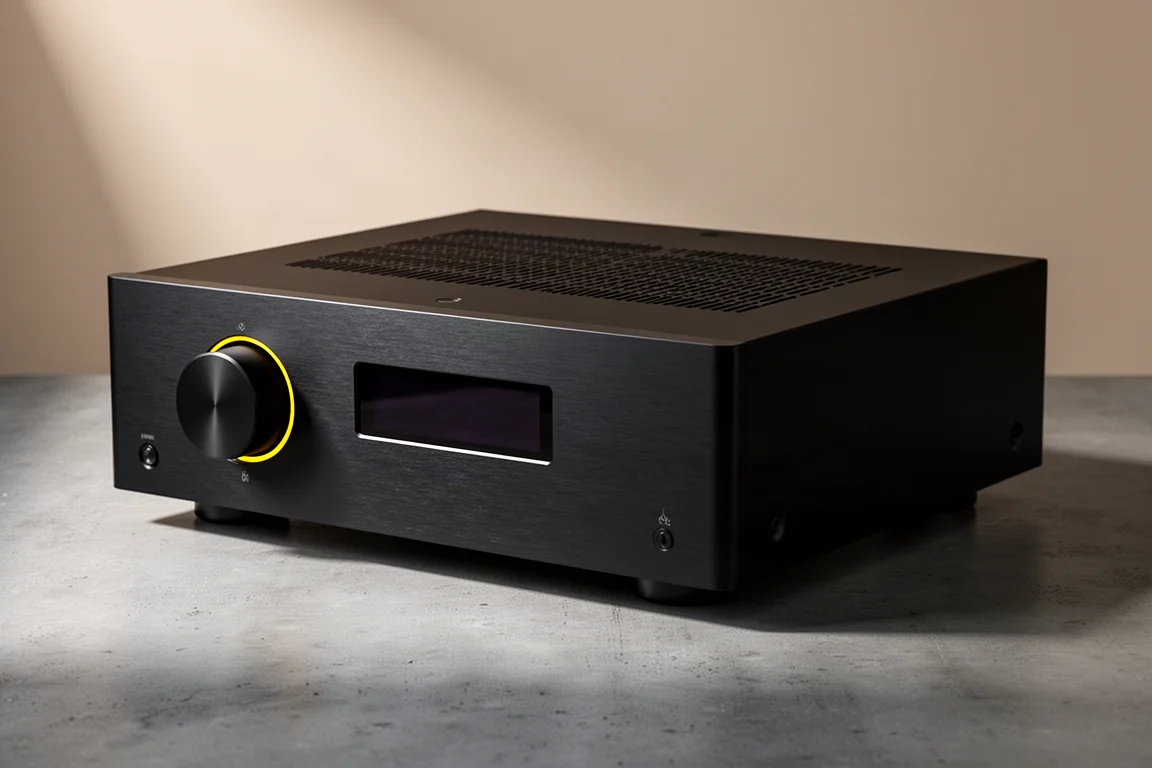
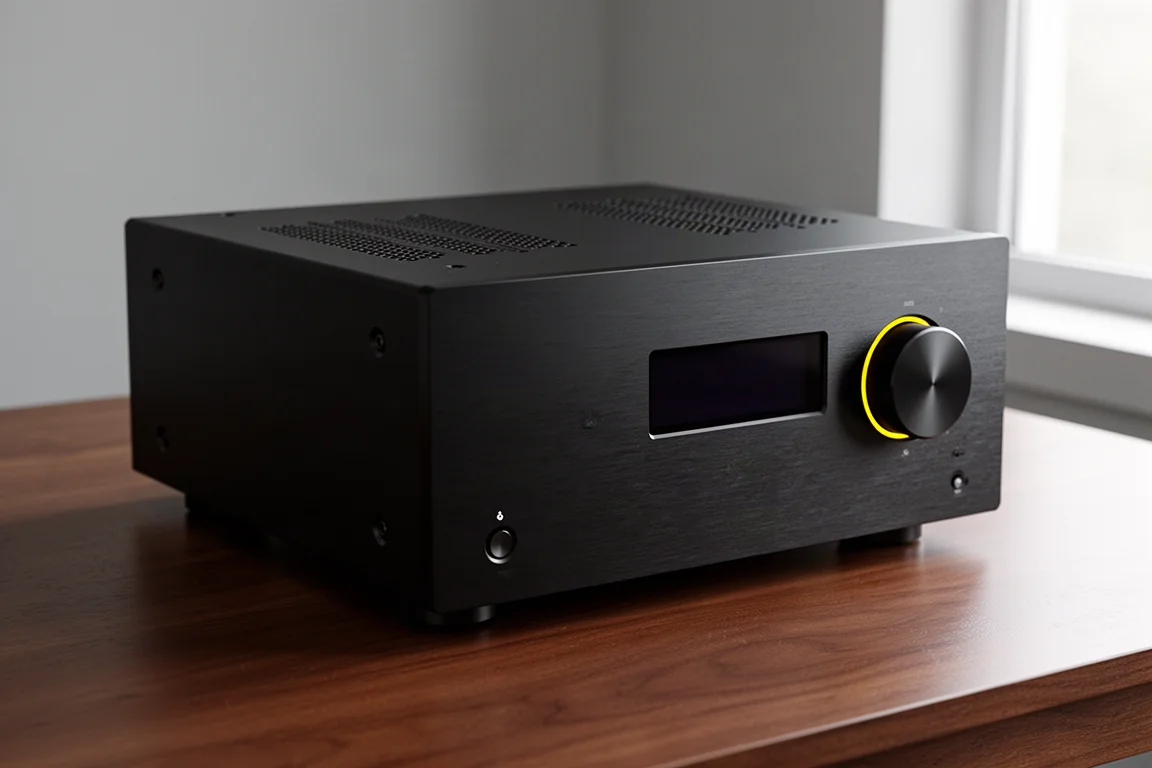
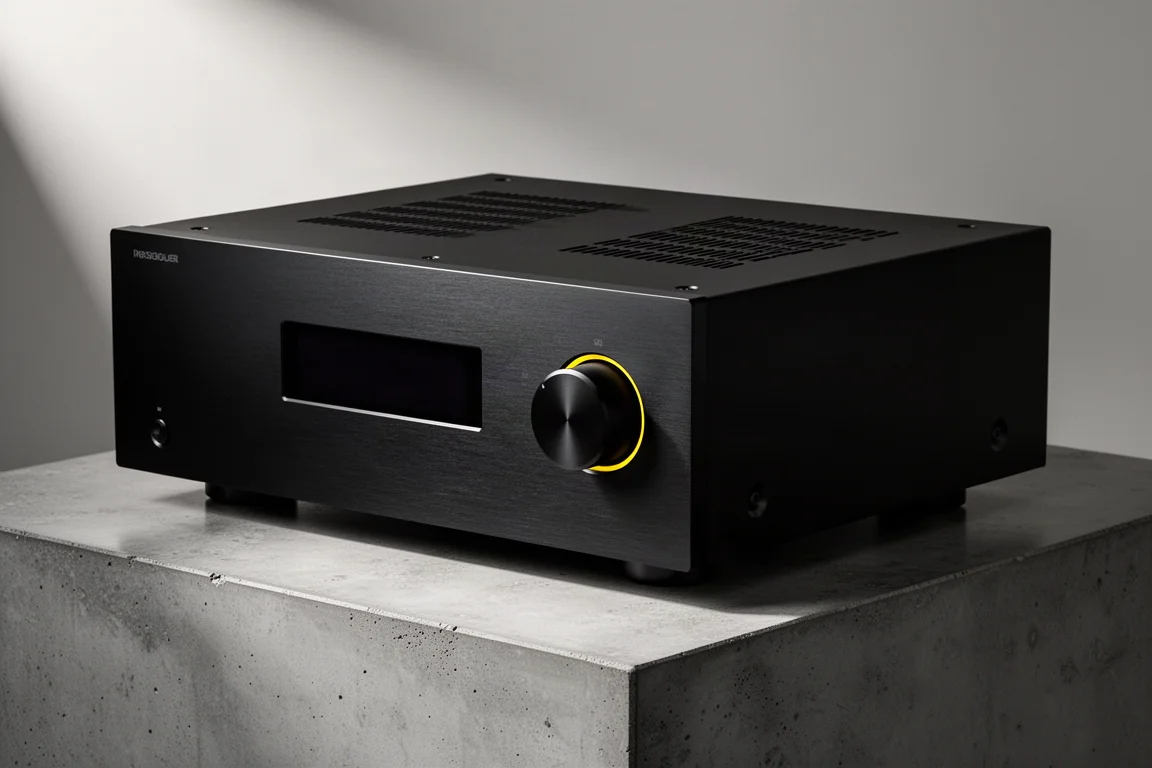
All four components use the same visual language: black casework, a thin yellow ring around the volume knob, and a 6.5-inch color display. A rear panel cowl overhangs the back of the chassis just enough to hide cables and antennas, and it is magnetic, so it can simply be lifted off. Build quality is substantial, with the AVR25 weighing 47 lb and the AVR35 over 50 lb.
Dirac Live room correction is included at no extra cost on every model. Many competitors in this category charge roughly $349 to activate the full-range version, so having it standard across the lineup is a meaningful difference.
On the video side, all four offer HDMI 2.1a with seven inputs and two outputs for the main zone, supporting 8K at 60 Hz or 4K at 120 Hz, along with HDR10+, Dolby Vision, HLG, variable refresh rate, and auto low latency mode for gaming. The AVR25, AVR35, and AVP45 add a third HDMI output for a second zone, which the AVR15 does not have. Digital audio connections cover two coaxial and two optical inputs plus three pairs of analog RCA inputs.
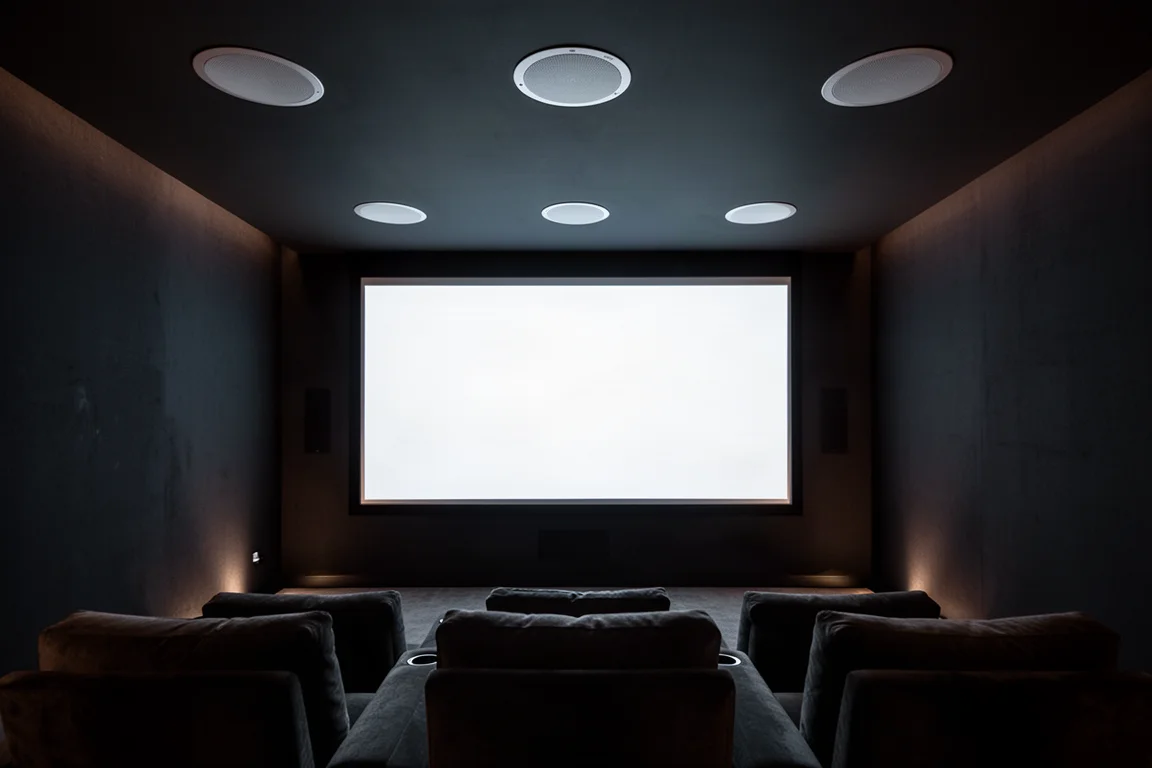
Streaming support is comprehensive: AirPlay, Google Cast, Spotify Connect, Tidal Connect, Qobuz Connect, and Roon Ready certification, all controlled through the Radia app alongside internet radio and podcasts. Bluetooth 5.2 is two-way, with Snapdragon Sound and Auracast, so audio can be streamed in from a phone or sent out to a pair of Bluetooth headphones.
Two practical details are worth noting before comparing the models. First, none of the four includes a built-in AM/FM tuner, so plan on a streaming radio service if a tuner matters. Second, every model ships with one dedicated subwoofer preamp output, and the AVR35 and AVP45 can reassign additional channels to more subwoofers, though each channel handed to a sub is one fewer available for speakers.
Dirac Live Room Correction and Optional Upgrades
Dirac Live measures the room with a microphone and then corrects both the frequency response and the timing of what actually reaches the listening seat. Setup takes a little effort, but it is manageable even for a first-time user.
Beyond the included version, two paid upgrades are offered for the first time with this lineup. Dirac Live Bass Control treats every subwoofer and speaker in the system as one cohesive low end rather than correcting each one separately. It aligns timing and phase between the subwoofers and the main speakers so bass blends in seamlessly instead of feeling disconnected, and it reduces boomy, uneven bass from seat to seat.
Dirac Live Active Room Treatment, or ART, is offered on Arcam products for the first time here. It uses the speakers to counter room reflections in real time, targeting the 20 to 150 Hz range where bass problems tend to live. ART earns its keep most in rooms that fight back acoustically, such as open floor plans, rooms with hard reflective surfaces, and unusually shaped spaces. In a room that is already well behaved, the improvement is more incremental.
Arcam AVR15: The Entry Point
The AVR15 processes up to 12 channels, nine of which are amplified on board using Class D amplification rated at 85 W per channel with two channels driven at 8 ohms. On its own, those nine channels cover a 7.1.2 setup, or 5.1.4 if height channels matter more than surround. Adding an external amplifier opens the door to layouts such as 9.1.2 using the full 12-channel ceiling.
Format support covers Dolby Atmos and DTS:X, but not IMAX Enhanced or Auro 3D, which Arcam reserves for the higher models. Digital-to-analog conversion uses the ESS Hyperstream 4 DAC platform.
With a single subwoofer preamp output and no zone two HDMI output, the AVR15 is the most straightforward option for a single-room system.
Arcam AVR25: Class AB Amplification and More Headroom
The AVR25 raises the processing ceiling from 12 channels to 16, and its nine onboard amplified channels switch from Class D to Class AB, rated at 120 W per channel with two channels driven at 8 ohms. A toroidal linear power supply delivers more stable, consistent power under demand, which helps in larger rooms and with less efficient speakers that draw more current.
The amplification class is the more consequential difference. Class D switches its output transistors fully on and off at high speed to reconstruct the waveform: efficient, cool-running, and fundamentally a switching process. Class AB uses a continuous analog design in which the output transistors stay partially active rather than snapping on and off, which greatly reduces crossover distortion. That matters because the fine detail that makes music and movies feel real tends to live in quiet passages rather than loud ones, and quiet passages are exactly where crossover distortion shows up. Class AB avoids the heat and power draw of running full class A continuously, and Arcam positions the AVR25 as carrying more of its classic two-channel realism into a multi-channel system.
The AVR25 also adds IMAX Enhanced and Auro 3D support and a dedicated zone two HDMI output. Its nine onboard channels cover the same 7.1.2 or 5.1.4 base, and the 16-channel ceiling leaves plenty of room to grow with extra height or surround speakers once external amplification is added. Positions such as extra height pairs and front wides are fixed on this model.
Arcam AVR35: Class G Power and Full Channel Flexibility
The AVR35 keeps the 16-channel ceiling but adds matrix channel assignment across all 16 channels, and that flexibility is what separates it from the AVR25. On the AVR25, positions like extra height pairs and front wides do one fixed job. On the AVR35, any of the 16 channels can be reassigned to whatever role the room actually needs. If front wides are not wanted, those two preamp channels can drive a second or third subwoofer instead, producing something like a 9.3.4 layout with all three subs blended through bass control. In the other direction, the left, center, and right channels can be run from a separate external amplifier, freeing every onboard channel for surrounds and heights.
Its nine built-in channels use Class G, Arcam’s signature topology, rated at 145 W per channel with two channels driven at 8 ohms. Class G runs two power supplies rather than one. The lower supply handles normal listening levels in pure class A, the same distortion-free mode found in exotic, inefficient amplifiers, and it stays there for the vast majority of listening since most music does not demand peak power. When a movie explosion or a large musical peak calls for more, a second higher voltage supply engages automatically. A circuit Arcam calls a lifter circuit manages that handoff, easing into the extra headroom smoothly rather than switching abruptly. The result is class A purity and detail at normal levels without the heat and power waste of true class A, with full power available the moment it is needed.
The AVR35 also steps up to the Hyperstream 4 DAC Pro platform, the same converter used in Arcam’s SA45 streaming amplifier. It covers the same 7.1.2 or 5.1.4 base on its own and weighs over 50 lb.
Arcam AVP45: A Processor for Separate Amplifiers
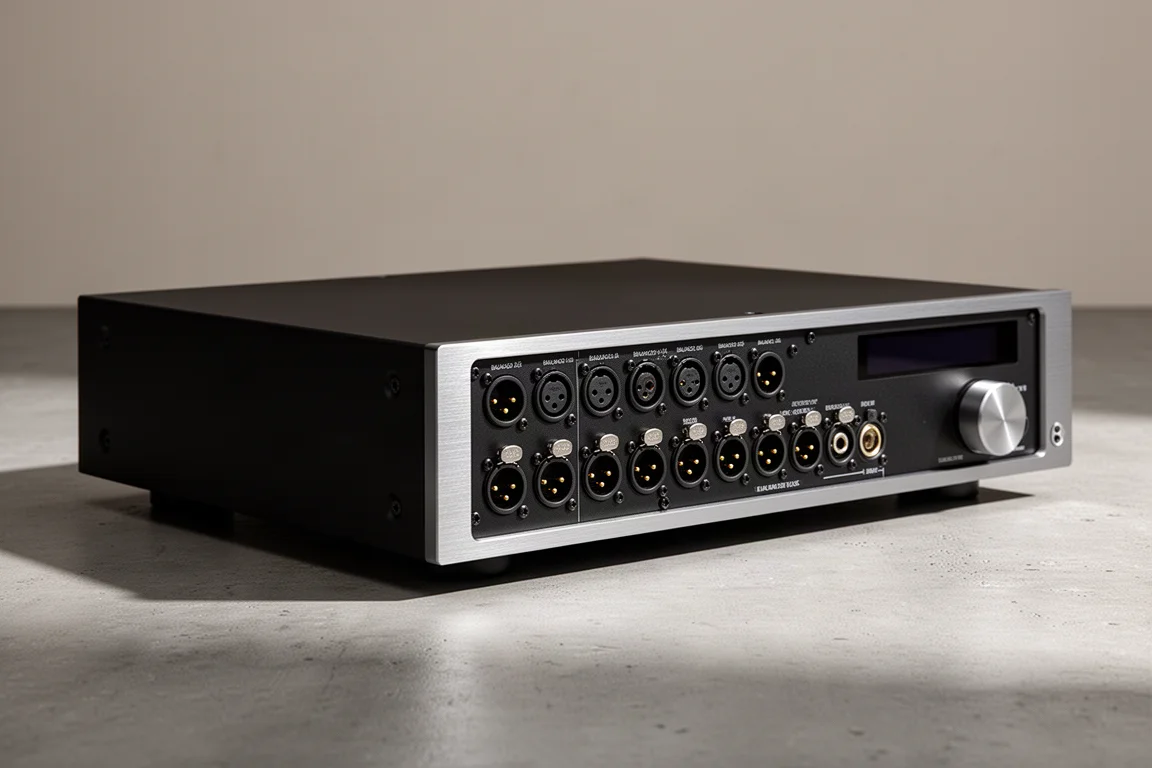
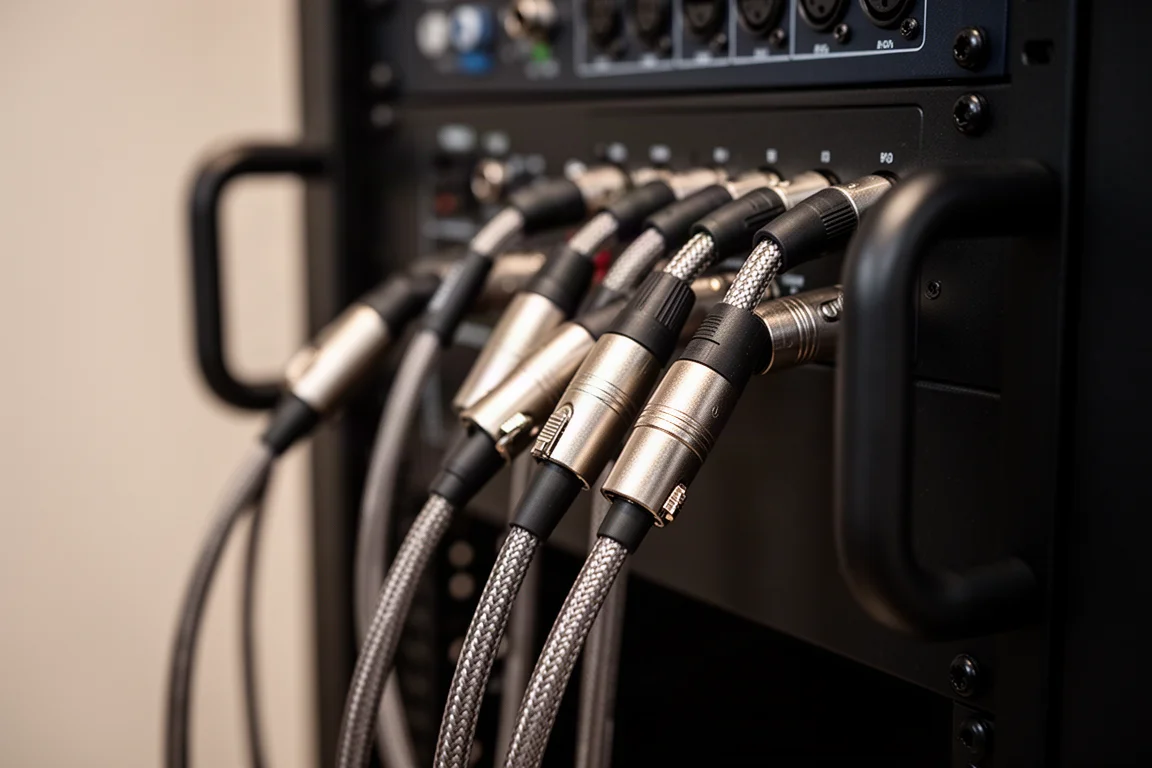
The AVP45 is a different kind of component: a 16-channel processor with no built-in amplification at all. Every channel has a balanced XLR output, and it is built for listeners who want to choose their own power amplifiers rather than have them baked into the chassis. It carries the full format list, including Dolby Atmos, DTS:X, IMAX Enhanced, and Auro 3D, along with matrix channel assignment across all 16 channels and its own zone two output.
Two matching power amplifiers were built alongside it: the PA9, a nine-channel Class G design, and the PA4, a compact four-channel Class D amp for height or surround duty. Paired with the AVP45, they provide 13 channels of amplification, and the processor’s 16-channel ceiling leaves room to scale further, up to something like a 9.1.6.
Which Model Fits Your Room?
If this is a first step into a Dirac-corrected, Atmos-capable home theater system, the AVR15 covers the essentials without paying for headroom that will not be used yet. For more format support, more current delivery, and more room to grow, the AVR25 is the clear step up. For the most power and the most flexibility in a single chassis, the AVR35 is the pick, and it is also the strongest performer of the three amplifiers. For a true separates system where amplification is chosen and expanded independently, the AVP45 is the natural choice, ideally paired with the PA9 or the PA4.
One trade-off runs across the range: every channel reassigned to a subwoofer is one fewer channel available for speakers. On the AVR35 and AVP45, four independent subwoofers can run while still leaving 12 channels for everything else, which is plenty for most rooms.
Because Dirac Live is included on every model rather than sold as an upgrade, the total system cost stays more predictable than on platforms that charge separately for full-range correction.
Conclusion
The new lineup modernizes Arcam’s home theater range in several meaningful ways: nine amplified channels across every model, Dirac Live included as standard, HDMI 2.1a with 8K and 4K120 support, and a design language that matches the two-channel Radia components. The differences between the four come down to amplification class and power, processing ceiling, channel flexibility, and whether amplification is built in at all. Matching those differences to the room, the speakers, and how far the system is likely to grow is the deciding factor.
Further reading
Related Reviews
Home Theater
Anthem AVM 90 Review: A 15.4-Channel Flagship Preamp Processor
A close look at Anthem's flagship preamp processor, covering its dual ESS DAC architecture, 15.4-channel layout, ARC Genesis calibration and four independent subwoofer outputs.

Home Theater
Apple TV 4K With AirPods: A Best-Value Home Theater Setup
An Apple TV 4K paired with AirPods over Bluetooth makes a compact home theater setup for movies, spatial music and late-night viewing, and it can be assembled for as little as $300.

Home Theater
Audio and Home Theater Gift Ideas: 13 Value Picks for Music and Movies
A practical gift guide for people who care about sound, covering budget three-way towers, powered desktop speakers, subwoofers, a receiver, headphones, and a streamer for spatial audio.