Televisions
TCL QM851G 98-Inch Review: Big-Screen Brightness Without Flagship Pricing
A 98-inch 4K QD Mini LED with Google TV, 144Hz VRR gaming, and brightness that rivals far more expensive flagships.
Introduction
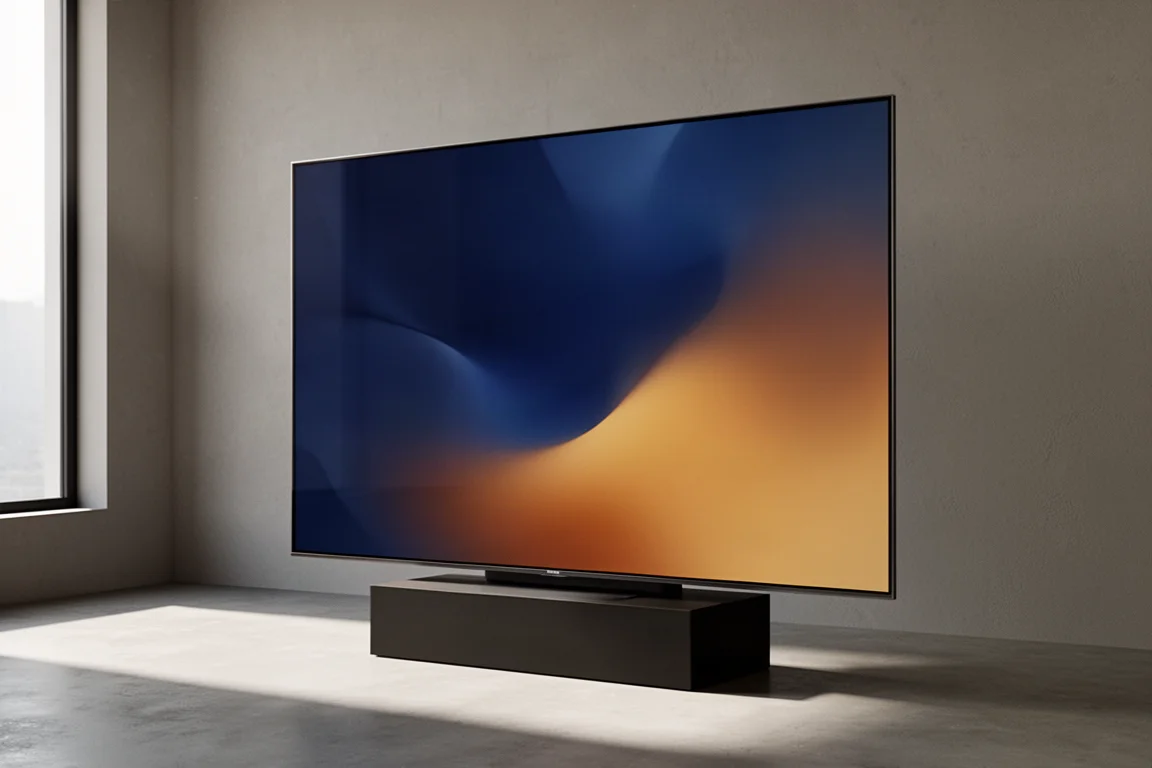
Big-screen televisions keep getting bigger, better, and cheaper, and the 98-inch TCL QM851G is one of the clearest examples of that trend. It is a 4K QD Mini LED set built around TCL’s newest AQ processor, which manages the thousands of backlighting zones and handles image processing and scaling. It is not TCL’s largest model for 2024, since the 115-inch QM89 takes that title, but 98 inches is already enough to turn a spare room into a genuine home theater.
The QM851G supports Dolby Vision IQ, HDR10+, HDR10, and HLG, runs Google TV, and carries a street price under $4,000 for the 98-inch size. For a display this large, that combination is unusual, and it is the main reason this set deserves a close look.
Who This TV Is For
This is a television for people who care about scale first and are willing to spend a few minutes tuning settings to get the best from it. A 98-inch screen rewards a room with some distance between the seating and the wall, and it makes the most sense in a dedicated or semi-dedicated home theater where movies, sports, and games are the main event.
It is also a natural fit for casual and mid-level gamers. The QM851G offers a native 120Hz refresh rate, support for 144Hz with VRR, ALLM, and AMD FreeSync Premium Pro, so higher frame rates and 4K resolution are both within reach with or without HDR enabled.
Anyone stepping up from a 65-inch or 75-inch set will notice the difference immediately. The built-in 2.1.2 speaker system is tuned by Onkyo, and there is ARC and eARC on board if you would rather route audio to a soundbar or receiver. If you want a huge panel that performs well in a bright room without flagship pricing, this set belongs on your shortlist.
Main Strengths
The QM851G earns its place through brightness, accuracy in the right picture mode, and a feature set that covers gaming and streaming without obvious gaps.
Brightness and HDR Performance
TCL advertises peak brightness up to 5,000 nits across the series, but brightness figures vary with screen size even within the same lineup, and that number is unlikely to apply directly to the 98-inch model. In practice this is still one of the brightest large displays around. In its Dynamic picture mode, the set sustained peak brightness above 3,000 nits on a windowed pattern.
After calibration, with all dynamic backlighting options switched off and only the brightness control doing the work, the QM851G measured around 900 nits. Engaging dynamic backlighting and brightness enhancement pushed peak brightness as high as 2,000 nits, and a maximum-effort run reached 3,000 nits and held that level for close to a minute. Sustained output like that is rare on a display this size, and it is a large part of why HDR content looks so punchy here.
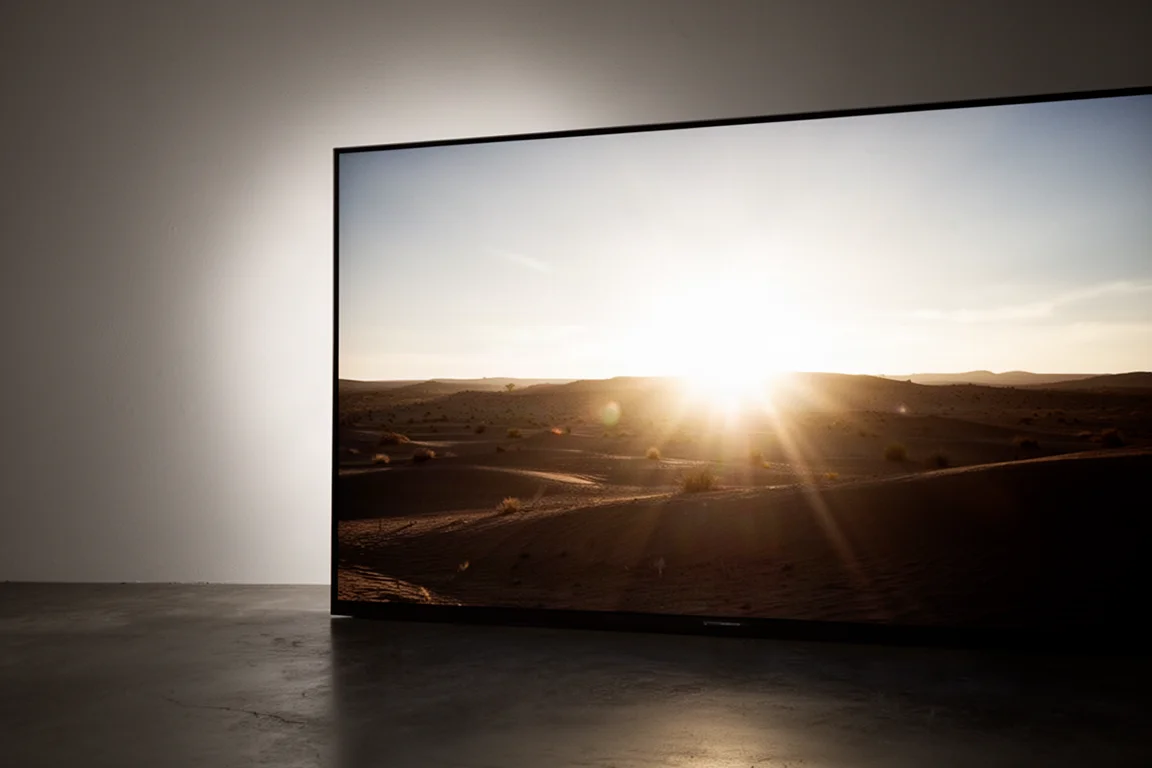
The trade-off is that chasing maximum brightness skews the image slightly blue and reduces accuracy, which some viewers may genuinely prefer for a bright room. HDR support covers Dolby Vision IQ, HDR10+, HDR10, and HLG, and with the recommended settings in place, grayscale and color accuracy do not shift when an HDR signal is fed to the set.
Picture Accuracy and Calibration Potential
Out of the box, the QM851G defaults to a Low Power profile. Its grayscale error measured a Delta E of 8 and its color error a Delta E of 9, well outside what counts as accurate. Switching to Dynamic, TCL’s version of a vivid mode, made things worse, with grayscale error climbing to 15 and color error to 12. That pattern is typical of vivid presets and is not unique to this set.
Movie mode is the better starting point. Grayscale error dropped to a Delta E of 4 and color error to a Delta E of 2, with color needing no further adjustment. The main flaw is a mild crushing of deep blacks that throws off the gamma curve just enough to push the grayscale measurement outside the standard, although the white point itself is spot on. In grayscale and color accuracy, the QM851G runs neck and neck with a Sony X90L reference and on par with the far more expensive Samsung QN90D, which measured marginally better on paper but could not sustain an accurate image.
For the best results, a professional calibration or a careful two-point calibration at home pays off. After a basic two-point adjustment, grayscale error fell to 1.6 and color error to 1.4. Leaving a slight black crush in place looked more natural than fully correcting the gamma curve, and the resulting image was accurate enough to satisfy all but the most demanding measurements.
Gaming, Motion and Connectivity
Motion handling is smooth. There were a few instances of stuttering while watching a streamed HDR sports broadcast, but those were rare and not clearly attributable to the television itself. A streamed soccer final, by contrast, looked excellent.
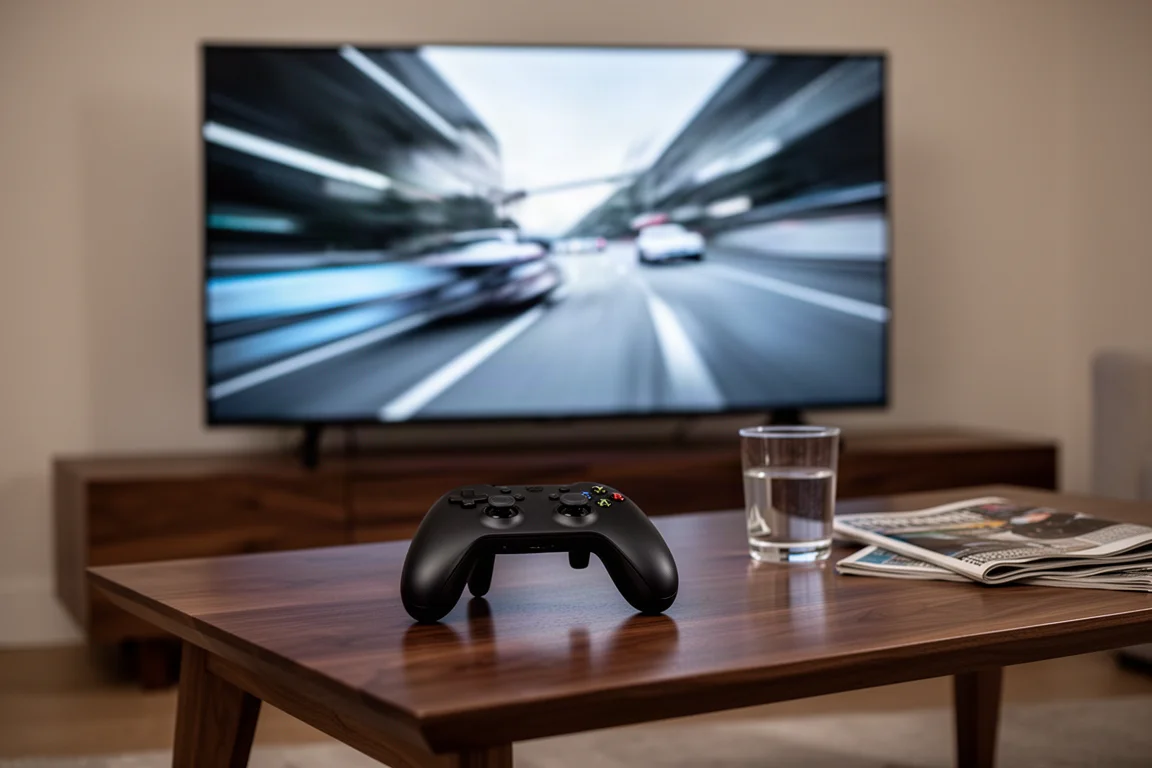
Gaming is where the QM851G is easy to recommend. The native refresh rate is 120Hz, and VRR allows up to 144Hz. ALLM and AMD FreeSync Premium Pro round out the feature set, and a PS5 session with games such as Overwatch 2 ran at higher frame rates and 4K resolution, with and without HDR, with no issues at all.
Connectivity covers four HDMI inputs, two of which are HDMI 2.1 while the other two are limited to HDMI 2.0. ARC and eARC enable Dolby Atmos passthrough to a soundbar or receiver. Networking and smart features include Ethernet, Wi-Fi 6, Bluetooth, Chromecast, and AirPlay 2, and the set works with Alexa, Google Assistant, and Apple HomeKit. Google TV provides access to the major streaming services out of the box, and the display showed no compatibility issues with third-party receivers or soundbars.
Things To Consider Before Buying
A few traits are worth weighing before you commit to a screen this size.
Dirty screen effect shows up on solid color and gray test patterns, so uniformity purists should be aware. With real-world content it is rarely noticeable, but it is a known characteristic of the panel.
Off-axis viewing is the other area to think about. Color and light shift as you move off to the side, particularly on 98-inch models. TCL has improved this with each generation and the QM851G is the best yet in that respect, but the behavior is not fully solved, so a wide seating arrangement deserves consideration.
Upscaling of legacy sources does not match the precision of the Sony X90L. Edge fidelity is not as crisp, contrast looks slightly less natural, and facial features can appear a little over-smoothed on 1080p material. Feed the set native 4K or 4K Dolby Vision instead and the gap narrows to almost nothing, with the TCL’s extra brightness often winning the subjective comparison.
Two more practical notes: the default Low Power and Dynamic picture modes are both inaccurate, so budget time for a settings change, and the brightest configurations trade color accuracy for output. On the positive side, blooming, especially around subtitles, is among the best this side of OLED, and reflections are handled better than on earlier TCL generations.
Buying Advice
The simplest path to a good picture is Movie mode with brightness set to 100 and the dynamic contrast and micro contrast aids set to low. That combination produced a real-world brightness of roughly 900 to 1,200 nits, which is plenty for everyday viewing, without meaningfully harming accuracy. Purists can turn those aids off entirely, or invest in a calibration for the last few percent of performance.
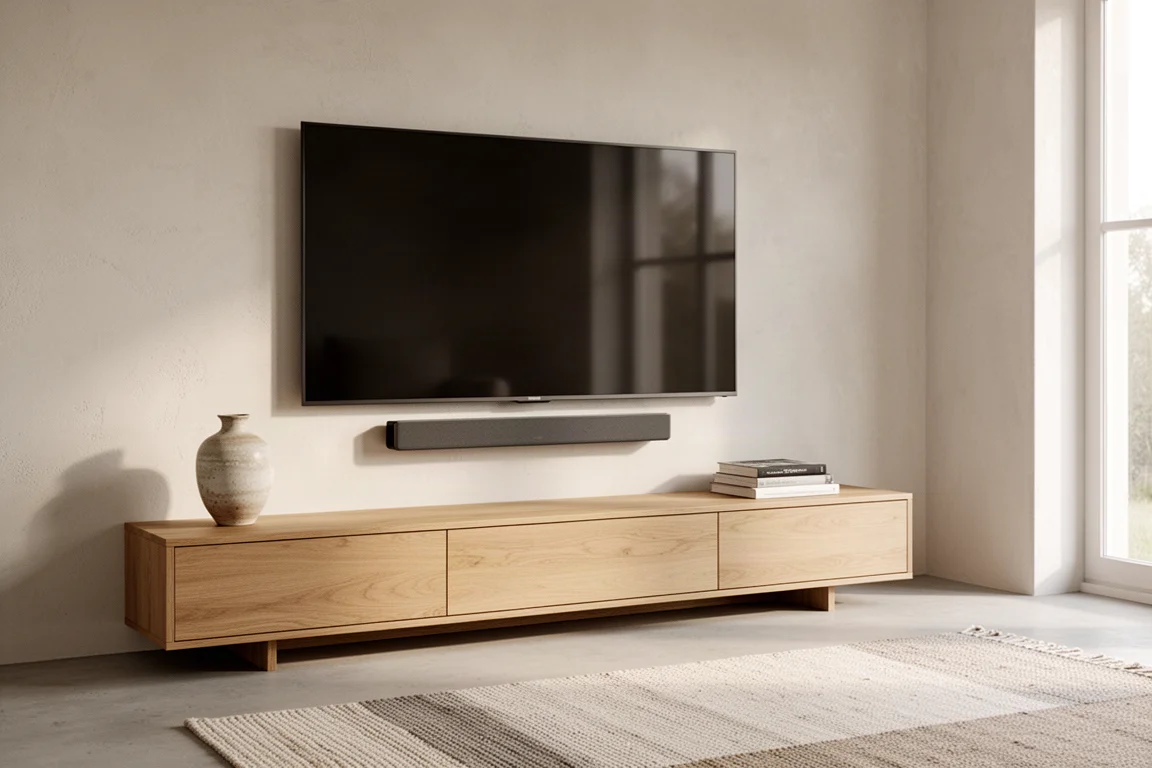
On price, the QM851G is hard to argue with. At a street price under $4,000 for the 98-inch model, it undercuts the Sony X90L on cost while offering a brighter image that many viewers will prefer, even though the Sony remains the more precise display on measurements. Against the Samsung QN90D, a $15,000 set with no Dolby Vision support, the comparison is even more lopsided: three QM851G units could be bought for the price of one Samsung with money left over.
The practical guidance is straightforward. If picture accuracy above all else is your priority and you watch a lot of older, lower-resolution content, the Sony reference still has the edge. If you want maximum size, maximum brightness, and a price that does not require a second mortgage, the TCL is the more sensible purchase.
Conclusion
The TCL QM851G is the strongest big-screen set TCL has produced, and it is more than competitive with other 98-inch LED and mini LED displays. It is exceptionally bright, accurate enough in Movie mode to satisfy most viewers, and capable of holding brightness levels that far more expensive sets struggle to sustain. Its weaknesses, upscaling of legacy sources and off-axis viewing, are real but narrow.
If you are shopping for a very large television and want the best combination of size, brightness, and price, the QM851G makes a compelling case. The one caveat is to spend a few minutes with the picture settings, because the factory defaults do not show what this display can do.
Product link
View more details for TCL QM851G
This product is mentioned in the review. Check the specifications, options, and compatibility before buying.
View more details for TCL QM851GFurther reading
Related Reviews
Televisions
LED vs OLED TVs: Choosing the Right Sony Model for Your Room
How LED and OLED televisions differ, the five factors that decide the right panel, and where the Sony X90K, X95K, Z9K, and A95K each fit.
Televisions
Samsung QN900B Review: The 8K QLED Flagship, Tested
A native 8K QLED with mini LED backlighting, measured brightness upwards of 1,800 nits, and an automatic calibration routine that genuinely delivers reference-grade accuracy.
Televisions
Sony Bravia 2026 Lineup: True RGB Explained Across Four Models
Sony's 2026 Bravia range brings true RGB backlighting to four models. Here is what the technology changes, and which television fits which room.