Televisions
LED vs OLED TVs: Choosing the Right Sony Model for Your Room
How LED and OLED televisions differ, the five factors that decide the right panel, and where the Sony X90K, X95K, Z9K, and A95K each fit.
Introduction
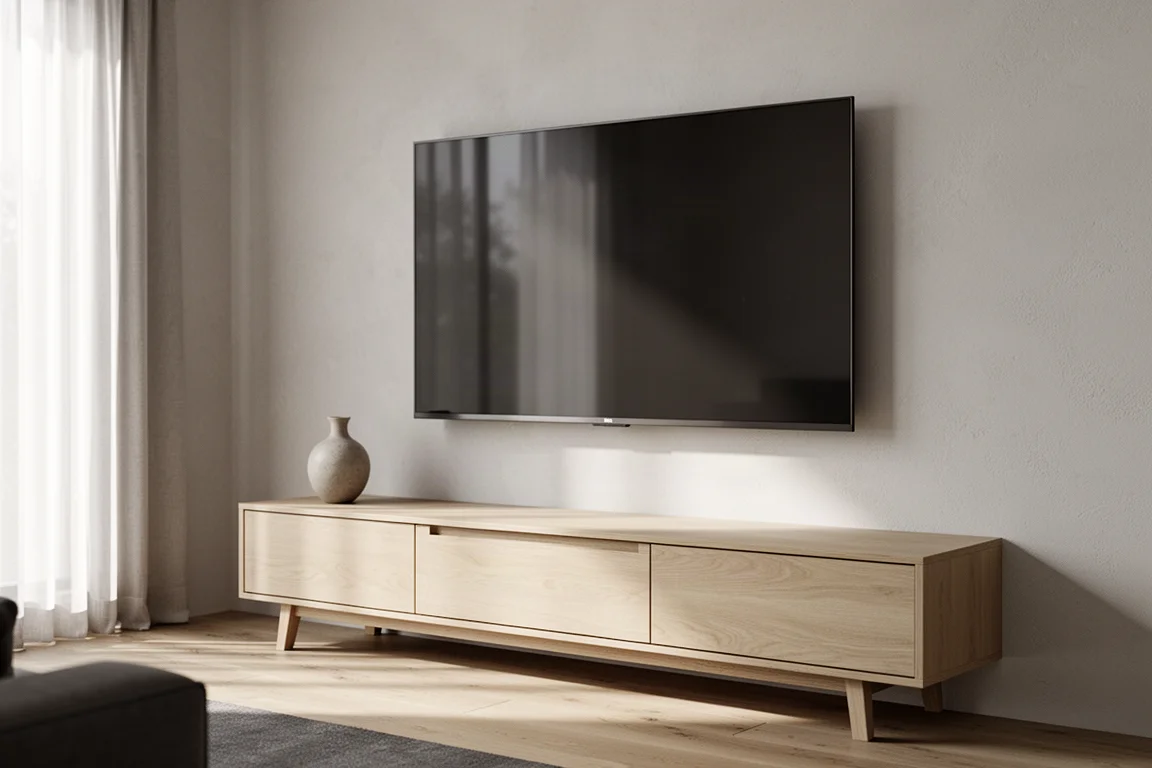
Shopping for a better-than-average television usually comes down to one fork in the road: LED or OLED. Both technologies can produce an excellent picture, and the differences between them have become harder to spot as processing has improved. What has not changed is that the right answer depends on the room, the seating, and how the set will be used.
This guide covers how the two panel types actually work, the five factors that tend to decide the choice, and four Sony models that span the range: the X90K, X95K, Z9K, and A95K. Sony is a useful reference point here because it works across nearly every stage of filmmaking, from cinema cameras and professional editing consoles to the projectors used in leading movie theaters. That background feeds into its video processing, and processing is a large part of why its televisions tend to look natural rather than merely bright.
LED and OLED: How the Two Panels Differ
An LED-type television uses a liquid crystal panel to form the picture, but that panel creates no light of its own. The light comes from LEDs positioned behind it. The earliest designs were edge lit, with LEDs along all four sides, along two sides, or just along the bottom, and small dispersion lenses spreading the light evenly across the screen. Edge lighting is still produced today and remains the most cost-effective approach, though not the strongest performer.
Direct-lit designs moved the LEDs behind the panel in an even spread, but without individual control and usually with fewer than a hundred diodes. Full array sets followed, with hundreds of LEDs behind the panel and, better still, the ability to control zones or even individual diodes. The versions with the finest control are described as full array local dimming, and they can produce a very bright, vivid image with excellent contrast. In practice, that means a picture that holds up well in a room with a lot of natural light.
Within Sony’s range, the X90K manages its backlight with XR Contrast Booster, while the step-up models move to Mini LED controlled by XR Backlight Master Drive.
OLED stands for organic light emitting diode, and its structure is simpler. Each diode emits its own light, so no backlight is needed at all. When a diode switches off, the result is true black without dimming zones having to approximate it, which delivers an almost perfect contrast ratio. The catch is manufacturing cost, and OLED panels remain more expensive to produce.
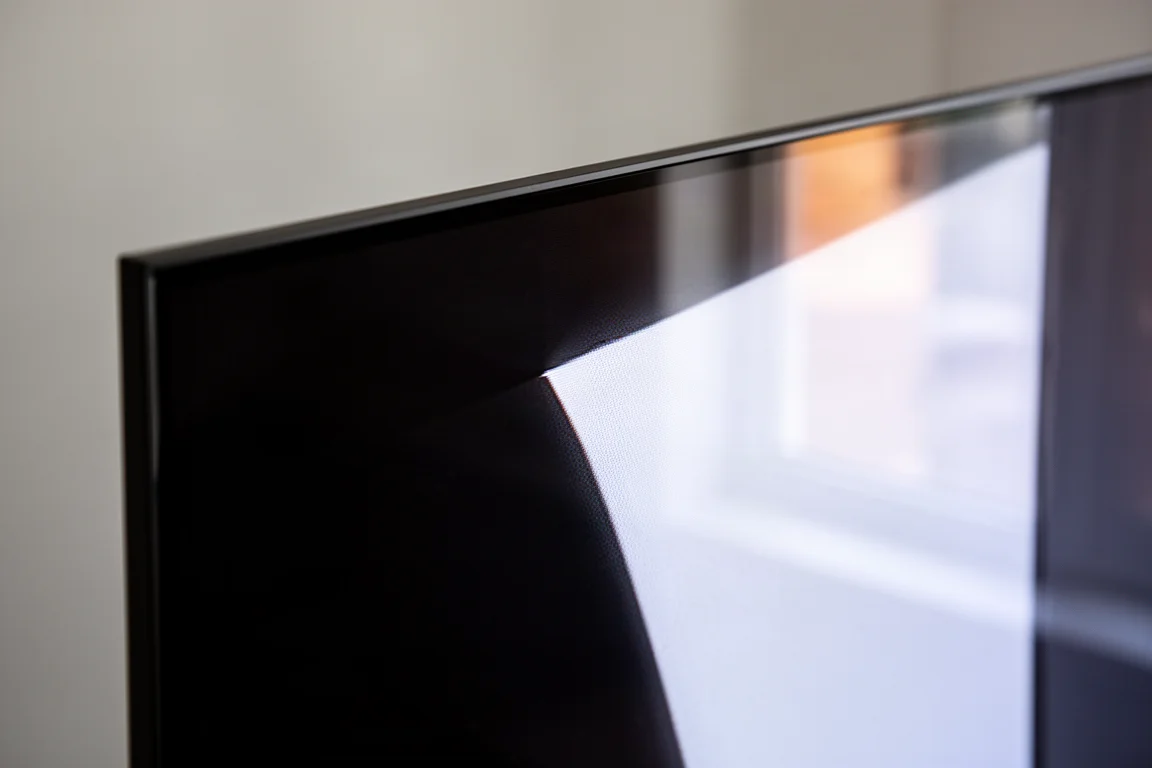
Sony buys its panels from a range of manufacturers and then applies its own video processing on top, and that processing decides a great deal of the final picture quality. The Cognitive Processor XR was a significant step forward in that effort, and the newest models pair the latest LED and OLED panel technology with it.
Room Lighting and Off-Axis Viewing
Environment is probably the single most important factor. OLED sets have increased their light output, and the premium and Master Series models pair a new high-luminance panel with the XR processor to push brightness further, but OLED still has less ability to overcome a brightly lit room. LED sets, by contrast, handle a room with plenty of light very well.
So the guidance is straightforward. If you want the deepest blacks and the best contrast, and you watch in a dark or dimly lit room, OLED will be the more satisfying choice. If most of your viewing happens with a lot of light in the room, or you simply like the pop of a bright image, LED is the better fit. LED also keeps a slight edge on pure light output.
Off-axis viewing is where OLED wins by a wide margin. Move to the side of an OLED and the picture barely changes. LED sets are designed to be viewed straight on, so picture quality holds up at roughly 30 degrees or less off axis, and steeper angles favor OLED, as long as the room’s lighting can be controlled. QD-OLED goes further: because it does not rely on color filters, color and luminance stay vivid and bright even from the side, with up to a 200 percent boost in color brightness compared with conventional OLED.
Gaming, Screen Size, and Price
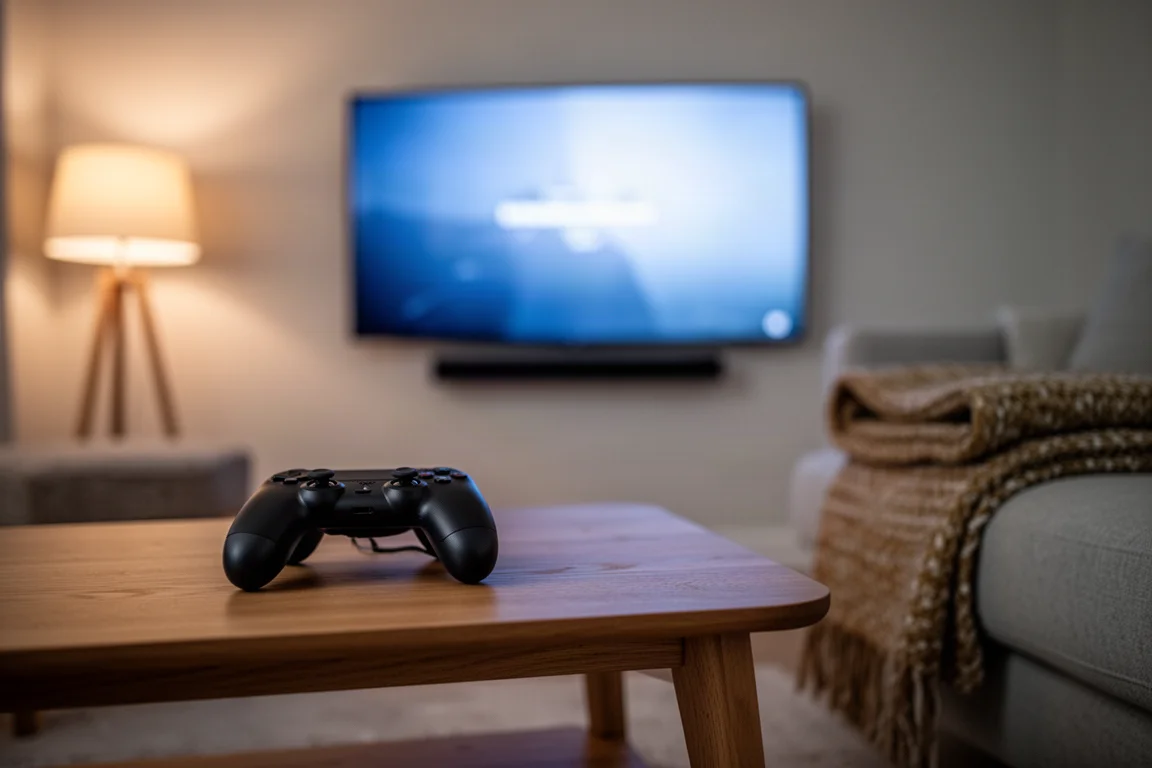
Gaming has become a much smaller differentiator than it once was, since input lag has improved substantially across modern televisions. OLED still holds an advantage thanks to a faster response time. Conventional LED sets, being designed for straight-on viewing, suit plenty of gamers, particularly in well-lit rooms where reflections can otherwise show up on the screen. The most competitive players are likely to prefer OLED for the response advantage.
Whichever panel type you choose, the best Sony televisions in the lineup include at least two HDMI 2.1 inputs. That allows two next-generation consoles to be connected at once, and it brings the speed benefits of a 48 gigabits per second peak bitrate and 4K content at 120 frames per second. Latency can drop as low as 8.5 milliseconds in ALLM game mode, which matters in shooting games and any title that depends on instant on-screen response. Sony also offers a compact OLED in 42-inch and 48-inch sizes, with an optional high-position stand that turns it into a high-performance OLED gaming monitor.
Screen size narrows the field as you move up. The average television sold today is 65 inches, and both panel types are well represented at that size. Beyond 83 inches, however, there are no Sony OLED options, so a very large screen generally means an LED-type set. New 77-inch OLED displays have joined the lineup at a strong value position.
Price has become the trickiest factor of all. OLED sets still cost more than the same size in LED, and they always have, but the two have moved much closer together. For a 55-inch or 65-inch television, OLED is no longer that much more expensive. As OLED sizes increase, prices climb more steeply, which is where LED regains a clear advantage.
Sony X90K: The Entry Point to Bravia XR
The X90K is the entry point of Sony’s Bravia XR range and the model that stays with XR Contrast Booster to manage its full array LED backlight. For a buyer who wants Sony’s picture processing, a bright image, and the contrast that comes with full array local dimming, it is the most accessible route into the lineup.
That combination makes it a natural fit for a living room with daytime viewing, where a set has to compete with windows rather than a controlled dark environment.
Sony X95K: Mini LED in the Premium Series
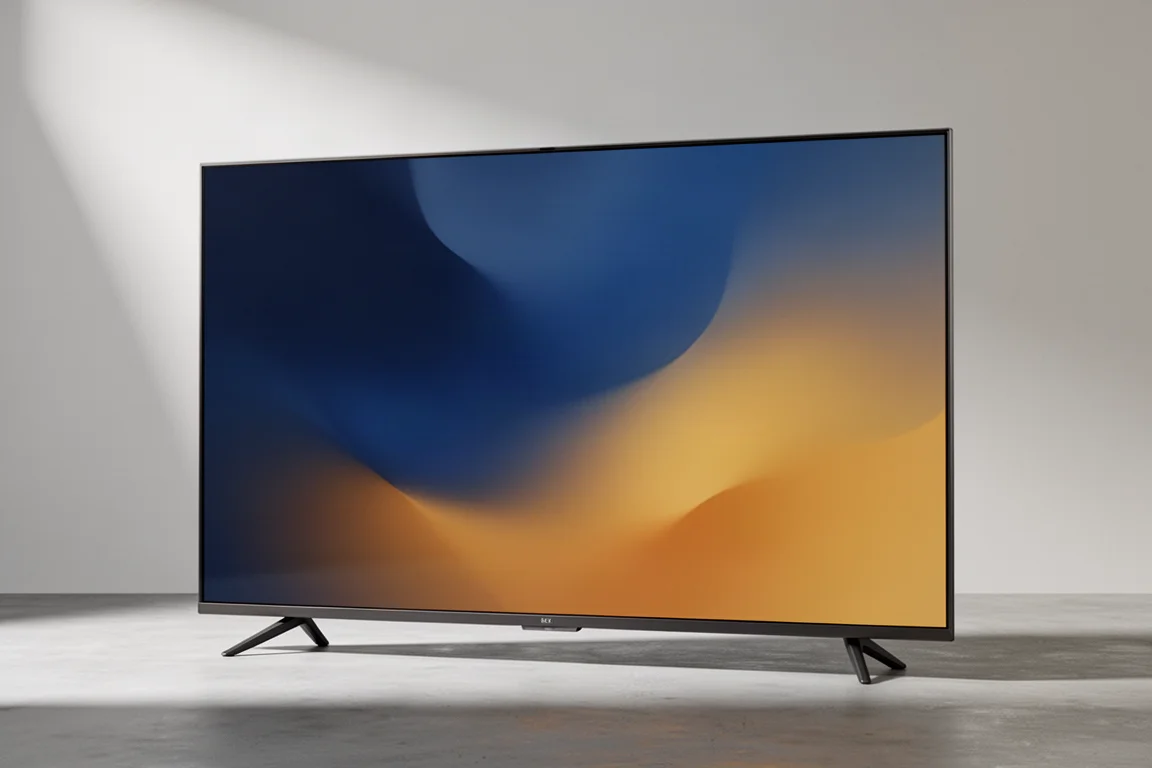
The X95K moves up to the premium series and is one of Sony’s first Mini LED televisions. Instead of XR Contrast Booster, its backlight is governed by XR Backlight Master Drive, the processing Sony applies to its denser Mini LED arrays. The appeal is more precise control over a bright image, which is exactly the trait that makes LED sets comfortable in well-lit rooms.
For viewers who spend most of their time watching with the lights on, or who sit relatively close to a large screen, that finer backlight control is the main reason to step up from the X90K.
Sony Z9K: Mini LED at the Master Series Level
The Z9K carries the Master Series designation and, like the X95K, belongs to Sony’s first Mini LED generation, with XR Backlight Master Drive handling the backlight. It pairs that Mini LED panel technology with Sony’s processing under the Master Series name, which is where the company places its most advanced display work.
As with the other LED-type sets here, its strengths line up with bright rooms, straight-on seating, and very large screen sizes, where OLED is simply not an option.
Sony A95K: QD-OLED in the Master Series
The A95K is Sony’s first QD-OLED television and sits in the Master Series. QD-OLED takes the self-emitting approach of OLED and adds a meaningful jump in color brightness, up to 200 percent compared with conventional OLED technology. Because it does not depend on color filters, color and luminance stay vivid and bright even when the screen is viewed off axis.
For a dark or dimly lit room, that combination of true black, near-perfect contrast, and wide usable seating is difficult to argue with. It is the model to consider if picture quality in a light-controlled room matters more to you than raw light output.
Overall Buying Advice
Start with the room. If you can control the light, OLED is still the best answer for the deepest blacks and the strongest contrast, and at 55 and 65 inches the cost gap over LED is not large. If your viewing happens in a bright space, or you want the punchiest possible image, an LED-type set will serve you better, and the X90K, X95K, and Z9K cover that path at different levels.
Then weigh seating and use. Wide seating and off-axis viewing point to OLED, and QD-OLED removes most of the remaining compromise. Gamers in bright rooms with straight-on seating will be perfectly happy with LED, while the most competitive players may still want OLED’s faster response time.
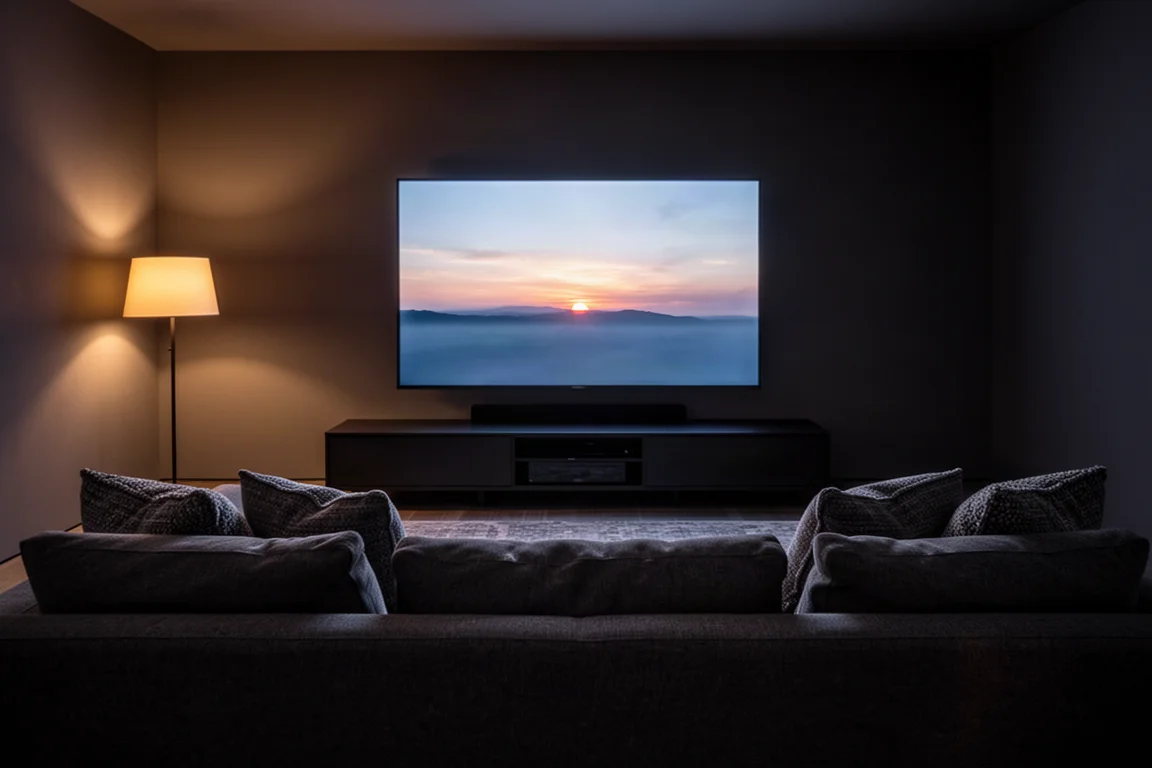
Finally, let size settle the question. Below 83 inches both technologies are available, and 65 inches is where the choice is widest. Above that, LED is the practical route. Whichever model you land on, Sony’s processing is doing the heavy lifting behind the panel, and that consistency is the strongest argument for choosing within one family of televisions.
Conclusion
LED and OLED have converged enough that neither is automatically better. LED sets remain the more cost-effective route for bright rooms and very large screens, while OLED and QD-OLED deliver the black levels and viewing angles that a light-controlled room can show off.
Match the panel to the room first, then to seating, gaming habits, screen size, and budget. Any of these four Sony models makes sense once it lines up with how and where you actually watch.
Further reading
Related Reviews
Televisions
Samsung QN900B Review: The 8K QLED Flagship, Tested
A native 8K QLED with mini LED backlighting, measured brightness upwards of 1,800 nits, and an automatic calibration routine that genuinely delivers reference-grade accuracy.
Televisions
Sony Bravia 2026 Lineup: True RGB Explained Across Four Models
Sony's 2026 Bravia range brings true RGB backlighting to four models. Here is what the technology changes, and which television fits which room.
Televisions
Sony X95L Review: A Flagship Mini LED 4K TV That Earns Its Size
Sony's 85-inch flagship mini LED delivers strong brightness, near-calibrated color out of the box, and refined backlight control. Here is who should buy it and what to weigh first.