Packing Organizers
Tasmanian Tiger Modular Pouches Review: A Four-Piece Organizer Set That Earns Its Place
A four-piece modular pouch set with YKK zippers, hook-and-loop backing and a 40 dollar price tag. Here is what works, what to check, and who should buy it.
Introduction
Good organization rarely gets noticed until the moment a pack turns into a search exercise. The Tasmanian Tiger Modular Pouches are a direct answer to that problem: a four-piece set of soft-sided kit bags in three sizes, priced at 40 dollars for the whole group.
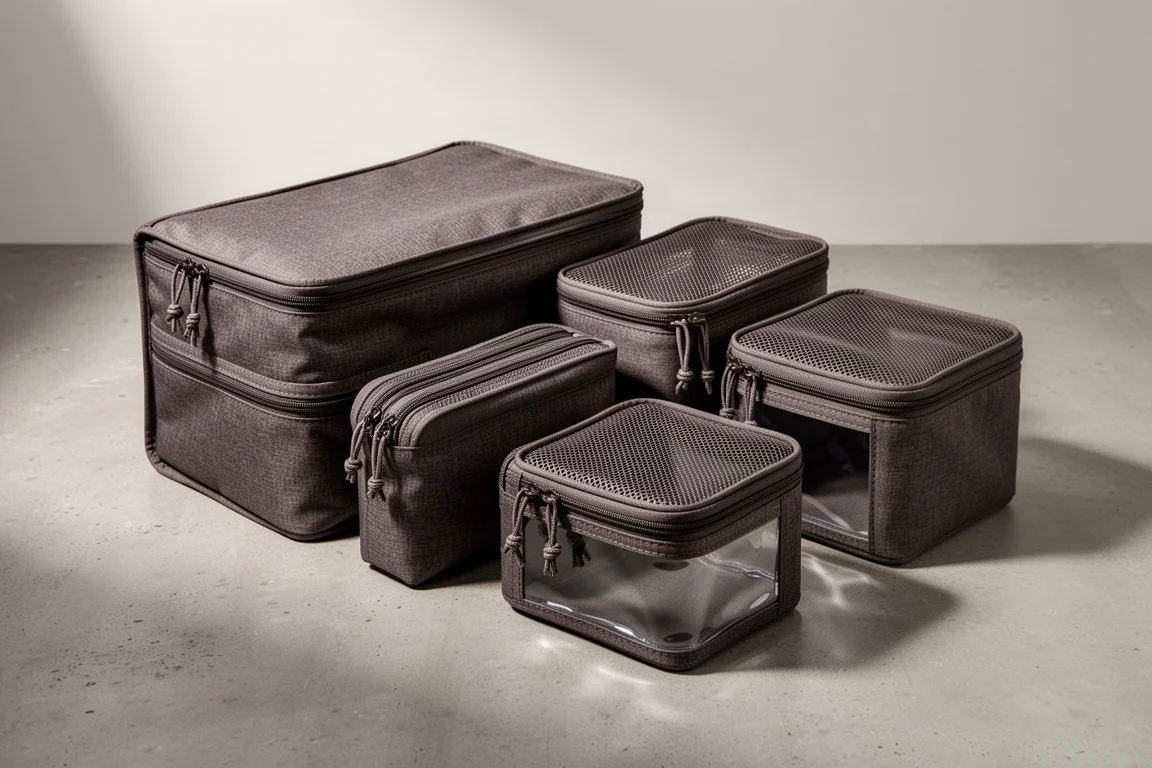
The set includes one large pouch, one medium pouch and two small pouches. The small pair is not identical. One has a clear vinyl window on the lid, while the other uses a fabric mesh panel, and that small difference is more useful in daily packing than it first appears. Every pouch in the set runs on dual two-way YKK zippers, each fitted with a zipper pull, and every pouch has hook-and-loop material on the back so it can be attached to the outside of a backpack or to the inside of a pack that supports that kind of mounting.
This is a practical organizer kit rather than a specialty item, and it is worth understanding the sizes, the materials and the small trade-offs before deciding whether it fits the way you pack.
Who This Set Is For
This set makes the most sense for people who carry a lot of small items and want them separated by purpose rather than mixed together. Backpackers, day hikers, travelers and anyone who keeps gear in a vehicle will find the format familiar: cube-shaped bags that hold a category of equipment, keep it visible, and move between bags without repacking.
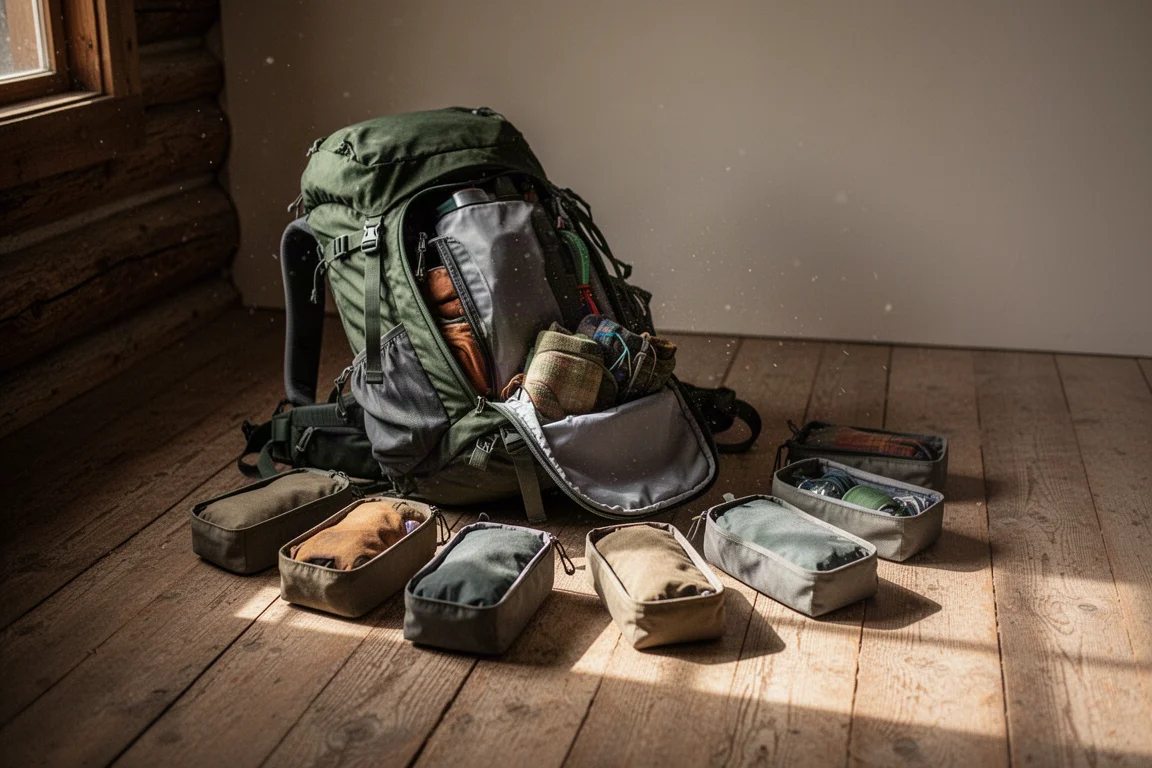
It also suits anyone whose backpack has hook-and-loop lining. In that case the pouches can be pressed against the inside wall of the pack and stay where they are placed, which turns a loose pile of gear into a fixed layout you can learn once and repeat on every trip. If your pack has no such lining, the pouches still work, they simply sit and stack instead of locking into position.
What Comes in the Set
The four pouches cover a wide spread of capacity. The large pouch measures 12 by 9 by 6 inches and weighs 4 ounces. The medium pouch measures 7 by 6 by 3 inches and weighs 2 ounces. The two small pouches measure 6 by 4 by 2 inches, with one at 1.7 ounces and the other at 2 ounces. Combined, the full kit weighs around 10 ounces, which is light enough that the organization does not come at a meaningful weight cost.
Only the large pouch carries cinch cords, with one at each end, so the largest bag can be compressed when it is not full. The medium and large pouches use a mesh panel across the lid, while one of the small pouches uses a clear vinyl window instead. The set is offered in three colors: black, coyote and olive.
Main Strengths: Materials, Build Quality and Durability
The construction is the strongest argument for this set. The body material is a 200 denier polyester with a PU coating, and the top mesh is a 150 denier polyester. Those are sensible, hard-wearing choices for gear that gets dragged in and out of packs, and the stitching and overall craftsmanship match the materials.
Durability has held up over many months of regular use on backpacking trips and day hikes, without gentle treatment. The fabric shows no abrasion marks on the outside, the mesh panels show no signs of wear, and the interiors still look clean. That matters more than a spec sheet here, because mesh is often the first thing to fail on an organizer bag.
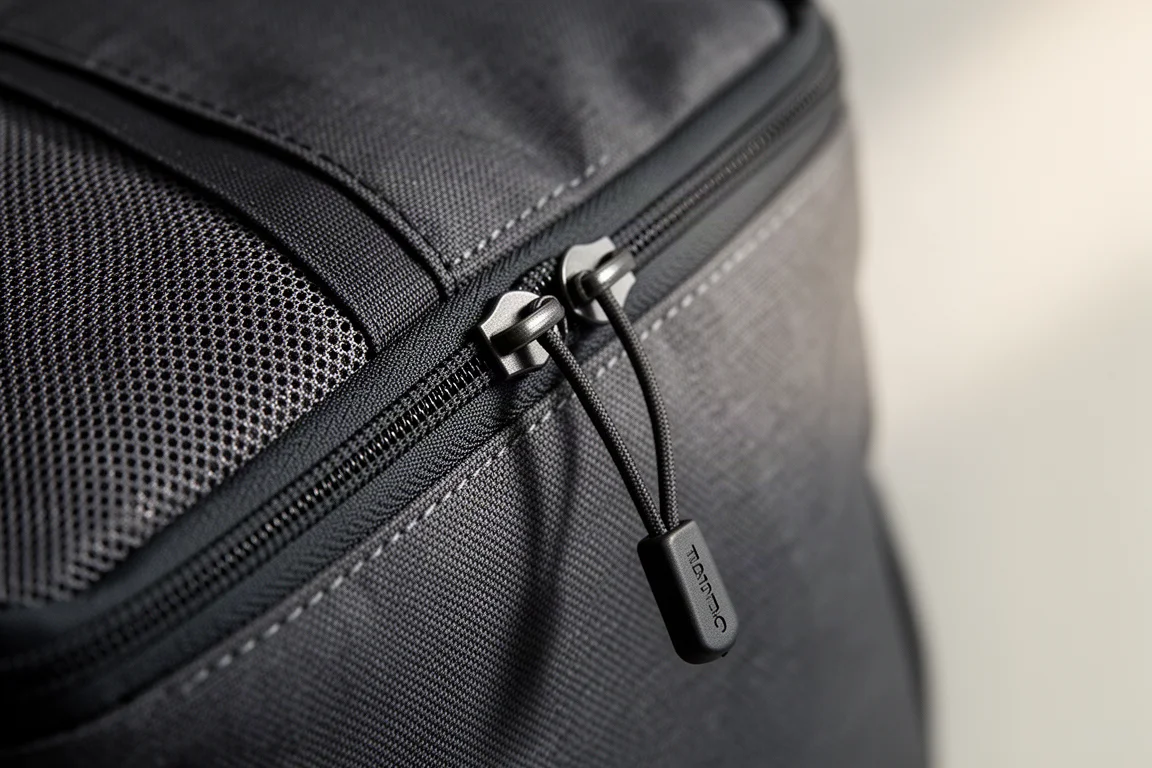
The zippers deserve their own mention. The dual two-way YKK zippers open and close smoothly, and the simple cord zipper pulls work well in practice. That last point is not as obvious as it sounds: plenty of organizer bags on the market ship without zipper pulls at all, which makes them noticeably more awkward to open when your hands are cold or busy.
Sizes, Weights and Pack Organization
The value of a set like this is not any single pouch but the way the pieces relate to each other. The large, medium and small formats are cube-shaped, which means they stack predictably on top of one another inside a pack instead of shifting into every gap. A pack loaded this way keeps a consistent layout, so you reach for the same place every time.
The weight distribution is also reasonable. The large pouch carries the bulk of the capacity at 4 ounces, while the medium and small pouches add very little. For a full kit of around 10 ounces, you get four separate compartments, which is a fair trade for most backpacking and hiking setups.
The cinch cords on the large pouch are a small but useful detail. When that bag is only partly filled, tightening both ends keeps the contents from sliding around and helps the pouch hold its shape in the pack.
Where These Pouches Work Best in Practice
The clearest way to judge a kit bag is by what people actually put in it, and this set covers four common jobs well.
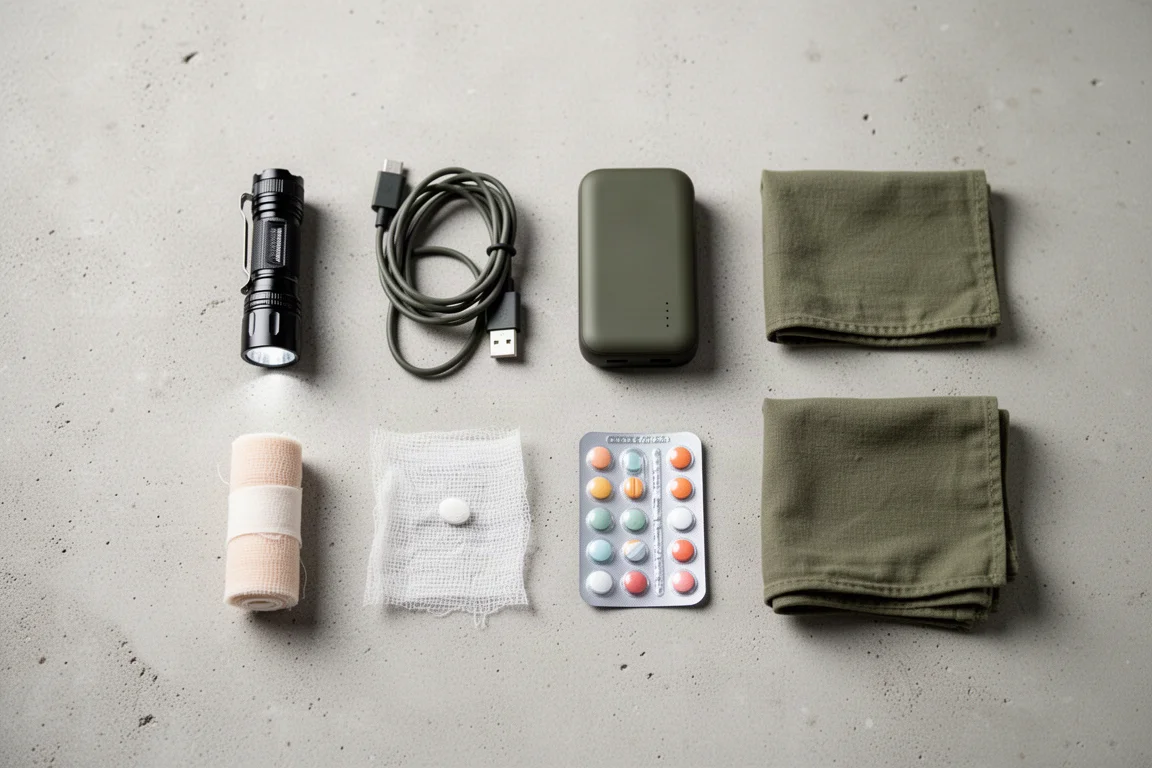
The small pouch with the vinyl window works as a power bag: a flashlight, a headlamp, a charging cable that can charge those devices and a phone, and a power bank. Even with all of that inside, there is still a substantial amount of unused space.
The small pouch with the mesh lid works as a camera bag, holding an ND filter, a dust brush, a blower, a microfiber cloth and spare camera batteries, again with room left over.
The medium pouch suits a first aid and miscellaneous kit: medications, bandages, a toothbrush, toothpaste and cordage, the kind of items that are annoying to hunt for when they are loose in a pack. The large pouch handles the broadest role. It can hold food, instant coffee, a fire kit, an empty ziplock bag for garbage or for waterproofing items in rain, plus multiple pots, a cup, a washcloth, a stove, a fuel canister, a spoon, a knife, matches and solid fuel, and it still has space remaining.
Mounting is where the design becomes genuinely flexible. The hook-and-loop backing means the pouches can be attached inside a compatible backpack to keep them fixed in place, or fixed to a hook-and-loop panel elsewhere, such as inside a vehicle, so the same organizer layout travels with you between a pack and a truck.
Things to Consider Before Buying
There is really one clear omission: the pouches have no handle on top. A small grab loop would make it much easier to pull a pouch out of a packed backpack, and it would be a welcome upgrade on an otherwise complete design.
The other point is about identification rather than construction. The mesh and vinyl panels let you see contents, which helps you grab the right bag, but they are less helpful when the contents are dark. If several pouches hold black items, a secondary labeling method such as color-coded tape or color-coded zipper pulls will do more for speed than the windows will.
It is also worth noting that only the large pouch has cinch cords. If compression matters to you in the smaller sizes, that capability is not part of this set.
Buying Advice
At 40 dollars for four pouches, the pricing is the easy part of the decision. Comparable organizer pouches frequently sell for more, often somewhere between 50 and 70 dollars, and this set delivers four usable sizes with good materials, smooth YKK zippers and hook-and-loop mounting.

The sensible way to approach it is by packing style. If you already separate your gear into categories and want those categories to be modular, stackable and movable between a backpack and a vehicle, this set is a straightforward buy. If you only ever need one compartment and never mount anything, a single pouch will do the same job for less. The strengths here are the breadth of the set, the build quality and the way the pieces work together as a system.
Conclusion
The Tasmanian Tiger Modular Pouches are a well-made, versatile organizer kit with excellent materials, reliable two-way YKK zippers and a price that compares favorably with similar products. The absence of a top grab handle is the one thing worth knowing in advance, and for most buyers it will not outweigh everything the set gets right. For anyone who wants gear separated, visible and easy to move between bags, this is a set that earns its place in the pack.
Product link
View more details for Tasmanian Tiger Modular Pouches
This product is mentioned in the review. Check the specifications, options, and compatibility before buying.
View more details for Tasmanian Tiger Modular PouchesFurther reading
Related Reviews

Backpacking Gear
Building a 10 lb Base Weight: An Ultralight Backpacking Gear List
A practical walkthrough of the ultralight pieces behind a 10 lb base weight, from a 765 g pack and a roomy one-person tent to a full camp chair and a dependable water filter.

Road Bikes
10 New Road Bikes Worth Watching: Aero, Titanium, Steel and Endurance Standouts
A practical roundup of 10 new road bikes, from aero flagships chasing single-watt gains to titanium, steel and endurance platforms built for real roads.
Bikepacking Gear
11 Bikepacking Essentials for Long-Distance Cycling
Eleven bikepacking essentials for long-distance cycling, from a steel gravel frame and a two-person tent to helmet lights, packable gloves, and a frame bag that puts weight in the right place.