Backpacking Shelters
Tarptent Double Rainbow Li Review: A Sub-2-Pound Dyneema Shelter With Room to Live
A close look at the Tarptent Double Rainbow Li, a Dyneema Composite Fabric shelter that trades interior storage and a high price for low weight and generous living space.
Introduction
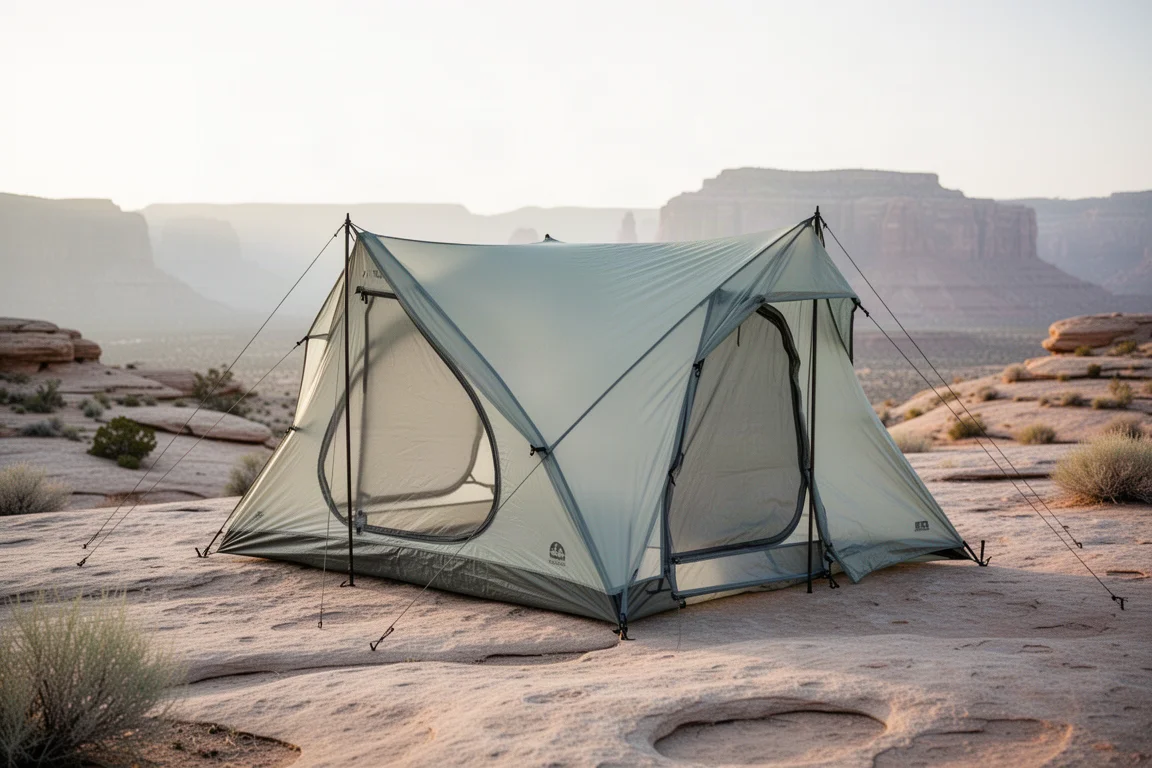
Nearly $700 is a serious amount to spend on a backpacking shelter, and it is fair to ask what that money actually buys. The Tarptent Double Rainbow Li answers with two goals that are usually in conflict: a shelter that can be pitched in almost any location, and a shelter that creates the greatest possible living space while saving the greatest possible weight.
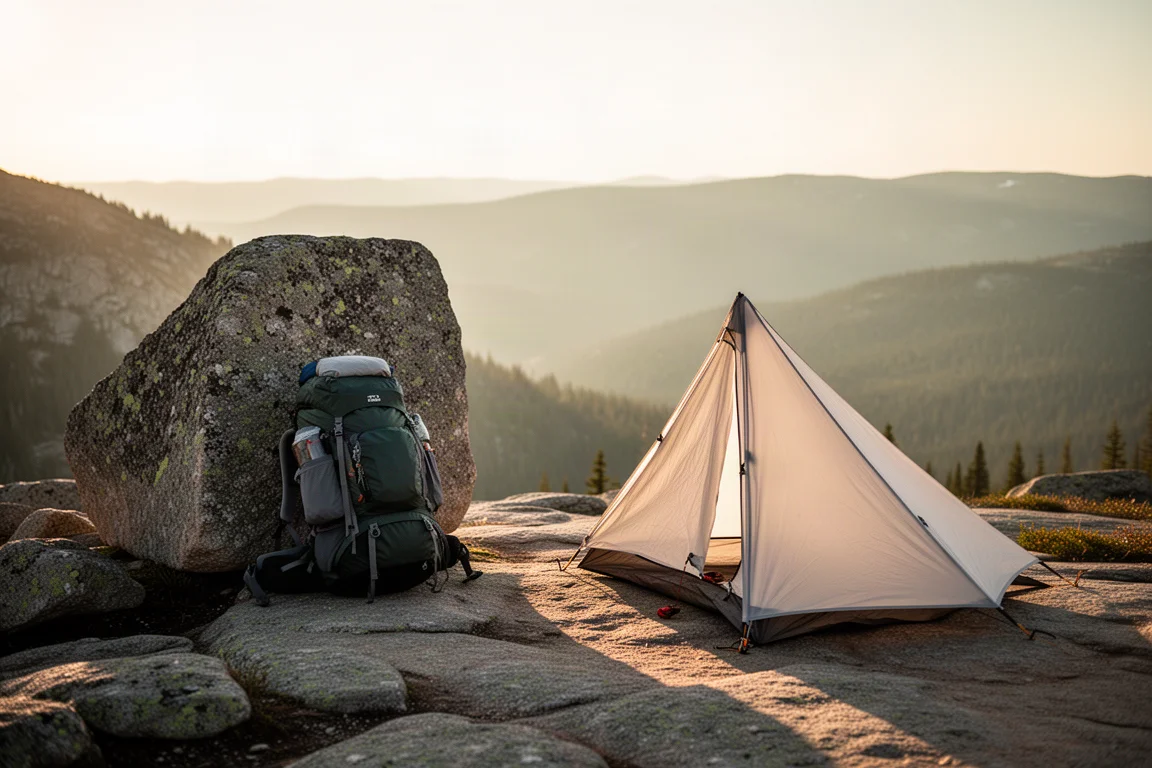
It is a Dyneema Composite Fabric shelter that comes in at sub 2 pounds, around 29 ounces, and it uses a full-length ridge pole to open up interior volume that pyramid-style trekking pole shelters struggle to match. This article covers what that design delivers, who it suits, and where the compromises show up.
Who This Product Is For
This shelter is aimed at backpackers who want one tent that works across very different terrain: high alpine mountains, forest, and desert. The priorities are a low packed weight, a large usable interior, and the flexibility to pitch on ground that is not always cooperative.
It also suits anyone who spends weekends in the backcountry and wants a shelter that feels like a home away from home rather than a minimal bivy. If your goal is the absolute lightest setup regardless of interior volume, or if you mostly camp in tight, heavily wooded sites, this is not automatically the right answer. It has a larger footprint and more weight than some alternatives, even with Dyneema in the mix.
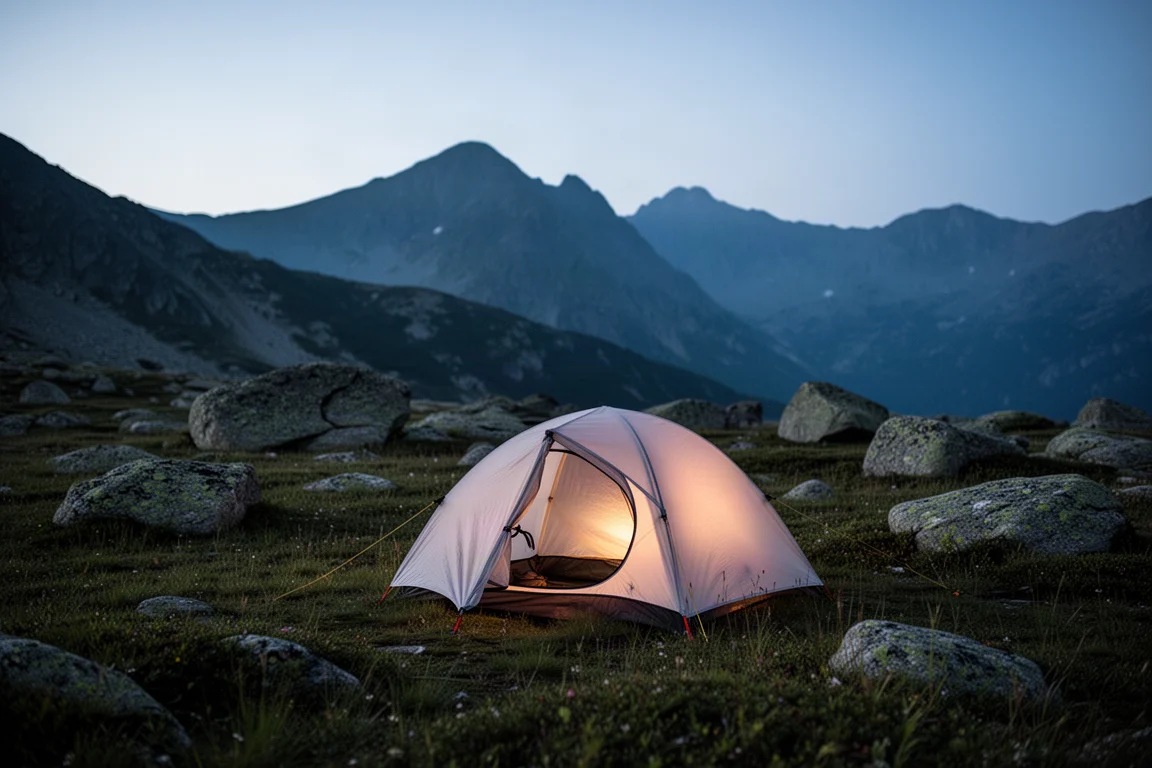
The trade-off is deliberate. You give up some cash and some flexibility on cramped pitches to gain space you can genuinely sit up in and gear you can spread out.
Dyneema Composite Fabric: The Case for the Weight
The single biggest barrier with this shelter is cost. Dyneema Composite Fabric is expensive, and the nearly $700 price reflects that. Plenty of other shelters work perfectly well for less money. They may be a little heavier, or use a more complicated design, but they get the job done.
What DCF brings is a combination of low weight and high strength. Unlike silnylon, it does not absorb moisture and does not sag when it gets wet, which matters in consistently wet conditions and heavy rain. Silpoly avoids the sagging problem too, but a DCF shelter is still meaningfully lighter than a silpoly one.
That is the core argument for this tent. The same shelter is available in silnylon, and that version is several ounces heavier. If weight savings sit at the top of your list and the budget allows it, DCF is the fabric that delivers them.
Living Space and the Ridge Pole Design
The ridge pole runs the entire length of the shelter, and that is what separates this design from a classic pyramid. Instead of tapering to a narrow point, there is usable room at both the foot end and the head end, plus a tall peak height. A brow pole spreads the walls outward to keep the interior open rather than closing in around you.
Sitting at the head end, with your back close to the rear wall, there is still enough height and width to sit up and move around comfortably. Lying down with arms extended overhead and feet at the far end, the amount of space is genuinely impressive for a shelter this light.
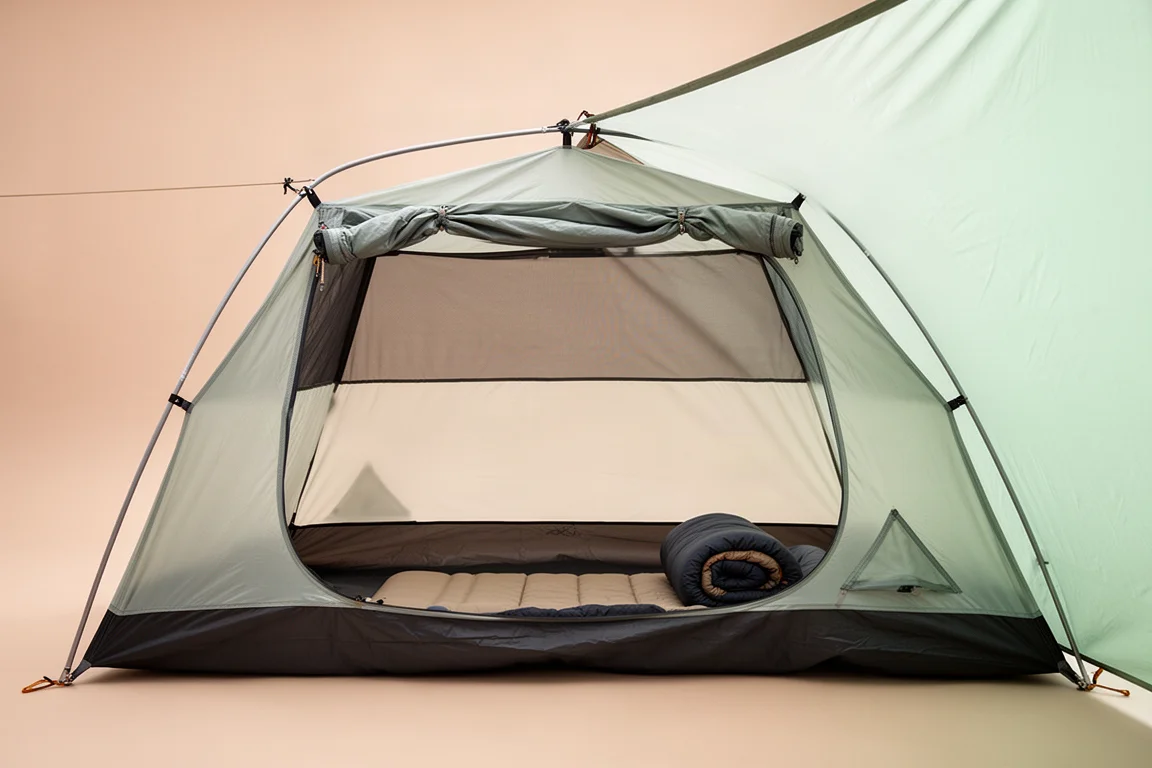
The main body is single wall, with thin nylon and no-see-um mesh over the doors and a DCF vestibule door that closes over the top on a size 3 waterproof zipper. The floor is a large bathtub design, also made from Dyneema Composite Fabric, in what amounts to a hybrid of single wall and double wall construction.
Porch mode is built in as an option. Trekking poles thread through loops to pull the doors out, and a strip of fabric rolls up and secures with velcro to form a small awning. It is not the headline feature here, but it is a useful one if you are already carrying poles.
Build Quality, Floor, and Ventilation
Construction is a real strength. The shelter is sewn together cleanly, with neatly taped seams throughout, and the stitching quality is high. It is made overseas in a factory in China, and the finish does not feel like a compromise at this price.
The bathtub floor is built around adjustable ventilation. A mitten hook at the top takes an elastic loop that holds the floor high during a heavy storm, and dropping that loop opens the shelter up when you want maximum airflow. On the inside, a ladder lock is oriented so you can make that adjustment without leaving the tent, and a second elastic loop lets you pull fabric out of the way and clip it back. The result is a floor that can be raised for weather protection or lowered for cross ventilation depending on conditions.
A final practical point: pull all the stakes and the shelter stands freestanding. That makes it possible to set up on slick rock, to reposition it, or to pitch it in rocky areas where staking simply is not an option.
Storage and Interior Organisation
This is where the Double Rainbow Li gives ground. Interior storage is limited to a pair of small triangular pockets on the sides. There is no network of gear lofts or floor-level organisation to lift items off the ground and help them dry, the way more feature-heavy shelters provide.
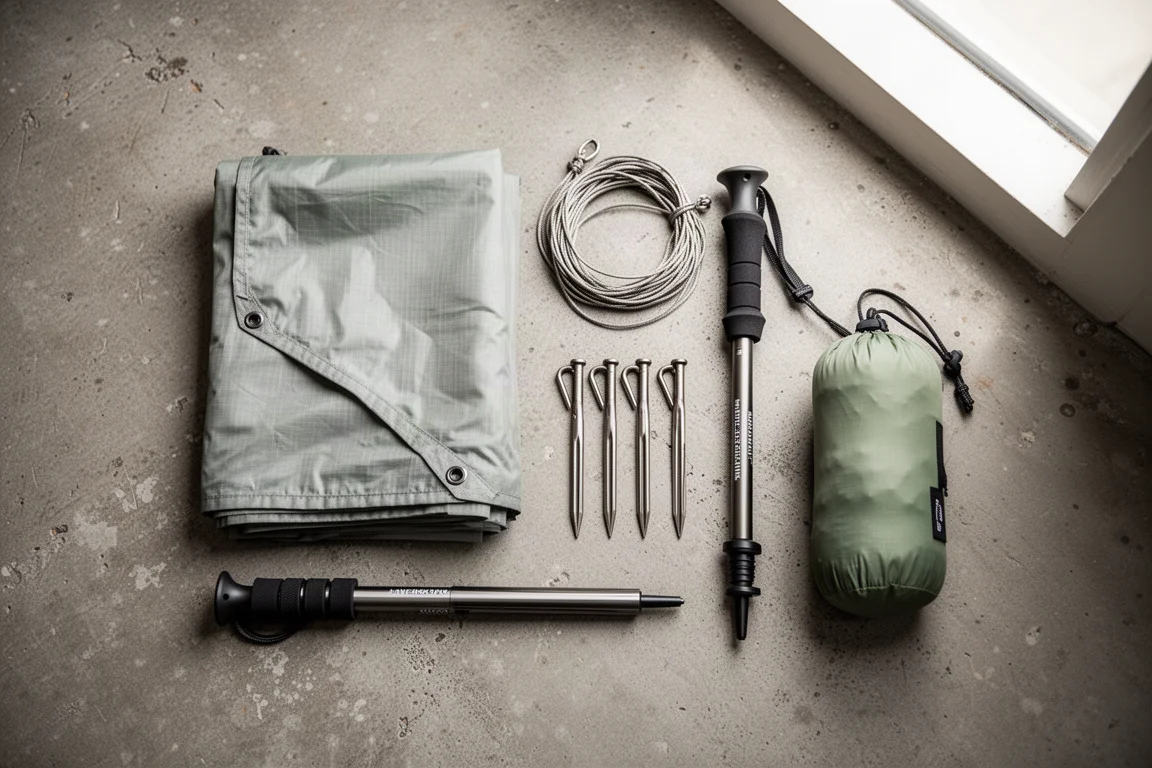
For a shelter this light that is a reasonable trade, but it is worth planning around. Expect to keep most of your kit in your pack or organised in stuff sacks rather than spread across the walls. The size 3 waterproof zipper is another detail to watch over time, particularly in sandy environments where grit can work its way into the teeth.
Things to Consider Before Buying
Three points deserve a hard look before committing.
First, the price. Nearly $700 buys a lot of shelter elsewhere, and the silnylon version of this same design costs less while weighing several ounces more. The question is whether those ounces matter more to you than the money.
Second, the footprint. This is a relatively large shelter. It provides the living space that makes it comfortable, but it needs more room to pitch, which can be a constraint in dense forest or on small, uneven tent pads.
Third, storage and the zipper. The interior pockets are minimal, and the door zipper is a long-term durability question mark rather than a proven weakness. If you camp in sand or grit regularly, keep an eye on it.
Buying Advice
Buy this shelter if your priority list reads weight first, living space second, and budget third. It is a strong fit for backpackers who cover varied terrain and want one tent that handles alpine, forest, and desert without changing the setup. The freestanding option is a genuine advantage on rock, and the interior volume makes long weekends far more comfortable than a cramped ultralight bivy.
If the price is the sticking point, the silnylon version of the same design is the logical alternative, provided you can accept the extra ounces. If your campsites are typically tight and sheltered, a smaller-footprint shelter may serve you better, and if you rarely sit up inside your tent, you may not need this much interior volume at all.
What the money genuinely buys is a very light, very well-made shelter with an unusually open interior. For the right backpacker, that combination is worth the cost.
Conclusion
The Tarptent Double Rainbow Li is not a shelter for everyone, and it is not priced to be. It is a sub 2 pound Dyneema Composite Fabric tent that pitches in almost any location, sets up freestanding when stakes will not go in, and offers living space that belies its weight. The compromises are real: a high price, a larger footprint, minimal internal storage, and a door zipper whose long-term behaviour in grit is still an open question. If weight savings and interior room sit at the top of your list, this is a shelter that earns its price. If they do not, a lighter option for your wallet is easy to find.
Product link
View more details for Tarptent Double Rainbow Li
This product is mentioned in the review. Check the specifications, options, and compatibility before buying.
View more details for Tarptent Double Rainbow LiFurther reading
Related Reviews
Backpacking Shelters
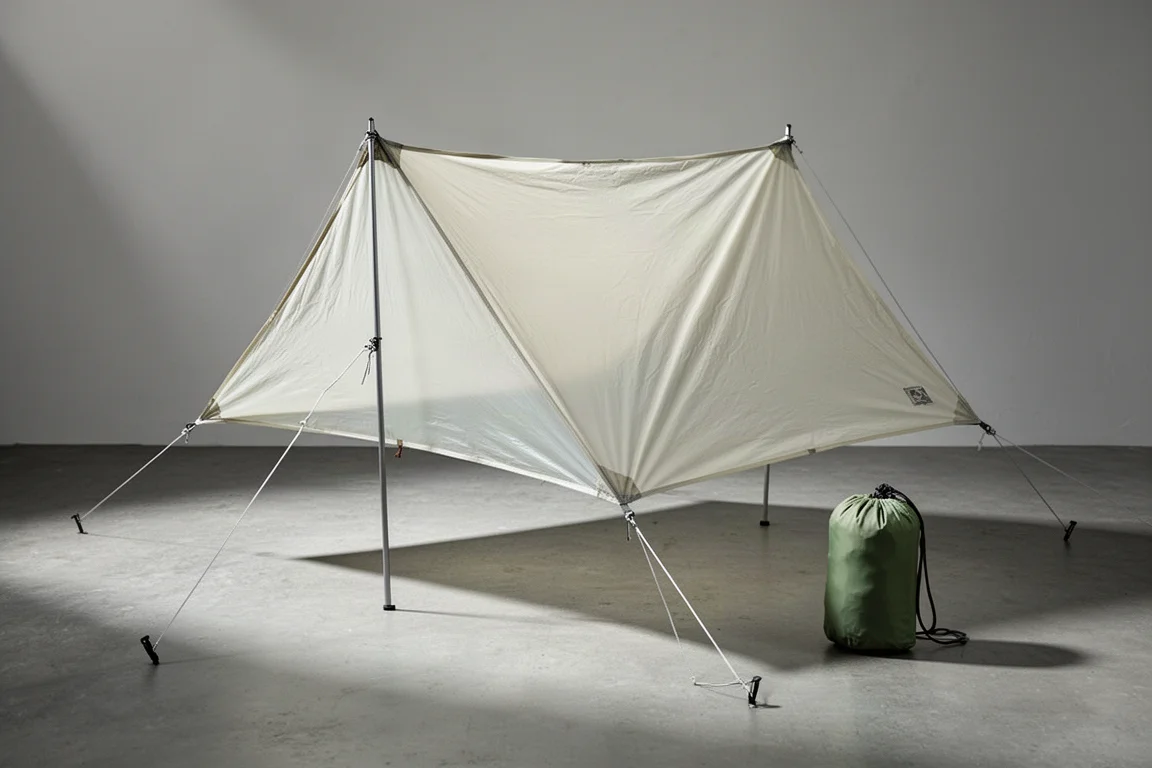
Hyperlite Mountain Gear Flat Tarp Review: A 9 oz Shelter at a Premium Price
A 9 oz Dyneema Composite Fabric tarp with welded seams, 25 tie-out points, and a $369 price tag. Here is what it does well and who should think twice.
Backpacking Shelters
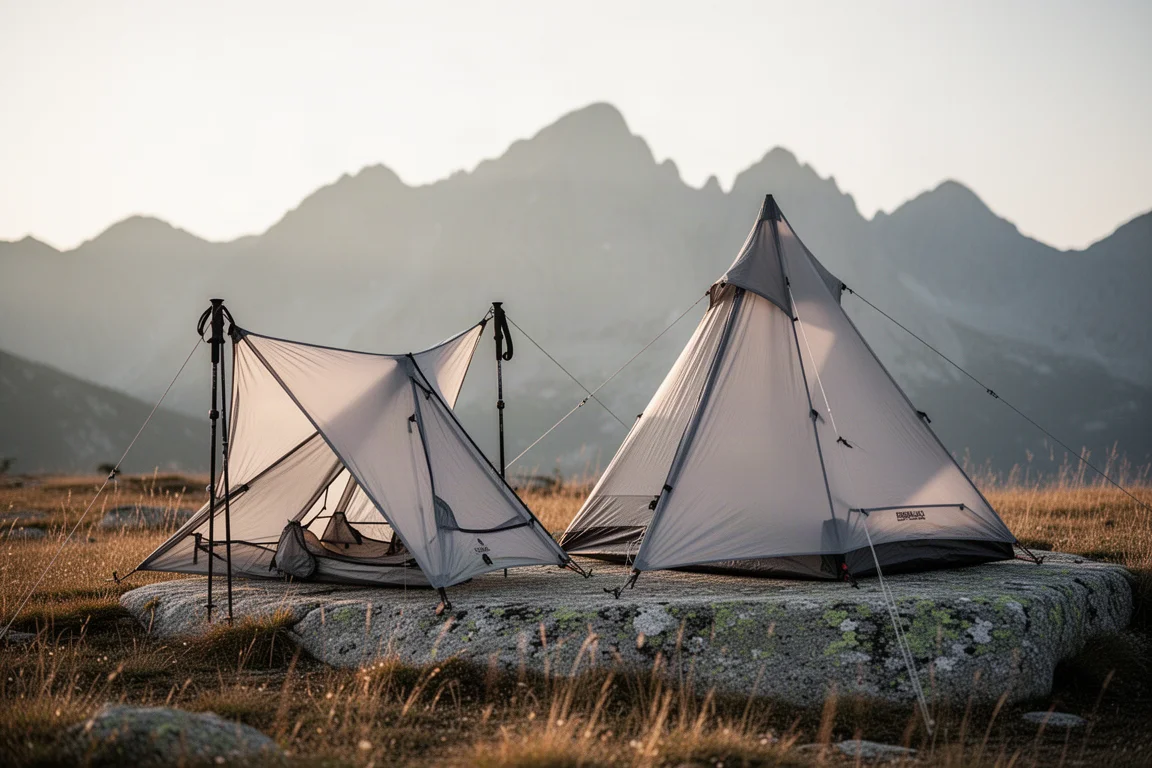
Durston X-Mid Pro vs Zpacks Offset Duo: Two Ultralight Shelters Compared
A practical comparison of two trekking-pole shelters: setup simplicity, interior room, headroom, condensation, and footprint, with clear guidance on which suits your camping style.
Backpacking Shelters
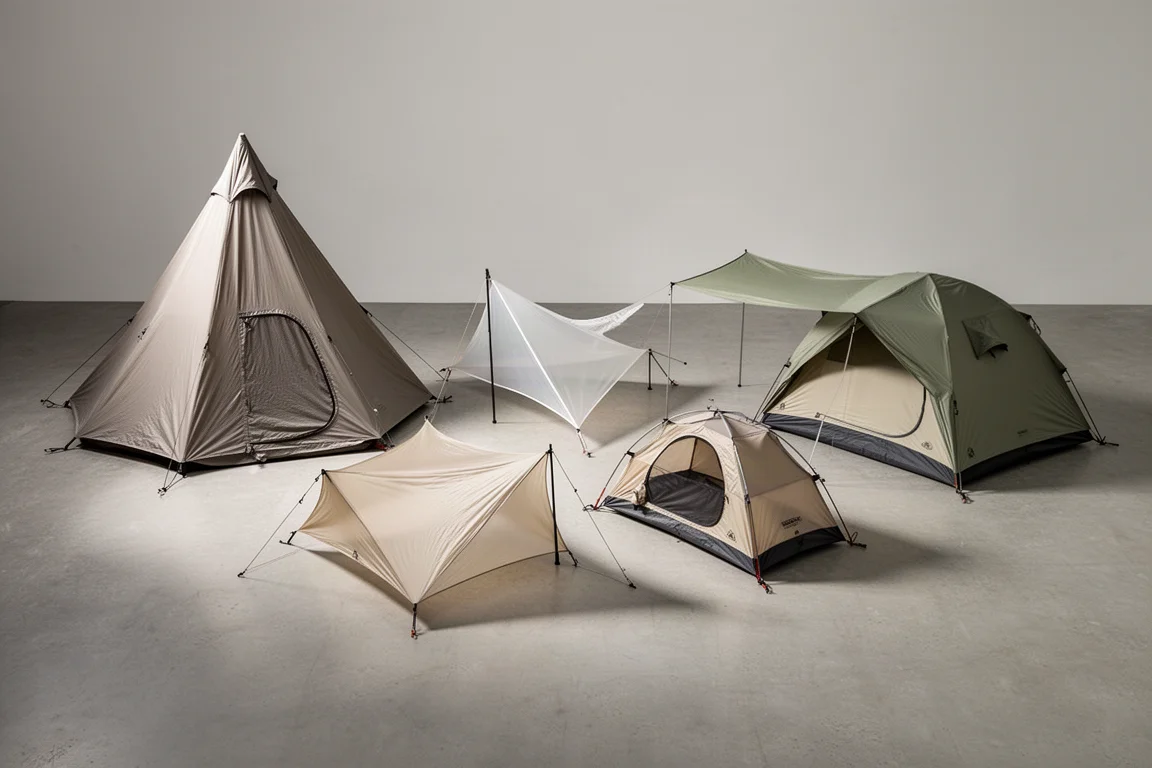
Four Backpacking Shelters for Different Trip Scenarios
A practical look at four backpacking shelters, from a modular four-season tipi style tent to a freestanding two-person option, and how to match each one to a real trip.