Backpacking Shelters
Hyperlite Mountain Gear Flat Tarp Review: A 9 oz Shelter at a Premium Price
A 9 oz Dyneema Composite Fabric tarp with welded seams, 25 tie-out points, and a $369 price tag. Here is what it does well and who should think twice.
Introduction
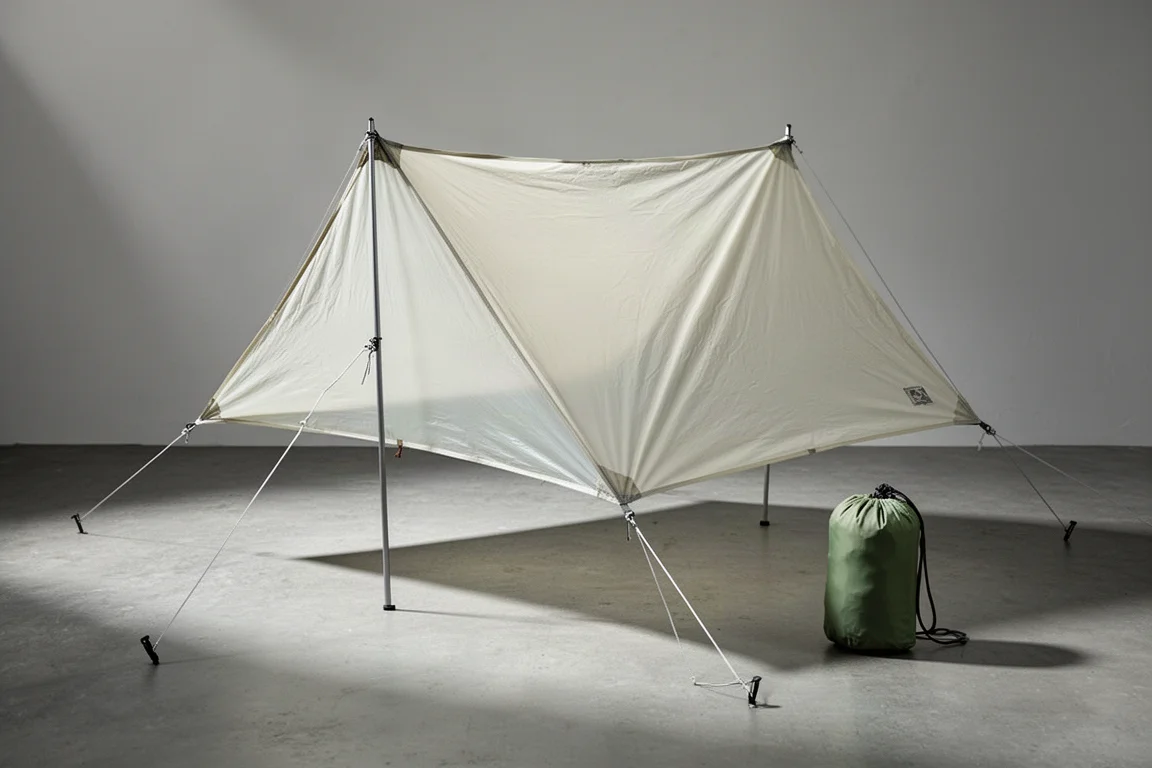
The Hyperlite Mountain Gear 8ft 6in x 8ft 6in Flat Tarp is one of the most expensive backpacking tarps you can buy, and at the same time one of the lightest. It weighs 9 oz and costs $369. Those two numbers tell you almost everything about who this shelter is built for: people who count every gram and are prepared to pay for the privilege.
The tarp is made from CF8 Dyneema, a Dyneema Composite Fabric that is also widely known as Cuben fiber. It is a high-performance non-woven composite, the same family of material used in applications where a fabric has to be extremely strong and extremely light at the same time, from backpacking shelters to sailboat sails. Per unit weight, the material is roughly 15 times stronger than steel and about 50 percent lighter than nylon or polyester.
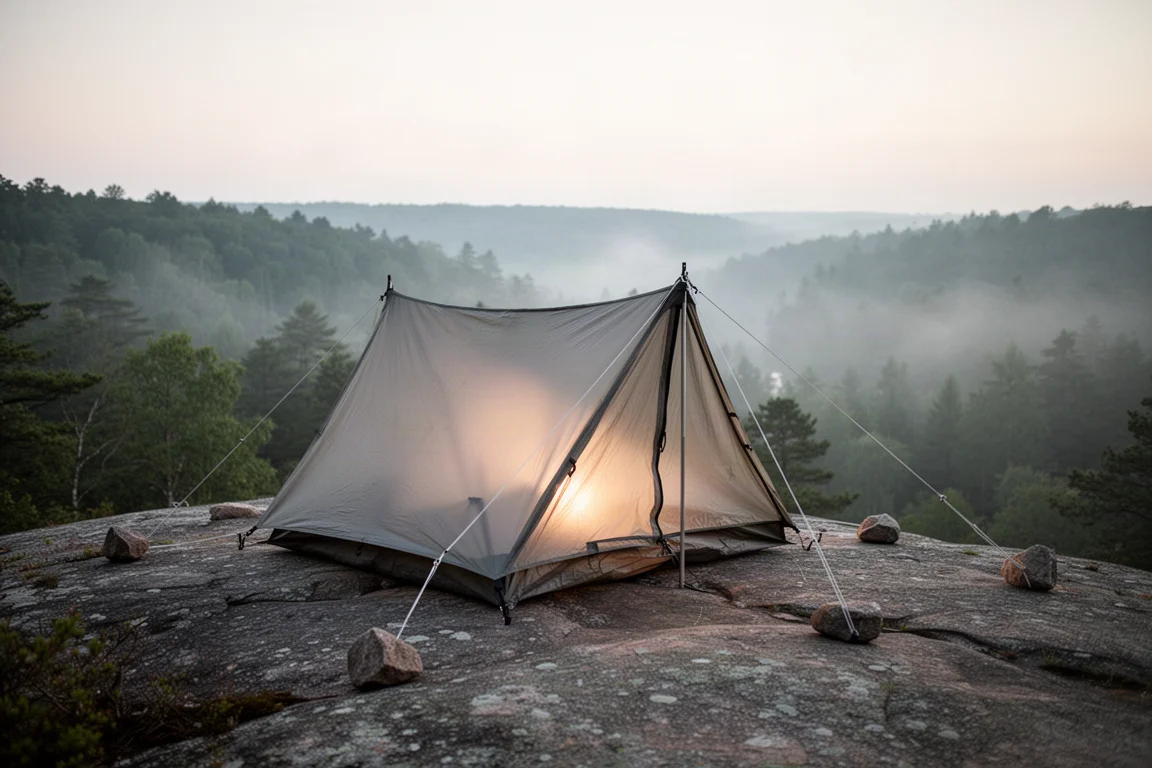
That combination of strength, weight, and cost frames the whole decision. This review walks through what arrives in the box, how the tarp behaves in real weather, and the practical trade-offs that come with a translucent, crinkly, premium fabric.
Who This Tarp Is For
This is a specialist shelter. It makes sense for backpackers and campers who have already decided that the lightest possible pack weight is worth a serious investment, and who want the strongest fabric available rather than the cheapest one that will do the job.
It also suits people who want maximum pitching flexibility. Because this is a square tarp, it offers the widest range of setup options, and it can be adapted to rain, snow, wind, and blizzard conditions once you know how to pitch it.
For most people, though, it is simply more shelter than they need. A tarp costing around $100 can still be lightweight and genuinely strong. The gap here is measured in ounces and in the material’s specific advantages, not in basic usability.
Main Strengths
The case for this tarp rests on four things: its weight, the strength of the fabric, the way it handles water and sunlight, and the build quality of the seams and attachment points. Each one is a direct result of the material choice.
Dyneema Composite Fabric Explained
Dyneema Composite Fabric does several things that conventional shelter fabrics cannot match. It is exceptionally light, roughly half the weight of nylon or polyester for a comparable area. It is exceptionally strong, with a strength-to-weight ratio around 15 times that of steel per unit weight.
Just as importantly, it does not absorb water at all. After a rain event you can wipe it down, fold it, and pack it without carrying any extra water weight the next day. The material is also highly UV resistant, so it does not degrade in sunlight as quickly as silicone-treated nylon, nylon, or polyester. Most people underestimate how much sun breaks down their equipment over a season.
The final material advantage is stretch. Dyneema Composite Fabric stretches very little, which means a pitch stays taut in wet conditions and needs fewer adjustments. With stretchier fabrics you often have to get up and re-tension the shelter after rain. Here, once it is pitched properly, it stays where you put it.
Welded Seams and Tie-Out Points
The tarp has no sewn seams at all. Every seam is welded and bonded rather than stitched. That matters because seams are the weakest point of any shelter: a stitched seam means a needle has punched a line of holes through the material, creating a path for leaks and a starting point for tears. Bonding removes that failure mode entirely.
Attachment points are generous. There are 16 tie-outs around the perimeter, each fitted with plastic hardware, plus seven more on the body of the tarp. Inside, two D-rings can take a guyline for a drying line or for hanging a light.
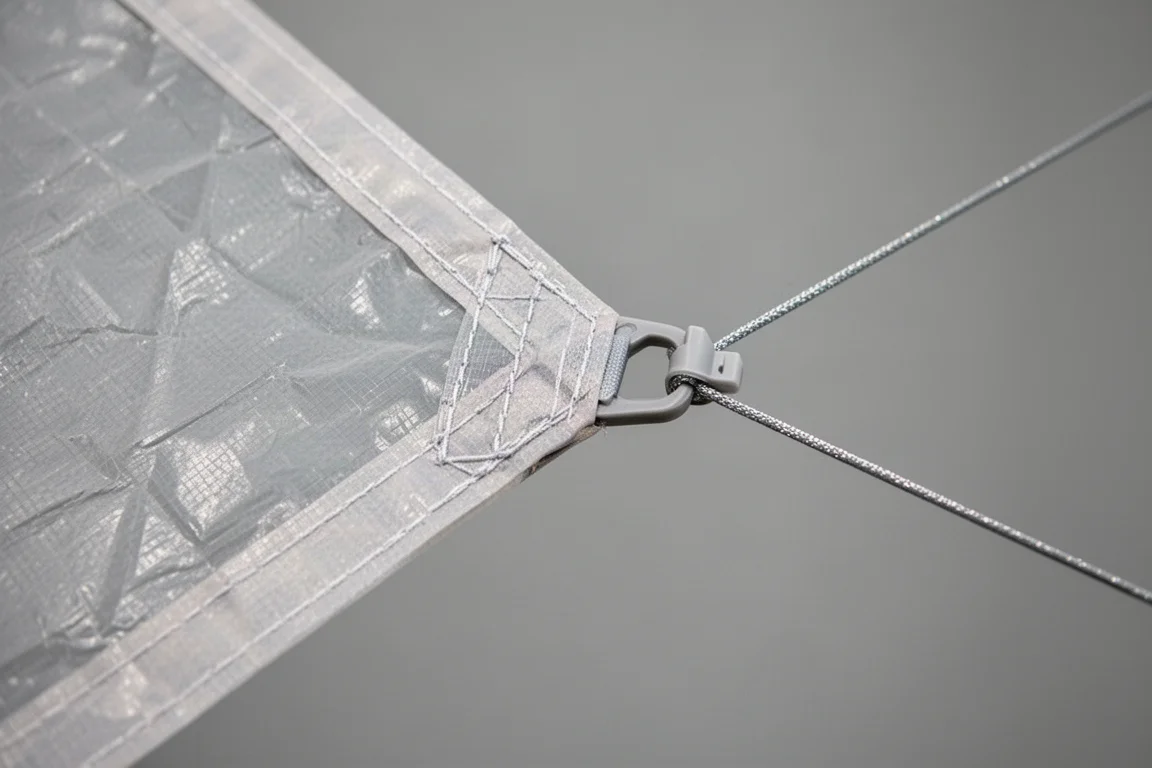
Build quality across these details has held up well over time. The bonding is clean, the tie-out points remain secure, and the tarp still looks and performs as it should after years of use.
Wind, Rain, and Weather Performance
The tarp has been completely waterproof in use and has never leaked. Because the fabric does not absorb water and stretches very little, it stays dry and taut through sustained rain.
Wind performance is where it stands out. This shelter has been used through winter conditions with winds above 50 mph without any problems. The low-stretch fabric and the number of tie-out points let you lock the pitch down hard, which is exactly what you want when the weather turns.
The square shape adds to that resilience. It allows a very large number of configurations, so you can build the shelter around the conditions rather than accepting one fixed design. That versatility, combined with the fabric’s strength, is why this tarp can handle rain, snow, wind, and blizzard conditions.
Durability supports the price. This is a shelter that has been used across the country over several years and dozens of outings, and it still looks excellent. A tarp at this price should last a long time, and this one does.
Things to Consider Before Buying
The trade-offs here are real, and some of them are inherent to the material rather than to the design. None of them make the tarp bad, but each one should factor into your decision.
Price and What Comes in the Box
At $369 for the 8ft 6in x 8ft 6in square version, this is a very expensive shelter. The larger 8ft x 10ft rectangular version is $395. After tax you are close to $400 for a piece of fabric and a set of guylines.
What you receive is the tarp itself, a CF8 Dyneema storage bag with a drawstring closure at the top, and 12 ultralight guylines. The guylines are good quality and it is right that they are included at this price, though lighter cordage is available if you want to shave more weight.
Tent stakes are not included. They are offered separately as part of an ultralight accessory kit, and being asked to pay extra for stakes on a shelter that already costs this much is a hard thing to accept. It does not change how the tarp performs, but it is worth budgeting for stakes and possibly lighter guylines before you order.
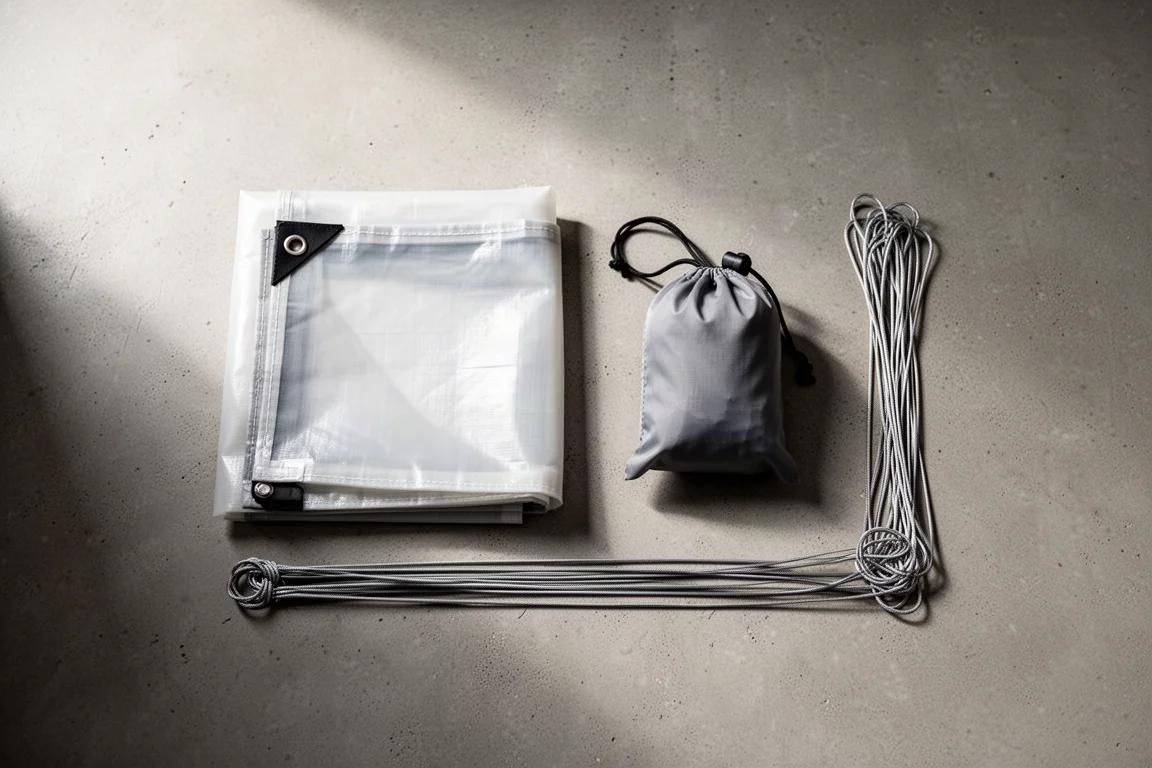
Packed volume is another consideration. In its storage bag the tarp measures about 9 inches long, 6 inches wide, and 4 inches deep. That is not a large package, but the material does not compress impressively well, so it occupies more space in a pack than the 9 oz weight might suggest.
Translucency, Noise, and Packed Volume
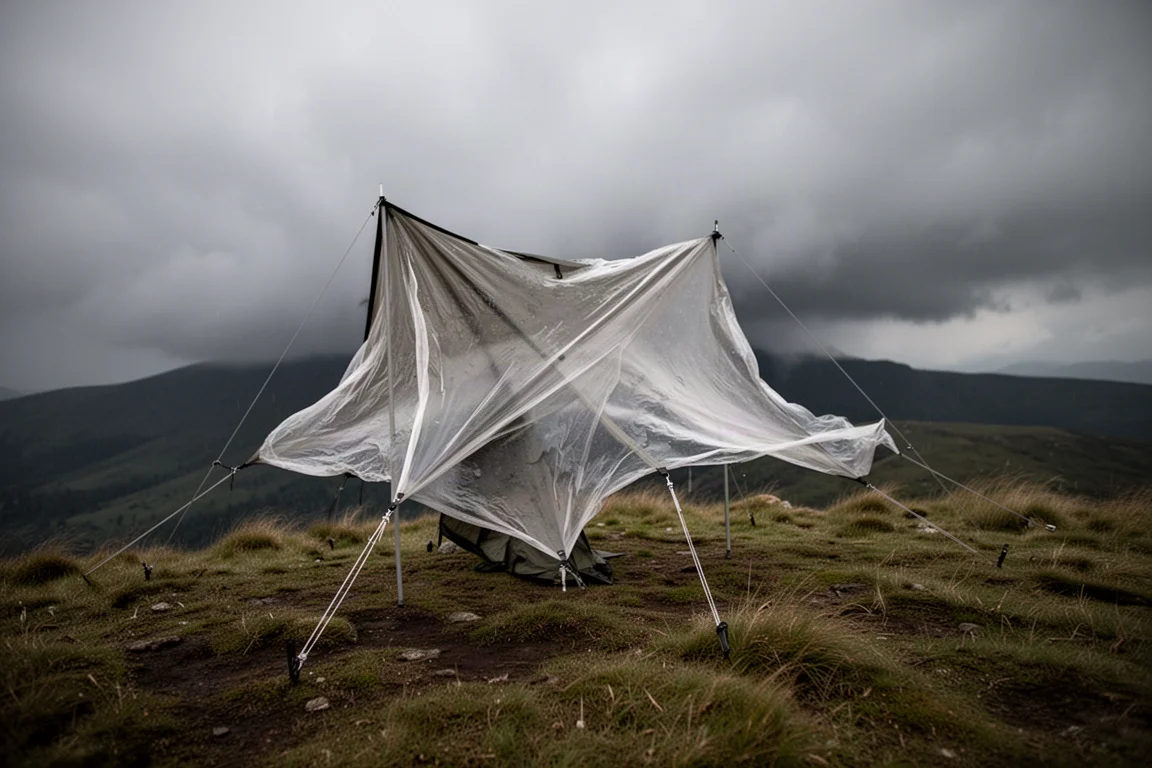
The fabric is translucent rather than transparent. You do get privacy: someone standing outside the shelter will see a silhouette and a slight shift in colour, not the interior. But a significant amount of light passes through.
That has two practical effects. Under a full moon, a surprising amount of light comes through the fabric, and anyone who cannot sleep with the lights on should think carefully before buying. In direct sun, the tarp transmits heat as well as light, so it can feel bright and warm underneath rather than shaded.
Noise is the second material characteristic to accept. The fabric is crinkly, and it gets louder as temperatures drop. In cold conditions you will hear it move.
The Learning Curve of Tarp Shelters
This applies to every tarp, not just this one, but it is the most important thing to understand before you buy. A tarp is not a tent. With a tent you pitch it, get inside, and you are protected. With a tarp, the way you pitch it determines whether you are protected.
That means practice. Pitching a tarp on a calm, sunny day is easy. Pitching the same tarp as a storm moves in, then adjusting it on the fly when the wind shifts, is a genuine skill. Expect to put a shelter up, decide it is not right for the conditions, take it down, and try a different configuration. That is normal and it happens on real trips.
Once you have that skill, a tarp becomes far more capable than most shelter systems. You can pitch above the tree line, handle strong storms, heavy wind, and serious rain, and stay completely safe. Without the skill, the same tarp is just fabric flapping in the breeze.
Buying Advice
If your priorities are the lowest possible weight and the highest possible fabric strength, this tarp delivers both, and it does so with excellent build quality. The welded seams, the 16 perimeter tie-outs, the seven body attachment points, and the internal D-rings all reflect a shelter designed by people who understand where tarps fail.
Be honest about whether those priorities are yours. If they are not, you can spend a fraction of the money and still carry a tarp that is lightweight and strong, just not as light or as strong as this one. If they are, then the decision comes down to choosing between the square 8ft 6in x 8ft 6in version and the larger rectangular 8ft x 10ft version, and to accepting the translucency, the crinkly fabric, and the extra cost of stakes. Buy it for the material and the weather performance, not for the price tag.
Conclusion
The Hyperlite Mountain Gear Flat Tarp is an outstanding shelter with a narrow audience. Its Dyneema Composite Fabric is remarkably light, roughly 15 times stronger than steel per unit weight, does not absorb water, resists UV degradation, and barely stretches, so a good pitch stays taut through rain and wind. The welded seams and generous tie-out points make it a genuinely durable piece of gear that holds up over years of use.
The obstacles are equally clear: $369 before tax, no stakes included, a translucent fabric that lets in light and heat, crinkly noise in the cold, and a real learning curve that applies to tarp camping in general. For the right backpacker, those are acceptable costs for a shelter that weighs 9 oz and shrugs off 50 mph winds. For everyone else, a much cheaper tarp will do the job just fine.
Product link
View more details for Hyperlite Mountain Gear 8ft 6in x 8ft 6in Flat Tarp
This product is mentioned in the review. Check the specifications, options, and compatibility before buying.
View more details for Hyperlite Mountain Gear 8ft 6in x 8ft 6in Flat TarpFurther reading
Related Reviews
Trail Running Gear
28-Mile Trail Run Pack Loadout: Ultralight Gear for High Alpine Self-Supported Running
A complete breakdown of gear, clothing, hydration, nutrition, and safety equipment for a 28-mile high alpine trail run with 7,800 feet of elevation gain.
Backpacking Gear
Backpacking Bathroom Kit: Three Essentials for Going in the Woods
A lightweight three-piece system for backcountry bathroom breaks: a durable trowel, a bottle-mounted wash nozzle, and a powdered soap that will not freeze.
Backpacking Gear
Backpacking Chairs: Two Lightweight Options and How to Choose
A practical look at the chair versus ground debate, plus two lightweight seat options and the trade-offs worth checking before you buy.