Hi-Fi Speakers
T+A Talis S330 vs Vivid Kaya 45: Two Premium Floorstanders, Two Philosophies
Two premium floorstanding loudspeakers that reach a very high standard from opposite directions, and how to decide which presentation suits your room and amplifier.
Introduction
High-end loudspeakers are often described as if every model climbs toward the same destination: one perfectly neutral, accurate sound. In practice, something closer to the opposite happens. As budget constraints lift, designs do not converge. They diverge, and they express their designers’ priorities more fully rather than less.
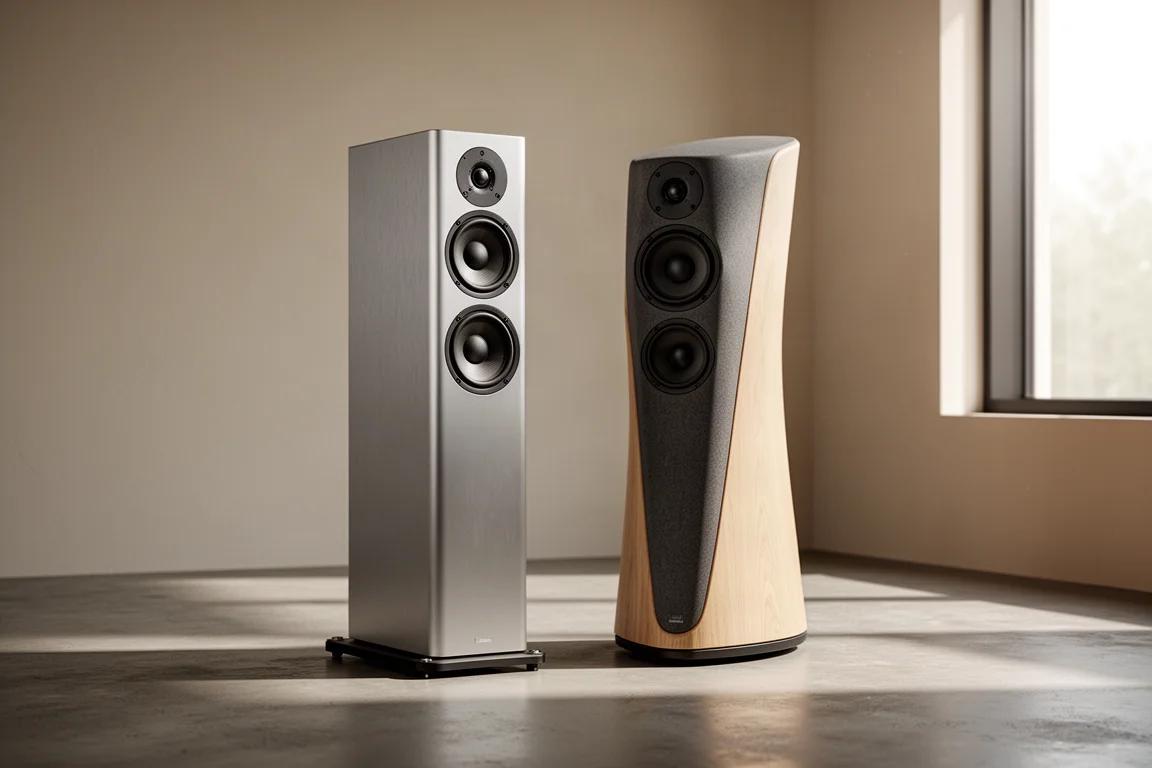
Two floorstanders make that case better than any argument. The T+A Talis S330 and the Vivid Kaya 45 are both three-way designs with four drivers and a 4-ohm nominal impedance, and only 2 dB separates their sensitivities: 87 dB for the Talis S330, which is engineered and made in Germany, and 89 dB for the Kaya 45, which is designed in the UK and built in South Africa. Both are floorstanders, and both have spent the past year in a Berlin listening room. Beyond that, they share almost nothing.
This guide covers what each speaker does well, how its construction shapes its sound, and which one is more likely to suit your room, your amplifier, and your ears.
Why Expensive Loudspeakers Do Not Converge
Start with the obvious problem. Nobody listening today was present at the original recording session. Even if they had been, microphone placement, the way those microphone feeds are mixed, and the mastering choices that follow shape the final sound far more than any two ears in a studio or a concert hall ever could.
Increasingly there is no single live event to reference at all. Many modern records are assembled from dozens of separate takes recorded in different spaces and then edited together inside a digital audio workstation. The recording is the performance. There is no singular original for a loudspeaker to be faithful to.
None of this means that anything goes. Bass boosted to the extreme is unpleasant to listen to, and an overly insistent top end is tiring. But designers working reasonably close to a flat or gently descending target curve have real room to express their own priorities, and that is precisely what happens as prices rise.
The practical consequence is that two speakers can both be excellent and still sound quite different. Working out which one is “more accurate” is not a measurement problem a buyer can solve at home. It is a question without a reference, which is why the more useful comparison comes down to character, construction, and system matching.
Cabinet Design: Aluminium Versus Composite
The two cabinets could hardly be more different in approach.
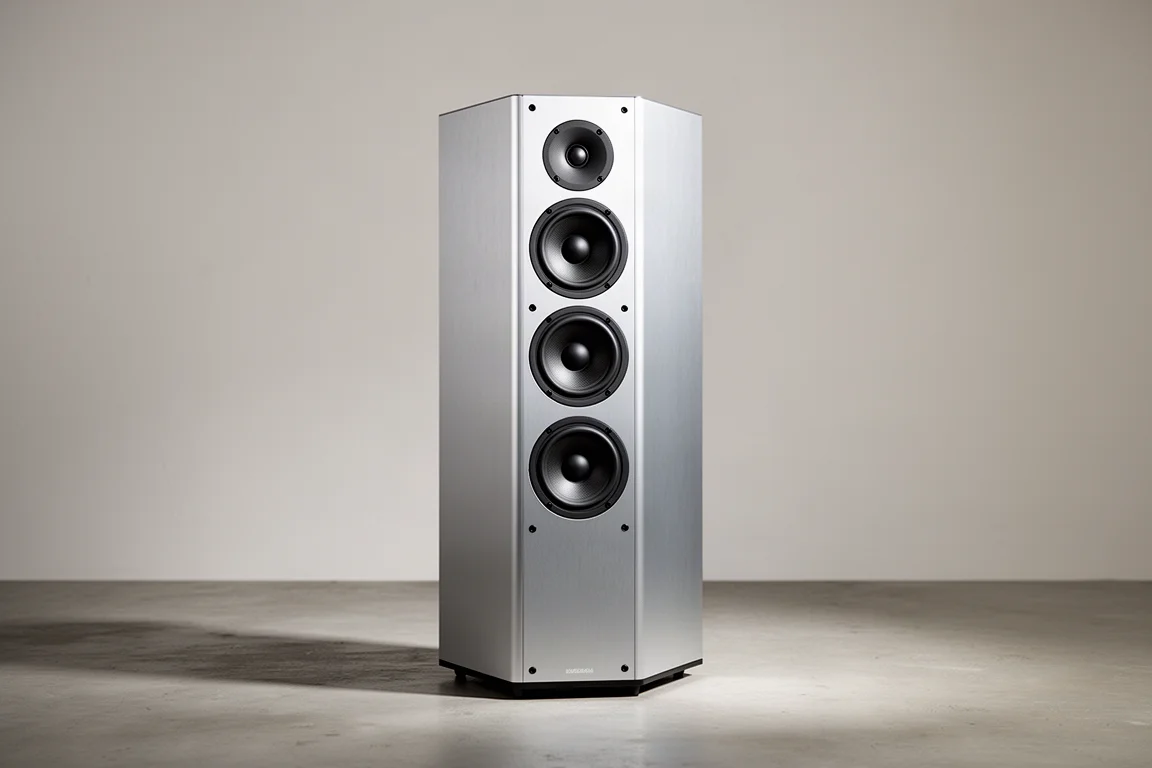
The T+A Talis S330 is built around an aluminium enclosure, extruded and machined into a U-shaped profile that is exceptionally rigid. At 33 kg, you will feel that rigidity when you move it into position. The design brief focused on cabinet geometry and material science: relatively slim baffles and rounded corners and edges that help control dispersion, plus an aluminium structure that lets a comparatively compact floorstander achieve the structural integrity needed for deep bass. The mid and bass drivers use embossed diaphragms for rigidity, and the tweeter is coated with magnesium.
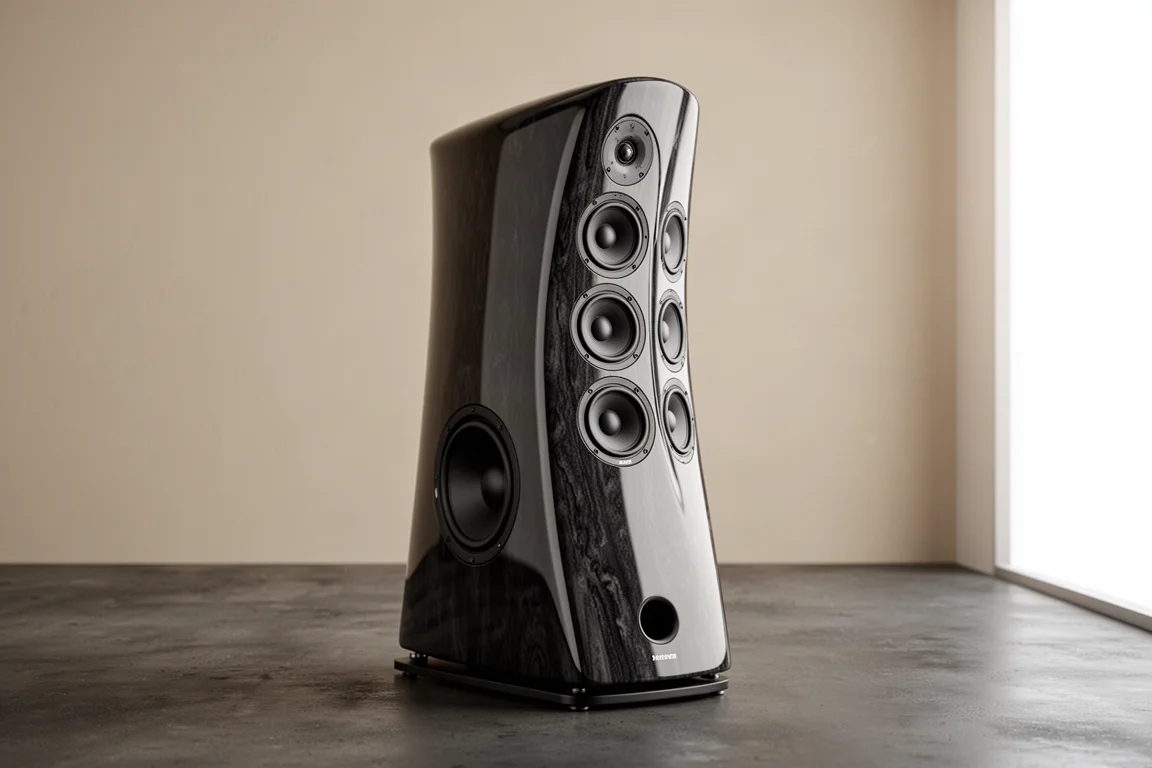
The Vivid Kaya 45 takes the opposite route. Its organic curves are functional rather than decorative. A glass-reinforced Soric core sandwich composite delivers immense stiffness without mass, which is why each speaker weighs just 25 kg. Side-firing woofers cancel each other’s reactive forces, so a light enclosure can still manage powerful bass energy. Inside, three tapered tube absorbers dissipate the rear wave energy coming off the back of the drivers. Each driver uses a radial magnet topology that requires fully magnetised magnets before assembly, a labour-intensive process, and each driver is mechanically decoupled from the enclosure with soft silicone O-rings to limit vibration transfer.
Worth noting: the Kaya 45’s designer has said that a heavy cabinet is not necessary when force-cancelling bass drivers are doing the work.
T+A Talis S330: Aluminium Rigidity and Deep Bass
Engineered and made in Germany, the Talis S330 is the more traditional looking of the two. It is elegant and easy to place in a room without the speaker becoming the room’s main event.
Its low-frequency reach is the clearest technical advantage. The Talis S330 extends down to 25 Hz, and in listening it digs deeper and kicks harder than the Kaya 45, particularly in the very low bass. Electronic dub spills out with solidity and weight, the kind of sound that moves air in the room rather than merely suggesting the presence of sub-bass. The midrange is the other standout: dynamically expressive, with vocals carrying presence and an elastic energy.
Amplifier matching matters here. With a warmer, more rounded Class AB integrated, the Talis S330 can sound a little humid in the upper frequencies. Under Class D control it opens up noticeably, especially through the mids.
Vivid Kaya 45: Curved Composite and Energy Management
Designed in the UK and built in South Africa, the Kaya 45 looks like nothing else in this bracket, and its shape is inseparable from its engineering. The curved composite cabinet is light, stiff, and unmistakably sculptural.
In the listening room, the Kaya 45 is the airier of the two in the uppermost treble. It communicates more recording space information and draws player outlines with greater precision. It is also the drier sounding speaker of the pair, which makes it a natural partner for warmer, more rounded Class AB amplification.
Its bass is rated to 37 Hz, and it never sounds thin. It is almost as dynamic as the T+A, but it does not travel as deep.
Listening Notes: Bass Depth and Midrange Energy
The bass gap is the most measurable difference between the two: 25 Hz against 37 Hz. In practice that shows up as weight and physicality in the lowest octaves. The Talis S330 pressurises the room; the Kaya 45 suggests it. Even so, there is no sense of the Vivid being short-changed at the bottom end, only a difference in how far down it goes.

Midrange character separates them further. The T+A’s midrange is the more dynamically expressive of the two, giving vocals presence and a springy energy. The drier Kaya 45 holds the listener at a slightly greater distance, which can read as more neutral or more reserved depending on the record. Under Class D amplification, tracks such as Peter Gabriel and Kate Bush’s “Don’t Give Up” reveal a liquidity in the T+A that extends up and down the frequency range.
Neither presentation is better. They are simply different answers to the same question.
Amplifier Pairing and Room Treatment
Both speakers were driven over the past year by integrated amplifiers from several manufacturers, and the final three months were spent with just two: one Class D design and one warmer Class AB design. That comparison says as much about the speakers as it does about the amplifiers.
The Kaya 45’s drier, airier treble is the better match for warm, rounded Class AB amplification. The Talis S330 is the more sensitive pairing: with the same warm amplifier it can sound a touch humid up top, while Class D power lets it open up through the midrange.
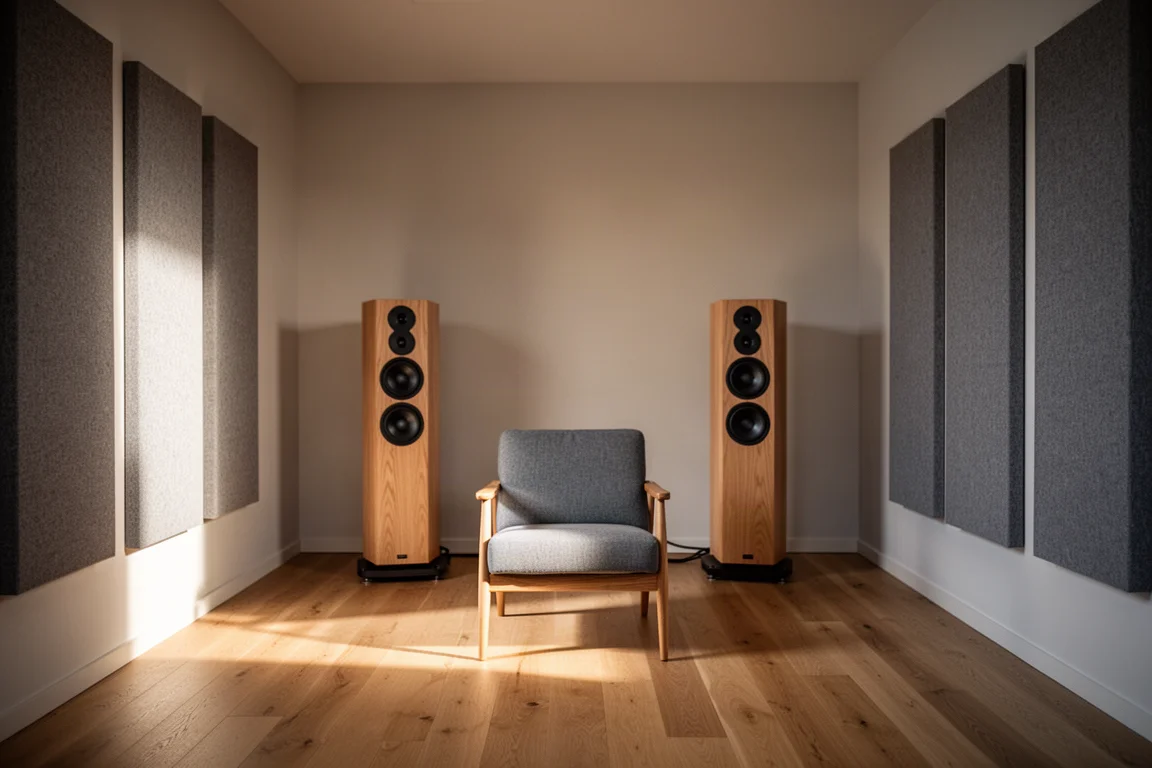
Room treatment is not optional at this level. Neither speaker should be considered for a room that has not been treated with acoustic panels first. The differences described here are audible in a controlled space. In a bare, reflective room they are far harder to hear, and much of what you paid for will be lost.
Treble Character and Detail Retrieval
The uppermost treble is where the two diverge most obviously. The Kaya 45 is airier, retrieving more of the recording space and rendering instrumental outlines with more precision. The Talis S330 is the slightly darker, more humid presentation, which some listeners will hear as smooth and others as less revealing.
Which one is closer to accurate? There is no way to know, because there is no reference to check against. Both speakers come from exceptionally experienced engineers, and both deliver no obvious audible flaws. Both sit close enough to whatever accurate might mean that a listener cannot determine which is closest.
Pricing and Regional Value
In the USA both of these loudspeakers sell for roughly $18,000 a pair, which turns the decision into a straight same-price choice between two design philosophies. In Europe the T+A is the more affordable of the two, which changes the calculation for buyers on that side of the Atlantic.
Whichever region you are buying in, the same advice applies: budget for amplification and room treatment alongside the speakers themselves. A serious amplifier upgrade or a solid round of acoustic panels will do more for the final result than stretching to the more expensive pair.
Which Speaker Should You Choose
Choose the T+A Talis S330 if you want the deeper bass of the two, a dynamically expressive midrange, and a traditional, elegant aluminium cabinet that settles into a living space without dominating it. It rewards Class D amplification and gives vocals a presence that is hard to ignore.
Choose the Vivid Kaya 45 if you value an airier treble, more precise instrumental outlines, and a lighter, sculptural cabinet that makes a statement. It is the better match for warm, rounded Class AB amplification, and its bass stays dynamic even if it does not reach as low.
Neither speaker is more accurate than the other. Only your room, your amplifier, your music, and your eyes can have the final say.
Conclusion
The Talis S330 and the Kaya 45 are two of the most convincing floorstanders you can hear in a treated room, and they arrive at that result from opposite directions: machined aluminium rigidity and deep bass on one side, curved composite lightness and treble air on the other. The lesson is not that accuracy stops mattering, but that above a certain price it stops being a single destination. Buy the presentation that suits your room and your amplifier, and treat the room before you spend another dollar on hardware.
Further reading
Related Reviews
Hi-Fi Speakers
1723 THX Tower vs 1528 Bookshelf: Which Speaker Fits Your Room?
Two speakers at roughly the same price, built very differently. How the 1723 THX tower and the 1528 bookshelf compare on construction, bass, power needs, and sound.
Hi-Fi Speakers
Acoustic Energy AE 300 Review: Deep Bass From a Compact Standmount
A two-way standmount with real wood veneer, surprising low-end weight, and a warm, easygoing character. Here is what to know before buying.
Hi-Fi Speakers
Acoustic Energy AE1 40th Anniversary Review: A Modern Take on a British Classic
A compact standmount that revives a 1980s favorite with all-new parts, a warm mid-centric balance, and a price of £1,499 per pair.