Bookshelf Speakers
SVS Ultra Evolution Nano Review: Small Speaker, Large Ambitions
A compact two-way bookshelf speaker with strong bass for its size, coherent drivers, and easy amplifier matching. Here is what to know before buying.
Introduction
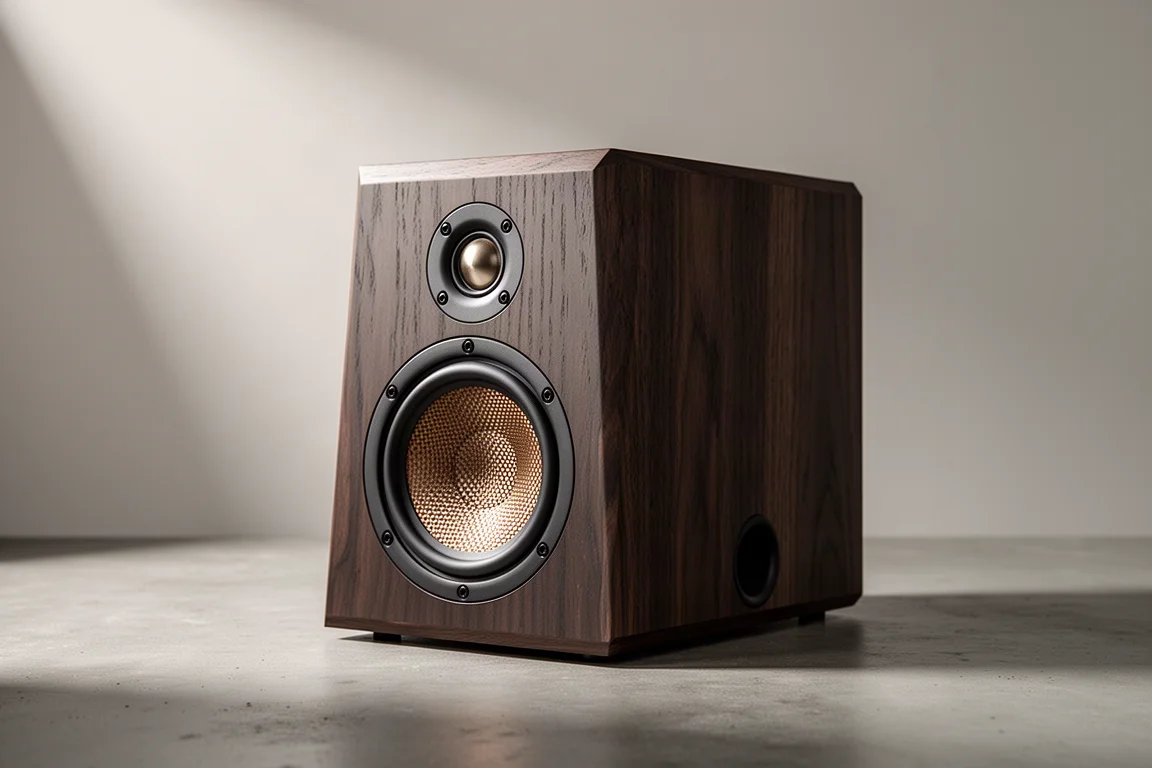
The SVS Ultra Evolution Nano is the smallest speaker in the Ultra Evolution family, a two-way bookshelf design standing roughly 12 inches tall. It carries the same time-aligned cabinet geometry as its larger siblings, and its reported frequency response of 44 Hz to 40 kHz suggests a speaker that aims well beyond its footprint.
For listeners who admire the larger tower in the range but cannot accommodate a speaker that stands close to four feet tall, the Nano is the practical alternative. This review covers what it does well, where it asks for a little care, and how it lines up against other two-way bookshelf speakers in its price class.
Who This Speaker Is For
The Nano suits listeners who want a compact speaker that behaves like a much larger one. Its 6 ohm nominal impedance and 85 dB sensitivity mean it is not unusually demanding, and it pairs comfortably with amplifiers and home theater receivers rated anywhere between roughly 20 and 150 watts. That flexibility makes it a reasonable fit for both a music system and a surround setup.
It is also the natural starting point for anyone who has been considering the larger Ultra Evolution Titan but knows their room or budget will not allow it. A complete system can be built around a pair of Nanos for less than the price of the Titan alone, while still delivering a substantial share of that speaker’s character.
Design, Drivers, and Reported Specifications
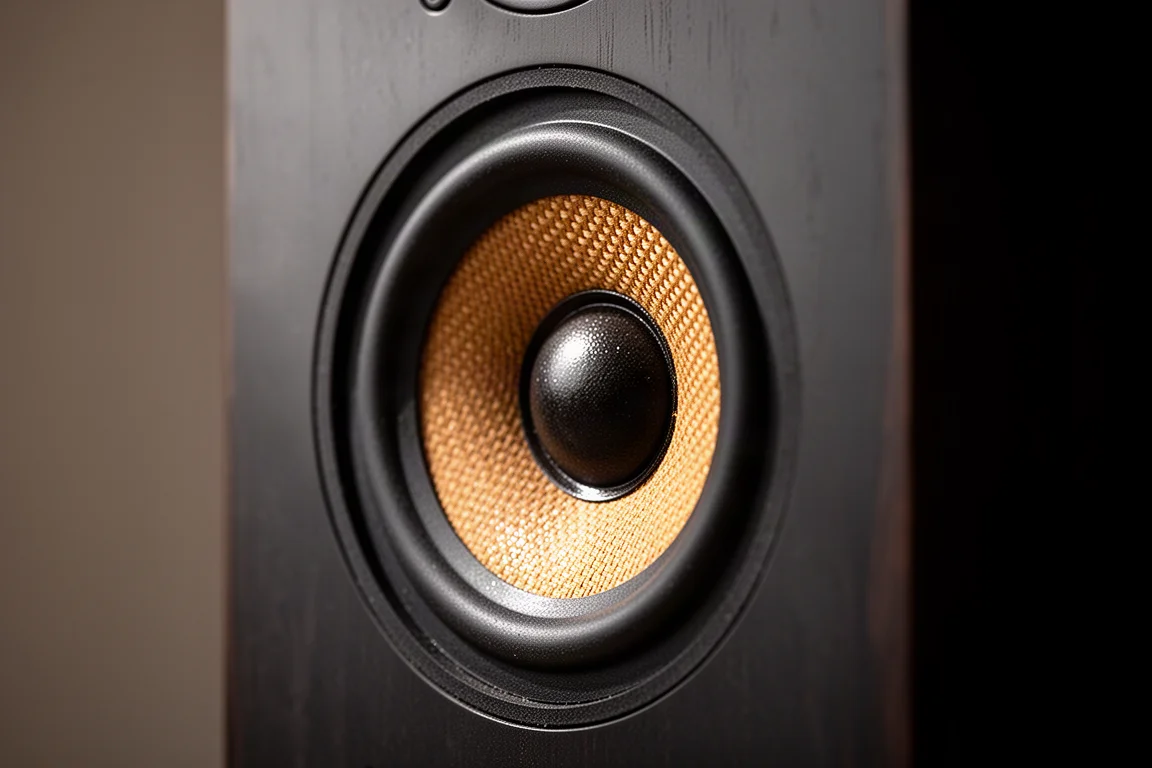
The Nano is a two-way design built around a 1-inch diamond-coated aluminum tweeter and a 5.25-inch woofer. Its angled front baffle places the acoustic centers of both drivers in physical alignment, a time-aligned approach that is a signature trait of the Ultra Evolution line. A rear-facing port completes the cabinet.
SVS reports a frequency response of 44 Hz to 40 kHz, a nominal impedance of 6 ohms, and a sensitivity of 85 dB. Those figures describe a small speaker with an unusually wide claimed bandwidth, and the in-room results below broadly support them.
Bass Performance and Scale
In-room measurements landed at 42 Hz, close to the reported figure. Peak bass energy sits strongest between roughly 50 and 60 Hz, which is typical for a compact two-way, and the natural rolloff begins just before 40 Hz. Tracks with deep low-frequency content will make that limit obvious, but the quality of what the Nano does produce is the more interesting story. Kick drum strikes and piano have weight and texture, and vocals arrive with a three-dimensional, grounded quality that is uncommon at this size.
Adding a subwoofer crossed over in the 50 to 60 Hz region lifts the presentation considerably, bringing the Nano closer to the scale and impact of its larger sibling. The speaker’s own low-end output is strong enough that the crossover point does not need to be set unusually high, which makes blending a sub easier whether it is done manually or with room correction software.
Treble, Midrange, and Coherence
Measured directly on axis, the treble does not roll off much, and some listeners may read that as brightness. In practice, a modest amount of toe-in toward the listening position produces a top end that is extended without becoming shrill. The edge of metallic instruments, from cymbals to brass, and the ping of a piano trill in open space come across as natural rather than ringing or fatiguing.
There is a slight dip between 1 and 2 kHz, close to the crossover point, but it measures less than 3 dB and is even smaller in nearfield conditions, so it is unlikely to become a practical concern. Across the two drivers the Nano is a very coherent speaker, which helps intelligibility and focus through the midrange and highs, particularly at lower listening volumes.
Dynamics and Everyday Listening
The Nano scales well, especially with a subwoofer in the system. It will play into the upper 90 dB range without complaint, and it handles both music and film soundtracks with composure. Its voicing is articulate and contrasty enough that dialogue and vocals stay easy to follow even when the volume is kept low, which is a genuinely useful trait in a speaker this size.
Setup and Placement Notes
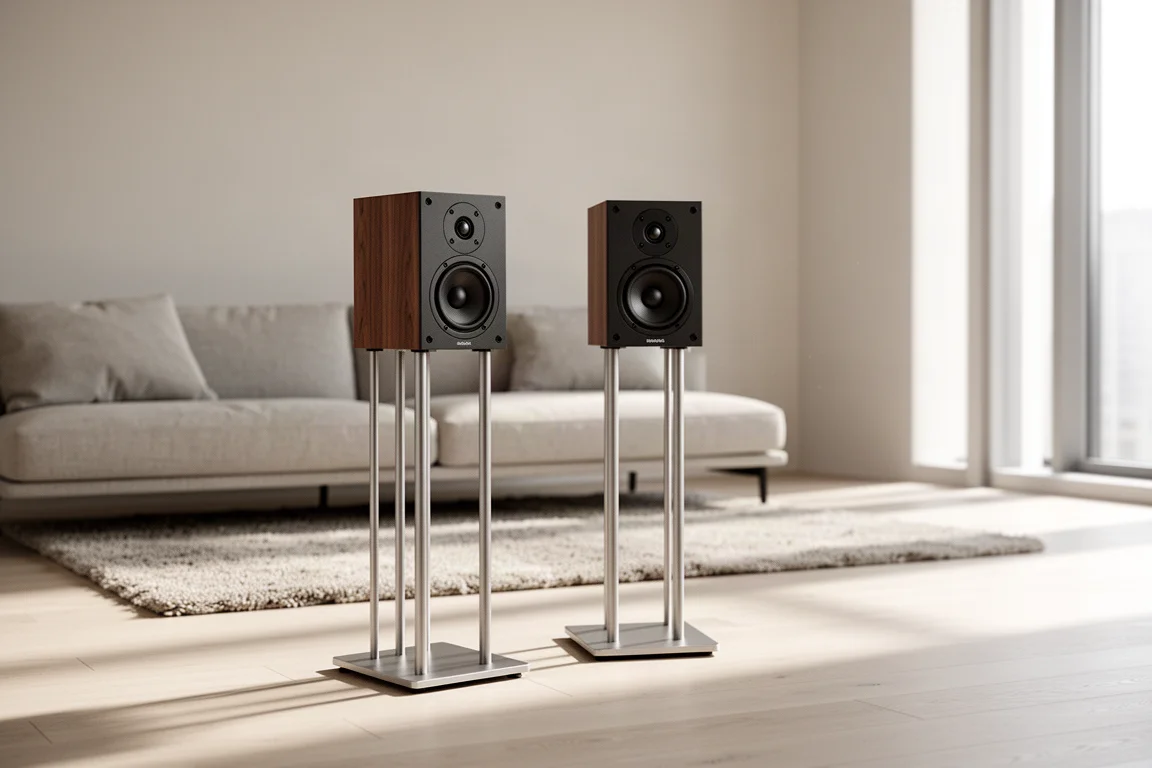
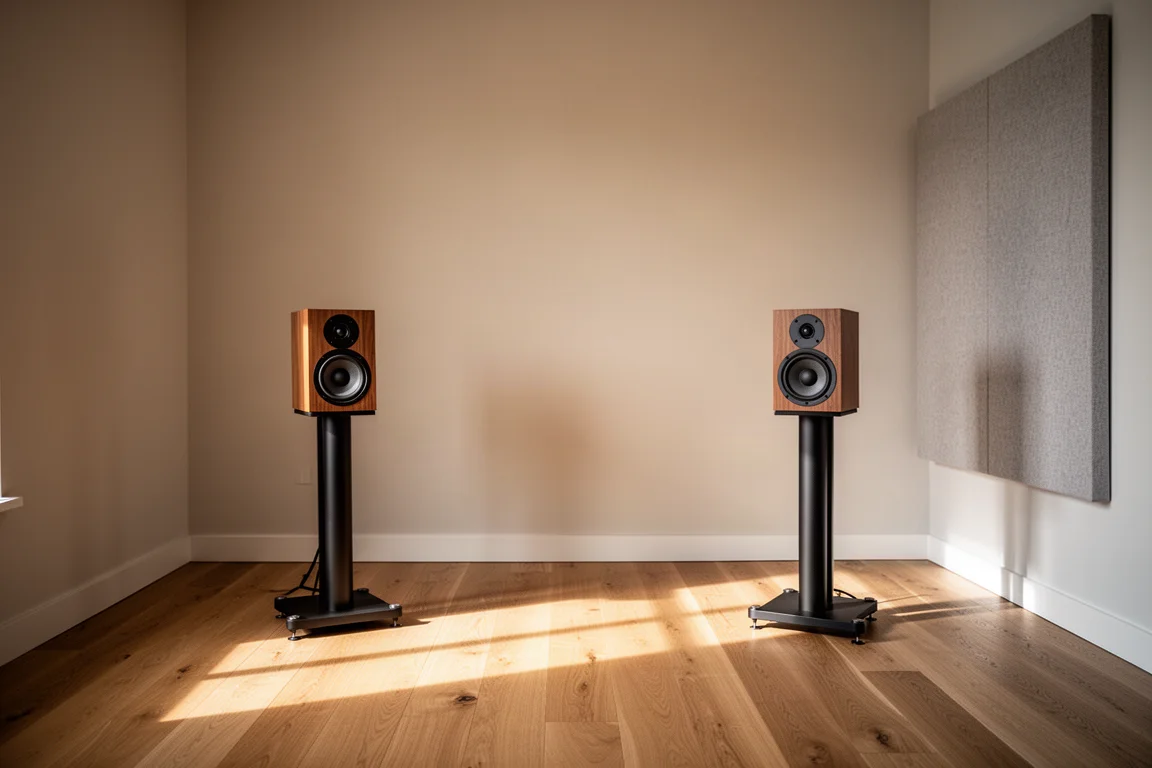
Setup matters more than any other factor here. Like most speakers, the Nano works best when it forms roughly an equilateral triangle with the primary listening position. In practice, spacing the pair about 9 to 10 feet apart with around 2 feet of clearance from the front wall produced the best balance of soundstage and low-end control.
Listeners with less room to work with should not be discouraged. Moving the speakers to roughly 8 inches from the front wall still sounded good: the soundstage flattened slightly and the bass gained a little energy, but nothing about that placement argues against using the Nano in a smaller space. The supplied setup guidance covers the basics, though its wording could be clearer for anyone new to the hobby.
How the Nano Compares to Other Bookshelf Speakers
The ELAC Debut 3.0 is the closest value comparison. It is a more textbook-neutral speaker, but it is also slightly more subdued and harder to drive, so it tends to need more volume before it shows what it can do. The two share a similar soundstage width and depth, yet the Nano’s presentation is at once larger and more nuanced, with performers and instruments more sharply defined. The Nano uses more distinctive materials and a more unusual cabinet shape, and the ELAC is the more affordable option for listeners who do not value those differences.
Against the larger and more expensive Bowers & Wilkins 606 S3, the Nano is surprisingly comparable despite using a smaller mid-bass driver, and the two will likely appeal to the same listener: someone who prioritizes nuance and placement of sound over absolute neutrality. The Bowers & Wilkins model offers more finish options, but the Nano is easier to set up, easier to drive, and asks for less investment in electronics, which makes it the stronger value of the two.
The Focal Theva No.1 sits at a similar price and matches the Nano for agility, yet it produces less bass energy despite being a larger speaker with a larger woofer. Both need a subwoofer for full-range playback, but the Nano can be crossed over lower, and its extra energy in the lower registers makes subwoofer integration easier.
Things to Consider Before Buying
The finish you choose matters more than it might seem. The glossy black and white options are highly reflective, and sunlight hitting them produces a visible flare. That can look striking in a living room, but in a home theater it can become a distraction, which makes the black oak wood finish the safer choice when the screen should hold all the attention. The white finish also makes fingerprints hard to hide, and dust is difficult to remove from the light-colored grille fabric without risking discoloration. Households with young children or curious pets may be better served by one of the black finishes.
It is also worth being realistic about the low end. The Nano’s bass is impressive for its size, but its rolloff begins just before 40 Hz, so a subwoofer is required for genuinely full-range playback.
Buying Advice
For anyone shopping for a quality two-way bookshelf speaker under a thousand dollars, the Nano is easy to recommend. It offers a large, detailed presentation, coherent driver integration, and enough flexibility to work with modest amplification and in rooms that cannot take a floorstander.
If budget is the deciding factor, the ELAC Debut 3.0 delivers a more neutral balance for considerably less money and remains a strong choice. If space and budget allow for a larger cabinet, the Ultra Evolution Titan will scale in ways the Nano cannot. For everyone in between, the Nano occupies a very sensible middle ground.
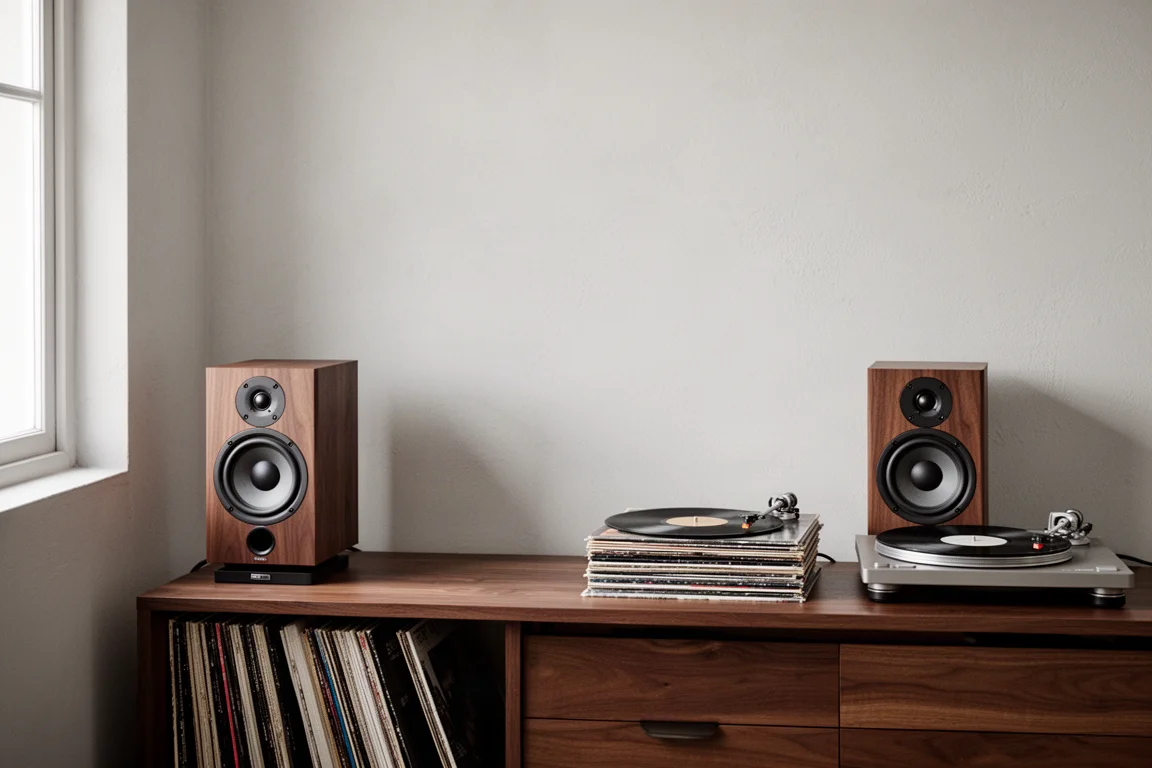
The practical advice is to plan for a subwoofer from the start, give the speakers a little toe-in, and choose a finish that suits the room rather than the showroom. Done that way, the Nano delivers far more than its footprint suggests.
Conclusion
The SVS Ultra Evolution Nano is a small speaker that behaves like a considerably larger one. Its bass is strong for its size, its drivers are exceptionally well integrated, and it is forgiving of both modest electronics and cramped placement. Pair it with a subwoofer and it can carry a full system; leave the subwoofer out and it still makes a convincing case for itself on its own. For listeners who want most of the Ultra Evolution character without the size or the outlay of the tower models, it is a confident recommendation.
Product link
View more details for SVS Ultra Evolution Nano
This product is mentioned in the review. Check the specifications, options, and compatibility before buying.
View more details for SVS Ultra Evolution NanoFurther reading
Related Reviews
Bookshelf Speakers
Acoustic Energy A100 Mark II Review: A Compact Standmount With an Expansive Soundstage
The Acoustic Energy A100 Mark II brings clarity, natural tonality and a wide soundstage to an entry-level standmount, with a few setup details worth knowing first.
Bookshelf Speakers
Acoustic Energy AE-100 Mark II Review: Compact Bookshelf Speakers With Standout Imaging
A compact British two-way bookshelf speaker with deep, layered imaging, fast bass, and a slight treble lift to weigh against a crowded $500 field.
Bookshelf Speakers
Acoustic Energy AE100 MK2 Review: Measured Performance and Four Alternatives
A close look at the Acoustic Energy AE100 MK2 bookshelf speaker, what its measured performance reveals, and four alternatives with different trade-offs.