Subwoofers
SVS SB17-Ultra Review: Reference-Grade Bass With a Serious Footprint
A close look at the SVS SB17-Ultra, a 124 lb flagship subwoofer with a 17-inch driver, 2,800 watts of continuous power, and measured linear bass from 20 Hz to 200 Hz.
Introduction
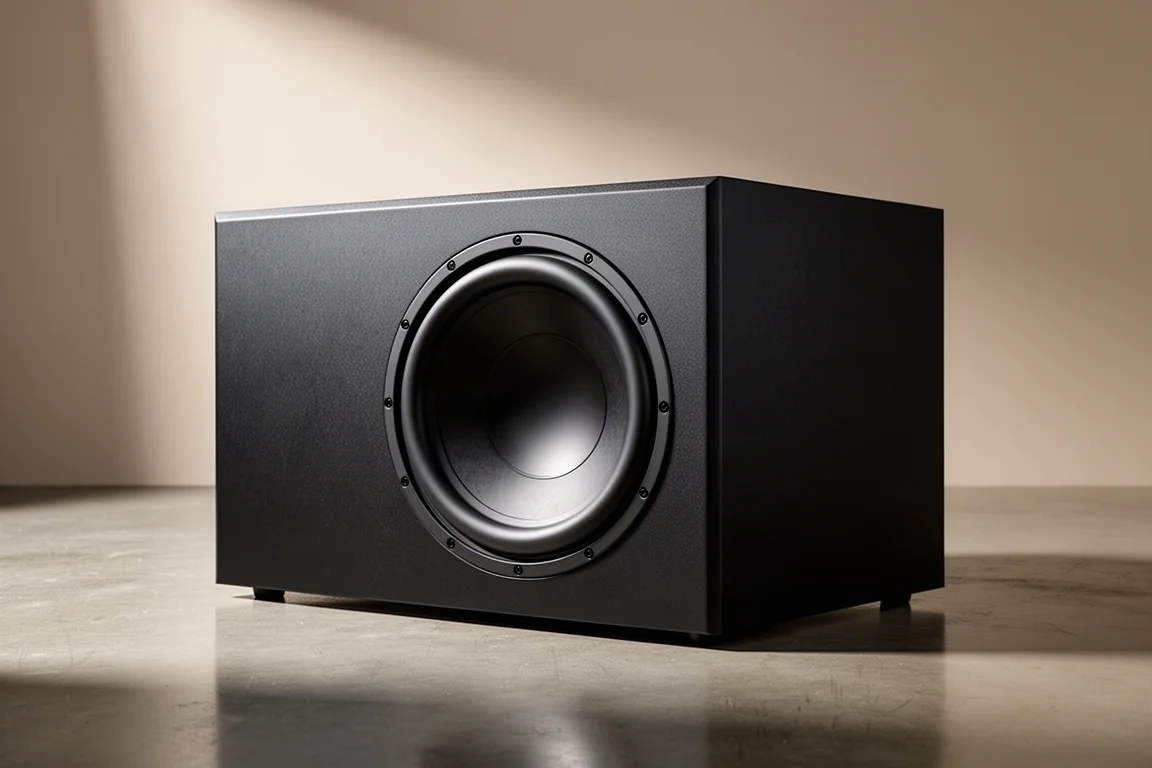
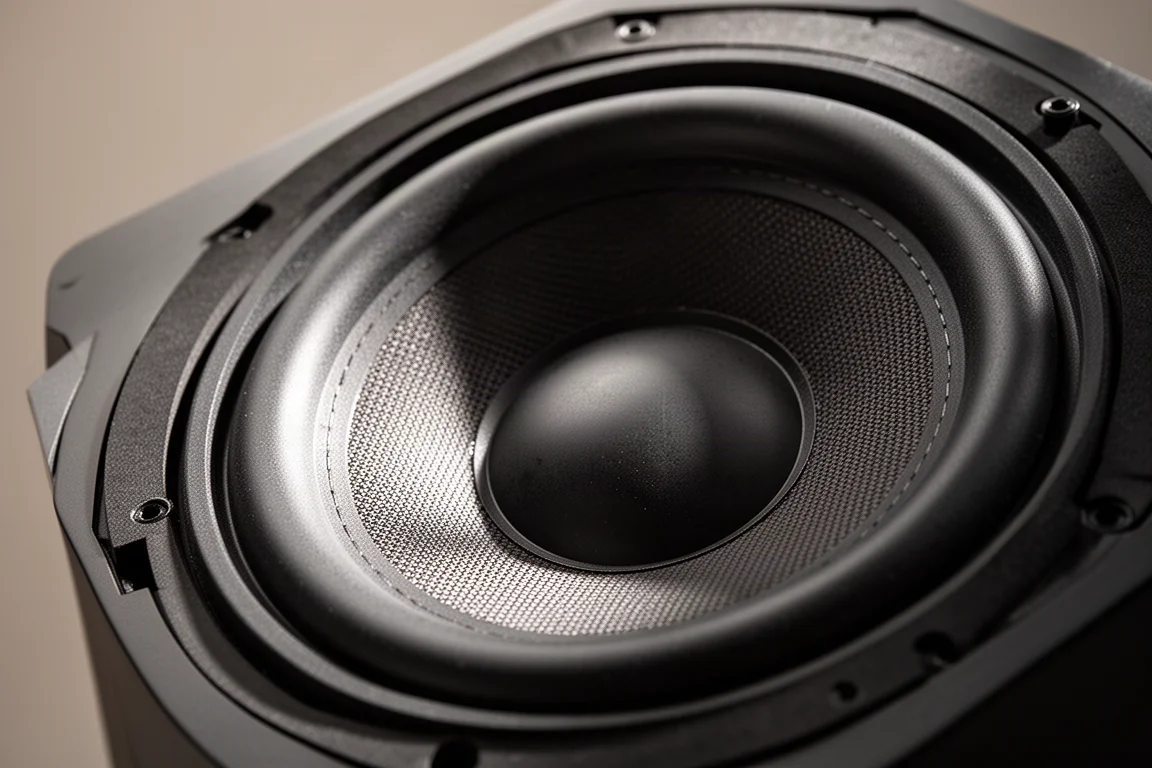
The SVS SB17-Ultra is SVS’s new flagship subwoofer, and it is built around a front-firing 17-inch high-excursion driver. That driver alone weighs more than 60 lb, and its 54 lb motor sits inside a substantial MDF cabinet measuring roughly 20 by 21 inches. Fully assembled, the subwoofer weighs 124 lb.
Power comes from an internal dual mono Class-D amplifier rated at 2,800 watts continuous, with a peak capacity above 6,000 watts. SVS reports a frequency response of 15 Hz to 320 Hz, which places the SB17-Ultra firmly in infrasonic territory: much of what it produces at the bottom end is felt rather than heard.
The interesting question is not whether a subwoofer this large can produce output. It is whether the performance justifies the space it occupies, and how it holds up against the reference-class subwoofers it is clearly aimed at.
Who the SVS SB17-Ultra Is For
The SB17-Ultra suits listeners who want genuine reference-level low-frequency output and can accommodate a very large cabinet. Even in a system with capable floorstanding speakers, it adds scale and dimension. The gains are largest where the bottom two octaves matter most: film soundtracks, organ and electronic music, and any material with real content below 30 Hz.
It is also a natural fit for systems where the preamp, integrated amplifier, or receiver has bass management and can split the incoming signal between the speakers and the subwoofer. Handing low frequencies to a dedicated subwoofer reduces strain on the amplifier and can improve clarity and dynamic headroom in the main speakers.
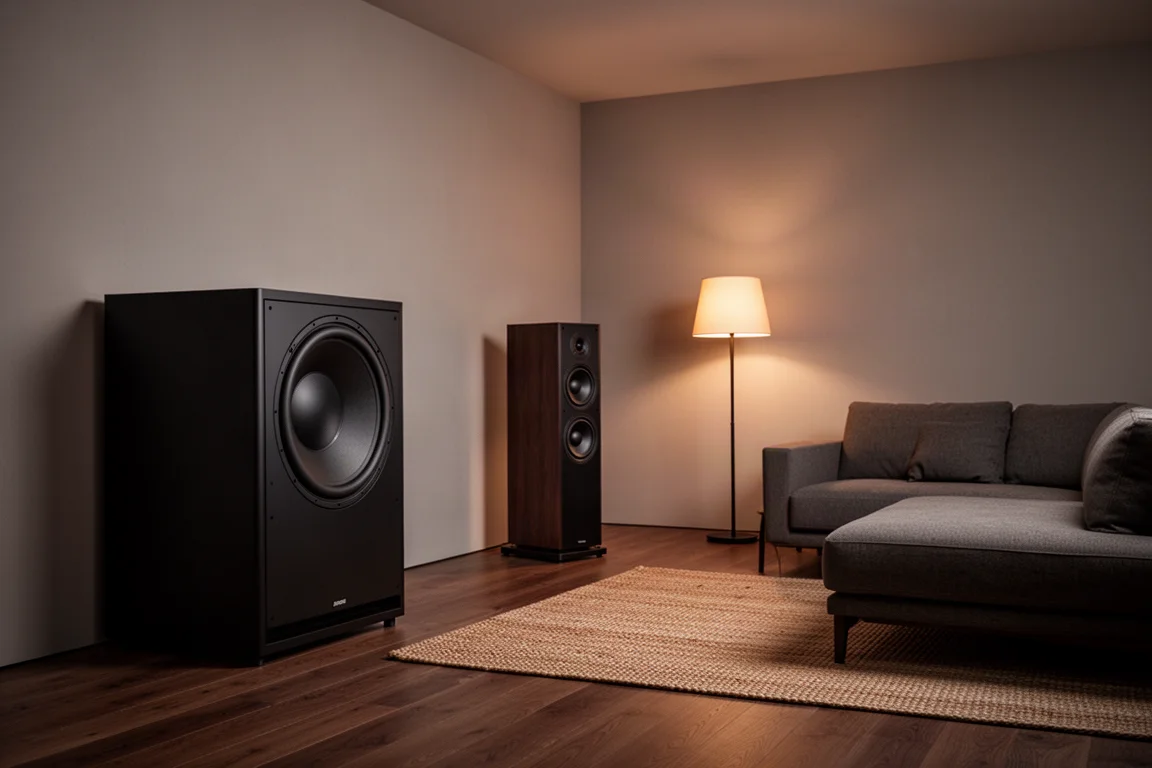
It is a less obvious choice for small rooms, apartments, or shared walls. A 124 lb cabinet needs a real footprint, and the output on tap can travel through furniture and through structure.
Main Strengths: Driver, Amplifier, and Control
The headline numbers are the driver and the amplifier, but the more revealing part of the design is how much control SVS hands to the owner. The back panel includes balanced and unbalanced inputs and outputs for the left and right channels, an LF input shared with the subwoofer’s right line-level input, trigger ports, an IR input, and a USB port that works with the SVS SoundPath wireless audio adapter, which is sold separately. A small display and a set of manual controls complete the panel.
Everything on that panel can also be handled from the SVS app for iOS, Android, and Amazon Fire devices. Basic functions such as volume, phase, and crossover are straightforward. More advanced users can adjust polarity, room gain compensation, and parametric EQ, then save the results as presets. That makes it practical to keep one configuration for music and another for film without redoing the setup every time.
Placement and Setup Matter More Than the Spec Sheet
Placement decides how much of this subwoofer’s performance you actually hear. In the room used for testing, areas along the front wall produced a dip around 40 Hz at the listening position, and those areas include the front corners where subwoofers are most often photographed. Moving the subwoofer along the left wall and closer to the left corner multiplied the sensation of bass. Placing it in the right rear corner produced very little output. One subwoofer, three positions, three very different results.
The practical takeaway is to test before settling in. A subwoofer placed in a spot that fights the room can sound unimpressive no matter how capable it is, and the SB17-Ultra is no exception. This is also the strongest argument for pairing bookshelf speakers with a subwoofer rather than spending the same budget on a full-range speaker that may lose its low end to an unlucky position.
Measured Performance: Linear Bass From 20 Hz Up
SVS claims the SB17-Ultra can reach 15 Hz at reference volumes hovering around 95 dB in open space, or quasi-anechoic conditions. Testing with the ground-plane method, which takes reflection points out of the measurement, produced a linear frequency response that tracked closely with the published figure. The subwoofer reached 20 Hz at roughly 92 dB, within the stated tolerance, and 15 Hz at 86 dB.
At a reference volume of 95 dB, the response stayed linear from 20 Hz to 200 Hz, and the results were repeatable at 75, 85, and even 100 dB without incident. Moved into position and measured at the listening position in-room, output capability grew stronger still, with 20 Hz measured at roughly 10 dB above the reference volume.
Music and Movie Listening Notes
The surprise here is subtlety. A subwoofer this size could easily behave like a blunt instrument, but the SB17-Ultra holds together on acoustic and jazz material. On quieter tracks its contribution shows up as scale and dimension rather than volume. Toggle it off and the same recording loses a layer of realism, with bass notes sounding smaller and flatter.
On more demanding material the difference is night and day. A kick drum at the bridge of a track landed with real texture and in-room impact without needing extreme volume. Pushed toward 90 dB in-room, the subwoofer did not break a sweat, and the organic character of the drum was preserved rather than flattened into punch and rumble. Wide stereo material also gained height and width, with lateral mixing that bordered on surround sound.
Film material benefits from the same composure. With bass management handling the handoff between the subwoofer and in-ceiling speakers, effects such as rounds traveling from front to back and then overhead kept their weight and scale as they moved through the room.
How It Compares With Other Subwoofers
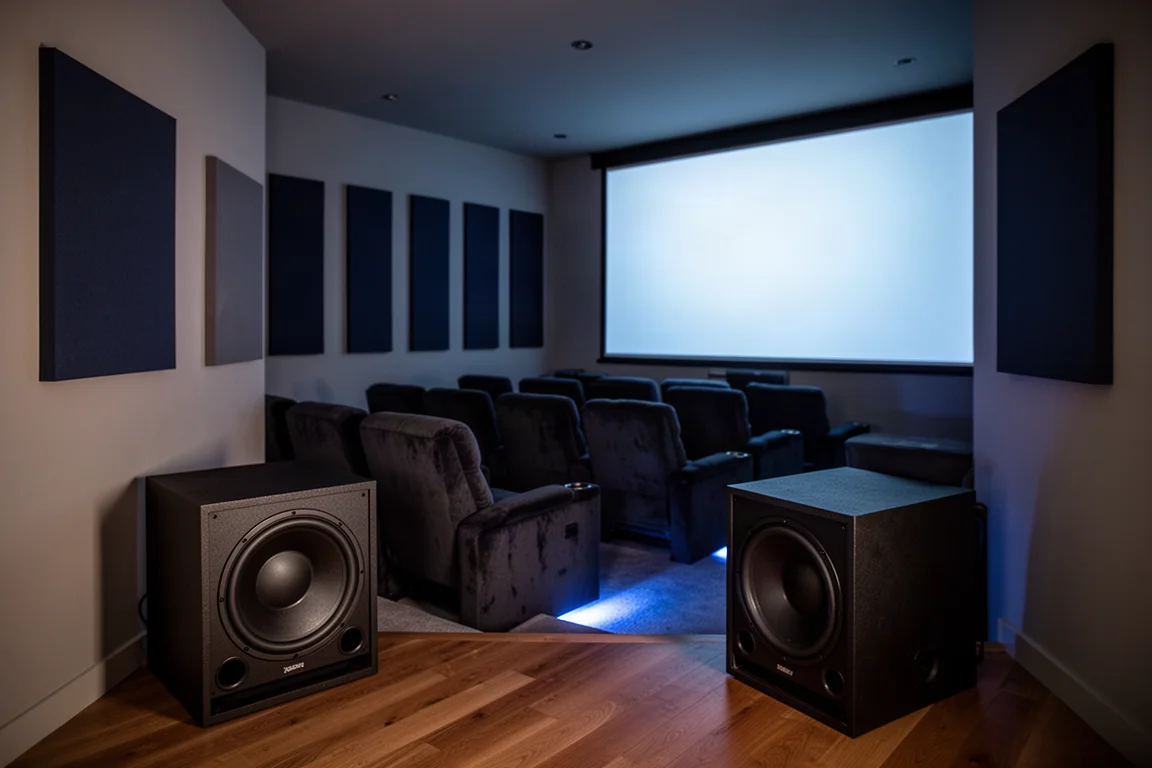
The Klipsch RP-1000SW, at around $700, remains an undeniable bargain and can reach 20 Hz at reference levels with some help from room boundaries. It is also a bit of a brute: boomier and less detailed than the SVS, and its 10-inch driver was pushed to bottoming out on a couple of occasions at very high volumes. Two of them would be easier and cheaper to fit into a room than a single SB17-Ultra. The KEF KC92 takes the opposite approach, trading output and low-frequency capability for a compact, living-room-friendly cabinet that is far easier to conceal. It costs about the same as the SVS, and its claimed 11 Hz figure was never approached in testing, while its 20 to 30 Hz performance came across as slightly one-note. Buyers are paying a premium there for compact size and good looks, whereas the SVS gives more features, more customization, and stronger performance per dollar.
The SVS 3000 Micro uses the same app and offers the same level of adjustability, so the user experience is nearly identical. It cannot match the SB17-Ultra’s output or low-bass capability even with help from the room, but at well under $1,000 it remains an easy recommendation for anyone with space constraints or a tighter budget. The REL Tzero Mk III is a different category entirely: rated down to 37 Hz and designed to augment the low end of smaller speakers in very small rooms, it is not comparable to the SB17-Ultra or to any of the subwoofers above.
Against the established reference class, the SB17-Ultra holds its own. The RBH SV-1212PR, at around $6,500, is a formidable subwoofer, but the SVS is every bit its equal on the strength of prior measurements and listening notes, costs roughly a third as much, and is considerably more user-friendly. The JL Audio Fathom f112, at around $5,000 each, remains one of the best subwoofers on the market and has endured for good reason. The SB17-Ultra does not beat it, but it is comparable in many ways, more flexible, and easier to live with thanks to app control, all at roughly half the cost.
Things to Consider Before Buying
Size is the first consideration. The SB17-Ultra is a large subwoofer and it will occupy a real footprint even in a big room. It can sound small and agile, but it cannot be made physically small.
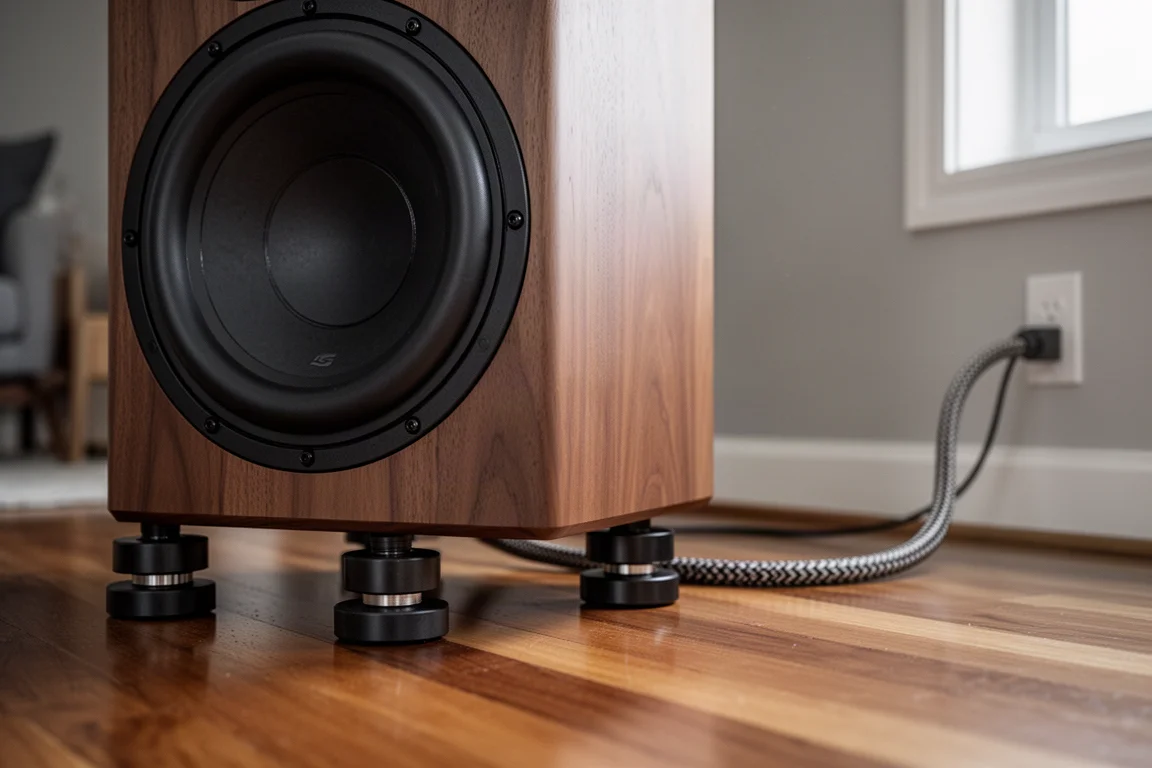
Vibration is the second. During testing the subwoofer never bottomed out, clipped, or distorted, but it rattled several pieces of nearby furniture and popped open a door on a sideboard. The stock feet isolate the cabinet reasonably well, though they are not miracle workers. More robust isolation feet, or an inexpensive set of washing machine pucks, can help keep vibrations out of furniture and away from neighbours.
Cabling is the third. Good placement may require longer interconnect runs to reach the preamp or receiver. The SVS wireless kit works well and cuts down on cable clutter considerably, but its signal-sense feature takes a moment to wake and produces an audible click from the back panel each time the subwoofer powers on or off. That behaviour is normal.
Finally, automatic room calibration was not yet available at the time of testing. SVS has said the feature is waiting on the subwoofer’s microphone, with an update expected in early 2025, after which the SB17-Ultra will be able to calibrate itself to the primary listening position. That will be particularly useful for systems that have subwoofer outputs but no calibration software of their own.
Buying Advice
If you have the space and you want the deepest, most linear bass your room can support, the SB17-Ultra is an easy recommendation. It delivers reference-level output with unusual composure, and its app control and presets make it far easier to integrate than its size suggests.
If space is tight, look smaller. The KEF KC92 and the SVS 3000 Micro both trade ultimate output for a cabinet that disappears into a living room, and the Klipsch RP-1000SW remains a strong value if you can accommodate two units. For a subwoofer in this class, the SB17-Ultra’s combination of measured linearity, adjustability, and cost relative to the reference alternatives is what makes the case.
Conclusion
The SB17-Ultra is not a subtle purchase, but it is a surprisingly subtle performer. It reaches into infrasonic territory, stays linear from 20 Hz to 200 Hz at reference volume, and keeps its composure on music as readily as it does on film. The trade-offs are physical: a large cabinet, furniture that may rattle, and a calibration feature that arrived later than the hardware. For listeners who can give it the space and the placement it needs, it is a reference-grade subwoofer at a price that undercuts the established names in the category.
Product link
View more details for SVS SB17-Ultra
This product is mentioned in the review. Check the specifications, options, and compatibility before buying.
View more details for SVS SB17-UltraFurther reading
Related Reviews
Subwoofers
Arendal 1961 Subwoofer 1S Review: Beautiful Build, Modest Punch at $1,000
A sealed $1,000 subwoofer with a gorgeous cabinet, plus three lower-priced alternatives that deliver more impact for movie nights.
Subwoofers
Arendal Sound 1723 2V Subwoofer Review: Dual 13.8-Inch Drivers Under $3,000
A flagship ported subwoofer with dual opposing 13.8-inch drivers, a 1,200W RMS amplifier, app-based DSP, and a 10-year warranty.
Subwoofers
Ascendo 16 Sub Active Sealed Review: Sealed Bass Built on Real Engineering
A close look at the Ascendo 16 Sub Active Sealed, a 16-inch sealed home theater subwoofer with independently verified measurements, a purpose-built driver, and genuinely controlled output.