Subwoofers
Ascendo 16 Sub Active Sealed Review: Sealed Bass Built on Real Engineering
A close look at the Ascendo 16 Sub Active Sealed, a 16-inch sealed home theater subwoofer with independently verified measurements, a purpose-built driver, and genuinely controlled output.
Introduction
Ascendo is not a brand you will find in a big box store, and it is not out chasing trends. In dedicated home theater and high performance audio circles, the name carries serious weight, and once you understand what the company is actually about, it is easy to see why.
Ascendo was founded in 1999, and from the very beginning the philosophy was simple: be radically different. Not different for its own sake, but because the founders genuinely believed most of the industry was doing things wrong. Three music enthusiasts and technology innovators set out to prove it, and what started as a small German engineering firm gradually evolved into one of the most technically rigorous audio companies in the world.
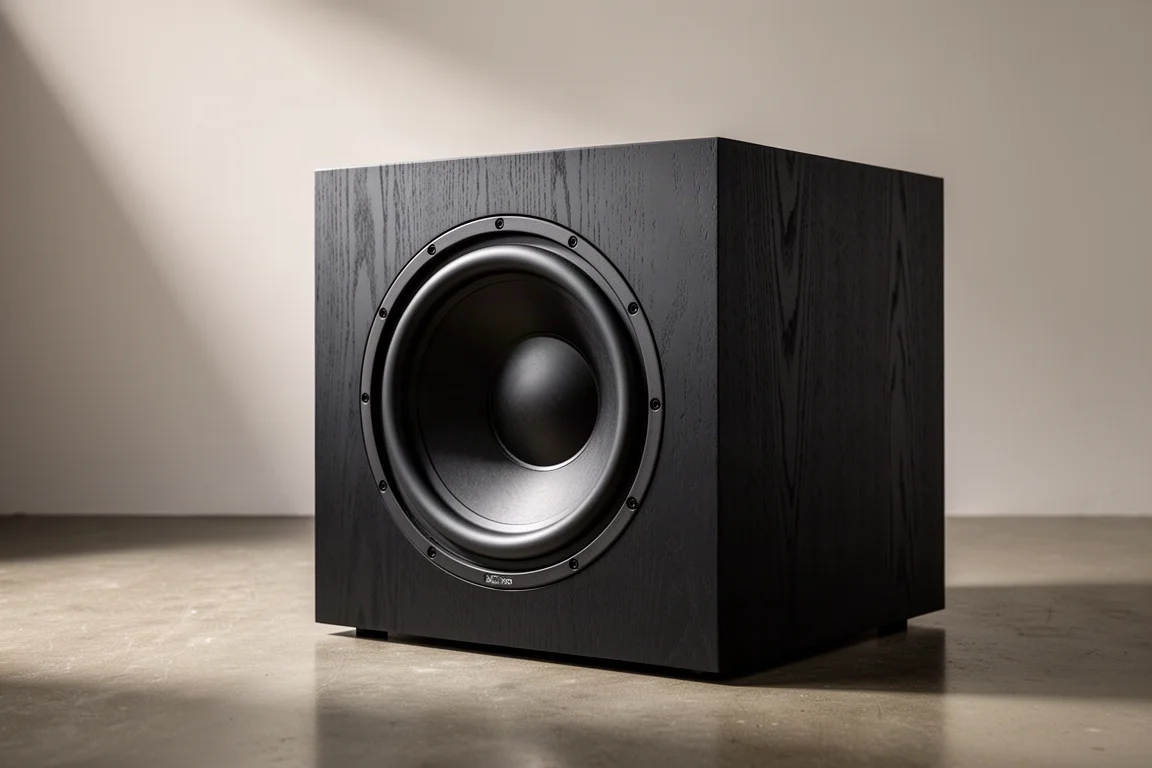
The Ascendo 16 Sub Active Sealed is one of the most compelling products in the current lineup, and it is a good place to start. It sits in the company’s performance tier, it uses a 16-inch driver built in house, and it is designed specifically for the acoustic conditions of a dedicated home theater rather than adapted from somewhere else.
What Ascendo Brings to the Table
In 2014, Jeffrey Heinzel joined Stefan Kock as a co-founding member of Ascendo Immersive Audio, bringing that vision specifically into the dedicated home theater space. For years the company operated more like an R&D firm than an audio brand, working on DSP solutions, acoustic measurement systems, and professional custom work. That engineering foundation turned out to be perfectly suited to high performance home theater.
The product lineup now spans 68 different products, from compact coaxial monitors all the way up to a 100-inch infrasonic subwoofer. The word infrasonic is worth pausing on. Those are frequencies that sit below the threshold of human hearing entirely. You do not perceive them as sound so much as feel them as physical pressure, as the sensation that the room itself is moving around you. Most subwoofer manufacturers do not engineer for that range at all, and Ascendo is one of the very few companies that does it deliberately and seriously.
Transparency is the other part of the story. Every product ships with full spinorama measurement data, clip and distortion reports, and independently verified specifications from a professional third-party European test laboratory. The data is complete, unfiltered, and openly available on every product page, which is rare in this industry and means the numbers you are evaluating are real. Everything is handcrafted in small batches, with every component tested before assembly and again after completion.
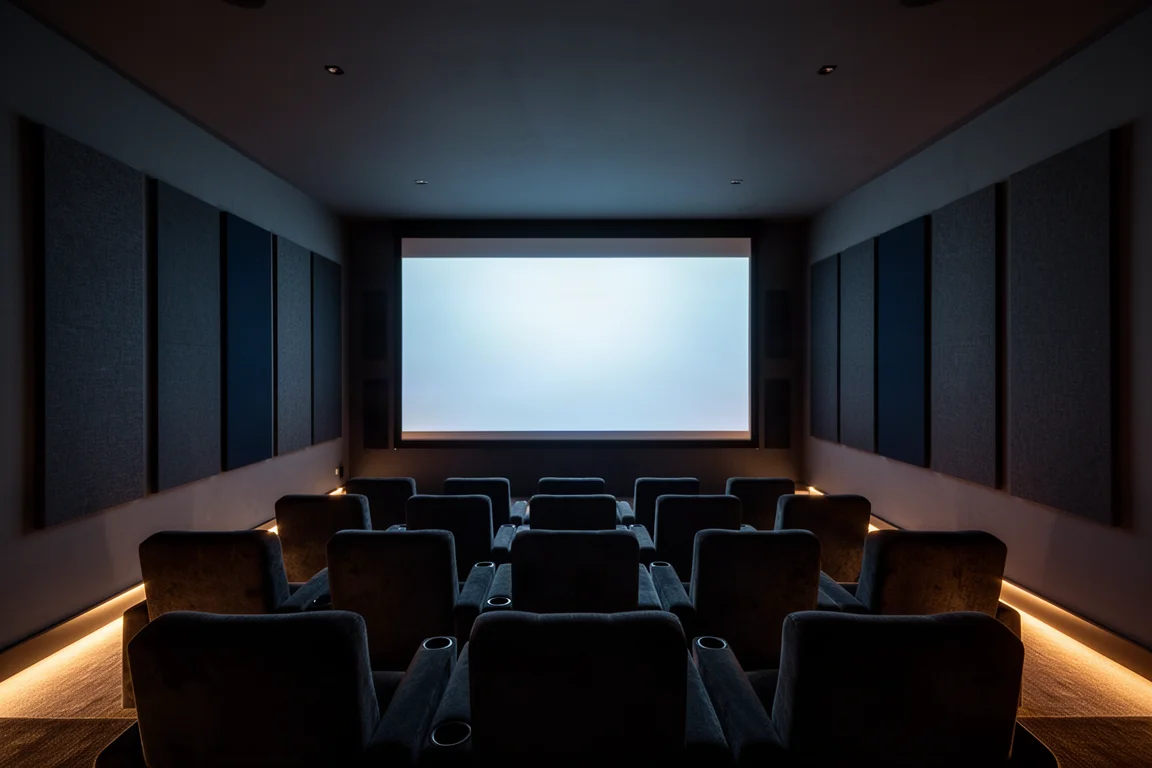
Home theater is a uniquely demanding environment, with its own acoustic challenges around reflections, standing waves, and time domain complexity. Ascendo designed for those conditions from day one. Beyond the technical side, the company’s stated goal is immersion deep enough that the technology disappears, leaving you with the moment of listening rather than an analysis of the gear.
Driver and Cabinet Engineering
Ascendo’s subwoofer lineup runs in two tiers: performance models and pro models. The 16 Sub Active Sealed sits in the performance tier, while the pro tier is where the more application-specific and externally amplified products live. There is also a pro passive version of the 16-inch driver for listeners who want to run their own external amplification, but for most people looking for an all-in-one solution, the active model is the one to consider.
Ascendo already had a strong following for the 12 Sub Vented, and customers were asking for more output, more extension, and more impact. Rather than simply building a bigger ported subwoofer, the company deliberately went sealed. A ported design uses a tuned port to extend low-frequency output, which can deliver more apparent bass at certain frequencies. The trade-off is that below the port tuning frequency output drops off steeply, and the port itself can introduce a slight overhang or blurring on fast transients. A sealed design rolls off more gradually and more predictably, which makes it easier to control with room correction software. More importantly, it is faster: the cone stays more tightly controlled by the amplifier at all times, so transients start and stop more cleanly. That is why sealed designs tend to sound more articulate on music and more precise on fast sound effects.
The catch is that sealed enclosures are harder to get right. There is no port to provide a low-frequency boost, so the driver and amplifier have to do more of the work, and going sealed with a 16-inch driver in a compact cabinet runs straight into Hoffman’s Iron Law: you can optimize for small enclosure size, deep bass extension, or high efficiency, but not all three at once. Ascendo’s answer was to build the driver from the ground up around those exact constraints.
The surround, the flexible ring around the edge of the cone, uses a narrow but extremely high roll design. In a smaller cabinet there is less physical space for cone movement, which makes it harder to get long travel without losing control, and getting a cone to travel far accurately in a tight space takes serious engineering. The cone itself is a triple-layer sandwich construction with a Rohacell core. Rohacell is a rigid foam originally developed for aerospace applications: stiff enough to be driven hard without flexing or introducing distortion, and light enough to start and stop quickly. The motor system uses a 3-inch voice coil, larger than the 2-inch coils found in most competitors, which means better heat dissipation and more linear behavior under heavy drive. That enables 20 mm of Xmax in each direction and 40 mm of total linear travel, with the voice coil staying within a homogeneous magnetic field across the entire range of motion. The maximum linear air volume displacement is 4.4 liters, the real measure of a subwoofer’s mechanical output capability: cone area multiplied by excursion.
The enclosure is high-density fiberboard, stiffer and denser than standard MDF, finished in clean black ash vinyl. It measures 20.5 inches wide, 19.1 inches tall, and 17.3 inches deep, with a total weight of 102 pounds. For a 16-inch sealed subwoofer with this level of output capability, that is a manageable footprint.
Connections and Setup Flexibility
Around the back you get two RCA line inputs, a balanced XLR input and output for LFE, a variable low-pass crossover from 50 to 150 Hz on the RCA path, variable phase from 0 to 180 degrees, a gain control, and auto sense for power management.
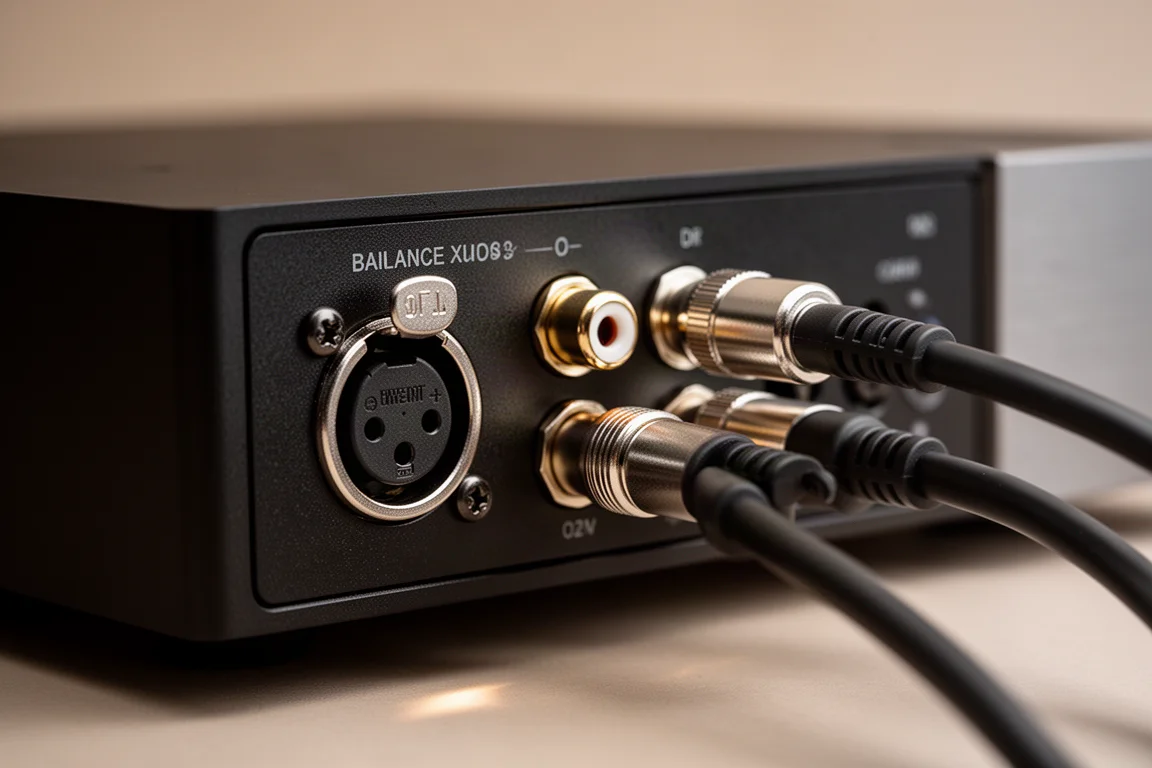
One detail worth understanding is how the two signal paths differ. The XLR LFE path is full range with no internal crossover applied, which means your AV processor or receiver handles all bass management. That is the ideal signal path for anyone running Dirac Live, Audyssey, or another external room correction system, with no double processing and no interference from calibration software. The RCA path, however, runs through the subwoofer’s internal crossover, and there is no way to bypass it. If your receiver only has RCA subwoofer outputs, which covers a lot of mid-range AVRs, you will need to be deliberate about coordinating crossover settings between the receiver and the subwoofer to avoid conflicts. It is not a deal breaker, but it does mean this subwoofer rewards being paired with a processor or receiver that offers balanced XLR outputs.
Real-World Performance
The driver, amplifier, and power supply working together produce a verified peak output of 125 dB. Frequency response is rated down to 20 Hz with the DSP engaged. Rather than leaving that number hanging, Ascendo also publishes verified measured data from the official data sheet: 35 Hz at -3 dB and 23 Hz at -12 dB, both without any DSP assistance. That -3 dB point of 35 Hz tells you the driver has real natural extension before any electronic processing is applied, and the DSP is doing modest work to reach 20 Hz rather than papering over a driver that runs out of steam at 50 Hz.
That is only apparent because of how Ascendo measures. Most manufacturers test in room, where boundary reinforcement from walls and floors adds anywhere from 6 to 12 dB of apparent bass output, and some do not specify their test conditions at all. Ascendo measures anechoically in half space, with no room gain and no tricks, just the driver performing on its own. Output testing uses short sine wave bursts rather than continuous tones, which more accurately reflects real-world use in music and film, and all of it is done by an independent third-party lab rather than in house. The result is that the published figures may look conservative next to some competitors, but in your actual room you should do meaningfully better than those baseline numbers.
In listening, the 16 was evaluated in two very different environments: a home theater lab of roughly 20 by 25 feet with 9-foot ceilings, running a 16-channel surround processor with a 7-channel power amplifier and Dirac Live handling room correction, and a smaller dedicated listening room of about 16 by 24 feet with the same ceiling height, running a different processor with Dirac Live. On the music side, a track with a significant beat drop around 4 minutes 55 seconds made the subwoofer’s speed immediately obvious. It hits hard, stops cleanly, and fills the room without ever feeling bloated or one note, which is not something to take for granted at this output level. Powerful and musical at the same time.
For film material, jet speed and movement came through with real precision, tight and physical in a way that reinforced what was happening on screen rather than simply adding volume. Deep, powerful low end during sustained chase sequences arrived on demand, and the subwoofer handled it without any strain. Across both rooms the consistent takeaway was the same: powerful and controlled. The sealed design behaves differently from a ported subwoofer in terms of how clean and defined the bass stays under pressure.
Placement, Calibration, and Dual Subwoofers
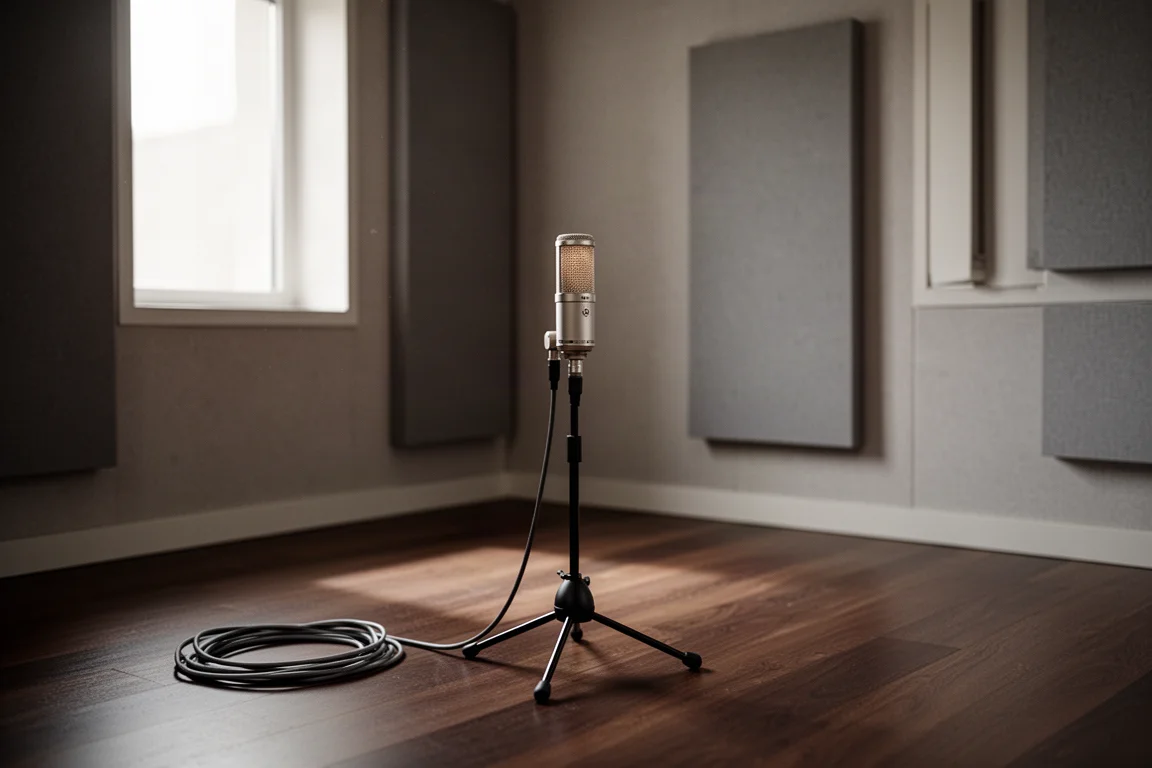
Placement and calibration can make an enormous difference with any subwoofer, including this one. Where the cabinet sits in the room and how it is integrated with room correction will shape the result at least as much as the hardware itself, so it is worth treating both as part of the purchase rather than an afterthought.
If your room and budget allow, running dual 16-inch subs is worth serious consideration. Two subwoofers do not just add output headroom, although they certainly do that. They also dramatically improve in-room bass smoothness. A single subwoofer excites room modes unevenly, which can leave certain seats with too much bass while others get too little. Two subs positioned correctly average out those modes and produce a flatter, more consistent response across all seats. With the output capability of the 16, a stereo pair has enough headroom for even some genuinely large dedicated theaters.
Things to Consider Before Buying
A sealed design is a deliberate trade. You give up the low-frequency boost a port provides, so the driver and amplifier do more of the work and the design leans on engineering rather than cabinet tuning to deliver output. If you are used to the looser, bigger-sounding presentation of a ported subwoofer, this will feel different, and that difference is the point.
The RCA path cannot be bypassed. If your receiver only has RCA subwoofer outputs, you will need to coordinate crossover settings carefully between the receiver and the subwoofer. The XLR LFE path is the cleaner route and the one that plays best with external room correction.
Placement and calibration matter enormously here. The measured figures are conservative by design because they are anechoic and exclude room gain, but that also means the final result depends heavily on how the subwoofer is integrated into your room.
At 102 pounds and roughly 20.5 by 19.1 by 17.3 inches, this is a substantial cabinet. Plan the delivery route and the final position before it arrives.
Finally, the recommended configuration for the smoothest in-room bass is a pair of subs, which doubles the cost and the footprint. A single unit remains a serious performer, but it is worth knowing that the best-case result assumes two.
Buying Advice
This subwoofer makes the most sense for anyone building or upgrading a serious home theater, a two-channel music system, or a system that serves both, and who wants bass that is as accurate as it is powerful. Ascendo brings real engineering discipline, independent measurement backing, and a product purpose-built for the environment it will live in rather than adapted from somewhere else.
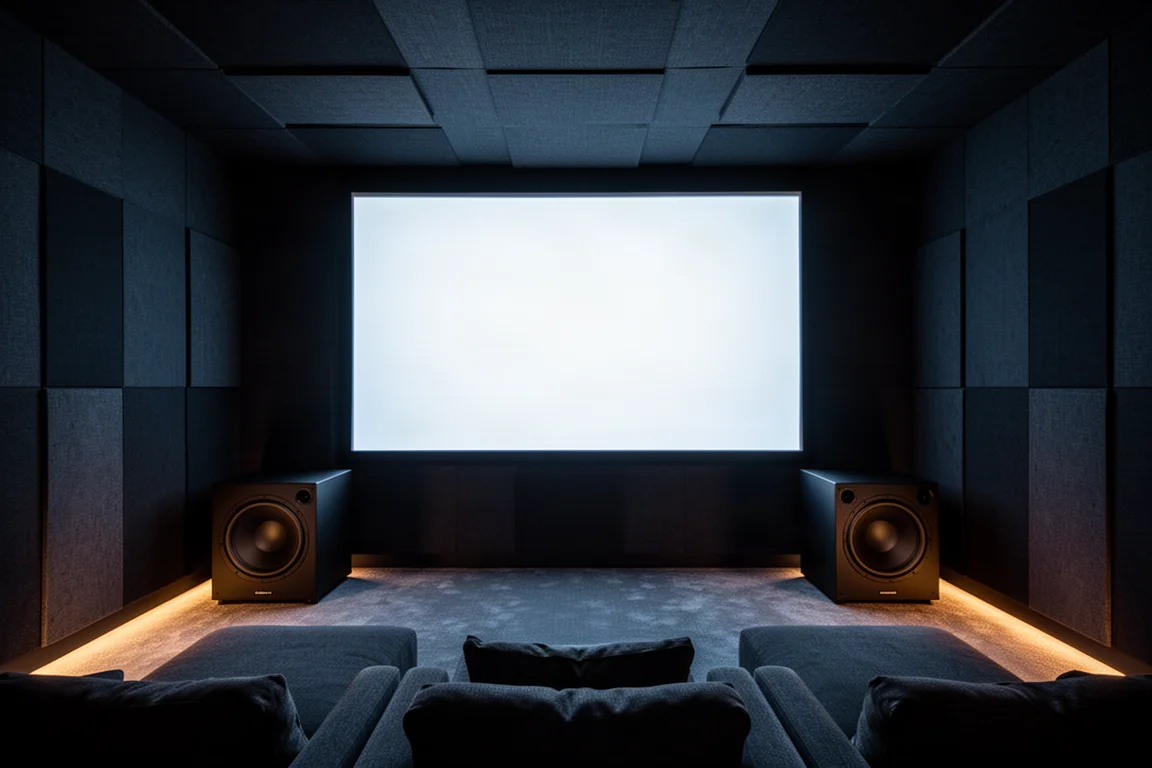
If your processor or receiver offers balanced XLR outputs, the 16 Sub Active Sealed is at its best, because the LFE path stays full range and your room correction software handles all bass management without interference. If you are limited to RCA subwoofer outputs, the subwoofer still works well, but take the time to align crossover settings between the two devices.
Because placement and calibration drive so much of the final result, buying from a source that can help with setup is genuinely valuable here. If a pair is possible in your room, plan for two from the start rather than adding a second unit later, since the improvement in seat-to-seat consistency is the kind of change that is hard to give up once you have heard it.
Conclusion
The Ascendo 16 Sub Active Sealed is a purpose-built answer to a hard engineering problem: how to deliver deep, powerful, tightly controlled bass from a sealed 16-inch cabinet without the low-frequency boost a port would provide. The answer lies in a driver developed in house, with a high roll surround, a Rohacell-cored sandwich cone, a 3-inch voice coil, and 40 mm of total linear travel, backed by verified measurements published openly rather than in room figures that flatter the spec sheet.
In practice it is fast, articulate, and genuinely physical, handling demanding music and dense film soundtracks without strain in both a large home theater room and a smaller dedicated listening room. It asks for thoughtful placement, careful calibration, and ideally a balanced XLR connection, and it rewards all three. For listeners who want bass that is as accurate as it is powerful, and who value being able to see the engineering behind the numbers, this one belongs on the short list.
Product link
View more details for Ascendo 16 Sub Active Sealed
This product is mentioned in the review. Check the specifications, options, and compatibility before buying.
View more details for Ascendo 16 Sub Active SealedFurther reading
Related Reviews
Subwoofers
Arendal 1961 Subwoofer 1S Review: Beautiful Build, Modest Punch at $1,000
A sealed $1,000 subwoofer with a gorgeous cabinet, plus three lower-priced alternatives that deliver more impact for movie nights.
Subwoofers
Arendal Sound 1723 2V Subwoofer Review: Dual 13.8-Inch Drivers Under $3,000
A flagship ported subwoofer with dual opposing 13.8-inch drivers, a 1,200W RMS amplifier, app-based DSP, and a 10-year warranty.
Subwoofers
Best Compact 8-Inch Subwoofers: JL Audio Dominion D108, SVS 3000 Micro, and Monoprice THX 8
Three compact 8-inch subwoofers compared on low-frequency extension, group delay, and output capability, with practical notes on crossover and placement.