Subwoofers
Arendal Sound 1723 2V Subwoofer Review: Dual 13.8-Inch Drivers Under $3,000
A flagship ported subwoofer with dual opposing 13.8-inch drivers, a 1,200W RMS amplifier, app-based DSP, and a 10-year warranty.
Introduction
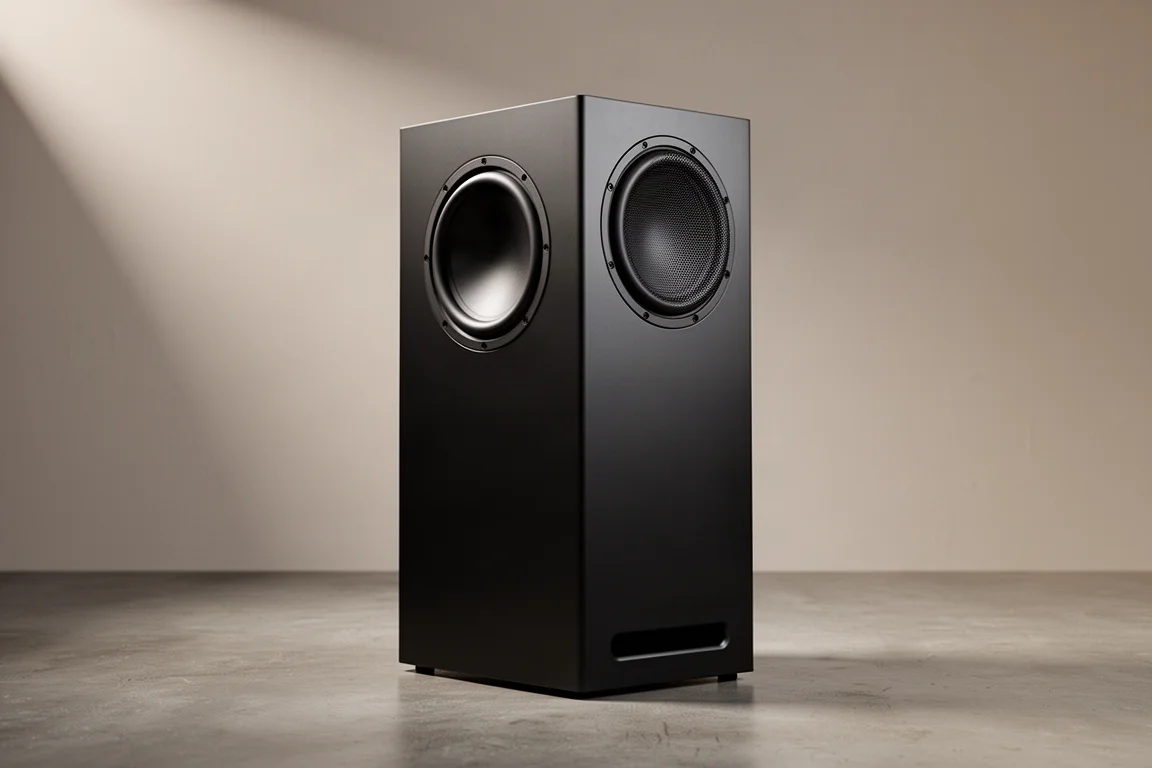
Most subwoofers force a choice between raw output and composure. The Arendal Sound 1723 2V takes a different route. It is the brand’s flagship powered subwoofer, built around two 13.8-inch drivers mounted on opposite sides of a slot-ported cabinet, driven by a 1,200W RMS Class D amplifier, and controlled through an on-screen display and a phone app.
It retails for under $3,000 with free shipping, and premium finish options add $100. That combination of driver size, amplifier power, and app-based tuning is unusual at this price, and it is the main reason this subwoofer is worth a close look before you commit to anything else in the same bracket.
Who This Subwoofer Is For
This is a subwoofer for listeners who want deep, clean output in a room that can support it. The dual opposing driver layout, the substantial amplifier, and the parametric EQ make it a natural fit for a dedicated home theater or a large living room where a single smaller subwoofer has already run out of headroom.
It also suits people who enjoy tuning by measurement rather than by ear alone. The app exposes frequency, Q, and gain for a seven-band parametric equalizer, so you can target a specific room peak instead of accepting whatever the room hands you.
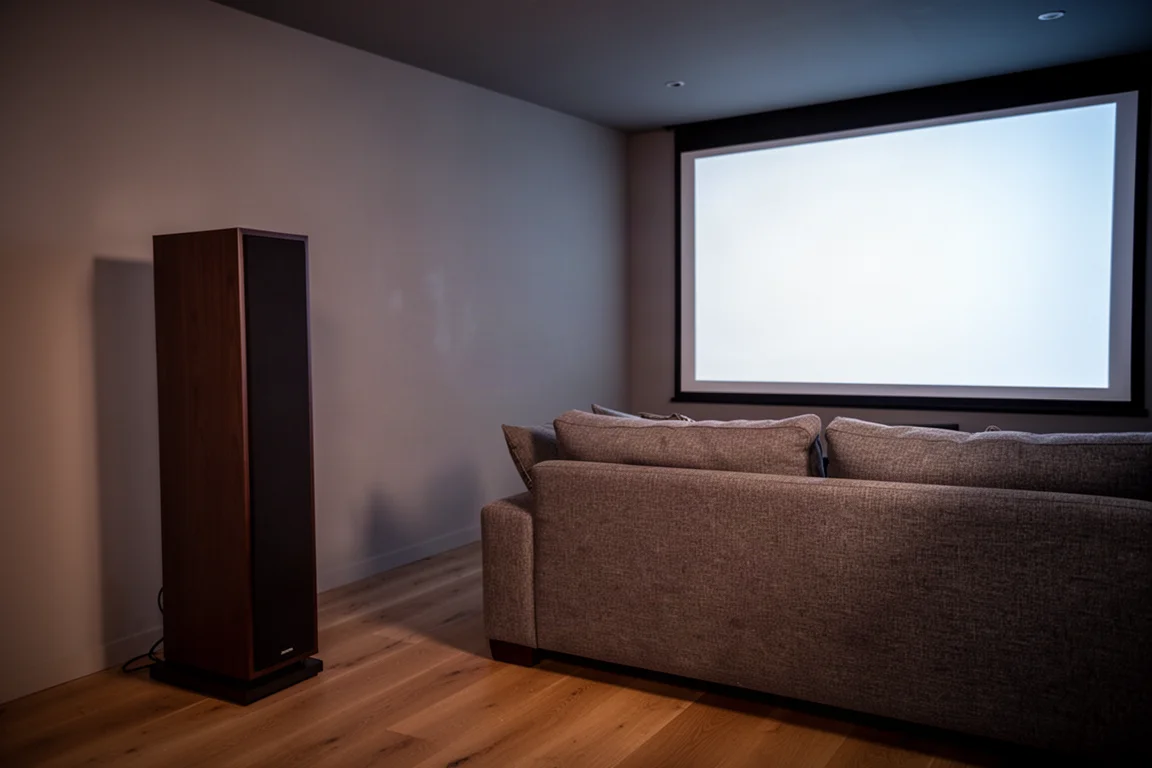
It is not the obvious pick for a small apartment or a desktop setup. The cabinet is large and heavy, and the output on tap is far more than a compact room needs. Buyers who simply want a discreet box that disappears into a corner will find better matches elsewhere.
Main Strengths
Three areas stand out: the cabinet and driver design, the amplifier and control system, and the measured behaviour that ties them together.
Dual Opposing Driver Design
The cabinet is built from HDF, a denser material than the MDF used in most speakers, and it is heavily braced throughout. It feels substantial and solid, and the satin and matte finishes have a premium, furniture-grade quality.
Mounting the two drivers on opposing sides is the key decision. Because the drivers move in opposite directions, the majority of cabinet vibration is cancelled rather than transmitted into the room and into the floor. The practical effect is a cabinet that stays calm even under heavy playback, stable enough that a drink placed on top will not slide off when the system is working hard.
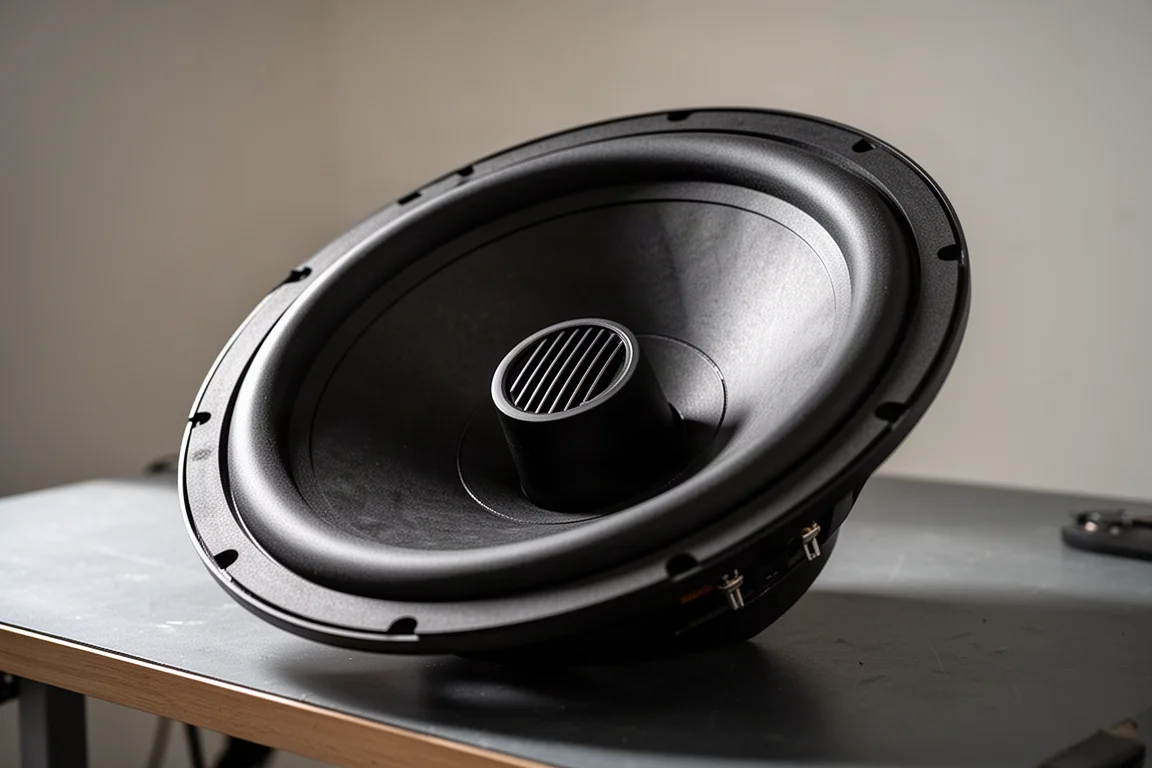
Each driver uses a long-throw motor with a vented pole piece, visible once you look inside the cabinet. That is serious hardware for this price class, and it is the foundation for the output figures discussed below.
Amplifier and App Control
The 1,200W RMS Class D amplifier is paired with a slot port and a full digital signal processing stage. Connectivity is generous: dual RCA inputs, dual XLR inputs, and dual XLR outputs. Each input can be configured independently, so the subwoofer can run in one configuration from an RCA input and a completely different one from an XLR input. On an AV receiver with multiple subwoofer outputs, that means separate stored presets without reworking the DSP each time.
The seven-band parametric equalizer removes the need for an outboard equalizer. You can adjust frequency, Q, and gain on the fly through the app, and the DSP can be applied across a group of subwoofers as well as to individual units. The on-screen display handles the same adjustments on the cabinet itself, and the app mirrors that interface on your phone.
Measured Performance and Integration
The manufacturer publishes its own CEA-2010 test data and frequency response graphs, and independent measurements landed within two to three dB of those published numbers. That kind of agreement is uncommon, since results shift with the microphone, the setup, and even the conditions on the day. Publishing accurate data and then matching it is a good sign that the specification sheet reflects reality.
In practice the response is linear and flat out to 100 Hz, which makes the subwoofer straightforward to blend with smaller bookshelf speakers or to run as a stereo pair beneath full-range mains. Long-term output sweeps stay linear with very low distortion, and group delay sits well under one cycle. Ported designs typically drift beyond a cycle below their tuning frequency, so staying inside that window matters: it is what keeps bass sounding tight and integrated instead of slow or bloated.
Protection circuitry also holds up under abuse. The subwoofer resists being pushed into ugly noises such as port chuffing, driver bottoming, or amplifier distortion, and it stays cool while doing it.
Things to Consider Before Buying
The strengths are clear, but a purchase at this level deserves a hard look at the practical side.
Size, Weight, and Placement
This is a big, heavy cabinet. The saving grace is its shape: because the drivers sit on the sides, the enclosure is a tall, slim rectangle rather than a wide cube, which makes it easier to tuck beside a sofa, a media unit, or a wall.
You will still need to plan for it. The drivers fire sideways, so the subwoofer needs clearance on both flanks, and the cabinet should not be wedged into a tight alcove that traps the side-firing output. Room correction software and the built-in parametric EQ will handle the worst peaks, but no amount of DSP fixes a placement that blocks the drivers.
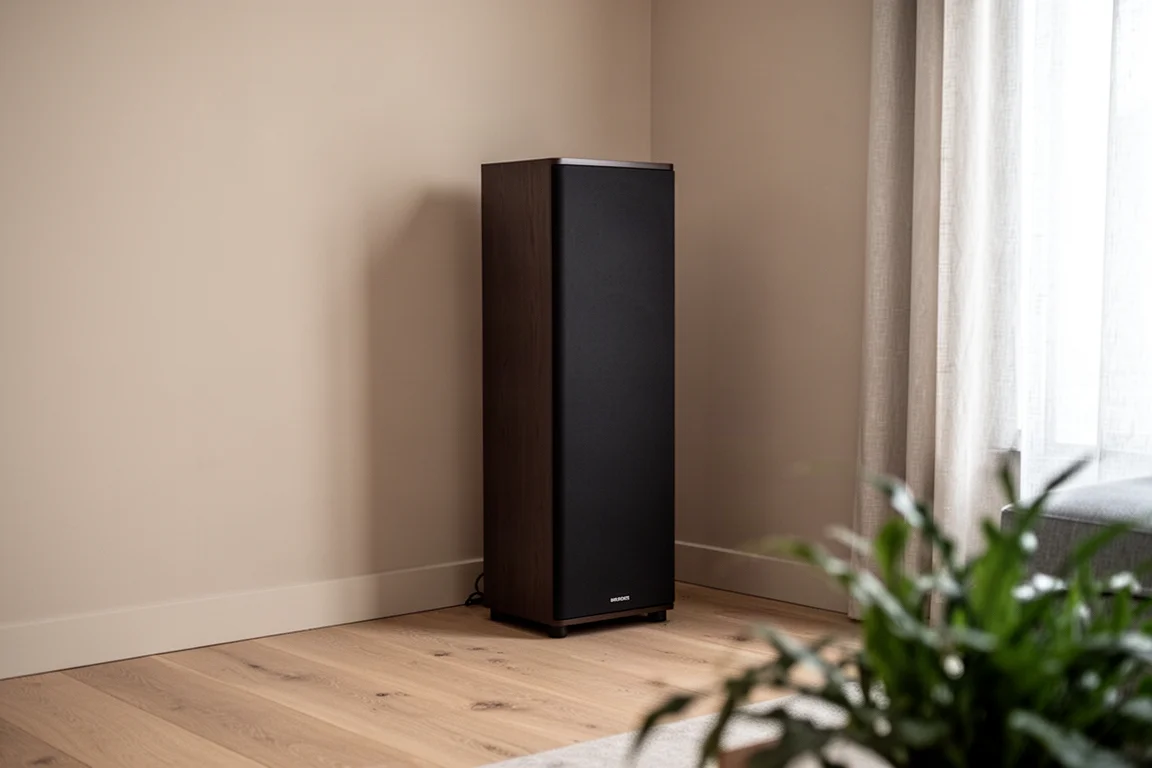
One more detail worth knowing: the brand’s speakers carry THX certification, while this subwoofer does not. The likely reason is licensing cost rather than capability, and the published output data suggests the hardware would meet or exceed those criteria anyway. If a THX badge is a requirement for you, factor that in.
Amplifier and App Control Caveats
The control system is deep, and depth cuts both ways. Buyers who want a subwoofer they can plug in and forget may find the parametric EQ, independent input configurations, and subwoofer grouping options more than they need. The flip side is that anyone willing to spend an evening with a calibrated microphone and measurement software can extract meaningfully better results from the same cabinet.
Buying Advice
Matching It to Your Room and System
The value case rests on more than the hardware. Free shipping applies, the warranty runs for 10 years, and the return window is 60 days, which is generous for a product this heavy and this dependent on room interaction.
That return policy matters more here than it would on a small speaker. Subwoofer performance is inseparable from the room, and 60 days gives you time to measure, tune, and confirm the subwoofer integrates with your mains before you commit. Pair it with a receiver that offers multiple subwoofer outputs and you can take full advantage of the independent input configurations.

If you are building a system around a matching speaker package, this subwoofer is designed to sit at the bottom of one. The linear response up to 100 Hz means it will not fight your mains at the crossover point, and the low group delay keeps the transition between subwoofer and speakers free of audible overhang.
Conclusion
The Arendal Sound 1723 2V is a serious flagship subwoofer at a price that undercuts most of its direct competition. Dual opposing 13.8-inch drivers, a 1,200W RMS amplifier, a braced HDF cabinet, app-based seven-band parametric EQ, and honest published measurements make it a strong choice for anyone with the room and the inclination to set it up properly.
The trade-offs are equally clear. It is large and heavy, it rewards buyers who are willing to measure and tune, and it does not carry a THX badge. If your space can accommodate a tall, slim cabinet and you want deep, controlled output with a decade of warranty coverage behind it, this subwoofer deserves a place on your shortlist.
Product link
View more details for Arendal Sound 1723 2V Subwoofer
This product is mentioned in the review. Check the specifications, options, and compatibility before buying.
View more details for Arendal Sound 1723 2V SubwooferFurther reading
Related Reviews
Subwoofers
Arendal 1961 Subwoofer 1S Review: Beautiful Build, Modest Punch at $1,000
A sealed $1,000 subwoofer with a gorgeous cabinet, plus three lower-priced alternatives that deliver more impact for movie nights.
Subwoofers
Ascendo 16 Sub Active Sealed Review: Sealed Bass Built on Real Engineering
A close look at the Ascendo 16 Sub Active Sealed, a 16-inch sealed home theater subwoofer with independently verified measurements, a purpose-built driver, and genuinely controlled output.
Subwoofers
Best Compact 8-Inch Subwoofers: JL Audio Dominion D108, SVS 3000 Micro, and Monoprice THX 8
Three compact 8-inch subwoofers compared on low-frequency extension, group delay, and output capability, with practical notes on crossover and placement.