Bookshelf Speakers
SVS Prime Bookshelf vs SVS Ultra Bookshelf: Which Speaker Suits Your System?
A practical comparison of two SVS bookshelf speakers covering tonality, sensitivity, bass limits, distortion, placement, and the amplification each one really needs.
Introduction
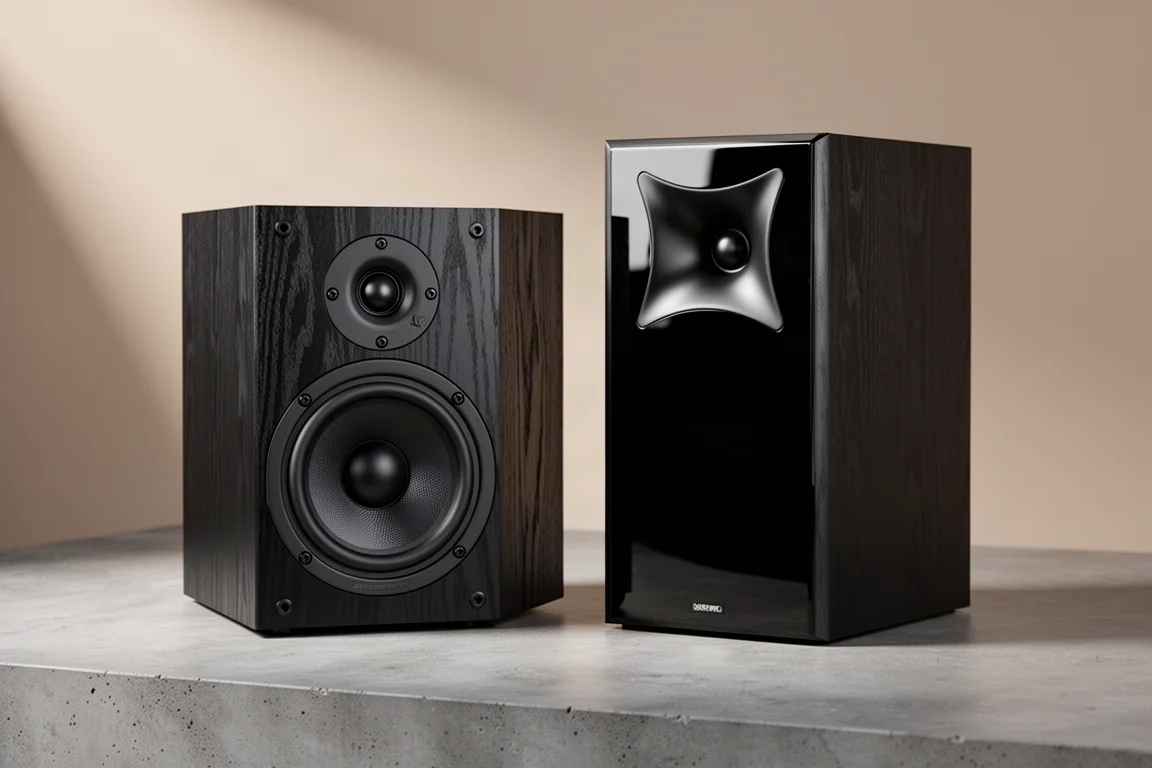
The SVS Prime Bookshelf and the SVS Ultra Bookshelf look like siblings from the same family, and in many ways they are. Both are two-way designs built around a 6.5-inch midwoofer and a 1-inch dome tweeter. The differences show up in the cabinet size, the price, and above all in how each one shapes the sound.
The Prime Bookshelf sits in the roughly $599 to $699 range, while the Ultra Bookshelf costs around $1,199. That gap raises an obvious question: what does the extra money actually buy? The short answer is tonality. The Ultra is the more linear speaker of the two, and the Prime leans brighter and more forward. Whether that difference is worth the price depends on your room, your amplifier, and whether you plan to run a subwoofer.
This comparison takes a measured, practical angle on both speakers: frequency response, sensitivity, impedance, bass limits, distortion at higher volumes, and the placement work each one needs to sound its best.
What These Two SVS Bookshelf Speakers Have in Common
Both speakers use a two-way configuration with a 6.5-inch midwoofer and a 1-inch dome tweeter, and their basic specifications land close together. Sensitivity is about 87 dB for the Prime and about 87.8 dB for the Ultra, so neither one is dramatically easier to drive than the other. Their F3 and F10 figures are also reasonably close, which means the low-frequency behaviour of the two designs is more similar than the price gap might suggest.
Both designs are also older than their current listings might imply. They are not recent refreshes, and their engineering predates the heavier emphasis on measurement-driven design that has shaped more recent speaker releases. That context matters when reading the data: what you see here is what the speakers were designed to do, not a snapshot of a brand new platform.
Two more shared traits are worth noting. First, both speakers radiate widely, so they need a room that can handle a lot of reflected energy. Second, both want a subwoofer. Neither is built to deliver deep bass on its own.
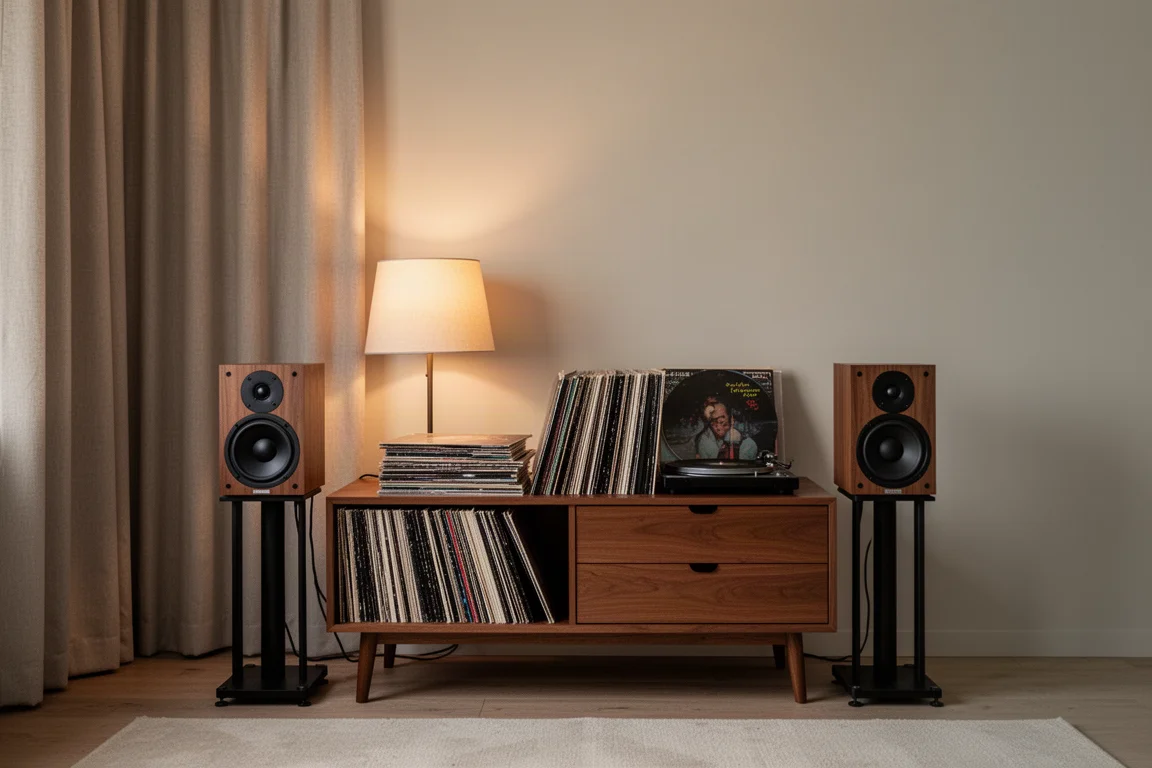
That combination of wide radiation and limited bass extension shapes almost every recommendation in this comparison. The speakers reward a little setup work, and they ask for a room and a system that can support them.
SVS Prime Bookshelf: Brighter and More Forward
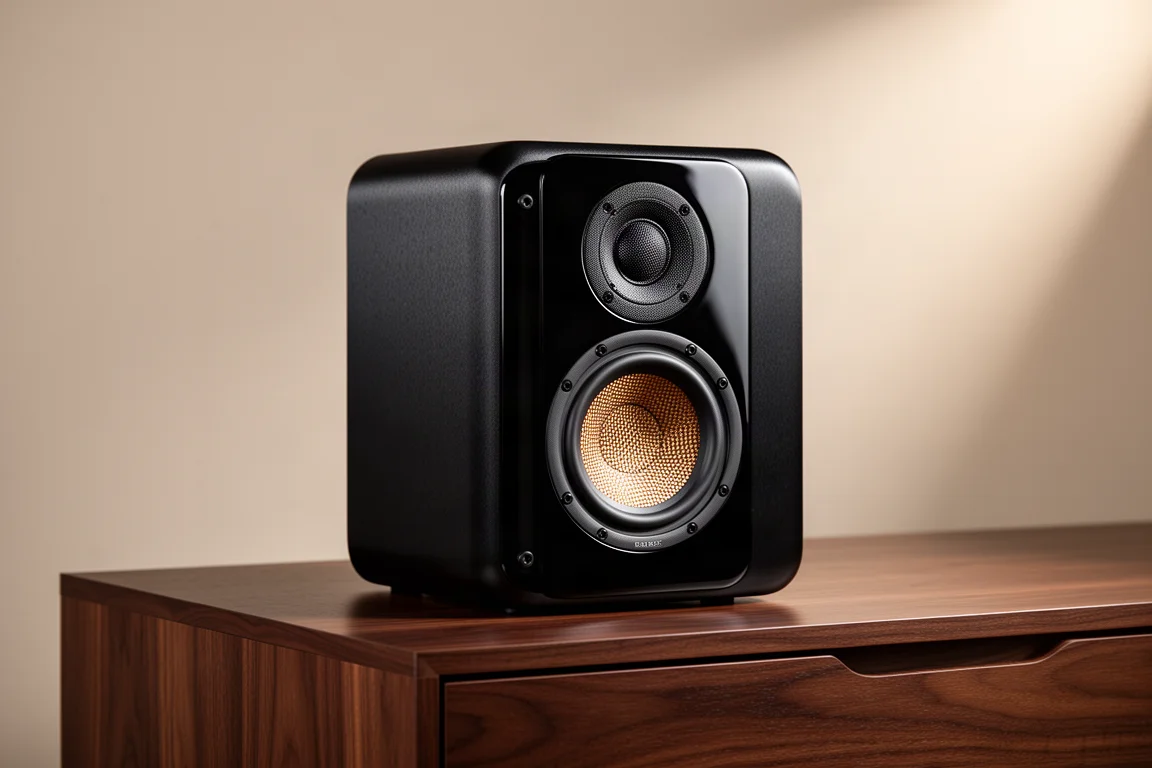
The Prime Bookshelf has a distinctive character: a forward, bright upper midrange and lower treble, sitting above a midrange that sounds noticeably scooped out. Measured response stays within roughly plus or minus 3 dB for the most part, but the shape of that response explains the impression. There is extra energy through the upper midrange, a dip in the treble around 4 to 5 kHz, and a relative recess in the middle.
The result is a speaker that can sound a little tinny, especially with material that already leans bright. The brightness is relative, of course, and the same measurement can be read two ways: either the upper midrange is boosted, or the midrange is pulled back. The second reading matches what the response curve shows.
On the amplifier side, impedance stays above about 4 ohms for most of the range, though the EPDR dips below that in places. That means a 4-ohm stable amplifier is the sensible requirement, and a separate power amplifier is a safer bet than an AVR. There is also a resonance around 250 Hz worth knowing about.
Bass extension is limited. The F3 sits at 69 Hz and the F10 at 48 Hz. Because the F10 is only about 20 Hz below the F3, the roll-off is not especially gradual, and a 50 Hz kick drum will not carry much weight. A subwoofer crossed over around 80 Hz is the practical solution.
There is also some diffraction and crossover-related behaviour in the upper midrange and treble that cannot be equalized out, which matters more in reflective rooms.
SVS Ultra Bookshelf: The More Tonally Neutral Design
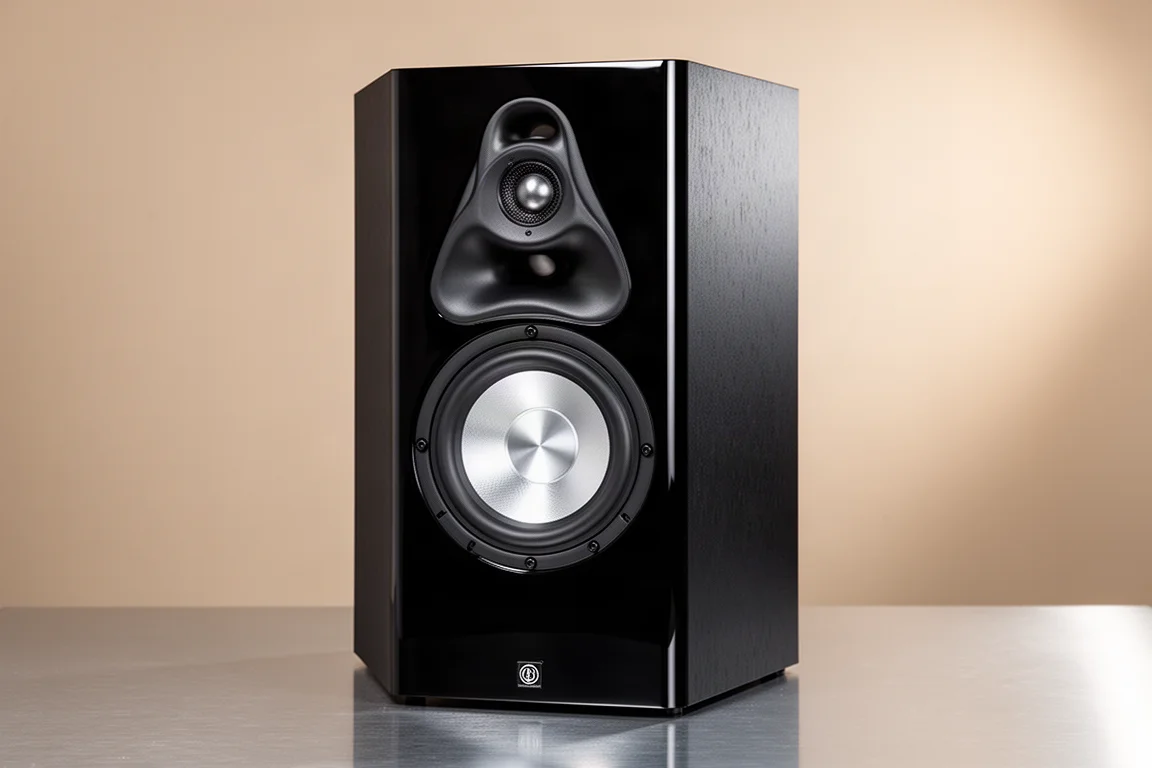
The Ultra Bookshelf is the more linear speaker by a clear margin. Its response is more even, averaging roughly minus 3 dB to plus 1.5 dB, and it produces a touch more output than the Prime. The midrange is not scooped in the same way, so voices and instruments hold their body instead of sitting behind a bright top end.
That does not make it perfectly neutral. There is still a somewhat boosted upper midrange, and to a lesser degree a lifted midrange, though the effect is milder than on the Prime. The pattern looks as though it could be related to baffle step behaviour combined with a tweeter level set a little low, which pushes the mix forward and can add a slight thinness in the upper midrange.
Directivity is smoother on the Ultra, helped by the vertical relationship between the midwoofer and the tweeter above it. Horizontally there is still some degradation in the directivity index, but less than on the Prime. Two diffraction features remain, one around 3 kHz and another between 6 and 7 kHz, and neither can be corrected with equalization. In a highly reflective room, those are the details most likely to draw attention.
In listening terms, the Ultra shows a minor midrange scoop, far less pronounced than the Prime, and a high-frequency region that stays within reason. A small bump around 3 to 4 kHz relative to 1 to 2 kHz can make it sound a little bright on axis in an untreated room, which is where toeing the speakers out comes in.
Sensitivity, Impedance, and Amplifier Demands
Sensitivity is close between the two: about 87 dB for the Prime and about 87.8 dB for the Ultra. Neither speaker is unusually efficient, so a modest amount of amplifier power goes a reasonable distance, but neither one will flatter a weak amplifier.
Impedance behaviour is the more important consideration. Both speakers stay above roughly 4 ohms for most of their range, with EPDR dipping below that in certain regions. The practical conclusion is the same for both: use an amplifier that is comfortable with a 4-ohm load. An AVR may manage in a smaller room at moderate levels, but a separate power amplifier is the more reliable choice. SVS maintains a customer service department that can advise on specific amplifier requirements, which is worth using if you are unsure about your current setup.
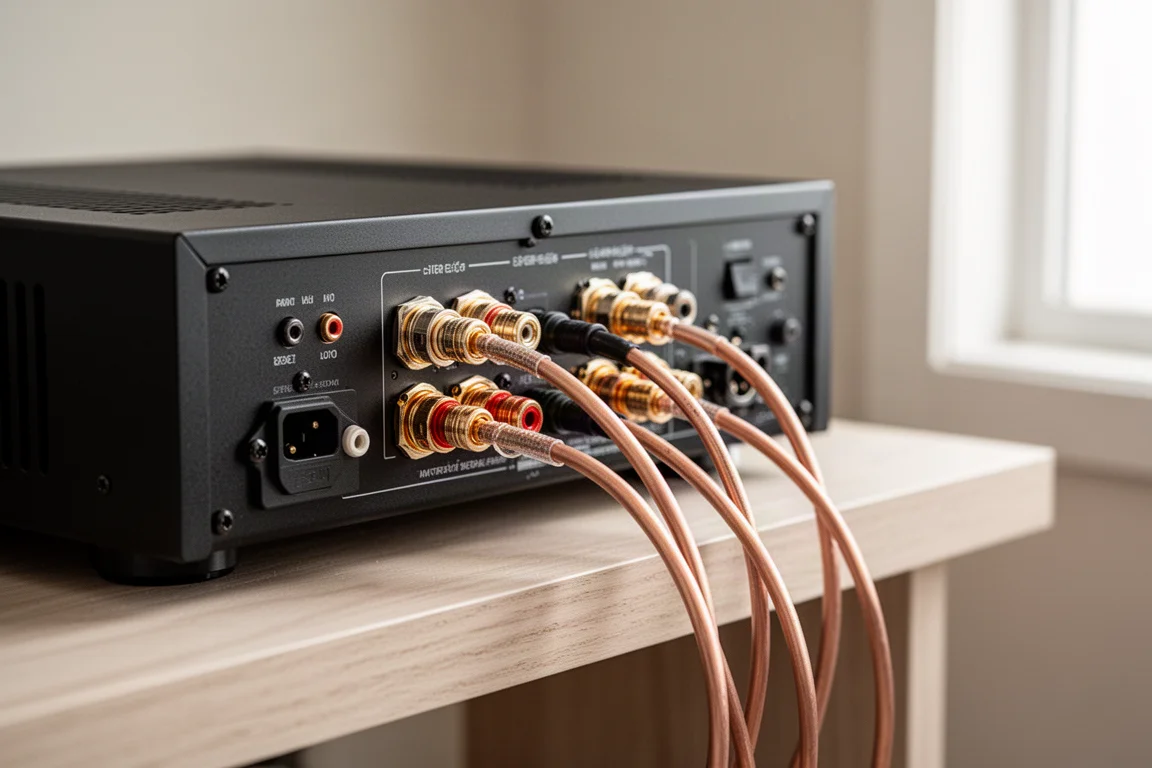
If you listen at higher volumes, or if your amplifier is rated only into 8 ohms, the impedance dips are the place where a system is most likely to struggle.
Bass Extension and Subwoofer Integration
The Prime’s F3 lands at 69 Hz with an F10 at 48 Hz, and the Ultra’s figures are close. On its own, an F3 number does not tell you much, because the shape of the roll-off matters just as much. An F3 at 69 Hz paired with an F10 far lower would suggest a gentle slope and usable output well below the F3. Here the F10 is only about 20 Hz below the F3, so the roll-off is comparatively steep and the deep bass simply is not there.
That is a deliberate trade-off. SVS builds a large range of subwoofers, and these bookshelf models are not designed to reach down to 40 Hz at the cost of sensitivity. Instead, they keep sensitivity near 87 dB and leave the low end to a subwoofer. Crossing them over at the typical 80 Hz point is the recommended approach, and it also reduces distortion. For the Ultra, crossing at 80 Hz clearly lowers midrange distortion. For the Prime, the improvement is smaller.
If you already own a capable subwoofer, this is not a drawback. If you were hoping to run either speaker full range in a two-channel system without one, expect limited weight in the bottom octaves.
Distortion and Compression at Higher Volumes
At 96 dB, the Prime shows some higher-order distortion in the midrange, which suggests a design that could benefit from refinement in that area. Whether it is audible depends on the material and the level, but it is worth knowing about. Both speakers keep distortion well controlled down to about 60 Hz.
Multi-tone distortion looks reasonably good on both. The Prime does not reach 3 percent until around 800 Hz, and there is some ringing in the 3 to 4 kHz region. The Ultra tells a similar story, with low distortion overall and nothing that stands out as a serious concern.
Compression is a wash between the two. At reasonable output levels, both perform well. Push a pair to 102 dB at three meters in a room and both begin to show non-linearity, and the Ultra is marginally worse in some respects. Neither speaker can play extremely loud without a subwoofer handling the low end.
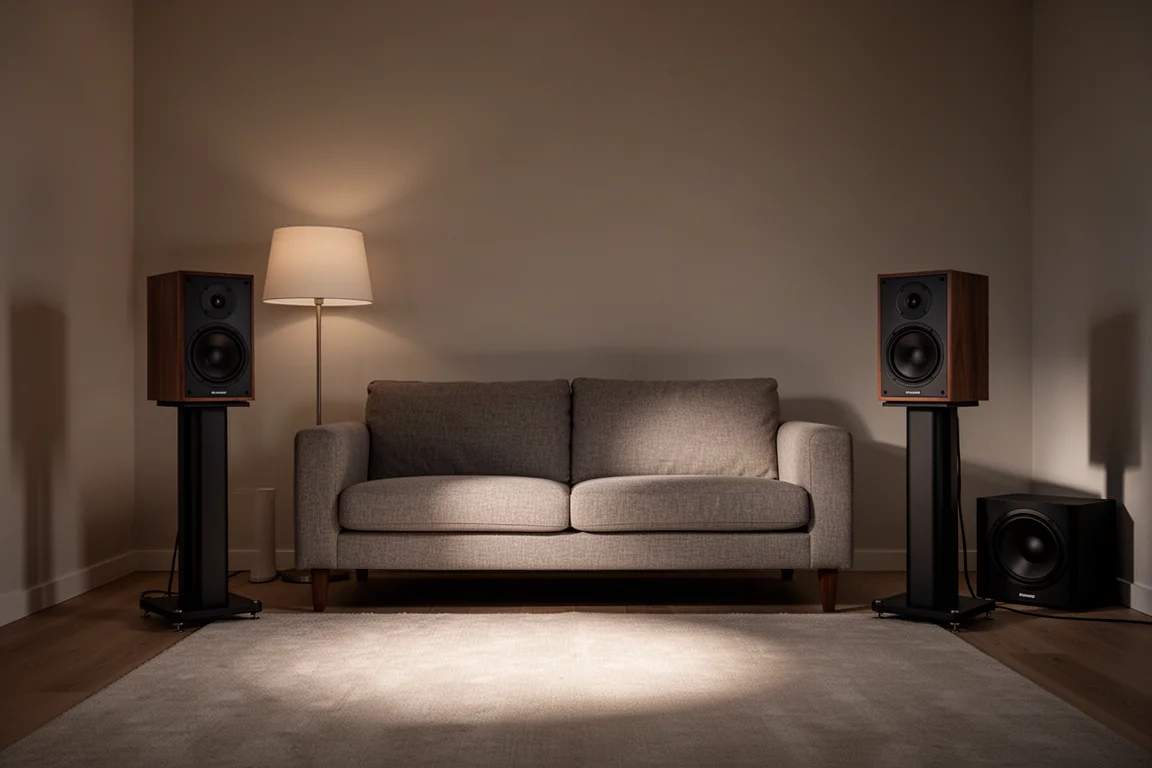
The takeaway is not that either speaker is fragile, but that both are happiest when the bass is offloaded to a subwoofer and the volume stays within sensible limits.
Placement, Toeing, and Room Treatment
Both speakers radiate widely. The Prime is especially broad, reaching about plus or minus 80 degrees at some points and averaging closer to plus or minus 70 degrees, and it sends more energy toward the rear of the room than the Ultra does. The Ultra is slightly narrower, though the difference is small and depends on how you read the data.
Vertically, both ask you to sit within roughly plus or minus 15 degrees of the tweeter axis, either on it or just above or below it. That is a normal requirement for a two-way bookshelf design with a 6.5-inch woofer.
Out of the box, both speakers sound a little brighter than many listeners will want when aimed directly on axis. Toeing them out by about 30 degrees shelves the top end and makes both more listenable. The Ultra benefits especially, because the resulting in-room response becomes notably smoother.
Because the radiation is wide, acoustic treatment on the walls is a real advantage. It will not remove the diffraction effects that cannot be equalized, but it can tame the reflections that make the on-axis and off-axis responses diverge, which is the practical path to a more balanced result.
Buying Advice: Which SVS Bookshelf Speaker Is Right for You?
The Ultra Bookshelf is the better speaker. It is more linear out of the box, and once toed out by about 30 degrees it delivers a smooth in-room response that the Prime cannot match. The sensitivity figure around 87 dB is a reasonable trade for the limited bass extension, since a subwoofer can cover what the speaker cannot.
The Prime Bookshelf remains a legitimate choice for listeners who prefer a livelier, more forward presentation, or who are building a home theater system where the speakers will be crossed over to a subwoofer and the room will not be treated. It costs meaningfully less, and its wide radiation can create an enveloping effect in the right space. Just go in knowing that the midrange is scooped, the top end is bright, and the diffraction in the upper midrange and treble is not something equalization will fix.
Whichever you choose, plan for two things: a 4-ohm stable amplifier and a subwoofer crossed over around 80 Hz. Those two pieces of the system matter as much as the choice between the speakers.
Conclusion
The Prime Bookshelf and the Ultra Bookshelf share a platform philosophy but not a sound. The Prime is forward, bright, and wide, with a scooped midrange and a lower price. The Ultra is more neutral, smoother in its directivity, and more expensive. Both are limited in the low end, both want a subwoofer, and both ask for a little care with placement and room treatment.
If tonal accuracy is your priority and your budget allows, the Ultra is the straightforward answer. If you want a wide, energetic presentation at a lower cost and you are willing to work with the speaker’s character, the Prime still makes sense.
Further reading
Related Reviews
Bookshelf Speakers
Acoustic Energy A100 Mark II Review: A Compact Standmount With an Expansive Soundstage
The Acoustic Energy A100 Mark II brings clarity, natural tonality and a wide soundstage to an entry-level standmount, with a few setup details worth knowing first.
Bookshelf Speakers
Acoustic Energy AE-100 Mark II Review: Compact Bookshelf Speakers With Standout Imaging
A compact British two-way bookshelf speaker with deep, layered imaging, fast bass, and a slight treble lift to weigh against a crowded $500 field.
Bookshelf Speakers
Acoustic Energy AE100 MK2 Review: Measured Performance and Four Alternatives
A close look at the Acoustic Energy AE100 MK2 bookshelf speaker, what its measured performance reveals, and four alternatives with different trade-offs.