Subwoofers
SVS PB17 Ultra Review: A 17-Inch Ported Subwoofer With Serious Headroom
A detailed look at the SVS PB17 Ultra, a 164-pound ported subwoofer with a 17-inch driver, 2800-watt amplifier, deep extension, and app-based tuning.
Introduction
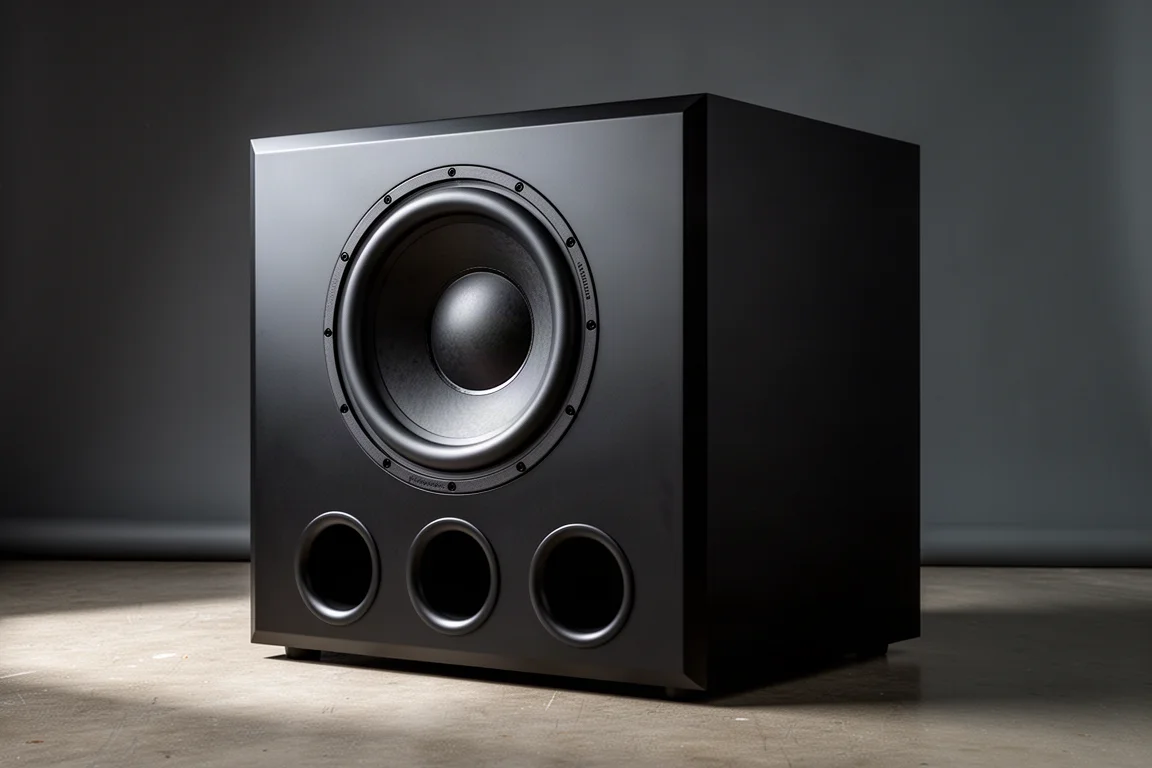
The SVS PB17 Ultra is the largest and most powerful subwoofer SVS has built, and it arrives in a cabinet that is essentially the same size as the PB16 Ultra it replaces. That is the headline here: a bigger driver and a meaningful jump in output packed into a footprint that owners of the previous model already know how to accommodate. The cabinet measures roughly 25 by 21 by 29 inches and weighs about 164 pounds, so it is as much a piece of furniture as it is a piece of audio equipment.
Inside, SVS pairs a front-firing 17-inch driver with a 2800-watt amplifier. Rated low-frequency extension is about 14 Hz at minus 3 dB in standard mode, with an extended mode that reaches deeper still. The subwoofer ships with a 45-day risk-free trial that covers shipping in both directions, along with a 5-year warranty on the amplifier and the rest of the unit. Pricing sits at around $3,000 shipped, with no tariff-driven increase at launch.
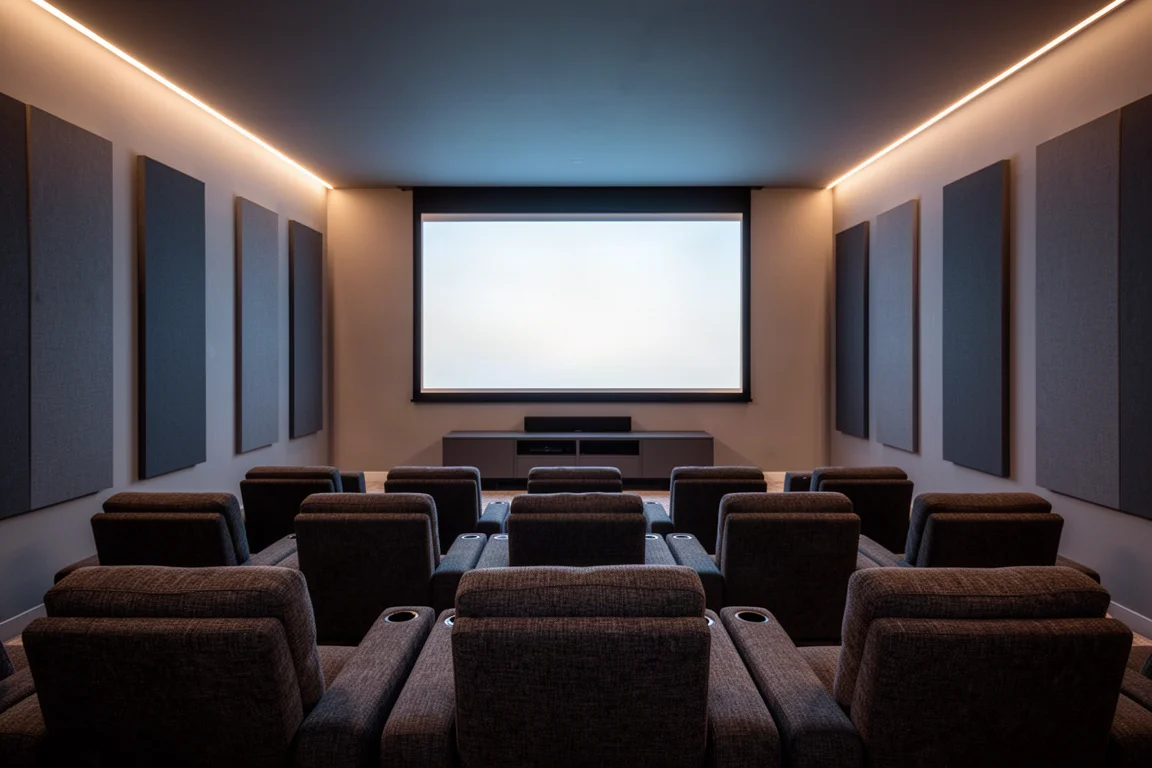
For listeners with the space and the appetite for genuinely deep bass, the PB17 Ultra sits at the top of the company’s ported range. It also has to justify a significant price and a serious physical commitment, which is what the rest of this review addresses.
Who This Subwoofer Is For
This is a subwoofer for large rooms and for systems that want output and extension rather than compact dimensions. Anyone shopping in this class already expects a big cabinet, and the PB17 Ultra does not pretend otherwise: at about 164 pounds and standing nearly 30 inches tall, it needs floor space and a plan for getting it there.
It suits two distinct buyer profiles. The first is the home theater owner with a big room who wants infrasonic weight below 20 Hz and enough headroom that the subwoofer never sounds strained. The second is the listener who wants to run the subwoofer crossed over unusually high, up to around 120 Hz, and use it to add midbass punch and dynamic range that most speakers cannot produce on their own.
It is not the right choice for a small room, for a shared wall in an apartment, or for anyone who needs a subwoofer that can be moved by one person. Within its intended use, though, the design brief is clear and the execution is aimed squarely at it.
Main Strengths: Deep Extension and Serious Headroom
Output is the most obvious strength. Burst measurements reach 107 dB at 16 Hz and average close to 119 dB from 30 Hz upward in standard mode, and long-term continuous output runs right up against 115 dB from roughly 30 Hz and above. That is the highest output SVS has produced, with roughly 10 dB more at 16 Hz than the PB16 Ultra, about 3 dB more at 80 Hz, and a very large advantage higher up.
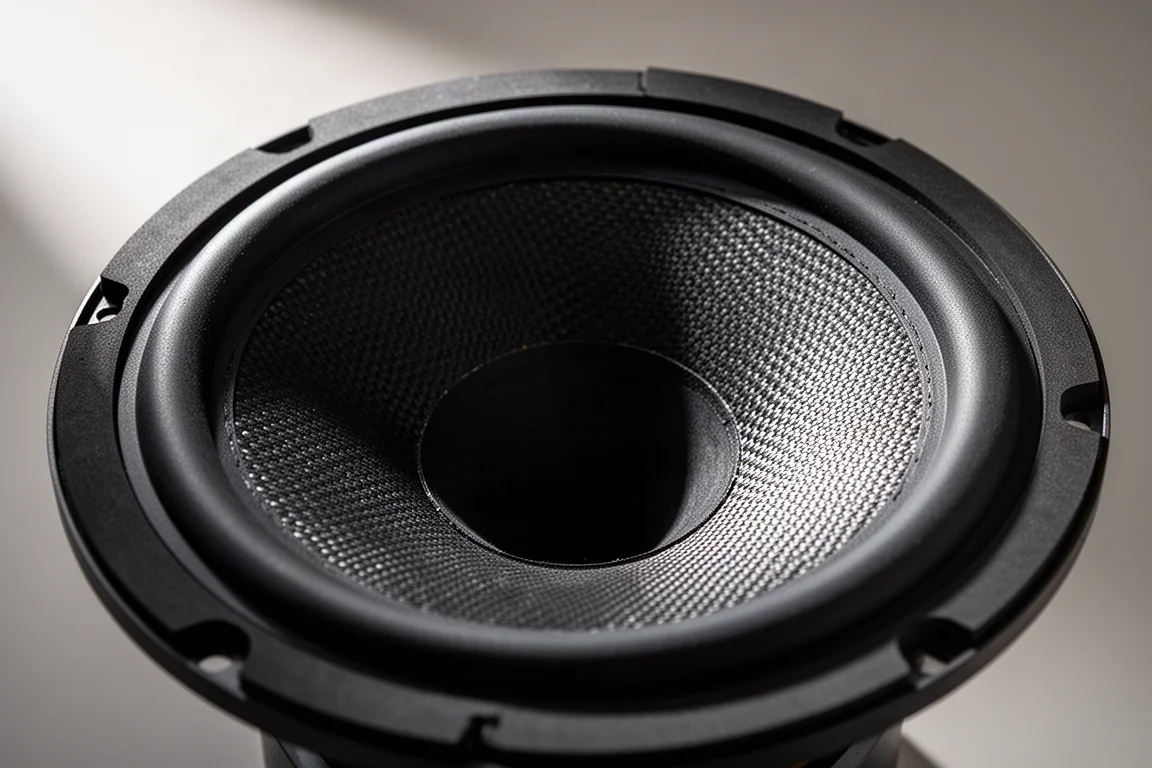
That upper-bass advantage comes from the driver design. The motor is overhung rather than underhung, the cone is a light glass-fiber construction, and voice-coil inductance is low, which together produce flat extension out to 100 Hz and roughly 120 dB of output at 125 Hz. In practice that means the subwoofer can be crossed over at 120 Hz without difficulty, adding kick and punch in a range where most speakers run out of headroom. Placing two of them behind the left and right main speakers and crossing over high is a genuinely compelling configuration.
Extension is the second pillar. The PB16 Ultra was capable down to about 16 Hz but did little below it; the PB17 Ultra adds measurable output below that point, which is rare for a ported design. Cleanliness holds up as well. At full throttle, harmonic distortion stays mostly below 10 percent and is dominated by even-order content, which is harder to notice than odd-order distortion. Standard mode measures cleaner than extended mode, as it does on any subwoofer with variable tuning, because standard mode keeps the most port volume working.
Time-domain behaviour is another step forward. Group delay stays largely under 10 milliseconds at 40 Hz and above, an improvement over the PB16 Ultra, which means the subwoofer reacts quickly rather than sounding sluggish. This is not simply a boom machine for effects tracks; it behaves like a high-fidelity subwoofer across the range.
Build quality supports the numbers. The cabinet uses three 4-inch ports with 90-degree internal bends, a thick front baffle, heavily braced side panels, and an internal brace dedicated to supporting a motor assembly that weighs around 60 pounds. The driver uses an 8-inch voice coil positioned above the permanent magnet, and the limiter is lenient enough that the driver is effectively protected at any usable level. SVS also deserves credit for the unboxing sequence: the cabinet slides out rather than requiring the box to be flipped, foam sliders make positioning easier, and the feet come pre-installed. Gloss black and black oak finishes are both offered.
Setup, App Control, and Everyday Use
Day-to-day ownership revolves around the control app. It provides parametric EQ, filter settings, phase, and level adjustments with fine granularity, down to half a decibel, which makes it possible to integrate the subwoofer precisely with a room and a processor.
Without the app, only the low-pass filter, phase, and volume remain accessible. The top-edge inset display used on the PB16 Ultra was removed on this model because the larger driver would not fit alongside it, so anything beyond the basics requires a phone or tablet. Calibration can still be handled entirely at the processor level, and that is enough for a solid setup, but fine tuning lives in the app.
The PB17 Ultra also earns the highest room-size rating used in this category, a tier reserved for subwoofers capable of pressurizing very large spaces. It is one of only a handful of designs to reach it, which reinforces who the product is actually built for.
How It Compares With Other High-Output Subwoofers
Within the same price class, the closest alternatives each give something up. The Klipsch RP-1600SW costs considerably less and is still a large ported design, but it is more basic in features, does not extend as deep, and does not match the build quality or cabinet mass here. The Monoprice Monolith 16-inch THX Ultra delivers a broadly similar level of raw performance, yet it has no app, no gloss finish option, and no equivalent customer support structure, and it does not include a trial with shipping covered both ways. The RBH Sound S12HP, a dual-12 design that has moved to a far more powerful amplifier, costs more as configured.
Higher up the performance ladder, the JTR Captivator 2400 pairs an 18-inch driver with a 2400-watt amplifier and is at least as capable at the lowest frequencies, but it is built to order with lead times measured in months and it has no app. The Arendal Sound 1723 2V is built like a tank and offers its full feature set on the cabinet itself rather than only in an app, though it gives up some output. The Paradigm Defiance X15 has strong midbass and app control but rolls off below 30 Hz, so it cannot match the deep-frequency confidence here. The Monoprice M215, a dual-15 design, is physically enormous in practice.
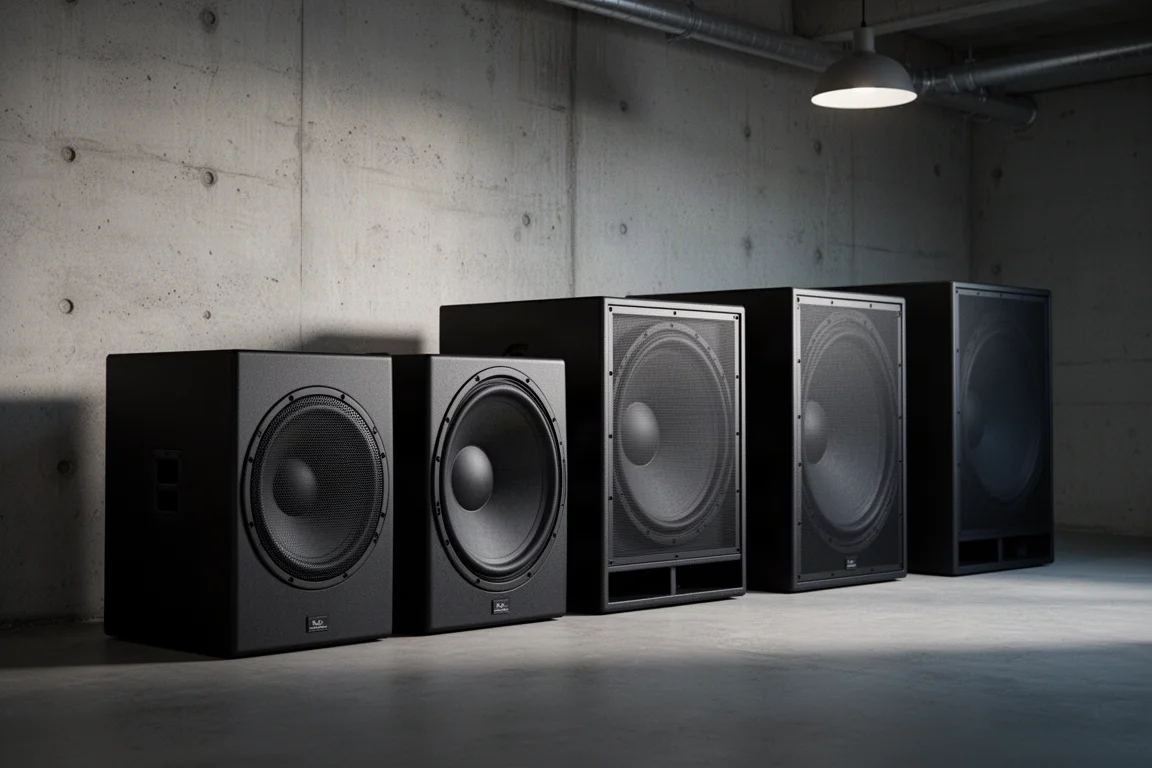
The pattern is consistent: several rivals match or approach the raw output, but the combination of app-based tuning precision, deep extension, low distortion, driver protection, and a 45-day trial with shipping both ways is what separates the PB17 Ultra from the field.
Things to Consider Before Buying
The clearest caveat is app dependence. If a phone or tablet is unavailable, incompatible, or simply not something you want to use for audio setup, you lose access to EQ, filters, and fine level control. Basic operation still works, and processor-side calibration covers the essentials, but the advanced functionality is tied to the app.
The feet are the other recurring complaint. They are small and leave very little clearance under the cabinet, which matters when lowering a 164-pound object into place: fingers can end up pinched. Aftermarket feet can be added, but they are not stock, and they do not solve the challenge of moving the subwoofer into position in the first place.
Finally, the practical realities of size and weight deserve honest consideration. This is a large cabinet with a large price. Buyers in this category generally accept both, but anyone hoping for a discreet addition to a living space should look at a smaller, sealed alternative instead.
Buying Advice
For a large room and a system that can take advantage of deep extension and high crossover points, the PB17 Ultra is a straightforward recommendation. It delivers the most output and the lowest distortion SVS has achieved in a subwoofer, and it improves on the outgoing model in extension, upper-bass headroom, and time-domain behaviour at the same time.
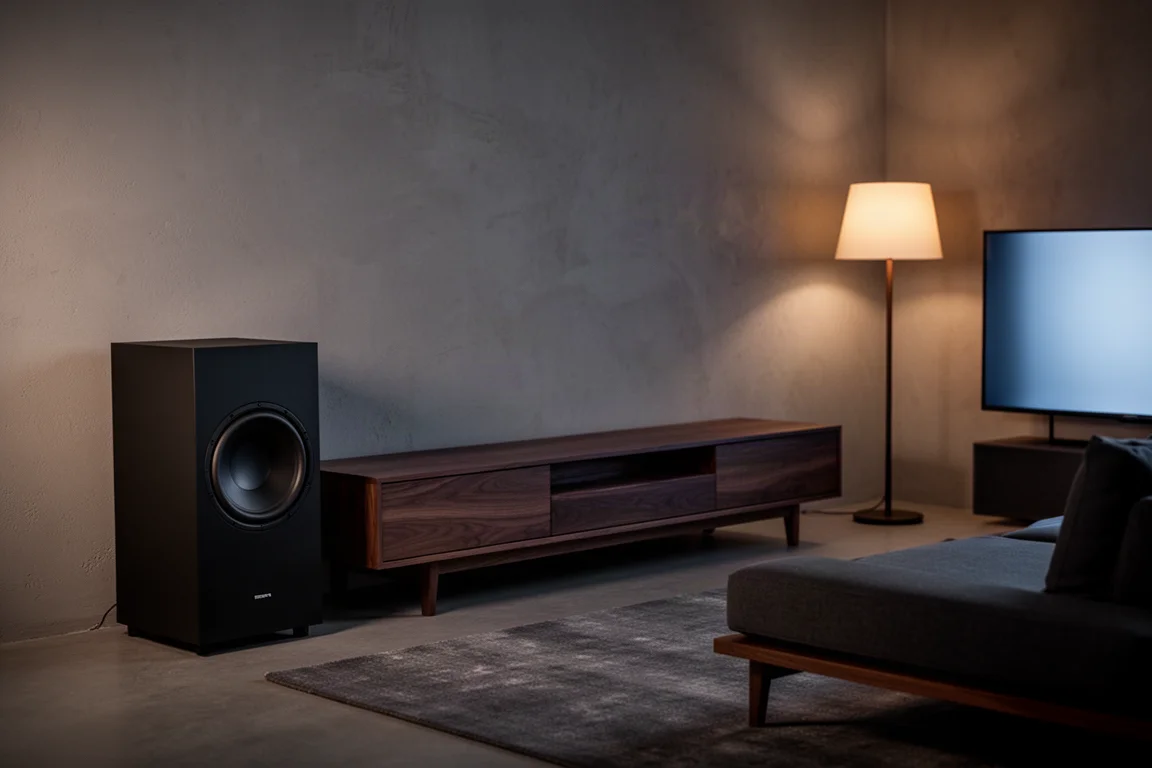
The buying decision mostly comes down to room size, placement, and whether the app-centric control scheme suits how you like to work. If those align, the 45-day trial with shipping covered both ways removes much of the risk from trying it at home, and the 5-year warranty covers the amplifier and the rest of the unit. If your room is modest or you need something compact, the strengths of this design simply will not have room to show themselves.
Conclusion
The SVS PB17 Ultra is the company’s most capable subwoofer to date: massive output, genuine infrasonic extension for a ported cabinet, distortion that stays controlled even at maximum drive, and group delay that keeps it quick rather than plodding. It handles music and movie material with equal composure, and it can be crossed over high enough to add midbass dynamics that speakers alone rarely match.
The reservations are narrow and specific. Advanced adjustment lives in an app, and the feet could use more clearance. Everything else about the design, from the braced cabinet and the large voice coil to the unboxing experience and the trial period, points to a product that was thought through carefully. For listeners with the space and the budget, it is a serious, well-executed flagship.
Product link
View more details for SVS PB17 Ultra
This product is mentioned in the review. Check the specifications, options, and compatibility before buying.
View more details for SVS PB17 UltraFurther reading
Related Reviews
Subwoofers
Arendal 1961 Subwoofer 1S Review: Beautiful Build, Modest Punch at $1,000
A sealed $1,000 subwoofer with a gorgeous cabinet, plus three lower-priced alternatives that deliver more impact for movie nights.
Subwoofers
Arendal Sound 1723 2V Subwoofer Review: Dual 13.8-Inch Drivers Under $3,000
A flagship ported subwoofer with dual opposing 13.8-inch drivers, a 1,200W RMS amplifier, app-based DSP, and a 10-year warranty.
Subwoofers
Ascendo 16 Sub Active Sealed Review: Sealed Bass Built on Real Engineering
A close look at the Ascendo 16 Sub Active Sealed, a 16-inch sealed home theater subwoofer with independently verified measurements, a purpose-built driver, and genuinely controlled output.