Home Audio
SVS In-Wall Subwoofer Review: Deep Bass Without Floor Space
A two-piece in-wall subwoofer system with an external amplifier, app-based tuning, and reported output down to 22 Hz, plus the drywall work it demands.
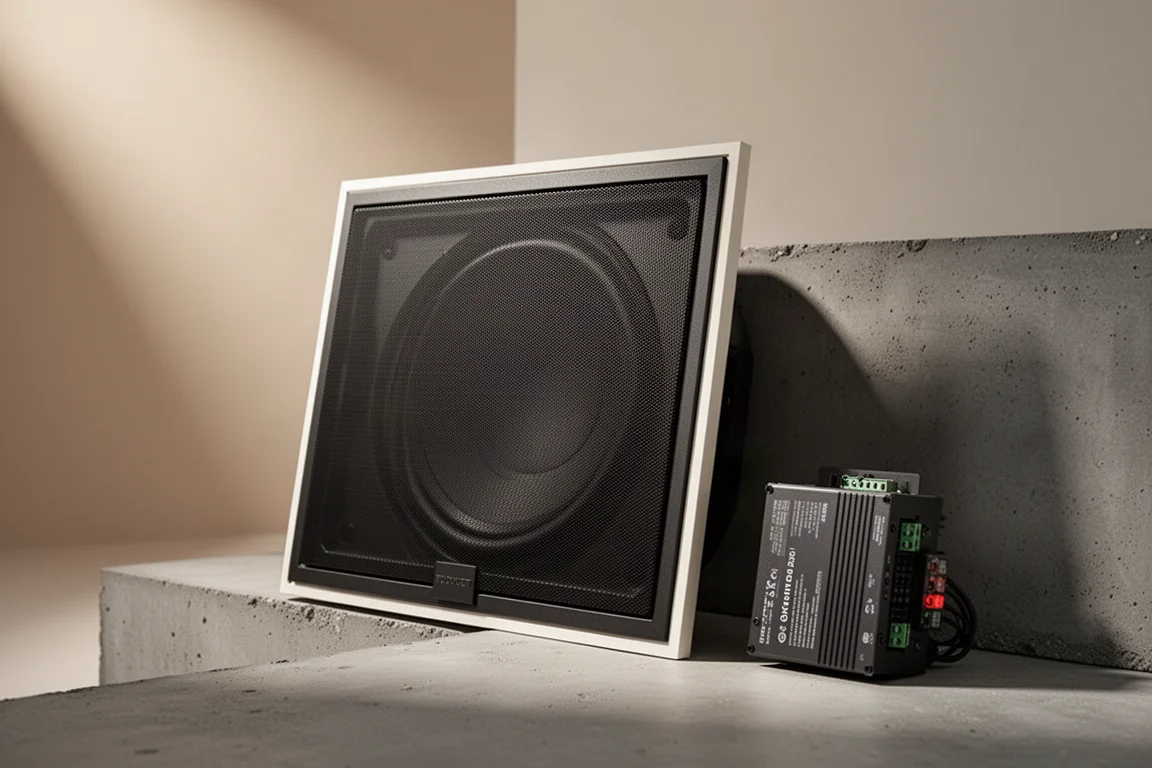
Introduction
In-wall subwoofers are an appealing idea until you picture the installation: measuring between studs, tracing a template onto drywall, and cutting an opening large enough for an 8-inch driver. This SVS system leans into that trade-off deliberately. Instead of a large cabinet occupying the floor, the subwoofers live inside the wall, and the only thing left visible is a grille you can paint to match the room.
The set arrives as two 8-inch in-wall subwoofers plus a separate external amplifier, and the amplifier is designed to sit outside the wall rather than inside it.
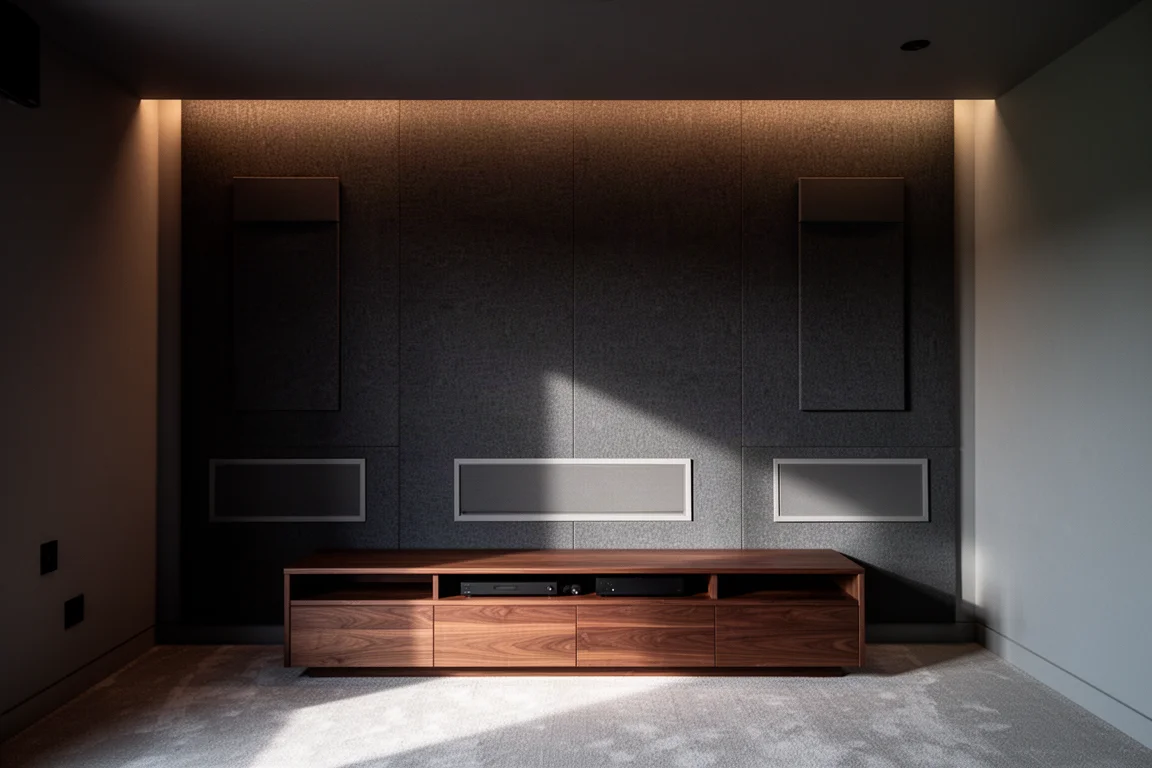
SVS also pairs the amplifier with a control app that covers crossovers, phase, and additional processing, which is a meaningful part of the value here. A subwoofer that disappears into drywall is only useful if you can still tune it to the room.
Who This In-Wall Subwoofer Is For
This system suits listeners who care about bass output but not about seeing the hardware. In a room that has to work as a studio, a movie room, and a music room at once, keeping the floor clear matters, and a pair of in-wall subwoofers keeps the layout modular while preserving as much wall space as possible.
It also suits anyone who already runs in-wall or in-ceiling speakers and wants the low end to match. Mixing flush-mounted speakers with a large floor-standing subwoofer tends to look like a compromise, and this approach avoids that mismatch entirely.
It does not suit renters, or anyone unwilling to open up a wall. Installation is genuinely part of the product rather than an afterthought.
Main Strengths
The reported low-frequency extension is the headline. This system is specified down to 22 Hz at plus or minus 3 dB, which is deep enough to give movie effects real weight and to add a solid foundation beneath music.
The amplifier arrangement is flexible in a practical way. One amplifier can drive both subwoofers, and it provides a separate set of speaker outputs for each one, along with RCA inputs. If you want to push the pair harder, a second amplifier can be added.
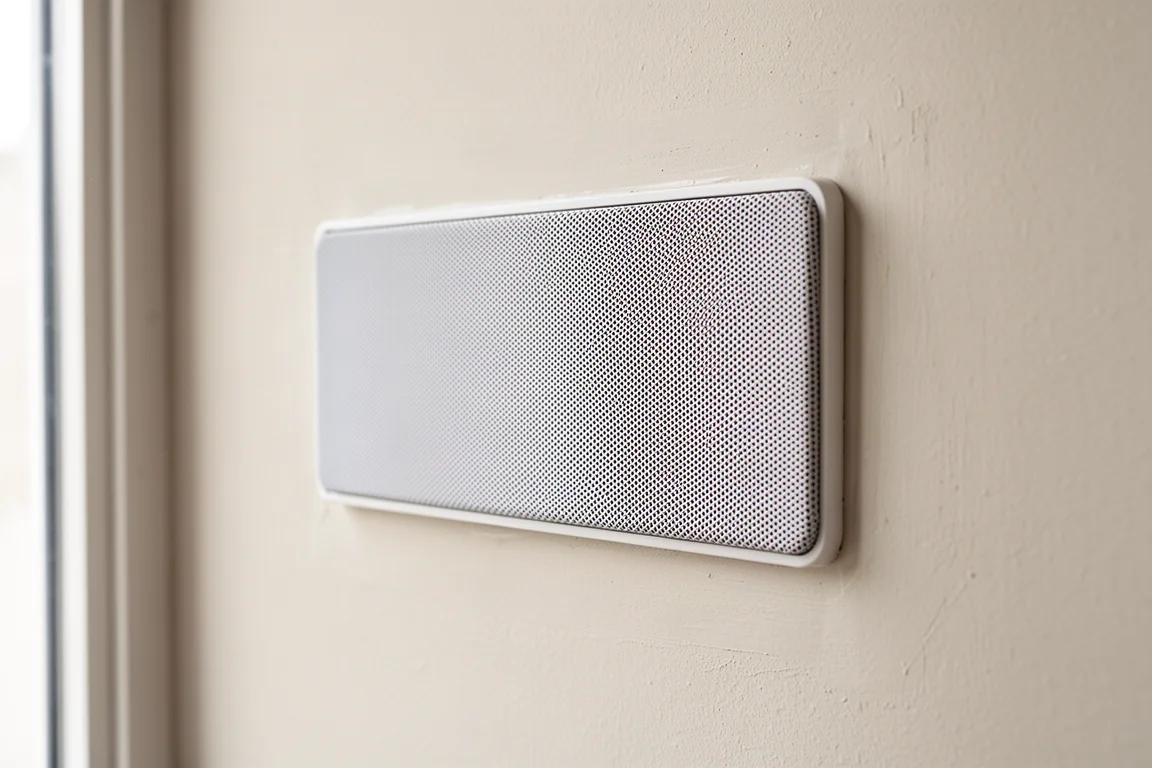
App control is the other standout. Crossovers, phase, and further digital processing are handled through the same app, so tuning does not depend on reaching behind a cabinet or working along the wall. For a system that is otherwise hidden, that convenience matters more than it might first appear.
The mounting hardware is well considered too. Each subwoofer uses tabs that extend outward as you tighten the front screws, clamping onto the drywall from behind. That keeps the finished face clean and leaves the grille as the only visible element.
Things to Consider Before Buying
The full system price is $3,000 for the two subwoofers and the amplifier. That is a significant outlay, and it lands in a category where the alternatives are mostly other in-wall designs that tend to be expensive as well.
Weight and handling are worth planning for. The shipping box alone is around 95 lb, and the packaging is awkward to move and unpack. Having a second person on hand makes this considerably easier.
The installation itself is the biggest variable. You are cutting into drywall, and what sits behind that drywall is unknown until you look. Electrical cable, plumbing, and unexpected framing can all change where the subwoofers can go, and there is no graceful way to return a subwoofer once an opening has been cut for it.
One more measurement detail: a 13-inch stud bay is too narrow to accommodate this installation. Standard 16-inch spacing is not guaranteed throughout a house, so checking the actual framing before ordering is worthwhile.
Installation and Setup Notes
The process starts with a template. It is taped to the wall at the intended location, traced, and then the outlined section of drywall is cut away and removed. The subwoofer then drops in between the studs, and the mounting tabs are tightened down.
Cutting a smaller exploratory hole first is a sensible habit. It gives you a chance to look and reach inside the cavity before committing to the full opening, which is how electrical cable and a pipe were both discovered during this installation. Neither would have survived a full-depth cut.
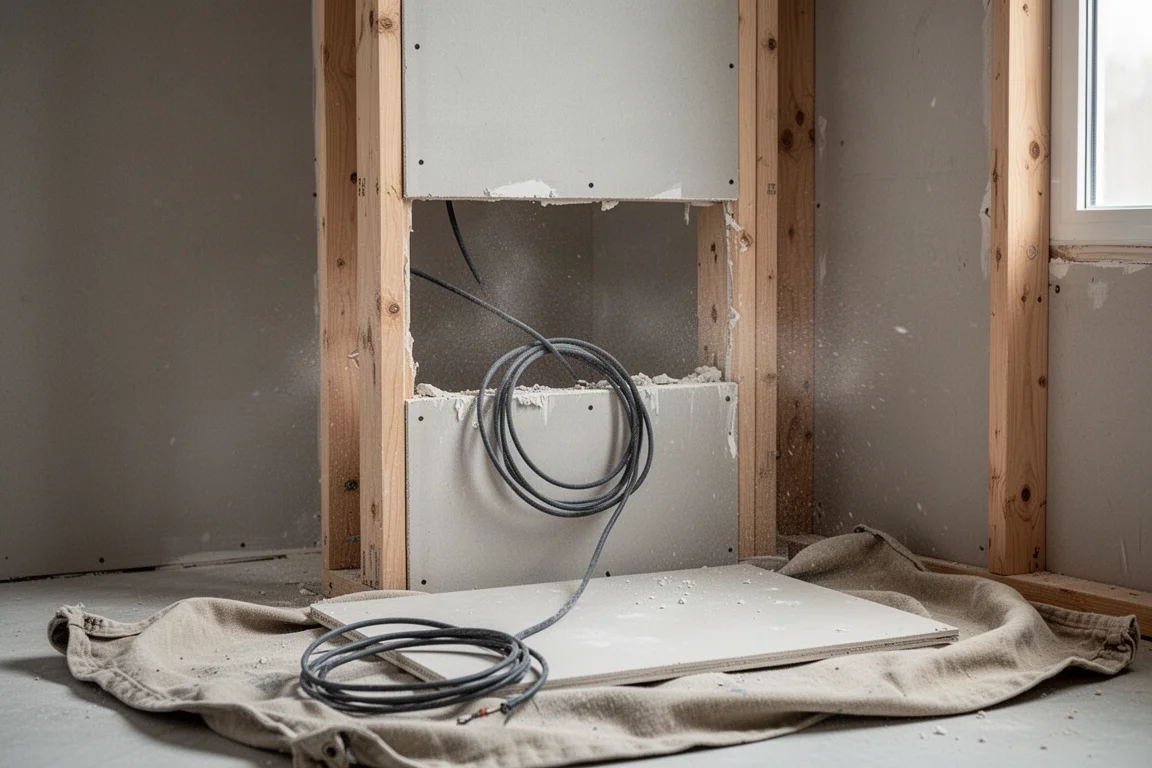
Wiring takes longer than most people expect. Running speaker cable through the wall, up into an attic or ceiling void, and back down to the amplifier is the slow part, and a fish tool saves far more time than reaching in by hand. Buying extra cable is cheap insurance: if the run measures around 30 feet, plan for 40.
Tightening the mounting tabs deserves care. They clamp firmly onto the drywall, but over-tightening can push the screw inward toward the driver, so snug is the goal rather than maximum force.
App Control and Tuning
Because the amplifier works with the app, the initial setup can be done from a seat rather than from behind the equipment rack. Crossover points and phase are adjustable, and the amplifier includes additional digital processing beyond the basics.
In a system like this, that tuning step is not optional polish. Wall placement changes how bass behaves in a room, and having control over crossover and phase makes it much easier to blend the subwoofers with the rest of the speakers.
The grilles are paintable, which completes the illusion that nothing is there. Thin, even coats work better than heavy rolling, and painting is best left until the installation is fully settled.
Buying Advice
If you want deep bass without surrendering floor space, this system delivers that in a way few alternatives can. The pair of 8-inch in-wall subwoofers plus the external amplifier comes in at $3,000, and the result is a room that looks untouched while still producing the low end a dedicated theater space needs.
The decision really comes down to two questions. Are you willing to open a wall, and do you know what is inside it? If the first answer is yes and you can investigate the second before ordering, the installation is manageable. The hardware itself is straightforward, the mounting system is forgiving, and the app removes most of the guesswork from tuning.
If you are renting, or if the room cannot tolerate a few patched holes and a repaint, a conventional cabinet subwoofer remains the safer choice.
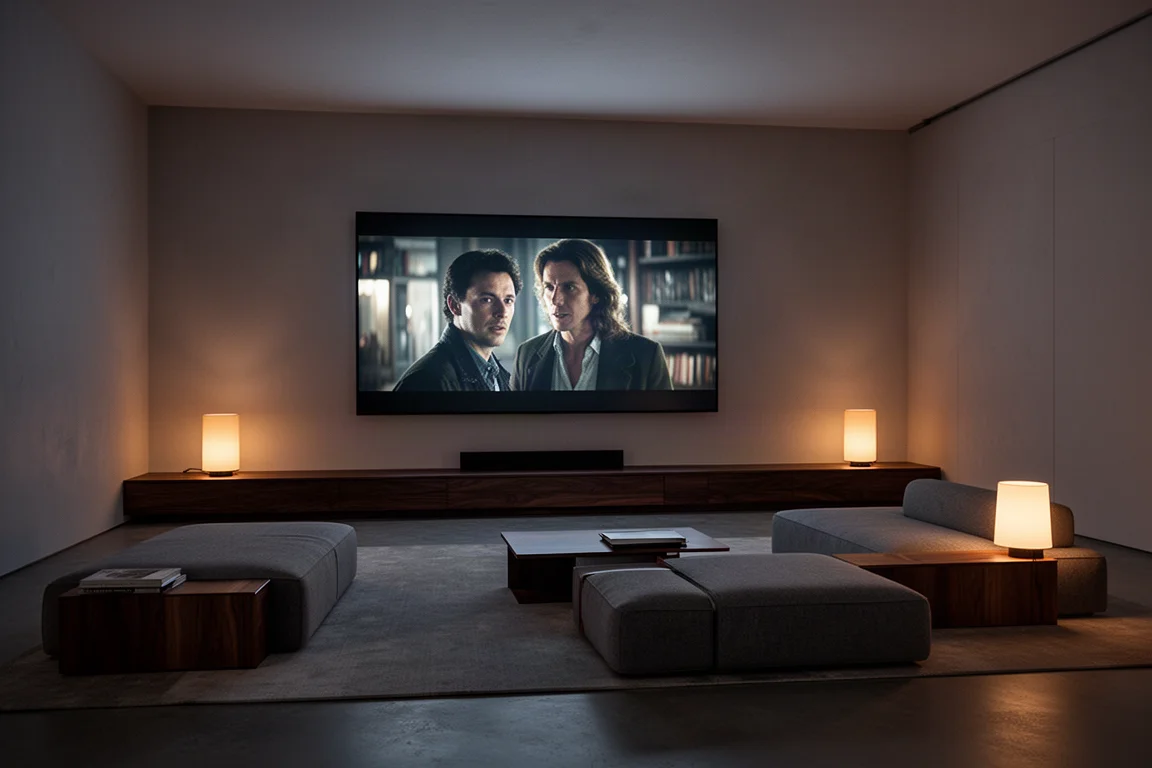
For anyone who has already committed to in-wall and in-ceiling speakers, this is the piece that completes the system without cluttering the room.
Conclusion
This is a project, not a plug-and-play purchase. It asks for planning, a tolerance for drywall repair, and enough cable to allow for mistakes. In exchange, it delivers reported output down to 22 Hz, flexible amplification, and app-based control, all from hardware you will never see once the grilles are painted.
Where it fits, it fits extremely well: a large room that needs real bass, a preference for clean walls, and a budget that can absorb $3,000 for the two subwoofers and amplifier. Where it does not, a floor-standing subwoofer will be cheaper, simpler, and just as satisfying.
Product link
View more details for SVS In-Wall Subwoofer
This product is mentioned in the review. Check the specifications, options, and compatibility before buying.
View more details for SVS In-Wall SubwooferFurther reading
Related Reviews
Home Audio
Aperion Novus Tower and Center Review: Punchy Home Theater Sound With Real Refinement
A close look at the Aperion Novus tower and center speakers, from their layered paint finish and punchy bass to the 4-ohm load and what the price actually buys.
Home Audio
Arendal 1610 Tower Review: Flagship Dynamics in a Room-Friendly Tower
A compact floorstanding tower with three 8-inch aluminium woofers, a 5-inch carbon midrange, and the kind of bass heft usually reserved for much larger speakers.
Home Audio
Arendal 1723 S THX Review: A Reference Speaker Built Like a Tank
A practical look at the Arendal 1723 S THX, a sealed, THX-certified speaker with exceptional build quality, a very flat top end, and a midrange that responds beautifully to EQ.