Subwoofers
SVS 5000 Revolution Series: SB5000 vs PB5000 Subwoofer Guide
How the sealed SVS SB5000 Revolution and the ported SVS PB5000 Revolution differ, what they share, and which one fits your room and listening habits.
Introduction
SVS has earned a strong reputation for high-value, high-performance subwoofers, and the 5000 Revolution series takes that approach further by carrying technology from the flagship 17-Ultra Revolution models into a more accessible price point. The series includes two models with very different personalities: the sealed SB5000 Revolution and the ported PB5000 Revolution. They share a driver design, an amplifier platform, a DSP engine, and the same control app, yet each one delivers a different experience depending on your room, your setup, and your listening preferences. This guide covers what the series changes, how the two models compare, and how to choose between them.
What the 5000 Revolution Series Changes
The Revolution name signals a broad overhaul of the approach to driver design, amplifier power, energy efficiency, and user experience. Both models use a newly designed 15-inch driver built from the ground up for high output and low distortion, rather than a reworked version of the previous woofer. It pairs dual 3-inch voice coils with a magnet that weighs 38 pounds on its own.
Power comes from the STA-2000D amplifier, rated at 2,000 watts RMS with more than 5,000 watts peak. Its true dual mono layout uses four class D amplifier modules bridged into two independent channels, each driving a separate voice coil. That improves efficiency, current delivery, and control over driver movement while reducing stress on the wall outlet. A custom switch-mode power supply and two-stage power factor correction keep power clean, and an onboard AC line conditioner filters voltage, removes distortion from the waveform, and reduces noise from other devices on the same circuit. The result is a clean 160 volt rail from a standard 15 amp outlet, which is enough to drive the large driver without distortion or excessive heat.
Despite the power on tap, the amplifier runs cool. A fully internal cooling system and an FEA-optimized design mean there are no external heat sinks to work around. Both models also carry the most advanced DSP in the SVS lineup to date, the same processing platform used in the flagship 17-Ultra Revolution, and it offers six times the processing power of the outgoing 4000 series.
SVS SB5000 Revolution: Sealed Bass With Tighter Control
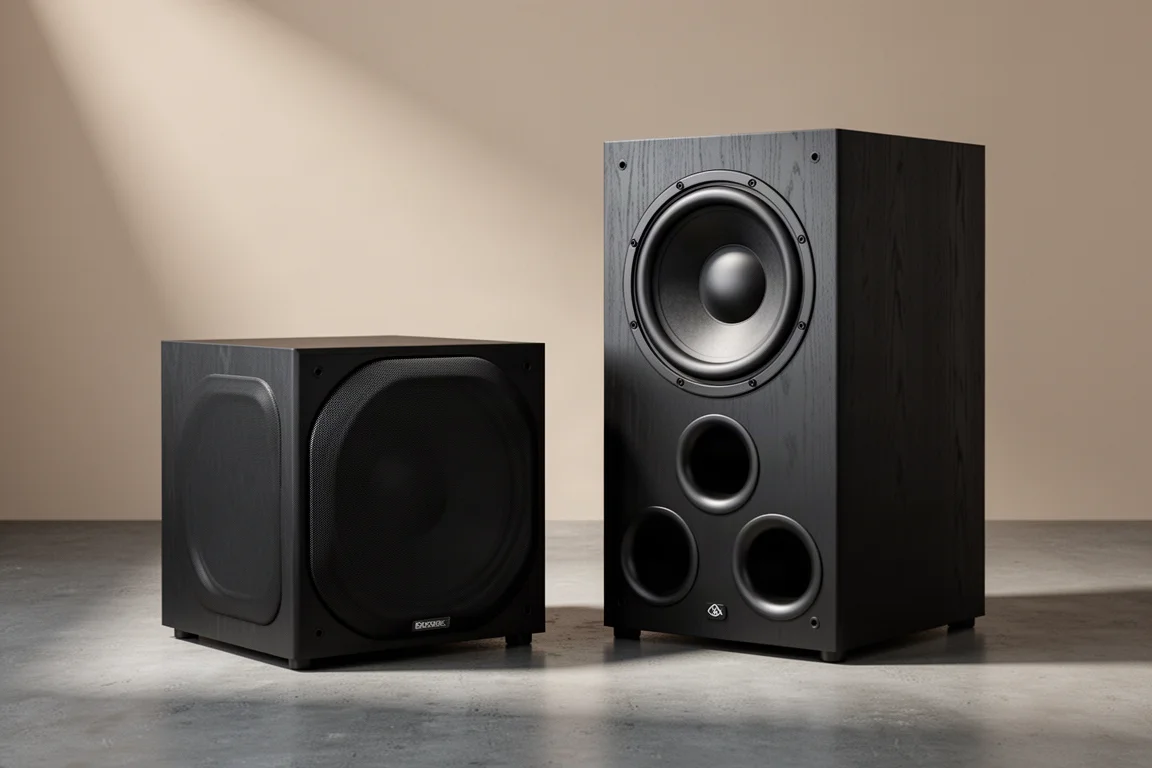
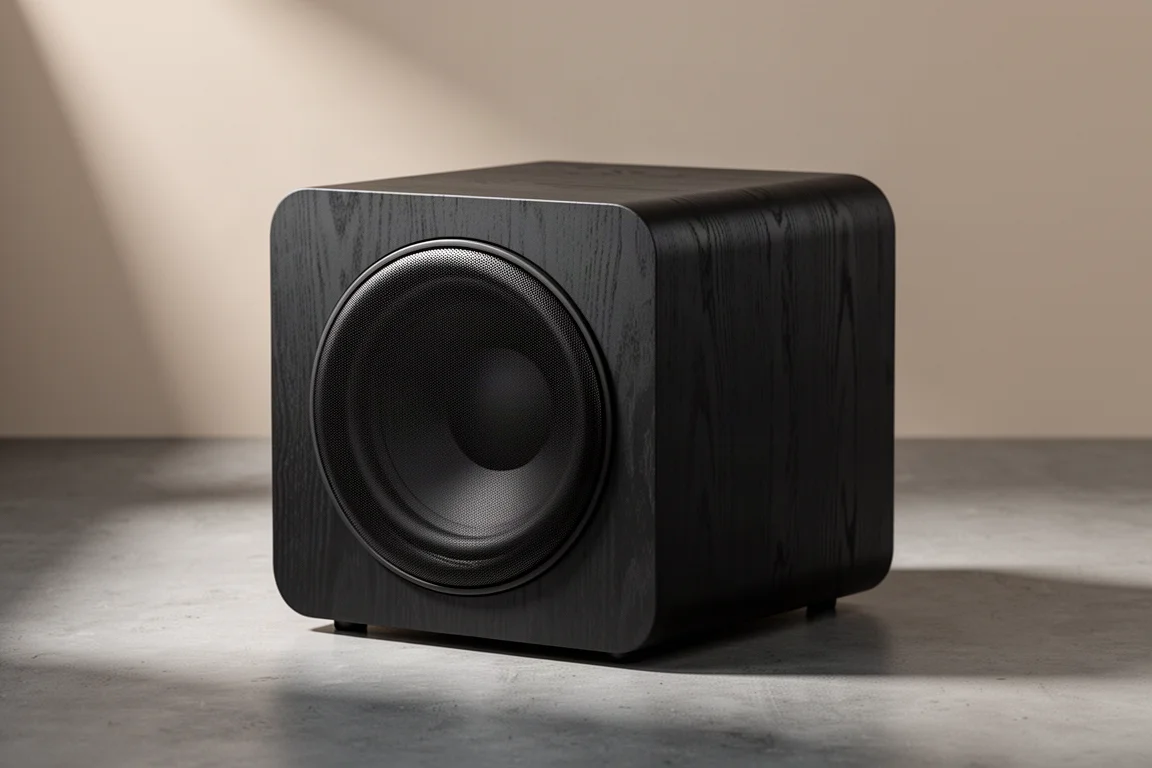
The SB5000 Revolution is the sealed model, and it prioritizes tight, accurate bass in a relatively compact footprint. At just under 18 inches on each side, it is easier to integrate into smaller rooms or more traditional two-channel setups. The sealed design also gives it a clean, port-free look that fits into decor-conscious spaces.
Inside, it uses the same 15-inch long-throw driver with dual 3-inch voice coils and a 38 pound magnet. Thanks to the DSP and the sealed cabinet, it delivers in-room bass extension down to 17 Hz, the kind of low end you feel as much as hear. The cabinet weighs 101 pounds.
Because the sealed design rolls off gently in the lowest frequencies, the bass tends to feel nimble and musical. Expect punch and definition in complex tracks or scenes with overlapping bass elements: kick drums hit with authority, and low-frequency effects stay clear and controlled rather than boomy. There is no smearing or lag, and the subwoofer integrates cleanly with the rest of the system, holding its composure even when pushed hard.
SVS PB5000 Revolution: Ported Output for Large Rooms
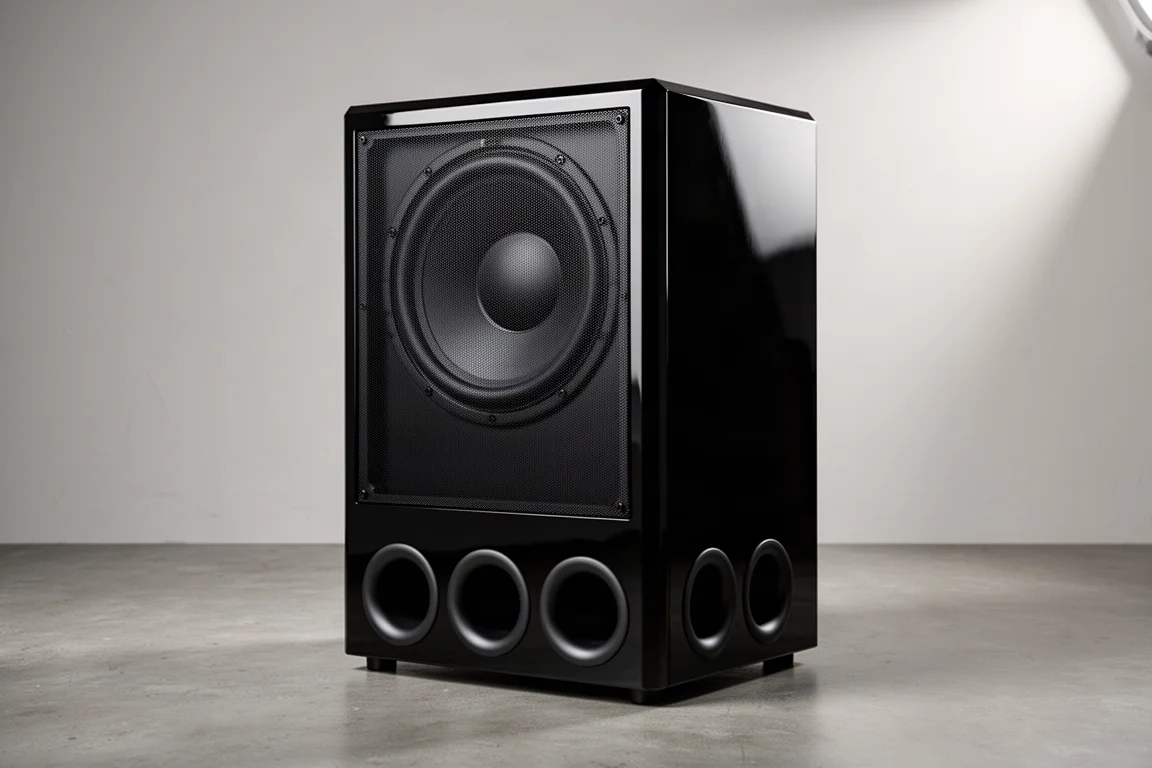
The PB5000 Revolution is the ported sibling, built for listeners who want the biggest, boldest bass possible. At over two feet tall and nearly two and a half feet deep, and weighing 153 pounds, it is not trying to hide. Behind the grille sits the same 15-inch driver, joined by three massive front-facing ports designed for maximum air flow and minimal distortion.
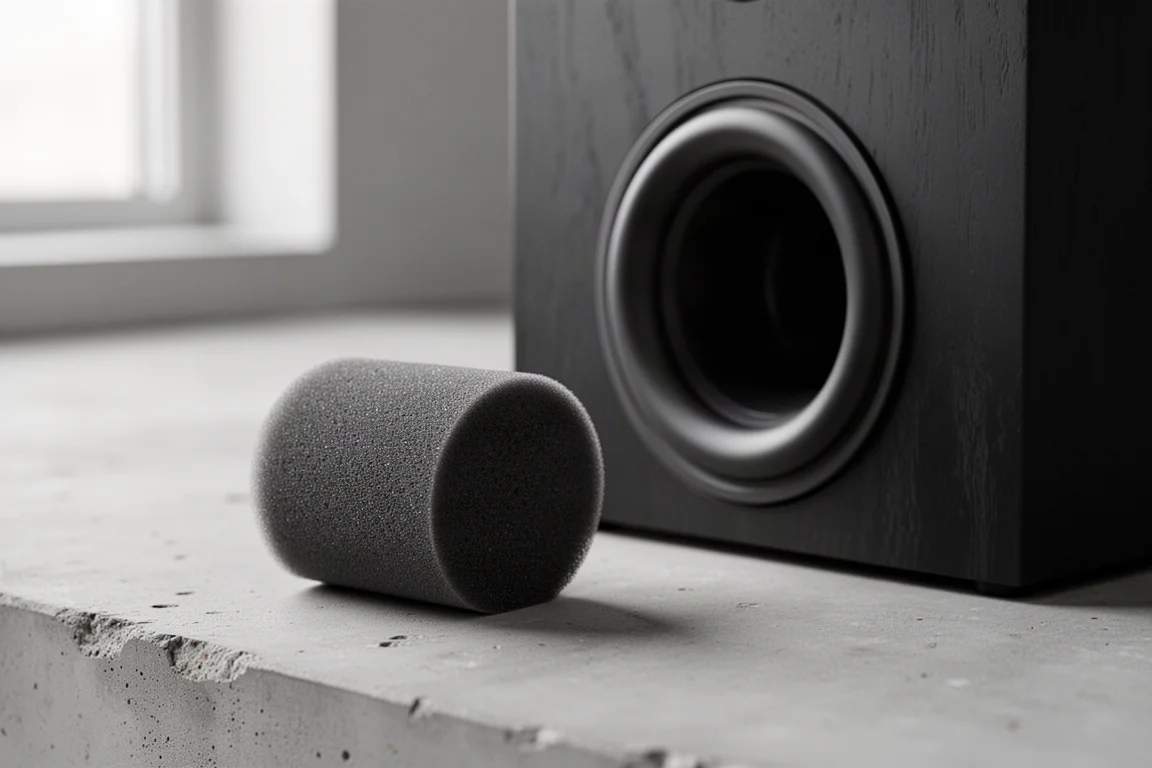
Those ports are flared at both ends to reduce chuffing, and they are configurable. SVS includes foam plugs that allow three tuning modes: standard with all ports open, extended low frequency with one port plugged, and sealed with all three ports plugged. With every port open, the subwoofer is tuned to 15 Hz for maximum output. In extended mode, tuning drops to 13 Hz for deeper bass. Sealed mode delivers a tighter, more controlled sound with the benefit of the larger cabinet volume. After changing the physical port configuration, you select the matching tuning mode in the app so the DSP applies the right settings.
That flexibility shapes how the subwoofer behaves. Open ports deliver explosive impact and wall-shaking bass for movies in large rooms, while sealing one or more ports dials in a more balanced, nuanced response for music. Dynamic headroom is massive, and the PB5000 fills large rooms with ease, staying composed even in scenes with complex, overlapping low frequencies. The ports are well tuned, and the DSP keeps the low end from becoming bloated or boomy, with port plugs and EQ available to fine-tune the response for your space.
Tuning Modes and App-Based Control
The DSP gives you detailed control over how each subwoofer behaves, including adjustable crossover points, phase, polarity, room gain compensation, up to three custom presets, and more parametric EQ bands than earlier models. Everything is adjustable from the SVS app over Bluetooth, so you can make changes in real time from your listening position instead of walking back and forth to the amplifier.
The three presets are one of the most practical features. You can set one for movies, another for music, and a third for late-night listening, then switch between them with a single tap. If you want a high output setting for action films and a subtler, more detailed profile for music, both are always a tap away.
The DSP does more than shape output. It also monitors amplifier temperature, driver behavior, and input voltage to prevent overload or failure, which is part of what keeps performance consistent when the subwoofer is pushed hard. An upcoming firmware update will add auto room EQ to compatible models, using the built-in microphone on an iOS or Android device to measure the room and apply tuning adjustments without extra calibration gear. That should make multi-subwoofer setups far more approachable. If you prefer physical controls, the rear panel offers a clear OLED display and a tactile knob interface, plus a display flip function so the screen stays readable when you reach over the back of the cabinet.
Build Quality, Finish, and Everyday Ownership
Both models are built from thick MDF with heavy internal bracing to keep unwanted resonance at bay, and the fit and finish are excellent. Each is available in premium black ash or gloss piano black, and both include a removable grille, so you can let the subwoofer blend in or stand out depending on your setup. The weight of these cabinets contributes to their rock-solid performance and the absence of cabinet noise.
Placement is worth planning for. The SB5000 weighs 101 pounds and the PB5000 weighs 153 pounds, so it helps to decide on a position before the cabinet is in the room. If cable runs are a constraint, wireless adapters make it possible to place a subwoofer where it performs best without running long cables across the floor.
Room Size, Placement, and Multi-Sub Setups
Placement and calibration matter as much as the subwoofer itself. Spend a little extra time getting the position and settings right, and either model will reward you every time you press play. A single SB5000 is more than enough for many rooms, and a single PB5000 can carry a large theater on its own.
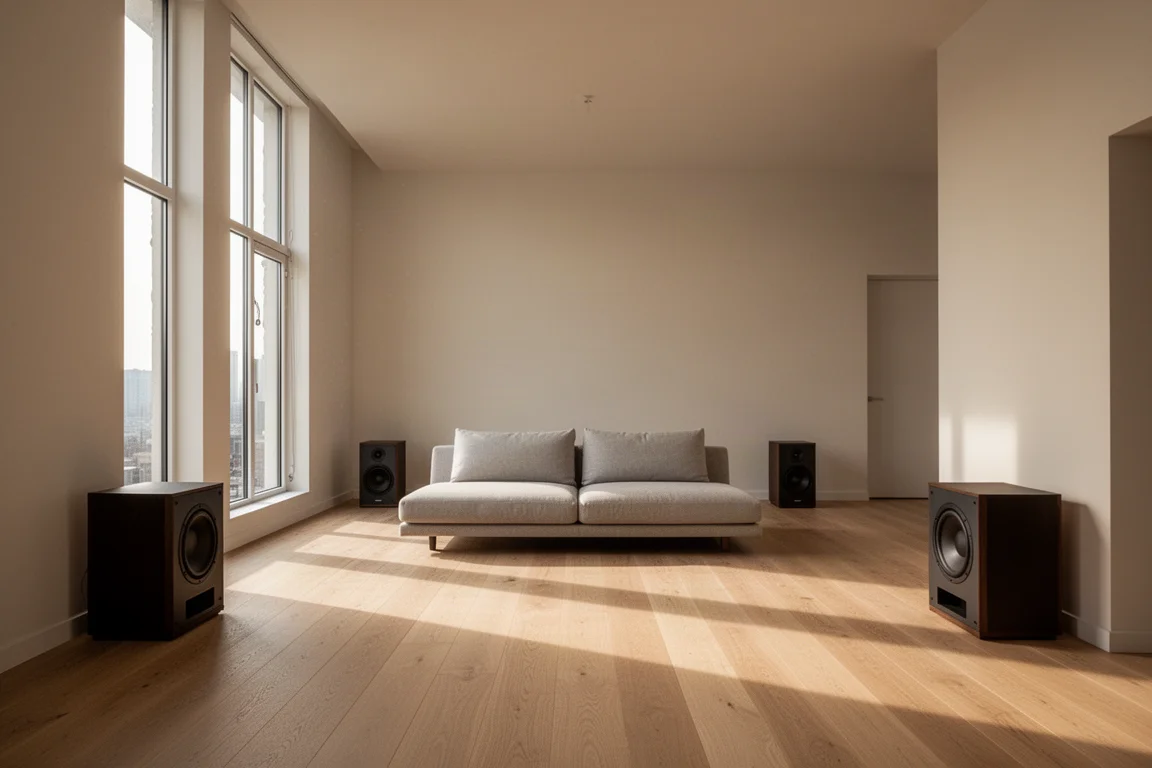
Adding a second or third subwoofer changes more than output. Multiple subwoofers deliver more consistent coverage across the room, which helps eliminate dead spots and creates a seamless sense of bass from every seat. A properly executed dual or quad setup is a genuinely different experience, and it is worth planning for if you are building a dedicated room. The upcoming auto room EQ feature should make that path easier for listeners who would rather not spend hours with calibration microphones and test tones.
What Each Subwoofer Is Best For
The SB5000 Revolution suits listeners who want clean, powerful bass in a music-first system, a smaller theater, or any room where a large ported cabinet simply will not work. It offers nearly the same low-end extension as the PB5000, with tighter control and a more subtle visual footprint.
The PB5000 Revolution is the choice for large rooms, big dedicated theaters, and open-concept spaces where cinematic impact is the priority. It is not compact, but if you have the space, it delivers performance that rivals subwoofers at much higher price points.
Buying Advice: Choosing Your 5000 Revolution Subwoofer
Both models share serious performance, a long list of smart features, and build quality that punches above their price. The decision comes down to room size, listening habits, and sound preferences. If you want tighter, more controlled bass in a smaller enclosure, the sealed SB5000 Revolution is the natural fit. If you want maximum low-end extension and earth-shaking impact, the ported PB5000 Revolution is the one to choose.
Whichever you pick, budget time for setup. Position the cabinet carefully, run through the app settings, and experiment with presets and tuning modes where they apply. These subwoofers are designed to be adjusted to the room rather than the other way around, and a little patience pays off in cleaner, more even bass.
Conclusion
The 5000 Revolution series shows how much thought went into both subwoofers. The sealed SB5000 Revolution and the ported PB5000 Revolution share a new 15-inch driver, a 2,000 watt amplifier platform, advanced DSP, and app-based control, but they serve different rooms and different priorities. Choose sealed for control, musicality, and a smaller footprint. Choose ported for depth, output, and cinematic scale. Match the subwoofer to your space, take the time to dial it in, and either model will deliver for years of listening.
Further reading
Related Reviews
Subwoofers
Arendal 1961 Subwoofer 1S Review: Beautiful Build, Modest Punch at $1,000
A sealed $1,000 subwoofer with a gorgeous cabinet, plus three lower-priced alternatives that deliver more impact for movie nights.
Subwoofers
Arendal Sound 1723 2V Subwoofer Review: Dual 13.8-Inch Drivers Under $3,000
A flagship ported subwoofer with dual opposing 13.8-inch drivers, a 1,200W RMS amplifier, app-based DSP, and a 10-year warranty.
Subwoofers
Ascendo 16 Sub Active Sealed Review: Sealed Bass Built on Real Engineering
A close look at the Ascendo 16 Sub Active Sealed, a 16-inch sealed home theater subwoofer with independently verified measurements, a purpose-built driver, and genuinely controlled output.