Subwoofers
SVS 3000 Micro vs KEF KC62: Two Compact Subwoofers Compared
A close look at two compact subwoofers: the app-controlled SVS 3000 Micro and the force-cancelling KEF KC62, and which type of system each one suits.
Introduction
Compact subwoofers have become genuinely livable. They are small enough to sit discreetly in an apartment, yet capable of adding the low-frequency foundation that small stand-mounted speakers cannot deliver on their own. Two models sit at the centre of that conversation: the SVS 3000 Micro and the KEF KC62.
Both use side-firing drivers and DSP to shape their output, and both are designed to disappear into a room rather than dominate it. They differ in driver size, amplifier power, control philosophy, connectivity and price.
This comparison looks at what each subwoofer does well, where each one asks more of its owner, and which kind of system each suits best.
What to Look For in a Compact Subwoofer
Four things separate one compact subwoofer from another. The first is driver size and total radiating area. Larger drivers move more air, which generally means more output and less strain when the mix gets demanding.
The second is amplifier power, which sets how much headroom the subwoofer has in reserve.
The third, and most often overlooked, is DSP delay. Any subwoofer that processes its input digitally introduces a small delay between the signal arriving at the subwoofer and the sound leaving it. If the amplifier cannot delay the main speakers by the same amount, the subwoofer may need to sit further into the room, closer to the listening position, so that its output arrives in step with the mains.
The fourth is how the subwoofer is controlled. Rear-panel switches and knobs are tactile and direct, while a Bluetooth app lets you adjust settings from your seat. That matters far more than it sounds when you are dialling in a crossover by ear.
Connectivity deserves a check as well. High-level speaker inputs and high-pass filtered outputs let a subwoofer integrate with stereo amplifiers and integrated amps that lack dedicated bass management of their own.
SVS 3000 Micro: App Control in a Small Cabinet
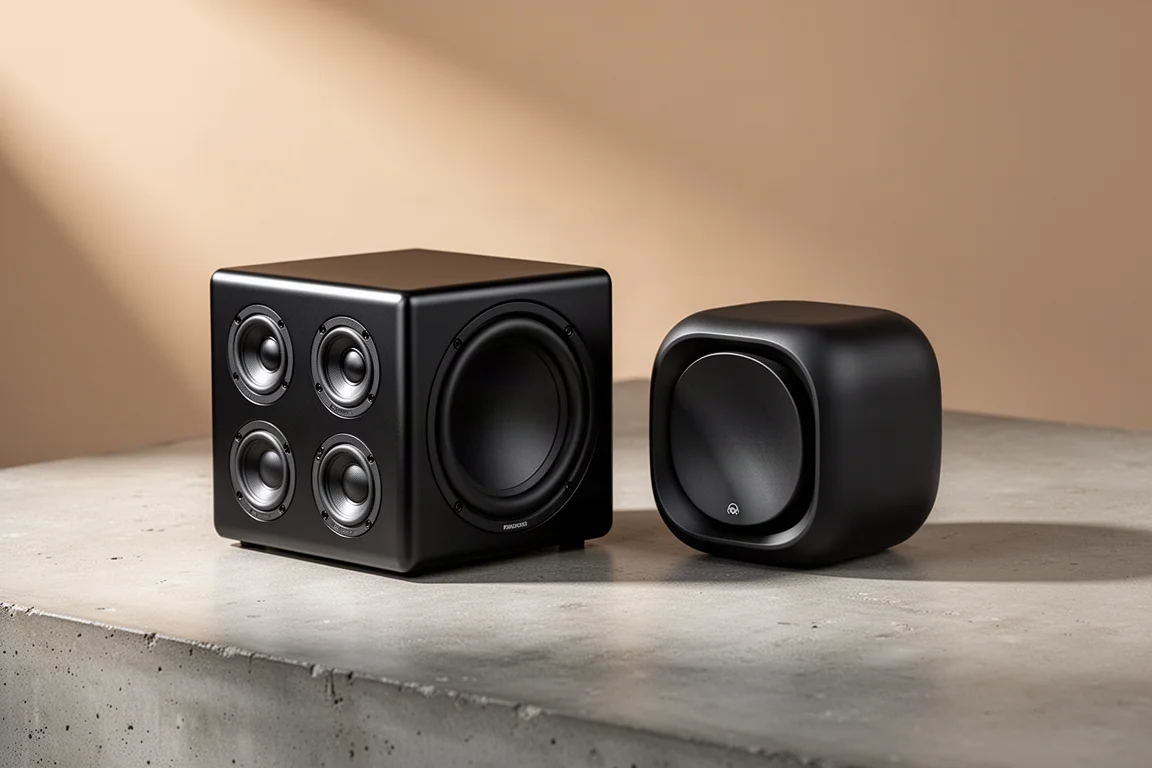
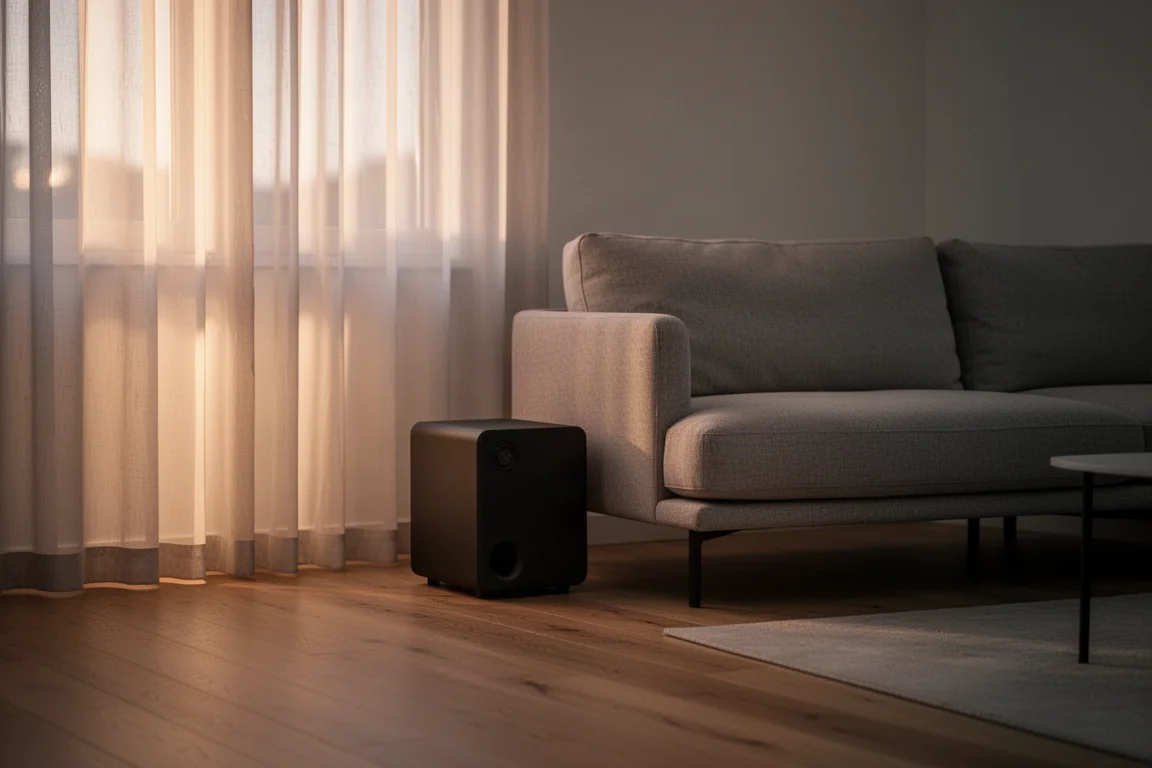
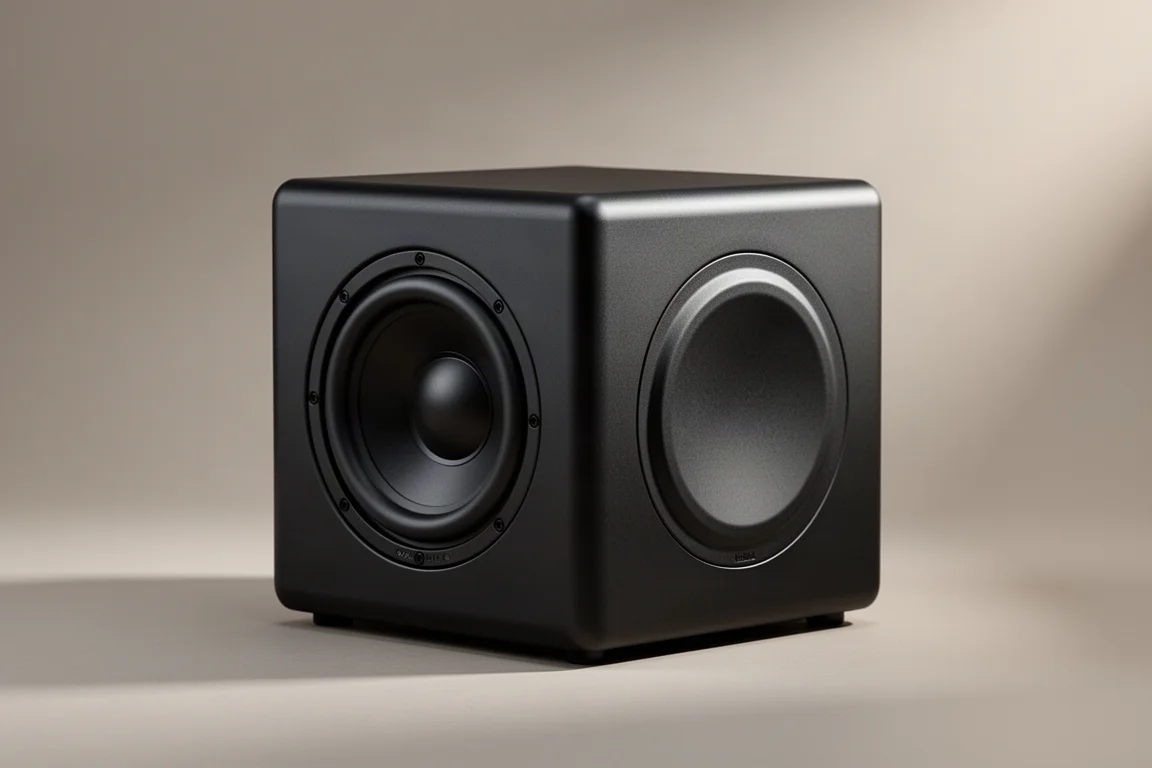
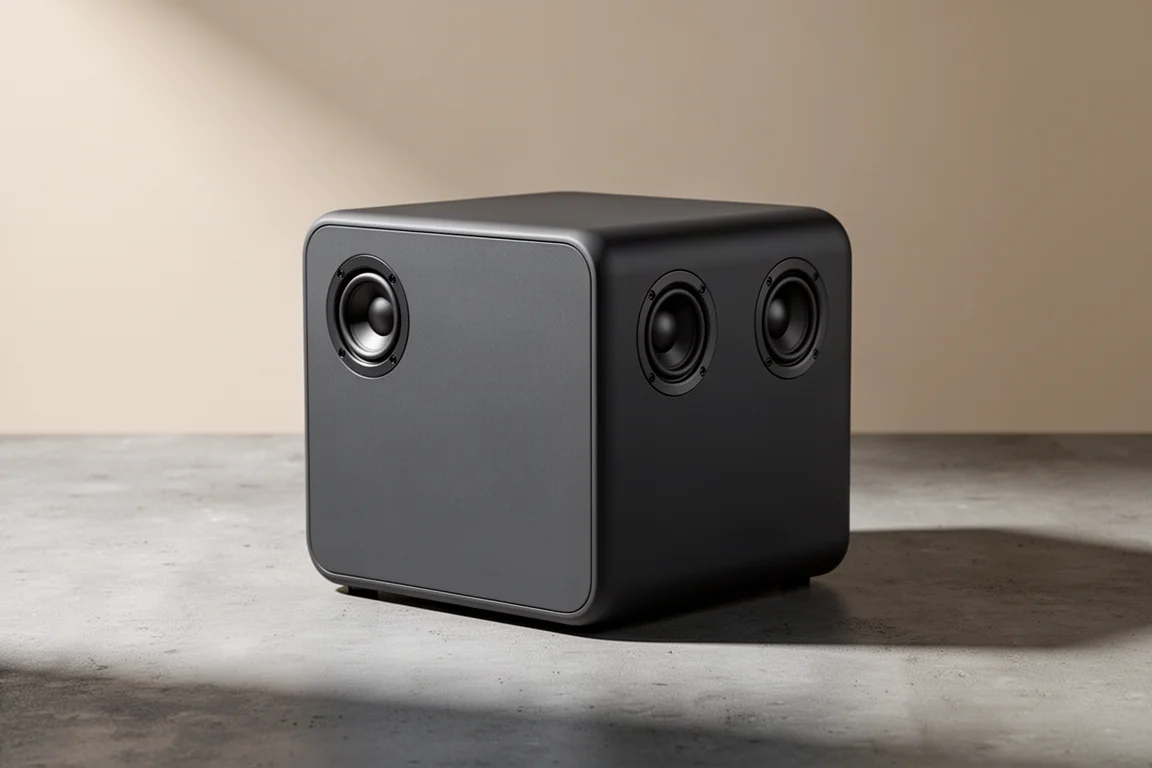
The SVS 3000 Micro is a compact, cube-shaped subwoofer with side-firing drivers measuring 20 cm in diameter, powered by an 800-watt Class D amplifier. SVS rates its low-frequency output as 3 dB down at 23 Hz, and the subwoofer uses DSP to manage the signal internally.
Its side grilles are designed not to vibrate during playback, although they cannot be removed. The cabinet is offered in high-gloss black and high-gloss white, and the white finish is the more discreet of the two in a typical living room.
Around the back, crossover point, gain and phase are set with press-button switches paired with an LED display. The more significant control surface is the companion app, which pairs with the subwoofer over Bluetooth and holds a rock-solid connection. From a chair at the listening position you can change gain, low-pass frequency, phase, polarity and crossover slope type without walking back and forth to the rear panel.
The app also adds a three-band parametric EQ and a room gain compensation control that rolls off the lowest output from a chosen frequency, with a choice between a 6 dB per octave and a 12 dB per octave slope.
The 3000 Micro does without the high-level speaker inputs and high-pass filtered RCA outputs found on some rivals, so systems that depend on those connections need a different integration route.
KEF KC62: Force Cancellation and Tactile Controls
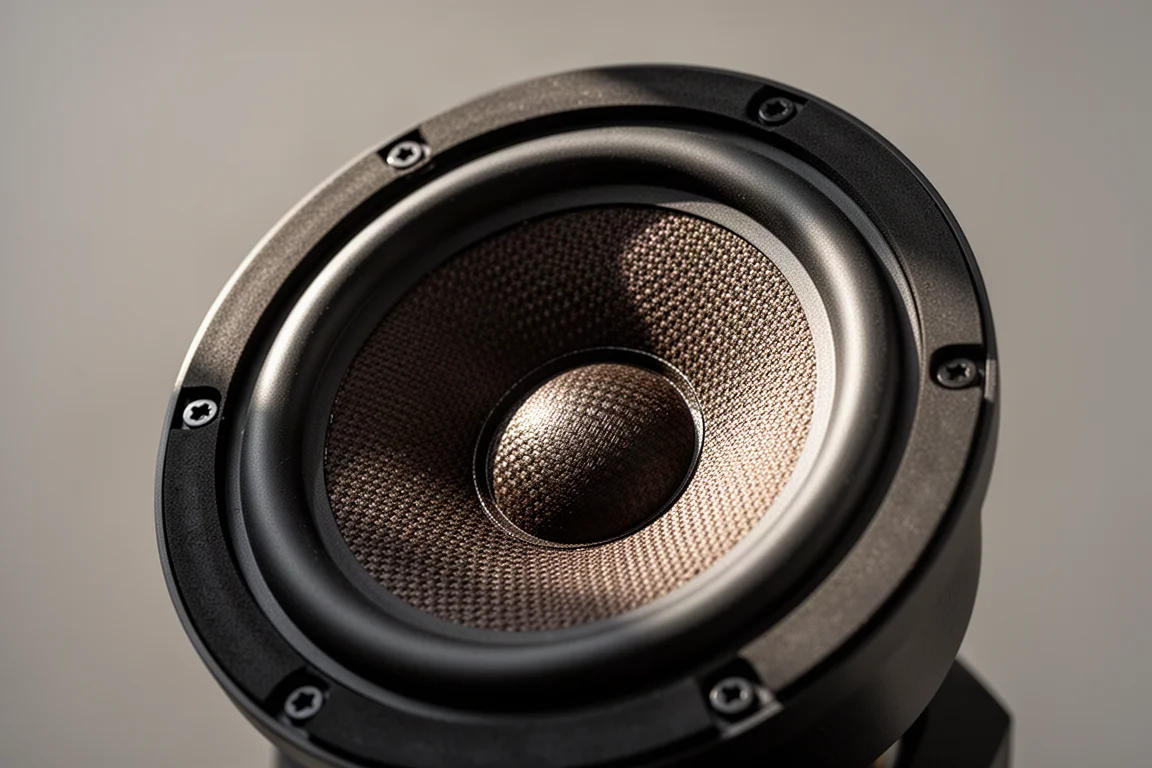
The KEF KC62 takes a different approach to the same problem. Its side-firing drivers are smaller at 16.3 cm, but they are arranged with force cancellation, so the opposing driver motion cancels much of the vibration that would otherwise pass into the cabinet and the floor. A 1000-watt amplifier drives them, and KEF specifies the subwoofer as 3 dB down at 11 Hz.
The KC62’s DSP delay is shorter, at around half a millisecond. In practice that means it needs less compensation when the main speakers cannot be delayed electronically.
Its rear panel uses rotary knobs and firm tactile switches rather than press buttons, and it includes high-level speaker inputs and high-pass filtered RCA outputs for systems that want them. There is no app, so every adjustment happens at the cabinet.
Visually, the KC62 reads as the more futuristic of the two, with a sculpted, rounded form. The 3000 Micro is the more traditional shape. That design difference matters because a subwoofer generally lives on the floor in plain sight, where it works as furniture as much as audio equipment.
Setup and Adjustment From the Listening Position
Setting up a subwoofer by ear is an iterative process: adjust the crossover, listen, adjust the gain, listen again. Doing that from the listening position shortens the loop dramatically, and this is where the 3000 Micro’s app has a clear advantage. Gain, low-pass frequency, phase, polarity and slope can all be changed in place, with no need to reach behind the cabinet.
The KC62 asks for the opposite habit. Its controls are physical and pleasant to use, but every change means getting up, walking to the subwoofer, making the adjustment and sitting back down.
DSP delay also shapes placement. With a delay of three to five milliseconds, the 3000 Micro may need to sit slightly further into the room when the amplifier cannot delay the mains to match, which is a placement constraint worth planning for. The KC62’s shorter delay makes that less of a consideration.
How the Two Subwoofers Compare on Sound
The two subwoofers have distinct characters. The 3000 Micro is the more overt player of bass notes and the more detailed of the pair, and it integrated cleanly with the main speakers, with the low end feeling like a natural extension of the mains rather than a separate layer sitting underneath them.
The KC62 counters with more weight and heaviness in the low end, and a slightly tighter overall character. Its specified low-frequency figure is lower than the 3000 Micro’s, while its smaller drivers give it less total radiating area, which helps explain the difference in presentation.
Both are convincing, and the choice between them comes down to the balance you prefer rather than one being plainly better than the other.
The 3000 Micro’s punch and dynamics also mesh particularly well with a livelier, more forward-sounding streaming amplifier, where its attack keeps pace with the rest of the system.
Tuning the Bass for a Real Room
Rooms do not reproduce bass evenly. Most produce peaks and dips in the low end, and the only way to know where they fall is to measure. Room measurement software paired with a calibrated microphone shows the shape of the response at the listening position.
Once the problem frequencies are known, the 3000 Micro’s three-band parametric EQ can pull down the worst peaks from the app. In one room, peaks around 33 Hz and 76 Hz were reduced to leave a noticeably flatter bass response. The corrections can be switched on and off with a single click, which is useful, because a flatter response is not automatically a better one. Some recordings, particularly acoustic and rock material, can sound better with more of that low-end energy left in place, while techno, dub techno and Jamaican dub tend to benefit from the tighter result.
Room gain compensation offers a simpler route for anyone who would rather not measure. Rolling off below around 40 Hz, with a choice of slope, reduces the very lowest output without touching anything else.
There is a limit to what the subwoofer itself can correct. With the crossover set at 80 Hz, the subwoofer handles everything below that point, so a peak at 100 Hz is out of its reach and belongs to the main speakers. Frequency-domain correction also says nothing about the time-domain behaviour of the system, so a smooth graph is a starting point rather than the whole story.
Which One Should You Choose?
The 3000 Micro is the easier recommendation for anyone who wants a straightforward setup. App control, a three-band parametric EQ and room gain compensation all live inside the subwoofer and apply to every source connected to the system, from streaming to television, HDMI and vinyl. That last point matters: correction applied inside the subwoofer covers all inputs, whereas correction applied inside a streaming app covers only that one source.
It is also the better fit for power users who measure their room and want to shape the subwoofer’s output without relying on their amplifier to do the work.
The KC62 makes more sense when the amplifier already handles subwoofer integration and room correction, when its high-level inputs and high-pass outputs are needed, or when its shorter DSP delay and physical controls are preferable to an app. Its extra weight in the low end and its more sculpted design are reasons to choose it on their own terms.
Price separates them as well. The 3000 Micro comes in at roughly two-thirds of the KC62’s asking price, which is a meaningful gap for a subwoofer that is smaller, lighter on features in a couple of specific areas, and more flexible in day-to-day tuning.
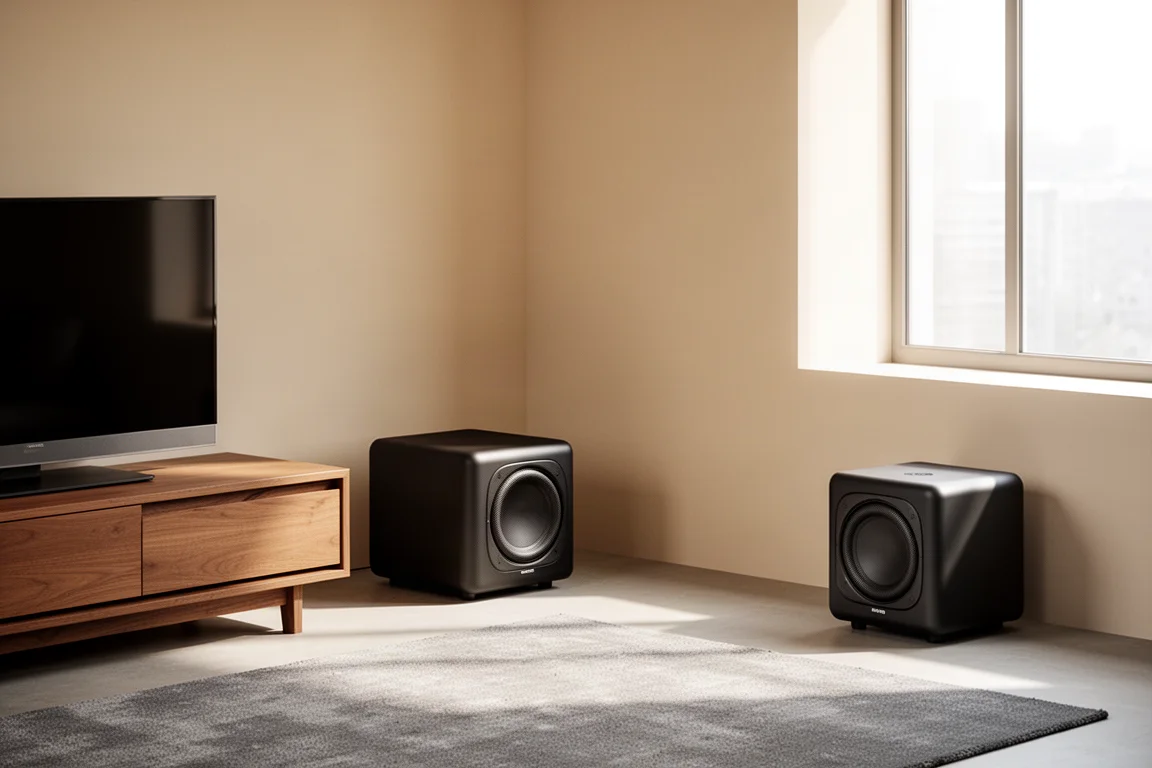
Either way, a compact subwoofer remains one of the most effective upgrades available to a system built around small stand-mounted speakers. Both of these models add full-range weight without taking over the room.
Conclusion
The SVS 3000 Micro and the KEF KC62 are both excellent compact subwoofers, and they solve the same problem in different ways. The 3000 Micro leads on control, tuning flexibility and price, with an app that makes setup genuinely comfortable and an onboard parametric EQ that works across every input. The KC62 leads on tactile controls, connectivity options and low-end weight, and it is the more striking object to live with.
Choose the 3000 Micro if you want the easiest path to well-integrated bass and the ability to correct the whole system from your seat. Choose the KC62 if your amplifier already handles integration, or if you value its physical controls and its heavier low-end character.
Further reading
Related Reviews
Subwoofers
Arendal 1961 Subwoofer 1S Review: Beautiful Build, Modest Punch at $1,000
A sealed $1,000 subwoofer with a gorgeous cabinet, plus three lower-priced alternatives that deliver more impact for movie nights.
Subwoofers
Arendal Sound 1723 2V Subwoofer Review: Dual 13.8-Inch Drivers Under $3,000
A flagship ported subwoofer with dual opposing 13.8-inch drivers, a 1,200W RMS amplifier, app-based DSP, and a 10-year warranty.
Subwoofers
Ascendo 16 Sub Active Sealed Review: Sealed Bass Built on Real Engineering
A close look at the Ascendo 16 Sub Active Sealed, a 16-inch sealed home theater subwoofer with independently verified measurements, a purpose-built driver, and genuinely controlled output.