Astrophotography
SVBONY SC571CC Review: A Budget-Friendly Cooled APS-C Camera for Astrophotography
The SVBONY SC571CC brings the proven IMX571 sensor to a cooled astrophotography camera at a more accessible price. Here is a practical look at its strengths and trade-offs.
Introduction
For astrophotographers who want a large-sensor cooled camera without paying a premium, the SVBONY SC571CC is worth a close look. It uses the well-known Sony IMX571 APS-C sensor, the same proven chip found in many popular cooled cameras. The main appeal here is price: it is often available for noticeably less than competing models, making it a practical option for budget-conscious imagers.
The camera is designed to pair with refracting telescopes and similar rigs, offering a large field of view even at longer focal lengths. This review covers what the camera offers, where it makes compromises, and who should consider it.
Who This Camera Is For
The SC571CC is aimed at astrophotographers who want a cooled camera with a large APS-C sensor but do not want to spend as much as mainstream options typically cost. The IMX571 sensor is a proven performer, with 3.76 micron pixels that sit in a useful sweet spot for a wide variety of telescopes. It is not the best at any single task, but it works well across many scenarios.
This camera suits imagers who already have a refractor or similar telescope and want to upgrade from a smaller sensor or an uncooled camera. It is also a good fit for those building a complete rig on a tighter budget, especially when paired with other SVBONY accessories.
Build and Design
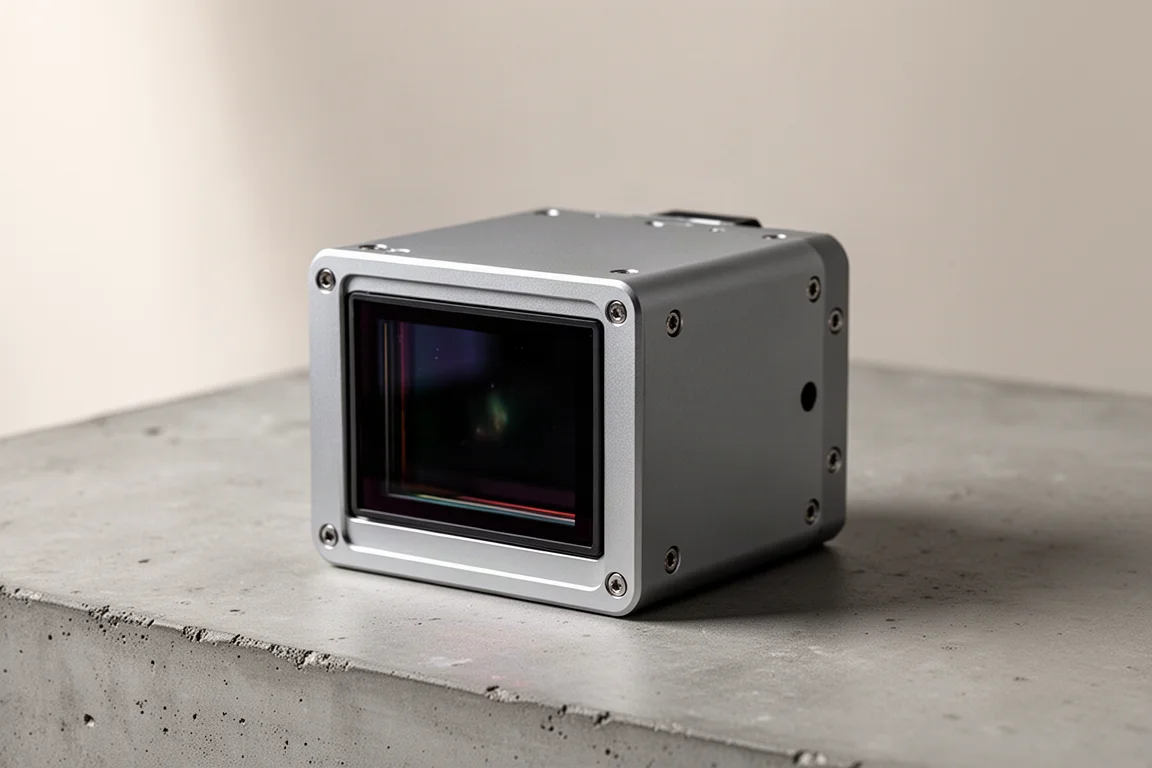
The SC571CC has a clean silver-gray body that fits well with darker-themed setups. At the front is a rectangular APS-C size sensor window with anti-reflection coating and no IR cut window. The side screw holes work with a variety of filter wheels and filter drawers, while the central threads are standard M42.
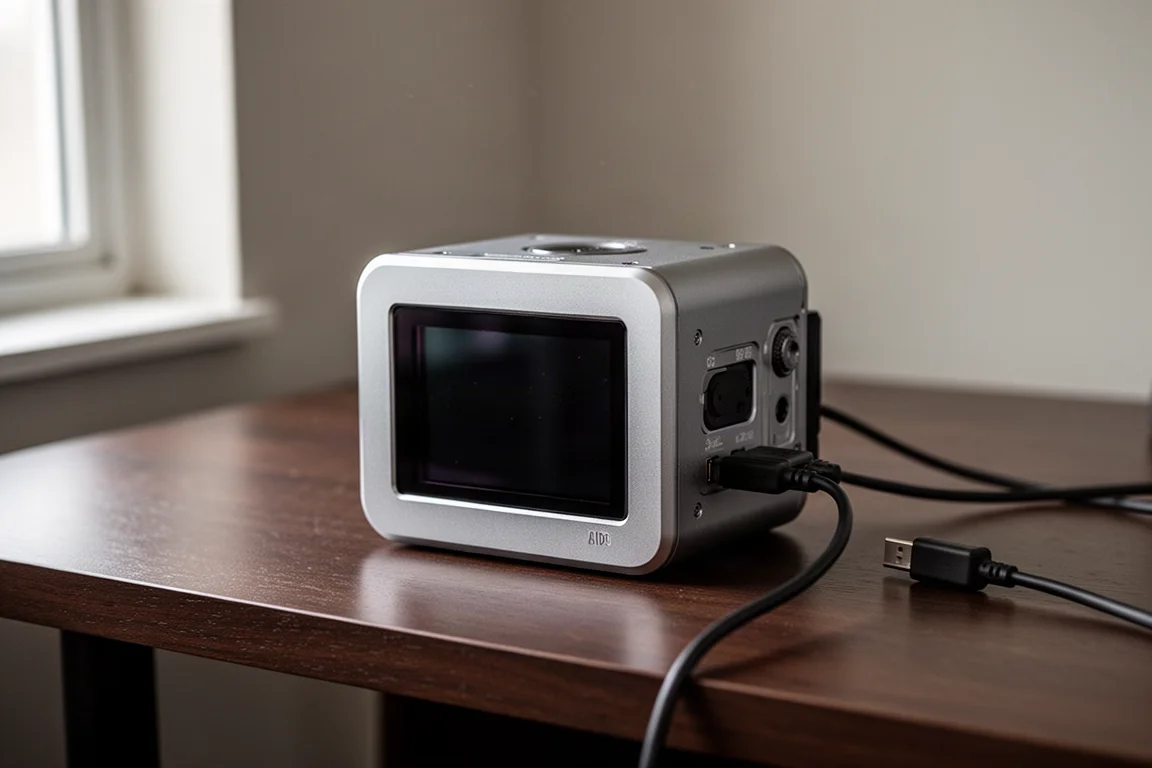
The camera measures 80 mm in diameter, which is slightly slimmer than some comparable models and can be an advantage for setups like HyperStar. On the other side, there is a 12 V 3 A power input and a USB-C port with USB 3.0 speeds. The camera includes 512 MB of internal cache.
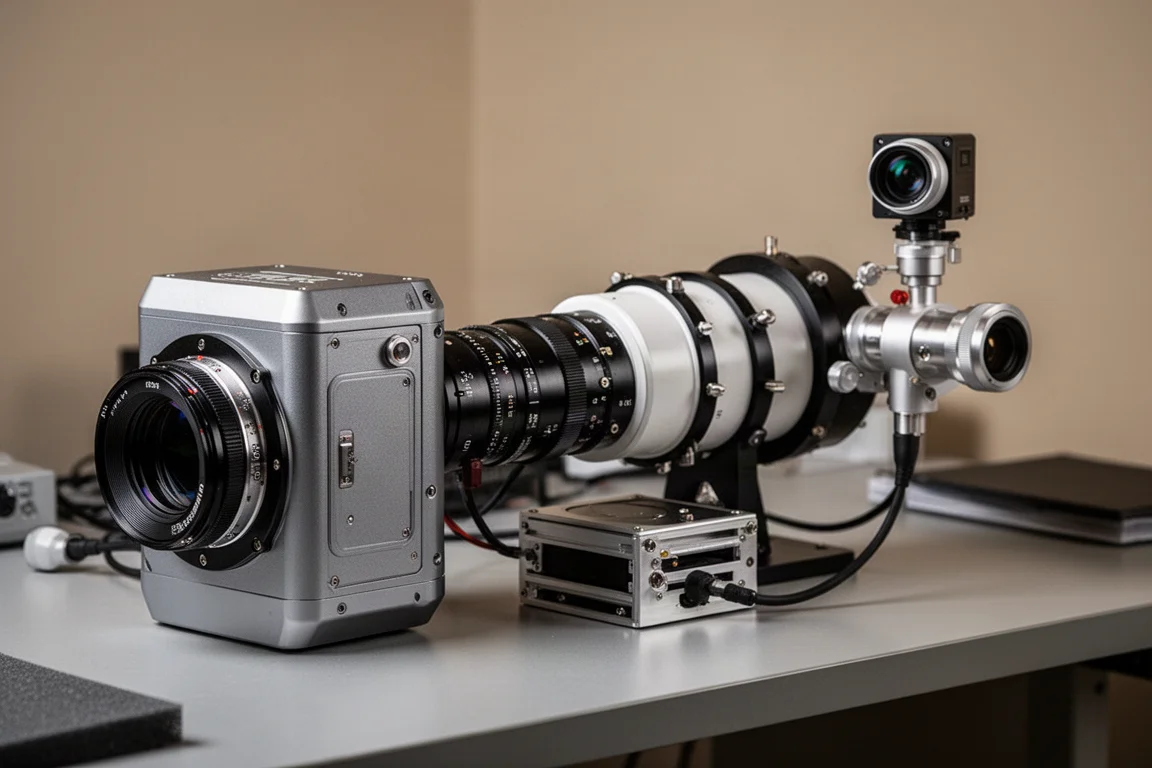
One notable omission is the lack of a built-in USB hub. Many competing cameras include a powered USB 2.0 hub for connecting accessories like filter wheels. The SC571CC does not, which is a deliberate choice to keep the price down. SVBONY instead suggests pairing the camera with an external hub, such as the SV241, which provides similar capability at a lower overall cost.
Cooling and Thermal Performance
The camera includes a built-in cooler, a dew heater, and a fan. In a room at 27°C, the cooler reached minus 13°C at full power, which is a full 40°C below ambient. That is better than the stated specification of 30 to 35°C below ambient.
The dew heater strength can be adjusted from one to four. A setting of one or two is generally sufficient for most conditions, while four is extremely strong and can reduce cooling effectiveness over time by heating the whole camera. The default setting was four, so it is worth lowering it.
Dark frames and bias frames showed no amp glow and looked clean in both high and low conversion gain modes, consistent with the reliable behavior expected from the IMX571 sensor.
Software and Compatibility
The camera connects to a computer via USB-C along with the 12 V input. Drivers are available from the SVBONY website, including a native SVBONY app, an ASCOM setup for use with software like NINA and SharpCap, and a DirectShow setup for other applications.
The camera works with popular astrophotography software such as NINA, Stellarmate, and SharpCap on Windows. It does not work with the ZWO ASI Air, as that platform only supports ZWO cameras.
The camera appears natively in software under SVBONY, Rising Cam, and ToupTek, which suggests it may be built by ToupTek to SVBONY specifications. This is not a drawback, as ToupTek is a well-regarded manufacturer. The native SVBONY app is straightforward, and the ASCOM setup is the recommended route for most users.
Image Quality and Performance
The SC571CC delivers image quality in line with other IMX571-based cameras. Test images of M13 and M51 showed clean star shapes and good detail, even with limited data collected from a light-polluted urban location.
The camera offers a manual switch between low conversion gain and high conversion gain, giving the user direct control rather than letting the camera decide automatically. In high conversion gain mode, read noise and gain performance closely matched the published specifications and were comparable to a well-known competing camera.

For deep-sky imaging, a gain setting of 100 with high conversion gain is a sensible starting point, along with an offset around 400. The camera performed as expected in testing, with no surprises in dark frames, bias frames, or stacked images.
Things to Consider Before Buying
The biggest trade-off is the lack of a built-in USB hub. If you plan to connect a filter wheel or other accessories directly to the camera, you will need an external hub or a different camera. This adds a small amount of extra cabling and hardware.
The camera also does not include an integrated tilt adjuster. If you need tilt adjustment, you can add a separate tilt adjuster from SVBONY or another brand, or rely on a telescope that already has one.
The included filter drawer does not have threaded holes on the side, which means the sensor angle cannot be finely controlled when connecting the camera. This can make it harder to align an off-axis guider perfectly, though it is not a major issue for most users.
Buying Advice
The SVBONY SC571CC is a solid choice for astrophotographers who want a cooled APS-C camera at a more accessible price. It delivers the same proven IMX571 performance as more expensive options, with the main compromise being the lack of a built-in USB hub.
If you are building a budget-conscious cooled imaging rig, this camera is worth considering, especially when paired with SVBONY accessories like the off-axis guider and filter drawer. The overall package can be assembled for significantly less than equivalent setups from other brands.
For those who already have a telescope and software setup, the SC571CC is a practical upgrade that does not sacrifice image quality. Just be prepared to manage the USB hub situation separately.
Conclusion
The SVBONY SC571CC is a capable and well-built cooled astrophotography camera that makes the IMX571 sensor more accessible. It performs as expected in terms of image quality, cooling, and reliability, while offering a meaningful price advantage over many competitors.
The lack of a built-in USB hub is the main compromise, but it is a reasonable trade-off for the savings. For budget-minded astrophotographers, this camera represents strong value and a practical path to a full cooled imaging setup.
Product link
View more details for SVBONY SC571CC
This product is mentioned in the review. Check the specifications, options, and compatibility before buying.
View more details for SVBONY SC571CCFurther reading
Related Reviews
Astrophotography
ASKAR FRA400C Review: A Versatile 400mm Refractor for Astrophotography and More
The ASKAR FRA400C is a compact 72mm refractor that balances reach, versatility, and portability for astrophotographers and visual observers.
Astrophotography
Askar SQA106 Review: A Premium 106mm Astrograph With Exceptional Optics
The Askar SQA106 is a premium 106mm quintuplet astrograph with impressive sharpness across full-frame sensors, though its price and weight demand careful consideration.
Astrophotography
Astro Imaging Gear 2026: Eight New Products Worth Watching
A look at the most interesting new astrophotography and astronomy products announced this year, from fast telescopes to smart cameras and wireless accessories.