Emergency Shelters
Survive Tent Review: A $25 Mylar Emergency Shelter Tested Overnight
A lightweight Mylar emergency shelter with closable doors that blocks wind and rain, but offers little warmth and tears easily. Here is what to expect before you buy.
Introduction
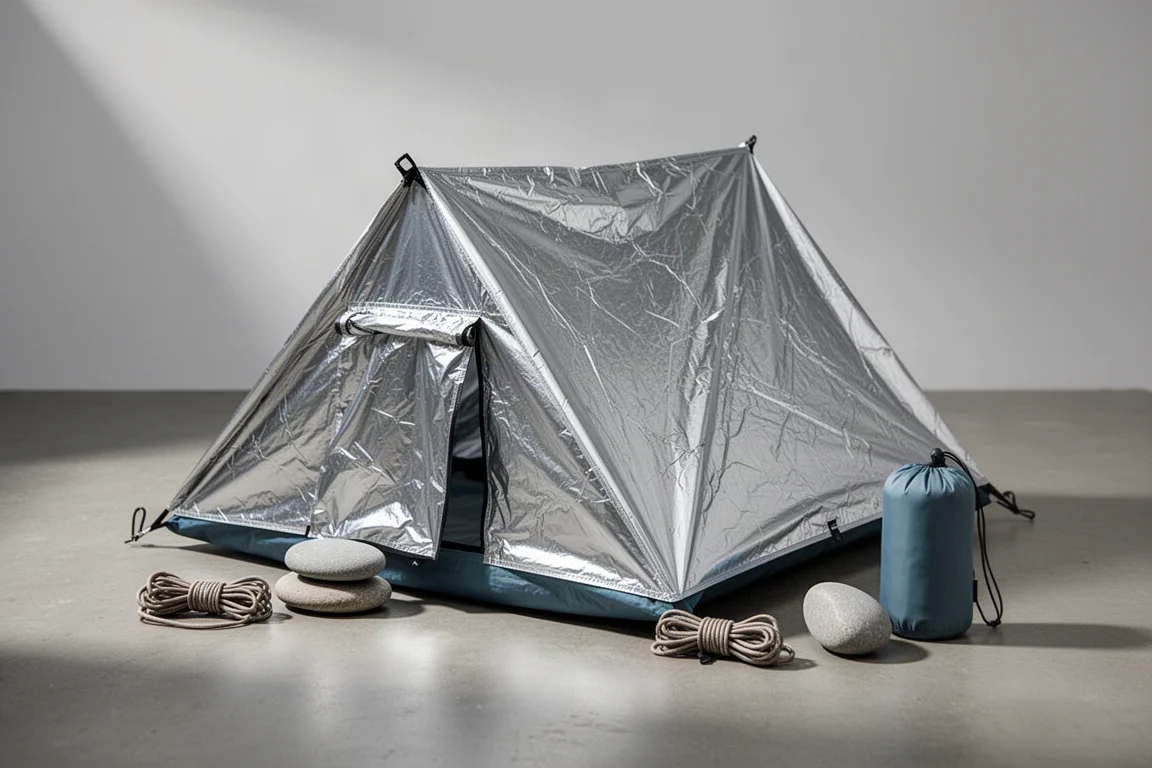
The Survive Tent is a Mylar emergency shelter with a feature most similar products lack: doors. Reflective Mylar shelters have existed for years, but they are usually open at one end, which makes them awkward in wind and rain. A closable entry is a small design change with a noticeable effect on how the shelter behaves overnight.
The material is the same reflective film used in emergency blankets, a thin plastic layer with an aluminum coating bonded to it. That construction is what makes the shelter waterproof, windproof, and mildly reflective, and it is also what makes it fragile.
At $25, the Survive Tent is positioned as a last-resort item rather than regular camping gear. It packs down to roughly the size of a drinks can and weighs about 11 oz, so it slips into a daypack or a vehicle kit without much thought. It is designed to be used three ways: as a bivy, as a blanket, or pitched as a small tent shelter. It measures 92 in long, 40 in wide, and has a peak height of about 34 in.
This article covers how it performed across a 12-hour overnight session, with temperatures falling from around 47°F in the evening to about 30°F before sunrise, in windy conditions and with a small chance of rain.
Who This Product Is For
The Survive Tent is aimed at hikers, hunters, and anyone who spends time in remote terrain and wants a minimal backup layer in their pack. It is not camping gear in any comfortable sense. It is an emergency item meant to be carried unused and, ideally, never deployed at all.
It suits someone who already has basic bushcraft skills. Using it as a blanket or a bivy is straightforward, but pitching it as a shelter takes more work than the simple triangular shape suggests.
The people who get the most from this shelter are those who accept the trade-offs before they buy: minimal weight and pack size in exchange for a cramped, fragile, and uncomfortable night.
Main Strengths
Wind blocking is the standout benefit. Once the shelter is pitched and the door flap is weighted down, it cuts moving air almost completely, and that alone makes a cold night noticeably more bearable than lying exposed.
Waterproofing is the second strength. Rain runs off rather than through, and the material keeps moisture out as long as the film stays intact.
Reflected heat is real but small. With the Mylar close to the body, the material returns a limited amount of radiant warmth. In practice that works out to roughly a one to two degree difference between being inside the shelter and being outside without it.
The doors are a genuine improvement over doorless Mylar shelters. Being able to close off the entry changes how much wind reaches you and keeps light rain off the sleeping area.
Weight and packed size remain the practical argument for carrying it. Less than a pound, roughly can-sized, and it takes up almost no room next to the rest of a kit.
Setup and Pitching
The shelter ships with roughly 22 ft of 550 paracord, which serves as the ridgeline and the main structural support. Getting it into a usable triangular shape takes several steps. The sides have to be spread and weighted with rocks, the ridgeline has to be tensioned and anchored, and the whole sheet has to be pulled tight enough that the material does not rest against the body.
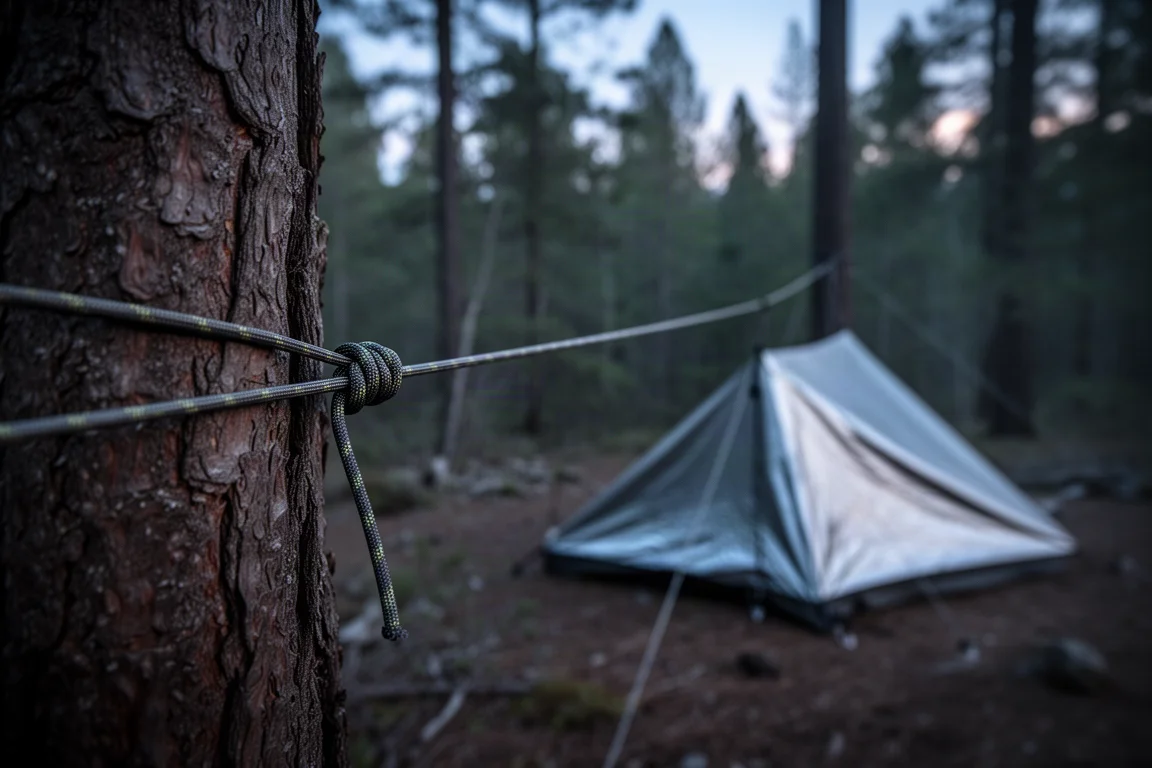
Closing the door is the weakest part of the design. There is no Velcro or fastening hardware. The flap is held shut by placing a rock on top of it. In calm conditions that works well enough. In wind, the film can stretch or the flap can work loose. Adjusting one part of the pitch tends to throw off another, so a good setup depends on patience and a little practice.
Used as a bivy or a blanket, none of this applies. That mode is simple, fast, and the easiest way to get value from the product.
Heat Reflection and Wind Blocking
Mylar reflects heat. It does not generate it, and it does not insulate. That distinction matters more than any single specification on the packaging.
Claims that Mylar reflects up to 90 percent of body heat are technically accurate but easy to misread. The figure describes how little heat passes through the material, not how much warmth you feel. The practical result is a difference of one to two degrees, not a warm night.
Body heat is lost through radiation, conduction, convection, and evaporation. A Mylar shelter can slow that loss by cutting wind and reducing radiant loss, but it will not prevent hypothermia. It only buys time.
Conduction is the most obvious problem when lying on the ground. The ground pulls heat away from the body continuously, and sitting up to reduce that contact is difficult inside a shelter with a 34 in peak. A measured comparison after roughly an hour inside showed 36°F indoors against 30°F outdoors, a six degree difference that reflects trapped air and wind protection rather than any real insulating value.
Condensation and Durability
The material does not breathe, and that has consequences. Within hours, condensation formed on the walls, the ceiling, and the floor, and water began running off the interior surfaces onto clothing and gear. In a survival context, getting damp is a serious problem because wet clothing accelerates heat loss.
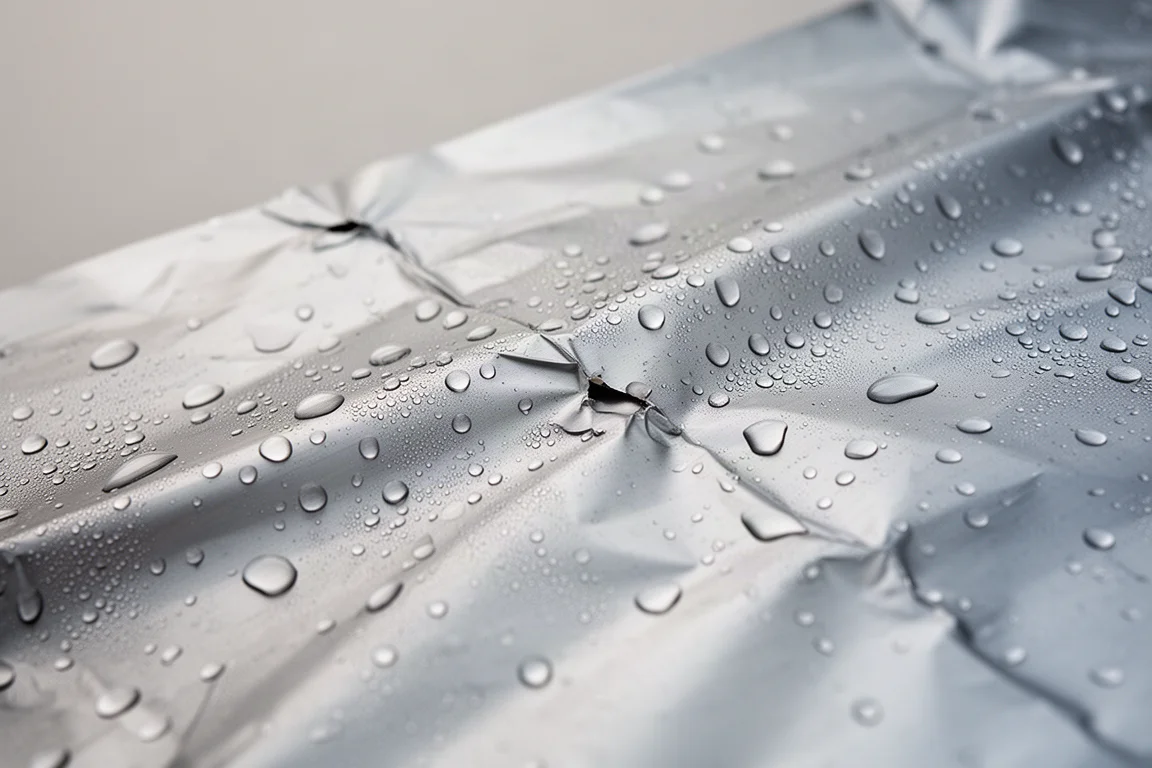
Durability is the other limitation. The film is a thin plastic layer with an aluminum coating, and it tears easily. After a single night of movement, holes had opened in the floor and the material had stretched thin enough to let light through. The ridgeline paracord also stretched overnight, which let the shelter sag inward until it was resting against the occupant, transferring moisture from the walls onto whatever was underneath.
Realistically, this is a one-night item, or at most two or three nights with extreme care. It is not something to reuse season after season.
Things to Consider Before Buying
- It is not insulating. The measured temperature benefit was about six degrees with the shelter pitched as well as it could be.
- Interior space is tight. At 92 in long, 40 in wide, and 34 in at the peak, sitting upright is difficult for taller users, and there is no way to get away from the material once it sags.
- Sealing the shelter properly is hard. The door has no fastener, and the pitch is sensitive enough that fixing one area disturbs another.
- Condensation is unavoidable. Because the film does not breathe, moisture collects on every interior surface and will dampen clothing and a sleeping layer.
- It will not last. The film punctures and stretches quickly, so plan on it being a single-use backup rather than a durable shelter.
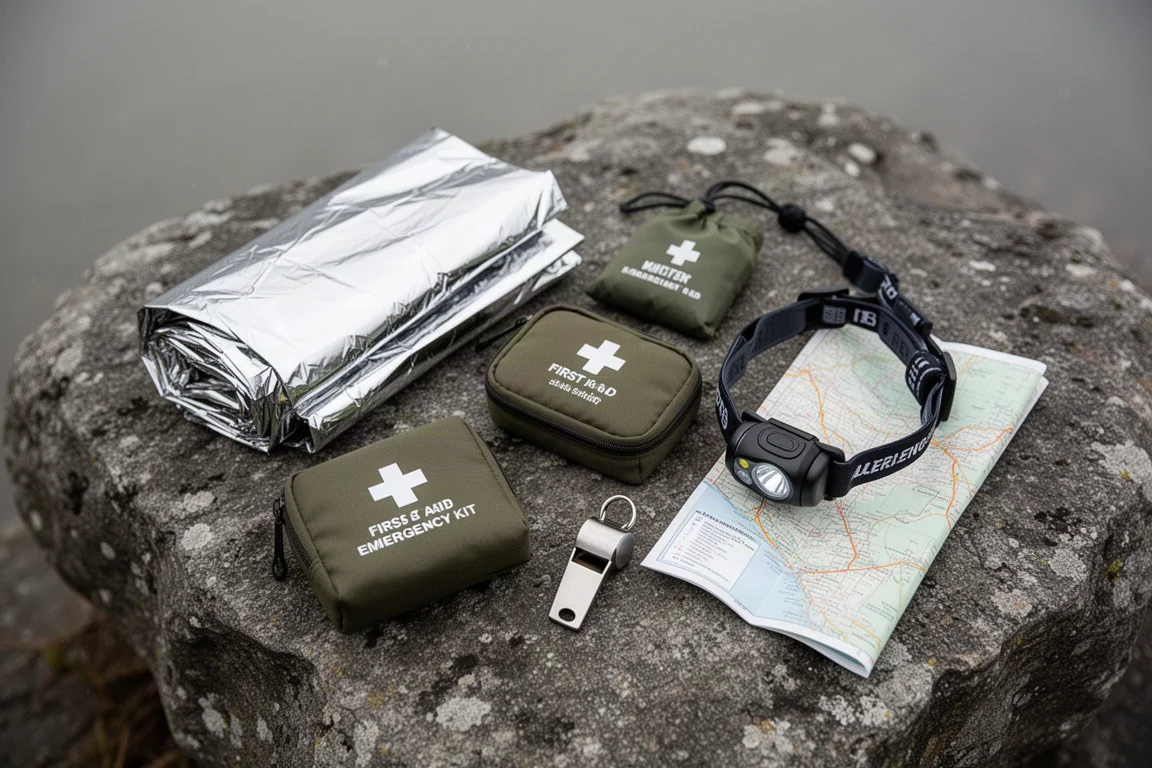
- Nothing is included beyond the shelter and cord. Layers, a light source, food, and water are all on you.
- A lightweight tarp can match the wind and rain protection without the heat reflection, and it can be reused. That makes the Mylar shelter a backup, not a substitute for proper gear.
Buying Advice
At $25, the Survive Tent makes sense as a sealed, unused item that lives in the bottom of a pack, a glovebox, or a small emergency kit. It is worth buying for the wind and rain protection alone, provided you go in expecting very little warmth and a fragile shelter that may only survive one night.
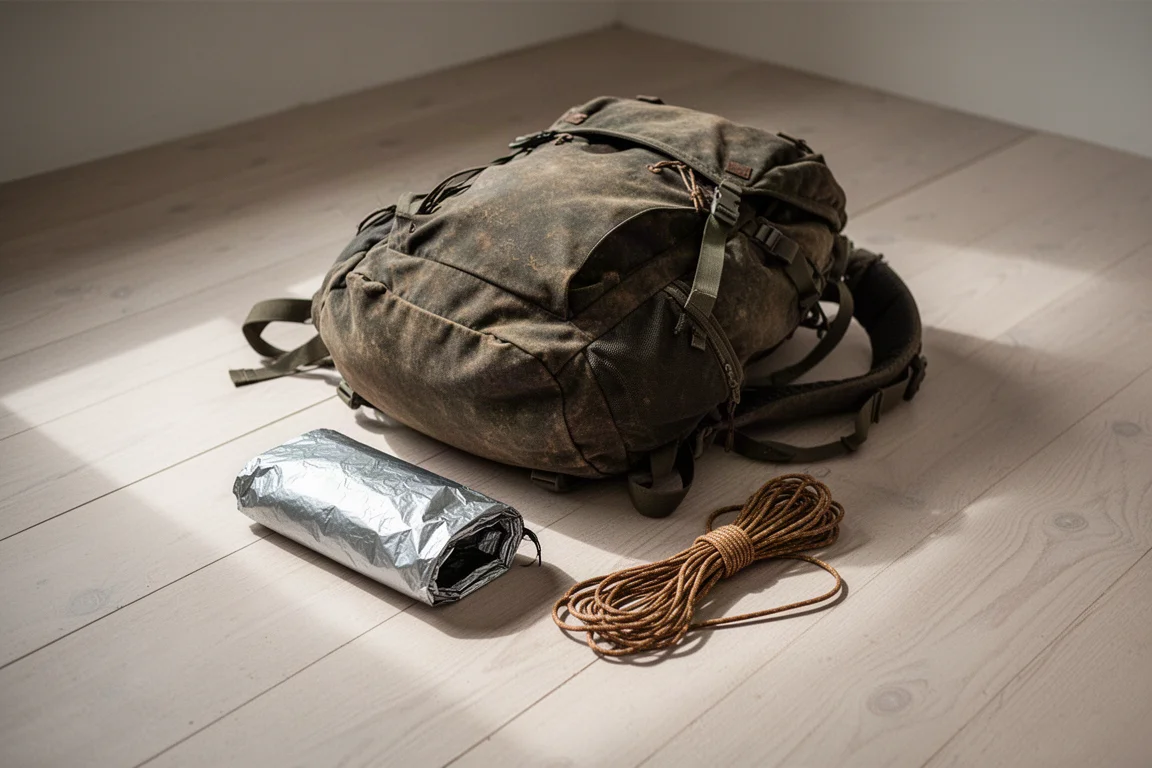
Store it in its original packaging, check that the film has not been creased or punctured before a trip, and treat it as one layer of a system rather than the system itself. The right way to think about this product is prevention first: carry adequate layers, plan routes so an unplanned night out is unlikely, and keep the shelter as a genuine last resort. If you ever do need it, pitch it with the material pulled as tight as you can manage, keep your clothing dry, and stay as close to the reflective film as comfort allows.
Conclusion
The Survive Tent does what a Mylar emergency shelter is supposed to do, and it does it slightly better than the doorless versions that came before it. It blocks wind, keeps rain off, reflects a small amount of body heat, and weighs almost nothing in a pack.
It is also cramped, hard to pitch well, prone to condensation, and quick to tear. Anyone expecting a warm, comfortable night inside a reflective bag will be disappointed. Anyone who treats it as a compact emergency layer, carried in case everything else goes wrong, will find it worth the small price.
Product link
View more details for Survive Tent
This product is mentioned in the review. Check the specifications, options, and compatibility before buying.
View more details for Survive TentFurther reading
Related Reviews
Emergency Shelters
Aqua Quest Survivor Emergency Tarp Review: A High-Visibility Shelter Built for Hard Weather
A 10 x 10 ripstop nylon emergency tarp with taped seams, a 5,000 mm hydrostatic head rating, 19 tie-out points, and reflective trim, tested through winter storms and driving rain.
Emergency Shelters
F Raven Wind Sack 3 Review: A $150 Emergency Shelter That Struggles in Real Weather
A field-focused look at the F Raven Wind Sack 3, covering wind and rain performance, condensation, setup limits, and whether it earns its price.
Emergency Shelters
Terra Nova Bothy Bag and Fjallraven Windsack 3: Two Emergency Shelters Tested in Wind and Rain
A wet, windy field test of the Terra Nova Bothy Bag alongside notes on the Fjallraven Windsack 3, covering condensation, ventilation, comfort, and when an emergency shelter is worth carrying.