Ski Resorts
Sun Valley Resort Review: Is Idaho's Iconic Ski Destination Worth the Trip?
Sun Valley pairs nearly 90 years of history and upscale lodges with modest snowfall and limited expert terrain. Here's what to expect before booking.
Introduction
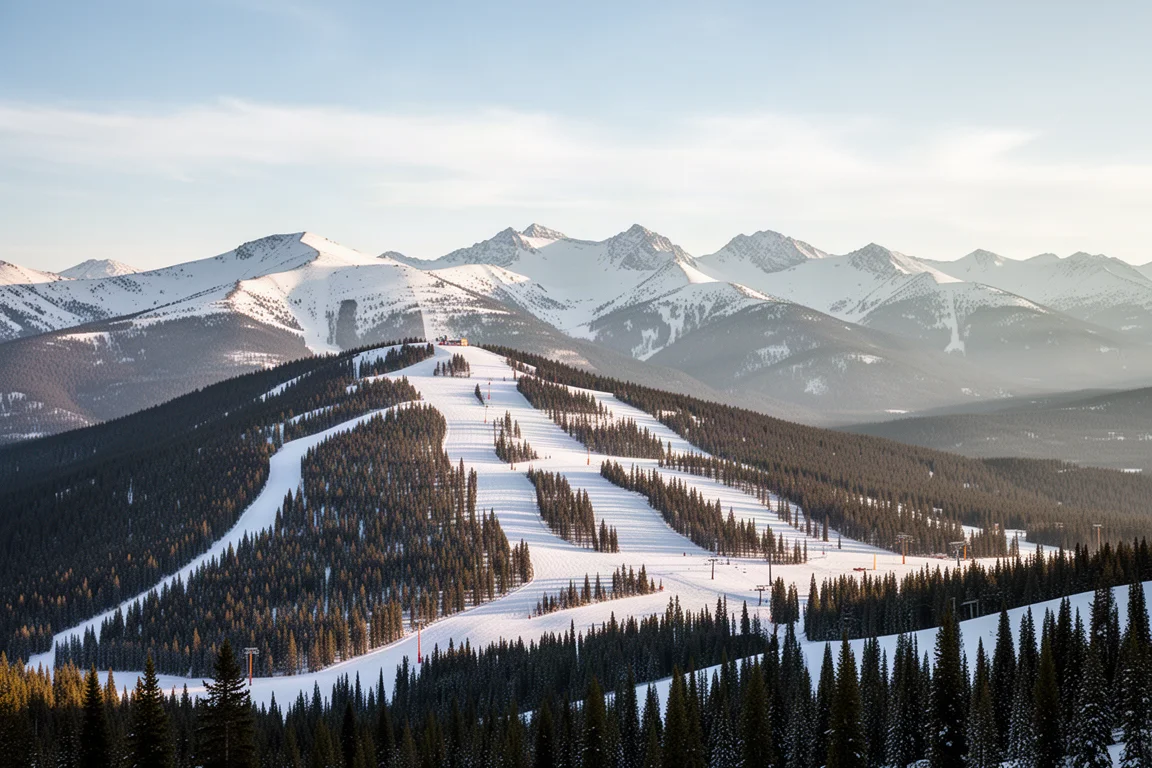
For many skiers planning a trip out west, Idaho is not the first state that comes to mind. Sun Valley has always been the notable exception. The resort has operated continuously for nearly 90 years, giving it a longer track record than every other Rocky Mountain destination over 1,000 acres, and it has built a loyal following of dedicated guests across decades. It is also far more remote than many of its competitors, which raises a fair question: is the experience actually worth the hype?
This review walks through the mountain experience in detail, then covers how Sun Valley stacks up in overall destination rankings.
Two Mountains, One Resort
Unlike most American destination resorts, Sun Valley consists of two physically separate terrain areas: Bald Mountain and Dollar Mountain. Bald Mountain hosts the vast majority of the terrain, and for most guests, all of their time on snow will be spent here. It measures 2,245 acres with varied terrain across its footprint. Lower and mid-mountain terrain sits chiefly below tree line with tree-lined trails and glades, while the very top of Bald Mountain hosts some high alpine bowl terrain.
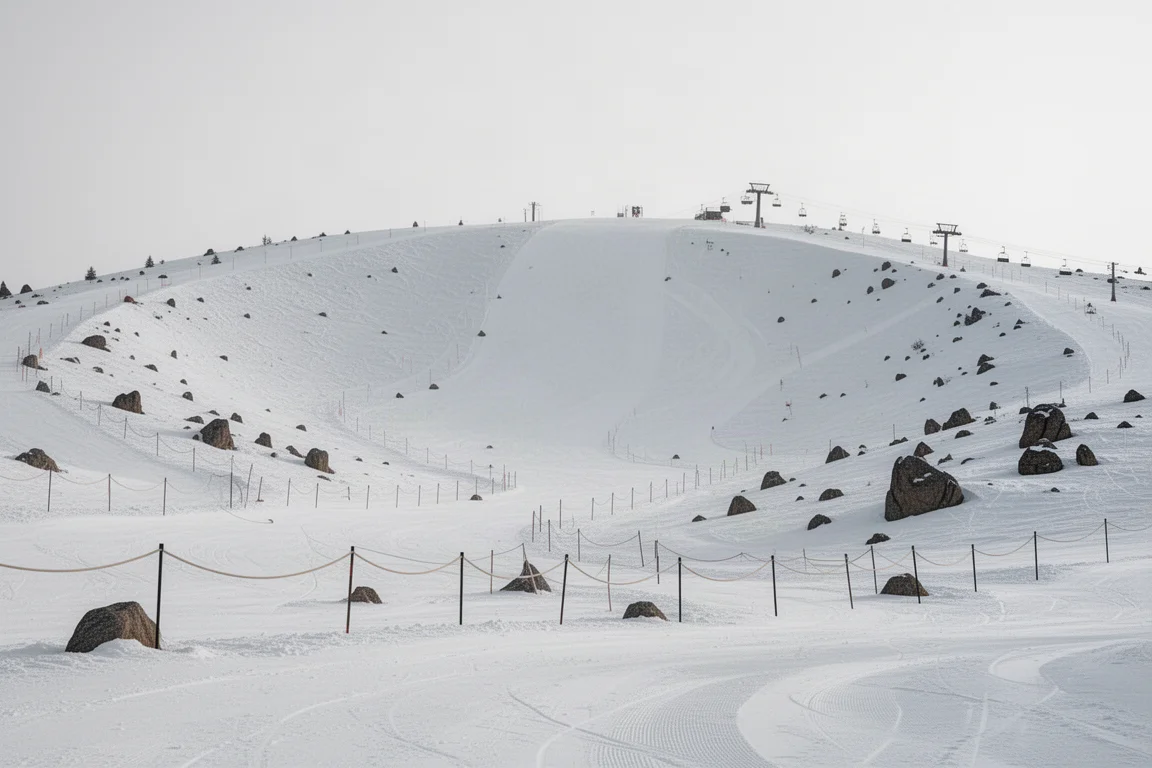
Dollar Mountain caters almost entirely to beginners. At 189 acres and 650 vertical feet, it is about as short as Idaho mountains get, but it is one of the most distinctive-looking mountains in the country: an entirely treeless footprint that turns the area into one giant bowl, with only rope lines and some rock formations separating the trails. Confusingly, the naming conventions invert expectations. Bald Mountain is the one with trees, while Dollar Mountain is the one without.
Luxury Lodges and On-Mountain Comfort
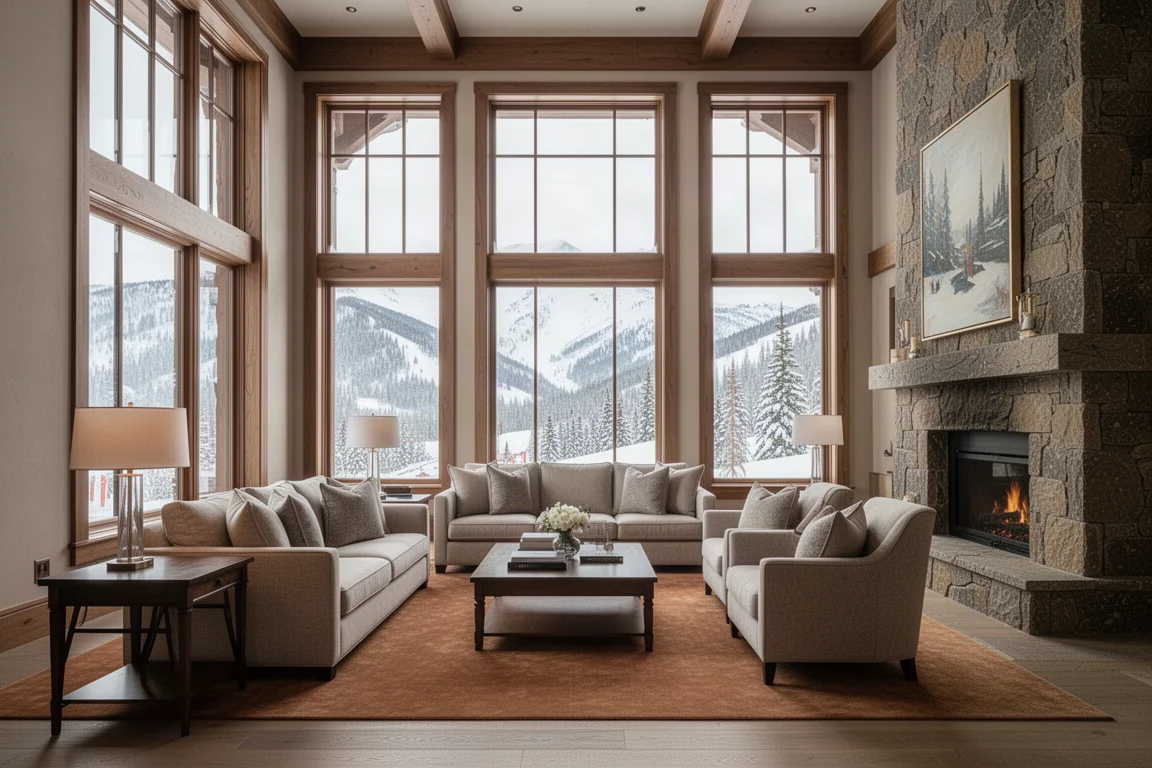
Sun Valley has attracted visitors for years thanks to its luxury credentials, and this becomes immediately apparent when you step into one of its on-mountain lodges. These facilities are among the highest caliber in the business, with elegant carpeting, couch seating, fantastic views, and a grandiose ambiance that feels genuinely upscale without being overly commercialized.
One caveat: the centrally located Lookout and Roundhouse lodges are smaller than the resort’s other facilities and reach capacity during peak times. Wherever you stop in, though, everything is incredibly nice, and facilities earn a 9 out of 10 in our category scoring.
Snow Reliability: The Big Weakness
Its Rocky Mountain location might suggest copious quantities of snow, but Sun Valley does not quite live up to snowfall expectations. The resort averages less than 200 inches of snow a season, far less than competing destinations. The problem is compounded by modest elevation: Sun Valley sits thousands of feet lower than many Rocky Mountain counterparts, resulting in less favorable snow preservation.
Sun Valley enjoys powder after storms, but conditions can deteriorate quickly and turn crusty after a few days without significant accumulation, especially in the sun-exposed high alpine areas. Much of the skiable footprint faces north, but the mountain as a whole faces east, and bare rock is common on the unskiable south-facing ridges. The resort scores a 7 for snow and a 5 for resiliency, the two lowest marks on its scorecard.
Terrain Breakdown by Ability
Beginners
Sun Valley is a family-oriented resort, and it offers an extensive array of green terrain on paper, with beginner-rated trails off every chairlift. That is incredibly rare, if not unheard of, at other destination resorts. However, some green trails are pitched fairly steeply, and many would be considered blues at other resorts, especially in the Seattle Ridge area. Beginners looking for truly easy terrain should head to Dollar Mountain, where green trails are much more accurately calibrated to the beginner level.
Intermediate Skiers
Despite the steeper-than-average greens, blue trails are generally comparable in difficulty to other resorts. Most areas offer intermediate options, but the best cruisers are found off the Challenger and Frenchman’s lifts. Christmas Ridge is also home to some excellent intermediate bowl terrain. Most blue runs receive regular grooming, and those that remain ungroomed make good mogul practice venues. Bald Mountain also offers a couple of terrain parks tailored toward beginner and intermediate visitors, while Dollar Mountain has jumps over 50 feet tall for advanced freestyle riders.
Advanced and Expert Skiers
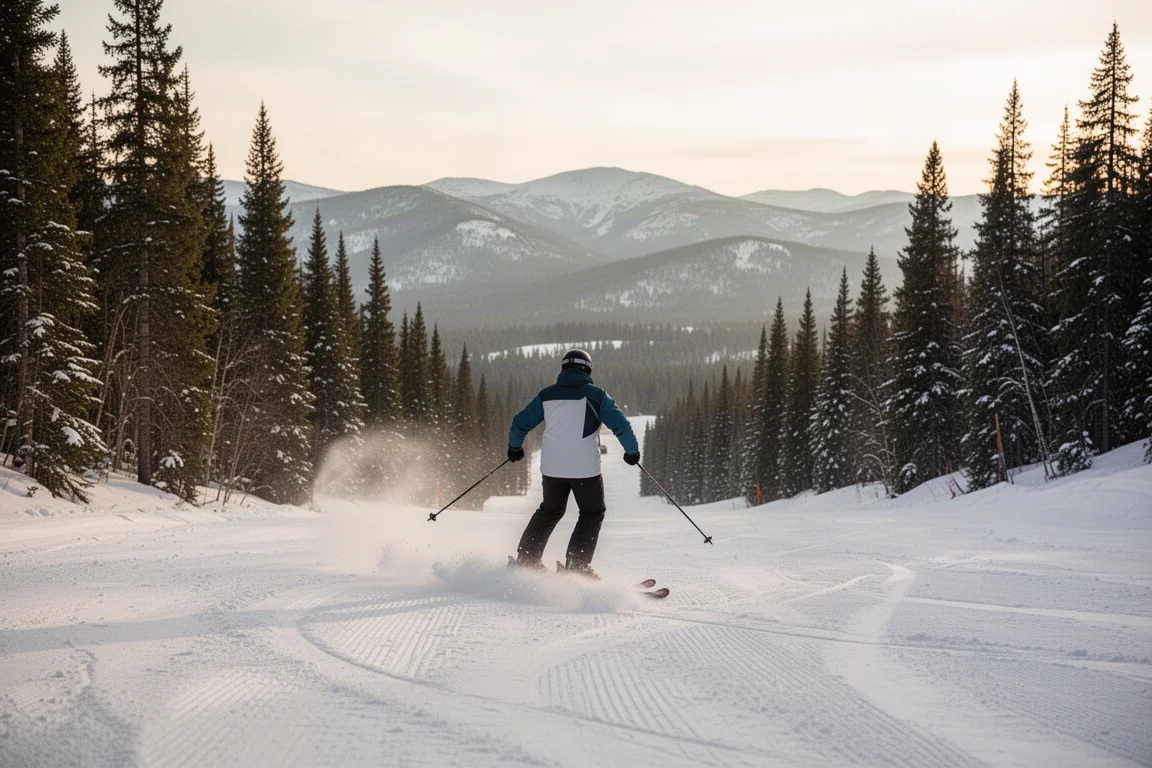
Sun Valley offers some fairly steep terrain, and the overwhelming majority of Black Diamond runs are ungroomed trails, glades, and bowls. A handful of single black runs can be found off nearly every lift, though most mellow into blues partway down and tend to develop huge moguls after a few days without new snow. Despite the Sunrise Bowl expansion a few years back, Sun Valley still is not ideal for experts. True expert pitches exist only on a small minority of trails at the south end, and Sunrise Bowl is subject to extremely variable openings with south-facing exposure that makes for some of the worst snow reliability of any Rocky Mountain destination. The resort scores a 6 for challenge and an 8 for terrain diversity.
Lifts and Crowd Flow
Sun Valley offers a competitive lift network that has only been getting better. Nearly all areas are now served by detachable lifts, and the resort does not attract the same traffic as some other Rocky Mountain destinations, so it is rare to see overly long lines even at peak times. This earns an 8 for crowd flow and a 7 for lifts.
Recent upgrades have improved logistics significantly. Two winters ago, the resort replaced the Challenger and Greyhawk lifts at the Warm Springs base with a new Challenger six-pack that is 20% faster while retaining a mid-unload station, plus a new Flying Squirrel high-speed quad on a completely new alignment for quicker access to points south. This past season, the aging Seattle Ridge Quad was replaced with a brand new six-pack.
A few annoyances remain: the two lifts serving the very top of Bald Mountain, Lookout and Mayday, are still slow fixed-grip triples, and the lift scanning technology is behind the times, so guests must have their passes out physically. Navigation is generally straightforward with clear signage, though some areas like Frenchman’s take a few days to learn.
Sun Valley is on both the Icon Pass and the Mountain Collective Pass. Full Icon passholders get seven unrestricted days, while Mountain Collective passholders get two. Note that Sun Valley is not on the Icon Base Pass, and the Icon Base Plus pass that previously included access has been discontinued.
Getting There and Where to Stay
Sun Valley is among the more remote ski destinations in the United States. The closest airport is Friedman Memorial Airport in Hailey, just 14 miles south, offering seasonal nonstop flights from cities like Seattle, Los Angeles, San Francisco, Salt Lake City, and Denver. For a wider range of flights, Boise Airport is about a two-and-a-half-hour drive away, and Salt Lake City is just under five hours by car. Winter driving can be tricky: US 20 is the shortest route from Boise but can be hazardous in bad weather, so many travelers opt for the longer but safer I-84 route.
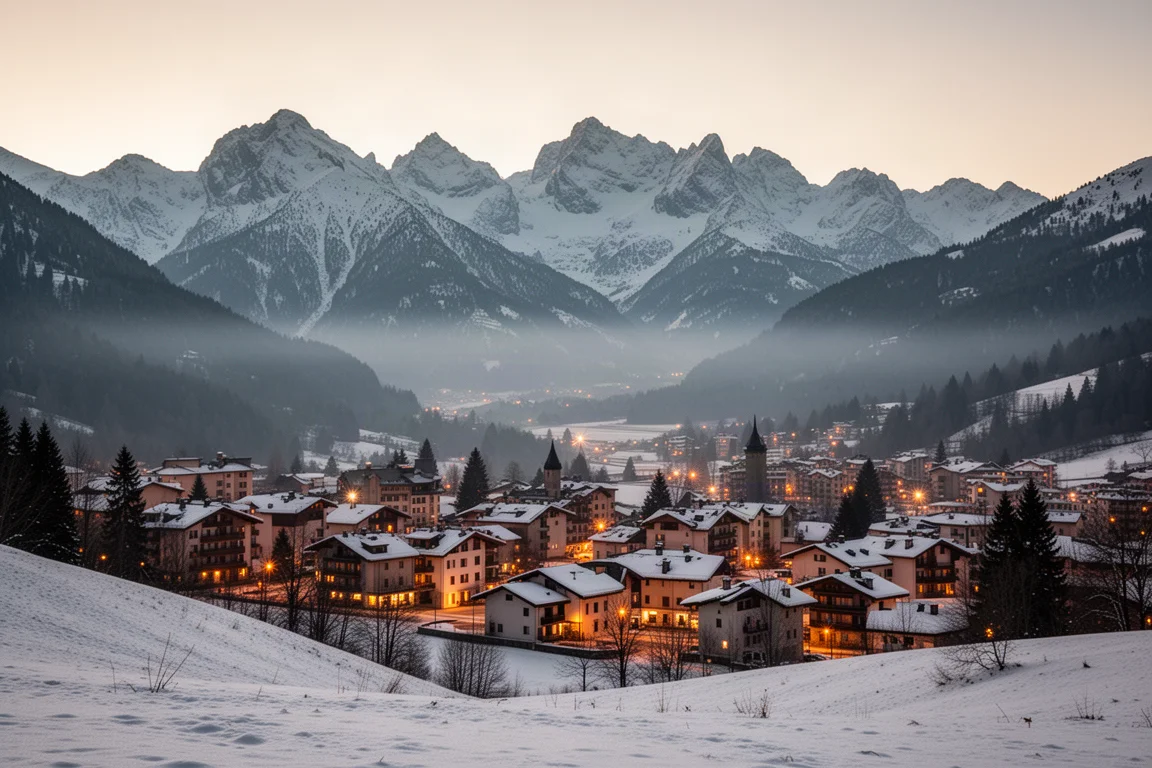
Once you arrive, parking is free and relatively easy at both the River Run and Warm Springs base areas, with shuttle buses to the lifts. Bald Mountain sits adjacent to Ketchum, a charming mountain town with a relatively local, uncommercialized feel. The official town of Sun Valley is a few miles down the road, more sprawled out, with a nice walking village and country club vibes. Most accommodations fall into the upscale to luxury range, including the historic Sun Valley Lodge and Sun Valley Inn. Bald Mountain has no lodging directly on site, though the closest condos are a short walk from the Warm Springs base. Budget travelers have limited options: Ketchum’s two Best Westerns are the cheapest choices, and they are actually pretty nice despite the brand name. Free shuttles connect most lodging areas to the lifts.
The après scene leans laid-back rather than lively. Both base lodges offer casual scenes, with River Run usually hosting live music on weekends, and Ketchum has bars like Whiskey Jacques and the Warfield ranging from casual to upscale. The social scene leans toward an inner social network rather than an environment to meet new people, and nobody will mistake the area for a party town.
Buying Advice and Overall Score
Sun Valley is a very solid vacation destination from a customer experience perspective, but it faces stiff competition from resorts with substantially more snow and larger, more difficult footprints. Its enduring popularity comes from an extremely loyal customer base, a charming town, and upscale amenities, not because the physical mountain is overtly superior to other easier-to-reach Rocky Mountain destinations.
Lift ticket prices have become significantly more expensive in recent years, with one-day adult rates now topping out at $245. Nobody should pay that amount for a lift-served ski experience where snow consistency is a notable issue and neither footprint size nor expert terrain quality are top-notch. These days, visiting Sun Valley really only makes sense if you are a local with a season pass, or if you have an Icon or Mountain Collective pass.
Here is how Sun Valley’s Bald Mountain scores across our 10 categories:
| Category | Score |
|---|---|
| Snow | 7 |
| Resiliency | 5 |
| Size (2,245 acres) | 7 |
| Terrain Diversity | 8 |
| Challenge | 6 |
| Lifts | 7 |
| Crowd Flow | 8 |
| Facilities | 9 |
| Navigation | 7 |
| Mountain Aesthetic | 8 |
These add up to an overall score of 72, placing Sun Valley third in the Northern Rockies and 23rd in North America. Nobody should book a trip expecting copious powder or blood-curdling terrain, but for nice lodges, beautiful views of the Sawtooth, Smoky, and Pioneer mountain ranges, and a hassle-free resort experience, Sun Valley certainly fits the bill.
Conclusion
Sun Valley remains a unique destination that trades snow depth and expert terrain for charm, luxury, and ease. If you value well-appointed lodges, a genuinely local-feeling mountain town, short lift lines, and stunning high-alpine views, the trip is easy to justify, ideally with an Icon or Mountain Collective pass rather than a full-price lift ticket. If your priority is deep powder or expert-level challenge, look elsewhere in the Rockies.
Product link
View more details for Sun Valley Resort
This product is mentioned in the review. Check the specifications, options, and compatibility before buying.
View more details for Sun Valley ResortFurther reading
Related Reviews

Ski Resorts
Alyeska Resort Review: Alaska's Largest Ski Resort, Worth the Journey?
A deep look at Alyeska Resort: heavy snowfall, expert terrain, an Icon Pass connection, and the trade-offs of a near-sea-level mountain in the Last Frontier.

Ski Resorts
Bear Valley Ski Resort Review: Northern California's Quiet Sierra Alternative to Tahoe
A lesser-known Sierra resort with over 1,300 skiable acres, surprisingly strong expert terrain, and crowd levels Tahoe can only dream of. Here is what to know before you go.

Ski Resorts
Colorado Ski Resorts Ranked: The Best Destination Mountains for Overall Experience
A ranked guide to Colorado's destination ski resorts, covering terrain, snow, logistics, crowds, and cost so you can pick the right mountain for your trip.