Backpacking Layers
Summer Backpacking Layering Systems: Five Lightweight Layers Worth Packing
A practical look at five lightweight layers for warm weather backpacking, from a packable down vest to a quick-drying base layer hoodie.
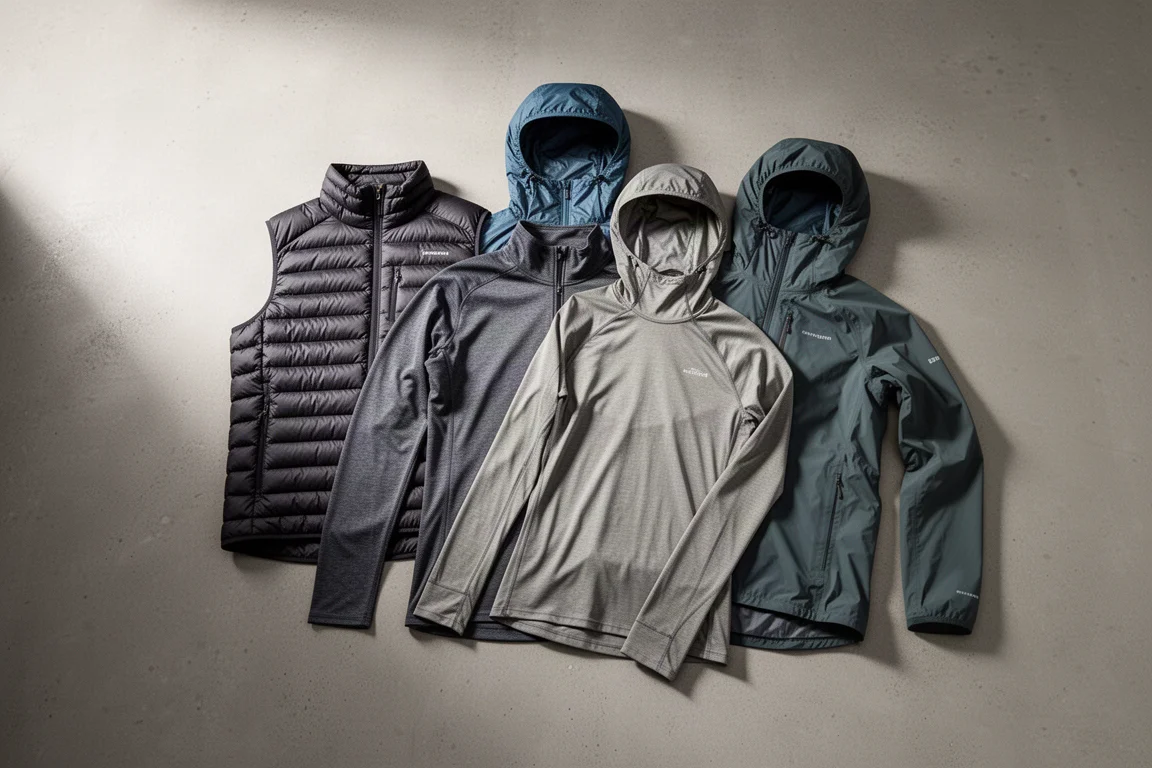
Introduction
Warm weather backpacking has a comfort problem that shows up twice a day. In the middle of the afternoon you are in shorts and a t-shirt, moving fast and trying to stay cool. An hour after the sun drops behind a ridge, the air turns cool and you want something on your arms and chest.
The answer is not a heavy winter jacket. It is a small set of lightweight layers that covers roughly 40°F and above, packs down to almost nothing, and can be combined under a rain shell when wind or weather moves in. Below are five layers that fit that brief, from a packable down vest to a quick-drying base layer hoodie.
What Warm Weather Layering Actually Requires
Summer layering is mostly about taking the chill off. You are not fighting deep cold, so the pieces that earn space in your pack are the ones that add warmth without weight, bulk, or fuss.
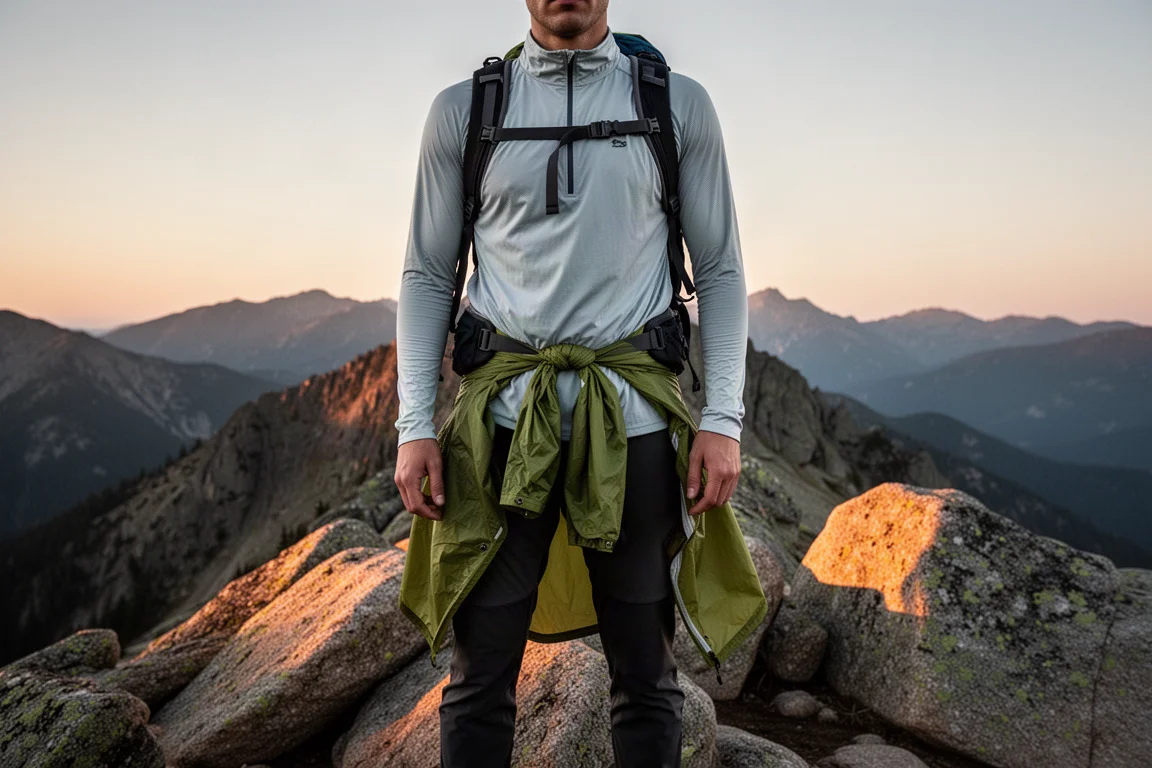
The most useful pattern is a mid-layer worn underneath a rain jacket. The shell blocks wind and keeps rain out, while the mid-layer traps the heat your body is already producing. That combination covers a surprising range of conditions without the bulk of a dedicated insulated jacket, and it is the approach worth building the rest of your system around.
Down is optional in this temperature range. It offers strong warmth for its weight and compresses smaller than anything else, but a lightweight synthetic or fleece mid-layer is often the more forgiving choice when damp weather is in the forecast. Both approaches work, and the right one depends on how dry your trips tend to be.
Best Down Option for Cool Evenings: Arc’teryx Cerium LT
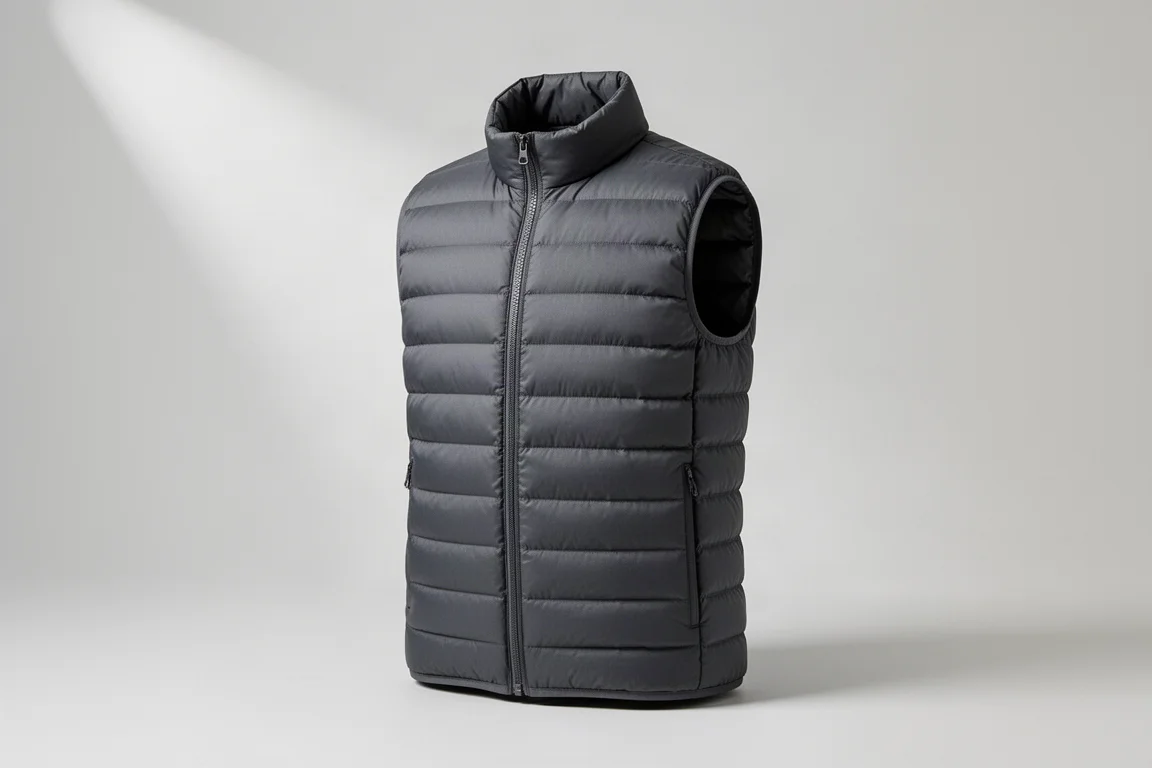
The Arc’teryx Cerium LT is a lightweight down vest built for the moment the temperature drops and you want warmth around your core rather than across your whole body. It takes the chill off quickly without the weight of a full down jacket.
Because it is down, it packs down to a very small bundle, which matters when every liter of pack space is accounted for on a summer trip. It is most at home on trips where lows stay at or above freezing, and it can also add a little comfort inside a sleeping bag during the coldest hours before dawn.
The trade-off is moisture. Down does not handle sustained wet weather well, so a dry forecast and a rain shell in the pack make the most sense for this layer.
Best Active Synthetic Mid-Layer: Outdoor Research Vigor
The Outdoor Research Vigor is a synthetic mid-layer in a half zip or quarter zip, and it is one of the most versatile pieces in a warm weather system. It works as an active layer when you are moving and still want added warmth after a weather change moves in.
Worn under a rain jacket, it traps heat efficiently, while the zip lets you dump warmth on a climb. The synthetic construction also keeps working if it gets damp and dries out quickly, which takes some of the stress out of a passing shower.
It is not the most expensive option either, and it holds up across multiple seasons, so it earns its place in a summer pack even if you also use it in colder months.
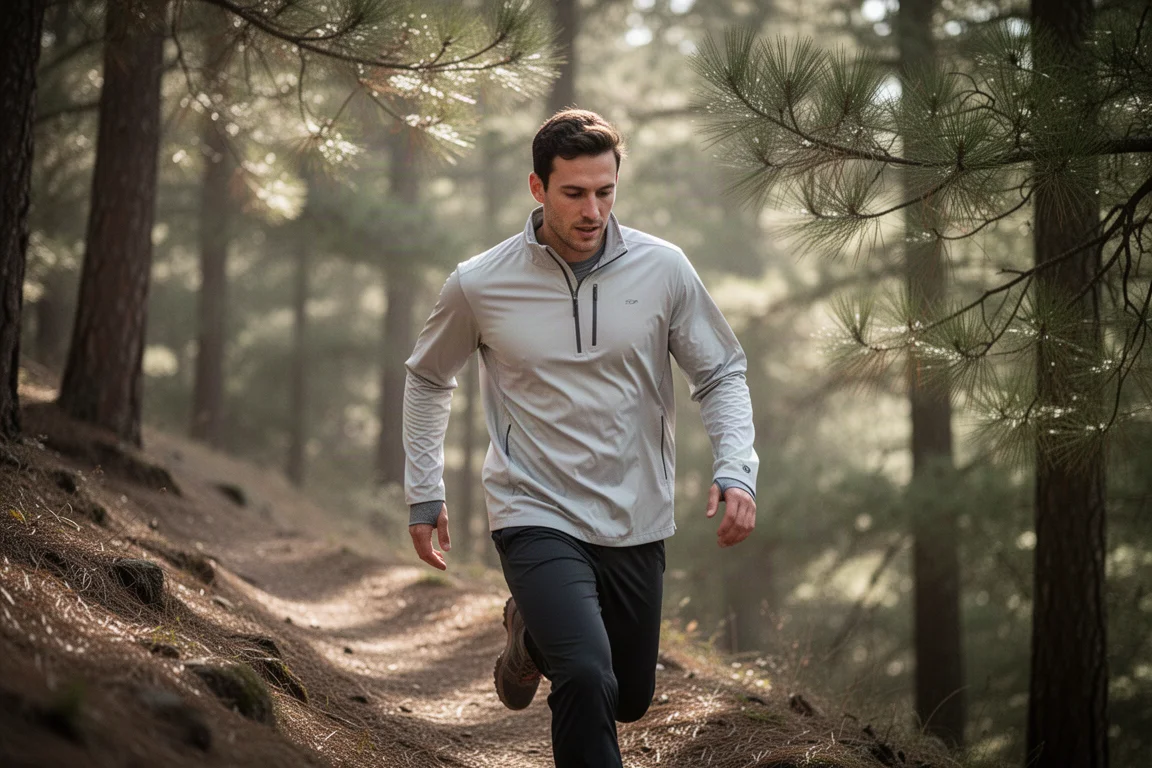
The Vigor is the layer to reach for when you expect to be moving rather than standing still, and when you want one mid-layer that covers more than one season of trips.
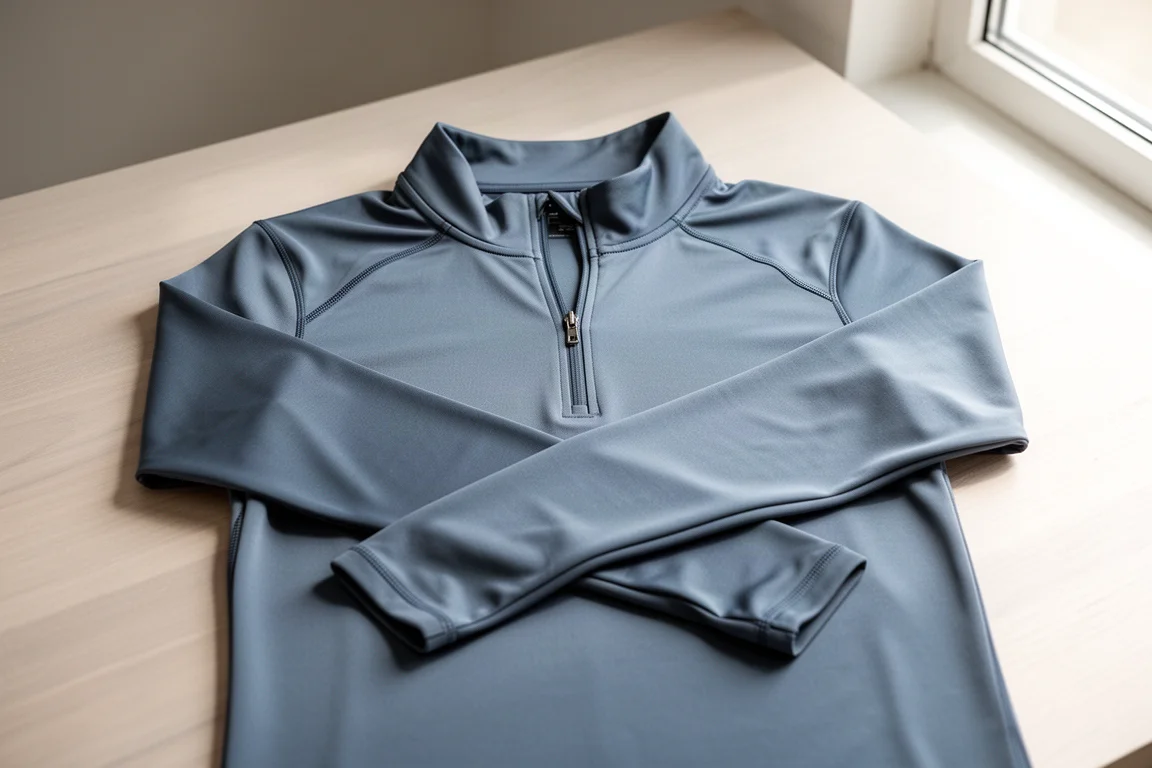
Best Superlight Synthetic Layer: Arc’teryx Atom SL
The Arc’teryx Atom SL takes the mid-layer idea and strips it down. This superlight version uses a minimal amount of synthetic fill and comes in both an anorak and a jacket version, so you can choose the format that suits how you pack.
What sets it apart in summer conditions is the DWR treatment on the fabric. A short shower does not force you to stop and pull out a rain jacket, and you do not have to worry about the insulation soaking through the way you would with down. It also dries quickly, which matters when you are moving in and out of light rain all afternoon.
That said, the fill is deliberately minimal. This is a layer for warm weather and light chill rather than cold evenings above treeline.
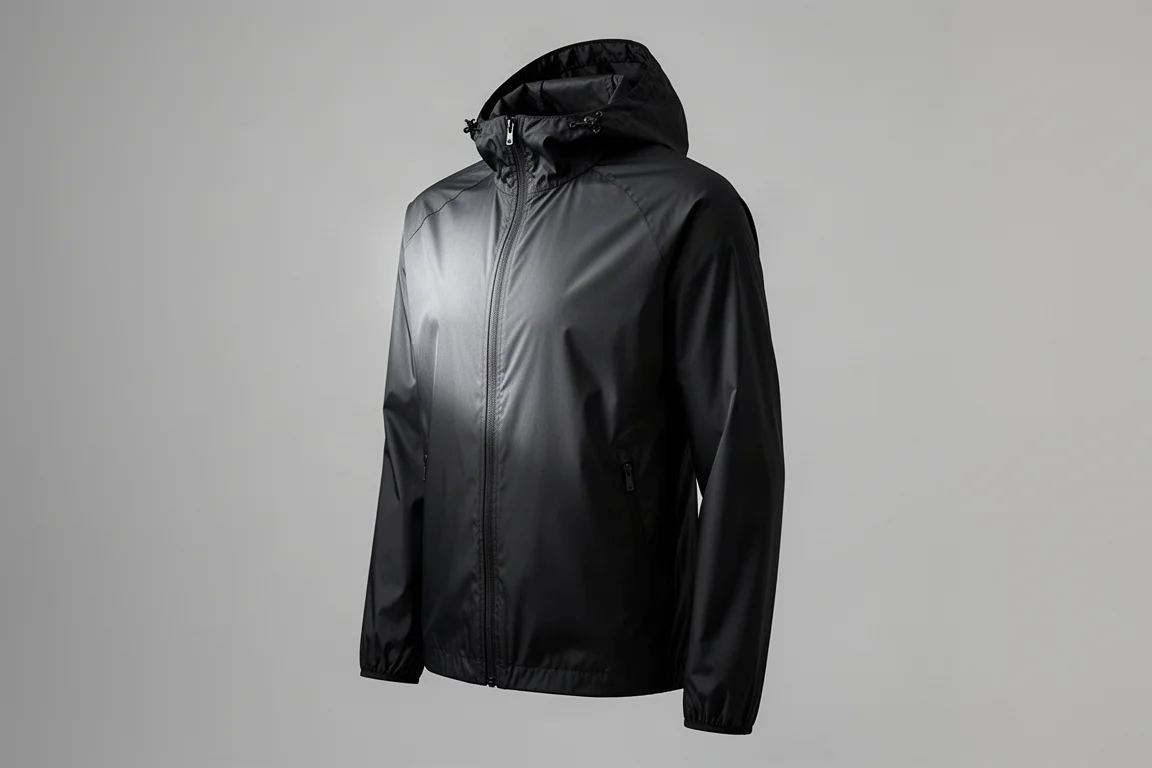
Best Base Layer: Outdoor Research Echo Hoodie
Every system in this guide sits on top of a base layer, and the Outdoor Research Echo Hoodie is a strong default. It is a long-sleeve hooded layer that adds coverage and works as the first piece against your skin on warm trips.
Its real value is drying speed. A base layer that dries quickly keeps you comfortable when you sweat on a climb and then stop in cooler air, and it layers cleanly under a synthetic mid-layer, a down vest, or a rain shell without bunching.
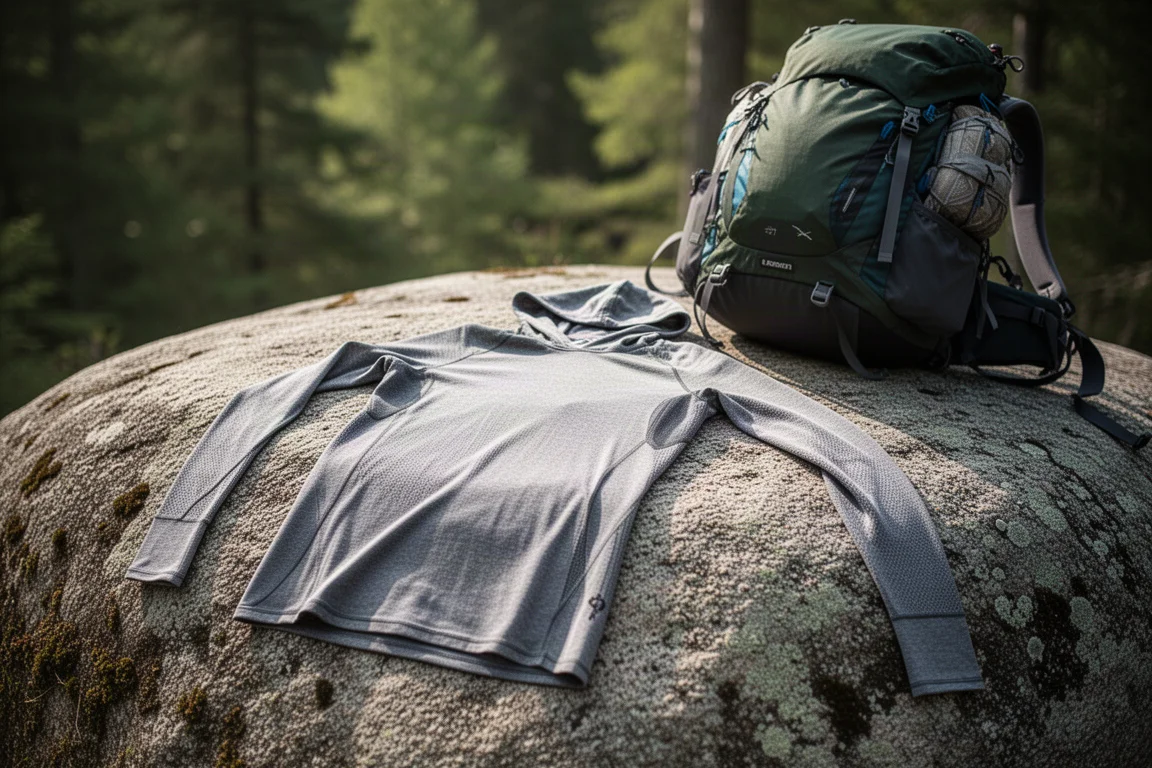
On its own it is not a warm layer, so treat it as the foundation of the system rather than a substitute for a mid-layer.
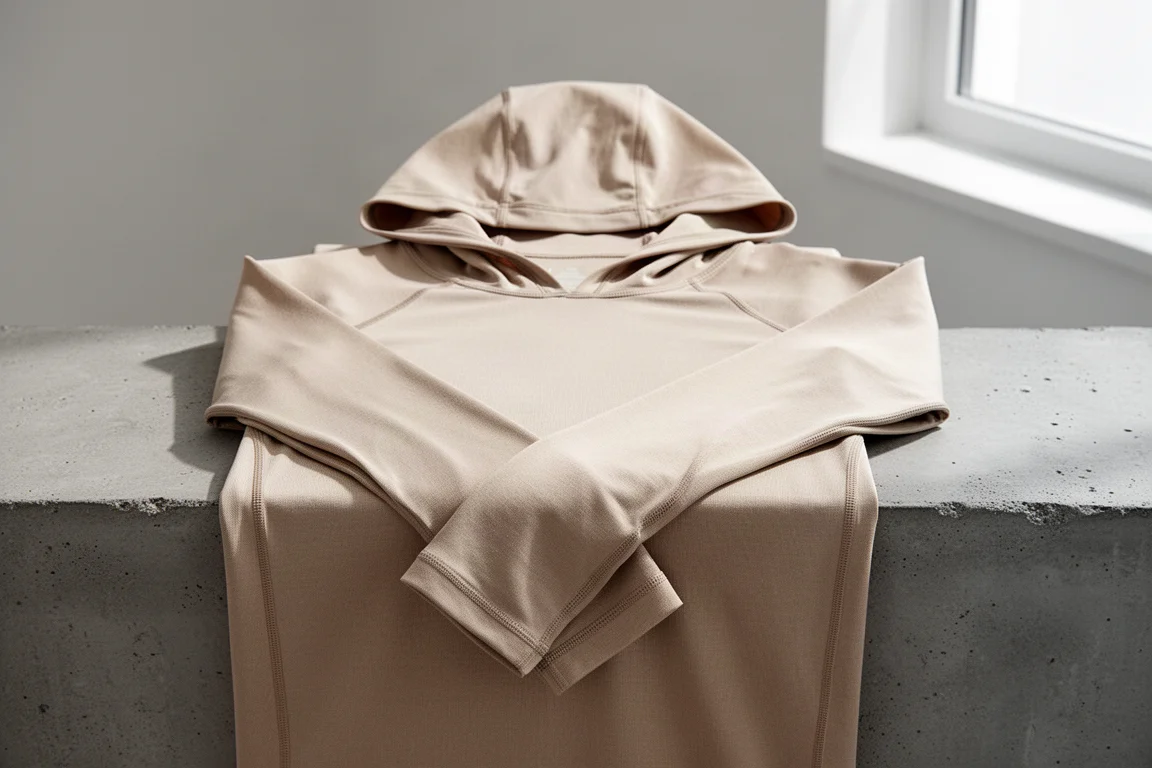
A Slightly Warmer Alternative: Arc’teryx Atom LT
If you want more warmth than the superlight version provides, the Arc’teryx Atom LT is the heavier-weight option in the same line. It is still light enough for summer use and works well across three-season trips, which makes it a reasonable single-layer choice for backpackers who would rather carry one mid-layer than two.
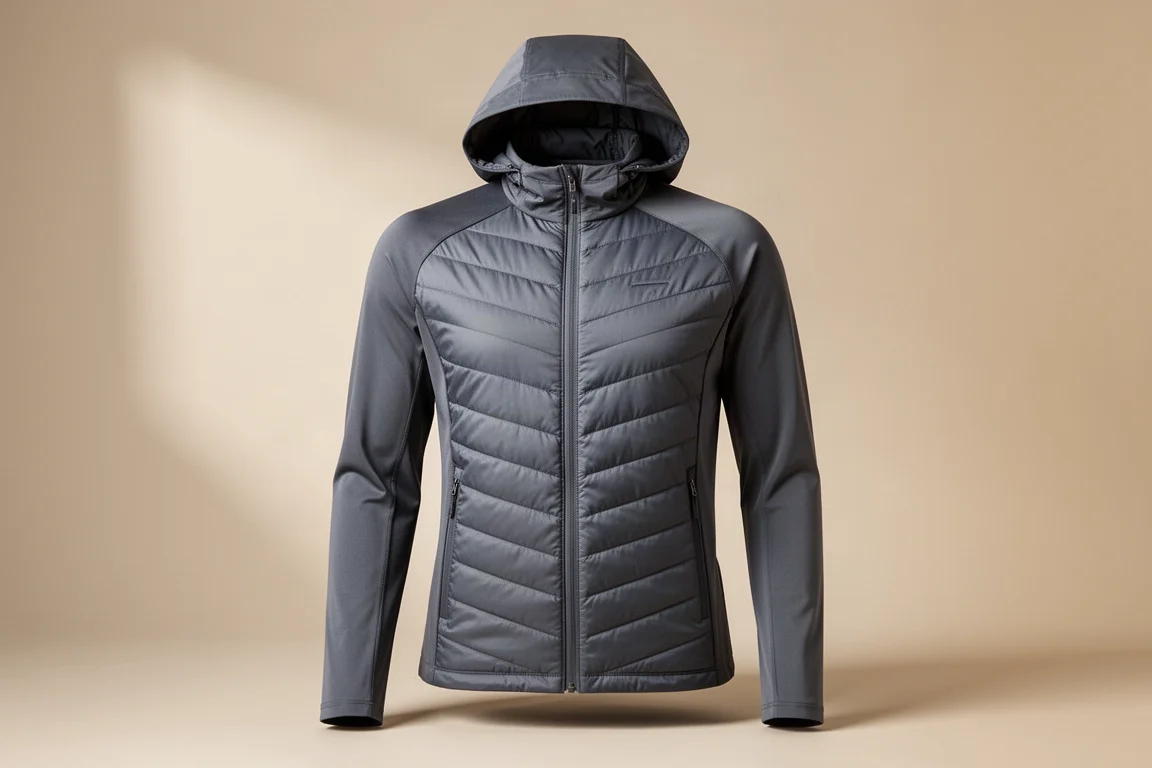
Buying Advice: How to Assemble the System
The strongest summer setup is a mid-layer under a rain jacket. That pairing gives you wind protection, rain protection, and enough trapped warmth for cool evenings without carrying a jacket that is overkill for 40°F to 50°F conditions.
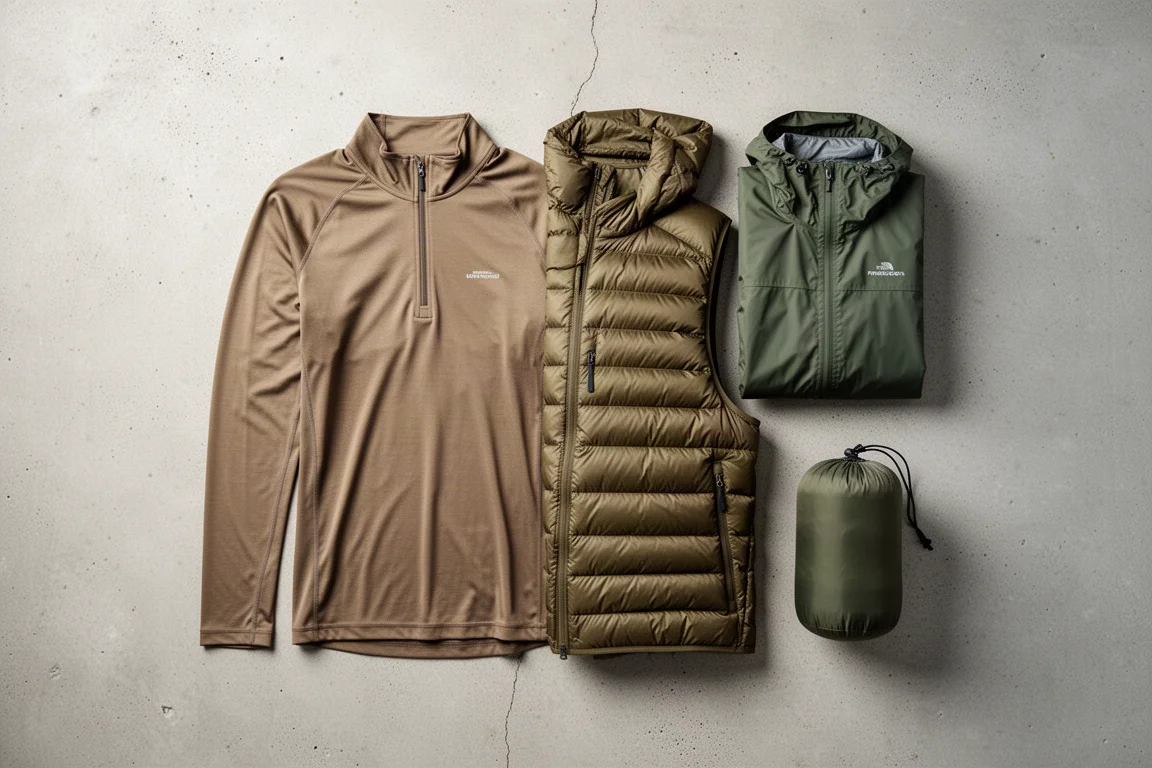
When choosing pieces, prioritize light weight and packability first. Look for a zip that lets you vent heat, a cut that layers under a shell without restricting movement, and a fabric that dries quickly. Fleece is comfortable and inexpensive but does not compress, so it takes up more room than a down or synthetic layer of similar warmth.
Down is not mandatory. A lightweight synthetic layer covers most summer needs and handles damp conditions with less worry, and it is the safer bet if you would rather not think about moisture at all.
Conclusion
Warm weather layering comes down to a few light pieces used in combination: a quick-drying base layer, a synthetic mid-layer that works while you move, and an optional down or superlight synthetic layer for cool evenings. Add a rain jacket over the top and you have a system that handles the swing from a hot afternoon to a cold hour before dawn. Match the pieces to how dry and how cold your trips tend to run, and the pack stays light.
Further reading
Related Reviews

Backpacking Gear
Building a 10 lb Base Weight: An Ultralight Backpacking Gear List
A practical walkthrough of the ultralight pieces behind a 10 lb base weight, from a 765 g pack and a roomy one-person tent to a full camp chair and a dependable water filter.
Road Bikes
10 New Road Bikes Worth Watching: Aero, Titanium, Steel and Endurance Standouts
A practical roundup of 10 new road bikes, from aero flagships chasing single-watt gains to titanium, steel and endurance platforms built for real roads.
Bikepacking Gear
11 Bikepacking Essentials for Long-Distance Cycling
Eleven bikepacking essentials for long-distance cycling, from a steel gravel frame and a two-person tent to helmet lights, packable gloves, and a frame bag that puts weight in the right place.