Studio Subwoofers
Studio Subwoofer Comparison: Kali Audio WS-6.2, Yamaha HS8S, JL Audio Dominion d108 and SVS 3000 Micro
Four compact studio subwoofers compared on measured low-frequency extension, maximum output, distortion and group delay, with clear guidance on which one suits your room and workflow.
Introduction
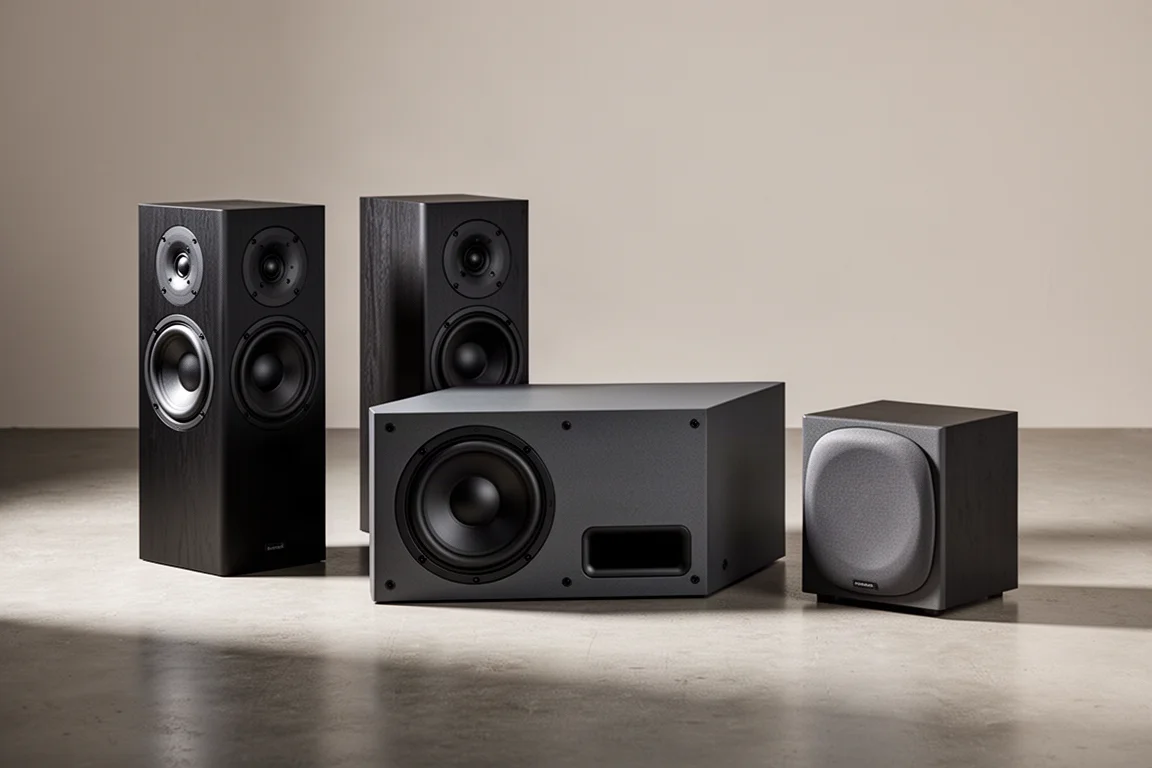
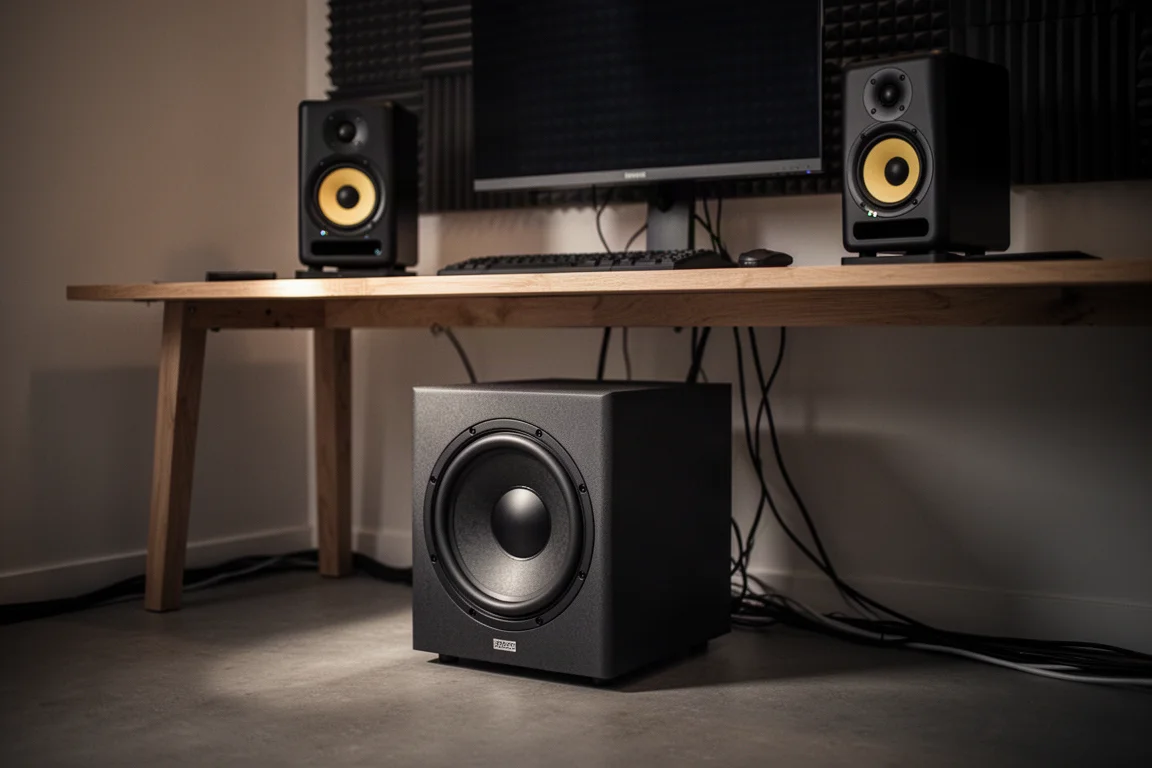
Two pro audio subwoofers sit at the same retail price and aim at the same buyer: the Kali Audio WS-6.2 and the Yamaha HS8S. Both are front-ported designs built for studio work, and both are compact enough to live under a desk or in a small room. Two further compact options, the JL Audio Dominion d108 and the SVS 3000 Micro, appear in the same output testing, which makes them useful reference points for anyone weighing size against capability.
This comparison leans on measured behaviour rather than adjectives. Frequency response, maximum output, distortion and group delay all shape how a subwoofer feels in a real room, and the gaps between these four designs are wide enough to change the decision.
How These Subwoofers Compare
The figures below come from one-metre measurements referenced to nominal levels of roughly 65 dB and 85 dB, plus each subwoofer’s maximum output. Frequency response sweeps establish the -3 dB and -10 dB points, output testing maps how much level each cabinet can sustain at low frequencies, and separate runs capture group delay and harmonic distortion.
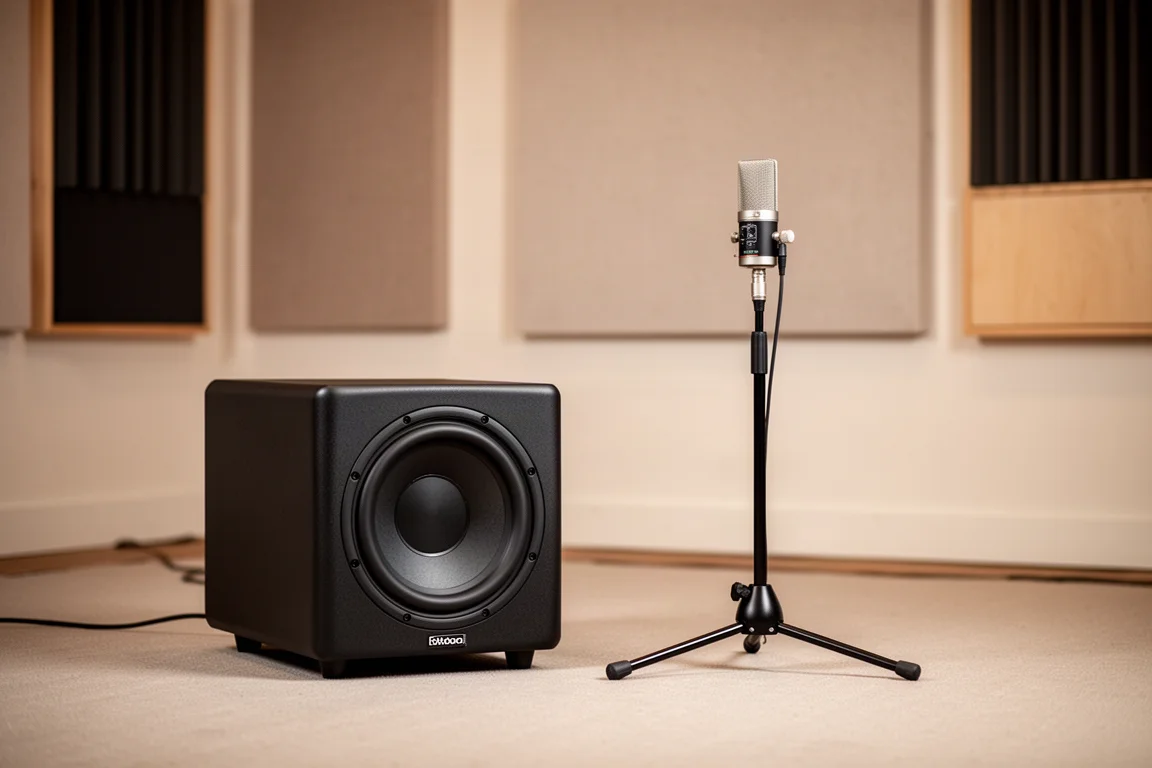
Two practical details apply to the whole group. Every subwoofer here is front-ported, so placement matters and none of them should be pushed flush against a wall. Both pro audio models also use internal limiting at high output, which protects the driver but reshapes the low-frequency rolloff, so the character at low listening levels is not identical to the character at maximum level.
Kali Audio WS-6.2: The Output and Extension Leader
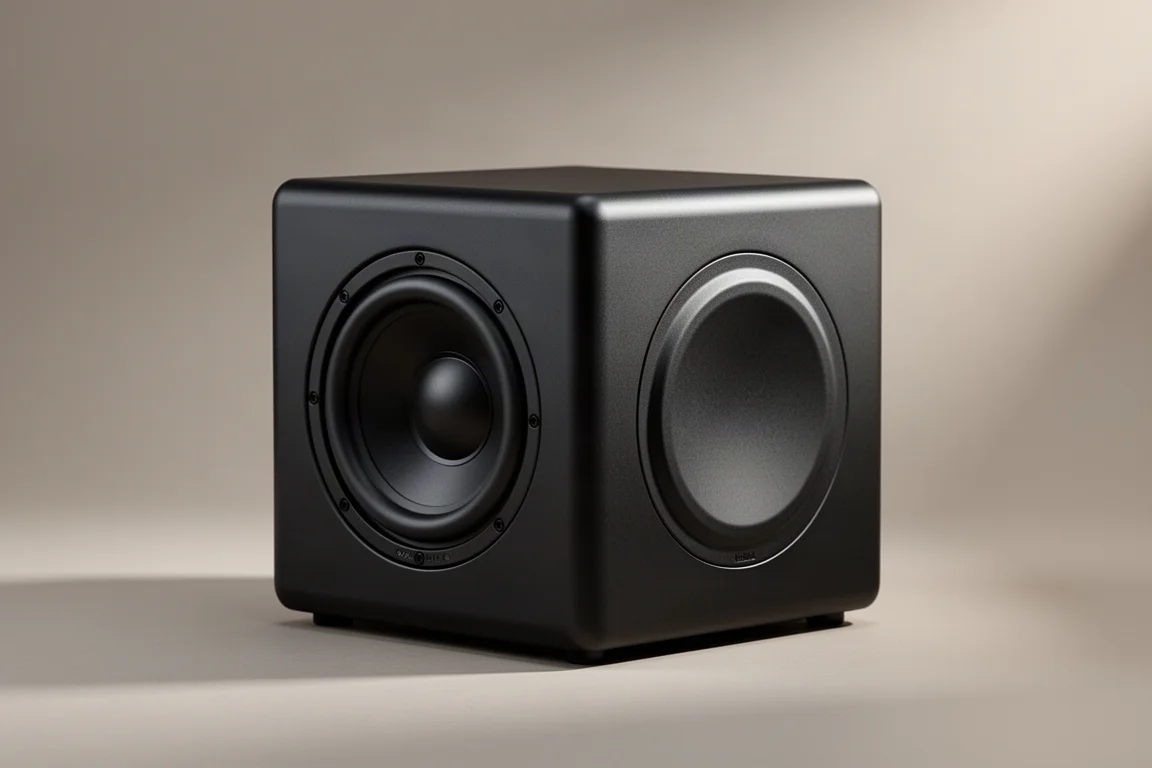
The WS-6.2 uses two 6.5-inch woofers, one on each side of the cabinet, with an RMS rating of about 400 watts. The stated frequency range is roughly 31 Hz to 180 Hz within plus or minus 3 dB. Inputs include two XLR and quarter-inch combo jacks, there are two XLR outputs, and RCA inputs are also provided. The cabinet weighs around 35 lbs and is taller and narrower than the Yamaha, so it claims more vertical space and less floor space.
Measured at a nominal level near 66 dB, the WS-6.2 reaches -3 dB at roughly 31 to 32 Hz and -10 dB at roughly 27 Hz. In output testing it passed at 25 Hz with about 97 dB, around 10 dB above the next closest subwoofer in this group. At 31 Hz it reached about 102.5 dB, again roughly 10 to 11 dB ahead, and at 50 Hz it measured about 102 dB.
Distortion is low for the class. At 20 Hz and a nominal level near 85 dB, total harmonic distortion measured about 10 percent, second harmonic about 4 percent and third order about 7 percent. Group delay came in around 5 milliseconds internally at 80 Hz and rises below 40 Hz, but the trend through the crossover region is close to the Yamaha’s, and that is the region that matters most when aligning a subwoofer with main monitors.
Yamaha HS8S: The Familiar Pro Audio Reference
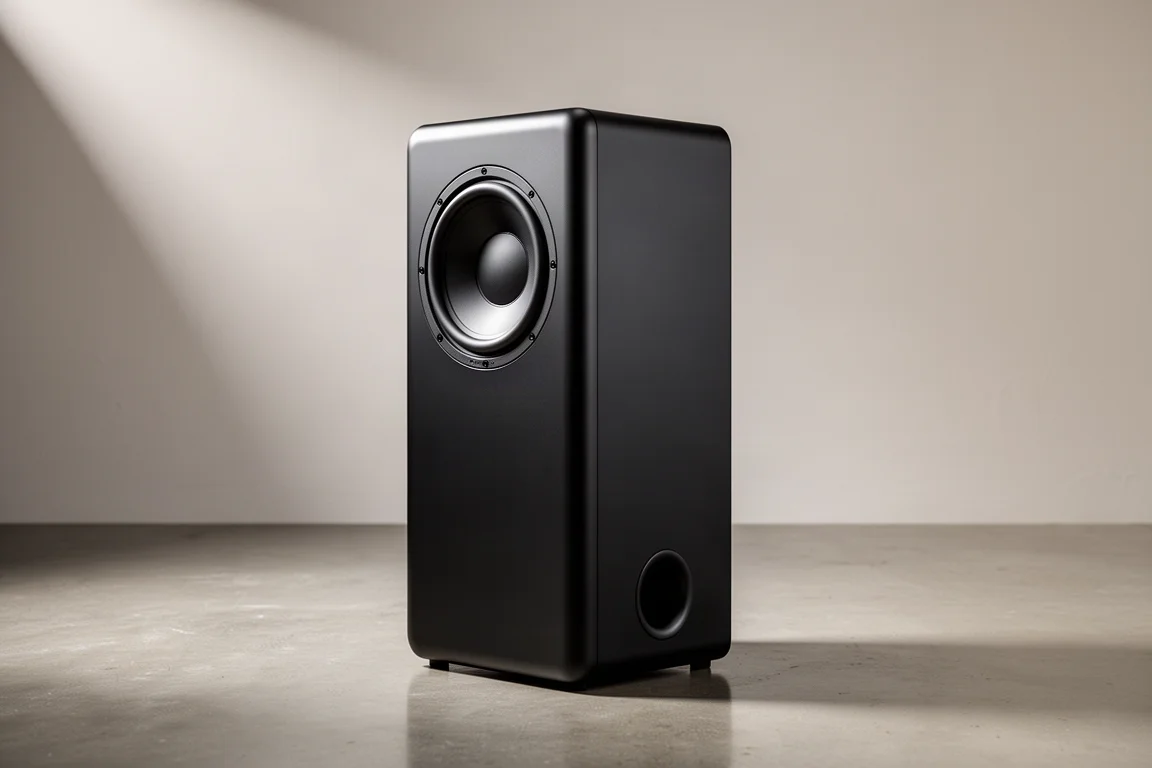
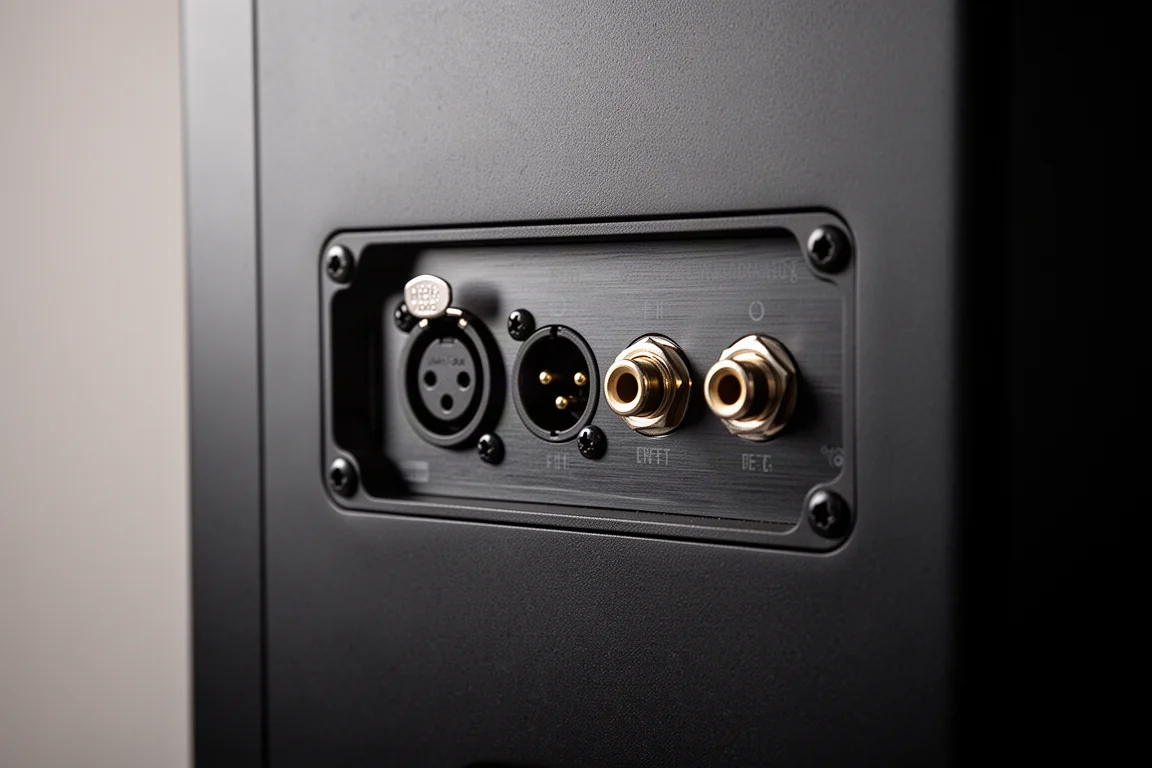
The HS8S uses a single 8-inch woofer with 150 watts of total power and a stated frequency range of 22 Hz to 150 Hz. It provides two XLR inputs and two quarter-inch inputs alongside two XLR outputs, and the cabinet weighs about 28 lbs.
At a median level near 85 dB, the measured -3 dB point lands around 37 Hz and the -10 dB point around 29 Hz. At maximum output the response shape changes noticeably at the low end, which points to an internal limiter protecting the driver, and a bump of roughly 2 dB appears centred near 70 Hz. That bump can read as extra punch at that frequency compared with quieter listening levels.
In output testing the HS8S produced no passing result at 20 Hz or 25 Hz. It measured roughly 90 to 91 dB at 31 Hz and held its own at 50 Hz at around 105 dB, where the mid-bass region is less constrained by distortion. Harmonic distortion at 20 Hz and a nominal 85 dB level measured about 45 percent total, about 32 percent second harmonic and about 32 percent third order.
Group delay for the HS8S measured roughly 7 to 8 milliseconds internally at 80 Hz. Both pro audio models follow a similar trend through the crossover region, so neither presents an abrupt phase challenge when matched to main speakers.
JL Audio Dominion d108: Small Cabinet, Clean Low End
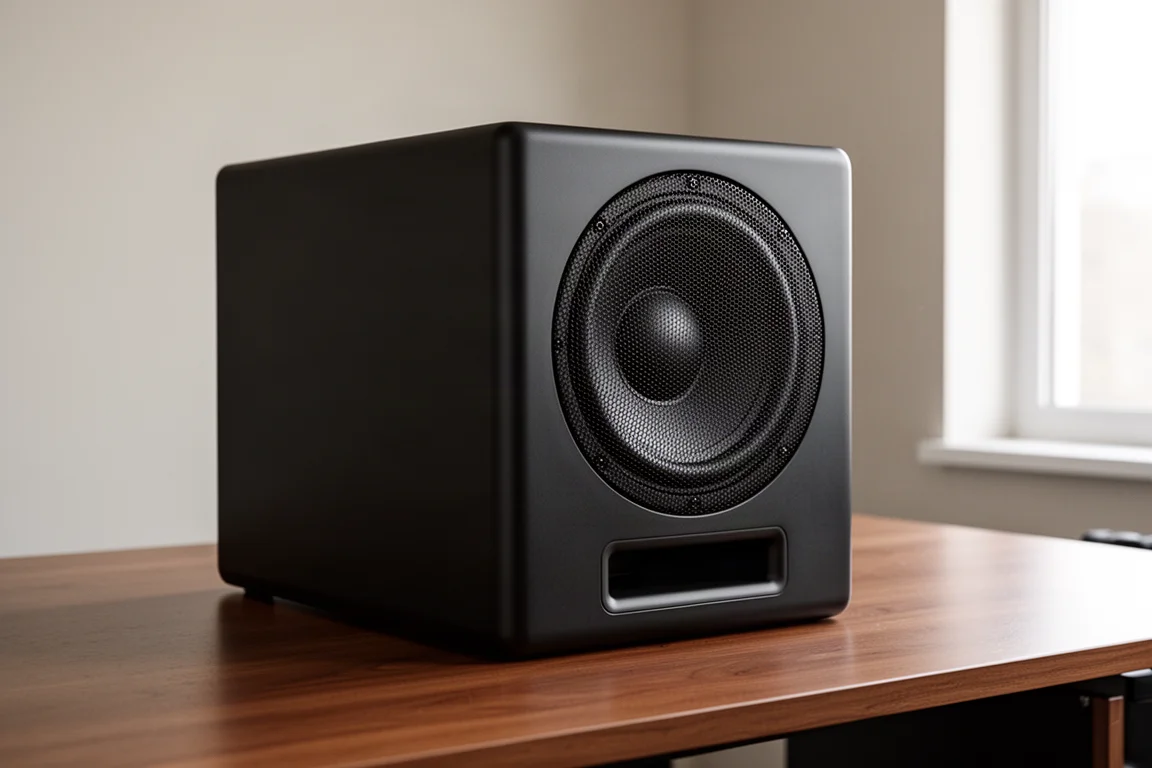
The Dominion d108 uses a single 8-inch subwoofer in a cabinet that is far smaller than the WS-6.2, roughly half its volume. It is one of two models here that produced a passing result at 20 Hz, a frequency where the WS-6.2 and the HS8S did not pass the same test.
In the shared output comparison it measured about 86 dB at 25 Hz, roughly 90 to 91 dB at 31 Hz and about 103 dB at 50 Hz. That places it well behind the WS-6.2 in the deep bass region while staying competitive in the mid-bass. For a listener who wants clean, controlled output at the very bottom rather than maximum level, that balance is the whole point of the design.
SVS 3000 Micro: Dual Drivers in a Compact Box
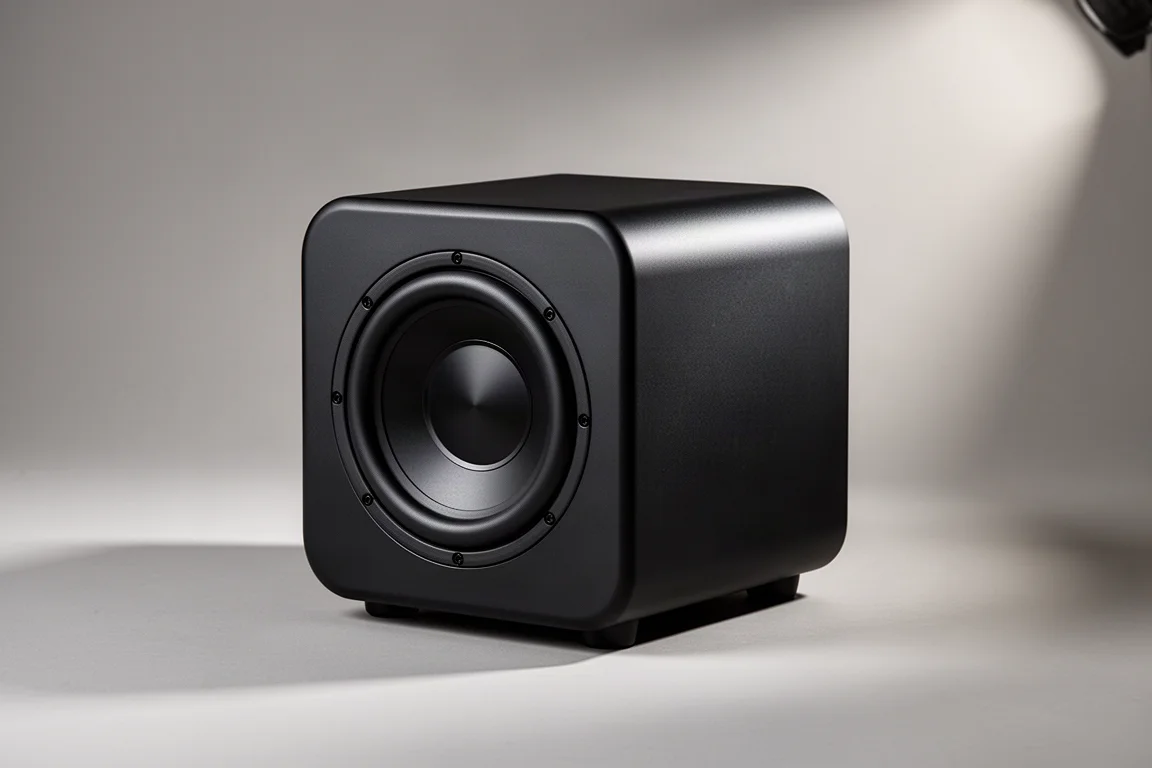
The 3000 Micro pairs two 8-inch drivers in a very small enclosure and appears in the same output comparison as the other three models. It delivers cleaner 20 Hz output than the WS-6.2, even though the WS-6.2 does have usable response that low.
Its output capability does not match the WS-6.2 at 25 Hz or 31 Hz, and it trails the Yamaha in the mid-bass region around 50 Hz. What it offers instead is a genuinely compact footprint with dual drivers, which makes it a practical answer when cabinet size is the limiting factor in a room.
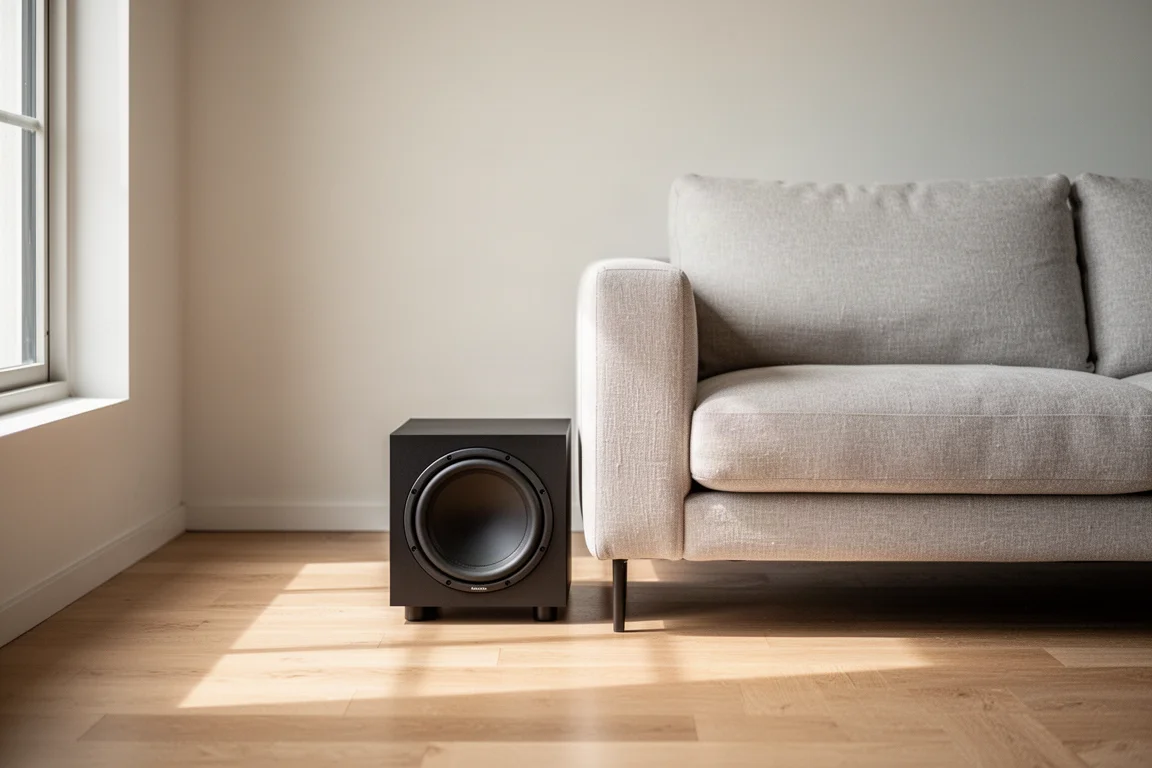
That combination of small size and clean low-frequency behaviour is exactly why it belongs in this group. It shows what you gain, and what you give up, when cabinet volume is the priority.
Buying Advice: Matching a Subwoofer to Your Room and Workflow
If low-frequency extension and maximum output are the priorities, the Kali Audio WS-6.2 is the clear leader here. It plays lower, delivers up to about 10 dB more output at 20 Hz and 30 Hz than the Yamaha, and keeps distortion far lower at 20 Hz. Mixing at high levels, or working with material that depends on deep bass, makes that advantage audible rather than academic.
If you work at moderate levels, want a smaller and lighter cabinet, and value a familiar pro audio connection set, the Yamaha HS8S remains a sensible choice. The caveat is its measured -3 dB point near 37 Hz and its sharply rising distortion at 20 Hz.
For rooms where cabinet volume is the hard limit, the JL Audio Dominion d108 and the SVS 3000 Micro trade maximum output for compactness and cleaner behaviour at 20 Hz. Neither will match the WS-6.2 in the 25 to 31 Hz range.
Group delay deserves one final note. The WS-6.2 shows higher group delay below 40 Hz, which sits outside the crossover region where alignment with main monitors matters most, and both pro audio models behave similarly through the crossover. Unless you are unusually sensitive to delay in that range, it is unlikely to change the decision.
Conclusion
Four compact subwoofers, two of them at the same retail price. The Kali Audio WS-6.2 wins on measured extension, output and distortion, and it is the one to choose when deep, loud and clean low end is the goal. The Yamaha HS8S stays relevant for moderate-level work and small footprints. The JL Audio Dominion d108 and the SVS 3000 Micro make their strongest case when space, rather than output, is the deciding constraint.
Further reading
Related Reviews

Backpacking Gear
Building a 10 lb Base Weight: An Ultralight Backpacking Gear List
A practical walkthrough of the ultralight pieces behind a 10 lb base weight, from a 765 g pack and a roomy one-person tent to a full camp chair and a dependable water filter.

Road Bikes
10 New Road Bikes Worth Watching: Aero, Titanium, Steel and Endurance Standouts
A practical roundup of 10 new road bikes, from aero flagships chasing single-watt gains to titanium, steel and endurance platforms built for real roads.
Bikepacking Gear
11 Bikepacking Essentials for Long-Distance Cycling
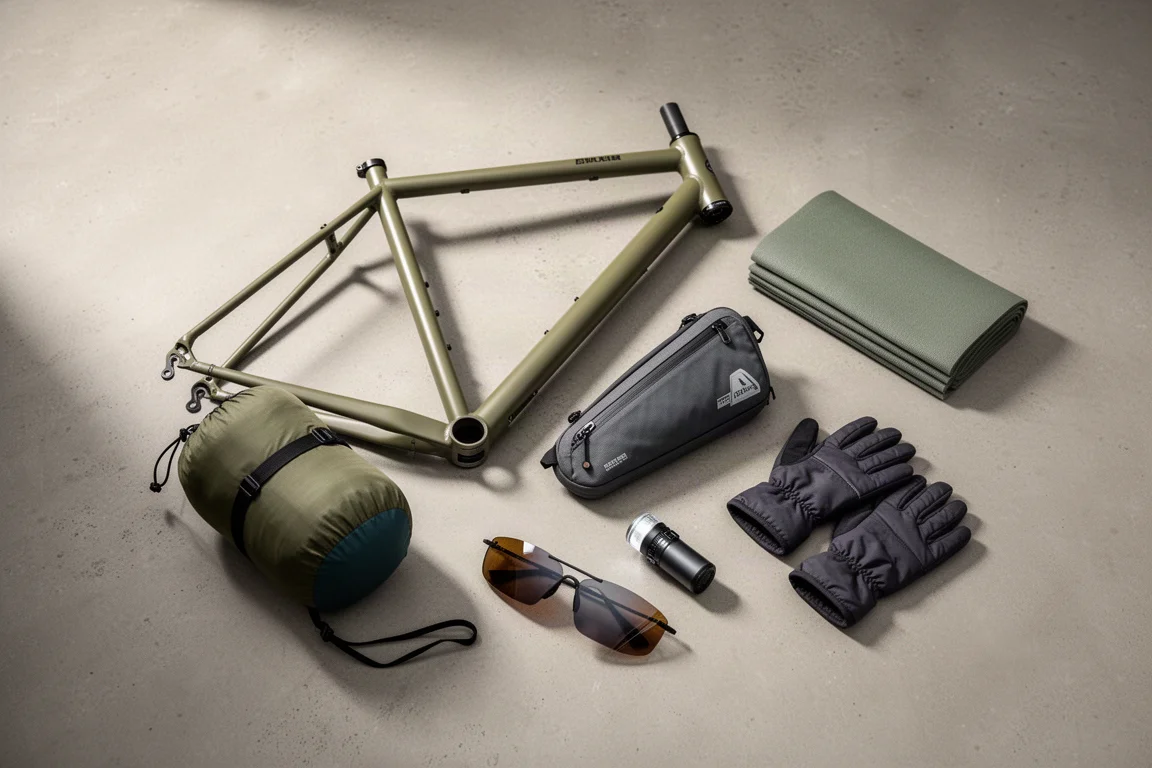
Eleven bikepacking essentials for long-distance cycling, from a steel gravel frame and a two-person tent to helmet lights, packable gloves, and a frame bag that puts weight in the right place.