Streaming Amplifiers
Streaming Amplifiers With Screens Compared: WiiM Amp Ultra, Ruark Audio R610, and Cambridge Audio Evo 150
Three touchscreen streaming amplifiers at very different prices, compared on power, software, connections, and long-term ownership.
Introduction
Streaming amplifiers with built-in screens have become one of the simplest ways to build a modern hi-fi system. One box, one power cord, a display on the front, and support for the streaming services and television connections most households already use. What has changed is the price of entry. A touchscreen streaming amplifier no longer has to cost several thousand dollars, and the spread between the affordable end and the premium end of the market is now wider than it has ever been.
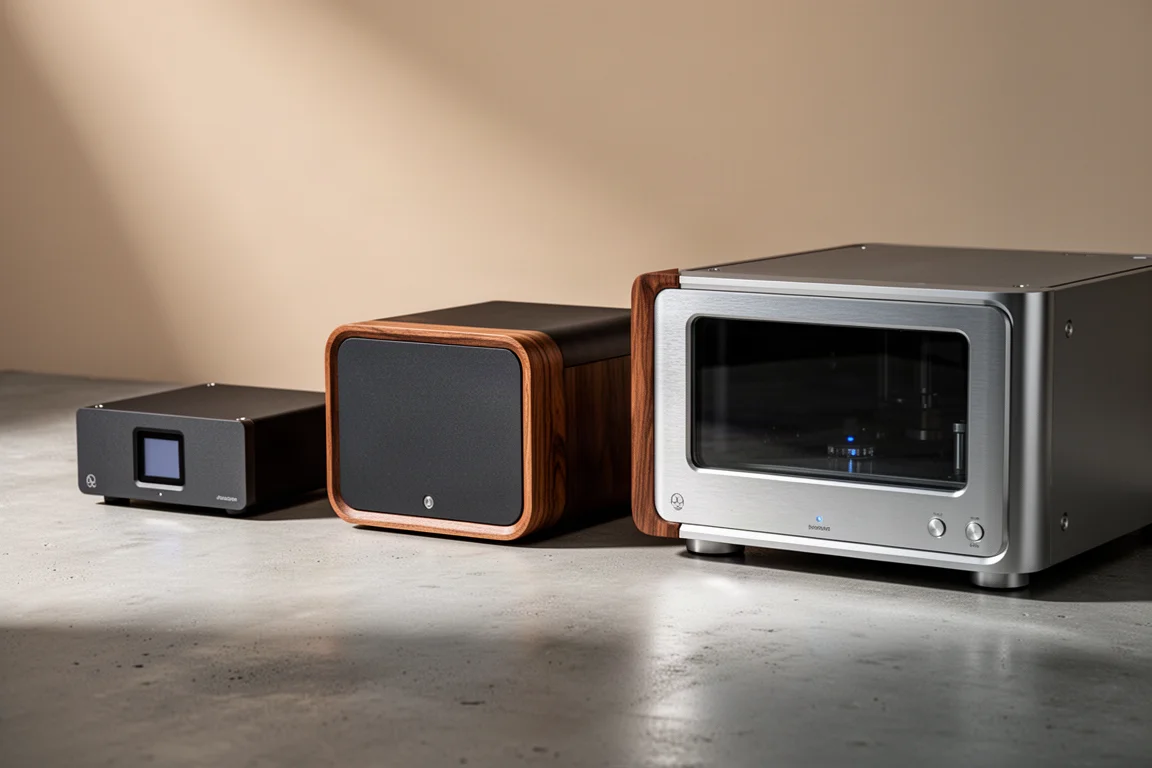
This comparison covers three of them: the WiiM Amp Ultra at $530, the Ruark Audio R610 at $1,900, and the Cambridge Audio Evo 150 at $3,300. All three are class D integrated amplifiers with color screens and streaming hardware inside, and all three are genuinely enjoyable to live with. Each one also has a specific limitation that matters more than the marketing suggests, and the most expensive model is not automatically the right answer for every room.
What Sets These Streaming Amplifiers Apart
Power ratings are the first place the three diverge, and they are also the least transparent part of the conversation. The WiiM Amp Ultra claims roughly 100 watts into 4-ohm speakers. Pushed to its limit, that amplifier can still barely reach 90 dB with the same pair of speakers. The Ruark Audio R610 is rated at 75 watts per channel and drove those identical speakers into the low 90 dB range without any trouble at all. The Evo 150 sits in a different category entirely, with enough output to damage a speaker if you are careless with the volume dial.
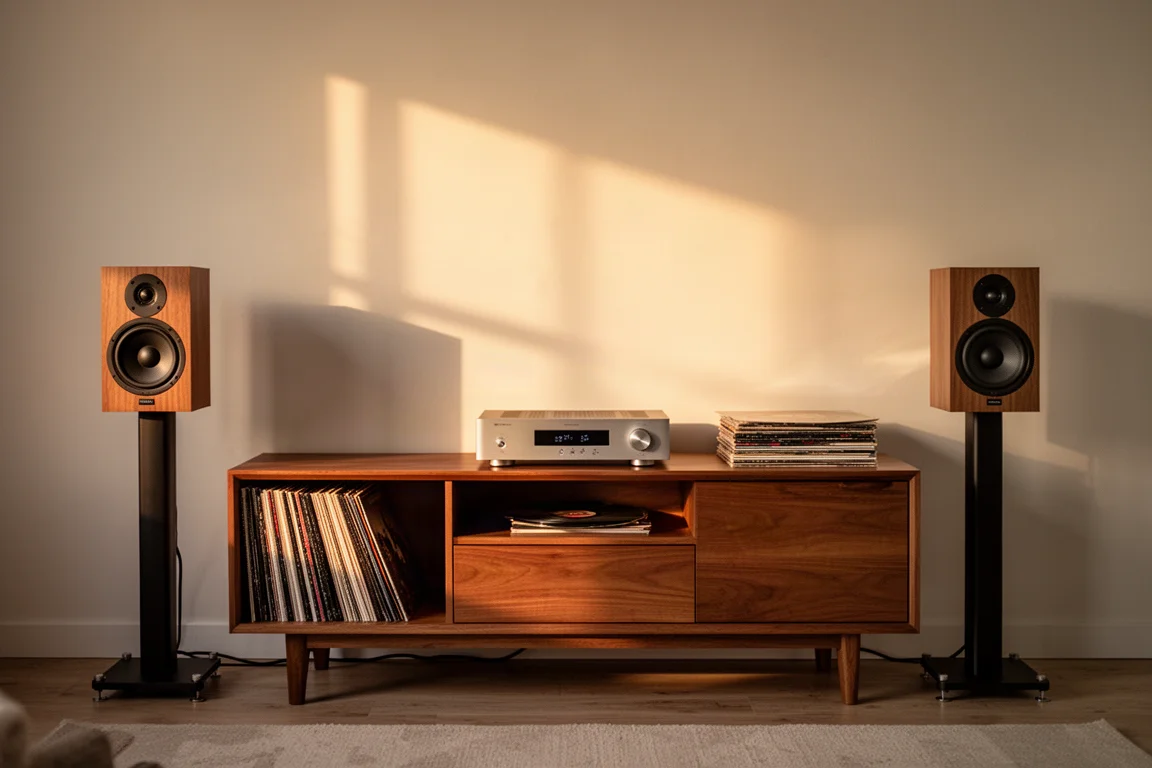
Screens and software separate them just as clearly. All three use color displays, but the Evo 150 has the largest and the WiiM Amp Ultra has the smallest, which becomes obvious the moment the three sit side by side. Connections follow a similar pattern: every model here offers digital inputs and a phono stage, and all three include HDMI ARC, which is the feature that makes them so easy to live with in a family room. Where they differ is on the back panel, and that difference has more practical consequences than any screen size.
WiiM Amp Ultra: Affordable Streaming With a Touchscreen
At $530, the WiiM Amp Ultra is the least expensive integrated streaming amplifier with a screen in this group, and nothing else at that price offers a comparable feature set. Software is where it earns its keep. Four years of updates have added room correction, parametric EQ, and options such as mono playback, and the platform is noticeably more capable than it was at launch.
Sound quality is smooth and laid back, closer in character to receivers built around Wolfson or Burr Brown converter chips than to a lean, analytical amplifier. It rounds off the edges of recordings and makes almost everything pleasant to listen to, though not every track arrives with the last word in detail.
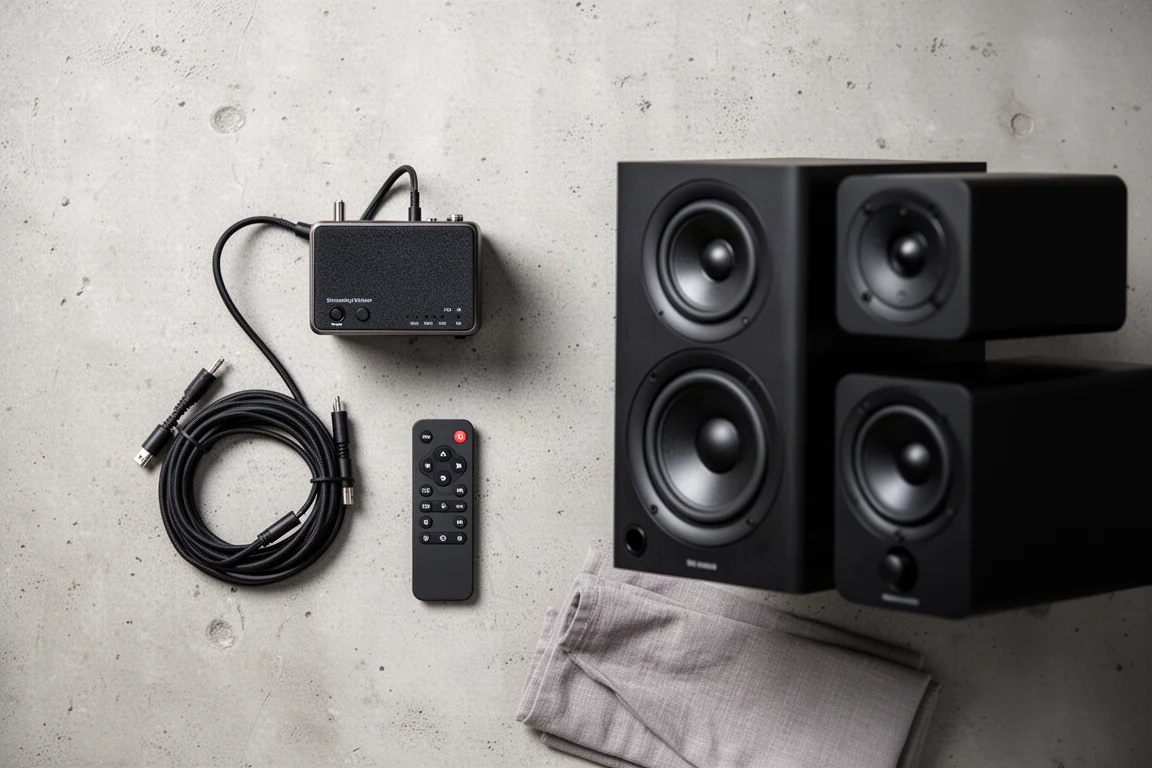
The catch is expansion. The WiiM Amp Ultra has no preamp outputs, which means you cannot feed its signal into a larger amplifier later if you want more power or a different voicing. There is a workaround, running USB output into an external DAC and then into another amplifier, but it remains a workaround rather than a design feature. For a $530 amplifier that is a reasonable compromise. For anyone planning to grow a system over time, it is a genuine constraint.
Ruark Audio R610: Vintage Looks and Preamp Outputs
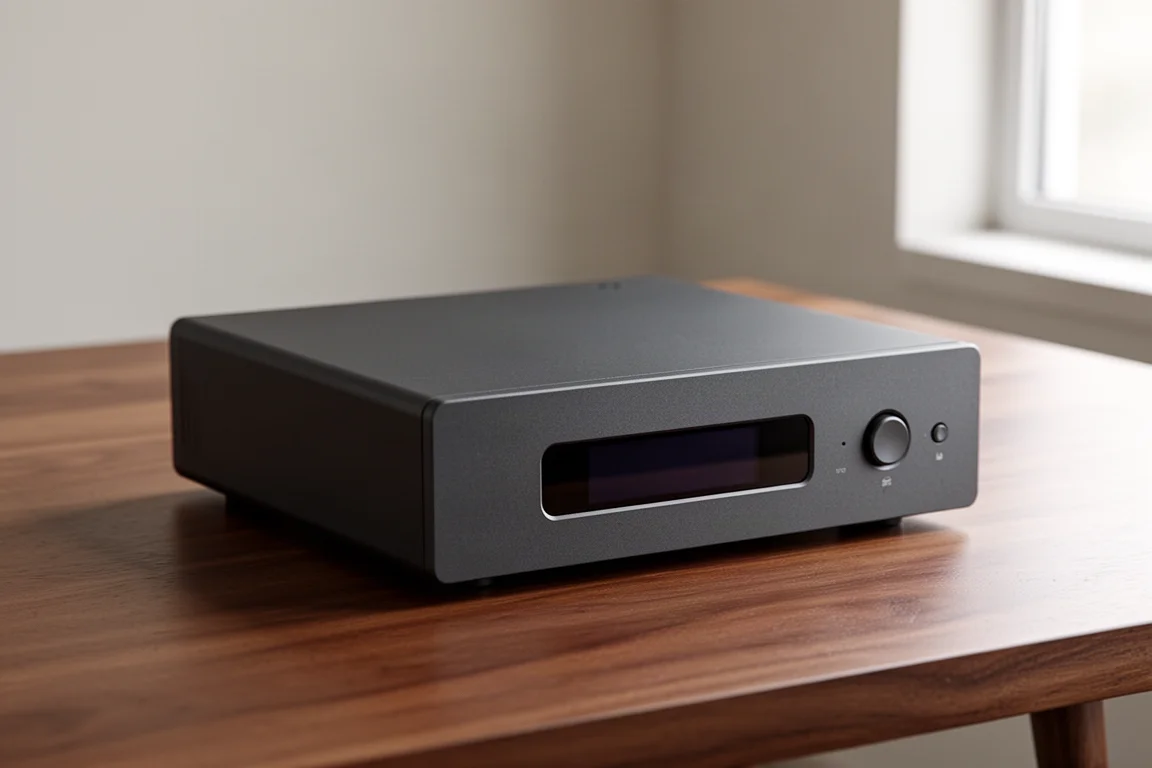
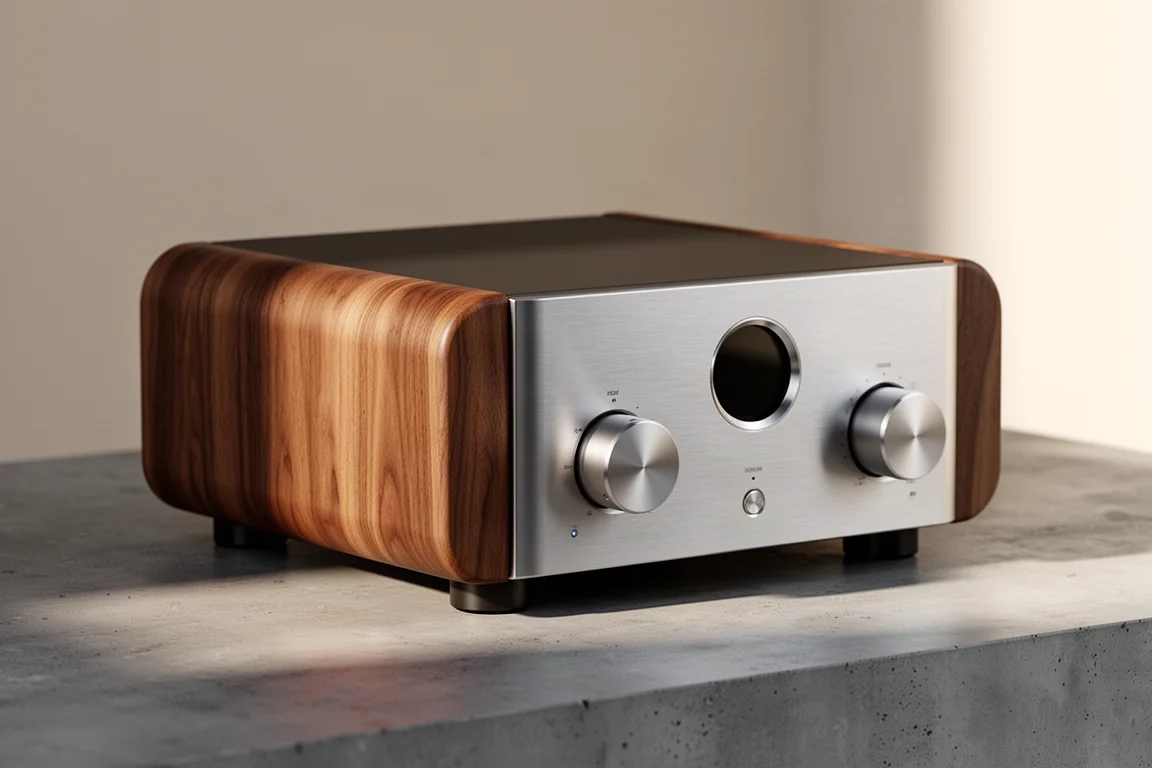
The Ruark Audio R610 costs $1,900 and makes 75 watts per channel, and it had no difficulty driving the same speakers that the WiiM struggled to push. Its appeal, though, is not really about numbers. The R610 leans into a vintage aesthetic and a physical control scheme that feels completely different from anything else in this group. It is the one here that is genuinely enjoyable to look at when it is not playing.
Crucially, it includes preamp outputs. That single detail changes how the amplifier can be used over time. You can start with the R610 on its own, then add a more powerful amplifier later and keep using the Ruark as the streaming front end. Streaming itself is handled mainly through a phone app, which keeps the experience simple rather than feature-heavy.
Cambridge Audio Evo 150: Power and Stream Magic
At $3,300, the Cambridge Audio Evo 150 is the most expensive amplifier here, and it justifies part of that price with power. It delivers a monumental amount of output and resolves more detail than either of the other two, without adding obvious coloration to the music.
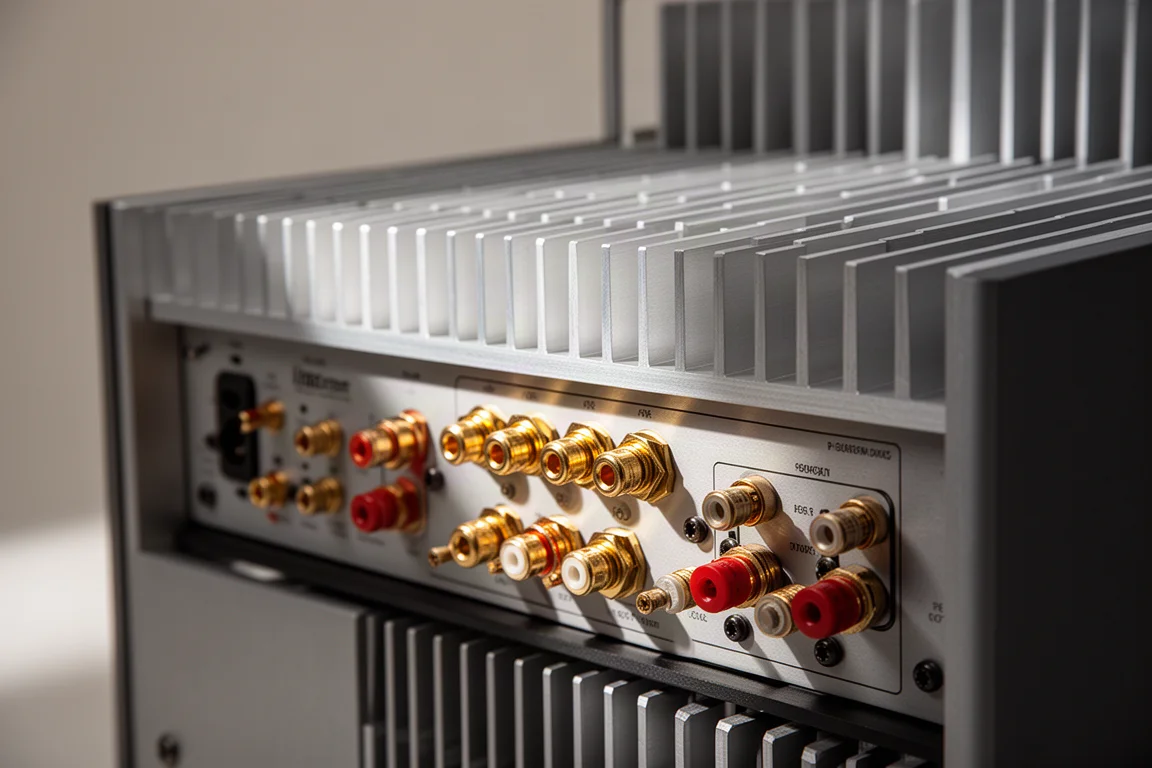
It also has the most connections on the back, including balanced XLR inputs and preamp outputs, so a large collection of sources is not a problem. Stream Magic, the Cambridge control platform, received a substantial update and now responds instantly to input. The interface looks more refined than it used to, EQ options have been improved, and Amazon Music has been integrated.
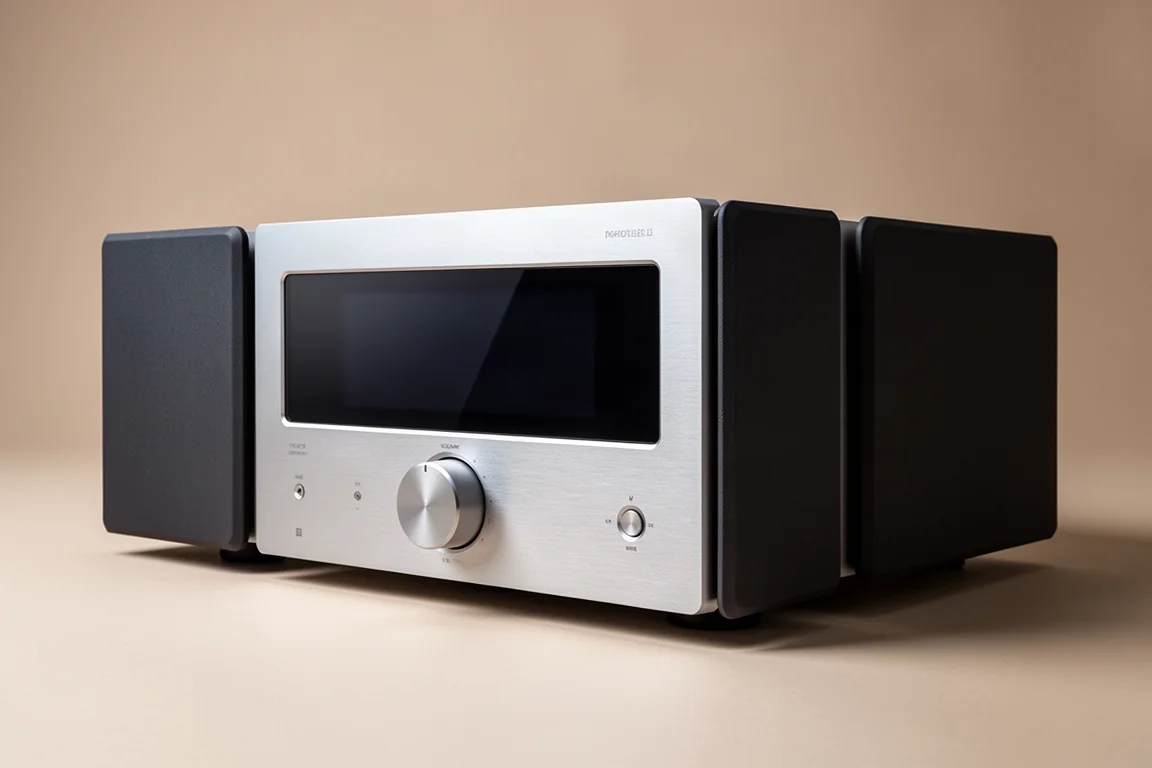
There is a personality angle as well. The Evo 150 uses magnetic side panels, so its appearance can be changed, and a DeLorean collaboration edition exists for buyers who want something more distinctive. Few hi-fi manufacturers offer that kind of flexibility, and it is one of the reasons the Evo 150 feels like more than a spec sheet.
Software, Screens, and Long-Term Ownership
Software quality varies more than the hardware specifications suggest. The WiiM platform offers the most features for the money, including room correction and parametric EQ, and it has improved steadily across four years of updates. Stream Magic on the Evo 150 carries fewer features but feels like the most refined experience of the three, with immediate response and a cleaner interface. The R610 keeps things simple by leaning on app-based control.
The longer-term question is worth taking seriously before spending anything. All three are class D designs with DAC chips, streaming hardware, and software sharing the same boards. If something fails, a repair may be possible, but a failure five or more years from now is a different proposition, particularly on a $3,300 amplifier. A replaceable streaming module that carried the streaming and converter chips would make these products far easier to recommend for the long haul. Cambridge’s design continuity offers the clearest path to a board-level repair, while the WiiM Amp Ultra has no equivalent route. HDMI ARC remains the quiet advantage that makes all three so family-friendly, and it is the feature most buyers end up using every single day.
Buying Advice: Matching the Amplifier to Your System
If your priority is features per dollar and you are building a simple one-box system, the WiiM Amp Ultra at $530 is the obvious starting point. You get a touchscreen, room correction, and parametric EQ for a fraction of the price of the others, as long as you accept the modest real-world power delivery and the lack of preamp outputs.
If you want character, physical controls, and a clear upgrade path, the Ruark Audio R610 is the middle ground. Preamp outputs mean it can stay in your system as a streaming source even after you add a separate power amplifier, and it has enough output to drive the same speakers that strain the cheaper option.
If you have demanding speakers, a large collection of sources, and a budget that reaches $3,300, the Cambridge Audio Evo 150 is the most capable of the three. It offers the most power, the most detail, the largest screen, and the widest set of connections, and its software is the most responsive of the group. It is expensive, and it should be treated as a long-term purchase rather than a casual one.
Conclusion
Streaming amplifiers with screens are convenient in a way that separates and cable-heavy racks are not: one power cord, one box, and HDMI ARC that makes them easy for anyone in the house to use. The trade-off is that a great deal of technology lives inside that single chassis, and how well it ages is an open question worth weighing before you buy.
The good news is that the entry point has never looked more attractive. The WiiM Amp Ultra delivers a screen, room correction, and parametric EQ for $530. The Ruark Audio R610 adds preamp outputs and real personality for $1,900. The Cambridge Audio Evo 150 delivers the most power, detail, and connectivity for $3,300. Choose based on how you listen and how you plan to expand, and any of the three can anchor a system for years.
Further reading
Related Reviews
Streaming Amplifiers
Best High-Performance Streaming Amplifiers: Seven Full-Size One-Box Picks
Seven full-size streaming integrated amplifiers for serious two-channel systems, each chosen for a different priority: room correction, power, minimalism, musicality, or reference build.
Streaming Amplifiers
Best Mid-Tier Streaming Amplifiers: NAD M10 V2 vs Naim Uniti Atom
Two compact all-in-one streaming amplifiers compared on interface, app experience, sound character, and connectivity.
Streaming Amplifiers
Bluesound Power Node N331 Review: A Streaming Amplifier Built for More Than Stereo
The Bluesound Power Node N331 keeps the compact chassis of its predecessor and adds a more powerful amplifier, a dedicated center channel output, and a THX AAA headphone stage.