Home Theater
A Stealth Dolby Atmos Home Theater Build: Six Products Worth Buying
A no-floor-space Dolby Atmos home theater plan built around six products that cover picture, sound, and control without cluttering the room.
Introduction
Building a home theater that disappears into a living room is harder than it looks. The usual advice points toward floor-standing speakers, a projector, and a rack of equipment, and all of it competes with the way the room actually gets used every day.
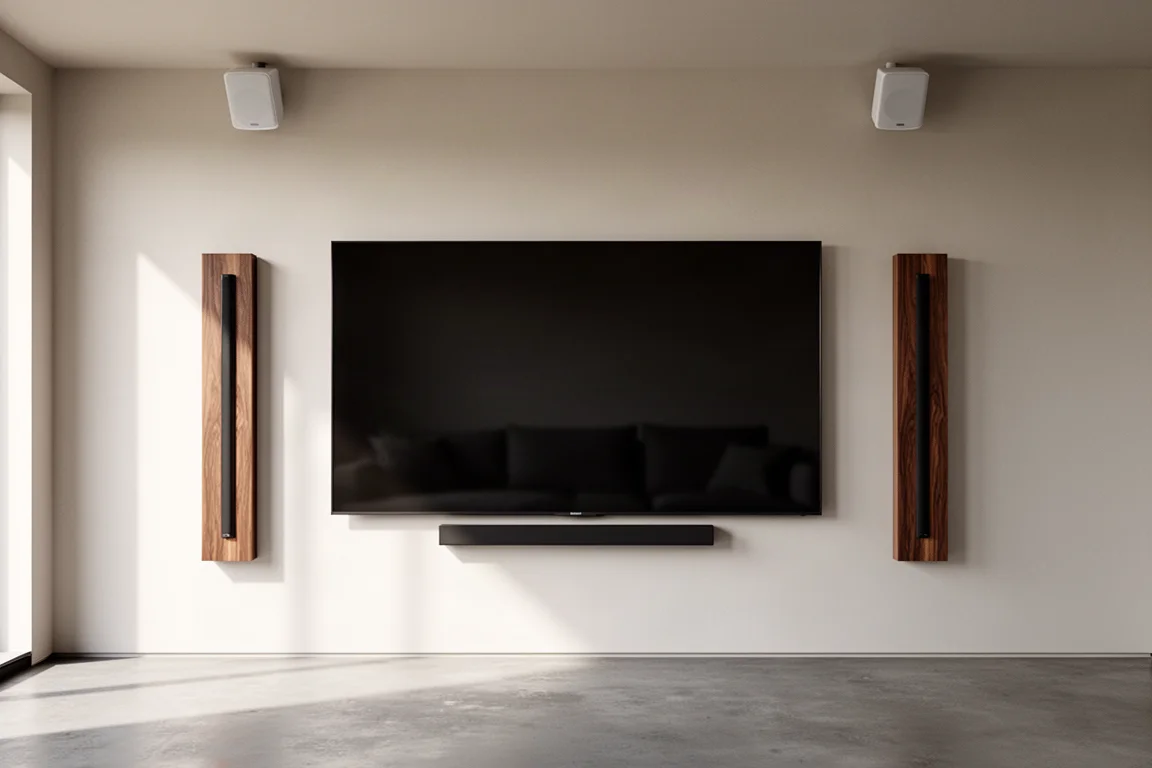
This plan takes a different route. It is built around three goals: a genuine Dolby Atmos multi-channel system, zero floor space taken up by speakers or a display, and a result that looks as good as it sounds. What follows is a 5.1.2 configuration assembled almost entirely on walls and ceilings.
What This Build Sets Out to Achieve
The core idea is to keep the floor clear. A wall-mounted television replaces a projection screen, on-wall speakers replace floor-standing towers, and the subwoofer sits off to one side rather than in the middle of the room. Nothing in the design has to be moved when the room is used for something other than movies.
A 5.1.2 layout drives the speaker count: five main speakers covering left, center, right, and surrounds, two height channels for the overhead Atmos effect, and one subwoofer for low frequencies.
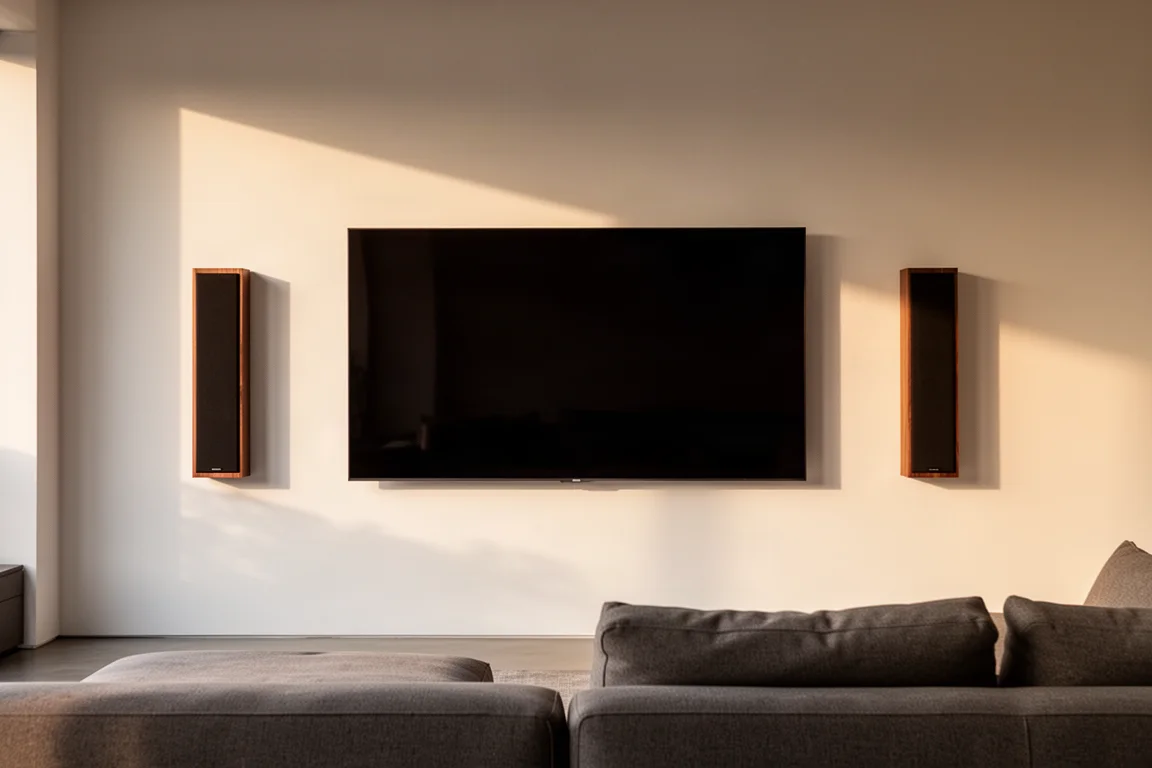
Because the speakers mount to walls and ceilings, their visual weight matters as much as their sound. Slim cabinets, restrained finishes, and built-in mounting hardware keep the room looking like a room rather than a showroom. Every product below can also be swapped for an alternative if the budget or the space calls for it.
The Screen: TCL QM7K
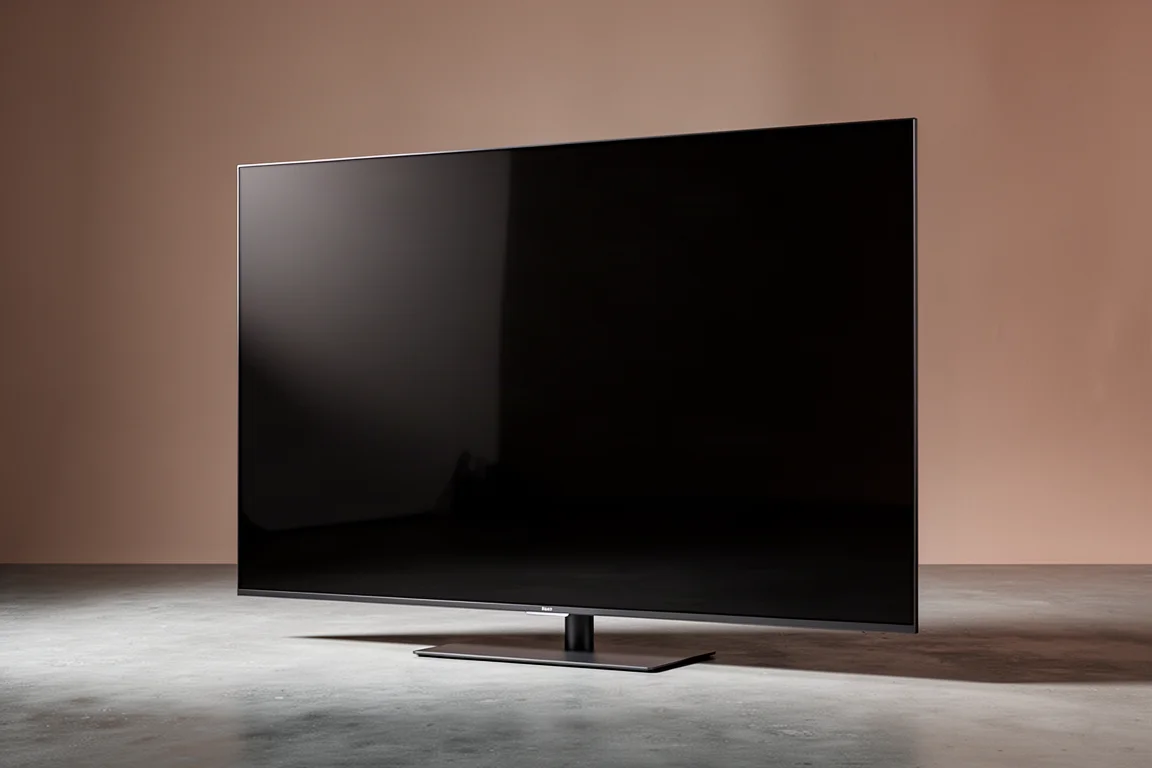
Large televisions have become the practical alternative to projection. Screens above 85 inches diagonally have come down in price and now appear across most major manufacturers’ lineups. This build specifies the TCL QM7K, a 98-inch set with a street price of roughly $2,500. Stepping down to the 85-inch version saves about $800.
It earns its place on accurate out-of-the-box picture quality, strong brightness, and even light uniformity across the panel. The operating system is quick and generally trouble-free, and streaming apps for the major services are built in, so the television works on its own before anything else is connected.
If TCL is not the right fit, Sony’s Bravia 9 or Bravia 7 can fill the same role, provided the room does not need a screen larger than 85 inches.
The Speakers: Sonus Faber Sonetto On-Wall
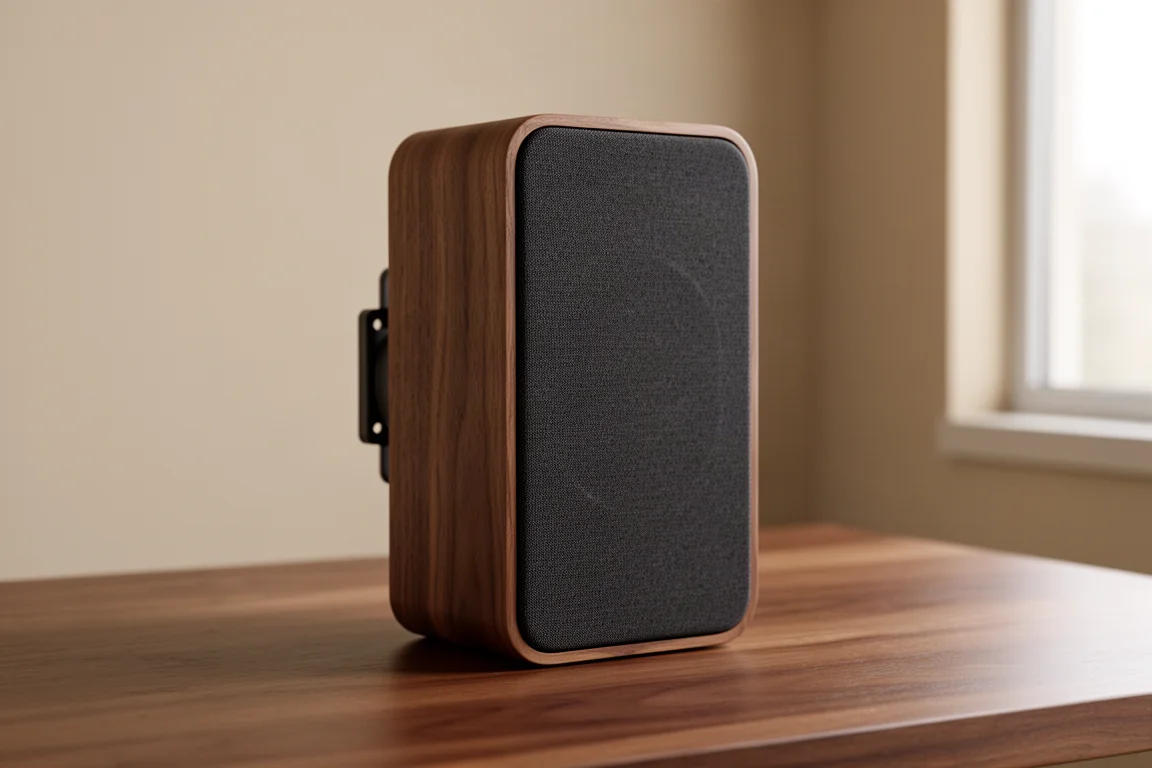
The main speakers are Sonus Faber’s Sonetto on-wall models, and they are the most design-forward part of the build. They read more like mountable furniture than like loudspeakers, which is exactly what a living room system needs.
They are available in walnut, wenge, and black. Walnut is the choice here for its timeless character, which suits both modern and traditional interiors. Wall mounts are included, which removes one more item from the shopping list.
Five on-wall speakers come to just under $7,500. That is a significant outlay, so it is worth knowing the alternatives. KEF’s Q4 Meta runs $599 each, or about $3,000 for five. Bowers & Wilkins’ M1 comes in at about $1,500 for five speakers.
The Height Channels: Bowers & Wilkins M1
Height channels are what turn a conventional surround setup into a Dolby Atmos system, and they are the easiest place to save money without giving up much. In-ceiling speakers would be the most invisible option, but a compact wall or ceiling mounted model is far easier to install and to reverse later.
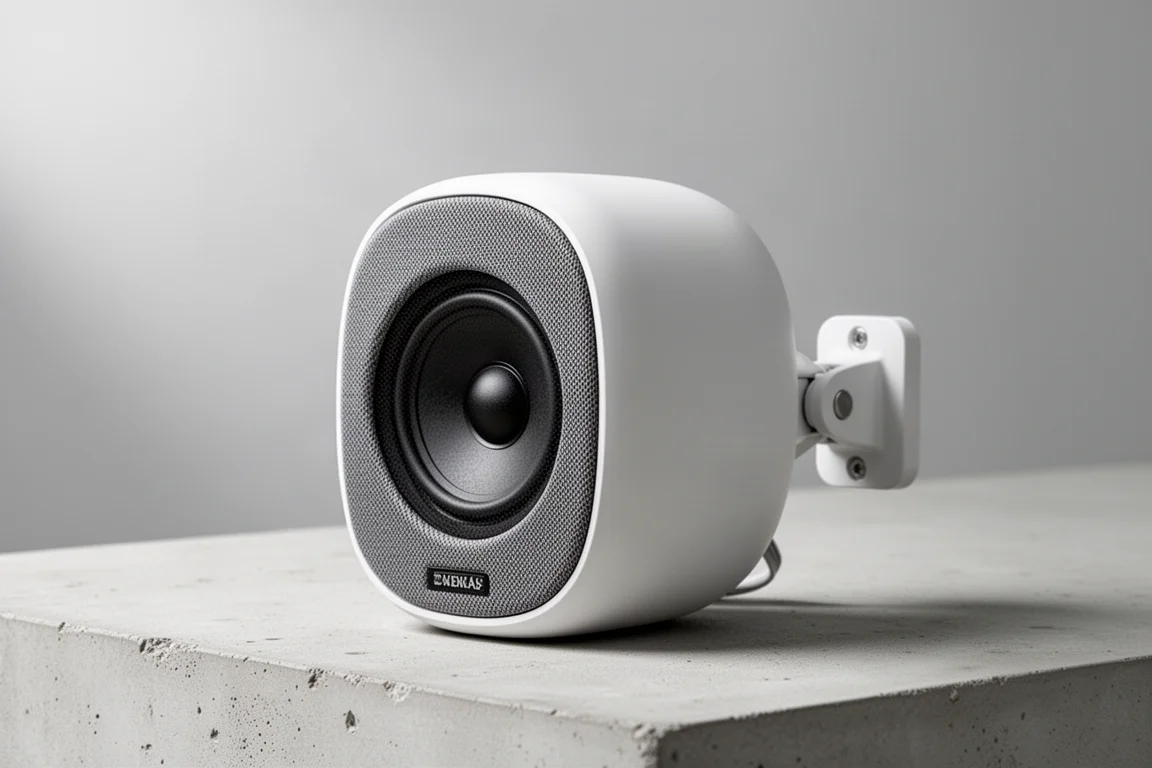
The Bowers & Wilkins M1 fits that job well for three reasons. The cabinets are small and finished in matte white, so they blend into most ceilings. The built-in mount works on both walls and ceilings. And that mount can be angled downward and slightly toward the listening position, which matters when the speakers sit above the audience.
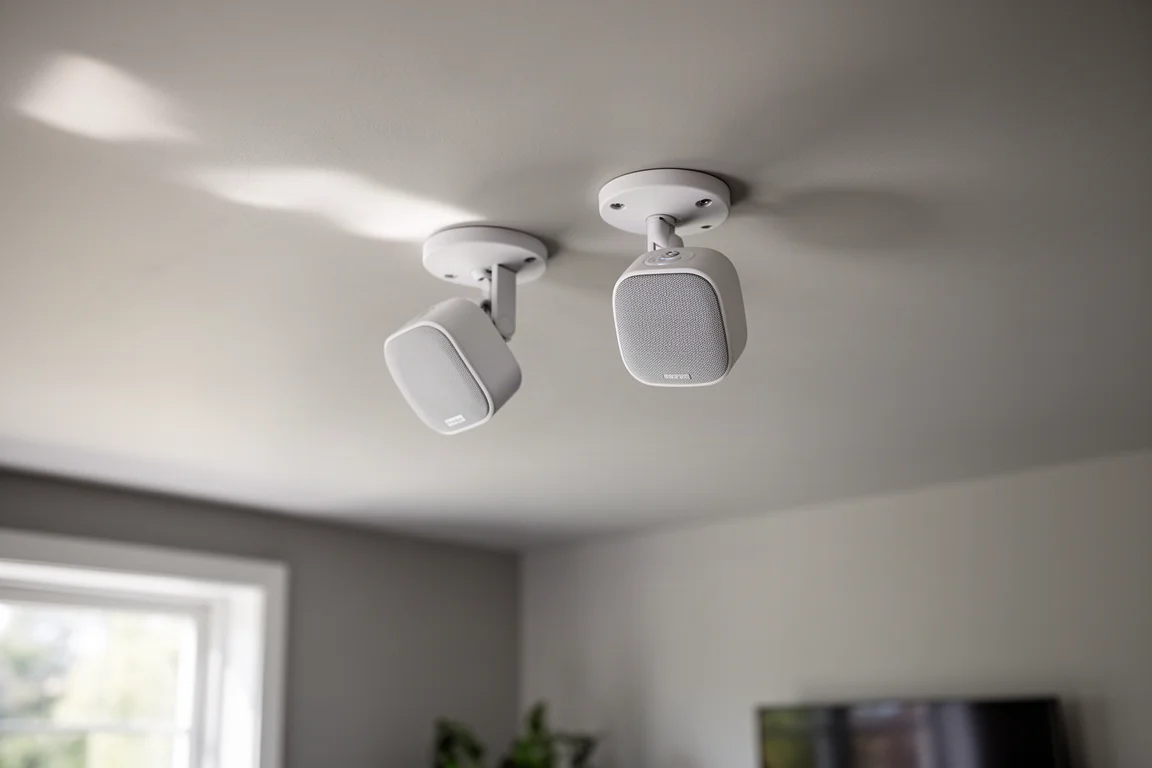
Seven matching M1s come to just over $2,000, which is enough for a fully matched surround and height array. Pairing them with speakers from a different brand for the main channels is not a problem worth losing sleep over. Room correction can smooth out the differences, and the practical gains from a discreet ceiling install outweigh the theoretical mismatch.
The Subwoofer: SVS 3000 Micro
On-wall and in-wall speakers rarely have the cabinet volume or the ports that freestanding designs use to reinforce low frequencies. Without a subwoofer, a system built this way can sound thinner than the speakers suggest.
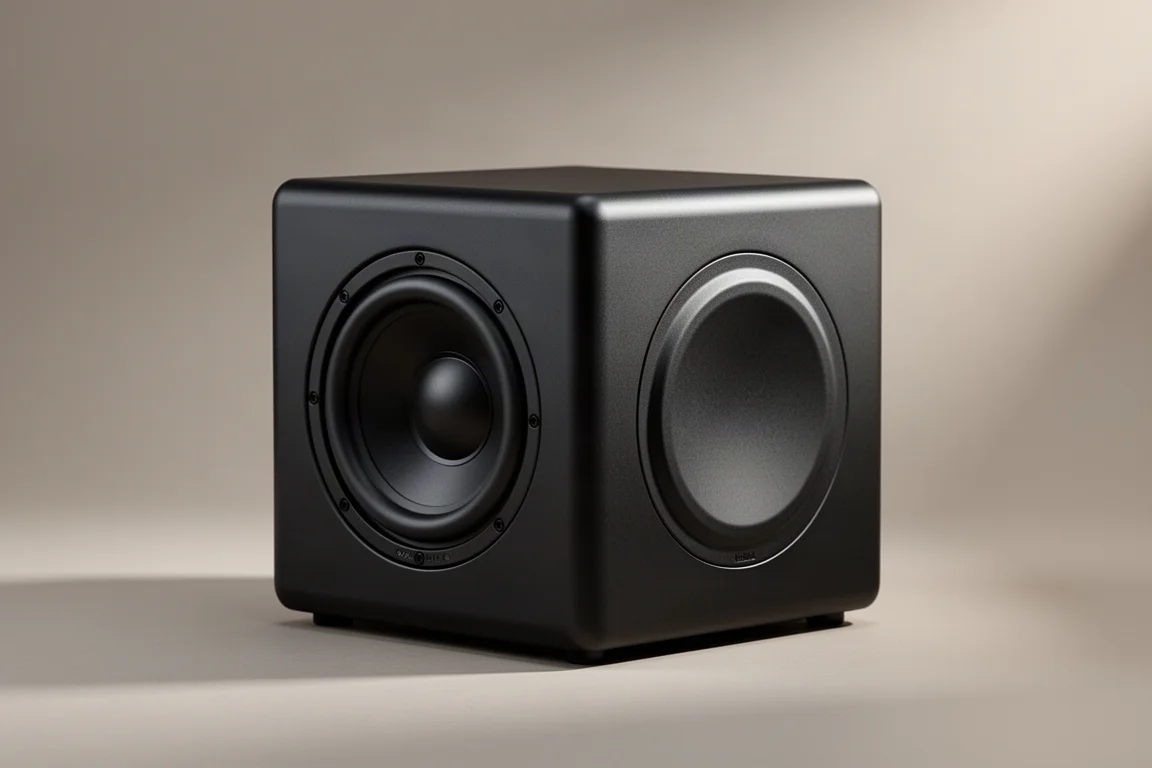
The SVS 3000 Micro is a compact option that restores that low end without taking up much room. An optional wireless subwoofer kit removes the need for a long cable run to the subwoofer position, which is often the least convenient part of a stealth install. Sonus Faber’s matching Gravis 2 in a walnut finish is the alternative for buyers who want the subwoofer to match the main speakers visually.
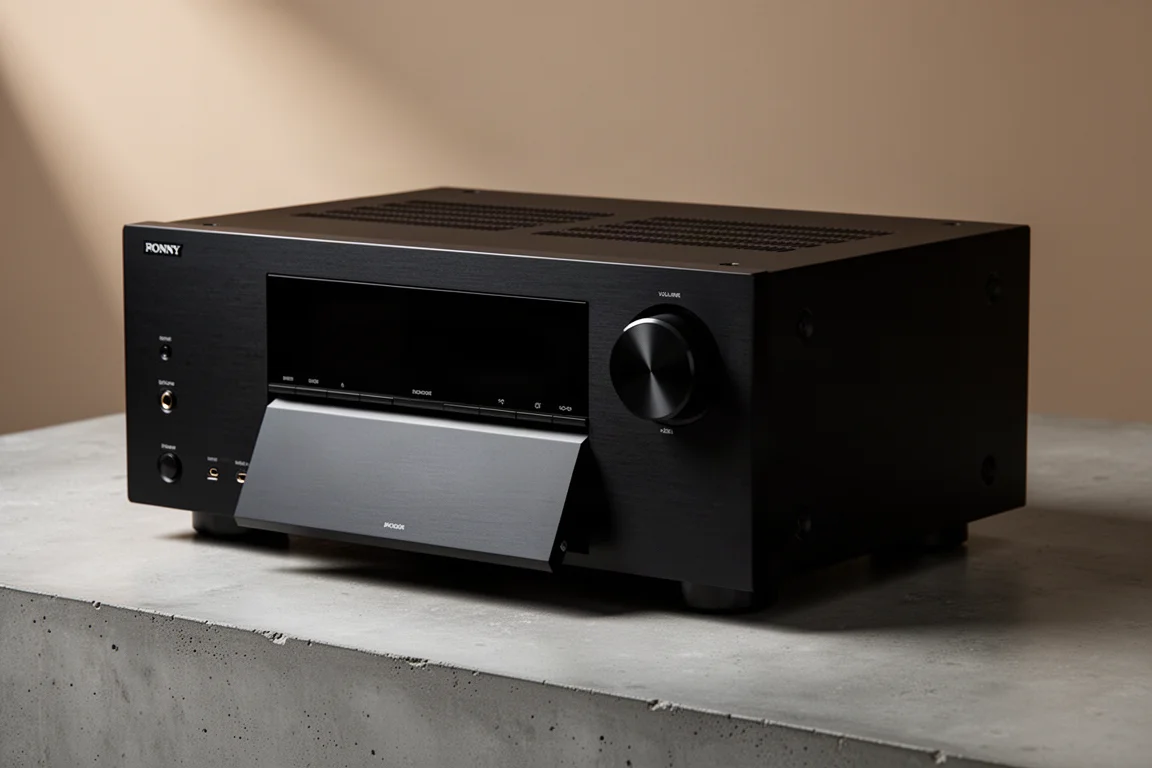
The Receiver: Onkyo RZ30
Everything above depends on an AV receiver that can drive five on-wall speakers, two height channels, and a subwoofer without strain. The Onkyo RZ30 is a 9.2-channel receiver priced just under $1,000, and it covers the essentials: enough power for difficult speaker loads, two independent subwoofer outputs, full preamp outputs for future expansion, and HDMI 2.1 support.
It also includes a built-in music streamer and ships with room correction software out of the box, which is unusual at this price.
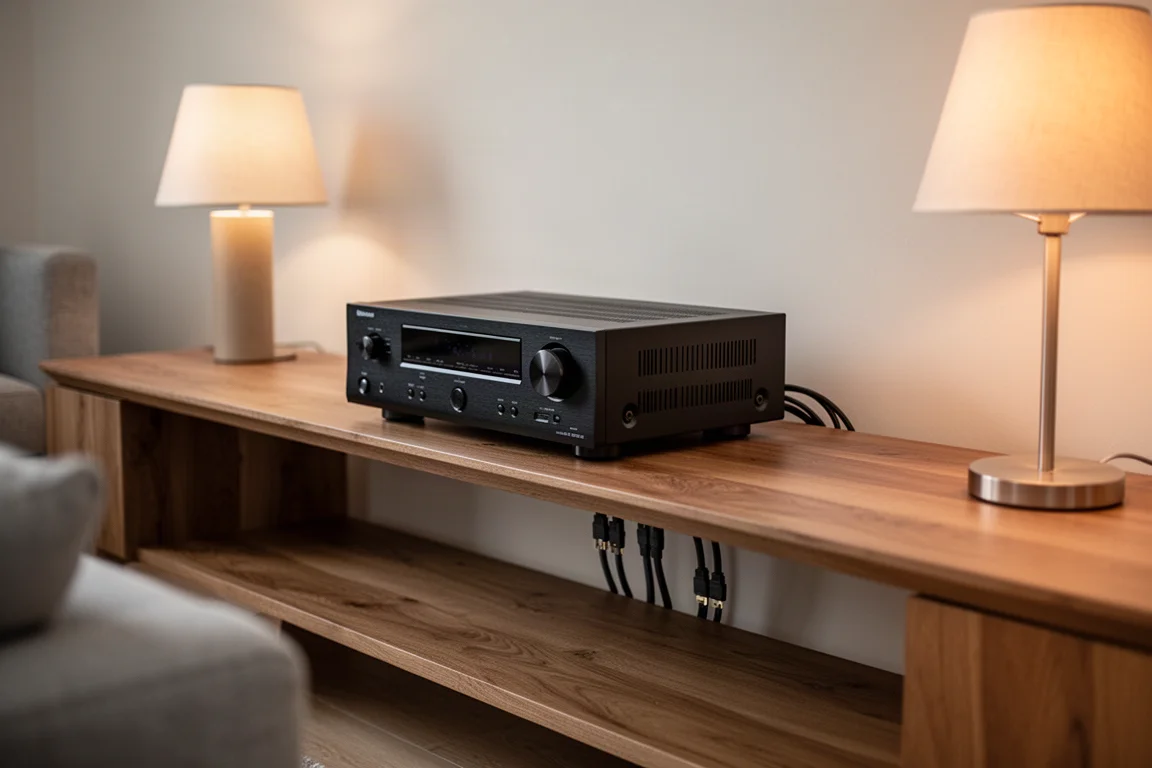
After everything is connected, the free version of that room correction can be run with the supplied microphone to tune the speakers and subwoofer to each other and to the room. Buyers who want more channels, more power, or a step up in refinement can look at the Onkyo RZ70, Sony’s 7000ES, or the Marantz Cinema 30 instead.
The Streaming Box: Apple TV 4K
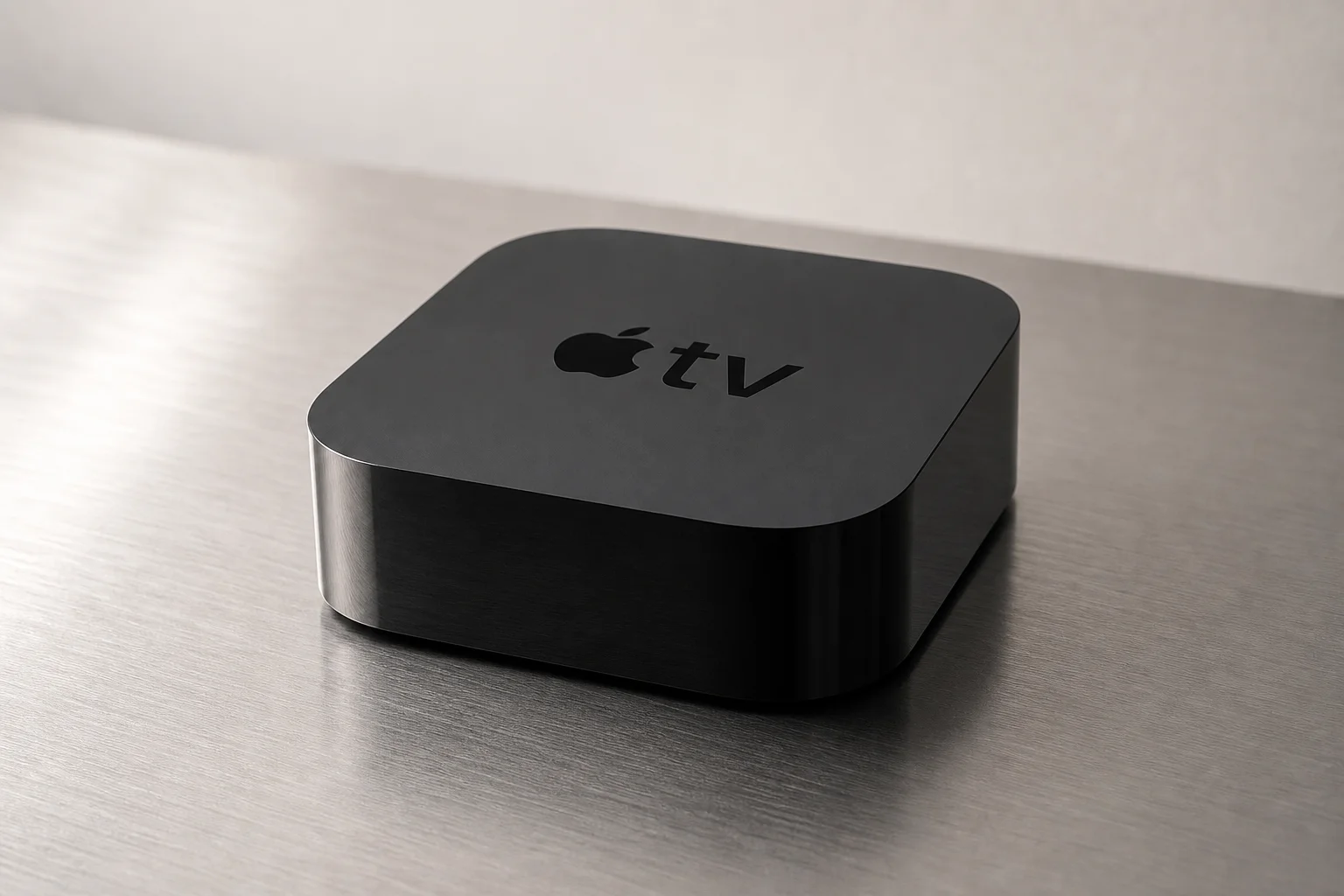
A large television already includes streaming apps, so a separate streaming box is optional. It is still worth adding one here for two reasons.
The first is usability, since the interface is more straightforward than the Google TV platform built into the set. The second is control. HDMI CEC support lets a single, simple remote operate the television, the receiver, and the streaming box without any additional programming. Mounting the box on the back of the television keeps it out of sight entirely.
Placement and Wiring Notes
Getting the sound right is mostly about where the speakers go. The left and right mains belong on either side of the television, spaced so the distance between them roughly matches the distance from the screen to the sofa. If the seating position is nine feet from the screen, aim for nine feet between the main speakers. Mount them so the tweeters sit near seated ear height.
The center channel goes directly below the television. Mounting it horizontally saves space, and for most listeners the benefit of a dedicated center outweighs any compromise from the orientation. If there is no room below the screen, a phantom center created by the left and right speakers is a workable fallback.
Surround speakers sit to the side of and slightly behind the listening position, at roughly the same height as the mains. They can go a little higher if that is more convenient, but they should not be pushed up against the ceiling.
Atmos height channels go on the ceiling, aligned with the left and right mains and positioned about halfway between the front wall and the listening position. Angling them down toward the seats improves the effect.
For wiring, CL-rated speaker cable can be run behind drywall. Where that is not practical, a narrow paintable cable track keeps the runs tidy and rental-friendly. Banana adapters at the receiver end make the connections easier to manage, and the full accessory list, including a wall mount, cable, adapters, and two high-speed HDMI cables, comes to roughly $400. Once everything is powered up, a cinema, movie, or filmmaker picture profile usually gives the most accurate image out of the box.
Overall Buying Advice
The screen and the speakers set the ceiling for what the system can do, so they deserve the first look. The receiver needs to match the speaker count and drive the load comfortably. Height channels and the subwoofer are where careful shopping pays off most, because strong options exist at much lower prices than the mains.
It also helps to decide early whether the walls can be opened up. In-wall and in-ceiling speakers are the most invisible solution, but on-wall models deliver most of the benefit with none of the drywall work, and they can move with you if the room changes.
Conclusion
A stealth Dolby Atmos system comes down to choosing products that do not need floor space and placing them carefully. A large television, five on-wall speakers, two ceiling-mounted height channels, a compact subwoofer, and a capable receiver cover the whole job, and every piece in this build has a sensible alternative if the budget or the room points elsewhere.
Further reading
Related Reviews
Home Theater
Anthem AVM 90 Review: A 15.4-Channel Flagship Preamp Processor
A close look at Anthem's flagship preamp processor, covering its dual ESS DAC architecture, 15.4-channel layout, ARC Genesis calibration and four independent subwoofer outputs.
Home Theater
Apple TV 4K With AirPods: A Best-Value Home Theater Setup
An Apple TV 4K paired with AirPods over Bluetooth makes a compact home theater setup for movies, spatial music and late-night viewing, and it can be assembled for as little as $300.
Home Theater
Arcam AVR15, AVR25, AVR35, and AVP45 Compared: Which AV Amplifier Fits Your System?
Four new Arcam home theater components share nine-channel amplification and Dirac Live, but differ in power, processing ceiling, and channel flexibility.