Woodworking
Starting a Woodworking Shop: The Budget Tools That Get the Job Done
A practical guide to building a woodworking shop from scratch, covering the tools worth buying first and the ones worth saving up for.
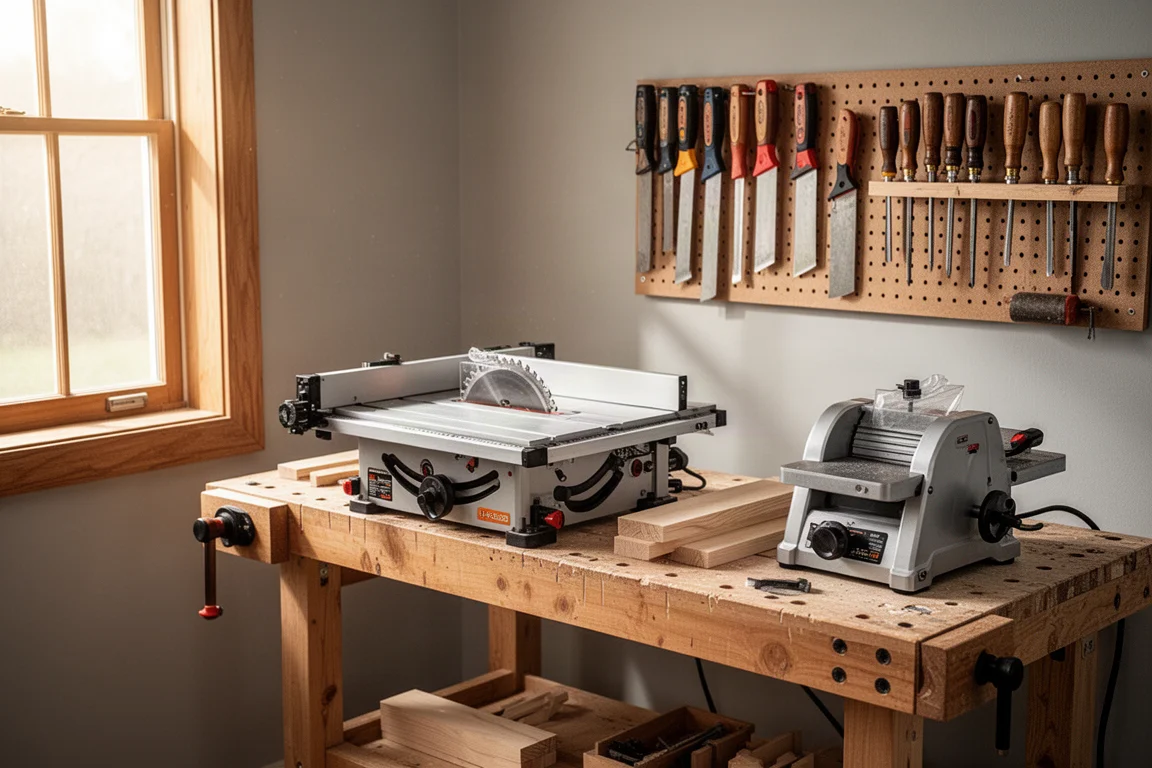
Introduction
Building a woodworking shop from an empty garage is a journey that starts with a single tool. The order in which you buy those tools matters more than the total budget, because each purchase should unlock new capabilities without forcing you to rebuy anything later. This guide walks through the tools worth picking up first, the ones where a budget option works perfectly, and the few machines where saving up makes a real difference.
First Tool: The Miter Saw
The miter saw is the first tool worth buying, and not just for woodworking. It doubles as a capable home improvement tool, which makes it an easier first purchase to justify. For fine woodworking, a sliding compound saw with a 10-inch blade hits the sweet spot between capacity and precision. The tilting head feature is useful for crown molding and DIY work, even if fine furniture making rarely needs it.
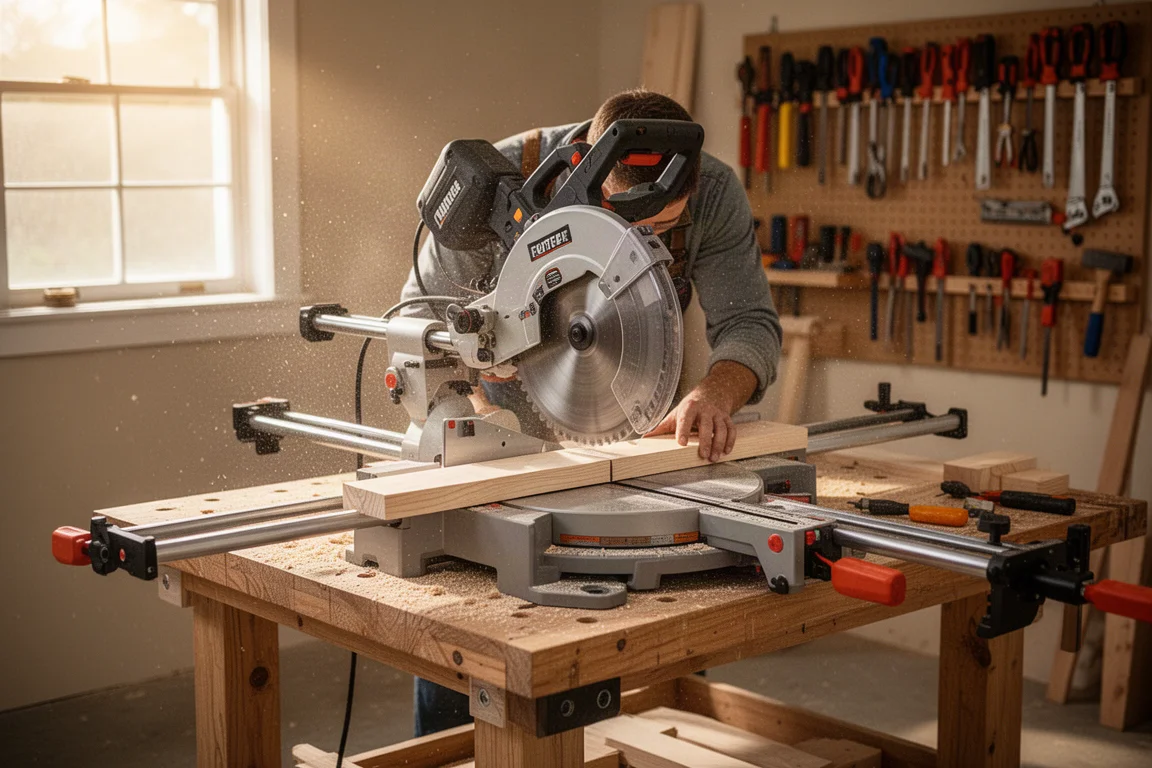
The first upgrade after buying any miter saw is replacing the stock blade with a dedicated cross-cut blade. Since the miter saw is used almost exclusively for cross-cuts, a quality blade delivers noticeably cleaner results. A miter saw stand with extension wings is worth considering early on, as it makes the saw portable and gives you support for longer workpieces. Eventually, a custom miter saw station becomes a worthwhile project, but the stand gets you started.
A budget miter saw handles most shop work well. The higher-end models offer better dust collection, less blade deflection, and a more solid build, but those refinements matter more once the rest of the shop is in place.
The Centerpiece: Table Saw
For most furniture makers, the table saw is the centerpiece of the workshop. This is the one tool where spending a little extra makes sense if the budget allows. The SawStop Compact Table Saw stands out because of its flesh-detection safety system. When the blade detects contact with skin, a brake slams into the blade and pulls it beneath the table in a fraction of a second, making serious injury virtually impossible.
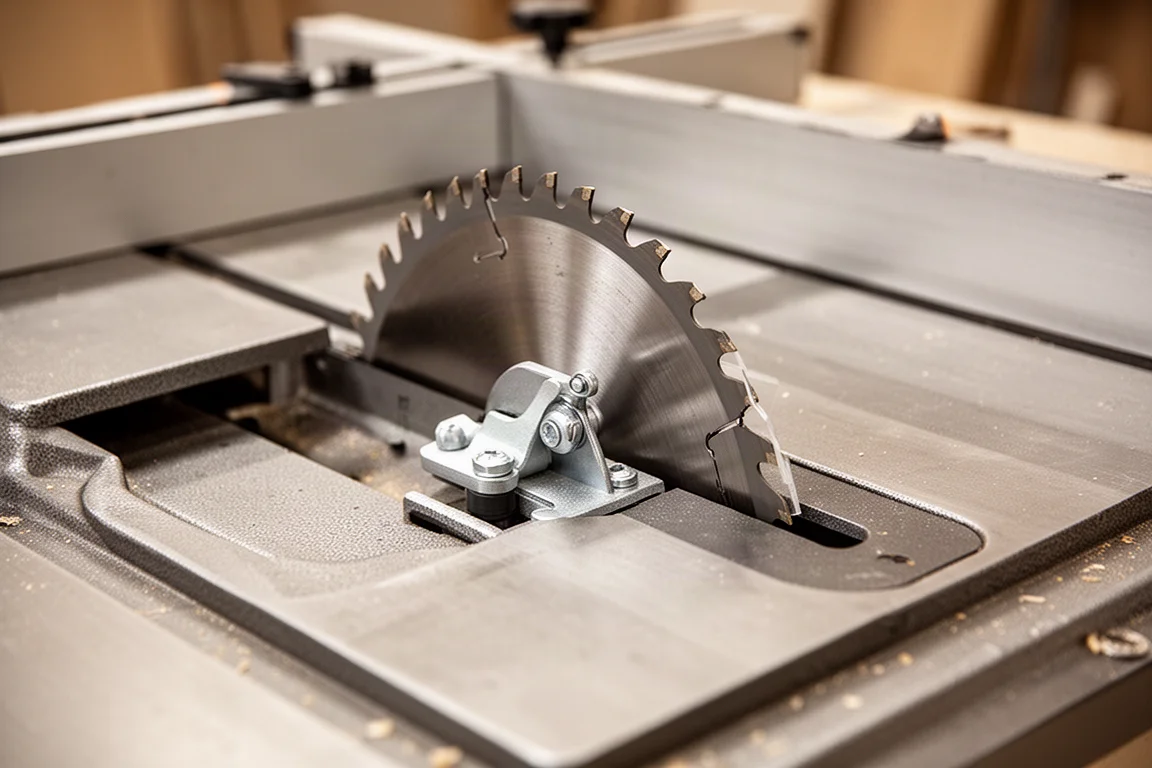
That safety feature is especially valuable in a shop where students or less experienced woodworkers will be working. The SawStop is not a budget tool, but the peace of mind it provides is hard to put a price on. Contractor-style table saws, by comparison, are lighter, louder, and have less effective dust collection. Their smaller size and lighter weight can make cutting sheet goods more difficult, though a proper table saw station with extension wings and an outfeed table solves most of those issues.
Two upgrades are worth buying right away with any new table saw: a good combination blade and a quality miter gauge. The stock versions that ship with most saws are built for DIY work, not fine woodworking. A table saw station with storage, an outfeed table, and wheels turns the saw into the true center of the shop.
Curved Cuts: Band Saw
A band saw handles curved cuts and re-sawing that a table saw cannot manage. For a starting shop, a single benchtop model covers most needs. The RIKON 10-305 is a step up in cutting capacity and build quality, making it a solid choice for anyone who expects to do serious re-sawing or work with larger pieces.
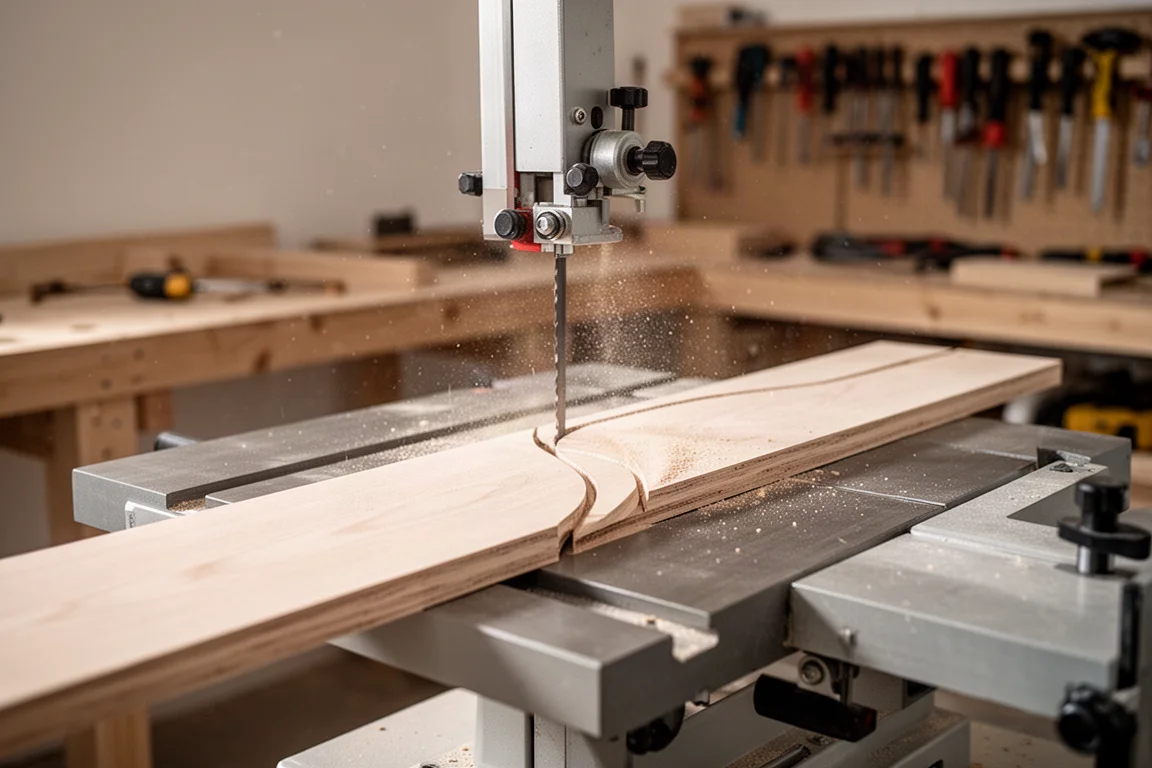
Budget-friendly benchtop band saws are perfectly capable for most furniture work. Like any new saw, the stock blade should be replaced immediately with a quality aftermarket blade, which makes a noticeable difference in cut quality and tracking. A two-band-saw setup, with a small saw for curves and a large one for re-sawing, is a luxury that can come later as the shop grows.
Drilling: Bench Top Drill Press
A bench top drill press provides the accuracy needed for drilling straight, repeatable holes at set depths. It is a straightforward tool, and the main differences between budget and premium models come down to weight, build quality, and travel. Heavier machines are more stable and generally better built, while premium models add features like digital readouts and automatic depth stops.
For starting out, a budget-friendly bench top drill press paired with a set of brad point bits and Forstner bits covers nearly all furniture-making needs. The bits matter as much as the press itself, since they determine hole quality.
Flattening Boards: Planer
A benchtop lunchbox planer is one of the most useful tools in a starting shop. Most portable planers handle boards 12 to 13 inches wide, which covers the vast majority of woodworking projects. The DeWalt planer is a dependable workhorse that has earned its reputation over years of use.
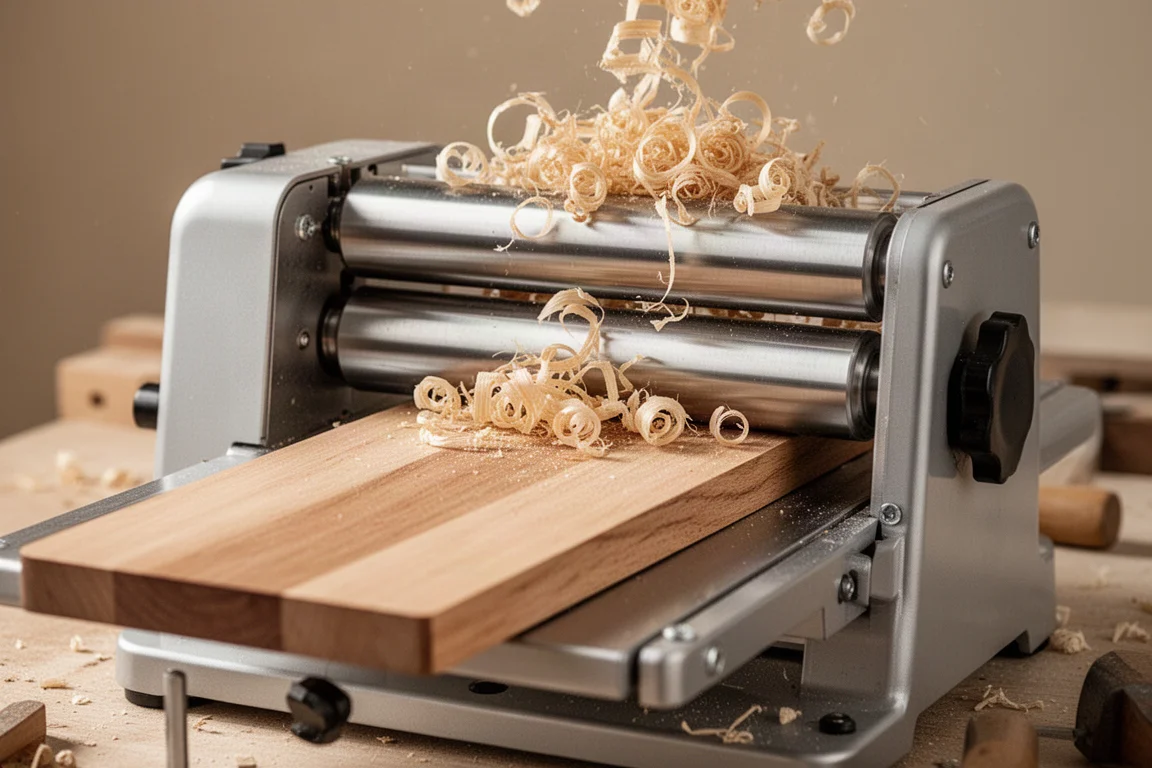
Larger planers, capable of handling 16-inch-wide boards, are a significant jump in both budget and space. For most woodworkers, the extra capacity is rarely needed, and there are jigs and workarounds for the occasional wide board. A planer becomes even more valuable if you can get rough lumber dimensioned at a local dealer, which pushes the need for a jointer further down the list.
Sanding and Finishing
Sanding is a task that rewards investment. A combination belt and spindle sander paired with a random orbit sander covers most starting needs. As the shop grows, dedicated disc, spindle, drum, corner, and detail sanders each earn their place, but they are not necessary on day one.
Clamps and Measuring
Clamps are a category where you can never have too many. Budget-friendly options from Harbor Freight have improved significantly and are perfectly adequate for most work. Starting with a budget of around $250 for a variety of clamps is a reasonable approach, adding more as projects demand.
For measuring, a couple of tape measures and a good combination square are the essentials. It is worth spending a little more on a quality combination square, since it is a tool that will last for decades. The premium measuring and marking tools can come later.
Buying Advice
The key to building a shop is buying tools one at a time as the budget allows and as projects demand them. A miter saw and workbench come first, followed by a table saw as the centerpiece. A band saw, drill press, and planer round out the core stationary tools. Budget options work well for most of these, with the table saw being the one place where spending extra for safety and quality makes the most sense.
Conclusion
Starting a woodworking shop does not require a massive upfront investment. By choosing the right tools in the right order, and knowing where a budget tool is sufficient versus where saving up pays off, an empty garage can become a functional furniture-making space. The journey is gradual, and each tool added expands what is possible.
Product link
View more details for SawStop Compact Table Saw
This product is mentioned in the review. Check the specifications, options, and compatibility before buying.
View more details for SawStop Compact Table SawFurther reading
Related Reviews

Woodworking Tools
123 Blocks and the Hardware Kit That Fixes Their Biggest Flaw
A practical look at 123 blocks, the hardware kit that solves their most common design flaw, and a sharpening station worth considering.
Pickleball Paddles
2025 Paddle Awards: The Best Pickleball Paddles of the Year
A category-by-category breakdown of the best pickleball paddles of 2025, covering value, control, all-court, power, and paddle of the year.
Automotive Accessories
70mai Dash Cam Comparison: A200 vs A510 vs A810
Three dash cameras from 70mai across different price points reveal how resolution and sensor quality impact real-world footage clarity, especially for number plate visibility and low-light performance.