Hi-Fi Speakers
Five Standout Hi-Fi Speakers Worth Hearing: A Curated Shortlist
Five very different speaker designs, from a compact stand-mount to a fully active studio monitor, and what each one asks of the rest of your system.
Introduction
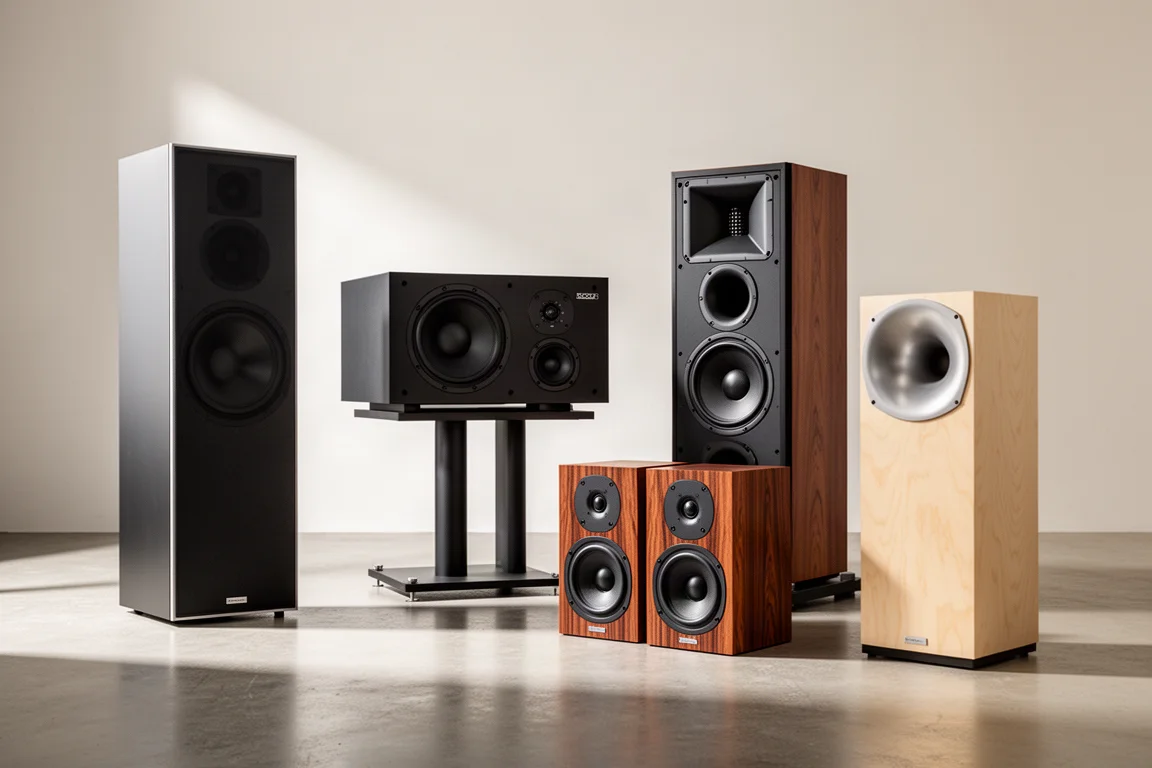
Some speakers stay with you long after they leave the room. The five models below earned a place on this shortlist because each one did something memorable with real recordings, and each one stayed interesting once the novelty of a new sound wore off. They span a wide stretch of the market, from a compact stand-mount that costs less than a modest amplifier to a fully active monitor priced like a small car, and they approach sound reproduction in five genuinely different ways.
If you are choosing a speaker this year, the useful question is not which one wins in the abstract. It is which design suits your room, your amplifier, and the recordings you actually play. Each entry below explains what makes the speaker distinctive and what you should know before buying.
How These Speakers Were Chosen
The criteria here are practical rather than statistical. A speaker made the cut when it stayed compelling across a broad range of music instead of flattering only pristine recordings, when its design choices were clearly audible rather than theoretical, and when it offered something genuinely hard to find at its price.
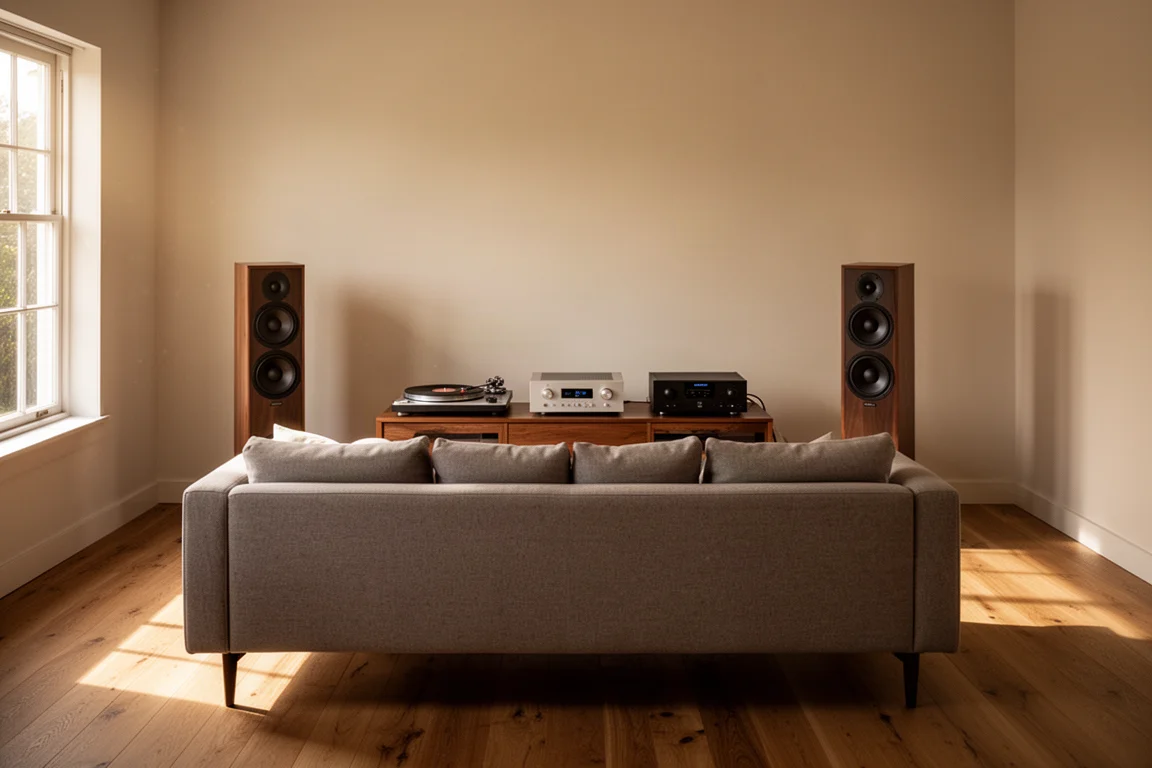
That last point matters most. Several of these designs use technology that is uncommon in their category, whether that is an all-analog active amplifier pack, a dipole air motion transformer, or a cast aluminum horn. Unusual engineering is not automatically better, but when it produces a clearly different musical result, it is worth understanding.
The prices across this group vary widely, and so do the demands they place on the rest of a system. A low-sensitivity planar needs serious amplifier power, while a high-sensitivity horn will run happily on a fraction of that. Room size matters just as much as budget.
Diptyque DP140 Mark II: A Planar That Breathes
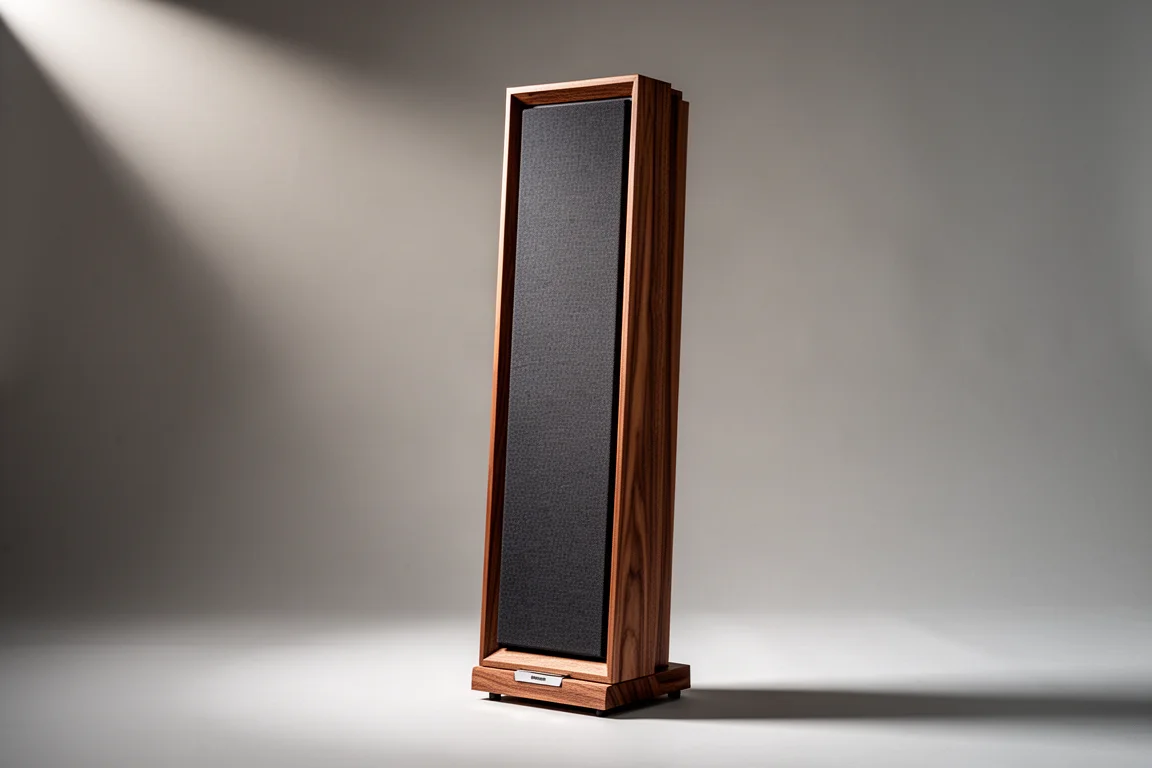
The DP140 Mark II is a dipole planar magnetic speaker, an approach familiar to anyone who has spent time with large flat-panel designs, but executed with a level of craftsmanship that stands apart. It is entirely made in France and handcrafted, and the build quality is a clear step above what is typical in this category.
The sound is where it separates itself from the planar crowd. It comes across as dynamically alive, with a punchy bottom end, fast bass, and very clear highs. The overall presentation is lively and highly transparent. Detail retrieval is high, so flawed recordings will not be disguised, yet the speaker stays easy to listen to rather than turning into an endurance test. It also plays loud without sounding strained. One practical note: the DP140 Mark II draws a great deal of current, and a low-powered amplifier will not get the best from it. Plan for a robust power amplifier.
ATC SCM50: Studio Accuracy With Active Electronics
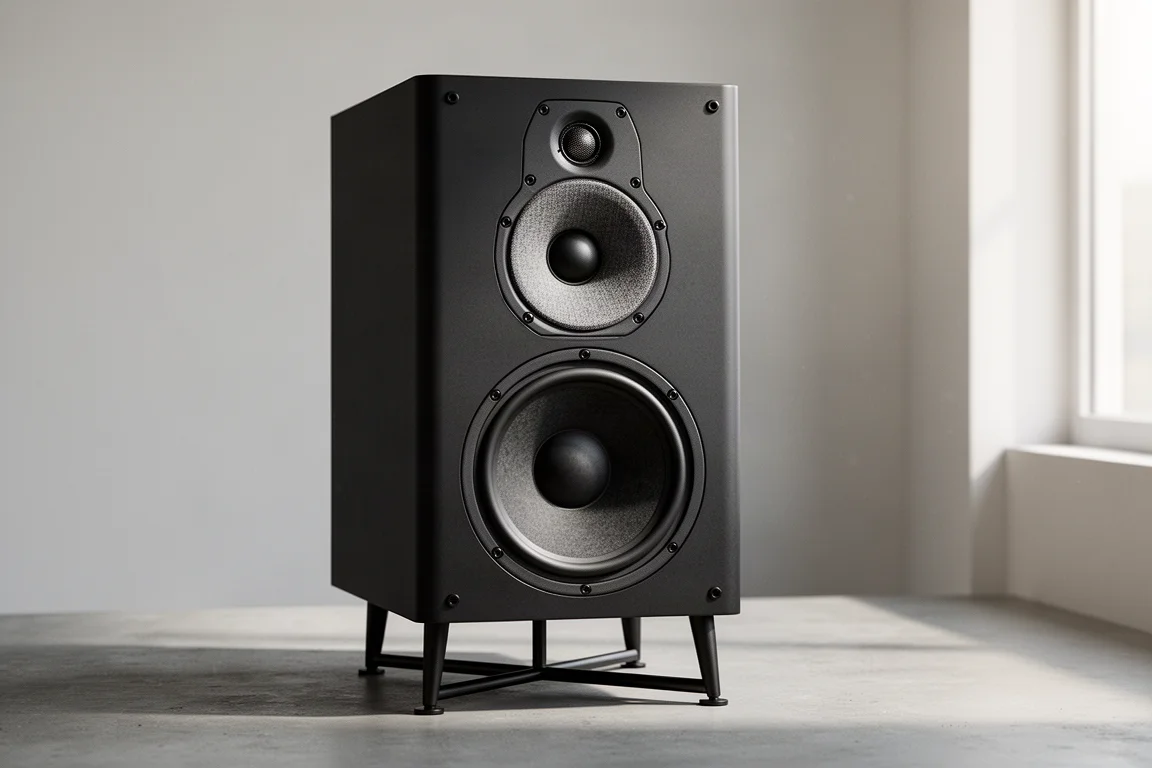
ATC builds primarily for professional studios, and the SCM50 shows what that background produces when it is aimed at a domestic listener. It is a three-way active design with three separate Class AB amplifiers, one each for the tweeter, the midrange, and the woofer. Fully analog active amplification of this kind is rare.
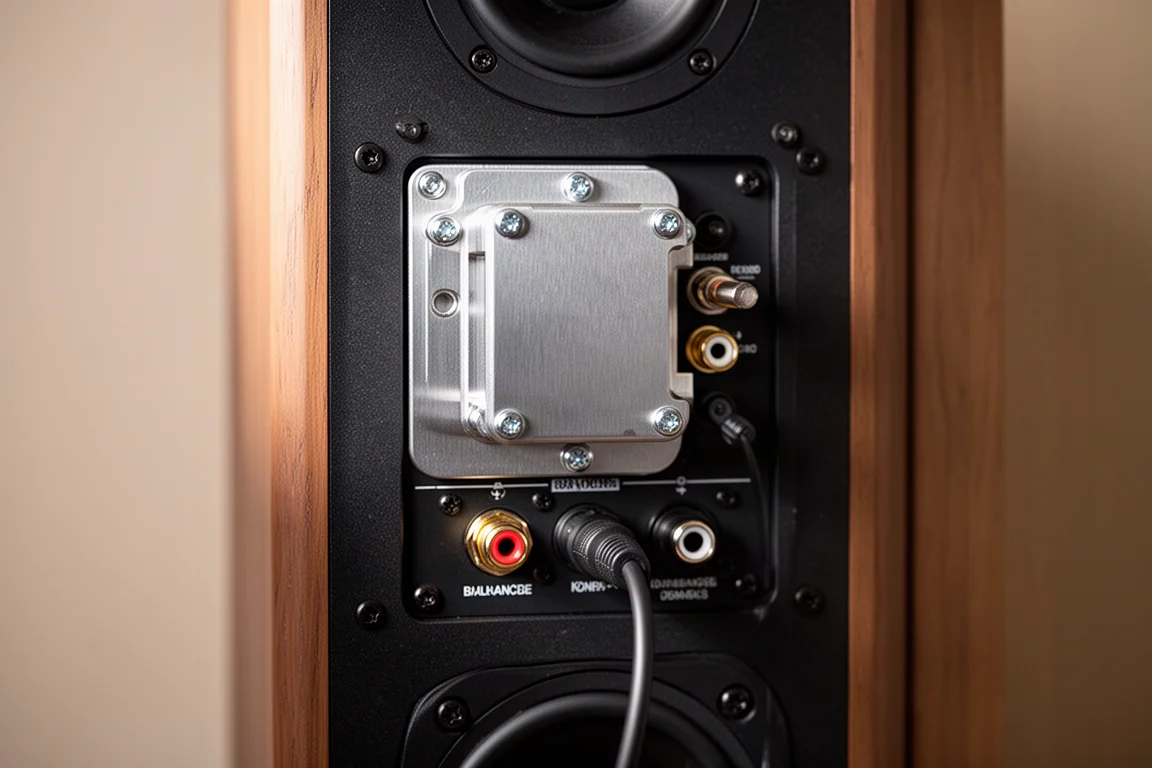
Just as notable is what ATC left out. There is no DSP and no digital input. You feed it a conventional line-level signal through XLR or RCA connections, and nothing else. The speaker and its electronics are covered by a six-year warranty, which is unusually long for active electronics. If the amplifiers ever need service, they are easily removable, so the cabinet does not have to make the trip back to England.
The character is that of a professional monitor: highly revealing, neutral, and punchy in the bass, with plenty of headroom. Poor recordings will sound poor. The SCM50 is available as an active pair with the matching stands at $22,000, or as a passive version at $16,000 a pair for listeners who prefer to use their own amplifiers.
Pure Audio Project Trio 10 Hy AMT: Open Baffle With a Dipole AMT
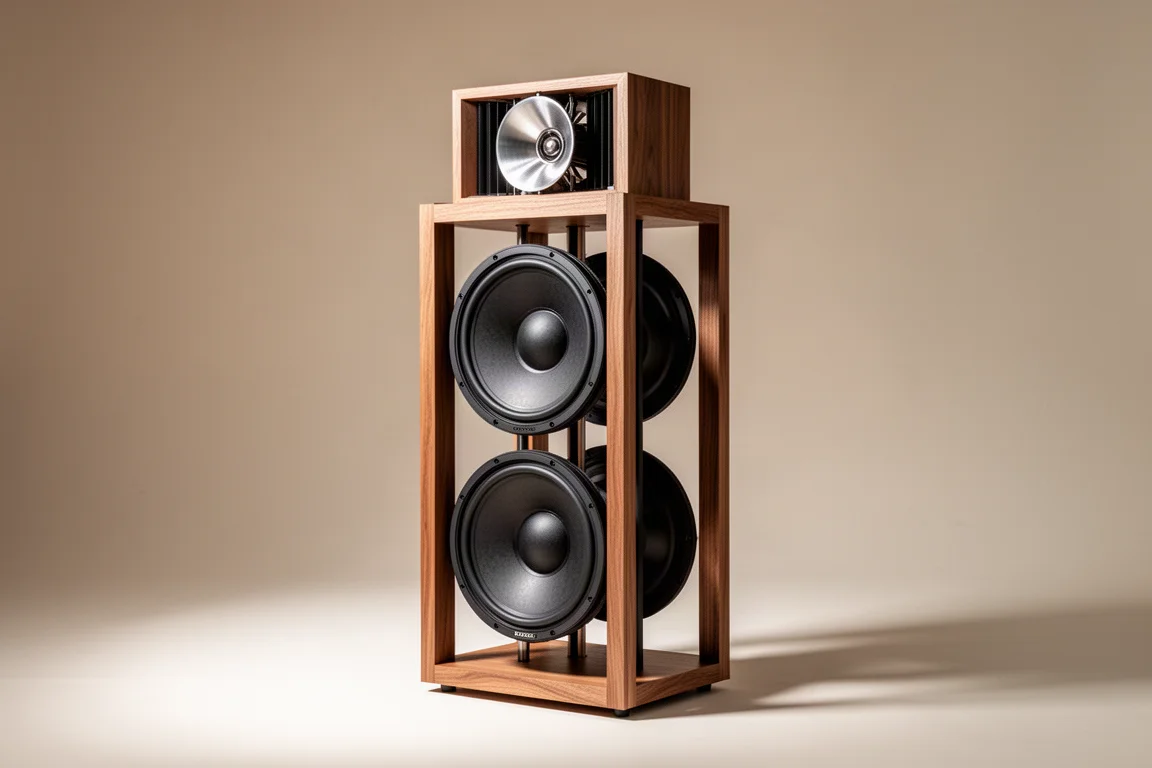
The Trio 10 Hy AMT pairs two 10-inch open baffle woofers with an air motion transformer tweeter that behaves unlike most. It is a dipole AMT, radiating as much energy from the rear as from the front, and it extends far lower than typical AMT designs, reaching down to 600 Hz where most stop at 1,500 Hz or 2 kHz. Custom waveguides sit in front of and behind the tweeter.
That tweeter is made in California by ESS, a company that has been building this type of driver since the 1970s. The result is a presentation closer to an electrostatic panel than to a conventional box speaker, with the speed, clarity, and transparency that implies, but with real dynamic capability that most electrostatics cannot match.
Pure Audio Project ships worldwide, and the Trio 10 Hy AMT is $5,900 a pair in US dollars, available in a range of finishes. Pricing is scheduled to rise by roughly 10 percent on January 1, so buyers who are interested should plan accordingly.
Sound Artist LS3/5A: Small Room, Big Value
The LS3/5A is a Chinese-made interpretation of the classic BBC monitor, and it does not officially meet that specification. What it does offer is a 4.5-inch woofer, a 0.75-inch dome tweeter, and a real rosewood veneer cabinet at $570 a pair including worldwide shipping, a fraction of what genuine BBC-specification examples command.
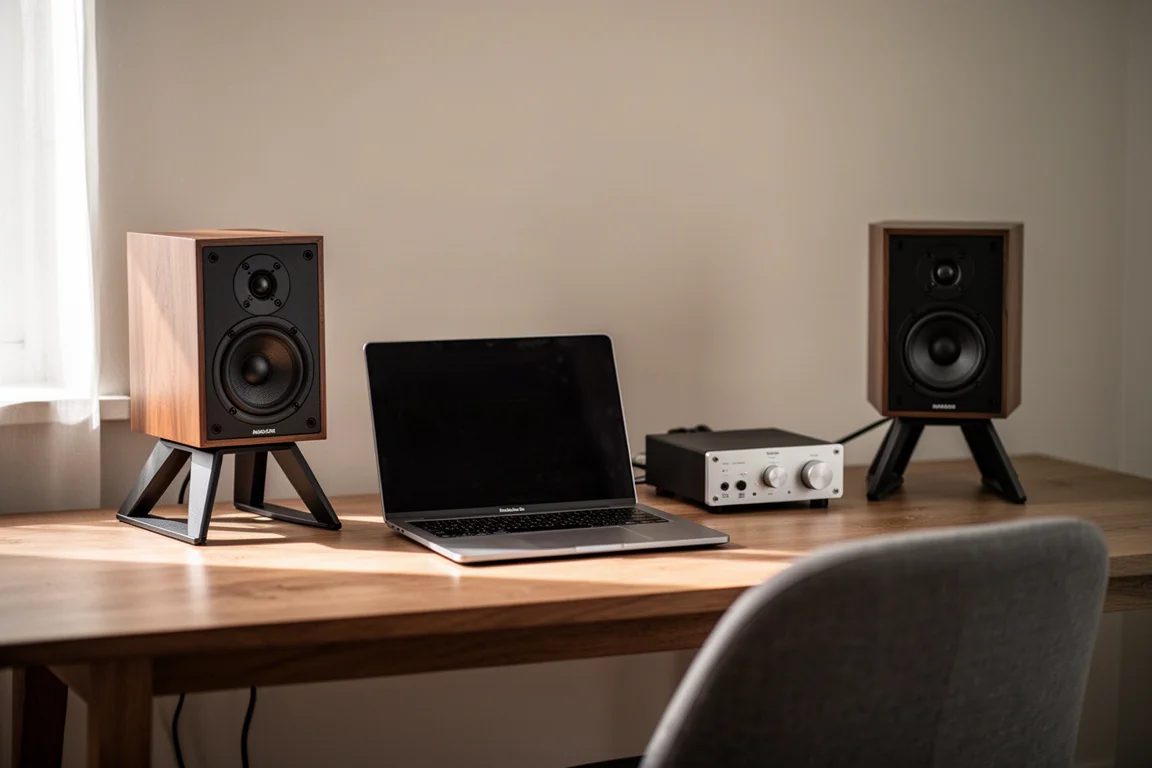
The listening experience is the surprise. The soundstage is huge for a speaker this small, the midrange is exceptionally sweet, and the bass is fuller than the cabinet size suggests, to the point where a subwoofer does not feel necessary. It works beautifully in a small room and as a nearfield monitor, and it also held up when placed where larger speakers normally sit.
Klipsch Ojas KOR1: A Modern Horn Collaboration
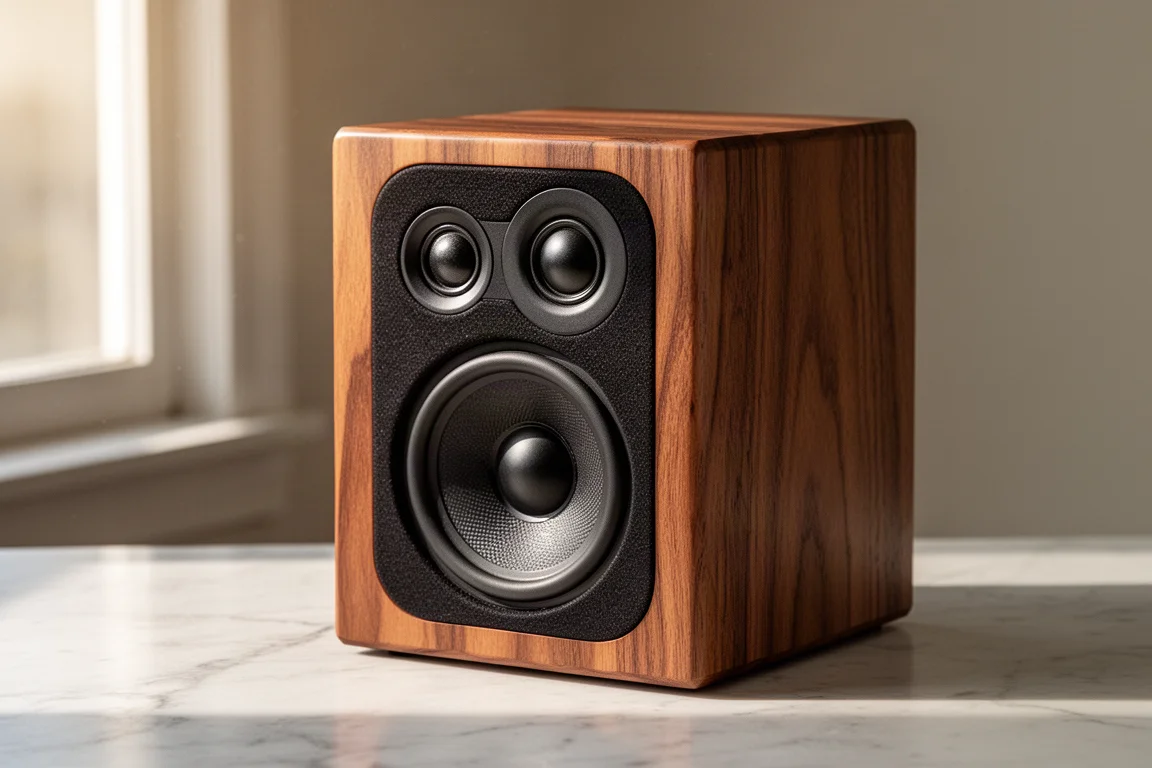
The KOR1 is the result of a collaboration between Klipsch and Ojas, bringing together Roy Delgado of Klipsch and Devon Turnbull of Ojas. It is a two-way stand-mount that borrows from both houses, but the details are where it distinguishes itself from anything either brand has offered before.
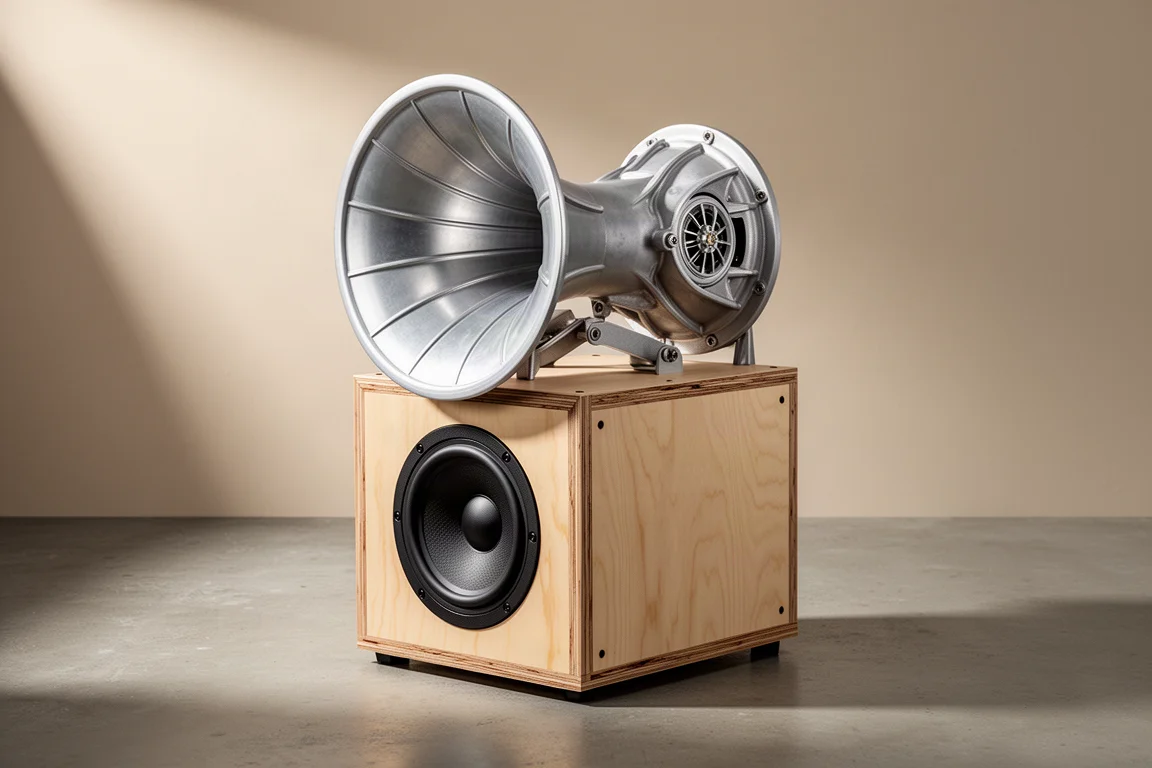
The horn is cast aluminum and radial rather than the molded plastic used on conventional Klipsch designs, and it is loaded by a compression driver. The cabinet is 13-ply birch plywood rather than MDF, heavily braced and solidly assembled. Sensitivity is high, around 97 dB, which opens up amplifier options in both directions: low-powered designs will drive it happily, and high-powered amplifiers are equally welcome.
The sound is unmistakably horn-like in the best sense, with the immediacy and scale of live music. Push it with highly dynamic material and it stays clean, without the sense of strain that creeps in as lesser speakers get louder. In a normal-sized room it can fill the space with ease. The KOR1 is $8,498 a pair including stands.
Buying Advice: Matching a Speaker to Your Room and Amplifier
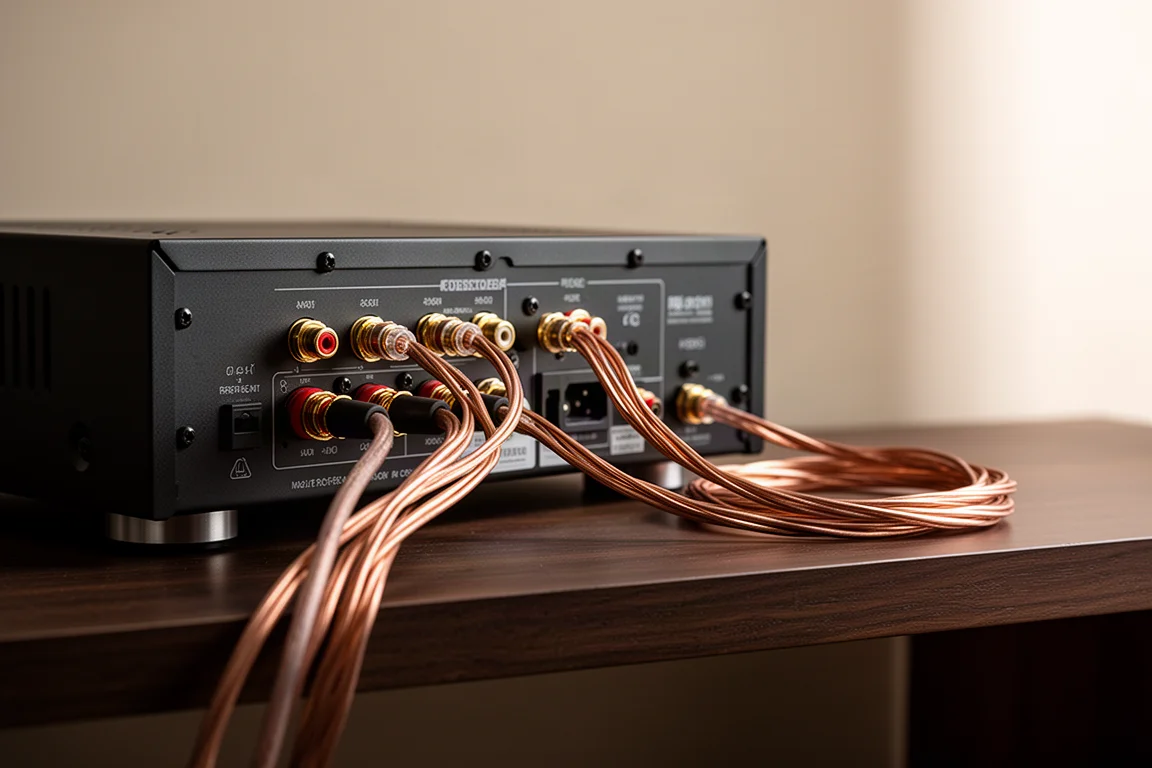
Start with the room and the amplifier, not the speaker. The Diptyque DP140 Mark II rewards a high-current amplifier and will disappoint if it is fed by something modest. The ATC SCM50 removes that question entirely by including its own amplification, and its analog-only input path makes it a straightforward partner for a quality preamplifier or a DAC with a volume control.
If your room is small, the Sound Artist LS3/5A is the least risky purchase on this list, and at $570 a pair including shipping it is also the easiest to justify. Listeners who want an open baffle presentation with genuine dynamics should look closely at the Pure Audio Project Trio 10 Hy AMT, particularly before the scheduled price increase. The Klipsch Ojas KOR1 suits anyone chasing the liveliness of a horn system who also wants the freedom to choose a low-powered amplifier.
Budget is only one axis. A $570 pair used well in a small room will often be more satisfying than an expensive pair squeezed into a space where it cannot breathe. Decide how loud you listen, how much space you have, and how much amplifier you already own, and the shortlist tends to sort itself out.
Conclusion
Five speakers, five different philosophies. The DP140 Mark II shows what careful planar construction can do, the SCM50 makes the case for fully analog active amplification, the Trio 10 Hy AMT proves that an open baffle design can be both transparent and dynamic, the LS3/5A delivers remarkable value in a small cabinet, and the KOR1 brings horn immediacy to a modern stand-mount. Any of them can anchor a serious system, provided it is matched to the room and the electronics around it.
Further reading
Related Reviews
Hi-Fi Speakers
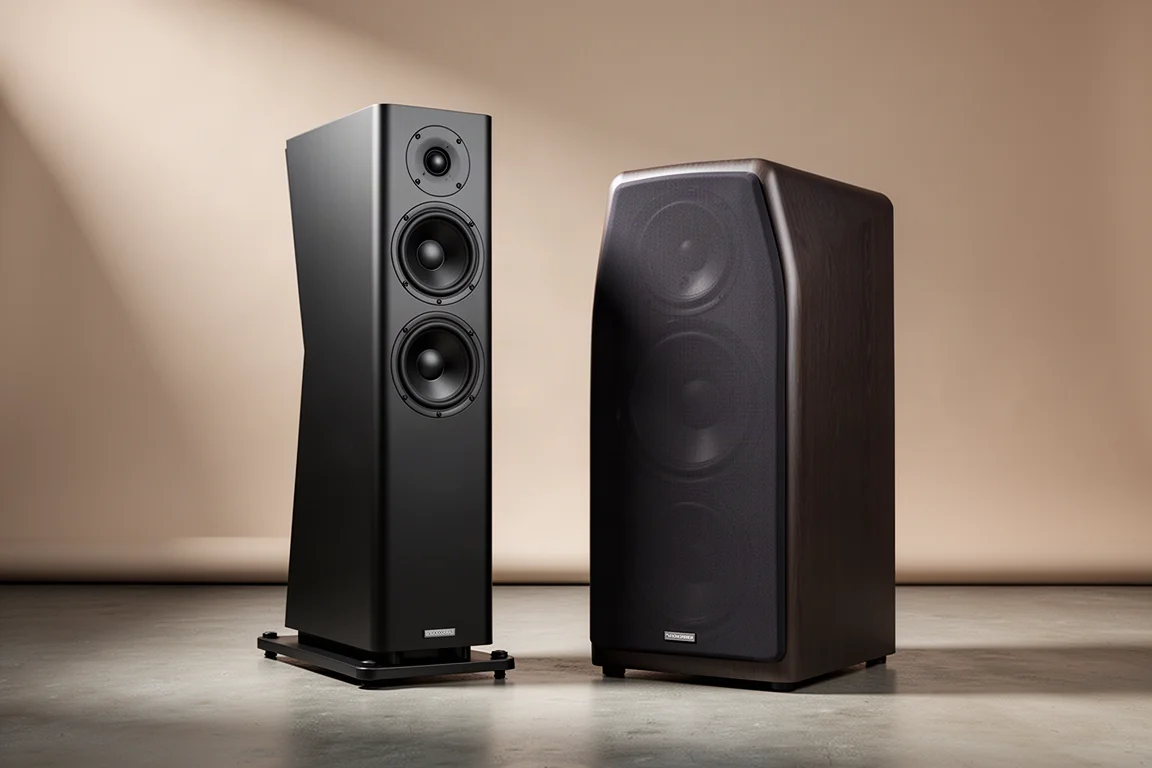
1723 THX Tower vs 1528 Bookshelf: Which Speaker Fits Your Room?
Two speakers at roughly the same price, built very differently. How the 1723 THX tower and the 1528 bookshelf compare on construction, bass, power needs, and sound.
Hi-Fi Speakers
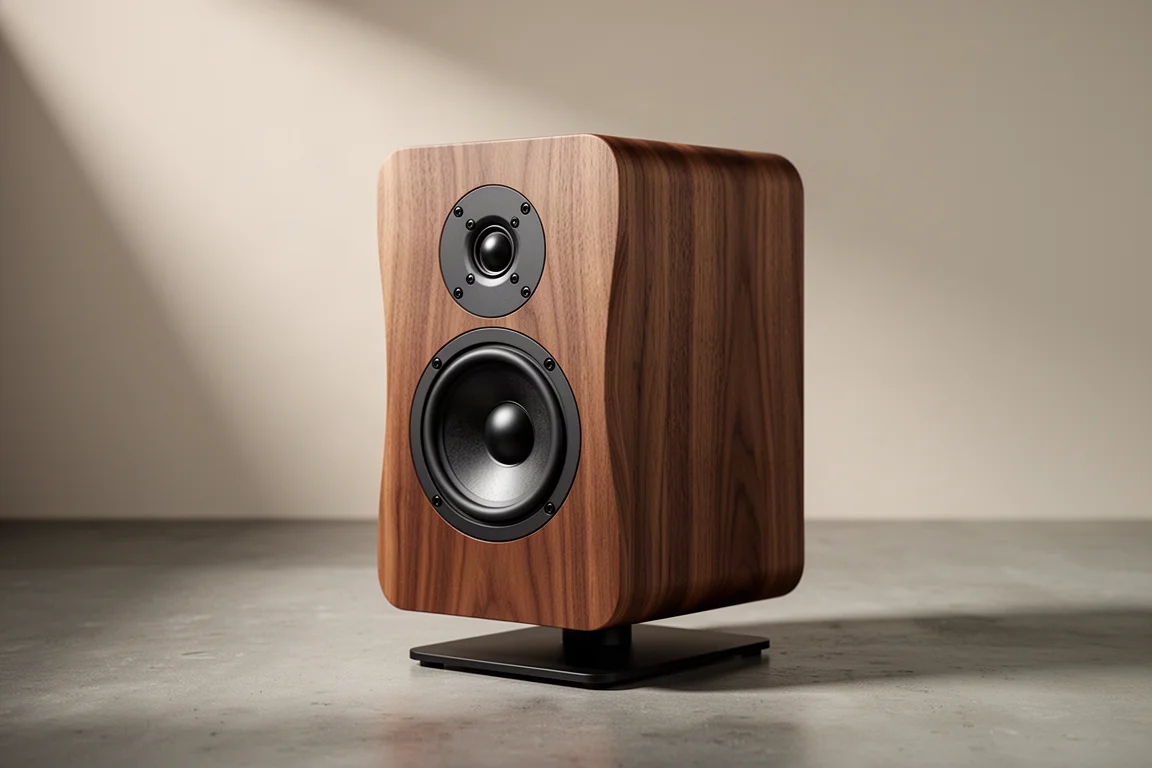
Acoustic Energy AE 300 Review: Deep Bass From a Compact Standmount
A two-way standmount with real wood veneer, surprising low-end weight, and a warm, easygoing character. Here is what to know before buying.
Hi-Fi Speakers
Acoustic Energy AE1 40th Anniversary Review: A Modern Take on a British Classic
A compact standmount that revives a 1980s favorite with all-new parts, a warm mid-centric balance, and a price of £1,499 per pair.