Ski Destinations
St. Moritz Ski Resort Review: Luxury Skiing in the Engadine Valley
A detailed look at St. Moritz's three ski areas, terrain, snow reliability, lifts, and luxury mountain experience to help you decide if it deserves a spot on your winter list.
Introduction
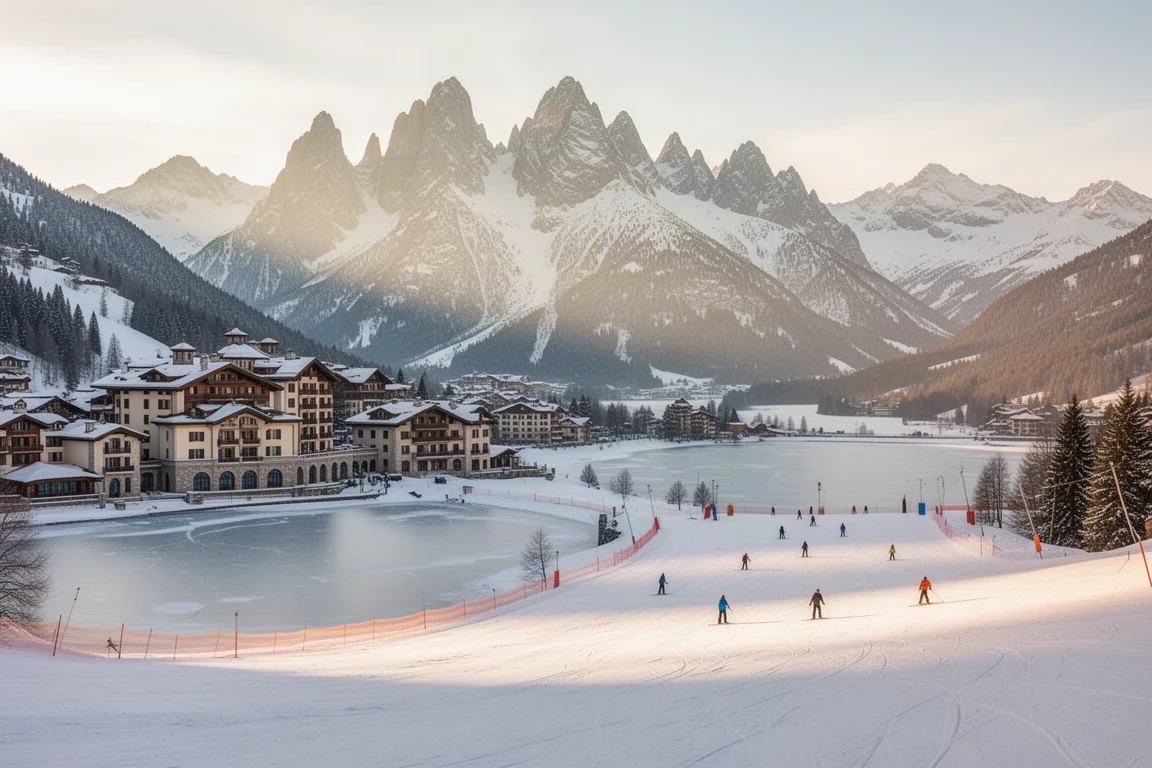
Few winter destinations carry as much reputation as St. Moritz. This famous Swiss region pioneered luxury skiing when it opened in 1864, which by many accounts makes it the world’s oldest ski destination. Today it still delivers the moneyed atmosphere you would expect, with designer branding across the resort and champagne bars on the slopes. But beyond the prestige, there is a genuine mountain destination here worth understanding in detail.
This review breaks down St. Moritz’s overall mountain experience: its terrain split, snow reliability, lift setup, amenities, and how the region stacks up against other prominent European ski destinations.
Three Ski Areas, Not One Resort
Like many European ski regions, St. Moritz does not exist as one continuous footprint. It consists of three distinct ski areas:
- Corviglia: Direct access from town, the largest and most polished footprint, with terrain for all ability levels.
- Corvatsch: North-facing slopes and more advanced terrain, including the slightly mellower Furtschellas area on the skier’s left side.
- Diavolezza Lagalb: Out of the way from town and the smallest and least built-up of the three, but with the best snow retention of the bunch.
Unlike many prominent Swiss destinations, St. Moritz is decidedly not a mega resort. Corviglia spans about 1,800 acres with roughly 68 km of marked piste, Corvatsch is about half that size, and Diavolezza Lagalb is roughly a tenth of Corviglia. The three areas are mostly disconnected from one another, with public bus service as the main link. In good conditions, advanced skiers can ski directly from Corvatsch to Corviglia, but not the other way around.
Terrain by Ability Level
Beginners
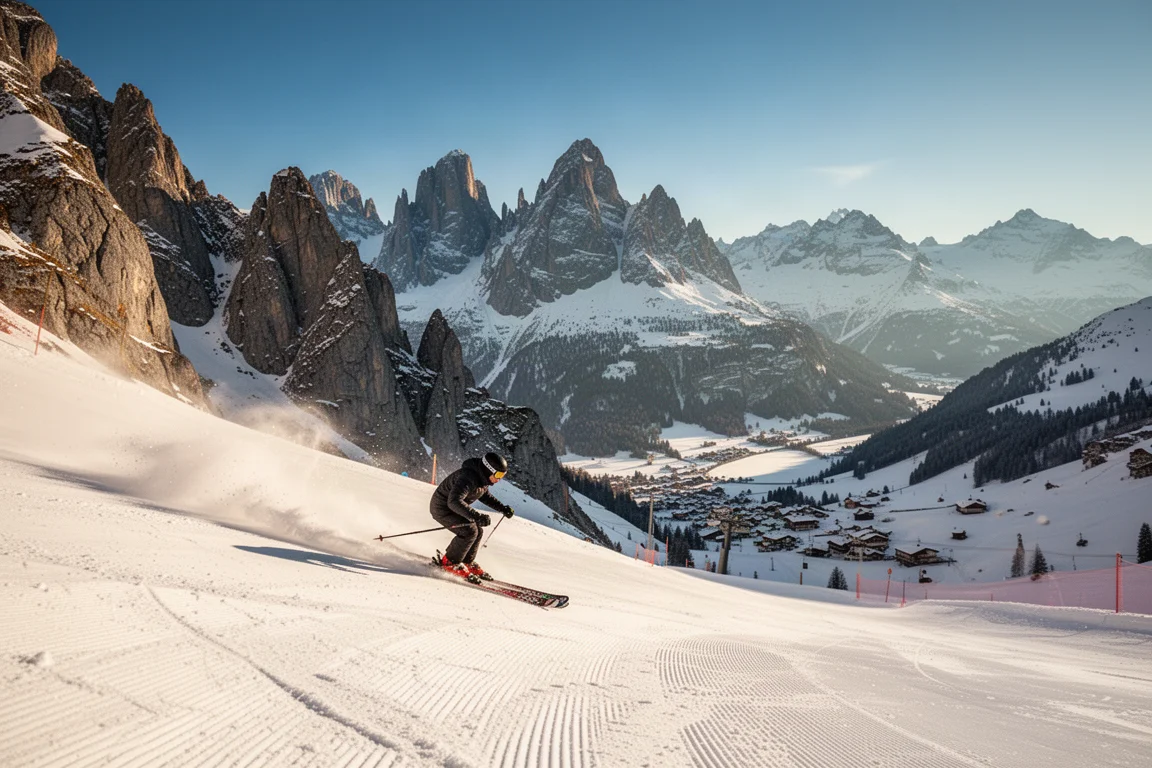
Corviglia is the place to be for easier terrain, with blue-rated pistes across its lower and mid-mountain areas. Corvatsch and Diavolezza-Lagalb are much less beginner-friendly, with only two main mountain blue runs at the former and none at the latter. True first-timers will find a handful of bunny hill areas at the bases of Corviglia and Corvatsch. One quirk at Corviglia: guests who ride the tram to the top for the iconic summit restaurant need to either take a red intermediate piste down or download the tram to return to mellow terrain.
Intermediates
St. Moritz opens up significantly once guests reach intermediate proficiency. Nearly every lift serves red-rated pistes, and the vast majority of marked runs at Corvatsch and Diavolezza-Lagalb hold this rating. At Corviglia, the red runs include some of the resort’s most iconic backdrops, most notably the Piz Nair descent from the top. Most reds are similar in difficulty to blues at typical North American resorts, though a few have steeper sections closer to regional black runs.
Advanced and Expert
Despite some reds being on the harder side, marked advanced terrain is somewhat lacking compared with other destinations. Corviglia’s blacks tend to be easy for Europe, sometimes closer to North American blues. The blacks at Corvatsch and Diavolezza are somewhat more technical but limited in quantity; some Corvatsch blacks feature steep pitches that transition to mellow terrain suddenly, producing surprising G-force effects at speed.
Snow Parks and Freeride Terrain
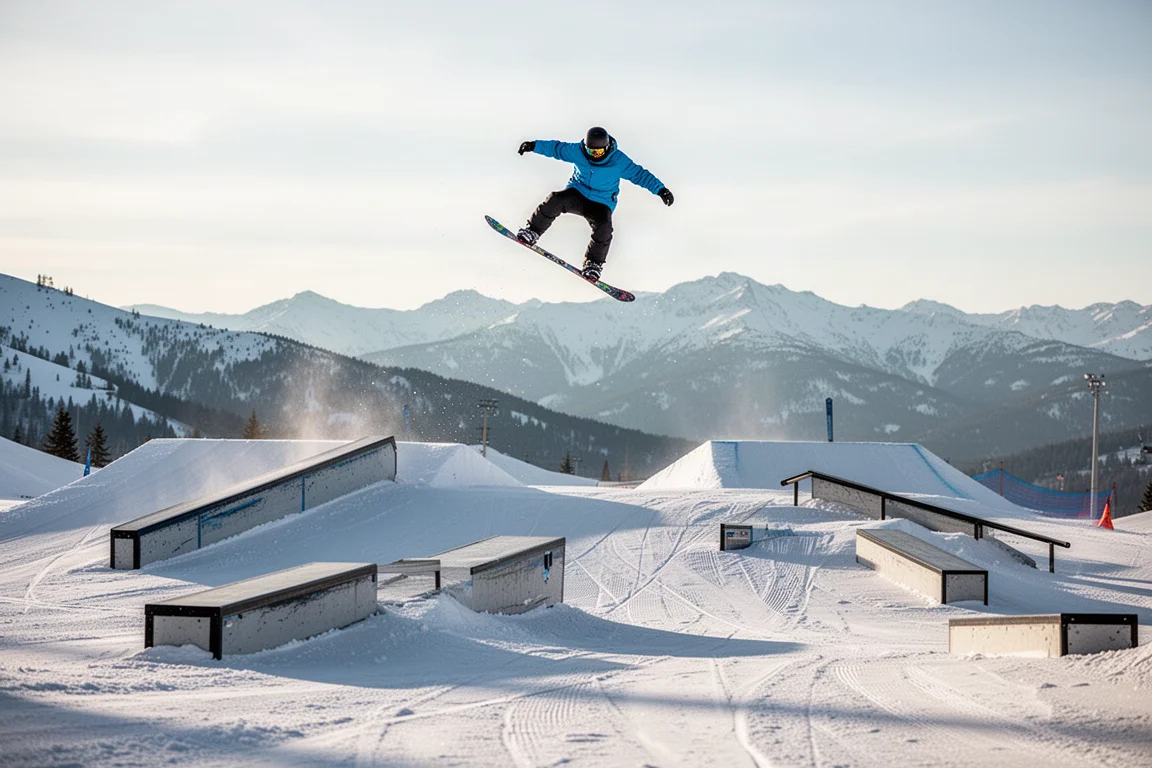
St. Moritz offers very strong freestyle options across the domain. The main attraction is the Crowland Snow Park at Corviglia, with jumps, rails, boxes, and specialty features for all abilities, including airbag features. Corvatsch has a fun park below the mid-station with its own chairlift plus a halfpipe, and Forcelles adds a fun park of its own.
St. Moritz is not widely known as a freeride destination, but quality off-piste terrain exists. Because few visitors venture off the slopes, off-piste areas can stay untracked for days or even weeks. Corvatsch’s upper mountain tram and the backside of Forcelles offer the most prominent off-piste experience, with visually striking lines that hold snow well thanks to their northerly aspect. Many lines cliff out if you don’t know your route, so these zones are best explored with a guide.
Diavolezza and Lagalb provide the most compelling freeride terrain when it hasn’t snowed recently. Diavolezza features true big mountain lines for those who know where to look, while Lagalb offers fun if slightly less demanding terrain. Corviglia also has significant out-of-bounds freeride accessible by traversing from the top of the Piz Nair tram: very steep, obstacle-strewn lines with significant payoff and stunning views.
Important caveats apply: all of these out-of-bounds areas are not patrolled or avalanche mitigated, terrain hazards are not marked, and avalanche risk is real. A beacon, shovel, and probe are fundamental, and hiring a guide is strongly recommended if you don’t know the terrain.
The Diavolezza Glacier Run
For inbounds adventure, the Diavolezza Glacier Run, officially Gletscher Abfahrt, is a yellow-rated marked trail that provides one of the greatest marked descents in Europe. This roughly 6-mile, 3,000-vertical-foot run passes jagged mountain facades, rock formations, and ice fields, and feels so remote it can seem like the middle of nowhere. About halfway down, you get a full view of the breathtaking Morteratsch Glacier, one of the largest in the Eastern Alps.
The catches: it ends with a long and arduous catwalk, crevasses require vigilance despite the resort’s mitigation, and it does not return to the resort. Instead, it converges into the Morteratsch hiking trail and spits out at the corresponding train station, which runs hourly, so timing your descent matters. Expect 45 minutes to an hour.
Snow Quality and Reliability
St. Moritz sees high-quality snow for the Alps, but totals are more modest than many top destinations. The region benefits from high elevation, with Corvatsch topping out at 3,300 m (about 10,800 ft) and the others close behind. Combined with north-facing slopes at Corvatsch and glacier terrain at Diavolezza, quality conditions are expected throughout winter with a decent spring season. The 1,800 m base elevation in town is a plus, making valley runs skiable in many parts, which is not a given in today’s Alps.
The Engadine Valley is relatively dry, so snowfall totals are typically modest. Frequent sun makes for comfortable skiing but drives freeze-thaw cycles at lower elevations, especially on south and east-facing slopes of Corviglia, and some lower runs can be variably open. All ski domains offer snowmaking on piste, and select areas benefit from snow farming to establish a reliable early-season base.
Navigation and Getting Around
On the whole, St. Moritz’s ski areas are not too hard to get around. Ample trail map postings, many showing lift and piste status, plus clear guidance at major intersections help. Corviglia is arguably the most cohesively designed, though it can be a little confusing to make sure you end at the right base at day’s end.
Corvatsch and Diavolezza Lagalb are victims of having been originally built as separate resorts then combined. At Corvatsch, getting between the Furtschellas and Corvatsch sides requires a lengthy journey toward the bottom, with surface lift rides involved in either direction. At Diavolezza and Lagalb, going from Diavolezza to Lagalb involves a connection trail, a magic carpet, and crossing a road on foot, while the reverse requires an arduous cross-country ski trail or a half-hourly bus.
Lift Infrastructure and Resort Access
Lift infrastructure is generally very impressive, but the experience splits depending on where you are. Corviglia offers a modern, luxurious setup with bubbles on nearly all chairlifts and high-speed service from all but one minor base area. A couple of less prominent areas, mostly at Corvatsch, rely on slow fixed-grip chairlifts, surface lifts, and in places no direct lift route at all.
Corviglia has some genuinely cool lift features. Access from downtown St. Moritz Dorf comes via a two-stage funicular railway that has existed in some form for over 110 years, with a bottom terminal starting underground before rising outside for great views. But this 100-person funicular is also the only direct access from the center of town, and trains run only every 15 minutes, even at peak. On busy days, queues can mean waiting out multiple trains. The gondola out of Celerina and the tram out of St. Moritz Bad are more efficient but out of the way for downtown guests.
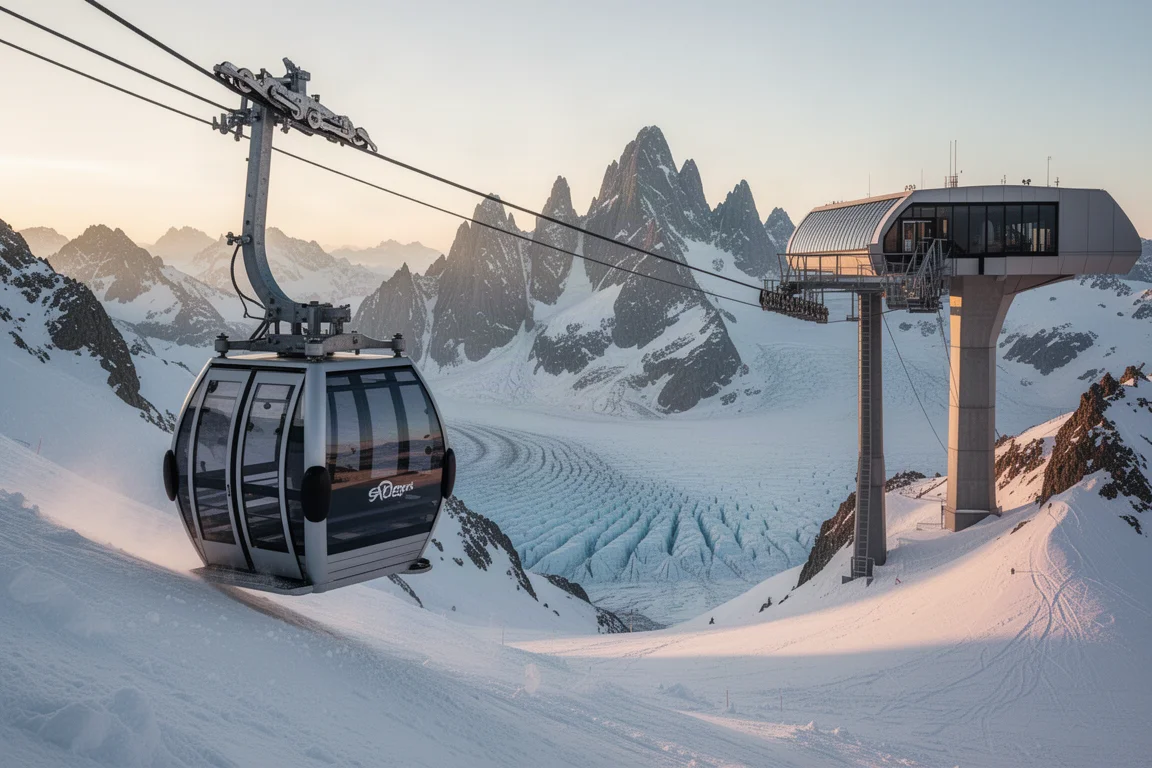
Elsewhere, Corvatsch, Diavolezza, and Lagalb are accessed only by tram. Long headways can annoy if you’ve just missed a car, but lower crowds keep lines manageable. Diavolezza’s tram is the only lift access to most of its terrain, and Lagalb’s to all of it. The true upper mountain summits of Corviglia and Corvatsch are also tram-only, with dramatic cable car rides offering some of the most breathtaking views in skiing, though lines can build on busy days.
Getting back into St. Moritz Dorf from Corviglia at day’s end is a known pain point. Valley trails end at inconvenient locations, so many guests download the funicular from the mid-station, where demand often exceeds capacity. Taking a valley run and walking is often faster, but if you’re already at the mid-station past the turnoffs, you may have no choice but to wait.
Crowds
Crowding peaks during the December break and the February school holiday period. Corviglia, with direct town access, can see significant congestion on peak days with long lift lines and worsened choke points. Corvatsch, Diavolezza, and Lagalb stay much quieter thanks to their remote locations; the latter two essentially never see serious crowds.
On-Mountain Amenities and Mountain Aesthetic
One of the greatest parts of the St. Moritz experience is the on-mountain amenities. Corviglia in particular offers exceptional restaurants seemingly around every corner. The other areas have plenty of food and drink too, though less upscale and widespread; at Diavolezza you need to head to the summit for a true restaurant, though the base terminal hosts a small coffee shop and a very cool glacier VR exhibit.
Food establishments range from casual cafes to high-end eateries, with plenty more reasonably priced than you might expect. Most offer indoor and outdoor seating, the latter perfect for the region’s frequent sun. The Piz Nair restaurant at Corviglia’s summit might be one of the most magnificent establishments in Europe, with panoramic views directly from your seat and Swiss-German delicacies on the menu.
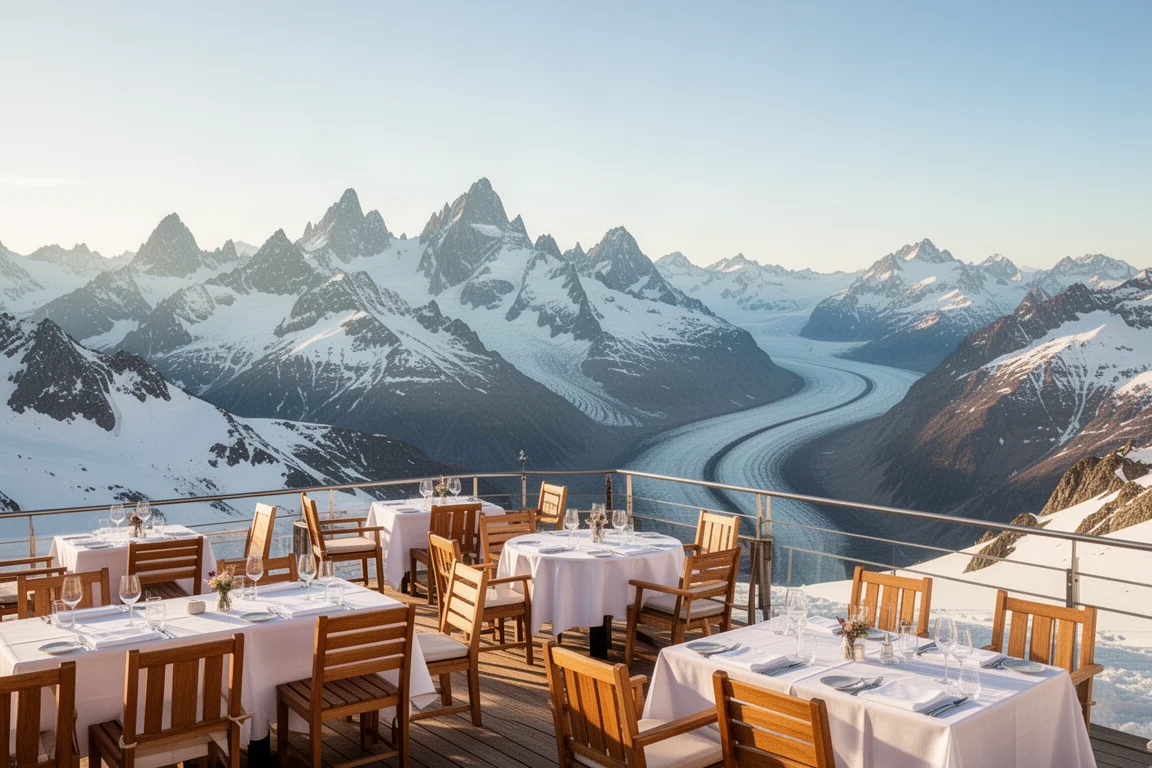
The mountain aesthetic is defined by opulence, particularly on the Corviglia side, with luxury branding everywhere from lift towers to gondola cabins. But that is balanced by phenomenal upper-mountain scenery that easily sits in the top tier of European ski regions. The broader Engadine Valley retains a more traditional, unmanufactured Alpine character, with small villages and working farmland, and the outlying ski areas feel significantly more down-to-earth.
Getting There, Lodging, and Town Life
St. Moritz is easily accessible by public transport: about 3.5 hours by train from Zurich Airport with multiple daily connections, about 3 hours by car from Zurich or Milan, or about 4 hours from Munich. Parking is available at secondary Corviglia bases and the main bases of the other areas. The Engadine Airport sits a short drive from the slopes for private flights.
Lodging spans a wide range. Downtown St. Moritz Dorf has some of the most luxurious hotels of any ski town, alongside cheaper authentic pensions and modest hotels if you book early. St. Moritz Bad, Celerina, and Silvaplana offer fantastic options with direct lift access to Corviglia or Corvatsch and quieter lift starts. Samedan and Pontresina offer cheaper lodging on the valley bus network, and a shared-room hostel sits at the edge of St. Moritz Bad for bargain hunters. For a one-of-a-kind stay, Berghaus Diavolezza is a summit hotel adjacent to the tram top terminal with a turnkey all-meals experience, though it is communal and you are up there for the night when lifts close, like it or not.
Après-ski reflects the ultra-luxe reputation, centering on high-end bars and lounges, with some divey spots if you know where to look. Beyond skiing, there is luxury shopping, world-class restaurants, and signature winter events like horse racing and polo on the frozen lake. The Engadine Valley also hosts one of the most extensive Nordic trail networks in the world, with tracks cutting through town and across Lake St. Moritz.
Pricing and Value
Despite the luxury positioning, lift ticket pricing is surprisingly reasonable. One-day adult tickets for the whole region top out at 85 Swiss francs during peak holiday season, with significantly lower prices off-peak, on multi-day tickets, or with access limited to specific ski areas. Corviglia, Corvatsch, Diavolezza, and Lagalb are also all members of the Ikon Pass suite, with seven shared days on the full pass and five on the Ikon Base Pass, neither with holiday blackout dates.
How St. Moritz Stacks Up
Scored individually across ten categories, Corviglia earns a 68 overall, Corvatsch a 62, and Diavolezza Lagalb a 61. Highlights include a 10 for on-mountain facilities at Corviglia, a 9 for its lifts, and 9 for its mountain aesthetic; Corvatsch and Diavolezza Lagalb score 8 each for aesthetics and 9 and 7 respectively for facilities. Corvatsch’s navigation (5) and Corviglia’s crowd flow (5) are the weakest marks, and snow scores are moderate across the board.
Buying Advice: Who Should Go
If the highest quantity of snow, best value accommodations, or a gigantic skiable footprint are your priorities, St. Moritz may not be the right choice. But if you want the ultimate European old-school luxury experience with the restaurants, town, and activities to boot, the ski domain certainly delivers. It will do the trick for those wanting a five-star vacation, even if other comprehensive mountain experiences are more compelling overall.
Conclusion
St. Moritz pairs world-class hospitality, stunning natural beauty, strong amenities, and excellent lifts in Corviglia with quiet reliability in its more remote sectors. What it cannot claim is the snowfall or raw size of the Alps’ very best. For luxury-minded skiers, that trade is often worth it; for pure mountain-hounds, alternatives may serve better.
Product link
View more details for St. Moritz
This product is mentioned in the review. Check the specifications, options, and compatibility before buying.
View more details for St. MoritzFurther reading
Related Reviews
Ski Destinations
16 American Ski Resorts Ranked: From Park City to Snowbird
A season-long tour across 16 American ski resorts, ranked from worst to best, with honest notes on terrain, snow, crowds, and vibe at each one.
Ski Destinations
Andermatt-Sedrun-Disentis Review: Switzerland's Low-Key Epic Pass Resort
A wide, quiet Alpine ski region spanning three separate mountain zones, now on the Epic Pass. Here is how the terrain, snow, lifts, and village experience stack up.
Ski Destinations
The Best Ski Resorts in Western Canada, Ranked
We rank every major Canadian ski resort west of the Rockies, from Nakiska's day-trip convenience to Whistler Blackcomb's unmatched terrain diversity.