Cycling Components
SRAM Road Groupsets Compared: Apex, Rival, Force and Red AXS Explained
A clear breakdown of SRAM's road groupset range, from Apex AXS and Apex Mechanical through Rival and Force to the range-topping Red AXS and 13-speed Red XPLR AXS.
Introduction
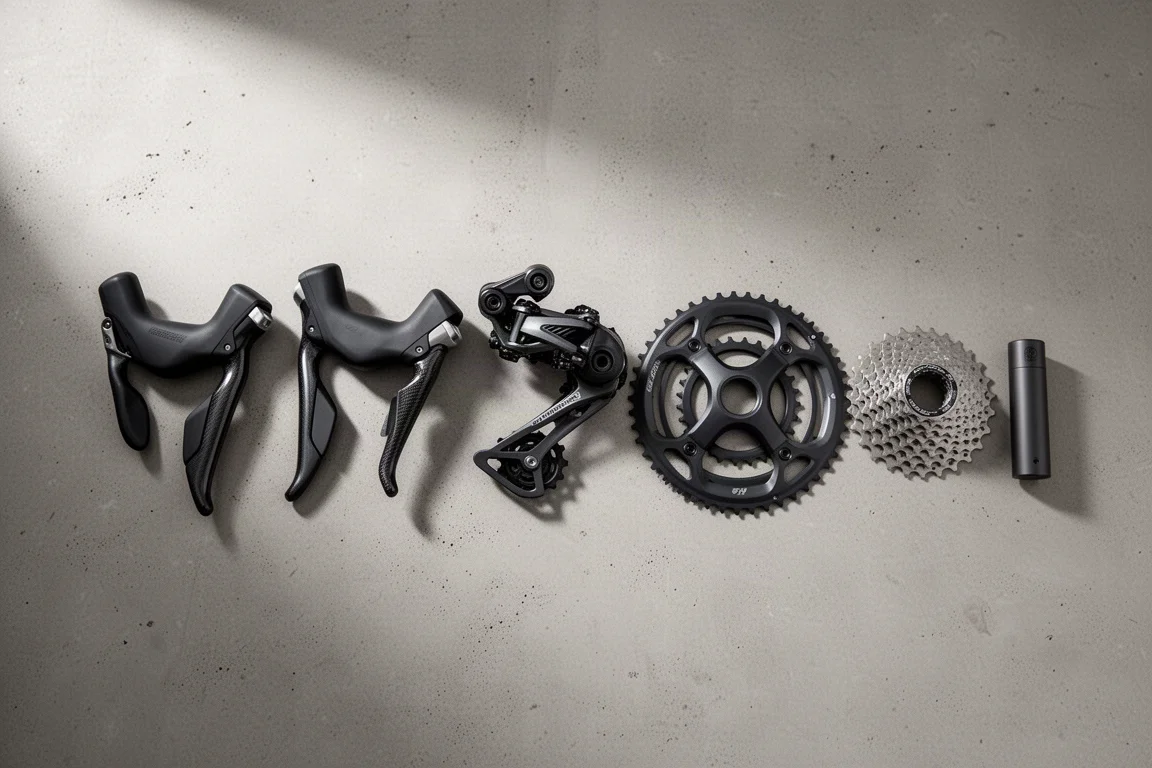
SRAM builds a broad spread of groupsets across disciplines, and the road range alone is easy to get lost in. Six options matter most for road and gravel riders: Apex AXS and Apex Mechanical at the entry point, Rival AXS in the middle, Force AXS above it, and the range-topping Red AXS alongside the 13-speed Red XPLR AXS.
Each step up buys something specific. Sometimes that is faster or more assured shifting, sometimes lighter materials, sometimes a wider gear range or more powerful brakes. This guide explains what genuinely changes between them, so you can work out where the sensible stopping point is for your riding.
What Actually Separates These Groupsets
Two fundamentals divide the range. The first is how gears are changed. Mechanical derailleurs use cables that pull on springs to move the derailleur, while electronic systems use electric motors to actuate those same springs, which usually delivers faster and more assured shifting. Apex is the only groupset in the range offered in both forms.
The second is gearing layout. A 1x setup uses a single chainring up front, which keeps things simple and gives 12 gears with a smaller overall range. A 2x setup adds a front derailleur and a double chainset, which widens the gear range and lets you hold a steady cadence. Rival AXS is the first groupset in the range to offer 2x.
Everything from Apex upward shares a common foundation. Every electronic groupset runs on the same AXS batteries, which are fully cross-compatible between front and rear derailleurs, and each derailleur is claimed to cover around 1,000 km on a single charge with a 60-minute charge time. Hydraulic disc brakes using DOT fluid are standard across the range, offering more modulation, power and longevity than rim brakes, though they are a little more involved to service. Setup, firmware updates, battery monitoring and gear indexing all run through the SRAM AXS app.
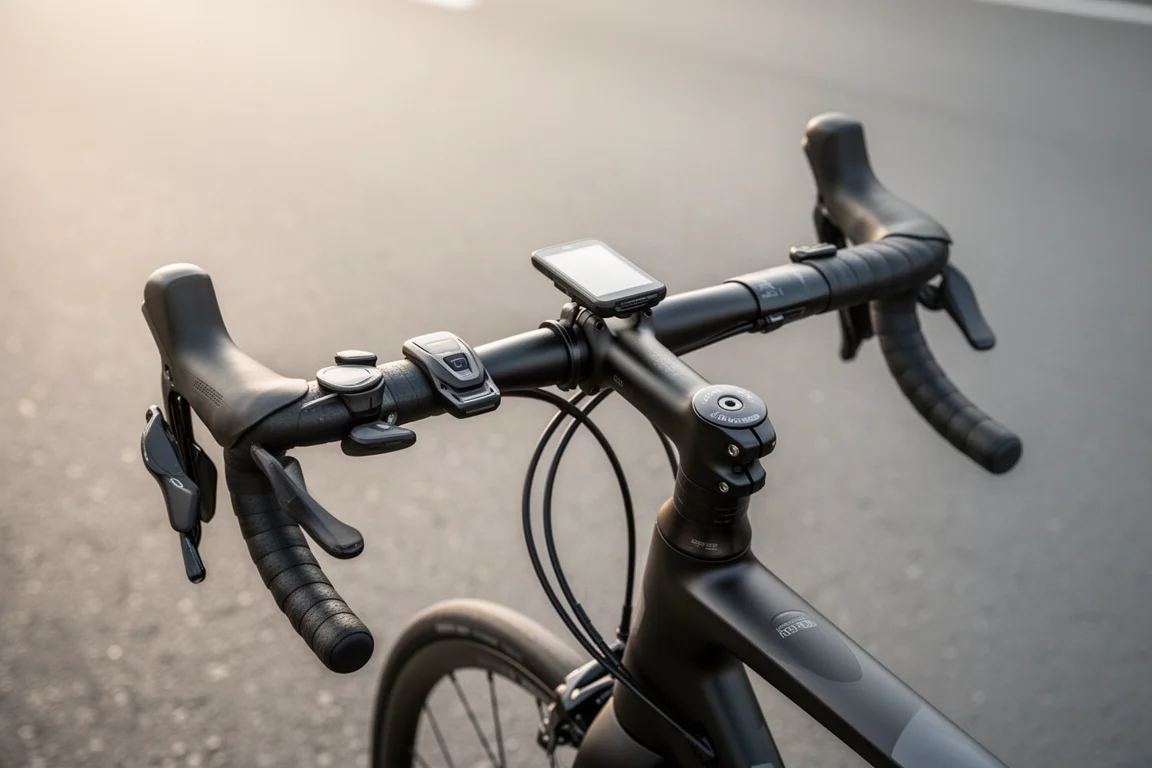
Power meters are upgrades rather than standard fit, and the technology changes as you move up. Apex and Rival use axle-based units, while Force moves to a spider-based design with a higher claimed accuracy and left and right power balance measurement.
SRAM Apex AXS and Apex Mechanical
Apex sits at the bottom of the SRAM road range and is the only family available in both mechanical and electronic versions. Both are 1x only, with a single chainring up front, 12 gears and a narrower spread than the 2x groupsets above. Apex AXS appears on a large number of road and gravel bikes, while the mechanical version is usually found on bikes built for more rugged terrain where average speeds are lower.
SRAM Apex AXS
Apex AXS uses the same control layout as almost every other electronic groupset in the SRAM road line. Each shifter carries a brake lever and a shift paddle, with the right paddle dropping you into a harder gear and the left paddle moving you into an easier one. The rear derailleur accepts cassettes up to 44 teeth, which is why Apex AXS turns up so often on all-road and gravel builds. Braking is hydraulic disc throughout, matching the rest of the range.
There is no power meter as standard, but an Apex AXS crank arm power meter is available as an upgrade for around $230. It is an axle-based unit that adds roughly 40 g and is claimed accurate to within 3 percent, a wider margin than SRAM’s top-end units offer, though still workable for most training.
A full Apex AXS groupset is priced at $1,195 in the US and £1,227 in the UK, and includes shifters, derailleur, chain, cassette, crankset, battery charger and a pair of disc rotors. Claimed weight is 2,900 g.
SRAM Apex Mechanical
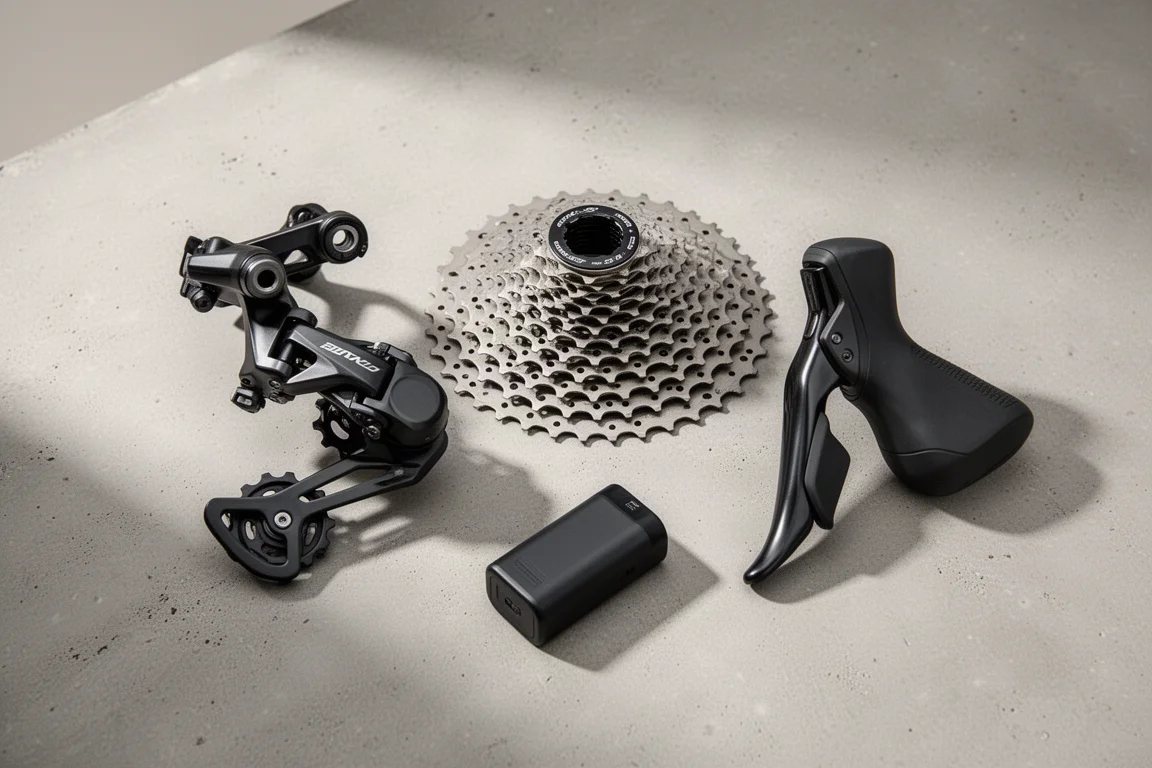
Apex Mechanical uses a single shift lever for the rear derailleur and SRAM’s DoubleTap system. Press the lever to the first click for a harder gear, or push it all the way through for an easier one. It is a touch lighter than the electronic version at a claimed 2,882 g and cheaper at $947, but the price gap is not large, and wireless shifting removes cable maintenance entirely, which makes Apex AXS the more sensible buy if the budget stretches that far.
SRAM Rival AXS: Best Value in the Range
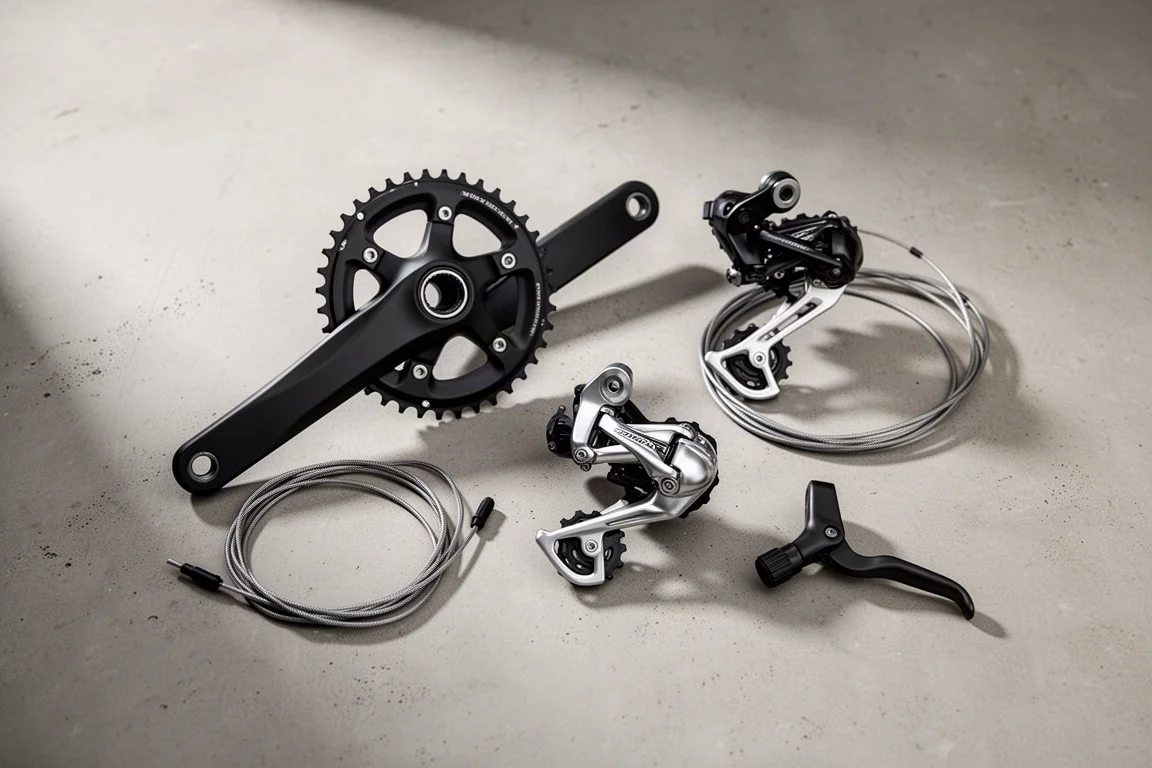
Rival AXS is the third tier in the range and, on the balance of price and functionality, the strongest value proposition in the whole lineup. It is broadly comparable to Shimano 105 Di2.
It is also the first SRAM groupset to offer a 2x setup, which means a much wider gear range without giving up cadence control. Chainring options are 48/35 for high gearing, 46/33 standard, or 43/30 wide, paired with either an 11-30 or a wide-range 11-36 cassette. Riders who prefer to keep things simple can run Rival AXS as a 1x setup instead, with chainrings available in 38, 40, 42, 44 and 46 teeth.
Shifting at the rear is the familiar left-for-easier, right-for-harder arrangement, and the front derailleur is operated by pressing both shift paddles at once. It sounds like it requires coordination, but it becomes intuitive quickly. Lever ergonomics are close to Apex and share a design used across several levers in the range, which suits a wide spread of hand sizes.
Because Rival adds a front derailleur, it also demonstrates one of the best livability features of SRAM groupsets above Apex: the batteries are completely interchangeable front and rear. If the rear battery runs flat mid-ride, you can swap it with the front and generally get home on one working derailleur. SRAM claims around 1,000 km per derailleur, which for most riders means charging roughly every one to four months.
A power meter is optional. The left-hand-only module costs $274, or $380 complete with chainrings, and uses an axle-based design claimed accurate to within 3 percent, which is plenty for interval sessions even if it trails the higher tiers.
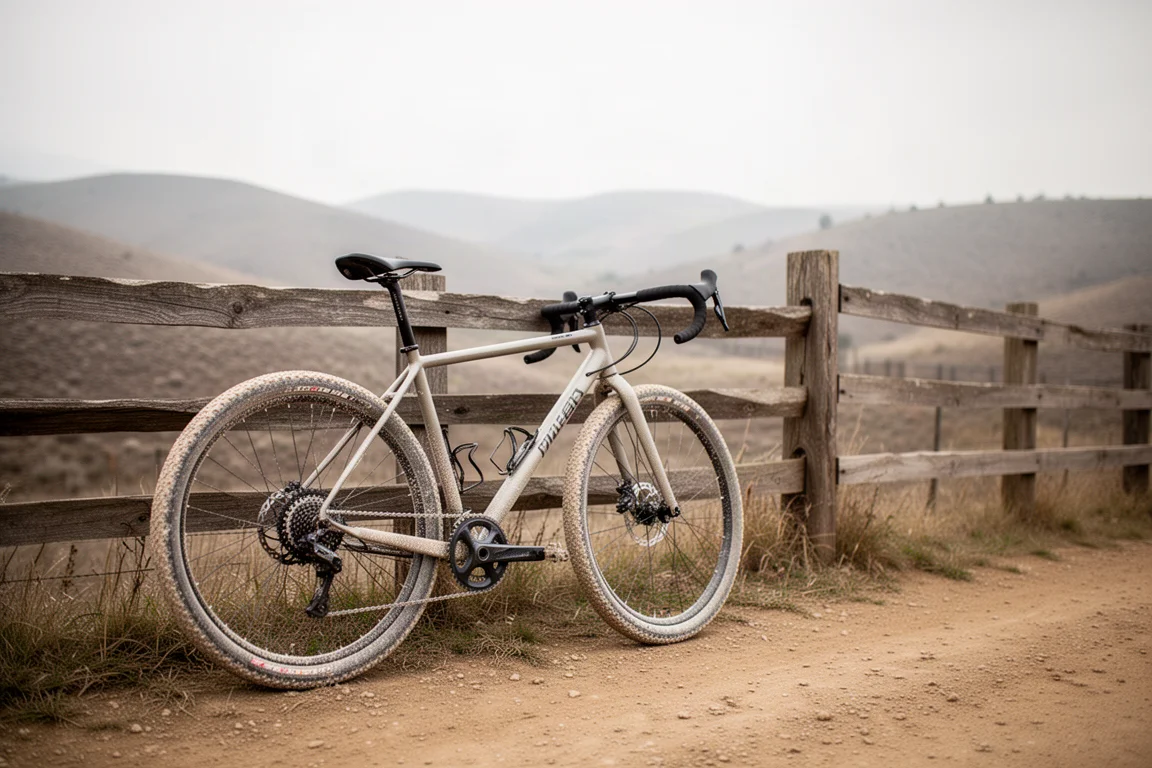
Construction is broadly similar to Apex, with an alloy chainset, though Rival steps up to a slightly lighter plastic lever and alloy mech cages. The front derailleur and double chainset add weight, so the complete groupset is heavier than Apex. Full groupsets excluding the optional power meter are priced at £1,649 in the UK.
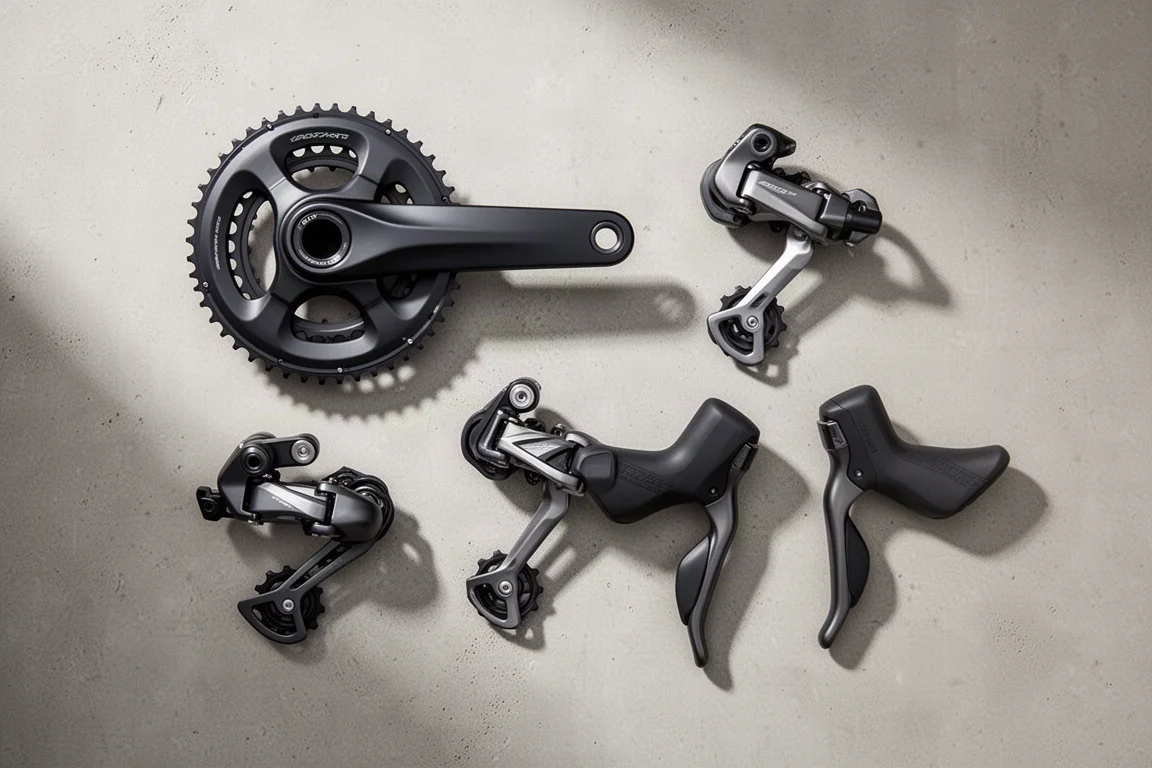
SRAM Force AXS: Where Weight Starts to Drop
Force sits above Rival and is where weight begins to fall quickly. Functionally it is almost identical to Rival, with the same paddle shifting and a very similar lever shape. The differences are in the materials.
Force uses a carbon composite brake lever that is slightly narrower than the Rival AXS equivalent, saving a modest 10 g. The bigger change is the crankset, where Rival’s alloy crank and steel chainring construction gives way to carbon fibre crank arms and alloy bonded chainrings. Rival’s crank with a power meter weighs 902 g, while the Force equivalent comes in at 748 g, a saving of over 150 g. The carbon construction is also stiffer, which helps power transfer.
The power meter changes too. Instead of the left-hand crank spindle unit used lower down the range, Force uses a chainring spider design claimed accurate to within 1.5 percent and adds left and right power balance measurement. The trade-off is that the direct mount unit has to be replaced along with the chainrings. SRAM maintains that chainrings should last the lifetime of the bike with proper maintenance and offers a 50 percent discount on replacement units, but it is worth factoring in if you plan to keep the groupset for years. The undiscounted list price of the Force power meter is $800, or £772 for the full crankset.
Two rear derailleurs are offered, a standard road version and an XPLR version for gravel. Shifting quality is the same across both, but the standard unit handles cassettes up to 36 teeth while the XPLR version takes up to 44. The mech uses slightly lighter aluminium plates with the same steel bearings as Rival, and the same applies to the front derailleur. The cassette also changes to SRAM’s mini cluster design, which is lighter than the pinned steel construction used on Rival AXS, saving around 45 g and largely accounting for the $70 price difference between the two.
Total claimed groupset weight is 2,920 g, roughly 300 g lighter than Rival and close to the entry-level Apex figure of 2,900 g. Price is $2,242 in the US and £2,257 in the UK.
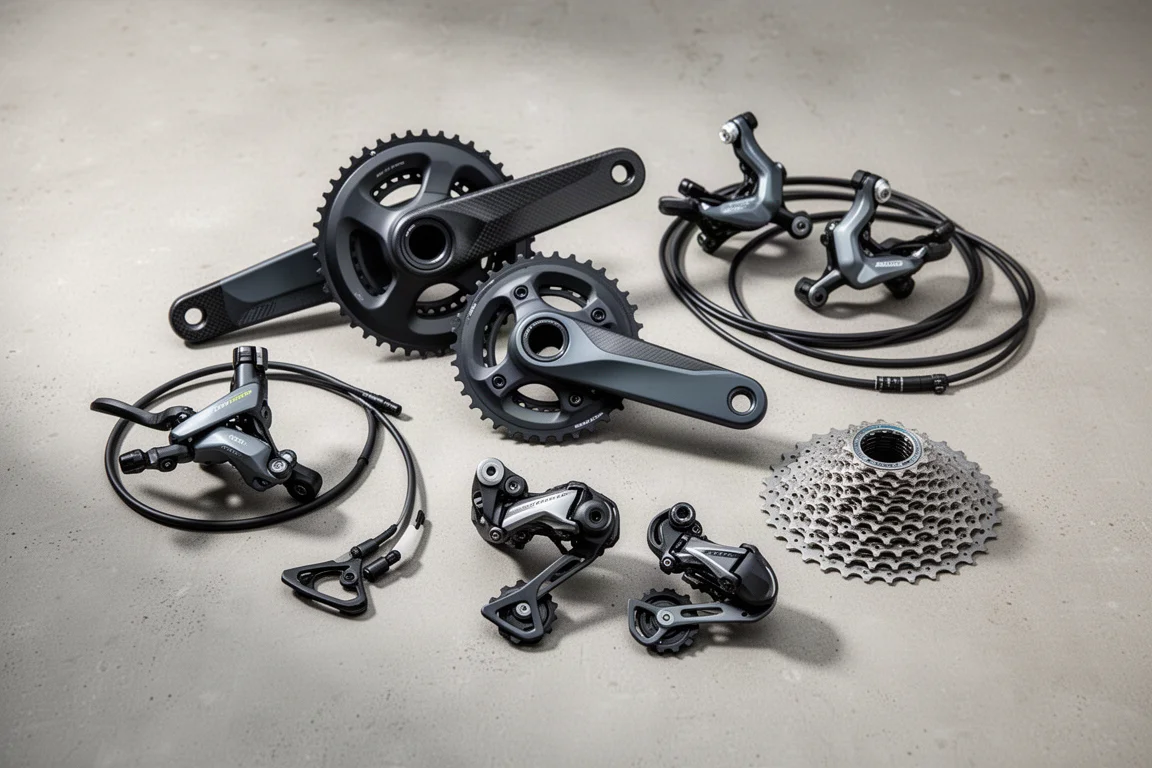
SRAM Red AXS: The Range-Topping Road Groupset
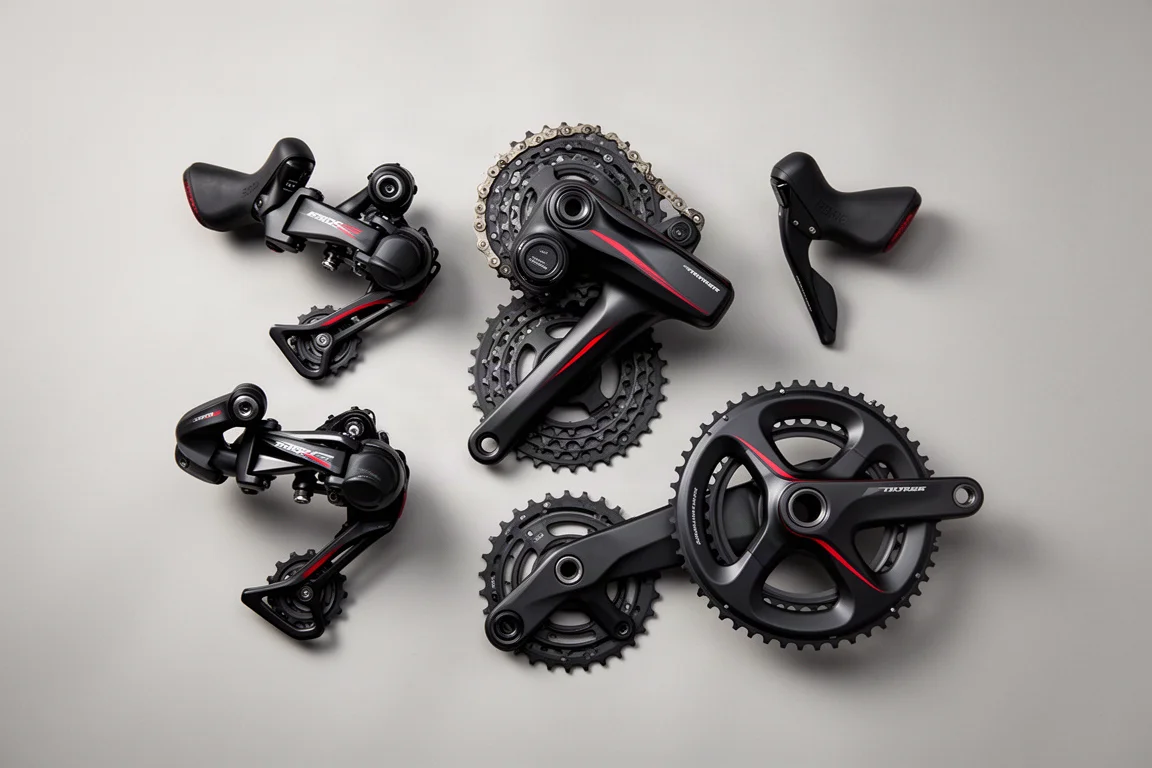
Red AXS was overhauled recently, and the changes touch almost every part. The most visible is a redesigned hood shape with a little more reach and a slight flare to the brake levers, which SRAM says brings the design in line with modern handlebar preferences. The carbon brake lever construction carries over, but a repositioned master cylinder has significantly improved brake feel. The calipers were updated as well, with repositioned pistons that give them more power than anything else in the SRAM road range, plus reach and bite point adjustment. In practice, that makes Red the strongest braking option in the lineup.
The new levers also add auxiliary buttons on the hoods, similar in concept to the buttons found on Shimano Di2 hoods. They can be programmed to do a range of jobs, from shifting gears to changing screens on Hammerhead cycling computers.
Weight saving is comprehensive. Carbon fibre mech cages appear front and rear, and the rear derailleur pulley wheels run ceramic bearings as standard. Front shifting is quicker thanks to a smaller throw on the front derailleur, which has less distance to travel to complete a shift, and communication time within the system has been cut by around 20 milliseconds, which sharpens shifts more than the number suggests. The chain is drilled out to remove excess material, and the cassette uses X-Dome technology to reach 180 g, a saving of 90 g in the cassette alone.
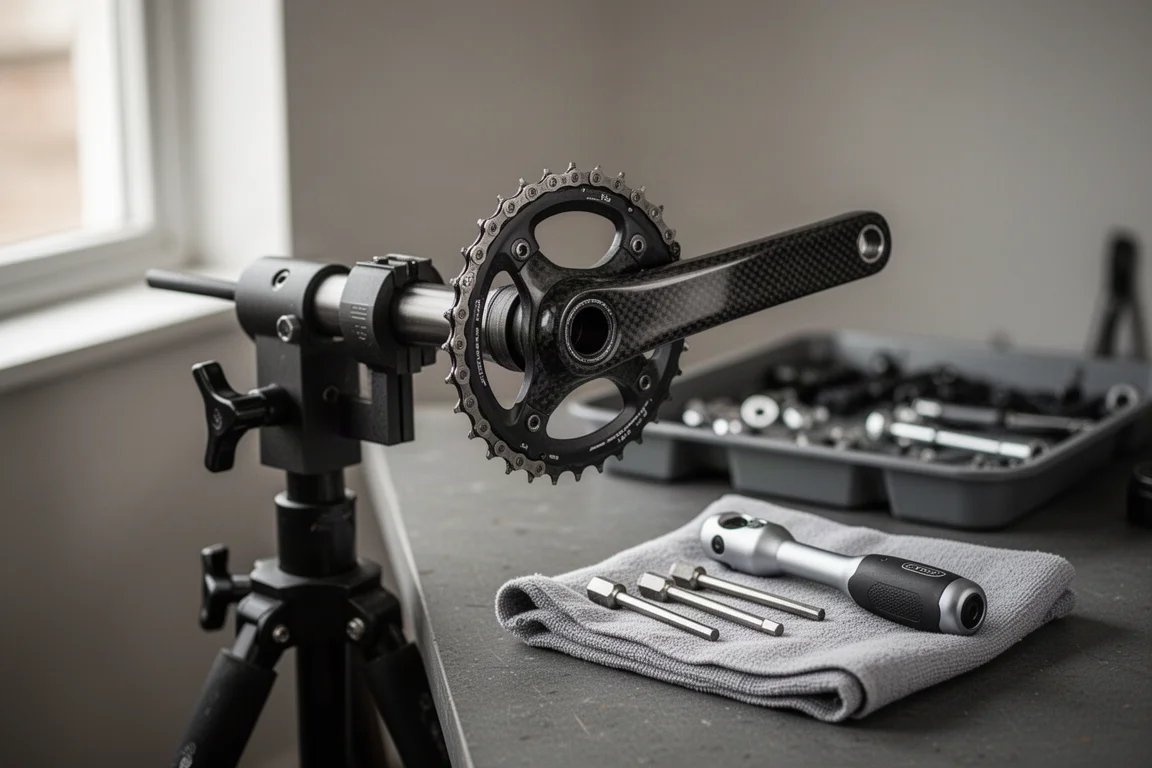
The result is a full groupset weight of 2,499 g, which SRAM positions as the lightest electronic disc brake road groupset on the market, ahead of Shimano Dura-Ace by 15 g. That comes at a price: $3,000 in the US or £3,000 in the UK.
SRAM Red XPLR AXS: 13-Speed for Gravel
Red XPLR AXS takes the range-topping platform in a different direction. It runs 1x13 gearing and uses a different rear derailleur design that blurs the line between SRAM’s road and mountain bike groupsets. The derailleur uses SRAM’s Universal Derailleur Hanger standard, which means it is currently only compatible with UDH frames.
The cassette range matches other XPLR groupsets at 10-46 teeth, but the addition of a 13th sprocket delivers smoother gear changes and better cadence control across the range. The shifters are exactly the same as those on the Red road groupset, so the hood shape, brake feel and auxiliary buttons carry over unchanged.
Which SRAM Road Groupset Should You Buy?
The right answer depends on what you value most. If you want the most affordable way into electronic shifting and can live with 1x gearing, Apex AXS is the logical starting point, and the small price gap over Apex Mechanical makes the wireless version the better long-term buy.
Rival AXS is the sweet spot for most riders. It is the first groupset with 2x, which opens up a much wider gear range and better cadence control, and its shifting performance remains strong despite the modest price. The interchangeable batteries and optional power meter round out a package that is hard to argue with.

Force AXS is for riders who want a meaningful weight reduction without jumping to the very top of the range. The carbon crankset, spider-based power meter with left and right balance and lighter cassette make it a genuine step up, though the price climbs accordingly. Red AXS sits at the top for riders who want the lightest and most powerful package SRAM offers, while Red XPLR AXS is the specialist choice for gravel riders on UDH frames who want 13-speed 1x gearing.
Conclusion
SRAM’s road range is more coherent than it first appears. Every groupset from Apex upward shares the same battery ecosystem, hydraulic braking, app-based setup and paddle shifting logic. What changes is gearing layout, materials, weight and brake performance.
Match those to your riding and the choice becomes straightforward: Apex AXS for affordable wireless shifting, Rival AXS for the best balance of price and function, Force AXS for a noticeably lighter build, and Red AXS or Red XPLR AXS for the top of the range.
Further reading
Related Reviews
Cycling Components
A 20,000-Mile Budget Race Bike Build: Five Parts Worth Knowing
A rim brake race bike assembled from low-cost components and ridden for 20,000 miles. Here is what delivered real speed, what caused problems, and what to weigh before copying the formula.
Cycling Components
7 Bike Fit Products Fitters Avoid: What to Check Before You Buy
Seven bike components that regularly cause knee, foot and saddle problems, with the specific concerns behind each one and what to look for instead.
Cycling Components
Four Affordable Bike Upgrades That Improve Ride Feel
Four low-cost cycling products that make a real difference to ride feel, plus the free setup changes worth trying first.