Cycling Components
SRAM Rival Explore Review: A 13-Speed Wireless Gravel Groupset
A practical look at SRAM Rival Explore, the 1x13 wireless gravel groupset that borrows heavily from the top-end Red, including real strengths, fit caveats and what it costs.
Introduction
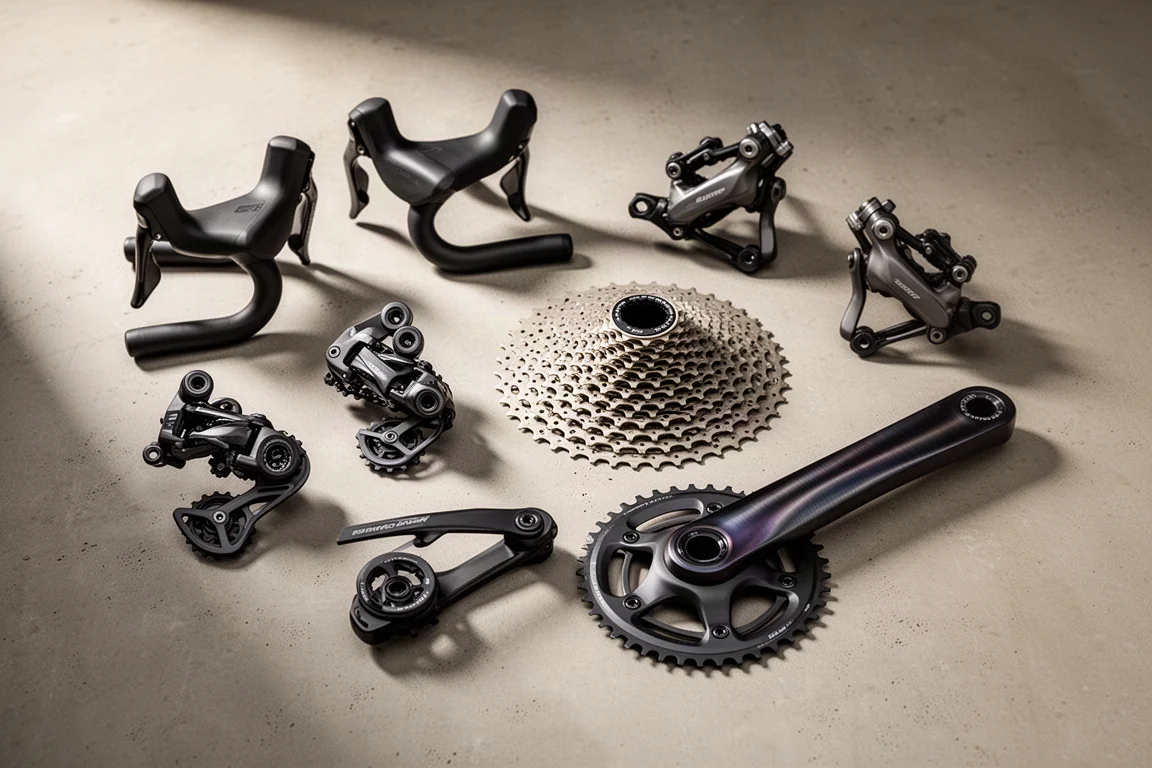
SRAM Rival Explore is a one-by groupset built for gravel and adventure riding. It brings 13 gears at the rear and a single chainring up front, it shifts and brakes wirelessly, and it introduces a new braking system. In SRAM’s line-up it sits third from the top, below Red and Force and above Apex, and it carries over almost every feature from the top-end Red.
The Explore label marks the one-by versions of these groupsets. Compared with the previous Rival, the levers have been drastically reshaped, the hydraulic braking has been upgraded, and there is now one more gear on the cassette. It is also considerably cheaper than the existing 13-speed Red, though the fully loaded, power-meter-equipped build still lands somewhere around $1,550 to $1,750 depending on configuration and market.
Who This Groupset Is For
This is a performance product, and it is aimed at enthusiasts and serious racers rather than casual riders. It can be connected to an app to customise how it shifts, and the lever shape, reach and hand position are clearly race focused. If you want a wide gear range without the complexity of a front derailleur, the one-by layout keeps things simple: one button for a harder gear, one for an easier gear.
It is less appealing if you are trying to keep spending low, or if you are at either extreme of the size range. The levers are long, and crank lengths stop at 175 mm, so smaller and very tall riders may need to look elsewhere or plan around third-party components.

For riders who spend long days on mixed surfaces, the appeal is the combination of range, grip and low maintenance. Gravel riding rewards a groupset that stays quiet, shifts under load and does not need constant attention, and that is the space this groupset is designed to occupy.
Main Strengths
The headline strengths are the braking, the shifting, and the fact that almost everything is wireless. Each of those has a real effect on how the bike feels to ride.
Braking That Sets the Benchmark
The braking technology from the top-end Red has trickled down into Rival, and it is genuinely a one-finger system. Modulation is strong and predictable, and it is especially useful off road, where a firm, controlled squeeze matters more than raw power. On long descents it helps keep arm pump in check and adds confidence, which in turn makes riding more enjoyable.
The lever blade has also been reshaped so it stands out from the bar rather than sitting close to it. On the previous design it was possible to trap the little finger against the handlebar when braking, and the new shape avoids that. Lever reach adjustment is still present, so the lever can be set closer to or further from the bar to suit hand size.
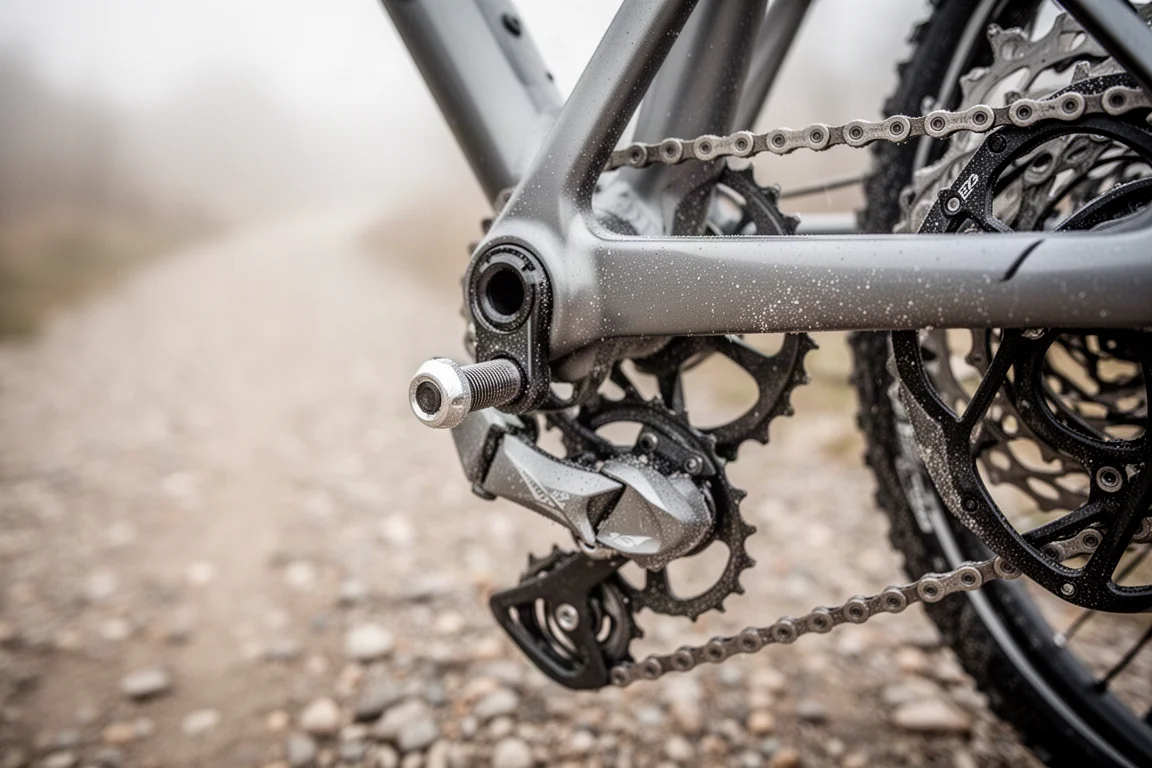
Compared with the older Rival braking, the difference is clear. The previous system was strong but felt spongy through the lever, while the new one feels more direct and requires noticeably less effort.
Crisp Shifting and the Direct-Mount Rear Derailleur
The rear derailleur uses a full mount design, which means it bolts straight onto the frame instead of sitting on a traditional derailleur hanger. The practical requirement is a UDH compatible frameset. Because the mech attaches at the rear axle area, an inherently strong part of the bike, it is well placed to absorb impacts, and it is designed to move out of the way rather than snap if something hits it. Mountain bikers have been running this arrangement for a while and report few problems, though it is still fairly new on gravel bikes.
One striking detail is that there are no adjustment screws at all, not even a B-tension screw. The derailleur simply goes on and sits in the correct position relative to the cassette. What you do need to get right is chain length, which should follow the manufacturer’s chart, and the mounting torque, which is a substantial 35 Nm and should be set with a torque wrench. The rear mech also uses oversized pulley wheels.
In use, the shifting is exceptionally crisp, and it comes across as noticeably better than the previous Rival Explore on the same frameset.
Wireless Simplicity and Broad Compatibility
Everything is fully wireless. The shifters run on coin cell batteries and each derailleur takes a small clip-on battery, and the system communicates reliably. That makes installation and part replacement about as straightforward as it gets, with no wire running through the frame. Some competing systems are only semi-wireless, with a wire through the chainstay linking the two derailleurs.
Compatibility is another strong point. Parts can be mixed and matched across the different groupsets as long as they are the same speed, and Apex is now 12-speed, so that covers nearly everything. The same chain works for the 13-speed Explore versions and the 12-speed road groupsets. The one thing Rival does without is the bonus buttons found on Force and Red, which can be programmed to control something like a dropper post.
Things to Consider Before Buying
This is a very good groupset, but a few practical details deserve attention before you commit, particularly around fit and frame compatibility.
Lever Length and Bike Fit
The new levers are roughly 1.5 cm longer than the previous version, which is a significant change on a bike. The upside is a really strong grip and purchase on the hoods, which pays off when you get out of the saddle for a steep gravel climb. The downside is that it adds length to a cockpit at a time when bikes are already coming with long reach figures.
If you are on the smaller side, this is worth checking carefully, because it can rule a bike out entirely. The Rival shifter body is also slightly slimmer than the Force equivalent and has no integrated button, which makes it a touch smaller in the hand and potentially more comfortable for riders with smaller hands.
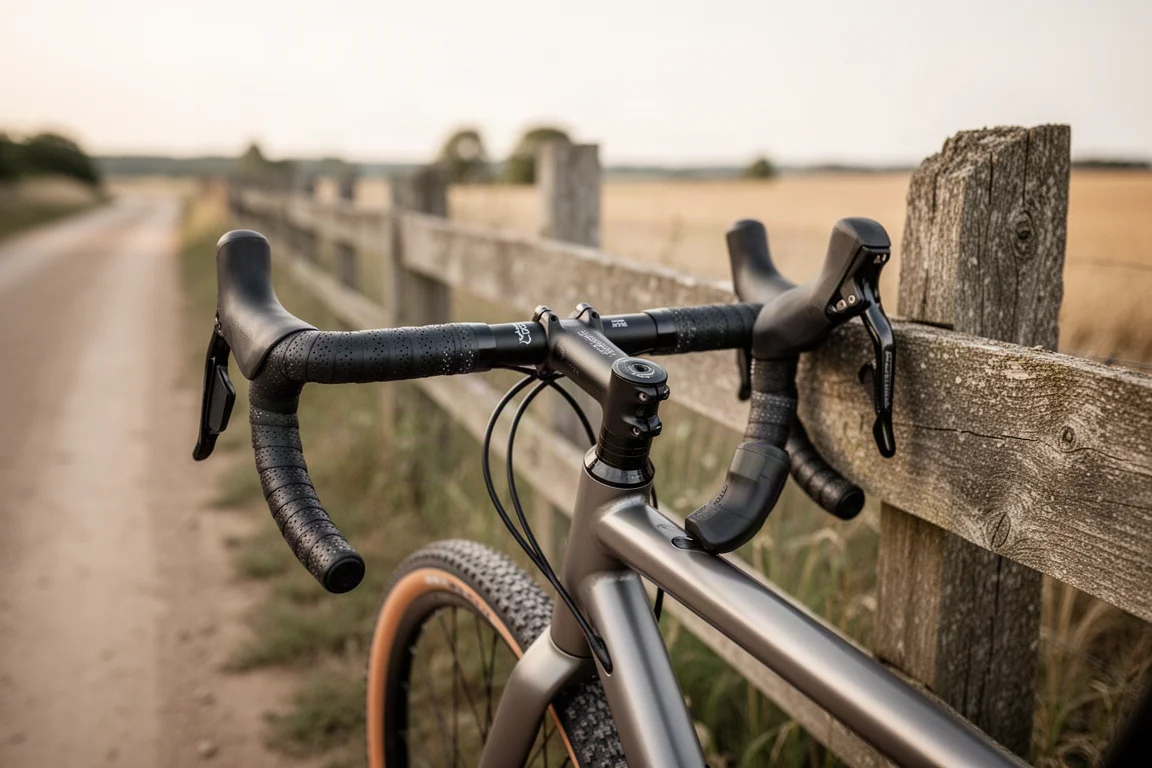
If you are upgrading an existing bike or buying a complete bike with this groupset, it is worth confirming reach and stem length before you buy, rather than after.
Weight, Gearing and Crank Options
The component weights add up to roughly 2,658 g in total: the crankset is 755 g, the pair of shifters 451 g, the 13-speed cassette 389 g, the rear mech with its oversized pulley, clutch and battery 467 g, the calipers with hose 326 g, and the rotors 280 g for a 160 mm pair front and rear. The rotors themselves are unchanged from before.
Chainring options run from 36 to 46 teeth, and the cassette uses a very small 10-tooth sprocket at the top end. Crank lengths come in 160, 165, 170, 172.5 and 175 mm, which is a reasonable spread but still limiting for very small and extremely tall riders, who often end up with third-party crank specialists. That is broadly in line with what the other major groupset makers offer.
On the extra gear: going from 12 to 13 speeds keeps a similarly wide range with slightly smaller gaps between ratios. More gears at the back also leaves less room for an enormous cassette, so there is a technical argument for it. In practice, most riders will not notice the difference.
What It Leaves Out Compared With Red
The list of omissions is short. There is no brake pad contact adjustment, so you cannot change how close the pads sit or how quickly they bite, although lever reach adjustment remains and matters more for most riders. There are no bonus buttons. Weight, materials and crank stiffness also differ from the top tier, and those differences may not matter at all depending on how you ride.
The optional power meter is single-sided and spindle based, which is a practical choice because chainrings can be changed normally.
Buying Advice
The fully loaded, power-meter-equipped build is priced around $1,550 to $1,750 depending on configuration and market. Drop the power meter and the price falls by up to about $200, which makes the standard version considerably friendlier. Either way it remains cheaper than Force or Red.
Whether that represents good value depends on what you are replacing. If your current groupset works and you are happy with it, there is no urgency here, and it is reasonable to expect this technology to filter further down the range over time. If you are building a gravel bike and want the best braking and shifting you can get at this level, the case is much stronger. It is also worth knowing the alternatives: Shimano GRX RX815 is electronic and one-by only, at 11-speed at this time, and its electronic 12-speed GRX is two-by only, while Campagnolo Ekar is gravel specific and 13-speed but mechanical only. Prices for all of these vary by retailer and market.
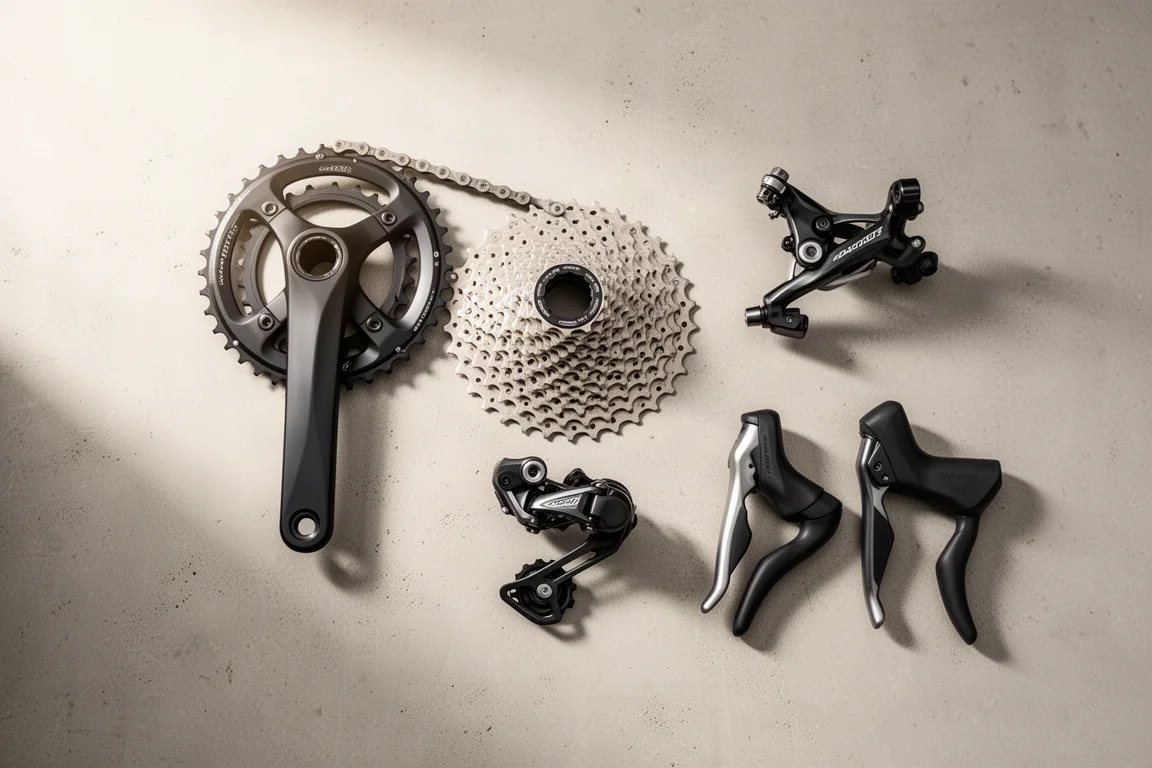
Two things should drive the decision more than anything else. First, fit: if the longer levers put the reach out of range for you, no amount of shifting quality will fix that. Second, braking: if you ride steep, loose descents and want a system you can operate with one finger, this is where the groupset justifies its price.
Conclusion
SRAM Rival Explore delivers on its promise. The braking is excellent, the shifting is among the crispest you can get on a gravel bike, and the wireless setup makes installation and maintenance genuinely simple. Compatibility across the range is a real bonus, and the one-by layout keeps everything easy to live with.
The reservations are just as clear. It costs a lot, the 1.5 cm longer levers will be a deal breaker for some riders, and the direct-mount derailleur requires a UDH compatible frame. If you are happy with what you already ride, there is no need to rush. But if you are building a gravel bike and want top-tier braking and shifting without stepping up to Force or Red, this is a very compelling option.
Product link
View more details for SRAM Rival Explore
This product is mentioned in the review. Check the specifications, options, and compatibility before buying.
View more details for SRAM Rival ExploreFurther reading
Related Reviews
Cycling Components
A 20,000-Mile Budget Race Bike Build: Five Parts Worth Knowing
A rim brake race bike assembled from low-cost components and ridden for 20,000 miles. Here is what delivered real speed, what caused problems, and what to weigh before copying the formula.
Cycling Components
7 Bike Fit Products Fitters Avoid: What to Check Before You Buy
Seven bike components that regularly cause knee, foot and saddle problems, with the specific concerns behind each one and what to look for instead.
Cycling Components
Four Affordable Bike Upgrades That Improve Ride Feel
Four low-cost cycling products that make a real difference to ride feel, plus the free setup changes worth trying first.