Cycling Components
SRAM Rival AXS Review: Lighter, Cheaper, and Genuinely Competitive
SRAM Rival AXS is a full redesign of the third-tier wireless groupset, with a lower-profile lever, a machined crankset, and pricing that undercuts Shimano 105 Di2.
Introduction
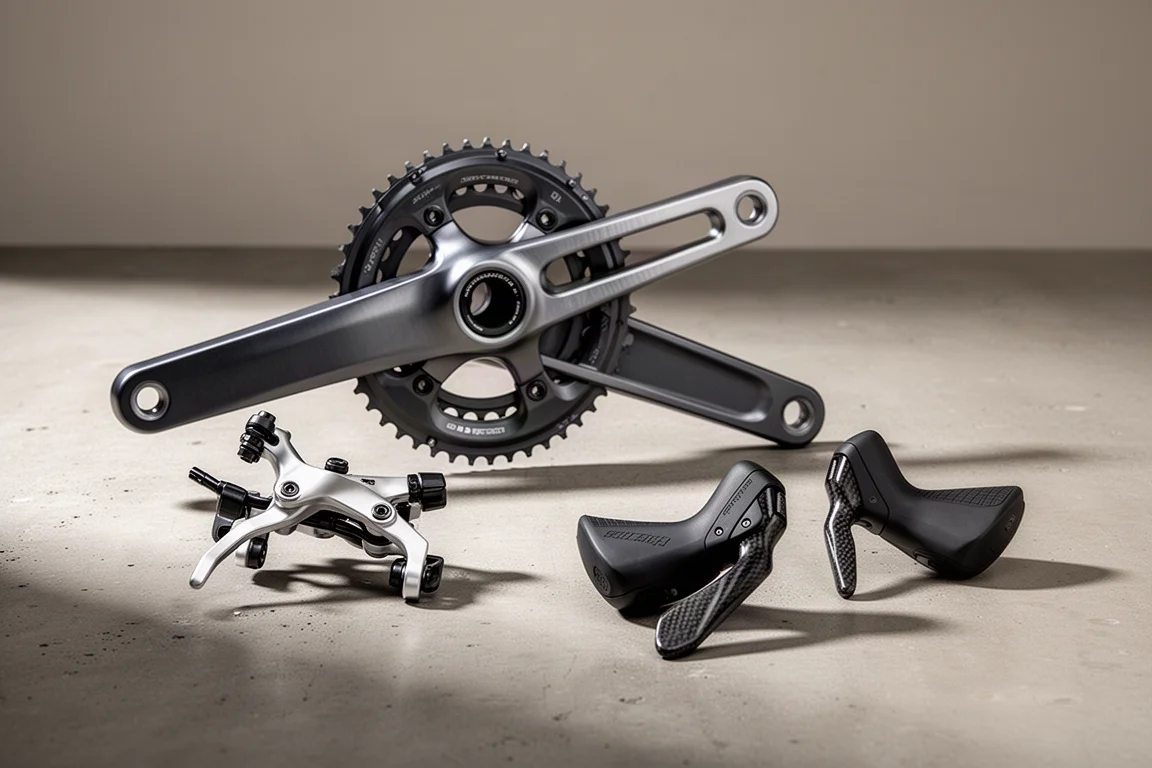
SRAM Rival AXS is not a light refresh. Almost every part of the groupset has been reworked, from the shape of the levers to the construction of the crankset, and the outcome is a third-tier wireless groupset that now beats Shimano 105 Di2 on both weight and price. For riders who have been waiting for electronic shifting to reach a more accessible level, this is the version that finally makes the case.
The changes run deeper than styling. The shifters adopt a much lower-profile design, the crankset moves to a machined two-piece chainring, the brakes are slimmer two-piece calipers, and the front derailleur gains a longer cage with built-in autotrim. Weight drops, price drops, and the riding experience moves noticeably closer to the more expensive tiers above it.
Who This Groupset Is For
Rival AXS makes the most sense for riders who want wireless electronic shifting without paying for the top tiers. It suits a first electronic groupset, a road bike build where reliability and low maintenance matter more than outright prestige, and gravel builds where the AXS ecosystem makes component swapping easy.

It is also a strong fit for riders who value braking control over feature count. The reprofiled lever offers one-finger braking from the top of the hoods as well as in the drops, which is the kind of detail that matters on long descents and technical corners. Riders who rely on hidden hood buttons for screen switching or dropper post control should look higher up the range, because Rival AXS does not include them, although Shimano 105 Di2 does not offer them either.
Shifter and Lever Redesign
The biggest single change is the shifter. The previous design placed the piston inside the hood in a vertical position, which made the body tall and bulky. Rival AXS turns that piston horizontally instead, which packages the internals far lower and produces a much more ergonomic hood.
The shape itself is carried over from Force AXS, which in turn inherited it from Red AXS, so the lever now looks and feels like a premium component rather than a budget one. The shift lever has been reprofiled with indents at the top for one-finger braking, and the blades have a slight out sweep that brings them within easier reach. The levers are carbon, which is unusual at this price point.
Weight reflects the redesign. A pair of levers including the brakes is 72 g lighter than the previous version. The one omission is the hidden button on the inside face of the hoods, which is a deliberate cost saving rather than an oversight.
Crankset and Brake Improvements
The old crankset was matte aluminium and looked plain next to the competition. The new one is machined and angular, with cutouts influenced by SRAM’s aluminium XO mountain bike crank, and it changes the look of the whole drivetrain. The chainring is now a two-piece direct-mount design, which is stiffer and considerably lighter than before.
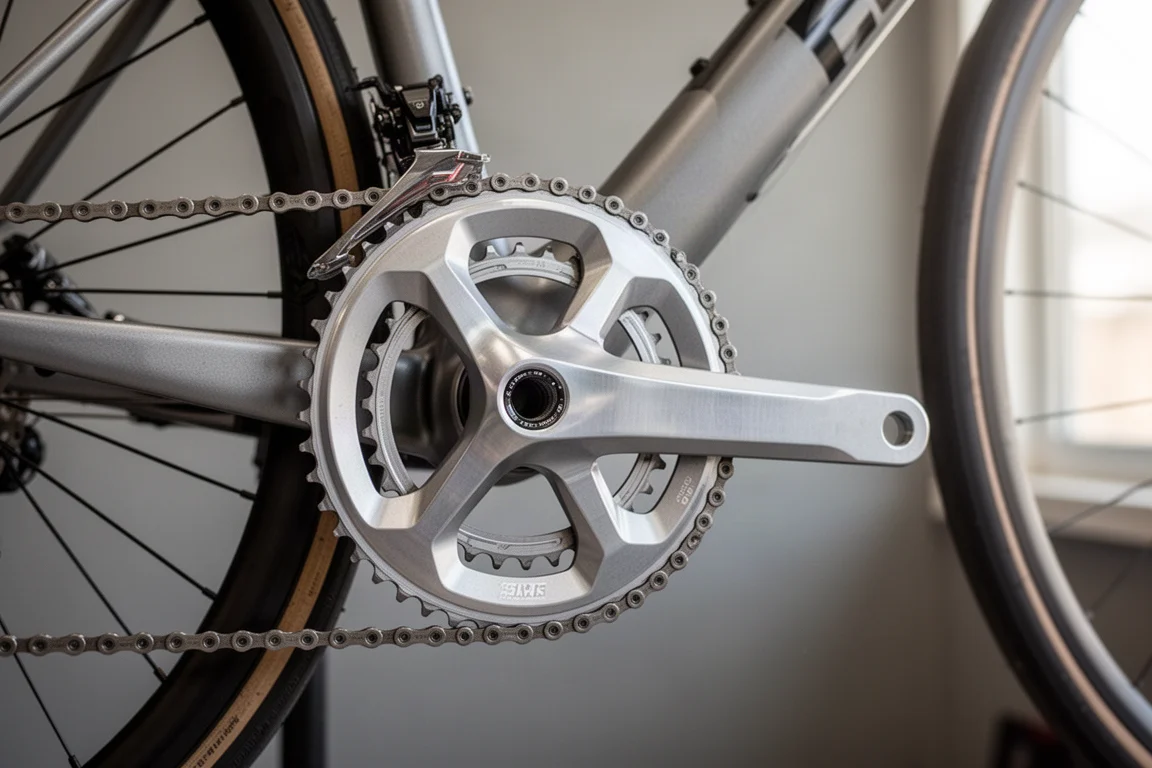
The trade-off appears at replacement time. Because the two rings form a single unit, a new chainring means buying both together, at roughly £120 or $140. That is still more expensive than the equivalent Shimano 105 parts, where the big ring costs $79.99 and the small ring $19.99.
Brakes follow the same direction. The old chunky calipers are replaced by slimmed-down, machined two-piece units influenced by the Force and Red designs, and they use the same Paceline rotors as the rest of the range. Visually they are a clear step up, and the braking feel is a bigger improvement still.
Shifting and Braking Performance on the Road
The front derailleur is where the riding experience changes most. It is slimmer with a longer cage, manages the chain better, and shifts more cleanly and smoothly. Its built-in autotrim keeps the cage just clear of the chain, so cross-chaining no longer produces the constant rubbing noise that makes a drivetrain feel poorly set up.
Rear shifting is quieter territory in terms of hardware. The rear derailleur sees the least change, keeping its spring clutch and gaining a cosmetic makeover. It does not receive the oversized lower pulley found on Force and Red, but it does not need fixing either.
Early ride data backs up the design work. Across roughly 299 miles in the first few days of riding, the groupset recorded 2,469 rear shifts and 109 front shifts with no missed shifts, no dropped chains, and no chain noise. Shifting is quicker and smoother than the previous generation throughout.
Braking deserves its own note. The indent at the top of the lever gives genuine one-finger braking from the hoods, while the out sweep and broad lever blade provide a solid contact point in the drops. The result is more control and less overbraking when descending at speed, which quietly makes a rider faster rather than slower.
Drivetrain Details and Compatibility
The AXS ecosystem is one of Rival’s strongest arguments. Everything is compatible with everything else, and it is backwards compatible too, so mixing tiers is straightforward. Rival AXS cassettes are offered in 10-30 and 10-36 only. A rider who prefers something in the middle, such as a 10-33, can step up to a Force cassette without changing anything else.
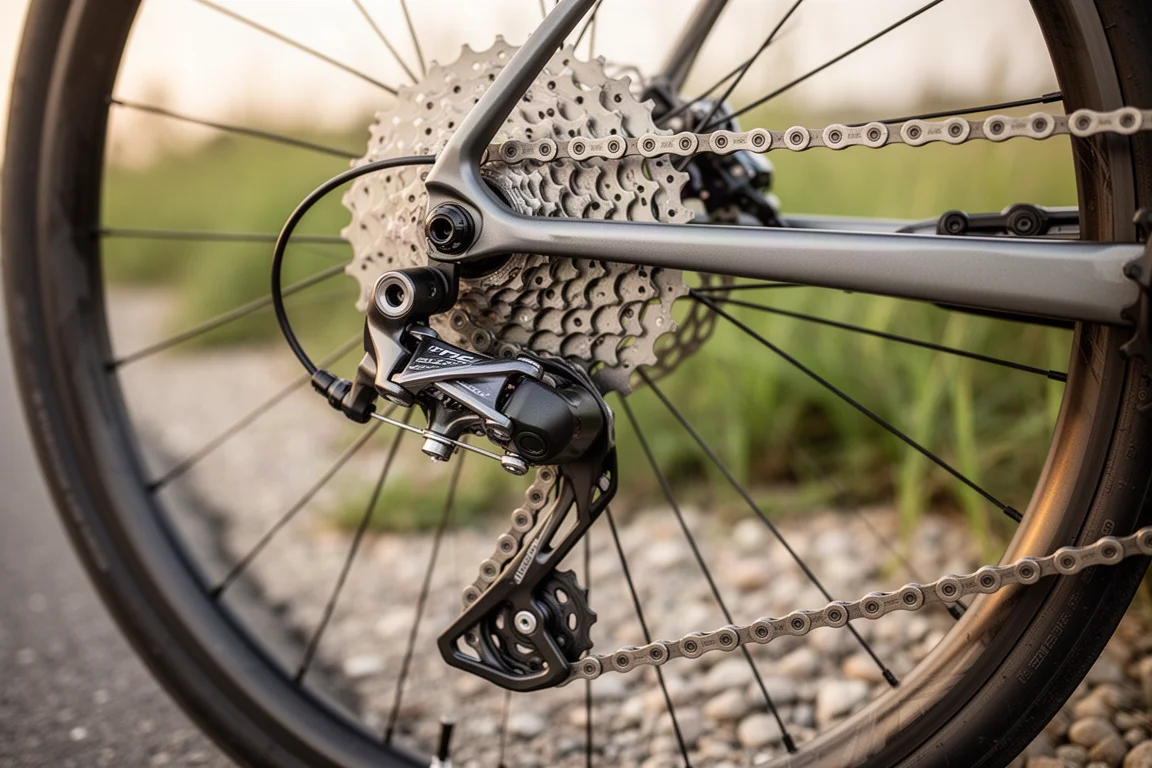
Front shifting logic follows the usual SRAM pattern, where both buttons are pressed simultaneously. It works reliably, but it can feel a fraction slower than Shimano’s single-button front shift because it asks for a little more thought before the chain moves.
Ratio progression is worth considering before choosing a cassette. With a 10-33, the first five gears run in single-tooth steps, the next three in two-tooth steps, and the jumps widen from there. At the top of the block, progression matters less than simply having a gear that can be spun on a climb.
Weight, Price, and Value
The previous Rival was heavier than Shimano 105 Di2, and that was the main reason 105 Di2 dominated at this level. Rival AXS reverses the situation: like for like, it is 32 g lighter than 105 Di2.
Price is the more striking change. Rival AXS arrives at $154, or £126 cheaper than 105 Di2 in the same specification. Even with the optional power meter added, it comes in around £9 or $39 below a 105 Di2 groupset with no power meter at all. A complete build with carbon wheels and a full carbon cockpit has been cited at around £3,100, although complete bike pricing will vary by brand and specification.
That combination of lower weight and lower cost changes the calculation for anyone speccing a bike at this level.
Things to Consider Before Buying
The hidden buttons on the inside face of the hoods are absent. On a road bike this is a minor loss, since those buttons are typically used for scrolling through head unit screens. On a gravel bike the omission is felt more, because they can be assigned to control a dropper post.
Chainring replacement costs more than the Shimano equivalent, and the two rings must be purchased as a single unit. Cassette choice is limited to 10-30 and 10-36, so riders who want a specific mid-range ratio need to look at a Force cassette. Front shifting requires a simultaneous two-button press, and the rear derailleur does not get the oversized lower pulley used on Force and Red.
None of these are serious drawbacks at this price, but they are worth knowing before committing to a build.
Buying Advice
Rival AXS is easy to recommend to riders who want wireless shifting, strong braking control, and a clean, low-maintenance drivetrain without paying for the top tiers. It now undercuts its closest competitor on both weight and price, and the lever and crankset redesigns close most of the visual and ergonomic gap to Force.

Riders who need hidden hood buttons, a specific cassette ratio, or the oversized lower pulley should consider Force or Red instead, especially on gravel builds where those details matter more. For road riders building a bike at this level, Rival AXS covers the essentials so completely that stepping up is hard to justify.
Conclusion
SRAM has rebuilt its third-tier groupset rather than refreshed it. The lower-profile lever, machined crankset, slimmer calipers, and improved front derailleur all move Rival AXS forward, and the weight and price figures make it a stronger proposition than the groupset it replaces. It is no longer the underdog at this level.
Product link
View more details for SRAM Rival AXS
This product is mentioned in the review. Check the specifications, options, and compatibility before buying.
View more details for SRAM Rival AXSFurther reading
Related Reviews
Cycling Components
A 20,000-Mile Budget Race Bike Build: Five Parts Worth Knowing
A rim brake race bike assembled from low-cost components and ridden for 20,000 miles. Here is what delivered real speed, what caused problems, and what to weigh before copying the formula.
Cycling Components
7 Bike Fit Products Fitters Avoid: What to Check Before You Buy
Seven bike components that regularly cause knee, foot and saddle problems, with the specific concerns behind each one and what to look for instead.
Cycling Components
Four Affordable Bike Upgrades That Improve Ride Feel
Four low-cost cycling products that make a real difference to ride feel, plus the free setup changes worth trying first.